
The Impact of Ancient Indian Numerical Methods on Global Mathematics

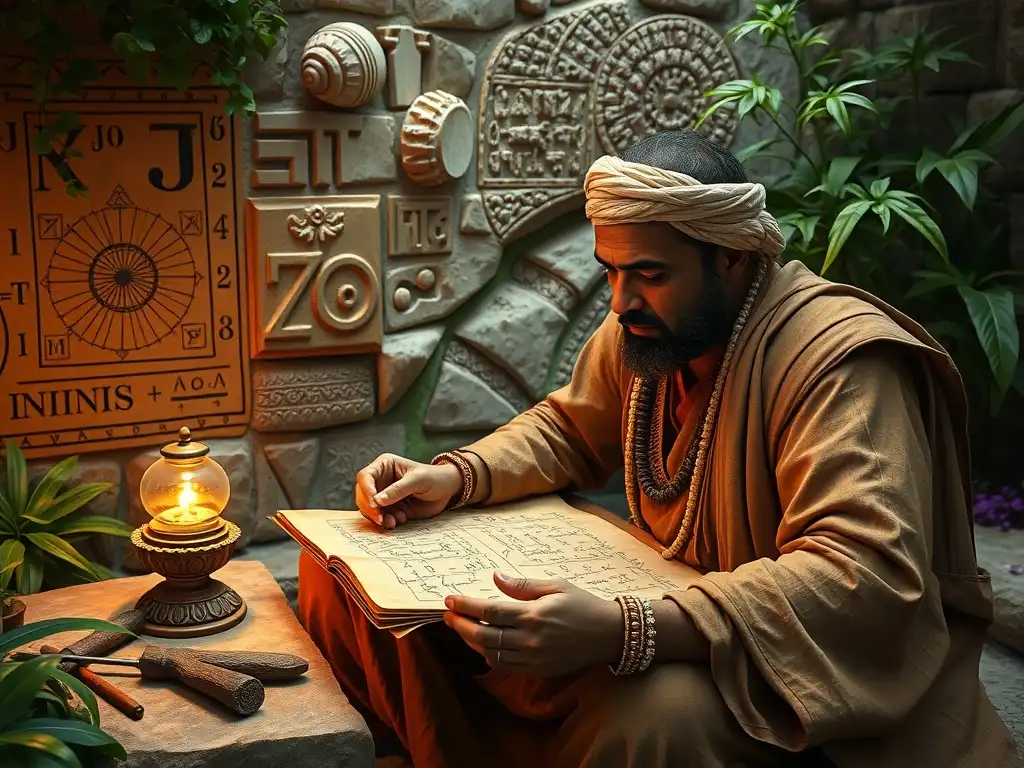
Welcome to Ancient India History, where we embark on a captivating journey through the rich tapestry of ancient Indian civilizations. From the ingenious innovations of the Indus Valley to the intellectual zenith of the Gupta Empire, we delve deep into the remarkable contributions that have shaped our world. In today’s featured article, we uncover the fascinating realm of Ancient Indian numerical methods—a pivotal aspect of mathematics that influenced thinkers across the globe.
Curious about how these ancient techniques paved the way for modern calculations? Join us as we explore this profound legacy and unravel the mysteries of a civilization that continues to inspire!

Introduction to Ancient Indian Numerical Methods
The exploration of ancient Indian numerical methods reveals a profound legacy that has significantly influenced the field of mathematics globally. From the intricate calculations of the Indus Valley Civilization to the sophisticated theories developed during the Gupta Empire, ancient Indian scholars made remarkable contributions that shaped numerical systems. This article will delve into the various facets of these methods, highlighting their relevance not only in historical contexts but also in their enduring impact on modern mathematics. By understanding the evolution of these numerical techniques, we can appreciate how they laid the groundwork for future mathematical developments across cultures.
Overview of Ancient Indian Mathematics
Ancient Indian mathematics is characterized by its unique approaches to numerical representation, calculation methods, and astronomical theories. The foundations were laid as early as 2500 BCE, with the Indus Valley Civilization showcasing advanced understanding through their weights and measures. As time progressed, the Vedic period introduced more complex concepts, such as the decimal system and algebraic formulations. The culmination of these efforts during the Gupta Empire, around the 4th to 6th centuries CE, marked a golden age for mathematics in India, producing renowned mathematicians like Aryabhata and Brahmagupta.
Significance of Numerical Systems in Ancient India
The numerical systems developed in ancient India were not merely academic exercises; they served practical purposes in trade, astronomy, and daily life. The introduction of the zero as a numeral, along with the positional decimal system, revolutionized how numbers were represented and manipulated. These innovations allowed for more complex calculations and laid the groundwork for algebra and calculus. The significance of these systems extends beyond India, as they eventually spread to the Islamic world and then to Europe, profoundly influencing mathematical thought and practices worldwide.
Historical Context of Numerical Methods in Ancient India
Understanding the historical context of ancient Indian numerical methods involves examining the progression of mathematical thought across different civilizations and periods. Each era contributed unique elements that enriched the overall tapestry of mathematics.
Development of Numerical Concepts in the Indus Valley Civilization
The Indus Valley Civilization (c. 2500–1900 BCE) is one of the earliest examples of advanced urban culture in South Asia, and it played a crucial role in the development of numerical concepts. Archaeological findings suggest that the inhabitants used a system of weights and measures, indicating an understanding of quantification and trade. The discovery of seals with symbols and potential numerical inscriptions hints at a nascent form of mathematics that facilitated economic transactions and resource management.
Contributions of the Vedic Period to Mathematics
The Vedic period (c. 1500–500 BCE) marked a transformative phase in ancient Indian mathematics. Texts such as the Sulbasutras provided rules for geometric constructions and rituals, integrating mathematics with spirituality. The decimal system, including the concept of zero, emerged during this time, fundamentally altering numerical representation. The Vedic mathematicians developed techniques for arithmetic operations, paving the way for more complex algebraic expressions and calculations that would later be instrumental in various scientific fields.
Advancements during the Gupta Empire
The Gupta Empire (c. 320–550 CE) is often regarded as the pinnacle of ancient Indian mathematics. Scholars like Aryabhata made groundbreaking contributions, including the approximation of π and the formulation of algebraic equations. The concept of positional notation, which enhanced the efficacy of calculations, was solidified during this period. Additionally, Brahmagupta’s work on arithmetic and solutions to quadratic equations laid the foundation for future mathematical explorations. The advancements made during the Gupta Empire not only influenced subsequent Indian mathematicians but also reached scholars in the Islamic world, thus impacting global mathematics.
Key Ancient Indian Numerical Methods and Their Features
Ancient Indian numerical methods were groundbreaking, laying the foundation for many mathematical concepts still in use today. These methods included a sophisticated understanding of numbers, calculations, and various mathematical operations. Among the most notable features were the place value system, the introduction of zero, and the use of fractions and decimals. These innovations not only enhanced the efficiency of calculations but also contributed to the development of algebra and arithmetic.
The ancient Indian mathematicians employed a decimal system, which significantly differed from the earlier numeral systems. This system allowed for the representation of large numbers and complex calculations with ease. Furthermore, the use of symbols and notation in mathematical writings, particularly in texts such as the "Aryabhatiya" by Aryabhata, illustrated the advanced level of mathematical literacy in ancient India.
The Place Value System in Ancient India
The place value system developed in ancient India was revolutionary for several reasons. Unlike earlier systems that relied on additive methods, the place value system represented numbers based on their position. Each digit's value changed depending on its placement within a number. For example, in the number 245, the '2' represents 200, the '4' represents 40, and the '5' represents 5. This innovation allowed for the efficient representation of large numbers.
The earliest evidence of the place value system can be traced back to the 1st century CE, particularly in the work of mathematicians like Aryabhata and Brahmagupta. The system not only simplified calculations but also paved the way for more advanced mathematical concepts, such as algebra. Additionally, this system influenced the mathematical practices of neighboring cultures, leading to its adoption across Asia and eventually into Europe.
The Concept of Zero and Its Mathematical Implications
One of the most significant contributions of ancient Indian mathematics is the concept of zero. The use of zero as a numeral and a placeholder revolutionized numerical methods, allowing for the representation of both the absence of value and the formulation of complex equations. The earliest recorded use of zero dates back to the 5th century CE in the "Bakhshali Manuscript," where it was symbolized by a dot.
The implications of zero extended beyond basic arithmetic. It facilitated operations such as addition, subtraction, multiplication, and division with greater ease and accuracy. Moreover, the introduction of zero contributed to the development of calculus and advanced mathematical theories. This concept spread to the Arab world and later to Europe, fundamentally altering the landscape of mathematics globally.
Use of Fractions and Decimals in Ancient Indian Mathematics
Fractions and decimals were integral to ancient Indian mathematical practices. Indian mathematicians demonstrated a sophisticated understanding of these concepts, enabling them to perform complex calculations. The use of fractions can be traced back to texts such as "Aryabhatiya," where fractions were represented in their simplest forms, allowing for precise calculations in various contexts, including trade and astronomy.
Decimals, too, were utilized effectively, with mathematicians like Brahmagupta employing them in calculations. The decimal system's flexibility allowed for the representation of fractional values, which enhanced trade practices by simplifying the computation of prices and exchanges. This early understanding of fractions and decimals laid the groundwork for future mathematical developments, influencing subsequent cultures and their numerical systems.
Comparison of Ancient Indian Numerical Methods with Other Global Systems
Ancient Indian Methods vs. Babylonian Numerical Systems
When comparing ancient Indian numerical methods to the Babylonian numerical systems, several key differences emerge. The Babylonians utilized a base-60 (sexagesimal) system, which was primarily additive and lacked a systematic place value structure. In contrast, the ancient Indian decimal system, based on a base-10 structure, allowed for more efficient calculations and easier manipulation of numbers.
Moreover, while the Babylonians had a form of zero, it was not as developed or widely used as in ancient India. The Indian approach to zero not only provided a placeholder but also represented a significant conceptual leap, enabling the development of more complex mathematical ideas. This fundamental difference in numerical systems illustrates how ancient Indian methods were more advanced and influential in shaping modern mathematics.
Influence of Ancient Indian Mathematics on Chinese Numerical Techniques
Ancient Indian mathematics significantly impacted Chinese numerical techniques, particularly during the Tang and Song dynasties. Indian texts were translated into Chinese, disseminating knowledge about the decimal system, the use of zero, and advanced arithmetic operations. Notably, the introduction of the place value system into China facilitated the development of more efficient calculation methods.
Chinese mathematicians, inspired by Indian methods, began to adopt and adapt these techniques, leading to innovations in their own numerical systems. The incorporation of Indian mathematical principles helped elevate Chinese mathematics, paving the way for advancements in algebra and geometry that would follow in subsequent centuries.
The Connection Between Ancient Indian and Islamic Mathematical Innovations
The connection between ancient Indian and Islamic mathematical innovations is a testament to the enduring influence of Indian numerical methods. Following the spread of Indian mathematics through trade and scholarship, Islamic mathematicians began to incorporate concepts such as the place value system and the use of zero into their own work. Mathematicians like Al-Khwarizmi, often referred to as the father of algebra, were influenced by Indian texts, which led to the establishment of algebra as a formal discipline.
This cultural exchange not only preserved ancient Indian mathematical knowledge but also facilitated its evolution. The synthesis of Indian and Islamic mathematics later reached Europe, profoundly influencing the development of Western mathematics during the Renaissance. This interconnectedness highlights the significant role ancient Indian numerical methods played in shaping the global mathematical landscape.
The Transmission of Ancient Indian Numerical Knowledge
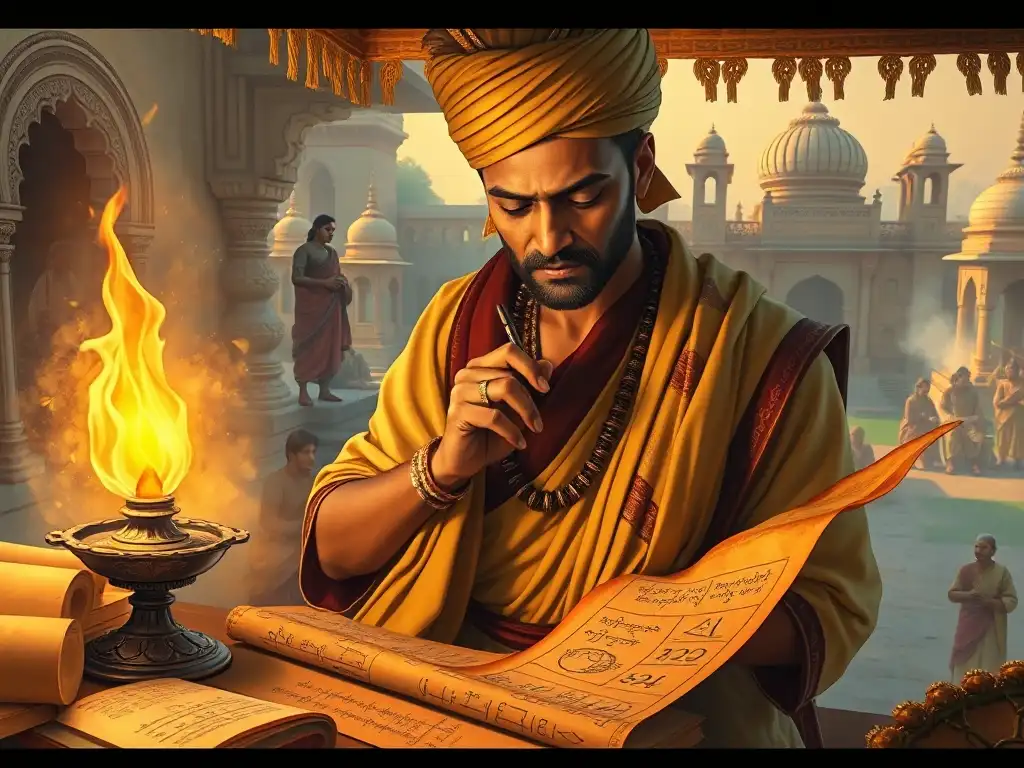
The transmission of ancient Indian numerical methods is a fascinating journey that highlights the interplay of culture, trade, and intellectual exchange. Indian mathematicians developed a sophisticated numerical system, including concepts such as zero, the decimal system, and various arithmetic operations. This knowledge did not remain confined within the subcontinent; rather, it traveled across regions, influencing various cultures and civilizations.
The spread of these numerical ideas was facilitated by several factors, including the movement of traders, scholars, and conquerors. Additionally, ancient texts, such as the Aryabhatiya by Aryabhata and the Brahmasphutasiddhanta by Brahmagupta, played a critical role in documenting and sharing these mathematical advancements. As these texts were translated and disseminated, they sparked interest and adoption of ancient Indian numerical methods in diverse contexts.
Routes of Mathematical Exchange: Trade and Cultural Interaction
Trade routes, particularly the Silk Road and maritime routes connecting India to the Middle East and beyond, served as vital conduits for the exchange of mathematical knowledge. Merchants, who often required advanced counting techniques for trade, facilitated the circulation of these ideas. As traders moved through different regions, they brought with them not just goods but also knowledge, including numerical methodologies.
Cultural interactions in places such as the Persian Empire also contributed to the exchange of mathematical concepts. Persian scholars translated Indian works into Arabic, preserving and enhancing the original ideas. This cross-pollination of knowledge between Indian and Middle Eastern scholars created a rich tapestry of mathematical thought, further propagating ancient Indian numerical methods.
Key Figures in the Dissemination of Ancient Indian Mathematical Concepts
Prominent mathematicians and astronomers from ancient India played crucial roles in transmitting their numerical knowledge. Figures such as Aryabhata, Brahmagupta, and Bhaskara II were instrumental in developing mathematical concepts that would later influence global mathematics.
- Aryabhata (476–550 CE): Introduced the concept of zero and the place-value system, laying the groundwork for modern arithmetic.
- Brahmagupta (598–668 CE): His work on arithmetic operations and rules for dealing with negative numbers was groundbreaking and later adopted in other cultures.
- Bhaskara II (1114–1185 CE): His contributions to algebra and the introduction of the concept of "cyclic" calculations further exemplified the depth of Indian mathematical thought.
These scholars not only influenced their contemporaries but also left a legacy that would resonate through the ages, providing a foundation for future mathematicians worldwide.
Influence on European Mathematical Thought During the Renaissance
The Renaissance, a period marked by a revival of interest in science and mathematics, saw an increased acknowledgment of ancient Indian numerical methods. The translation of Arabic texts into Latin introduced European scholars to Indian mathematics.
Prominent figures such as Fibonacci, who encountered Indian numerals during his travels, recognized the efficiency of the decimal system. His work, particularly in Liber Abaci (1202), popularized Hindu-Arabic numerals in Europe, effectively replacing the cumbersome Roman numeral system. This shift not only revolutionized mathematics in Europe but also paved the way for advancements in various scientific fields.
The Lasting Impact of Ancient Indian Numerical Methods on Modern Mathematics
The influence of ancient Indian numerical methods extends far beyond historical significance; it has shaped contemporary mathematical practices globally. The principles derived from these early systems continue to underpin various mathematical frameworks used today.
Legacy of Ancient Indian Mathematics in Contemporary Mathematical Practices
Modern mathematics owes a significant debt to ancient Indian contributions, particularly in the development of algorithms and computational techniques. The decimal system, which simplifies arithmetic operations, is a direct inheritance from ancient Indian practices. Furthermore, the concept of zero is fundamental to mathematics, serving as the cornerstone of number theory and algebra.
In practical applications, ancient Indian methods are reflected in computer science, where algorithms for calculations often echo the techniques established by Indian mathematicians. The enduring legacy of this rich mathematical heritage is evident in everything from basic arithmetic to advanced computational theories.
Integrating Ancient Indian Numerical Techniques in Modern Education
Incorporating ancient Indian numerical methods into modern educational curricula can enrich mathematical understanding and appreciation. Teaching these concepts can provide students with a historical context that enhances their grasp of mathematical principles. Methods such as the use of Vedic Mathematics, which includes techniques for mental calculation, can be particularly beneficial in developing problem-solving skills and numerical fluency.
Educational institutions around the world are beginning to recognize the value of this integration, promoting a more holistic view of mathematics that honors its diverse origins. By understanding the historical significance of these methods, students can appreciate the evolution of mathematical thought and its impact on contemporary practices.
Recognition of Ancient Indian Contributions in Global Mathematics
The recognition of ancient Indian contributions to mathematics is increasingly prominent in scholarly discourse. Academic research, historical analysis, and mathematical retrospectives have begun to highlight the pivotal role that Indian mathematicians played in shaping mathematical thought.
Organizations and conferences dedicated to the history of mathematics are now incorporating discussions on ancient Indian numerical methods, ensuring that their contributions are acknowledged within the broader narrative of global mathematics. As awareness grows, so does the appreciation for the rich intellectual heritage that ancient India has bestowed upon the world, solidifying its place in the history of mathematics.
Conclusion: The Enduring Influence of Ancient Indian Numerical Methods
The legacy of ancient Indian numerical methods continues to resonate throughout the world of mathematics today. From the introduction of the decimal system to the concepts of zero and negative numbers, these innovations laid foundational stones for modern arithmetic and calculus. Ancient Indian mathematicians such as Aryabhata and Brahmagupta not only developed theories and formulas but also engaged in practical applications that influenced trade, astronomy, and engineering. Their methodologies have transcended time, highlighting the enduring influence of ancient Indian numerical methods on global mathematics.
The propagation of these methods through trade routes and cultural exchanges has fostered a rich tapestry of mathematical understanding across civilizations. As modern scholars deepen their research into these ancient practices, it becomes increasingly clear how pivotal these contributions were in shaping contemporary mathematical thought. The principles established by ancient Indian mathematicians serve not only as historical milestones but also as vital tools for future explorations in mathematics and related fields.
Summary of Key Contributions and Their Relevance Today
- The Decimal System: Introduced by Indian mathematicians, the decimal system is integral to modern mathematics. Its place-value system allows for efficient computation and is foundational for various fields, including computer science and engineering.
- Concept of Zero: The introduction of zero as a numeral and a placeholder revolutionized mathematical calculations. It enabled the development of algebra and calculus, essential components of modern mathematics.
- Negative Numbers: Ancient Indian mathematicians like Brahmagupta made significant strides in understanding and utilizing negative numbers, a concept that is crucial for solving equations and understanding real-world phenomena.
- Algebraic Formulas: The early formulations of algebraic principles in texts such as the "Brahmasphutasiddhanta" provided a basis for future mathematical exploration. These foundational ideas continue to inform algebraic practices in contemporary mathematics.
The relevance of these contributions is reflected in the mathematics curricula worldwide, demonstrating a direct lineage from ancient Indian practices to current educational standards.
Future Research Directions in Ancient Indian Mathematics
The field of ancient Indian mathematics offers numerous avenues for future research. Scholars can explore:
- Comparative Studies: Investigating the interactions between ancient Indian mathematics and other mathematical traditions, such as those in Greece and China, can provide insights into the evolution of mathematical thought globally.
- Manuscript Analysis: Many ancient texts remain unexamined; thorough analysis of manuscripts like the "Siddhanta" and "Aryabhatiya" can uncover forgotten methods and theories, enriching our understanding of ancient numerical systems.
- Mathematics and Culture: Understanding how cultural, religious, and philosophical contexts influenced mathematical developments can provide a more holistic view of the contributions made by ancient Indian mathematicians.
- Educational Implications: Exploring how ancient Indian numerical methods can be integrated into modern teaching practices may help foster a deeper appreciation of mathematics among students today.
As researchers continue to delve into these areas, the impact of ancient Indian numerical methods on mathematics will undoubtedly become even more pronounced.
References for Further Reading on Ancient Indian Numerical Methods
Books and Articles on Ancient Indian Mathematics
- "Mathematics in India" by Kim Plofker: This comprehensive work discusses the development of mathematical ideas in India, tracing their origins and evolution through various historical periods.
- "The History of Mathematics: A Brief Course" by Roger L. Cooke: This book provides an overview of significant developments in mathematics, including the contributions from ancient India.
- "A History of Indian Mathematics" by C. T. Rajagopal: This text offers a detailed exploration of Indian mathematical achievements, focusing on notable figures and their contributions.
- Research articles in journals like the "Indian Journal of History of Science" provide scholarly insights into various aspects of ancient Indian mathematics.
Online Resources and Academic Journals on Historical Mathematics
- The Mathematics Genealogy Project: An online database that traces the lineage of mathematicians, including those from ancient India.
- The History of Mathematics Archive: This resource contains a wealth of information on historical mathematical texts and their contexts, including ancient Indian contributions.
- JSTOR and Google Scholar: Both platforms host numerous academic papers and articles focusing on ancient Indian mathematics, providing access to a range of scholarly research.
- Online courses and lectures: Platforms like Coursera and edX often feature courses on the history of mathematics, including modules dedicated to ancient Indian methods.
By engaging with these resources, readers can further their understanding of the rich legacy of ancient Indian numerical methods and their profound impact on mathematics as we know it today.
- Introduction to Ancient Indian Numerical Methods
- Historical Context of Numerical Methods in Ancient India
- Key Ancient Indian Numerical Methods and Their Features
- Comparison of Ancient Indian Numerical Methods with Other Global Systems
- The Transmission of Ancient Indian Numerical Knowledge
- The Lasting Impact of Ancient Indian Numerical Methods on Modern Mathematics
- Conclusion: The Enduring Influence of Ancient Indian Numerical Methods
- References for Further Reading on Ancient Indian Numerical Methods
- What are Ancient Indian numerical methods?
- How did Ancient Indian numerical methods influence other cultures?
- What is the significance of the decimal system in ancient India?
- Who were some key figures in the development of Ancient Indian numerical methods?
- How do modern mathematicians view Ancient Indian numerical methods?
Frequently Asked Questions
What are Ancient Indian numerical methods?
Ancient Indian numerical methods refer to the mathematical techniques developed in ancient India, which included concepts such as zero, decimal systems, and advanced calculations. These methods significantly influenced global mathematics.
How did Ancient Indian numerical methods influence other cultures?
The impact of Ancient Indian numerical methods reached various cultures through trade and scholarship, particularly during the medieval period. Scholars in the Islamic Golden Age and later European mathematicians adopted these techniques, enhancing their own mathematical systems.
What is the significance of the decimal system in ancient India?
The decimal system, developed in ancient India, is crucial as it introduced the concept of place value and zero, which simplified calculations and paved the way for modern mathematics. This innovation is considered one of the greatest contributions to global math.
Who were some key figures in the development of Ancient Indian numerical methods?
Key figures include Aryabhata, who made significant contributions to algebra and trigonometry, and Brahmagupta, known for his work on arithmetic and the rules for zero. Their writings laid the foundation for future mathematical advancements.
How do modern mathematicians view Ancient Indian numerical methods?
Modern mathematicians recognize Ancient Indian numerical methods as foundational to the development of mathematics. Their innovative approaches and theories continue to be studied and appreciated for their complexity and relevance in contemporary mathematics.
Final Reflection: The Enduring Legacy of Ancient Indian Numerical Methods
The significance of ancient Indian numerical methods is not just a relic of the past; it is a vibrant thread woven into the fabric of modern mathematics. Today, as we navigate an increasingly complex world driven by technology and data, the foundational principles established by ancient Indian mathematicians continue to resonate. Their innovative approaches to problem-solving and calculation have laid the groundwork for advancements that shape our daily lives. The brilliance of these methods is a testament to the timeless nature of human ingenuity.
The influence of ancient Indian numerical methods extends far beyond historical curiosity; it has profoundly shaped the cultural and intellectual landscape of mathematics globally. From the introduction of zero to the development of algorithms, these contributions have transformed how we understand and interact with numbers. As mathematician Carl Friedrich Gauss once said, "> Mathematics is the queen of the sciences, and number theory is its queen." This quote encapsulates the essence of how ancient Indian methods have not only enriched mathematical theory but have also inspired generations of thinkers and innovators across the globe.
As we reflect on the lessons of ancient Indian numerical methods, let us embrace the spirit of inquiry and creativity that characterized these early mathematicians. I invite you to explore how these timeless principles can be applied in your own life, whether in problem-solving, critical thinking, or fostering a deeper appreciation for the beauty of mathematics. By recognizing the impact of these ancient methods, we honor their legacy and empower ourselves to contribute to the ongoing story of mathematical discovery.
Unlock the Power of Ancient Math!
Thank you for exploring the incredible legacy of ancient Indian numerical methods with us! By delving into this fascinating topic, you've gained insight into how these techniques have shaped global mathematics. Now, it's time to take your newfound knowledge and make a difference in your own learning journey.
Here are some empowering actions you can take right now:
- Start using an ancient Indian method for solving mathematical problems in your studies or daily life. Whether it’s the concept of zero or Vedic mathematics, give it a try and see how it enhances your skills!
- Share your insights by discussing what you’ve learned with friends or in online communities. Spread the word about the rich history of mathematics and encourage others to incorporate these methods into their own educational practices.
- Explore further by visiting local libraries or online platforms to find resources or documentaries about ancient mathematics, and consider sharing your findings in educational forums or blogs.
What unique ways do you think ancient Indian numerical methods can influence modern mathematical thinking? Join the conversation in the comments below!