
Cultural Exchanges and Influence
Explore how ancient India shaped and connected with the wider world through cultural exchanges and influence 🌏✨. Discover the vibrant interactions, shared traditions, artistic fusion, and enduring ideas that linked Indian civilization with neighboring regions and inspired the development of societies across Southeast Asia. From trade and diplomacy to religion, language, art, and architecture, uncover the lasting global impact of ancient Indian history and its remarkable cultural legacy.
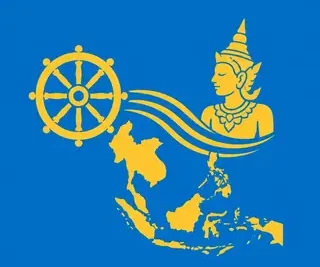 Influence on Southeast Asia
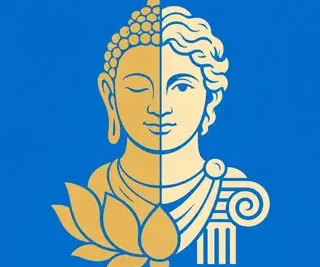 Artistic and Cultural Syncretism
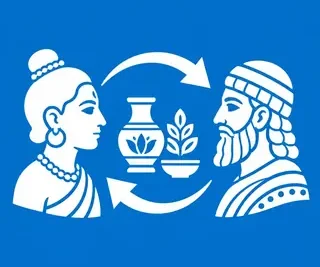 Interactions with Neighboring Civilizations
Cultural Exchanges and Influence in Ancient India reveals how ancient Indian civilization developed through sustained contact with neighboring regions and distant societies. From the Indus Valley Civilization to the Gupta Empire, merchants, monks, scholars, artists, and diplomats carried ideas, technologies, religious traditions, artistic styles, and languages across Asia.
This category explores the cultural exchange of ancient India and its lasting influence on South Asia and Southeast Asia. Discover how trade routes, maritime networks, migration, and religious missions connected India with Central Asia, Persia, the Roman world, Sri Lanka, and kingdoms across Southeast Asia. Learn how Buddhism, Hinduism, Sanskrit literature, Indian numerals, architecture, sculpture, and political traditions were adapted beyond the Indian subcontinent.
Rather than viewing influence as a one-way process, these articles examine cultural interaction and mutual exchange. Readers will find useful historical context on the movement of people and ideas, the blending of artistic traditions, and the regional transformation of Indian religious and cultural practices.
🌍 Interactions with Neighboring Civilizations
This subcategory examines ancient India’s relationships with neighboring civilizations, including Persia, Central Asia, Sri Lanka, and the Mediterranean world. Readers can explore evidence from archaeology, inscriptions, coins, literature, and trade records that demonstrates how commerce and diplomacy encouraged the exchange of goods, technologies, languages, and beliefs.
Expect clear explanations of ancient Indian trade routes, overland connections through the northwest, and maritime links across the Indian Ocean. Topics may include contacts between the Indus Valley Civilization and Mesopotamia, Indo-Greek cultural interaction, Kushan connections, and the movement of Buddhism and Indian scholarship across Asia.
🎨 Artistic and Cultural Syncretism
Artistic and cultural syncretism describes the creative blending of traditions that occurred when Indian communities interacted with foreign peoples. This section explores how sculpture, painting, architecture, religious imagery, decorative motifs, music, literature, and philosophical ideas changed through cross-cultural contact.
Readers can learn how Gandharan art combined Indian Buddhist subjects with Hellenistic artistic techniques, and how Persian, Central Asian, and regional influences shaped ancient Indian culture. These articles explain how cultural traditions were adapted rather than simply copied, creating new forms that reflected local identity and wider international connections.
🌏 Influence on Southeast Asia
This subcategory explores the spread and adaptation of Indian culture in Southeast Asia, including modern Indonesia, Cambodia, Thailand, Myanmar, Vietnam, Malaysia, and the Philippines. Through merchants, religious teachers, royal courts, and maritime trade, ideas from India influenced kingdoms such as Funan, Chenla, Srivijaya, Sailendra, and the Khmer Empire.
Discover the enduring impact of Indianization in Southeast Asia, including the adoption of Hinduism and Buddhism, Sanskrit inscriptions, Indian-style political concepts, temple architecture, epics such as the Ramayana and Mahabharata, and systems of writing. The focus remains on local adaptation, showing how Southeast Asian societies transformed Indian influences into distinctive regional cultures.
❓ Frequently Asked Questions
What was cultural exchange in ancient India?
Cultural exchange in ancient India was the movement and adaptation of ideas, religions, languages, artistic styles, technologies, goods, and customs between Indian communities and other civilizations. It occurred through trade, migration, diplomacy, pilgrimage, and education.
Which civilizations interacted with ancient India?
Ancient India interacted with the Indus Valley’s western neighbors, Mesopotamia, Persia, Central Asian societies, the Greek world, the Roman Empire, Sri Lanka, and Southeast Asian kingdoms. These relationships supported the exchange of luxury goods, coinage, religious beliefs, artistic forms, and scientific knowledge.
How did Buddhism spread beyond India?
Buddhism spread through monks, merchants, pilgrimage networks, royal patronage, and major centers of learning such as Nalanda. It traveled through Central Asia and along maritime routes to Sri Lanka, Southeast Asia, China, Korea, and Japan, where it developed distinctive local traditions.
What is Gandharan art?
Gandharan art is a Buddhist artistic tradition associated with the northwestern Indian subcontinent. It is known for combining Indian religious subjects with Hellenistic and Roman-inspired naturalism, including realistic human forms, wavy hair, and draped clothing.
How did ancient India influence Southeast Asia?
Ancient India influenced Southeast Asia through religion, Sanskrit language, scripts, royal traditions, literature, temple design, sculpture, and philosophical ideas. Southeast Asian societies actively adapted these influences, creating unique cultures rather than reproducing Indian civilization exactly.