
Interaction with Other Civilizations
Discover how ancient India connected with the wider world through Indian-Persian interactions, Chinese exchanges, and Greek relations 🌏. Explore the movement of ideas, trade, art, technology, religion, and diplomacy that shaped civilizations from the Indus Valley to the Gupta Empire. Uncover the enduring global influence of ancient Indian history and its vibrant cross-cultural connections.
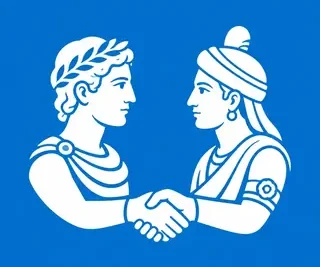
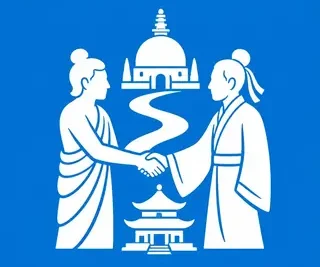
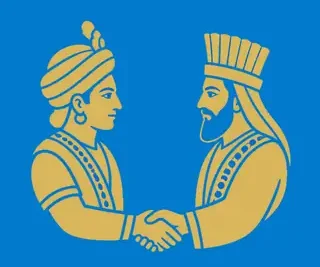
Interaction with Other Civilizations played a defining role in the development of ancient India. Through trade, diplomacy, migration, warfare, religious missions, and intellectual exchange, Indian kingdoms maintained lasting connections with Persia, China, Greece, and the wider ancient world. These relationships helped shape ancient Indian culture, commerce, religion, art, science, and political history.
From the movement of merchants along the Silk Roads to the spread of Buddhism across Asia, interactions with neighboring civilizations created a dynamic exchange of ideas and goods. Indian spices, textiles, precious stones, mathematics, astronomy, and philosophical traditions traveled abroad, while foreign artistic styles, administrative practices, technologies, and cultural influences entered the Indian subcontinent.
This category explores the major international connections of ancient India, including Indian-Persian relations, Indian-Chinese exchanges, and Indian-Greek relations. Readers will discover how empires, travelers, scholars, traders, and religious teachers connected India with some of the most influential civilizations of the ancient world.
🏺 Indian-Persian Interactions
The history of Indian-Persian interactions includes centuries of contact between the Indian subcontinent and the Persian world. These connections developed through the Achaemenid Empire, trade routes across the northwest, diplomatic relations, and later cultural exchanges between Indian kingdoms and Iranian societies.
Readers can expect to learn about Persian influence in northwest India, commercial links across Central Asia, and the exchange of languages, artistic traditions, administrative ideas, and religious concepts. This section also examines how Persian records and foreign travelers contributed to our understanding of ancient Indian history.
🐉 Indian-Chinese Exchanges
Indian-Chinese exchanges were especially important in the spread of Buddhism, scholarship, and cultural knowledge across Asia. Monks, pilgrims, translators, and merchants traveled between India and China, creating powerful intellectual and religious networks that connected Buddhist centers in India with communities in Central and East Asia.
This subcategory explores the journeys of famous Chinese pilgrims, the development of Buddhist translation projects, and the role of ancient universities such as Nalanda. Readers will also discover how China preserved valuable accounts of Indian society, education, politics, geography, and religious life.
🏛️ Indian-Greek Relations
Indian-Greek relations began through military encounters, trade, diplomacy, and the establishment of Indo-Greek kingdoms in the northwest Indian subcontinent. The campaigns of Alexander the Great brought India into closer contact with the Hellenistic world, while later Indo-Greek rulers created a distinctive cultural environment.
Readers can explore the development of Gandharan art, Greek influence on coinage and sculpture, diplomatic missions, and the exchange of knowledge in astronomy, medicine, and philosophy. This section highlights the cultural fusion that emerged when Indian and Greek traditions interacted across the ancient world.
❓ Frequently Asked Questions
What does interaction with other civilizations mean in ancient Indian history?
It refers to the political, economic, religious, cultural, and intellectual connections between ancient India and civilizations such as Persia, China, and Greece. These interactions occurred through trade, travel, warfare, diplomacy, migration, and religious missions.
How did ancient India interact with Persia?
India interacted with Persia through the northwest frontier, trade routes, imperial expansion, diplomacy, and cultural exchange. These connections influenced administration, art, language, commerce, and the historical records associated with ancient India.
Why were Indian-Chinese exchanges important?
Indian-Chinese exchanges helped spread Buddhism from India to China and encouraged the translation of religious and philosophical texts. Chinese pilgrims also recorded valuable information about Indian cities, universities, customs, and political conditions.
What was the impact of Greek influence on ancient India?
Greek contact contributed to the development of Indo-Greek kingdoms, realistic sculpture, new coinage designs, and Gandharan art. Greek and Indian scholars also exchanged ideas in astronomy, mathematics, medicine, and philosophy.
Which ancient trade routes connected India with other civilizations?
Land routes through the northwest connected India with Persia and the Mediterranean world, while maritime routes across the Arabian Sea and Indian Ocean linked Indian ports with western Asia. Overland and Central Asian routes also supported exchanges between India, China, and the Hellenistic kingdoms.