
The Significance of the Decimal System in Ancient Indian Math


Welcome to Ancient India History, where we embark on a fascinating journey through the vibrant tapestry of ancient Indian civilizations. In this exploration, we delve into the significance of the decimal system in ancient Indian math, a groundbreaking contribution that transformed mathematical understanding both in India and beyond.
As you uncover the profound impacts this system has had on the world, prepare to be captivated by stories of innovation and intellect that continue to resonate today. Join us as we unravel the mysteries of the past and celebrate the brilliance of an ancient culture that shaped the very foundations of mathematics!

The ancient Indian decimal system is a remarkable achievement that has had a profound impact on mathematics, not just in India but across the world. This numerical innovation, often regarded as one of the most significant contributions of ancient Indian civilization, laid the groundwork for modern mathematical practices. It embodies key principles of abstraction, organization, and simplicity, making complex calculations more accessible and efficient. In this article, we will delve into the significance of the ancient Indian decimal system, exploring its origins, development, and lasting influence on mathematics.
Introduction to the Ancient Indian Decimal System
Overview of the Decimal System
The decimal system, also known as the base-10 system, is a positional numeral system that uses ten digits (0-9) to represent numbers. Each digit's position indicates its value, which exponentially increases as one moves left from the decimal point. This system facilitates the representation of large numbers and simplifies arithmetic operations. The ancient Indian decimal system was a groundbreaking shift from earlier numerical systems, allowing for more complex mathematical computations and contributing to advancements in various scientific fields.
Historical Context of Ancient Indian Mathematics
The roots of the decimal system in ancient India can be traced back to the Vedic period (1500-500 BCE), where early mathematical concepts began to develop. Ancient texts, such as the Sulba Sutras, reveal a sophisticated understanding of geometry and measurement. The evolution of mathematical thought continued through the subsequent periods, with notable mathematicians like Aryabhata and Brahmagupta making significant strides in numerical representations and calculations. Their work laid the foundation for the eventual adoption and refinement of the decimal system, which would later influence various cultures through trade and intellectual exchange.
The Development of the Decimal System in Ancient India
Early Numerical Systems in Ancient India
Before the establishment of the decimal system, ancient Indian mathematicians utilized various numerical systems, including the use of tally marks and other primitive counting methods. These early systems, while functional, posed limitations in terms of efficiency and complexity. The transition from these rudimentary systems to a more structured approach marked a transformative period in Indian mathematics. The introduction of zero as a numeral in this context was particularly revolutionary, enabling the representation of empty values and facilitating calculations involving large numbers.
Transition to the Decimal System
The transition to the decimal system was gradual, influenced by cultural, economic, and intellectual developments. As trade and commerce expanded across ancient India, the need for more efficient mathematical tools became apparent. The adoption of the decimal system allowed for easier calculations in commerce, astronomy, and engineering. This period marked a significant leap in mathematical sophistication, characterized by the use of positional notation and the formal recognition of zero. The combination of these elements not only enhanced practical arithmetic but also paved the way for advanced mathematical concepts that would emerge in later centuries.
The ancient Indian decimal system stands as a testament to the ingenuity and intellectual prowess of Indian mathematicians. Its significance extends beyond mere numerical representation; it symbolizes a pivotal shift in mathematical thought that has shaped the course of mathematical history globally.
Key Features of the Ancient Indian Decimal System
The ancient Indian decimal system, also known as the base-ten system, is one of the most remarkable contributions to mathematics from ancient India. Its key features include:
- Base Ten Structure: The system is based on powers of ten, which simplifies arithmetic operations and calculations. This structure allows for easy manipulation of numbers.
- Use of Zero: The introduction of zero as both a placeholder and a number was revolutionary. It enabled the representation of large values and facilitated complex calculations.
- Position-Based Notation: Each digit's position within a number determines its value, which is fundamental to the place value system. For example, in the number 205, the '2' represents 200, while the '5' represents 5.
- Simplicity and Efficiency: The system allows for straightforward addition, subtraction, multiplication, and division. This efficiency made it accessible for trade, astronomy, and other fields requiring calculation.
Base Ten Concept and Its Importance
The base ten concept is foundational to the ancient Indian decimal system. This system operates on the principle that each digit's value is ten times that of the digit to its right. For instance, in the number 4,562:
- The '4' is in the thousands place (4,000).
- The '5' is in the hundreds place (500).
- The '6' is in the tens place (60).
- The '2' is in the ones place (2).
This structure is crucial because it allows for the efficient representation of large numbers and complex calculations. The significance of the base ten system extends beyond mathematics; it influenced various fields such as astronomy, commerce, and engineering in ancient India. The simplicity of the base ten system made it easier for scholars and traders to conduct transactions and communicate numerical ideas effectively.
Notation and Representation of Numbers
In ancient India, the notation for numbers was developed systematically. The use of symbols to represent numbers allowed for easier writing and communication. The numeral system included distinct symbols for the digits 1 through 9 and a special symbol for zero.
- Digits 1-9: Each digit had its own unique symbol, which made it easier to write and read numbers.
- Zero: The concept of zero was not just a placeholder but also represented the absence of a value. This duality made calculations more manageable.
For example, the numeral "123" was represented by combining the symbols for 1, 2, and 3, showcasing a clear and structured approach to numerical representation. This innovative notation system laid the groundwork for modern mathematics and influenced numeral systems around the world.
Place Value System in Ancient Indian Mathematics
The place value system is one of the most significant aspects of the ancient Indian decimal system. This system assigns value to a digit based on its position in a number, which is a critical innovation in mathematics.
- Positional Value: Each position in a number corresponds to a power of ten. The rightmost digit represents \(10^0\), the next \(10^1\), \(10^2\), and so on. This concept allows for the representation of large numbers without needing separate symbols for each value.
- Facilitating Arithmetic Operations: This system made addition, subtraction, multiplication, and division more straightforward and efficient. For instance, when multiplying, one can simply align the numbers based on their place value and perform the operations systematically.
The ancient Indian mathematicians were pioneers in formalizing this place value system, which later influenced other cultures and laid the foundation for the mathematics we use today.
Contributions of Ancient Indian Mathematicians
Ancient Indian mathematicians made significant advancements in mathematics, particularly in the development and refinement of the decimal system. Their contributions not only shaped the mathematical landscape of their time but also had a lasting impact on mathematics worldwide.
Notable Figures in Ancient Indian Mathematics
Several prominent mathematicians stand out in the history of ancient Indian mathematics:
- Aryabhata (476-550 CE): Known for his work in algebra and astronomy, Aryabhata introduced the concept of zero and positional notation, significantly advancing the numeral system.
- Brahmagupta (598-668 CE): He made notable contributions to arithmetic and algebra, including rules for calculating with zero and negative numbers.
- Bhaskara I (600-680 CE): He is credited with the first systematic use of the decimal place value system in his works, which laid the groundwork for future mathematicians.
These figures not only advanced mathematical principles but also influenced the teaching and application of mathematics across cultures.
Influence of Ancient Indian Mathematicians on the Decimal System
The influence of ancient Indian mathematicians on the decimal system is profound. Their innovations and teachings spread beyond India, impacting various regions, including the Islamic world and Europe.
- Transmission of Knowledge: The works of Indian mathematicians were translated into Arabic, which played a critical role in the spread of the decimal system to the Islamic Golden Age and later to Europe.
- Integration into Global Mathematics: The principles of the decimal system established by Indian mathematicians became integral to the mathematical systems developed in other cultures, shaping the course of mathematics globally.
This enduring legacy highlights the significance of the ancient Indian decimal system and its mathematicians in the broader context of mathematical history. Their contributions represent a crucial turning point that paved the way for modern numerical systems, making the ancient Indian decimal system significant in the evolution of mathematics.
The Significance of the Decimal System in Ancient Indian Math
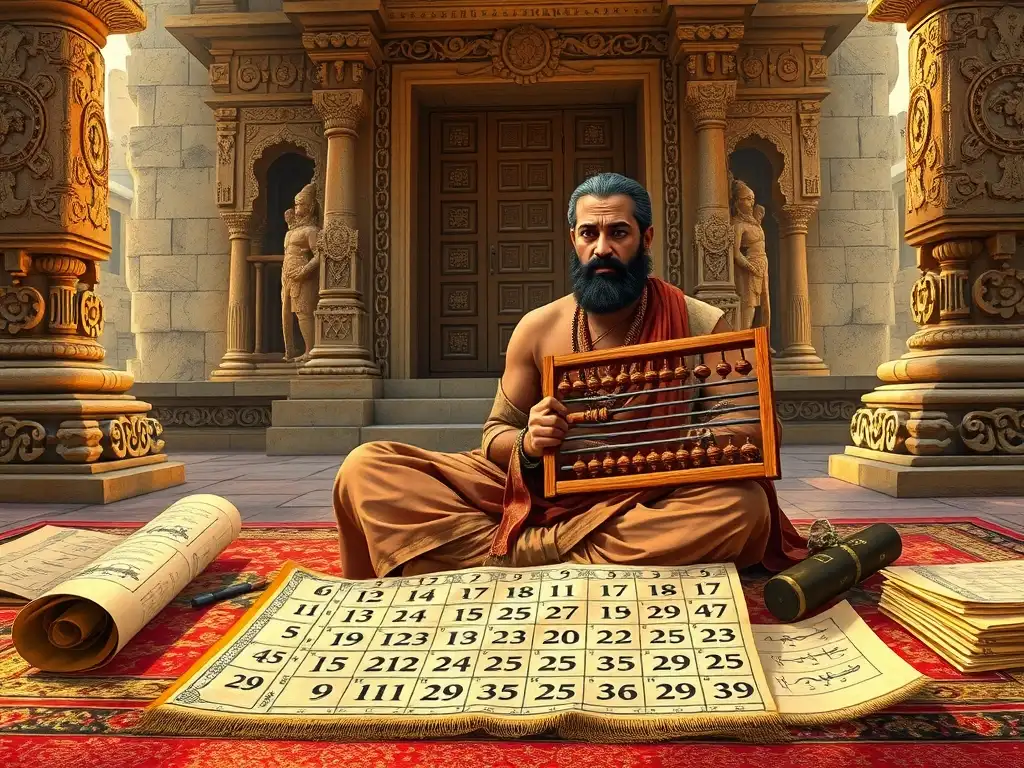
The decimal system, also known as the base-10 system, is one of the most significant mathematical contributions attributed to ancient Indian civilization. This system not only revolutionized numerical representation but also laid the groundwork for advanced mathematical concepts that would shape the future of mathematics. By enabling efficient calculations and fostering a better understanding of numerical relationships, the ancient Indian decimal system became a cornerstone of mathematical development, both in India and throughout the world.
Role in Advancing Mathematical Concepts
The ancient Indian decimal system introduced the concept of zero, which was a monumental breakthrough. This innovation allowed for the representation of large numbers and facilitated arithmetic operations such as addition, subtraction, multiplication, and division. The introduction of positional value—where the position of a digit determines its value—enhanced the complexity and efficiency of calculations.
Further, ancient Indian mathematicians, such as Aryabhata and Brahmagupta, utilized the decimal system to develop advanced concepts, including algebra and trigonometry. The systematic way of representing numbers simplified the calculation of square roots and cube roots, thus paving the way for more complex mathematical theories. The work of these mathematicians, grounded in the decimal system, contributed significantly to the field of mathematics, impacting education and scholarly pursuits in ancient India.
Impact on Trade and Commerce in Ancient India
The decimal system played a crucial role in the economic development of ancient India. As trade flourished, the need for an efficient numerical system became increasingly important. The ability to conduct complex calculations quickly and accurately facilitated trade transactions, making it easier for merchants to compute prices, taxes, and profits.
In bustling markets, the use of the decimal system allowed merchants to maintain precise records of their transactions. This precision in numerical representation helped establish trust in commercial dealings and contributed to the growth of trade networks within and beyond the Indian subcontinent. The decimal system thus served as a vital tool for economic expansion, enabling the rise of a sophisticated marketplace characterized by diverse goods and services.
Influence on Global Mathematical Practices
The significance of the ancient Indian decimal system extends beyond its origins. As Indian scholars traveled and shared their knowledge, the decimal system began to influence other cultures. The transmission of this system to the Arab world during the medieval period was particularly noteworthy. Scholars like Al-Khwarizmi adopted and adapted the Indian numeral system, integrating it into their own work.
The subsequent translation of these texts into Latin brought the decimal system to Europe, where it replaced the cumbersome Roman numeral system. This transition had lasting implications for mathematics and commerce, leading to the eventual development of modern mathematics. The widespread adoption of the decimal system in various cultures highlights its significance as a universal tool for mathematical expression and calculation.
Comparative Analysis of the Decimal System with Other Numerical Systems
The ancient Indian decimal system is often compared to other numerical systems, such as those used by the Egyptians and Babylonians. Understanding these differences provides insights into the advantages of the decimal system and its impact on mathematical thought.
Comparison with Egyptian and Babylonian Numerical Systems
The Egyptian and Babylonian numerical systems were primarily based on different bases—Egyptians used a base-10 system but lacked a positional value for zero, while Babylonians employed a base-60 system. The absence of a true zero in these systems resulted in more complex calculations and a limited ability to represent large numbers efficiently.
In contrast, the ancient Indian decimal system, with its inclusion of zero and positional notation, allowed for more straightforward arithmetic operations and the representation of infinitely larger numbers. This positional value system not only streamlined calculations but also made it easier to comprehend numerical relationships, fostering a deeper understanding of mathematics.
Advantages of the Decimal System Over Other Systems
The advantages of the ancient Indian decimal system over its contemporaries are manifold. Key benefits include:
- Simplicity and Efficiency: The base-10 system is inherently simpler, making it easier to learn and use for calculations.
- Positional Value: The use of positional notation allows for a more organized representation of numbers, reducing the potential for errors in calculations.
- Zero as a Placeholder: The introduction of zero enabled mathematicians to represent large numbers and conduct operations that were previously unmanageable.
- Facilitation of Advanced Mathematics: The decimal system laid the groundwork for algebraic concepts and complex calculations, advancing mathematical thought significantly.
These advantages not only highlight the significance of the ancient Indian decimal system but also underscore its enduring legacy in the evolution of mathematics worldwide.
Legacy of the Ancient Indian Decimal System
The ancient Indian decimal system, known for its innovative approach to numerical representation, has left an indelible mark on the world of mathematics. Originating around the 6th century CE, this system introduced the concept of place value, whereby the position of a digit within a number determines its value. This breakthrough simplified arithmetic operations and paved the way for more complex calculations. The decimal system allowed for the efficient notation of large numbers, which was crucial for trade, astronomy, and various scientific endeavors in ancient Indian civilization.
The legacy of this mathematical system extends beyond mere numerical representation; it significantly influenced various fields such as commerce, architecture, and astronomy. Ancient Indian mathematicians like Aryabhata and Brahmagupta utilized the decimal system in their groundbreaking works, contributing to advancements in algebra and trigonometry. The principles established by this system also facilitated the development of zero as a number, which was another revolutionary concept that arose in ancient India.
Influence on Later Mathematical Developments
The ancient Indian decimal system had a profound impact on the evolution of mathematics across cultures. Its principles were transmitted to the Islamic world through trade and conquest, where scholars such as Al-Khwarizmi adopted and expanded upon these ideas. The introduction of the decimal system into Arabic mathematics laid the groundwork for the modern numeral system we use today.
As the decimal system spread to Europe during the Middle Ages, it replaced the cumbersome Roman numeral system. This transition allowed for more straightforward calculations and contributed to the European Renaissance, which saw a resurgence in mathematical and scientific inquiry. The pervasive use of the decimal system in global mathematics underscores its significance as a foundational element in the development of modern numerical systems.
Recognition in Modern Mathematics
In contemporary mathematics, the ancient Indian decimal system is recognized as one of the most significant contributions to the field. The system's introduction of positional notation and the concept of zero revolutionized mathematics and facilitated the advancement of various other disciplines, including physics, engineering, and computer science.
Mathematicians worldwide acknowledge the contributions of ancient Indian scholars in texts and educational curricula. The decimal system's efficiency in representing numbers and performing calculations is taught universally, evidencing its lasting influence on mathematical education. Moreover, the historical journey of the decimal system is often a topic of study in mathematics history courses, highlighting its essential role in shaping the mathematical landscape as we know it today.
Conclusion
Summary of the Ancient Indian Decimal System Significance
The ancient Indian decimal system's significance lies in its revolutionary approach to mathematics, particularly through the introduction of place value and zero. This system not only facilitated advanced calculations in ancient India but also influenced subsequent mathematical developments worldwide. Its principles became foundational to various civilizations, ultimately shaping modern mathematics.
Reflection on Its Lasting Impact on Mathematics and Culture
The lasting impact of the ancient Indian decimal system transcends numerical representation; it reflects the cultural and intellectual advancements of ancient India. By enabling complex calculations and fostering scientific pursuits, this system played a crucial role in the progress of various fields.
The legacy of the decimal system is a testament to the ingenuity of ancient Indian mathematicians and serves as a reminder of the rich mathematical heritage that continues to inspire contemporary scholars and practitioners. As we navigate a world increasingly reliant on mathematics and technology, the significance of the ancient Indian decimal system remains a cornerstone of mathematical thought and cultural identity.
- Introduction to the Ancient Indian Decimal System
- The Development of the Decimal System in Ancient India
- Key Features of the Ancient Indian Decimal System
- Contributions of Ancient Indian Mathematicians
- The Significance of the Decimal System in Ancient Indian Math
- Comparative Analysis of the Decimal System with Other Numerical Systems
- Legacy of the Ancient Indian Decimal System
- Conclusion
- What is the ancient Indian decimal system?
- How did the decimal system impact mathematics?
- What were the contributions of ancient Indian mathematicians to the decimal system?
- Why is the decimal system considered significant in global mathematics?
- How does the ancient Indian decimal system compare to other numeral systems?
Frequently Asked Questions
What is the ancient Indian decimal system?
The ancient Indian decimal system is a numerical system that uses place value and base ten, allowing for more complex calculations and representations of numbers.
How did the decimal system impact mathematics?
The decimal system significantly advanced mathematics by facilitating arithmetic operations and enabling the development of algorithms that are foundational to modern mathematical practices.
What were the contributions of ancient Indian mathematicians to the decimal system?
Ancient Indian mathematicians, such as Aryabhata and Brahmagupta, made crucial contributions, including the introduction of zero as a number and the formalization of the decimal place value system.
Why is the decimal system considered significant in global mathematics?
The significance of the decimal system in global mathematics lies in its efficiency and versatility, which paved the way for the adoption of this system worldwide, influencing countless cultures and fields.
How does the ancient Indian decimal system compare to other numeral systems?
Compared to other numeral systems, the ancient Indian decimal system is unique because of its use of zero and place value, making it more practical for complex calculations than systems like Roman numerals.
Final Reflection: The Enduring Legacy of the Ancient Indian Decimal System
The significance of the ancient Indian decimal system resonates profoundly in our contemporary world, where mathematics is the backbone of technology, finance, and science. The innovations of ancient Indian mathematicians not only laid the groundwork for modern numerical systems but also exemplified the brilliance of human intellect in overcoming complex challenges. Their contributions remind us that the pursuit of knowledge is a timeless endeavor, and the systems we take for granted today are built upon the shoulders of giants.
The impact of the ancient Indian decimal system extends beyond mere numbers; it has shaped our cultural and intellectual landscape. As we navigate an increasingly digitized world, the principles established by these early mathematicians continue to influence our daily lives. The way we calculate, measure, and understand the universe is deeply intertwined with their legacy. Mathematics is the language with which God has written the universe.
– Galileo Galilei. This quote encapsulates the essence of how mathematical systems, like the decimal system, serve as a bridge to understanding the complexities of existence.
As we reflect on the lessons from the ancient Indian decimal system, I invite you to consider how these principles can inspire your own journey. Embrace the spirit of inquiry and innovation that characterized those early mathematicians. Whether you are a student, a professional, or a lifelong learner, let the significance of this mathematical legacy encourage you to explore, question, and contribute to the world around you. The past holds valuable insights that can guide us toward a brighter future, where the beauty of mathematics continues to unfold.
Unveil the Power of Ancient Indian Mathematics!
Thank you for exploring the remarkable world of the decimal system in ancient Indian mathematics! You've discovered how this brilliant system has shaped modern mathematics. Now, it’s time to take that inspiration further and transform your understanding of numbers.
Here are some actionable ways you can dive deeper into this fascinating subject:
- Explore ancient texts: Seek out translated versions of classical mathematical works and uncover the profound insights they offer.
- Start a community discussion: Share your newfound knowledge with friends or online groups interested in the history of mathematics—your insights could spark an engaging debate!
- Create a project: Develop a classroom activity or write a blog post to explain the significance of the decimal system to a wider audience.
What aspect of ancient Indian mathematics fascinates you the most, and how do you plan to share this knowledge with others?