
The Influence of Foreign Invasions on Property and Inheritance Laws


Welcome to Ancient India History, where we embark on a fascinating journey through the intricate tapestry of India's past. Here, we delve into the influence of foreign invasions on property and inheritance laws, uncovering how these encounters shaped legal frameworks that continue to resonate today. As we explore the myriad ways foreign powers intertwined with ancient Indian civilizations, you'll discover intriguing connections between culture, governance, and societal norms. Prepare to be captivated by the stories that lie ahead—your adventure into the depths of India's heritage begins now!
- Introduction to Foreign Invasions and Property Laws in India
- Historical Background of Foreign Invasions in India
- Impact of Foreign Invasions on Property Laws in India
- Comparative Analysis of Property and Inheritance Laws Pre- and Post-Invasion
- Case Studies of Specific Foreign Invasions and Their Legal Impact
- Conclusion: The Lasting Legacy of Foreign Invasions on Property Laws in India
- References and Further Reading on Foreign Invasions and Property Laws in India
-
Frequently Asked Questions
- What were the main foreign invasions that impacted property laws in ancient India?
- How did foreign invasions affect the inheritance laws in India?
- Were there any specific property laws introduced by foreign rulers?
- How did ancient Indian civilizations respond to these foreign property laws?
- What is the significance of understanding foreign invasions on today's property laws in India?
- Final Reflection: The Enduring Legacy of Foreign Invasions on Property Laws in India
- Unveil the Legacy: Take Action to Understand Your Heritage!
Introduction to Foreign Invasions and Property Laws in India
The intricate tapestry of India's legal history reveals a profound interplay between foreign invasions and the evolution of property and inheritance laws. As various civilizations flourished across the Indian subcontinent, from the Indus Valley to the Gupta Empire, they were often disrupted by external forces. These invasions not only impacted the socio-political landscape but also significantly influenced the legal frameworks governing property rights and inheritance practices.
Understanding this historical interaction is crucial for comprehending how foreign invasions shaped the legal systems that govern property laws in India today. This article delves into the complexities of these invasions and their enduring legacy on the country's legal heritage.
Overview of Foreign Invasions in Ancient India
Ancient India experienced a series of foreign invasions that profoundly altered its cultural and political landscape. Notable invasions include:
- Aryan Migration (c. 1500 BCE): The arrival of the Indo-Aryans introduced new social structures and customs, laying the groundwork for subsequent developments in property rights.
- Persian Invasions (c. 550 BCE): Under the Achaemenid Empire, Persian authority influenced administrative practices, including taxation and land ownership.
- Alexander the Great (c. 326 BCE): His invasion opened India to Hellenistic influences, which intermixed with indigenous practices.
- Mauryan Empire (c. 322-185 BCE): Although not an invasion in the traditional sense, the Mauryan Empire's expansion brought together diverse legal practices and property laws.
- Huns and Kushans (c. 1st to 5th centuries CE): These invasions resulted in significant cultural exchanges and adaptations within property laws.
These invasions contributed to a dynamic legal evolution as different cultures interacted and merged, leading to a complex legal landscape that varied across regions and communities.
Significance of Property and Inheritance Laws in Historical Context
Property and inheritance laws have always played a pivotal role in shaping societies. In ancient India, these laws were not merely legal frameworks but were deeply intertwined with social norms and cultural values. The primary significance of these laws includes:
- Social Structure: Property laws helped define social hierarchies and relationships within communities, influencing status and power dynamics.
- Economic Stability: Clear inheritance laws ensured economic continuity and stability, allowing families to preserve wealth across generations.
- Cultural Identity: The customs surrounding property and inheritance were often tied to religious beliefs and cultural practices, reflecting the identity of various communities.
- Adaptability: As foreign influences permeated Indian society, property laws exhibited remarkable adaptability, integrating new concepts while preserving traditional practices.
These historical laws provide essential insights into the socio-economic conditions of the time and underscore the impact of foreign invasions on local customs and legal systems.
Purpose of the Article: Exploring the Intersection of Invasions and Legal Systems
This article aims to explore the complex relationship between foreign invasions and the development of property and inheritance laws in ancient India. By examining specific historical events and their repercussions on legal frameworks, we hope to achieve several objectives:
- Analyze Historical Trends: Identify how different invasions influenced property laws and inheritance practices across various regions in India.
- Highlight Cultural Interactions: Showcase the interplay between indigenous customs and foreign legal traditions, illustrating how they shaped modern legal systems.
- Inform Contemporary Understanding: Provide a historical context that aids in understanding current property laws in India, tracing their roots back to ancient practices influenced by invasions.
Through this exploration, we seek to enrich the reader's understanding of how historical forces have shaped contemporary legal frameworks regarding property and inheritance in India.
Historical Background of Foreign Invasions in India
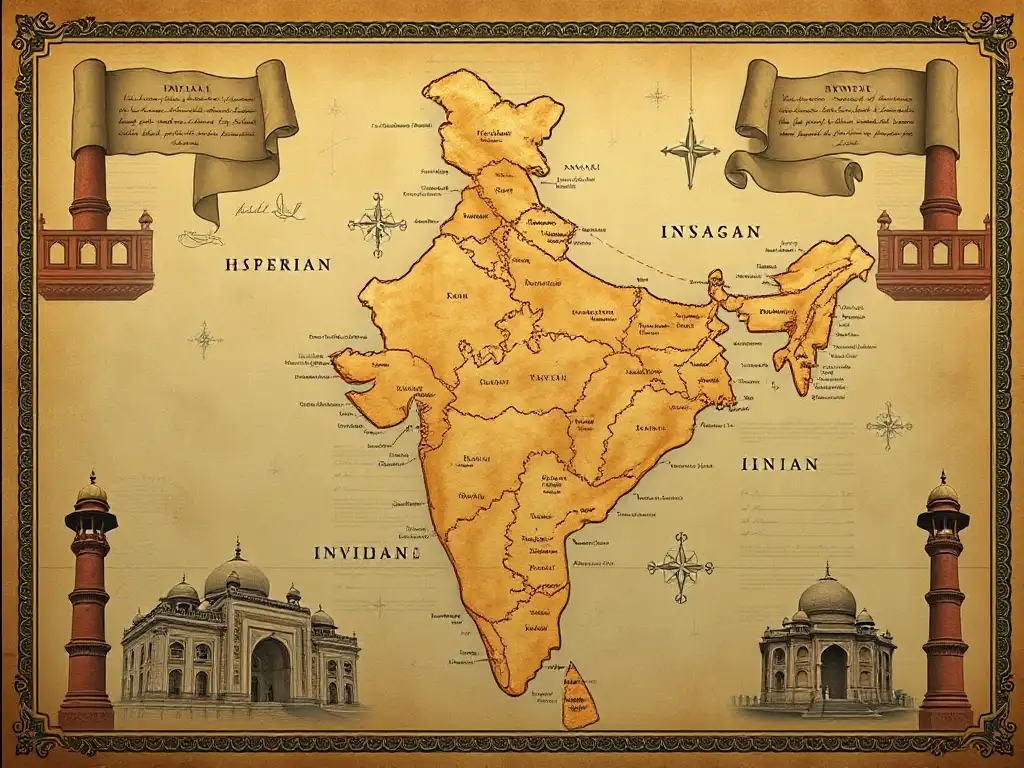
The history of India has been significantly shaped by a series of foreign invasions that brought profound changes to its socio-political landscape, including the property and inheritance laws. The complex tapestry of Indian civilization has been woven from diverse threads introduced by these invaders, who not only altered the governance structures but also influenced cultural norms and legal practices. Understanding the historical context of these invasions is crucial to grasping their impact on property laws in India.
Major Foreign Invasions Impacting Indian Society
Alexander the Great's Invasion
Alexander the Great's incursion into India in 326 BCE marked one of the earliest significant foreign invasions. His campaign introduced the concept of Hellenistic influence on Indian governance and culture. While Alexander's stay was relatively short-lived, his invasion stimulated interactions between Greek and Indian philosophies, arts, and sciences.
- Impact on Property Laws: The introduction of Greek administrative practices led to a shift in land ownership concepts. While traditional Indian systems were predominantly agrarian and communal, the Greek influence began to introduce notions of individual property rights, which subsequently permeated through various Indian kingdoms.
The Maurya and Gupta Empires' Encounters
The Maurya Empire (322–185 BCE) and Gupta Empire (circa 320–550 CE) were remarkable periods in Indian history characterized by extensive trade and cultural exchanges, including foreign invasions from regions like Central Asia. These encounters brought about a fusion of ideas and practices.
- Impact on Property Laws: The Mauryan and Gupta rulers adopted and adapted elements from conquered territories, leading to a more structured legal framework regarding property. The Arthashastra, authored by Kautilya, outlines various strategies regarding property management, taxation, and inheritance, reflecting the influence of earlier foreign interactions.
Islamic Conquests and Their Influence
The arrival of Islamic invaders, starting with Muhammad bin Qasim's conquest of Sind in the early 8th century, initiated a profound transformation in Indian society. The Delhi Sultanate and later the Mughal Empire established new administrative practices and legal frameworks.
- Impact on Property Laws: Islamic law (Sharia) introduced new inheritance principles, notably the concepts of wasiyat (will) and mirath (inheritance). These laws significantly altered existing practices by emphasizing equitable distribution among heirs, particularly favoring male descendants while ensuring women's rights to a portion of the inheritance. This period also saw the codification of laws under various rulers, further entrenching these principles into the fabric of Indian property law.
The British Colonial Rule
The British colonial period (1858–1947) brought about radical changes to India's property laws, influenced by British legal principles and practices. The introduction of the British legal system marked a departure from traditional laws, significantly impacting the way property was owned and inherited.
- Impact on Property Laws: The British implemented a system that favored land revenue collection, leading to the establishment of land tenure systems such as the Zamindari system. This not only affected land ownership but also altered inheritance practices, as property became increasingly viewed as a commodity subject to taxation rather than a communal asset. The introduction of personal law codes for different religious communities further complicated inheritance laws, creating a patchwork of regulations based on religion and custom.
Overall, the influence of foreign invasions on property laws in India has been multifaceted, with each wave of invaders leaving indelible marks on the legal landscape. The evolution of these laws reflects the dynamic interplay of cultural and legal traditions, ultimately shaping the contemporary legal framework in India.
Impact of Foreign Invasions on Property Laws in India

Changes in Property Ownership Structures
The landscape of property laws in India underwent significant transformations due to various foreign invasions, notably during the periods of the Persian incursions, Alexander's campaign, and the subsequent Islamic conquests. These invasions introduced new property ownership structures that contrasted starkly with the traditional systems prevalent in Indian society.
Transition from Traditional to Foreign Land Tenure Systems
Traditional Indian property laws were largely influenced by agrarian practices, where land was often held communally or through feudal systems. With the arrival of foreign powers, particularly the Mughals, a shift occurred towards centralized land tenure systems. The Mughal Empire implemented a system known as Zamindari, where land revenue was collected by landlords (Zamindars) on behalf of the state. This system not only altered ownership dynamics but also paved the way for the emergence of a class of landlords, fundamentally changing the socio-economic fabric.
The British colonial period further revolutionized property ownership through the introduction of the Permanent Settlement of 1793. This policy formalized land ownership, making Zamindars the absolute owners of land, which disrupted previous communal practices. As a result, the rights of peasants were considerably diminished, leading to a more fragmented and privatized land ownership structure.
Legal Reforms Introduced by Invading Powers
Each foreign invasion brought about distinct legal reforms impacting property laws. For instance, the Mughals codified existing laws and introduced new regulations that recognized the rights of landlords, which were further complicated by the diverse legal customs across regions. The Maratha Empire also contributed to this evolution by implementing their own systems of land management.
During British rule, a series of legal reforms were introduced, such as the Indian Succession Act of 1925, which standardized inheritance laws and property transfer processes across different communities, including Hindus and Muslims. These reforms were aimed at consolidating legal authority and establishing a uniform legal framework, which often disregarded traditional practices and local customs.
Influence on Inheritance Laws
The impact of foreign invasions extended beyond property ownership to deeply influence inheritance laws in India. These changes were often reflective of the blending of diverse cultural practices and legal systems.
Shifts in Inheritance Practices Due to Cultural Integration
With the arrival of invaders, there was a notable shift in inheritance practices influenced by foreign cultural integration. For example, Islamic law, which emphasized the principles of Sharia, introduced concepts such as Haq (right) and Mirath (inheritance), which were distinct from Hindu inheritance practices governed by Mitakshara and Dayabhaga systems.
As a result, the integration of these practices led to a hybridization of inheritance laws, where traditional Hindu practices coexisted with Islamic inheritance principles, particularly in regions with significant Muslim populations. This blending created a complex legal landscape where inheritance rights became subject to the religious affiliations of individuals, complicating property claims and succession issues.
The Role of Religious and Cultural Beliefs
Religion played a crucial role in shaping inheritance laws during and after foreign invasions. The Islamic conquests led to an increased emphasis on religious texts as legal sources for inheritance matters, which often conflicted with existing Hindu customs.
Additionally, the colonial administration's recognition of personal laws based on religion further entrenched these divisions. For instance, the Hindu Succession Act of 1956 aimed to amend traditional laws, granting equal rights to daughters in inheritance, a significant departure from previous practices influenced by patriarchal norms often reinforced by foreign rule.
The interplay of these cultural and religious dynamics illustrates the profound influence of foreign invasions on property and inheritance laws in India, shaping a legal framework that continues to evolve even today.
Comparative Analysis of Property and Inheritance Laws Pre- and Post-Invasion

The history of property and inheritance laws in India has been significantly shaped by various foreign invasions, which introduced new legal concepts and influenced traditional practices. This comparative analysis explores the characteristics of property and inheritance laws before and after these invasions, highlighting the transformations that occurred as a result.
Pre-Invasion Property and Inheritance Laws
Characteristics of Ancient Indian Land Ownership
In ancient India, land ownership was primarily characterized by communal and individual rights. The concept of land ownership was deeply intertwined with social and religious norms, leading to a complex system of land tenure. Key features of this system included:
- Common Land Use: Villages often shared lands for cultivation, and land was considered a community asset rather than strictly owned by individuals.
- Rights of the King: The king held ultimate ownership of all land, granting rights to individuals or families based on loyalty and service.
- Religious Significance: Land was often bequeathed through religious rituals and was linked to the caste system, where certain castes had specific rights over land.
Traditional Practices of Inheritance
Inheritance practices in ancient India were predominantly governed by customary laws, which varied by region and community. The following points illustrate the traditional inheritance practices:
- Male Preference: Inheritance typically favored male heirs, with sons receiving a larger share than daughters. This practice was rooted in the patriarchal structure of society.
- Joint Family System: Property was usually held collectively within a joint family, allowing for shared management and use of resources.
- Gift and Bequest: Families often utilized gifts and bequests to transfer property during one's lifetime, reinforcing familial ties and support.
Post-Invasion Changes in Property and Inheritance Laws
The arrival of various foreign invasions, including the Persians, Greeks, and later the Mughals, introduced new legal frameworks and practices that significantly altered the landscape of property and inheritance laws.
Adoption of Foreign Legal Concepts
With the influx of foreign powers, certain legal concepts began to permeate Indian society, leading to notable changes in property laws:
- Individual Ownership: Unlike the communal practices, foreign influences promoted the idea of individual land ownership, allowing for more personal control over property.
- Legal Documentation: The introduction of formal legal documentation and contracts became prevalent, providing a basis for property transactions that was previously informal.
- Codification of Laws: The necessity for codification arose from the diverse legal traditions, leading to the establishment of more structured property laws that drew from both Indian and foreign legal systems.
The Hybridization of Legal Practices
The interaction between indigenous customs and foreign legal systems resulted in a hybridization of practices that reshaped inheritance laws:
- Incorporation of Islamic Law: Following the Mughal invasion, Islamic inheritance laws were integrated into local practices, introducing concepts such as fixed shares for women and the right to inherit property in specific circumstances.
- Regional Variations: The hybridization led to diverse practices across different regions, where local customs coexisted with foreign legal principles, creating a mosaic of property laws.
- Women's Rights: Over time, the evolving legal landscape began to acknowledge women's rights to inherit property, although this was often contingent upon the application of specific legal frameworks.
The influence of foreign invasions on property laws in India reflects a complex interplay between tradition and change, resulting in a dynamic legal environment that continues to evolve. Understanding this historical context is crucial for grasping the current legal framework governing property and inheritance in India today.
Case Studies of Specific Foreign Invasions and Their Legal Impact

Case Study: The Mughal Empire's Influence on Land Revenue Systems
The Mughal Empire, which flourished from the early 16th to the 18th century, had a profound impact on land revenue systems in India, significantly altering property laws and inheritance practices. The introduction of a systematic revenue collection framework, known as the Zabt system, marked a pivotal shift in how land was owned and taxed.
Key Features of the Zabt System:
- Centralized Revenue Collection: The Mughal administration established a centralized system of revenue collection that allowed for efficient taxation of agricultural produce. This was a departure from previous practices, where local chieftains exercised significant control over land and taxation.
- Land Classification: Under the Zabt system, lands were classified according to productivity, which determined the tax rate. This classification system created a sense of land ownership, as cultivators were now recognized as proprietors of their land, rather than merely tenants of local rulers.
- Inheritance Practices: The Mughal influence led to the establishment of clearer inheritance laws, which often favored male heirs. This change resulted in a transition from communal land ownership to individualized property rights, affecting how inheritance was perceived and practiced among various communities.
The Mughal legal framework not only influenced land ownership but also set the stage for future legal reforms. The codification of property rights during this era contributed to the evolution of property laws in India, laying the groundwork for later developments under British rule.
Case Study: British Legal Reforms and Their Effects on Indian Property Laws
The British colonial period brought about significant legal reforms that reshaped property laws in India, with lasting effects on inheritance practices and land ownership. The introduction of the British legal system sought to standardize and codify laws, affecting various aspects of property and inheritance.
Impact of British Legal Reforms:
- Introduction of the Transfer of Property Act (1882): This act established comprehensive guidelines for the transfer of property, including rules for sale, mortgage, lease, and exchange. It aimed to create a clear legal framework for property transactions, which had significant implications for property ownership and inheritance.
- Codification of Inheritance Laws: The British made efforts to codify Hindu and Muslim personal laws regarding inheritance. The Hindu Succession Act (1956) and the Muslim Personal Law (Shariat) Application Act (1937) were pivotal in determining how property was inherited, emphasizing the rights of women and ensuring legal clarity.
- Land Tenure Systems: The British introduced various land tenure systems, such as the Permanent Settlement in Bengal, which altered the relationship between landowners and tenants. This system often favored zamindars (landlords) and marginalized the rights of tenants, affecting inheritance as property became concentrated in fewer hands.
The British legal reforms had a dual effect: while they sought to modernize and standardize property laws, they also entrenched inequalities in land ownership and inheritance practices. The ramifications of these changes are still felt today in the context of property laws in India, showcasing the enduring legacy of foreign invasions on the legal landscape.
Understanding these case studies sheds light on how foreign invasions, specifically the Mughal and British periods, significantly influenced property laws and inheritance practices in India, highlighting the complex interplay of culture, governance, and legal frameworks that have shaped India's historical landscape.
Conclusion: The Lasting Legacy of Foreign Invasions on Property Laws in India

The history of property and inheritance laws in India has been significantly shaped by various foreign invasions that occurred over the centuries. These invasions not only disrupted the socio-political landscape but also instigated profound changes in legal frameworks that governed property rights and inheritance practices. Understanding these changes is essential to grasp the complexities of contemporary property laws in India.
Summary of Key Changes in Property and Inheritance Laws
The impact of foreign invasions on property laws can be categorized into several key changes:
- Introduction of New Legal Concepts:
- The arrival of foreign rulers brought with it different legal systems and concepts of property ownership. For instance, the Mughals introduced the Jagir system, where land revenue was collected by appointed officials, thereby altering traditional land ownership structures.
- Shift from Common Law to Codified Laws:
- The British colonial period saw the introduction of codified laws, such as the Transfer of Property Act (1882) and the Indian Succession Act (1925). These laws replaced many customary practices, leading to a more standardized approach to property and inheritance.
- Gender and Inheritance Rights:
- In many ancient societies, inheritance was largely patrilineal. However, foreign invasions and subsequent legal reforms began to challenge these norms. For example, the Hindu Succession Act of 1956 aimed to grant equal rights to women in inheritance, influenced by changing societal values post-colonization.
- Recognition of Land Rights:
- The British introduced the concept of land tenure, which recognized individual ownership of land, contrasting sharply with the communal land rights prevalent in many indigenous cultures. This shift resulted in increased disputes over land ownership and rights, as legal frameworks became more complex.
The following table summarizes some of these key changes over time:
| Period | Key Changes in Property Laws |
|---|---|
| Pre-Invasion Era | Primarily customary laws governing property and inheritance. |
| Mughal Era | Introduction of the Jagir system; shifts in land revenue collection. |
| British Colonial | Codification of laws; establishment of the Transfer of Property Act. |
| Post-Independence | Legal reforms promoting gender equality in inheritance laws. |
Reflection on the Ongoing Influence of Historical Invasions
The influence of historical foreign invasions continues to resonate in contemporary India. The legal landscape remains a tapestry woven from diverse traditions and foreign elements, and this complexity can often lead to challenges in property disputes.
- Cultural Hybridization: The amalgamation of different legal systems has led to a hybrid culture of property laws, where indigenous customs coexist with codified statutes. This creates a unique legal environment that can be both beneficial and confusing for property owners.
- Legacy of Disputes: The historical shift from communal to individual land ownership has led to ongoing disputes, particularly in agrarian contexts where land is not only an economic asset but also holds cultural significance. The remnants of feudal structures can still be observed today, particularly in rural areas.
- Modern Legal Reforms: Contemporary legal reforms are often influenced by the historical context of invasions. For instance, current debates regarding land acquisition and rights of indigenous communities reflect historical injustices rooted in earlier foreign policies.
The legacy of foreign invasions on property laws in India is profound and multifaceted. It has led to significant legal transformations that continue to influence current property and inheritance laws, highlighting the need for an understanding of historical contexts when navigating contemporary legal challenges. The interplay of tradition and modernity in India's legal framework remains a vital area of study for those interested in the evolution of property rights in the country.
References and Further Reading on Foreign Invasions and Property Laws in India

Understanding the complex evolution of property and inheritance laws in India, particularly in the context of foreign invasions, requires a thorough exploration of both historical and contemporary sources. This section provides an overview of essential literature that sheds light on the influence of various invasions on the legal frameworks that govern property rights in India.
Suggested Books and Articles
-
"The History of Indian Law" by A. P. Ghosh
This comprehensive text discusses the evolution of legal systems in India, including extensive insights into property laws influenced by foreign powers.
-
"Foreign Invasions and Their Impact on Indian Society" by R. K. Sharma
This book examines the socio-legal changes brought about by various foreign invasions, including the Mughals and British, with a focus on property rights and laws.
-
"The Inheritance of Property in Ancient India" by S. P. Gupta
Gupta's work dives into the traditional inheritance practices before foreign influences altered them significantly, providing a historical perspective.
-
"Colonial Law and its Impact on Indian Society" by M. B. Nair
This article explores how British colonial rule restructured property laws in India and how these changes were influenced by earlier invasions.
-
"Legal Pluralism in India" by K. V. Rao
This resource addresses how multiple legal systems coexisted in India due to various invasions and the implications for property laws.
-
“Legal History of India: A Research Guide” by D. K. Joshi
This guide offers a comprehensive look at the historical context of Indian law, including property and inheritance laws shaped by foreign invasions.
Notable Legal Texts from Ancient India
The legal landscape of ancient India was significantly influenced by various texts that codified property and inheritance laws. Here are some notable legal texts that provide insight into these laws:
- Manusmriti (Laws of Manu)
- Overview: One of the most important ancient legal texts, Manusmriti outlines the rules of personal conduct, including inheritance laws. It reflects how invasions altered social norms and property rights.
- Key Provisions: It discusses the roles of men and women in property ownership and inheritance, indicating a shift in dynamics with foreign influences.
- Yajnavalkya Smriti
- Overview: This text is noted for its more progressive stance on property rights, especially concerning women, compared to Manusmriti. It highlights the transition in property laws post-invasions.
- Key Provisions: The text elaborates on the distribution of property and the rights of heirs, showcasing influences from various foreign rulers.
- Narada Smriti
- Overview: Narada Smriti is a critical legal text that covers various aspects of civil law, including property rights and inheritance. Its provisions reflect the impact of the socio-political environment shaped by invasions.
- Key Provisions: It emphasizes the importance of equitable distribution of property and offers guidelines that were influenced by both local customs and foreign practices.
- Kautilya's Arthashastra
- Overview: While primarily a treatise on statecraft, Arthashastra includes significant discussions on property rights, taxation, and economic policies, providing context on how invasions affected these areas.
- Key Provisions: It underscores the importance of maintaining stability in property laws amidst foreign conflicts and invasions.
The exploration of these texts allows for a deeper understanding of how foreign invasions have historically influenced property laws in India, shaping the legal framework that governs property and inheritance to this day.
Frequently Asked Questions
What were the main foreign invasions that impacted property laws in ancient India?
The main foreign invasions included those by the Mughals, Greeks, and Turks, each of which brought changes to property laws and societal structures, influencing land ownership and inheritance practices.
How did foreign invasions affect the inheritance laws in India?
Foreign invasions introduced new legal frameworks and customs that often blended with indigenous practices, leading to a diverse inheritance system that reflected both local and foreign influences.
Were there any specific property laws introduced by foreign rulers?
Yes, many foreign rulers implemented property laws that emphasized state control over land, such as the Zamindari system introduced by the Mughals, which significantly altered land ownership dynamics.
How did ancient Indian civilizations respond to these foreign property laws?
Ancient Indian civilizations often adapted and integrated foreign property laws into their own systems, leading to a hybrid legal culture that retained traditional aspects while accommodating new influences.
What is the significance of understanding foreign invasions on today's property laws in India?
Understanding the impact of foreign invasions on property laws helps in comprehending the historical evolution of legal frameworks in India, which can guide current property rights discussions and reforms.
Final Reflection: The Enduring Legacy of Foreign Invasions on Property Laws in India
The intricate relationship between foreign invasions and property laws in India remains profoundly relevant today. As we navigate an increasingly globalized world, the historical shifts in property and inheritance laws shaped by foreign influences remind us of the complexities that define our legal landscape. The echoes of these invasions are not merely relics of the past; they continue to inform contemporary legal practices and societal norms, illustrating that history is not just a series of events but a living narrative that shapes our present.
Cultural and social dynamics have been significantly influenced by the evolution of property laws, which reflect the power struggles and adaptations that have occurred over centuries. The way property is owned, inherited, and transferred in India today is a testament to the resilience and adaptability of its legal framework in the face of foreign invasions. > “History is not just what happened; it is how we remember it.” This quote encapsulates the essence of our understanding of property laws, highlighting the importance of recognizing historical influences while shaping future legal practices.
As we reflect on the lessons drawn from the historical context of foreign invasions and their impact on property laws, I invite you to consider your own relationship with these themes. How do the legacies of the past inform your understanding of property and inheritance today? By engaging with this history, we can foster a deeper appreciation for the complexities of our legal systems and advocate for a more equitable future. Let us carry these insights forward, ensuring that the lessons of history guide our actions and decisions in the present and beyond.
Unveil the Legacy: Take Action to Understand Your Heritage!
Thank you for exploring the intricate world of how foreign invasions have shaped property and inheritance laws in ancient India. Your curiosity is essential for grasping the rich tapestry of our history and its relevance today. Now, let’s take that knowledge and put it into action!
- Explore further: Research a specific foreign invasion and its impact on property laws. Share your findings with friends or family to spark discussions about the lasting effects of history!
- Engage with our community: Join our forums dedicated to ancient laws and share your insights or questions. Your thoughts can ignite valuable conversations!
- Dive into resources: Discover recommended books or documentaries about the judicial evolution of ancient India. These resources can significantly enrich your understanding!
Which aspects of ancient property or inheritance laws resonate most with your understanding of justice and fairness in today's world?