
The Fascinating Applications of Ancient Indian Numerical Systems in Daily Life


Welcome to Ancient India History, where we embark on a journey through time to uncover the rich tapestry of civilizations that flourished on the Indian subcontinent. In our latest exploration, we delve into the fascinating applications of ancient Indian numerical systems in daily life, revealing how these innovative concepts not only shaped mathematical thought but also influenced various aspects of culture and commerce.
Prepare to be intrigued as we unravel the mysteries of these ancient methods, sparking your curiosity to learn more about their significance and legacy. Join us as we illuminate the remarkable contributions of ancient India to the world of mathematics and beyond!
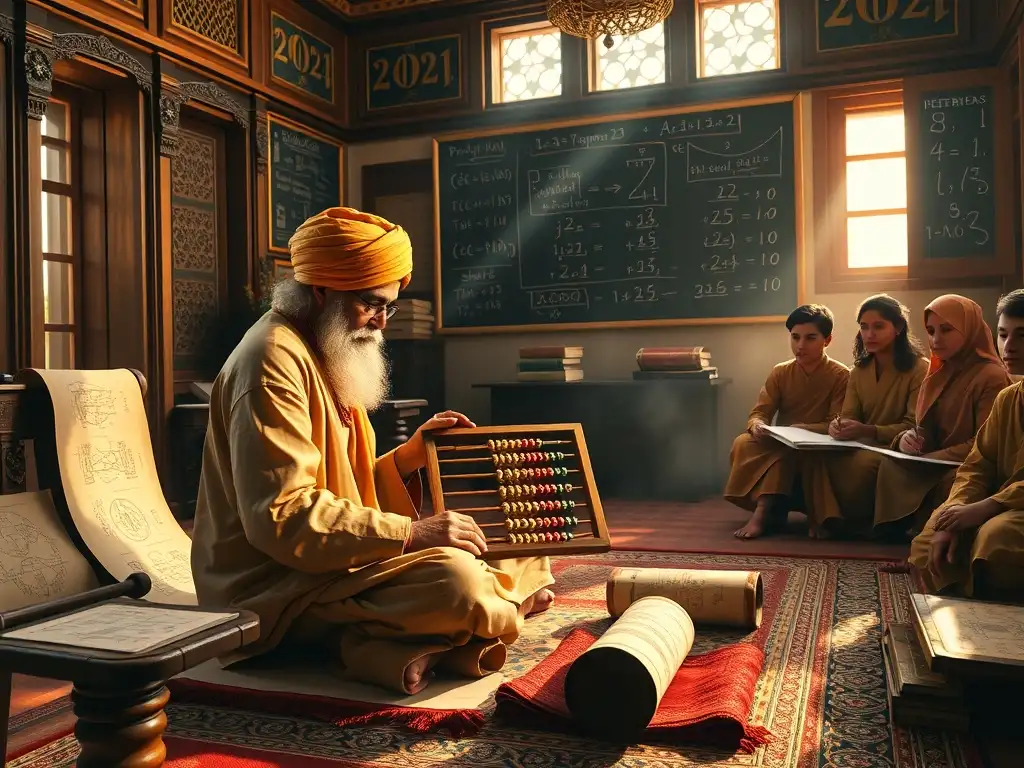
Introduction to Ancient Indian Numerical Systems
Ancient Indian numerical systems represent a remarkable chapter in the history of mathematics, showcasing the ingenuity and innovation of early Indian scholars. These systems not only laid the foundation for contemporary numerical concepts but also played a pivotal role in everyday life across various domains such as commerce, astronomy, and architecture.
Understanding the applications of these ancient numerical systems offers valuable insights into how they shaped the social and cultural landscapes of their time. By exploring the intricate methods and philosophies behind these numerical systems, we gain a deeper appreciation for their significance in the evolution of mathematics and their lasting impact on the world.
Overview of Numerical Systems in Ancient India
The numerical systems in ancient India were diverse and evolved over centuries, culminating in sophisticated methods that addressed the complex needs of society. Key features of these systems included:
- Decimal System: Ancient Indians conceptualized the base-10 system, which is foundational to modern mathematics.
- Place Value Notation: This innovative approach allowed for efficient representation of large numbers, enhancing computation accuracy.
- Zero Concept: The introduction of zero as a numeral transformed mathematical calculations and theoretical frameworks.
These features collectively contributed to a robust mathematical framework that facilitated advancements in various fields, making daily tasks more manageable and efficient.
Importance of Ancient Indian Mathematics in Daily Life
The applications of ancient Indian numerical systems were profound and far-reaching. They influenced multiple aspects of daily life, including:
- Trade and Commerce: Merchants utilized numerical systems for transactions, pricing, and record-keeping, ensuring accuracy and transparency in business dealings.
- Astronomy and Timekeeping: The mathematical principles were applied to create calendars and predict celestial events, essential for agricultural planning and religious observances.
- Architecture and Engineering: Ancient builders employed mathematical calculations for constructing temples, palaces, and public works, showcasing the practical application of numerical systems in design and construction.
These examples illustrate how ancient Indian numerical systems were not merely theoretical but were integral to the daily functioning of society.
Historical Context of Ancient Indian Numerical Systems
Understanding the historical context of ancient Indian numerical systems involves examining their origins and the environment in which they developed. This context reveals the interactions among various cultures and the intellectual exchanges that fostered mathematical advancements.
Development of Numerical Concepts in Ancient India
The development of numerical concepts in ancient India can be traced back to the Indus Valley Civilization, where early forms of counting and record-keeping emerged. Over time, these initial concepts evolved through the contributions of various scholars, including:
- Brahmagupta: An influential mathematician of the 7th century who advanced the understanding of arithmetic operations and the use of zero.
- Aryabhata: A pioneering figure in the 5th century, known for his work in astronomy and his contributions to the place value system.
The interplay of cultural, economic, and intellectual factors during this period significantly influenced the growth of numerical concepts, leading to a sophisticated understanding of mathematics.
Key Figures in Ancient Indian Mathematics
The realm of ancient Indian mathematics is rich with notable figures whose contributions were instrumental in shaping numerical systems. Among these:
- Bhaskara I: Known for his commentary on Aryabhata, he played a crucial role in furthering mathematical knowledge in ancient India.
- Varahamihira: A polymath who contributed to astronomy and mathematics, he helped integrate numerical systems into practical applications.
These scholars, along with many others, not only advanced mathematical theory but also ensured its application in daily life, leaving a legacy that continues to influence modern mathematics.
Core Features of Ancient Indian Numerical Systems
Ancient Indian numerical systems are renowned for their complexity and ingenuity, deeply influencing mathematics as we know it today. One of the most significant aspects of these systems is their base-10 structure, which aligns with the decimal system widely used globally. This feature allowed for efficient calculations and record-keeping, facilitating various aspects of daily life. Additionally, ancient Indian mathematicians introduced the concept of zero, a revolutionary development that transformed mathematical operations and theoretical frameworks.
The place value system is another critical element, enabling a concise representation of large numbers. This system allowed for the differentiation between values based on their position, significantly enhancing computational efficiency. Together, these features laid the groundwork for advanced mathematical concepts, making ancient Indian numerical systems a cornerstone of mathematical progress.
Base-10 System and Its Significance
The base-10 system, also known as the decimal system, was central to ancient Indian mathematics. This system employs ten digits (0-9) to represent numbers, where each position in a number signifies a power of ten. For instance, the number 345 can be expressed as:
- \(3 \times 10^2\) (hundreds)
- \(4 \times 10^1\) (tens)
- \(5 \times 10^0\) (units)
The significance of the base-10 system lies in its simplicity and efficiency, facilitating easier calculations and a clearer understanding of numerical relationships. It provided a framework for mathematicians and merchants, allowing for innovations in trade, finance, and scientific inquiry.
The Concept of Zero and Its Impact on Mathematics
The introduction of zero (0) as a numeral is one of the most profound contributions of ancient Indian numerical systems. Zero serves not only as a placeholder in the place value system but also as a number in its own right, representing the absence of quantity. This dual role of zero revolutionized mathematical operations.
Before the concept of zero, calculations involving large numbers were cumbersome and often inaccurate. With zero, operations such as addition, subtraction, multiplication, and division became more manageable and precise. Its introduction allowed for the development of algebra and calculus in later periods, significantly impacting mathematics globally. The philosophical implications of zero also enriched mathematical thought, leading to a deeper understanding of concepts like infinity and the void.
Place Value System in Ancient Indian Numerals
The place value system is pivotal in ancient Indian numerical systems, enabling the representation of large numbers with fewer symbols. This system categorizes digits based on their position, where each position increases by a power of ten. For example, the number 2021 can be broken down as:
- \(2 \times 10^3\) (two thousand)
- \(0 \times 10^2\) (zero hundred)
- \(2 \times 10^1\) (twenty)
- \(1 \times 10^0\) (one)
The efficiency of the place value system allowed ancient Indian scholars to perform complex calculations, paving the way for advancements in mathematics and sciences. This system not only simplified arithmetic but also laid the foundation for the development of advanced mathematical theories, influencing cultures worldwide.
Applications of Ancient Indian Numerical Systems in Daily Life
The practical applications of ancient Indian numerical systems were extensive, affecting various aspects of daily life, trade, and technology. From commerce to astronomy, these numerical systems were integral in organizing and processing information efficiently.
Trade and Commerce
In ancient India, trade and commerce flourished due in part to the robust numerical systems in place. Merchants utilized the base-10 system to keep accurate records of transactions, inventory, and currency. The introduction of zero allowed for clearer accounting, reducing errors in financial dealings.
For instance, trade routes such as the Silk Road depended on accurate measurements and calculations for the exchange of goods. Ancient Indian traders developed sophisticated systems of weights and measures, enabling fair trade practices that contributed to economic stability and growth.
Astronomy and Timekeeping
Ancient Indian astronomers relied heavily on numerical systems for celestial observations and calculations. The accuracy of these systems enabled them to predict astronomical events, such as eclipses and planetary movements. Mathematical texts like the "Surya Siddhanta" detailed the use of trigonometry and algebra to calculate the positions of celestial bodies.
Timekeeping was also revolutionized by these numerical systems, as the ancient Indians developed precise methods for measuring time based on astronomical observations. The division of the day into smaller units, such as hours and minutes, was facilitated by their numerical prowess, allowing for a structured approach to daily life and rituals.
Architecture and Engineering
The influence of ancient Indian numerical systems is evident in the architectural marvels of the time. Engineers and architects employed mathematical principles to design and construct monumental structures, such as temples and palaces. The precise calculations required for the layout and symmetry of these buildings reflect the advanced understanding of geometry and measurement prevalent in ancient Indian society.
The use of scale and proportion, governed by their numerical systems, enabled the creation of intricate designs that have stood the test of time. This mastery of mathematics not only contributed to the aesthetics of architecture but also ensured structural integrity, showcasing the practical applications of ancient Indian numerical systems in engineering.
Influence on Modern Mathematical Practices
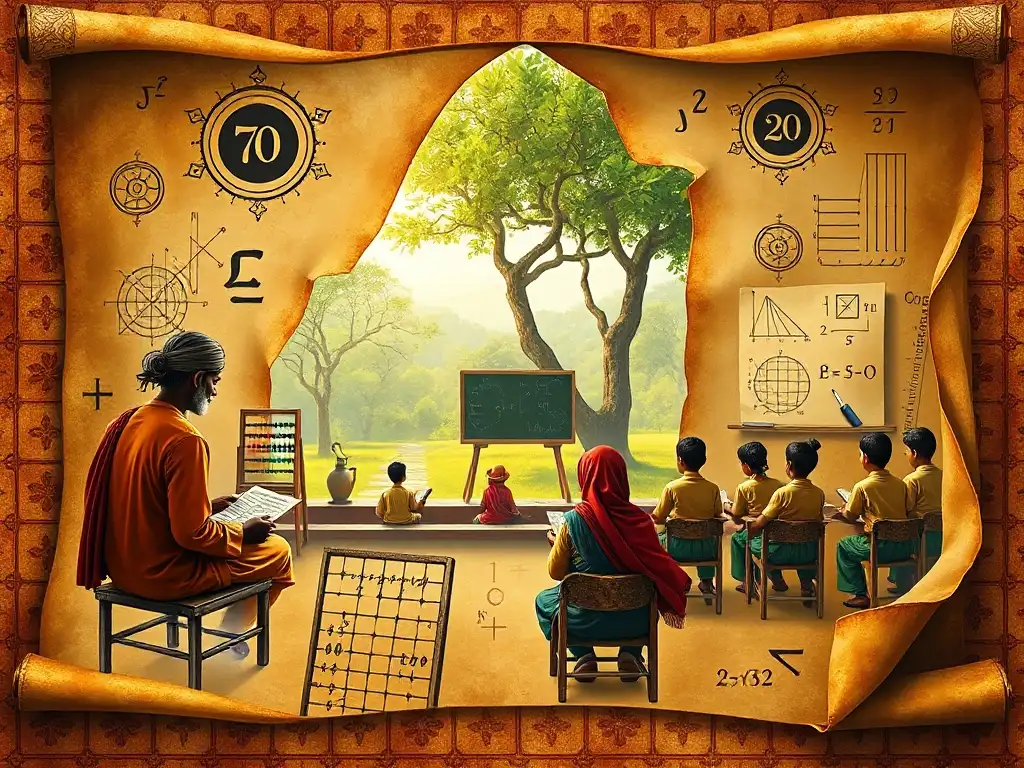
The ancient Indian numerical systems have had a profound influence on modern mathematical practices, particularly through the introduction of the concept of zero and the decimal system. These innovations laid the groundwork for advances in both arithmetic and algebra, which are foundational elements in contemporary mathematics. For example, the use of positional notation, where the position of a digit affects its value, is a concept that originated in ancient Indian mathematics and is critical for calculations today.
Moreover, renowned mathematicians like Aryabhata and Brahmagupta contributed significantly to early algebra, with their works offering insights into solving quadratic equations and algorithms that are still relevant in modern computational techniques. The systematic approach to mathematics developed in ancient India can be seen reflected in current mathematical education and practices around the globe.
Legacy of Ancient Indian Numerical Systems in Contemporary Mathematics
The legacy of ancient Indian numerical systems is evident in various aspects of modern mathematics. The introduction of zero as a numeral revolutionized calculations, allowing for the representation of large numbers and the execution of complex arithmetic operations. This concept was not only essential in India but also spread to the Arab world and eventually to Europe, influencing mathematical thought across continents.
Additionally, the use of the decimal system has become a standard in mathematics. The principles laid down by ancient Indian scholars have been foundational in the development of mathematical theories and practices, including advanced fields such as calculus and number theory. The methodologies for calculating areas and volumes in geometry, as documented in ancient texts, continue to inform contemporary mathematical practices.
Comparison with Other Ancient Numerical Systems
When compared to other ancient numerical systems, such as the Babylonian base-60 or the Roman numeral system, ancient Indian numerical systems exhibit unique characteristics that enhanced their utility. The Babylonian system, while sophisticated, relied heavily on a base-60 counting method that complicated calculations. Roman numerals, on the other hand, were cumbersome for arithmetic operations due to their lack of a positional system.
In contrast, the Indian system's flexibility with a base-10 format and the inclusion of zero allowed for more efficient calculations and easier problem-solving. This efficiency is reflected in the speed and accuracy with which ancient Indian mathematicians could perform complex calculations compared to their contemporaries. Furthermore, the adaptability of the Indian system facilitated its integration into various cultural contexts, making it a precursor to the global numerical systems we use today.
Conclusion
Recap of the Importance of Ancient Indian Numerical Systems
The ancient Indian numerical systems played a crucial role in shaping the foundations of mathematics as we know it today. Their introduction of zero, the decimal system, and systematic arithmetic methods not only advanced mathematical practices in ancient times but also laid the groundwork for future developments across the globe. The influence of these systems is palpable in modern educational curricula and professional mathematical practices.
Final Thoughts on Their Relevance in Today's World
The relevance of ancient Indian numerical systems in today's world cannot be overstated. As we navigate an increasingly data-driven society, the principles established by ancient Indian mathematicians remain integral to fields such as science, technology, engineering, and finance. Understanding the roots of these numerical systems not only enriches our appreciation of mathematics but also highlights the enduring legacy of ancient Indian contributions to global knowledge. The exploration of these historical foundations encourages a deeper respect for the mathematical innovations that continue to shape our lives today.
- Introduction to Ancient Indian Numerical Systems
- Historical Context of Ancient Indian Numerical Systems
- Core Features of Ancient Indian Numerical Systems
- Applications of Ancient Indian Numerical Systems in Daily Life
- Influence on Modern Mathematical Practices
- Legacy of Ancient Indian Numerical Systems in Contemporary Mathematics
- Comparison with Other Ancient Numerical Systems
- Conclusion
- What are ancient Indian numerical systems?
- How did ancient Indian numerical systems impact daily life?
- What are some key contributions of ancient Indian mathematicians?
- How did the ancient Indian numerical system influence other cultures?
- Are there any surviving examples of ancient Indian numerical systems?
Frequently Asked Questions
What are ancient Indian numerical systems?
Ancient Indian numerical systems refer to the mathematical frameworks and notational methods developed in India, particularly during the Indus Valley Civilization and later periods, which greatly influenced mathematics globally.
How did ancient Indian numerical systems impact daily life?
These systems provided essential tools for trade, commerce, and astronomy, enabling efficient calculations and record-keeping, thus facilitating more organized and prosperous societal functions.
What are some key contributions of ancient Indian mathematicians?
Prominent figures like Aryabhata and Brahmagupta made significant contributions, such as the concept of zero, place value, and advanced algebraic techniques, which laid the groundwork for modern mathematics.
How did the ancient Indian numerical system influence other cultures?
The Hindu-Arabic numeral system originated from ancient Indian methods and was transmitted through trade and cultural exchanges, eventually becoming the standard numeral system used globally today.
Are there any surviving examples of ancient Indian numerical systems?
Yes, numerous inscriptions, manuscripts, and texts from ancient India, such as the Sulbasutras, contain valuable information on geometry and calculations, showcasing the sophistication of these numerical systems.
Final Reflection: Embracing the Wisdom of Ancient Indian Numerical Systems
The relevance of ancient Indian numerical systems in today’s world cannot be overstated; they serve as a testament to the ingenuity of our ancestors and their profound understanding of mathematics. As we navigate a technology-driven society, the principles embedded in these ancient systems remind us that the roots of modern mathematics are deeply intertwined with cultural heritage and historical wisdom. The ability to appreciate and apply these concepts in our daily lives is not just an academic exercise but a bridge connecting us to a rich legacy of knowledge.
The influence of ancient Indian numerical systems extends far beyond mere calculations; they have shaped the very fabric of our cultural and social landscapes. From the way we approach mathematics in education to the methods we employ in commerce and technology, these systems continue to resonate. As the mathematician and philosopher Bhaskara II once said, “Mathematics is the language of the universe.” > This quote encapsulates the enduring significance of these numerical systems, highlighting their role as a universal language that transcends time and culture.
As we reflect on the fascinating applications of ancient Indian numerical systems, let us invite ourselves to explore and integrate these timeless principles into our everyday lives. Consider how the wisdom of the past can inform our present and future decisions, whether in personal finance, education, or problem-solving.
Embrace the opportunity to learn from these ancient teachings, and allow them to inspire a deeper appreciation for the interconnectedness of knowledge across generations. The journey into the world of ancient Indian numerical systems is not just about understanding numbers; it’s about recognizing the profound insights they offer for a more harmonious and enlightened existence.
Unlock the Power of Ancient Wisdom Today!
Thank you for exploring the fascinating world of ancient Indian numerical systems with us! You've uncovered the remarkable ways these timeless concepts influence our daily lives. Now, it’s time to take that inspiration and apply it in meaningful ways.
Here’s how you can dive deeper and make the most of what you've learned:
- Start using ancient numerical principles in your daily problem-solving. Try incorporating techniques like Vedic math for faster calculations or Ayurvedic numerology to create a more balanced and fulfilling life.
- Share your newfound knowledge with friends and family! Discuss how these ancient systems can enhance modern understanding at your next gathering or through your social media platforms.
- Engage with your local community by organizing a workshop or meetup focused on the significance of ancient Indian mathematics—invite others to join the conversation and share insights!
How will you incorporate the wisdom of ancient Indian numbers into your life today?