
How Ancient Indian Innovations in Zero Led to Modern Scientific Discoveries


Welcome to Ancient India History, where we embark on a fascinating journey through the rich tapestry of ancient Indian civilizations. From the awe-inspiring Indus Valley to the illustrious Gupta Empire, we delve into the remarkable contributions that have shaped our modern world. In this exploration, we shine a spotlight on ancient Indian innovations in mathematics, particularly how the concept of zero revolutionized scientific thought and paved the way for groundbreaking discoveries.
Prepare to be captivated as you uncover the incredible legacy of ancient mathematicians that continues to influence our lives today. Join us as we unravel the mysteries of the past and spark your curiosity for the wonders that await!
- Introduction to Ancient Indian Innovations in Mathematics
- Historical Context of Zero in Ancient India
- Key Ancient Indian Innovators in Mathematics
- The Mathematical Principles Behind Zero
- Influence of Ancient Indian Innovations on Global Mathematics
- Case Studies of Modern Applications of Ancient Concepts
- Conclusion: The Legacy of Ancient Indian Innovations in Mathematics
-
Frequently Asked Questions
- What is the significance of the invention of zero in ancient India?
- How did ancient Indian mathematicians contribute to mathematics?
- What impact did ancient Indian innovations have on the world?
- Can you provide examples of other mathematical innovations from ancient India?
- How did the Gupta Empire contribute to the evolution of mathematics?
- Final Reflection: The Timeless Legacy of Ancient Indian Innovations in Mathematics
- Unveil the Power of Zero: Transform Your Understanding Today!
Introduction to Ancient Indian Innovations in Mathematics
The contributions of ancient Indian civilizations to mathematics have had a profound impact on the development of scientific thought and innovation throughout history. Among these contributions, the most notable is the invention of zero, a concept that revolutionized numerical systems and paved the way for modern mathematics.
This article explores how ancient Indian innovations in mathematics, especially the conceptualization of zero, have influenced contemporary scientific discoveries. By delving into the significance of mathematics in ancient Indian society and understanding the profound implications of the concept of zero, we can appreciate the legacy of these early mathematicians and their enduring influence on the world today.
Importance of Mathematics in Ancient Indian Civilization
Mathematics played a crucial role in the development of ancient Indian civilization, serving not only as a practical tool for trade and commerce but also as a foundation for various scientific and philosophical explorations. The ancient Indians recognized mathematics as a means to understand the universe and its complexities. Here are some key aspects of the importance of mathematics during this period:
- Astronomy and Calendar Systems: Ancient Indian mathematicians developed intricate astronomical calculations, which were essential for creating accurate calendars. The alignment of celestial bodies was fundamental to agricultural planning and religious observances.
- Architecture and Engineering: Mathematics was integral to the construction of monumental architecture, such as temples and fortifications. The use of geometric principles ensured structural integrity and aesthetic appeal.
- Trade and Commerce: As trade flourished, mathematical skills became vital for merchants. The use of advanced calculations facilitated trade transactions and accounting practices.
- Philosophical Inquiry: Many ancient Indian texts explore mathematical concepts in a philosophical context. This intersection of mathematics and philosophy enriched intellectual discourse and laid the groundwork for future mathematical advancements.
Overview of the Concept of Zero
The concept of zero is one of the most significant contributions of ancient Indian mathematicians, representing a paradigm shift in numerical comprehension. Initially utilized as a placeholder in positional numeral systems, zero evolved to symbolize the concept of 'nothingness.' Here are some critical points regarding the development of zero in ancient India:
- Historical Context: The earliest known use of zero can be traced back to the 5th century CE in the works of mathematician Aryabhata. His treatise, the Aryabhatiya, included references that laid the foundation for the mathematical significance of zero.
- Symbolism and Functionality: In ancient Indian mathematics, zero was not merely a numeral but a fundamental concept that facilitated calculations, allowing for the representation of large numbers and complex equations.
- Impact on Other Cultures: The introduction of zero to the Islamic world and, subsequently, to Europe transformed mathematical practices globally. Its adoption in different cultures underscored its universal significance.
- Modern Applications: Today, zero is an essential part of arithmetic, calculus, and computer science, illustrating how a simple concept can lead to sophisticated advancements in technology and science.
Through the exploration of ancient Indian innovations in mathematics, particularly the concept of zero, we can better understand the remarkable contributions of these civilizations and their lasting impact on modern scientific discoveries.
Historical Context of Zero in Ancient India
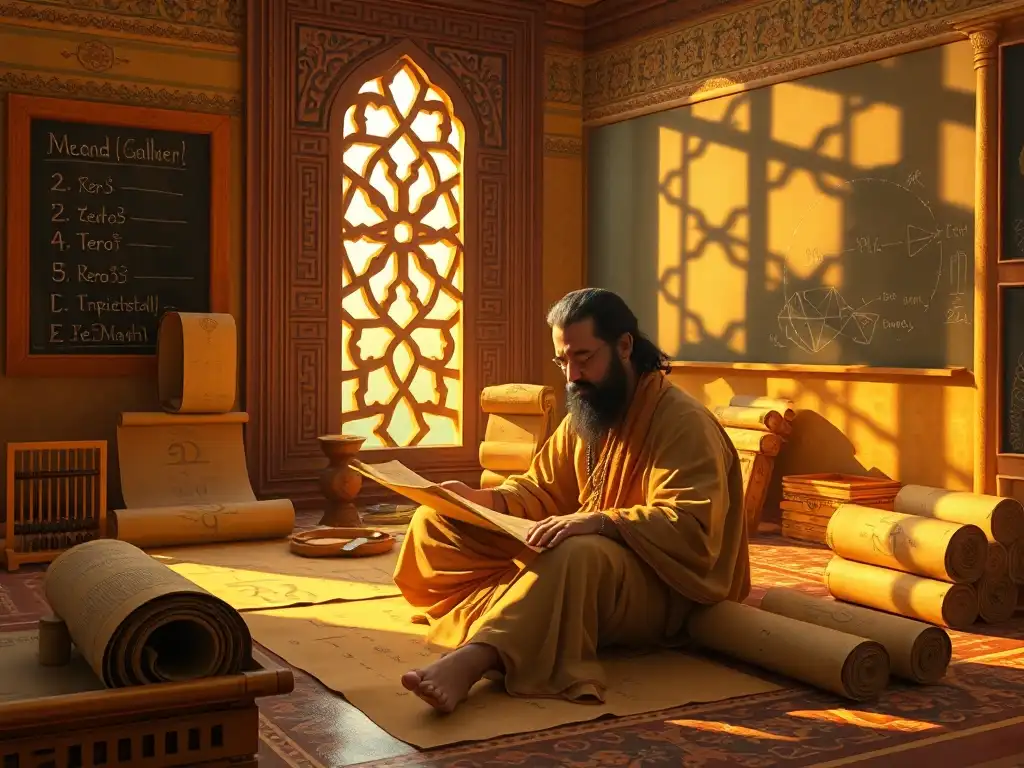
The concept of zero is one of the most significant contributions of ancient Indian innovations in mathematics. Understanding its historical context allows us to appreciate its profound impact on mathematics and science. The roots of zero can be traced back to the early numerical systems that flourished in ancient India. These systems laid the groundwork for the development of zero as both a numeral and a concept.
Early Numerical Systems in Ancient India
In ancient India, numerical systems evolved significantly over time. The earliest known numerical system is the Indus Valley Civilization's script, which dates back to around 2500 BCE. This civilization utilized various symbols for counting and trading, although the specifics of their numerical system remain largely undeciphered.
As we progress to later periods, we see the emergence of more sophisticated systems, particularly during the Vedic period (circa 1500–500 BCE). During this time, the use of numbers became more widespread, particularly in the context of astronomy, mathematics, and rituals. The Brahmi numerals, which were developed around the 3rd century BCE, are among the earliest recorded numeral systems in India and featured a positional style of notation similar to what we recognize today.
Key developments during this time included:
- Base-10 System: The use of a decimal system, which is a critical precursor to the concept of zero.
- Place Value: The recognition that the position of a number affects its value, a concept that is crucial for the understanding of zero.
These early numerical systems demonstrated a level of mathematical sophistication that would later facilitate the conceptualization of zero.
The Evolution of the Concept of Zero
The evolution of the concept of zero in ancient Indian mathematics is marked by a gradual transition from a placeholder to a full-fledged numeral. Initially, zero served primarily as a positional marker in the decimal system. This use can be seen in the writings of Aryabhata (476–550 CE), who was among the first to treat zero as a number in its own right within his seminal work, the Aryabhatiya.
By the time of Brahmagupta (598–668 CE), the understanding of zero had further evolved. In his work, Brahmasphutasiddhanta, he outlined arithmetic rules involving zero, marking a pivotal moment in its acceptance. He defined zero as the "result of subtracting a number from itself" and established operational rules for addition, subtraction, and multiplication involving zero, such as:
- Addition of Zero: \( a + 0 = a \)
- Subtraction of Zero: \( a - 0 = a \)
- Multiplication by Zero: \( a \times 0 = 0 \)
These rules illustrated the transition from viewing zero merely as a placeholder to recognizing it as an essential component of arithmetic operations.
The advancements in the understanding of zero culminated in the 9th century with the work of Mahavira and later, Bhaskara II, who expanded upon these concepts. Bhaskara’s innovations included more complex equations and the application of zero in calculations involving infinity and negative numbers, further solidifying its importance in mathematics.
The journey of zero from ancient Indian innovations in mathematics is not just a story of a number but a testament to the intellectual rigor and creativity of ancient Indian scholars. This evolution set the stage for future advancements in mathematics and science worldwide, profoundly influencing various fields, including astronomy and engineering.
Key Ancient Indian Innovators in Mathematics
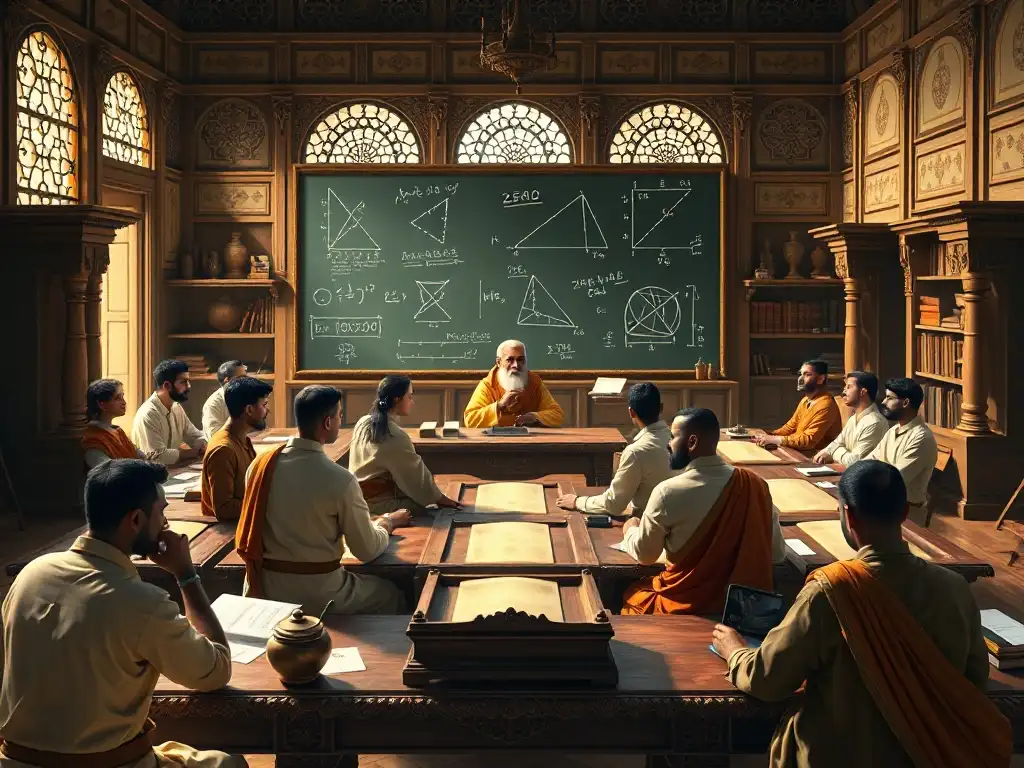
The contributions of ancient Indian mathematicians to the concept of zero and mathematics as a whole are monumental. Their innovations laid the groundwork for modern mathematics, influencing a wide array of scientific disciplines. Here, we delve into the lives and works of key figures who significantly advanced the understanding and application of the number zero.
Aryabhata: The Pioneer of Zero
Aryabhata, born in 476 CE, is often hailed as the first significant mathematician and astronomer in ancient India. His work, Aryabhatiya, is a foundational text in the history of mathematics.
- Concept of Zero: Aryabhata introduced the notion of zero as a placeholder, which was revolutionary at the time. He used the term "kha" (meaning "void") to articulate this concept, allowing for the representation of large numbers and facilitating calculations.
- Mathematical Innovations: His work included methods for solving linear and quadratic equations and approximating the value of π (pi). He provided a formula for the area of a triangle and the volume of a sphere, showcasing the application of zero in geometric calculations.
- Legacy: Aryabhata's introduction of zero was not merely a number; it represented a philosophical concept of nothingness that would have profound implications in mathematics and beyond.
Brahmagupta's Contributions to Zero and Negative Numbers
Brahmagupta, who lived in the 7th century CE, expanded upon Aryabhata's work and made significant contributions to the understanding of zero and negative numbers.
-
Rules for Zero: In his seminal text, Brahmasphutasiddhanta, Brahmagupta established rules for arithmetic operations involving zero. He posited that:
- Any number added to zero remains unchanged.
- A number subtracted from zero yields its negative.
- Multiplying any number by zero results in zero.
These principles laid the foundation for future mathematical operations involving zero.
-
Negative Numbers: Brahmagupta also tackled the concept of negative numbers, providing rules for their use in calculations. He described scenarios where negative values arise, which was a significant step towards the acceptance of negative numbers in mathematics.
-
Quadratic Equations: Additionally, he contributed to solving quadratic equations, further demonstrating the application of zero in broader mathematical contexts.
Bhaskara II: Advancements in Mathematical Concepts
Bhaskara II, also known as Bhaskara the Elder, flourished in the 12th century CE and is known for his extensive work in mathematics and astronomy. His major work, Lilavati, is a comprehensive guide to arithmetic that incorporates the use of zero.
- Practical Applications of Zero: In Lilavati, Bhaskara II not only explained theoretical concepts but also provided practical applications of zero in calculations involving fractions, ratios, and proportions. His work is notable for making mathematics accessible to the general populace.
- Innovative Techniques: He developed methods for solving complex problems, including:
- Calculating the area of various geometric shapes.
- Understanding cyclic quadrilaterals.
- Applying the concept of zero in various mathematical operations.
- Influence on Later Mathematics: Bhaskara II's contributions significantly influenced later mathematicians in India and the Islamic world, promoting the widespread use of zero in various mathematical disciplines.
The innovations in mathematics by these ancient Indian scholars not only advanced the understanding of zero but also shaped the future of mathematics itself. Their pioneering work continues to resonate in modern mathematical concepts and practices, illustrating the profound impact of ancient Indian innovations in mathematics.
The Mathematical Principles Behind Zero

Understanding Place Value and Its Significance
The concept of place value is fundamental to understanding how zero functions within our numerical system. Ancient Indian mathematicians recognized that the position of a digit in a number determines its value, which is pivotal for efficient calculations. For example, in the number 205, the digit '2' represents two hundred due to its position, not merely the value of '2'.
The Development of Place Value System
- Base Ten System: The ancient Indians used a base ten (decimal) system, which is still in use today. This system is structured around ten symbols (0-9), and zero plays a crucial role in denoting the absence of value in a particular place.
- Cultural Adoption: The place value system facilitated more complex calculations, which were essential for trade, astronomy, and architectural planning in ancient Indian civilizations.
The introduction of zero as both a number and a placeholder allowed for the representation of larger numbers with greater ease. For example:
- The number 10 signifies one group of ten and zero units.
- The number 100 signifies one group of one hundred, showcasing how place value allows for a more extensive representation of quantities.
The Role of Zero in Arithmetic Operations
Zero’s role in arithmetic operations is not merely as a placeholder but also as a unique number influencing calculations. Ancient Indian innovations in mathematics elucidated how zero interacts with other numbers in various operations.
Addition and Subtraction
- Addition: Adding zero to any number yields the number itself (e.g., \(5 + 0 = 5\)). This property is fundamental in establishing zero as an identity element in addition.
- Subtraction: Subtracting zero from a number also results in the number itself (e.g., \(7 - 0 = 7\)). This reinforces zero's identity function.
Multiplication and Division
- Multiplication: Multiplying a number by zero results in zero (e.g., \(8 \times 0 = 0\)). This illustrates zero's role in nullifying values.
- Division: Dividing any number by zero is undefined, highlighting the distinct nature of zero in mathematical operations.
These principles are critical to modern mathematics and underscore the significance of ancient Indian innovations in mathematics, particularly in the development of zero.
Zero as a Placeholder: Transforming Numerical Calculations
The introduction of zero as a placeholder revolutionized numerical calculations in ancient Indian mathematics. It not only simplified the representation of large numbers but also made complex computations more manageable.
Impact on Mathematical Representation
- Simplified Computation: With zero, calculations involving large numbers became straightforward. For instance, writing 1,000 is more efficient than writing one thousand using words or additional symbols.
- Facilitating Advanced Calculus: The ability to represent numbers like 10,000 or 100,000 with a mere addition of zeros demonstrates the power of this innovation.
Influence on Modern Mathematics
The legacy of using zero as a placeholder has transcended ancient Indian mathematics and is now a cornerstone of modern mathematical systems globally. The ability to perform arithmetic operations with clarity and precision has roots in these ancient innovations.
The ancient Indian innovations in mathematics, particularly the development of zero, revolutionized numerical representation and calculations, laying the foundation for modern scientific discoveries.
Influence of Ancient Indian Innovations on Global Mathematics

The influence of ancient Indian innovations in mathematics, particularly the concept of zero, has had a profound impact on global mathematical thought and practice. This foundational idea not only revolutionized mathematical calculations but also facilitated the development of advanced mathematical concepts across various cultures. The contributions made by ancient Indian mathematicians laid the groundwork for subsequent innovations in mathematics and science worldwide.
Transmission of Mathematical Knowledge to the Islamic World
The transfer of ancient Indian mathematical knowledge to the Islamic world during the medieval period was a significant milestone in the history of mathematics. Scholars such as Al-Khwarizmi played a crucial role in this transmission, translating and expanding upon Indian texts that introduced concepts like zero and the decimal system.
- Key Texts and Translations: The Bakhshali Manuscript, which dates back to the 7th century, is one of the earliest documents showcasing the use of zero in calculations. Its translations into Arabic were pivotal in spreading these ideas.
- Influence of Indian Numerals: The numeral system developed in India, known as the Hindu-Arabic numeral system, was adopted by Islamic scholars. This system included symbols for zero and the other digits, which streamlined calculations and became the standard for mathematical notation.
- Cultural and Intellectual Exchange: The flourishing of trade routes between India and the Islamic empires facilitated not only the exchange of goods but also ideas. Scholars traveled between these regions, sharing knowledge that would later influence mathematics in Europe.
The integration of Indian mathematical concepts into Islamic scholarship paved the way for significant advancements in algebra and arithmetic, laying the foundation for future mathematical exploration.
How Ancient Indian Innovations Shaped European Mathematics
The influence of ancient Indian innovations in mathematics reached Europe during the Renaissance, a period marked by a revival of classical knowledge and an appetite for scientific inquiry. The introduction of the Hindu-Arabic numeral system and the concept of zero created a paradigm shift in mathematical practices across Europe.
- Introduction of Zero: The concept of zero was revolutionary; it allowed for the representation of large numbers and facilitated calculations that were previously cumbersome. European mathematicians began to adopt this idea, leading to more sophisticated mathematical operations.
- Notable Figures: Mathematicians such as Fibonacci, who encountered these Indian innovations during his travels, played a crucial role in introducing the Hindu-Arabic numeral system to Europe through his work Liber Abaci. His advocacy for this system contributed to its acceptance among European scholars.
- Impact on Scientific Development: The adoption of these mathematical principles enabled advancements in navigation, engineering, and astronomy. The ability to perform calculations more efficiently fostered developments in fields such as physics and architecture.
The legacy of ancient Indian innovations in mathematics is evident in the mathematical frameworks and practices that continue to shape modern science and technology.
Modern Scientific Discoveries Rooted in Ancient Indian Mathematics
Today, the mathematical principles established by ancient Indian scholars, particularly those related to the concept of zero, continue to underpin many modern scientific discoveries and technological advancements.
- Computational Mathematics: The binary system used in computer science can trace its roots back to the ideas of positional notation, which were influenced by the Indian numeral system. Zero plays a crucial role in computing, representing the absence of a value and enabling complex calculations.
- Physics and Engineering: The principles of calculus, developed much later in Europe, are deeply intertwined with the mathematical frameworks pioneered by Indian mathematicians. The ability to conceptualize and manipulate abstract quantities remains central to physics and engineering today.
- Mathematical Modelling: Modern scientific fields such as statistics and data analysis utilize mathematical models that can be traced back to ancient Indian innovations. The ability to quantify and analyze data effectively owes much to the groundwork laid by these early mathematicians.
The ancient Indian innovations in mathematics, particularly the development of zero, not only transformed mathematical thought in their own time but also continue to influence modern scientific discoveries. Their legacy is a testament to the enduring impact of these foundational ideas on global mathematics and technology.
Case Studies of Modern Applications of Ancient Concepts

The concept of zero, a remarkable ancient Indian innovation in mathematics, has transcended its origins to become a foundational element in various modern scientific fields. This section explores notable case studies that illustrate how the ancient understanding of zero continues to influence contemporary applications in computer science and quantum physics.
The Use of Zero in Computer Science
Zero is not merely a number; it is an integral concept in the realm of computer science. Its applications are foundational to various programming languages, data structures, and algorithms. Here are some key points that illustrate its importance:
- Binary Code: At the heart of computer systems lies binary code, which employs the digits 1 and 0. This system is essential for data processing and storage. The adoption of zero as a placeholder allows for the representation of large numbers and the execution of complex calculations.
- Data Structures: In data structures such as arrays and linked lists, zero often represents the starting index. For example, in many programming languages (like C, Java, and Python), the first element of an array is accessed using index 0. This convention simplifies the implementation of algorithms and enhances computational efficiency.
- Boolean Algebra: In Boolean logic, which underpins computer programming, zero represents the false value. The interplay between zero (false) and one (true) is crucial for decision-making processes within algorithms, ensuring that computational tasks are performed correctly.
- Error Detection: Zero plays a vital role in error detection mechanisms. For instance, checksums and parity checks utilize zero to verify data integrity during transmission. This application ensures that data remains accurate and reliable, thus enhancing communication systems.
The ancient Indian innovation of zero has become a cornerstone of computer science, facilitating advancements in technology and enabling the development of modern computing systems.
Zero in Quantum Physics and Theoretical Mathematics
The implications of zero extend into the realms of quantum physics and theoretical mathematics, where it holds significant theoretical and practical applications:
- Quantum States: In quantum mechanics, the concept of superposition allows particles to exist in multiple states simultaneously. Zero often represents the ground state or the lowest energy level of a quantum system. Understanding how zero functions in this context is crucial for advancements in quantum computing and information theory.
- Wave Functions: The wave function, a fundamental concept in quantum physics, often incorporates zero in its mathematical representation. For instance, the probability amplitude of finding a particle in a particular state can be expressed as a complex number, where zero indicates the absence of probability. This concept is pivotal in interpreting phenomena like quantum entanglement and tunneling.
- Theoretical Models: In theoretical mathematics, zero serves as a critical point of reference in various models and equations. For example, in calculus, the concept of limits often involves approaching zero. Understanding how functions behave as they approach zero can provide insights into their continuity and differentiability.
- Cosmological Applications: In cosmology, the role of zero is evident in the formulation of theories about the universe's origin. Concepts such as the Big Bang theory and the expansion of the universe frequently involve equations where zero is a pivotal value, influencing our understanding of space-time dynamics.
The ancient Indian innovations in mathematics, particularly the introduction of zero, have profoundly influenced modern scientific disciplines such as quantum physics and theoretical mathematics. These applications underscore the enduring legacy of ancient knowledge in shaping contemporary scientific frameworks.
Conclusion: The Legacy of Ancient Indian Innovations in Mathematics

The legacy of ancient Indian innovations in mathematics, particularly the invention of zero, transcends time and geography. This groundbreaking concept not only transformed mathematical practices in India but also laid the foundation for a global mathematical language. The intellectual contributions from ancient Indian mathematicians, such as Aryabhata and Brahmagupta, underscored the sophistication of their understanding of arithmetic, algebra, and geometry.
The mathematical framework that emerged from ancient India has had a profound influence on various fields, including astronomy, physics, and computer science. The ability to represent numbers with the digit zero enabled complex calculations and paved the way for advancements in technology and science, leading to significant progress in various domains. Today, the principles established by ancient Indian scholars continue to resonate in modern mathematical theories and applications.
The Enduring Impact of Zero on Contemporary Science
The introduction of zero as a numeral revolutionized mathematics and science. Its implications are evident in numerous contemporary scientific fields:
- Computing: In modern computing, zero serves as a fundamental building block in binary systems, representing the off state in digital circuits. This binary code is the foundation of all computer programming and data processing.
- Calculus: The concept of limits in calculus often employs zero in defining derivatives and integrals, facilitating a deeper understanding of continuous functions and change.
- Physics: In physics, zero plays a crucial role in equations of motion, thermodynamics, and quantum mechanics. It is essential for expressing concepts such as absolute zero, which defines the lowest possible temperature.
- Engineering: Engineers frequently utilize zero in designing algorithms, simulations, and structures, where the precision afforded by the numeral is indispensable.
The versatility of zero allows for unprecedented innovations in these fields, demonstrating its vital role as a catalyst for scientific advancement.
Future Directions in Mathematical Research Inspired by Ancient Knowledge
The exploration of ancient Indian innovations in mathematics, particularly the concept of zero, opens avenues for future research and development. Scholars are encouraged to delve deeper into the following areas:
- Historical Mathematical Texts: Investigating ancient manuscripts, such as the Aryabhatiya and Brahmasphutasiddhanta, could yield insights into mathematical techniques that can be adapted for contemporary problems.
- Interdisciplinary Studies: Collaborations between mathematicians, historians, and computer scientists could foster innovative approaches that integrate ancient methodologies with modern technology.
- Cultural Mathematics: Understanding how ancient Indian mathematical concepts were influenced by cultural and philosophical perspectives can inspire new ways to teach and apply mathematics today.
- Global Mathematics: Researching the cross-cultural exchanges of mathematical ideas can provide a more comprehensive understanding of how zero and other concepts evolved and impacted global mathematics.
The innovations in mathematics originating from ancient India, specifically the invention of zero, continue to influence modern science and technology. By honoring this legacy and exploring its implications, we can not only enhance our understanding of mathematics but also inspire future generations of mathematicians and scientists.
Frequently Asked Questions
What is the significance of the invention of zero in ancient India?
The invention of zero was a revolutionary concept that transformed mathematics, enabling complex calculations and the development of modern numeral systems.
How did ancient Indian mathematicians contribute to mathematics?
Ancient Indian mathematicians, like Brahmagupta and Aryabhata, made significant contributions such as the concept of zero, advancements in algebra, and methods for solving equations.
What impact did ancient Indian innovations have on the world?
The innovations in mathematics, particularly the concept of zero, influenced not only mathematics but also science, astronomy, and engineering across diverse cultures globally.
Can you provide examples of other mathematical innovations from ancient India?
Besides zero, ancient Indians developed decimal systems, early trigonometry, and methods for calculating square roots, showcasing their advanced understanding of mathematics.
How did the Gupta Empire contribute to the evolution of mathematics?
During the Gupta Empire, there was a remarkable flourishing of knowledge in various fields, including mathematics, leading to systematic advancements and the establishment of foundational principles still used today.
Final Reflection: The Timeless Legacy of Ancient Indian Innovations in Mathematics
The exploration of ancient Indian innovations in mathematics, particularly the concept of zero, remains profoundly relevant today. In a world increasingly driven by technology and data, the foundational principles established by ancient mathematicians continue to shape our understanding of the universe. The legacy of zero is not just a historical footnote; it is a cornerstone of modern scientific discoveries that influence everything from computer programming to quantum physics.
The impact of these innovations transcends time, weaving through the fabric of our cultural and social landscapes. The contributions of ancient Indian scholars remind us that knowledge is a collective journey, built upon the insights of those who came before us. As we navigate the complexities of contemporary challenges, we can draw inspiration from the wisdom of the past. Mathematics is the language in which God has written the universe.
— Galileo Galilei. This quote encapsulates the essence of how ancient mathematical concepts, like zero, have become integral to our understanding of the world.
As we reflect on the significance of these ancient innovations, I invite you to consider how you can incorporate the lessons of creativity, perseverance, and curiosity into your own life. Embrace the spirit of exploration and innovation that characterized ancient Indian mathematicians. Whether through learning, teaching, or simply sharing knowledge, let us honor their legacy by fostering a culture of inquiry and discovery in our own communities. The future of mathematics and science lies in our hands, and it is our responsibility to carry forward the torch of knowledge ignited by those brilliant minds of the past.
Unveil the Power of Zero: Transform Your Understanding Today!
Thank you for diving into the fascinating world of ancient Indian innovations! By exploring how the concept of zero shaped modern science, you’ve uncovered a vital piece of history that continues to influence our lives today. Now, it's time to take the next step in your journey of discovery!
Here’s how you can expand your exploration and share the wisdom of the past:
- Embrace the knowledge: Consider starting a personal project that involves applying the concept of zero in mathematics or technology to discover its relevance in your own work or studies.
- Join the conversation: Engage with fellow enthusiasts in our community by sharing your insights on the article or discussing how ancient innovations can impact contemporary science. Connect with us on ancientindiahistory.com!
- Spread the wisdom: Share this article with friends or on social media—let's celebrate these groundbreaking contributions from ancient India together!
What aspect of ancient innovations inspires you the most, and how do you believe it can influence future discoveries? Your insights could spark an important conversation!