
The Continuing Legacy of Ancient Indian Mathematics in Today's World


Welcome to Ancient India History, where we embark on a journey through the fascinating tapestry of one of the world's oldest civilizations. In this exploration, we delve into the incredible contributions of ancient Indian mathematics, a legacy that continues to shape our modern world. Ever wondered how the intricate concepts of zero and the decimal system came to be?
Join us as we uncover the profound impact of these mathematical innovations, revealing the brilliance of thinkers from the Indus Valley to the Gupta Empire. Your adventure into the depths of history begins here—let’s dive into the numbers that changed the course of time!
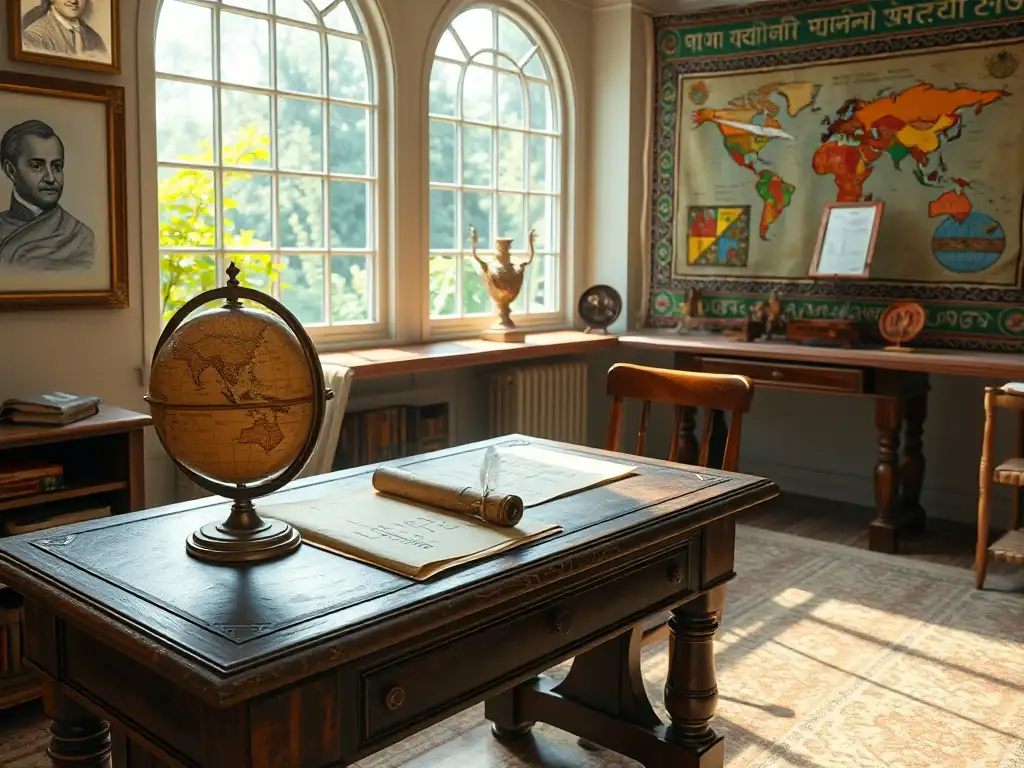
Introduction to Ancient Indian Mathematics Contributions
The legacy of ancient Indian mathematics is profound and multifaceted, deeply influencing various fields of study that continue to thrive in the modern world. From the sophisticated calculations of the Indus Valley Civilization to the advanced theories developed during the Gupta Empire, ancient Indian mathematicians contributed significantly to the global mathematical landscape. Their work laid the foundation for modern mathematics, introducing concepts and techniques that are still in use today. This article will explore the remarkable contributions of ancient Indian mathematics, highlighting the achievements of key mathematicians and their enduring impact on contemporary mathematical practices.
Overview of Ancient Indian Mathematics
Ancient Indian mathematics dates back thousands of years, with early evidence found in the inscriptions of the Indus Valley Civilization (approximately 2500 BCE). However, it was during the classical period, particularly between the 5th and 12th centuries CE, that Indian mathematics truly flourished. Mathematicians such as Aryabhata, Brahmagupta, and Bhaskara II made groundbreaking advancements in various branches of mathematics:
- Arithmetic: Development of sophisticated methods for calculation.
- Geometry: Exploration of shapes and formulas for area and volume.
- Astronomy: Application of mathematical principles to celestial calculations.
These ancient scholars meticulously documented their findings, preserving knowledge that would later influence both the Islamic Golden Age and the European Renaissance.
Importance of Ancient Indian Mathematicians in History
The contributions of ancient Indian mathematicians are not only crucial to the history of mathematics but also reflect the broader context of Indian culture and philosophy. Their work exemplifies a unique blend of theoretical inquiry and practical application. For instance, Aryabhata's Aryabhatiya introduced astronomical calculations that were remarkably accurate for its time, emphasizing the interplay between mathematics and astronomy.
The significance of these mathematicians extends beyond their immediate discoveries. They fostered an environment of inquiry and innovation that encouraged further exploration in various scientific fields. Their teachings and texts have inspired generations of mathematicians worldwide, emphasizing the timeless relevance of their contributions.
Key Contributions of Ancient Indian Mathematics
Development of the Decimal System
One of the most significant contributions of ancient Indian mathematics is the development of the decimal system, which includes the concept of place value. This system, which employs ten symbols (0-9), revolutionized numerical representation and computation. The earliest recorded use of this system can be traced back to the 6th century CE in the works of mathematicians like Brahmagupta.
| Feature | Description |
|---|---|
| Base | Decimal (base 10) |
| Symbols | Ten digits (0-9) |
| Place Value | Value determined by position of digit |
The adoption of the decimal system simplified complex calculations and laid the groundwork for future advancements in mathematics.
Innovations in Algebra and Geometry
Ancient Indian mathematicians made remarkable strides in both algebra and geometry. They developed techniques for solving quadratic equations and provided geometric proofs for various theorems. Brahmagupta's work, particularly in "Brahmasphutasiddhanta," contains rules for solving linear and quadratic equations, establishing a framework that would later influence algebraic practices worldwide.
Key Innovations:
- Introduction of symbols to represent unknowns.
- Formulation of rules for dealing with fractions and negative numbers.
- Development of geometric principles, including the Pythagorean theorem.
The Concept of Zero and its Impact on Mathematics
The introduction of zero as a numeral is perhaps one of the most transformative contributions of ancient Indian mathematics. This concept, attributed to the mathematician Aryabhata, allowed for the representation of absence and enabled more complex calculations. The acceptance of zero as a number itself led to advancements in arithmetic operations and paved the way for the development of algebra.
Zero is an essential element in the number system, representing a pivotal shift in mathematical thought.
The impact of this concept is profound, as it not only revolutionized mathematics in India but also spread to the Arab world and eventually to Europe, fundamentally altering the course of mathematical history.
The contributions of ancient Indian mathematics are not only a testament to the ingenuity of its scholars but also a vital part of the ongoing narrative of mathematical evolution. Their work continues to resonate in contemporary mathematics, highlighting the importance of understanding and appreciating the roots of mathematical thought.
Significant Mathematicians of Ancient India
Ancient Indian mathematics boasts a rich history marked by the contributions of several brilliant mathematicians whose works laid the foundation for many modern mathematical concepts. Their innovations were not merely confined to theoretical frameworks but were also applied in various fields such as astronomy, architecture, and commerce. The contributions of these mathematicians continue to resonate in contemporary mathematical practices and education systems around the globe.
Aryabhata: The Pioneer of Indian Mathematics
Aryabhata, active in the 5th century CE, is often regarded as the pioneer of Indian mathematics. His seminal work, the Aryabhatiya, encapsulates his insights into arithmetic, algebra, trigonometry, and astronomy. Aryabhata introduced the concept of zero as a placeholder, which revolutionized number systems. Furthermore, he proposed a systematic approach to solving quadratic equations and calculated the value of π (pi) to an accuracy that was remarkable for his time.
His methods for calculating the area of a triangle and the volume of a sphere were also groundbreaking. Aryabhata's astronomical calculations, which included the determination of the length of the solar year, were astoundingly close to modern measurements. His influence extends beyond borders, inspiring mathematicians and astronomers in both India and abroad.
Brahmagupta: The Father of Algebra
Brahmagupta, who lived in the 7th century CE, is often celebrated as the father of algebra. His major work, Brahmasphutasiddhanta, presents rules for arithmetic operations involving zero and negative numbers, which were revolutionary concepts at the time. Brahmagupta laid the groundwork for algebraic formulations and provided methods for solving linear and quadratic equations.
His contributions also include the introduction of algorithms for mathematical operations, which are still in use today. Brahmagupta’s work directly influenced later mathematicians, especially in the Islamic Golden Age, paving the way for the integration of Indian mathematical concepts into global mathematics.
Bhaskara II: Advancements in Calculus
Bhaskara II, who flourished in the 12th century, made significant advancements in mathematics, particularly in calculus. His text, Lilavati, is renowned for its comprehensive treatment of arithmetic and geometry, while Bijaganita addresses algebra. Bhaskara II's exploration of infinitesimals predates the formal development of calculus in Europe by several centuries.
He formulated rules for determining the maxima and minima of functions, offering a precursor to differential calculus. Additionally, Bhaskara II contributed to the understanding of the cyclic nature of the sine and cosine functions, which are fundamental elements in trigonometry today. His innovative methodologies and results greatly enriched the mathematical landscape and influenced subsequent generations of mathematicians.
Influence of Ancient Indian Mathematics on the World
The legacy of ancient Indian mathematics is profoundly evident in the ways it has shaped mathematical thought and practice across cultures. The transmission of knowledge from ancient India to other civilizations facilitated significant advancements in mathematics and science.
Transmission of Mathematical Knowledge to the West
The intellectual exchange between ancient India and the Greco-Roman world is a vital chapter in the history of mathematics. Indian numerals, including the concept of zero, were transmitted to the Islamic world and subsequently to Europe. This transformation occurred through translations of Indian texts, which were preserved by Arab scholars.
During the medieval period, the introduction of Arabic numerals in Europe—derived from Indian numeral systems—revolutionized mathematics and commerce. The adoption of these numerals replaced the cumbersome Roman numeral system, leading to advancements in calculations and mathematics education in Western cultures.
Contributions to Islamic Mathematics and Astronomy
Ancient Indian mathematics significantly influenced Islamic scholars during the Golden Age of Islam. Mathematicians such as Al-Khwarizmi, who is often called the "father of algebra," drew heavily on the works of Brahmagupta and Aryabhata. The synthesis of Indian and Greek mathematical knowledge led to groundbreaking developments in algebra, trigonometry, and astronomy.
Islamic astronomers utilized Indian mathematical concepts to enhance their astronomical calculations, which were crucial for navigation and timekeeping. The rich tradition of mathematics in ancient India thus played a pivotal role in the evolution of mathematical sciences in the Islamic world, leaving an indelible mark on the history of mathematics.
Application of Ancient Indian Mathematics in Modern Times

The contributions of ancient Indian mathematics have transcended time, finding applications in various domains of modern life. From the foundational principles of arithmetic and algebra to advanced concepts in geometry and calculus, the influence of ancient Indian mathematicians is evident in contemporary mathematical practices. Scholars and educators continue to explore these ancient techniques, integrating them into modern curricula to enhance mathematical understanding. Notably, the sophisticated methods of calculation developed during the Vedic period and later by mathematicians such as Aryabhata and Brahmagupta serve as a testament to the depth of knowledge that ancient Indian scholars possessed.
Use of Ancient Concepts in Contemporary Mathematics
Ancient Indian mathematicians pioneered concepts such as zero, negative numbers, and the decimal system—ideas that are fundamental in today’s mathematics. For example, the introduction of zero as a number by Brahmagupta revolutionized arithmetic and algebra, allowing for the development of equations and complex calculations that are integral to modern mathematics. The use of the decimal system, which was significantly advanced by Indian scholars, is now a universal standard in mathematics and finance.
Additionally, the methods of approximation and calculations in trigonometry, as developed in ancient texts, are still utilized in various fields, including architecture, astronomy, and engineering. The sine and cosine functions, which are crucial in these disciplines, have roots in the mathematical treatises of ancient India, showcasing the enduring legacy of these early mathematicians.
Influence on Technology and Computing
The impact of ancient Indian mathematics extends into the realms of technology and computing, where algorithms and computational techniques have been influenced by ancient practices. The principles of algorithms can be traced back to the meticulous problem-solving methods outlined in texts like the "Aryabhatiya." For instance, Aryabhata's systematic approach to calculations can be seen in modern computational algorithms used in computer science.
Moreover, the binary numeral system, which is foundational in computer programming and digital systems, has connections to ancient Indian mathematical principles. The exploration of mathematical structures and concepts in ancient texts continues to inspire innovations in technology today, highlighting the relevance of these early contributions to contemporary advancements.
Conclusion: The Lasting Impact of Ancient Indian Mathematics
The legacy of ancient Indian mathematics is not merely historical; it continues to shape modern mathematical thought and applications. The systematic approaches and theories developed by ancient mathematicians laid the groundwork for many contemporary mathematical practices. As we delve into various aspects of mathematics today, it is essential to recognize and appreciate the profound influence of these early scholars.
Reflection on the Importance of Preserving Mathematical Heritage
Preserving the mathematical heritage of ancient India is vital for future generations. Understanding the evolution of mathematical concepts helps us appreciate the ingenuity of ancient scholars and their contributions to global mathematics. By teaching and integrating these historical concepts into today’s educational frameworks, we can inspire a new generation of mathematicians and thinkers. It is crucial to promote the study of ancient texts and methodologies, ensuring that the wisdom contained within them is not lost to time.
Future Perspectives on Ancient Indian Mathematics Contributions
Looking ahead, the contributions of ancient Indian mathematics hold promise for future research and development. As we explore interdisciplinary fields such as mathematics and artificial intelligence, the ancient principles may offer unique insights and methodologies. Engaging in a dialogue between ancient wisdom and modern innovation can lead to the discovery of new mathematical techniques and applications, reaffirming the relevance of ancient Indian mathematics in today’s rapidly evolving world. The ongoing exploration of these contributions not only enriches our understanding of mathematics but also fosters a deeper appreciation for the cultural heritage that has shaped our mathematical landscape.
References and Further Reading
The contributions of ancient Indian mathematics have had a profound influence on mathematical thought and practice throughout history. For those interested in exploring this rich field further, a variety of resources are available, ranging from scholarly books to insightful articles. Below is a curated list of recommended readings that delve into the intricacies of ancient Indian mathematics, its key figures, and its lasting impact on contemporary mathematics.
Recommended Books on Ancient Indian Mathematics
- "Mathematics in India" by Kim Plofker
This book provides a comprehensive overview of the history of mathematics in India, covering significant developments and contributions from ancient times through the medieval period. Plofker's analysis includes the work of notable mathematicians and the cultural context in which they operated.
- "The History of Mathematics: A Brief Course" by Roger L. Cooke:
While this book covers global mathematics, it dedicates significant sections to the contributions of Indian mathematicians, particularly in the context of the development of zero and the decimal system.
- "The Mathematics of India: A Historical Perspective" by C. N. Srinivasan:
Srinivasan explores the mathematical achievements of ancient India, including geometry, arithmetic, and algebra. This book emphasizes the unique aspects of Indian mathematics and its role in the broader history of mathematics.
- "Ancient Indian Mathematics" by K. R. S. Iyengar
This work focuses specifically on the mathematical practices and theories developed in ancient India, highlighting key texts and their implications for modern mathematics.
- "Decimal System: The Indian Contribution" by M. D. Bhattacharya:
This book examines the origins and development of the decimal numeral system in India, detailing how it revolutionized arithmetic and mathematics globally.
Articles and Journals for In-Depth Study
- “The Contributions of Aryabhata to Mathematics and Astronomy”
This article reviews the groundbreaking work of Aryabhata, one of India's most renowned mathematicians and astronomers. It discusses his contributions to trigonometry and the place value system.
- “Indian Mathematics: A Historical Overview” in the Journal of Indian Philosophy:
This scholarly article provides a detailed examination of the evolution of mathematics in India, including key texts and their mathematical principles.
- “Mathematical Practices in Ancient India: A Comparative Analysis” published in the Indian Journal of History of Science:
This journal article offers a comparative approach to understanding the mathematical practices in ancient India and their interactions with other ancient civilizations.
- “Zero and the Indian Contribution to Mathematics” in the Mathematics Teacher
This article explores the significance of zero in mathematics, tracing its origins to ancient Indian mathematicians and its transformative impact on mathematical concepts.
- “The Role of Vedic Mathematics in Contemporary Mathematics” in the International Journal of Mathematics Education
This paper discusses the relevance of ancient Indian Vedic mathematics techniques in modern teaching methods and their potential benefits for learners today.
These resources provide a robust foundation for anyone looking to deepen their understanding of ancient Indian mathematics and its influential legacy that persists in contemporary mathematical thought.
- Introduction to Ancient Indian Mathematics Contributions
- Key Contributions of Ancient Indian Mathematics
- Significant Mathematicians of Ancient India
- Influence of Ancient Indian Mathematics on the World
- Application of Ancient Indian Mathematics in Modern Times
- Conclusion: The Lasting Impact of Ancient Indian Mathematics
- References and Further Reading
- What are some key contributions of ancient Indian mathematics?
- How did ancient Indian mathematicians influence the world of mathematics?
- What role did the Indus Valley civilization play in the development of mathematics?
- How does the Gupta Empire contribute to our understanding of ancient Indian mathematics?
- Why is the study of ancient Indian mathematics important today?
Frequently Asked Questions
What are some key contributions of ancient Indian mathematics?
Ancient Indian mathematics made significant contributions, including the invention of the zero, advancements in algebra, and the development of trigonometric functions.
How did ancient Indian mathematicians influence the world of mathematics?
Ancient Indian mathematicians, like Aryabhata and Brahmagupta, laid the groundwork for modern mathematics by introducing concepts that were later adopted in Islamic and European mathematics.
What role did the Indus Valley civilization play in the development of mathematics?
The Indus Valley civilization demonstrated early mathematical understanding through their advanced urban planning, including the use of standard weights and measures.
How does the Gupta Empire contribute to our understanding of ancient Indian mathematics?
During the Gupta Empire, mathematicians made remarkable strides in calculus and geometry, leading to the creation of texts that are still referenced in modern mathematics.
Why is the study of ancient Indian mathematics important today?
Studying ancient Indian mathematics helps us appreciate the historical context of mathematical concepts and shows how ancient civilizations shaped our current understanding of the subject.
Final Reflection: Embracing the Legacy of Ancient Indian Mathematics
The contributions of ancient Indian mathematics are not merely historical footnotes; they are the foundation upon which much of modern mathematics stands. Today, as we navigate an increasingly complex world driven by technology and data, the principles and innovations from ancient Indian mathematicians resonate more than ever. Their work in areas such as zero, algebra, and geometry continues to influence contemporary mathematical thought and practice, reminding us that the quest for knowledge is a timeless endeavor.
The legacy of ancient Indian mathematics has profoundly shaped our cultural and intellectual landscape. From the intricate calculations of Aryabhata to the profound theories of Brahmagupta, these early thinkers laid the groundwork for mathematical concepts that are still in use today. Their insights have transcended time and geography, influencing scholars and practitioners around the globe. As the mathematician Carl Friedrich Gauss once said, “Mathematics is the queen of the sciences,” and the contributions from ancient Indian mathematicians have certainly enriched this royal domain. The greatest mathematicians are those who can see the connections between ideas, and the ancient Indian mathematicians were masters of this art.
As we reflect on the enduring impact of ancient Indian mathematics, let us take a moment to appreciate the wisdom and creativity that have shaped our understanding of the world. I invite you to explore how these ancient principles can inspire your own journey in mathematics or any field you pursue.
Whether it’s embracing the spirit of inquiry, fostering creativity in problem-solving, or recognizing the interconnectedness of knowledge, let the legacy of these brilliant minds guide you. Together, we can honor their contributions by applying their lessons to our lives, ensuring that their wisdom continues to illuminate the path forward.
Unlock the Secrets of Ancient Indian Mathematics Today!
Thank you for diving into the fascinating world of ancient Indian mathematics! You've uncovered the remarkable ways this legacy continues to shape our lives. Now, let’s take the next step on this journey together.
Here are some powerful actions you can take right now:
- Explore the original texts: Delve into ancient manuscripts or find translations of key works to deepen your understanding of their significance.
- Share your knowledge: Discuss what you’ve learned with friends or online communities to spark interest in this incredible legacy and its contributions.
- Implement mathematical concepts in daily life: Try using Vedic math techniques in your calculations and experience their efficiency firsthand!
What aspect of ancient Indian mathematics do you find most intriguing, and how do you think it can be applied in today's world? Let's discuss!