
The Influence of Ancient Indian Numerical Systems on Islamic Mathematics

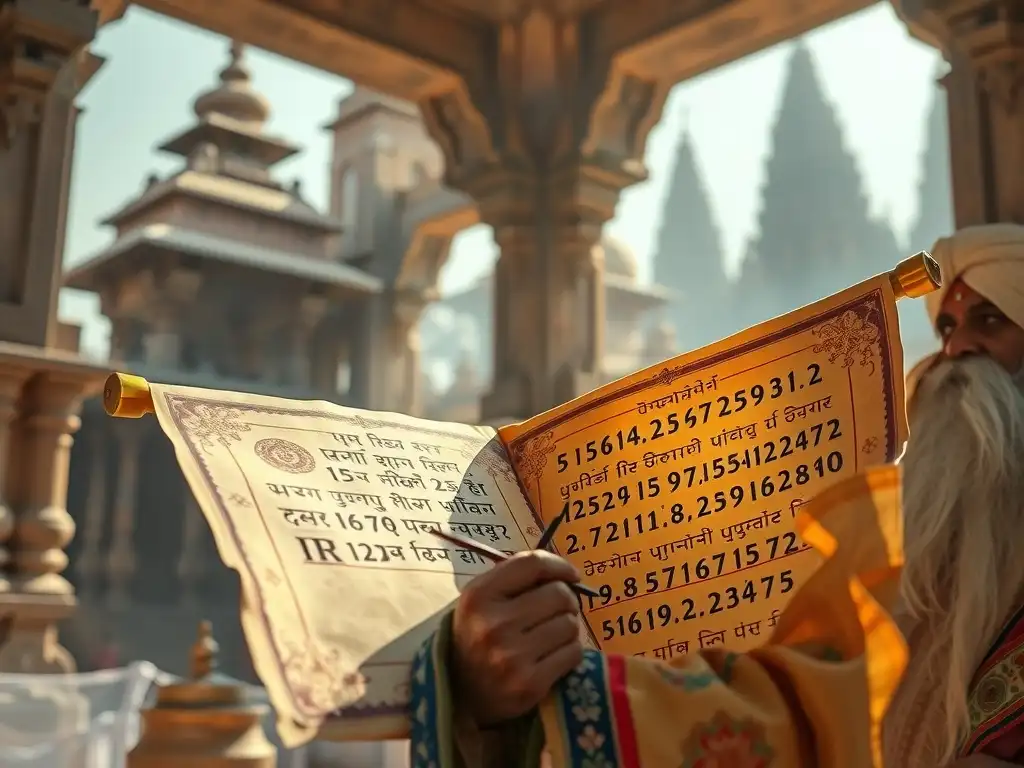
Welcome to Ancient India History, where we embark on a fascinating journey through the rich tapestry of India's past, uncovering the remarkable contributions of its ancient civilizations. Today, we delve into the captivating world of ancient Indian numerical systems, exploring how these foundational concepts not only shaped Indian mathematics but also significantly influenced Islamic mathematics.
Prepare to be intrigued as we reveal the intricate connections and lasting impact of these early numerical innovations on the broader landscape of mathematical thought. Join us as we unravel this essential chapter in the history of mathematics and discover how the brilliance of ancient India continues to resonate through time!

Introduction to Ancient Indian Numerical Systems
The study of ancient Indian numerical systems offers a fascinating glimpse into the mathematical ingenuity and cultural richness of one of the world's oldest civilizations. Over centuries, ancient India developed a sophisticated system of mathematics that not only contributed significantly to the global mathematical landscape but also profoundly influenced later cultures, particularly during the Islamic Golden Age.
This article aims to explore the intricate connections between ancient Indian numerical systems and Islamic mathematics, highlighting how knowledge transcended borders and transformed mathematical practices. By examining the historical context, key features, and the transition of this knowledge, we can better appreciate the enduring legacy of ancient Indian mathematics in shaping the world we live in today.
Overview of Ancient Indian Numerical Systems
Ancient Indian numerical systems were marked by their innovation and complexity, laying the groundwork for modern mathematics. The most notable contribution is the decimal place value system, which included the concept of zero as a number. This revolutionary idea not only simplified calculations but also enhanced the representation of large numbers. The following points summarize the key aspects of ancient Indian numerical systems:
- Decimal System: The introduction of a base-10 system that revolutionized arithmetic operations.
- Concept of Zero: The unique use of zero as both a placeholder and a numeral, allowing for more sophisticated calculations.
- Numerical Symbols: Development of a set of symbols and numerals, which would eventually evolve into the digits we use today.
Historical Context and Development
The historical context of ancient Indian numerical systems is rich and diverse, tracing back to the Indus Valley Civilization (circa 2500 BCE) and continuing through the Vedic period and the Gupta Empire (circa 320-550 CE). During this time, several key developments occurred:
- Indus Valley Civilization: Evidence of early numerical systems through seals and artifacts.
- Vedic Mathematics: Introduction of mathematical concepts in sacred texts, showcasing an early understanding of geometry and arithmetic.
- Gupta Empire: A flourishing period for mathematics, where scholars like Aryabhata and Brahmagupta made significant advancements in algebra and astronomy.
Key Features of Ancient Indian Mathematics
Ancient Indian mathematics was characterized by several innovative features that set it apart from contemporaneous systems:
- Algebraic Techniques: Development of methods for solving equations and understanding relationships between numbers.
- Astronomical Calculations: Advanced methods for calculating planetary positions and eclipses, which required precise numerical systems.
- Mathematical Texts: Important works such as "Aryabhatiya" by Aryabhata and "Brahmasphutasiddhanta" by Brahmagupta, which codified mathematical knowledge and practices.
The Transition of Knowledge from Ancient India to Islamic Mathematics

The transition of ancient Indian numerical systems to Islamic mathematics was facilitated by cultural exchanges and trade, which played a crucial role in disseminating knowledge across borders.
Cultural Exchanges between India and Islamic Scholars
The interaction between Indian mathematicians and Islamic scholars was marked by a mutual exchange of ideas and knowledge. As Islamic empires expanded, they encountered the rich mathematical traditions of India, leading to a synthesis of ideas that enriched both cultures.
- Translation Movements: Many texts from ancient India were translated into Arabic, making them accessible to Islamic scholars.
- Collaborative Scholarship: Scholars like Al-Khwarizmi incorporated Indian numerical systems into their works, significantly influencing Islamic mathematics.
The Role of Trade Routes in the Dissemination of Numerical Knowledge
Trade routes, such as the Silk Road and maritime routes, served as conduits for the exchange of goods and ideas. This facilitated the movement of not only commodities but also knowledge, including mathematical concepts.
- Cultural Interactions: Merchants and travelers carried mathematical texts and ideas across regions.
- Establishment of Learning Centers: Places like Baghdad became melting pots of knowledge, where Indian mathematical concepts were studied and expanded upon.
Notable Scholars Involved in the Transition
Several notable scholars played a pivotal role in bridging ancient Indian mathematics with Islamic thought:
- Al-Khwarizmi: Often referred to as the "father of algebra," he synthesized Indian and Greek mathematical ideas, leading to the development of algebra as a discipline.
- Al-Biruni: A polymath who studied Indian mathematics and astronomy, contributing to the understanding of these fields in the Islamic world.
- Omar Khayyam: Known for his work on cubic equations, he built upon the foundations laid by Indian mathematicians.
Through these channels of exchange and collaboration, ancient Indian numerical systems not only enriched Islamic mathematics but also laid the groundwork for future developments in the field. This interconnected history underscores the importance of cultural exchange in shaping mathematical thought across civilizations.
Key Contributions of Ancient Indian Numerical Systems to Islamic Mathematics
The ancient Indian numerical systems laid foundational principles that significantly influenced Islamic mathematics. The exchange of knowledge between these civilizations occurred through trade, conquests, and cultural interactions, particularly during the early centuries of the Islamic Golden Age. This transfer of ideas led to advancements in various mathematical fields, including arithmetic, algebra, and geometry.
Introduction of the Decimal System
One of the most significant contributions of ancient Indian mathematics is the decimal system, which uses a base-10 format. This system, including the place value concept, was revolutionary in simplifying calculations. It allowed for the representation of large numbers and facilitated complex arithmetic operations.
The decimal system was introduced to the Islamic world through translations of Indian texts, particularly during the 7th to 9th centuries. Scholars such as Al-Khwarizmi and Al-Kindi played a crucial role in adapting these concepts, which later became integral to Islamic mathematics. By implementing the decimal system, Islamic mathematicians could perform calculations with greater ease and accuracy, leading to advancements in various scientific fields.
Adoption of Zero as a Numerical Concept
The introduction of zero as a numerical concept is another critical aspect of ancient Indian numerical systems that profoundly impacted Islamic mathematics. In ancient India, zero was recognized not merely as a placeholder but as an independent entity representing the absence of value. This innovative concept allowed for the development of more sophisticated mathematical operations.
Islamic mathematicians, including figures like Al-Khwarizmi, adopted the use of zero from Indian sources, which enabled them to perform calculations that were previously cumbersome using Roman numerals or other numerical systems. This adoption was pivotal in the evolution of algebra and calculus, ultimately influencing mathematics as a whole.
Influence on Algebra and Arithmetic Practices
Ancient Indian contributions to algebra and arithmetic practices also found their way into Islamic mathematics. Indian mathematicians such as Brahmagupta provided early formulations of algebraic rules, including solutions to linear and quadratic equations. These principles were translated and studied by Islamic scholars, who further developed and expanded upon them.
The influence of ancient Indian practices can be seen in the works of Islamic mathematicians, who incorporated Indian methods into their own frameworks. This blending of knowledge not only advanced mathematical understanding but also laid the groundwork for future innovations in both cultures.
Comparative Analysis of Ancient Indian and Islamic Numerical Systems
A comparative analysis of ancient Indian and Islamic numerical systems reveals both similarities and differences that shaped their mathematical landscapes. This section delves into the shared foundations and unique methodologies that characterized each system.
Similarities in Mathematical Approaches
Both ancient Indian and Islamic mathematical systems share foundational similarities, particularly in their treatment of numbers and operations. The use of place value, the decimal system, and the concept of zero are pivotal elements that both civilizations embraced.
Moreover, the emphasis on rigorous problem-solving and logical reasoning showcases a common pursuit of mathematical excellence. Scholars from both traditions often engaged in translating and commenting on each other's works, fostering a collaborative environment that enriched their mathematical heritage.
Differences in Methodologies and Applications
Despite their shared features, there are notable differences in the methodologies and applications of ancient Indian and Islamic numerical systems. For instance, Indian mathematics was often more abstract and philosophical, focusing on theoretical aspects, while Islamic mathematics tended to be more practical, reflecting the needs of commerce, astronomy, and engineering.
Additionally, the presentation of mathematical concepts varied, with Indian texts often employing poetic verses, whereas Islamic scholars favored prose and systematic exposition. This divergence in approach not only influenced the teaching and learning of mathematics but also shaped the development of mathematical thought in their respective cultures.
Case Studies of Influential Texts
Several influential texts exemplify the impact of ancient Indian numerical systems on Islamic mathematics. Among these is the Brahmasphutasiddhanta by Brahmagupta, which introduced key concepts in arithmetic and algebra. Its translation into Arabic facilitated the spread of Indian mathematical knowledge.
Another significant text is Al-Khwarizmi's Al-Kitab al-Mukhtasar fi Hisab al-Jabr wal-Muqabala, which synthesized Indian and Greek mathematical knowledge. This work not only introduced algebra to the Islamic world but also served as a cornerstone for later mathematical developments in both Islamic and European traditions.
These case studies highlight the interconnectedness of mathematical ideas across cultures and underscore the lasting legacy of ancient Indian numerical systems on Islamic mathematics.
Impact of Ancient Indian Numerical Systems on Islamic Mathematical Advancements

The interaction between ancient Indian numerical systems and Islamic mathematics during the medieval period significantly shaped the development of mathematical thought. The introduction of the numeral system, particularly the concept of zero and place value, revolutionized mathematical calculations and problem-solving techniques in the Islamic world. This transformation not only enhanced computational efficiency but also laid the groundwork for advanced mathematical concepts that would later permeate into Europe and beyond.
The Indian numeral system, which included symbols for numbers and a sophisticated understanding of arithmetic, was transmitted to the Islamic world through trade and cultural exchanges. Islamic scholars adopted these systems, leading to innovations in algebra, geometry, and astronomy. This exchange is exemplified in the works of scholars such as Al-Khwarizmi, who integrated Indian numerical concepts into his writings, thereby influencing subsequent generations of mathematicians.
Development of Mathematical Treatises in the Islamic Golden Age
During the Islamic Golden Age, which spanned from the 8th to the 14th century, numerous mathematical treatises were developed that heavily borrowed from ancient Indian numerical systems. Scholars like Al-Khwarizmi, whose name is the root of the term "algorithm," wrote comprehensive texts that elucidated the use of the Hindu-Arabic numeral system. His seminal work, Al-Kitab al-Mukhtasar fi Hisab al-Jabr wal-Muqabala (The Compendious Book on Calculation by Completion and Balancing), introduced algebraic principles using Indian numerical methods, effectively bridging the gap between Indian and Islamic mathematics.
Additionally, the translation movement in places like Baghdad facilitated the dissemination of Indian mathematical texts. These translations not only preserved ancient knowledge but also enhanced it through critical commentary and application. The treatises produced during this era became essential resources for future mathematicians, establishing a foundation for modern mathematics.
Influence on Key Islamic Mathematicians
Several key Islamic mathematicians were profoundly influenced by ancient Indian numerical systems. Al-Khwarizmi is perhaps the most notable, but others, such as Al-Battani and Omar Khayyam, also incorporated these concepts into their works. Al-Battani's extensive calculations in trigonometry utilized the Indian numeral system, demonstrating its practical applications in astronomy. His tables of sines and tangents, calculated with great precision, showcased the effectiveness of the Indian numerical methods.
Omar Khayyam further expanded on these ideas by exploring the solutions to cubic equations, employing techniques derived from Indian mathematics. The integration of these numerical systems not only advanced the mathematical discourse of the time but also highlighted the collaborative nature of intellectual development across cultures.
Long-term Effects on Global Mathematical Practices
The influence of ancient Indian numerical systems on Islamic mathematics has had enduring effects on global mathematical practices. As Islamic scholars translated and expanded upon Indian mathematical texts, they laid the groundwork for the transmission of knowledge into Europe during the Renaissance. The introduction of the Hindu-Arabic numeral system to Europe facilitated more complex calculations, eventually replacing Roman numerals.
This transition had far-reaching implications, as it allowed for advancements in various fields, including commerce, navigation, and engineering. The mathematical principles developed during this period, rooted in ancient Indian systems, continue to underpin modern mathematical education and practices worldwide, emphasizing the importance of acknowledging these historical contributions.
Conclusion: The Lasting Legacy of Ancient Indian Numerical Systems
The legacy of ancient Indian numerical systems is profound, impacting not only Islamic mathematics but also the broader landscape of global mathematical knowledge. The ideas and methodologies developed in ancient India have endured, proving to be foundational for future mathematical explorations and innovations.
Reflection on Cultural Contributions to Mathematics
The cultural contributions of ancient Indian civilizations to mathematics are invaluable. The development of the place-value system and the conceptualization of zero are among the most significant advancements that originated in India. These ideas transcended geographical boundaries, influencing various cultures and civilizations, particularly during the Islamic Golden Age. Acknowledging this rich heritage allows us to appreciate the interconnectedness of different cultures in the realm of mathematical thought.
The Importance of Preserving Historical Knowledge
Preserving historical knowledge is crucial for understanding the evolution of mathematical concepts and practices. By studying the contributions of ancient Indian numerical systems, we gain insight into the collaborative nature of knowledge creation across cultures. This preservation not only honors the past but also informs contemporary mathematical education and research, ensuring that the legacies of ancient civilizations continue to inspire future generations.
References
The study of ancient Indian numerical systems and their influence on Islamic mathematics draws from a rich tapestry of historical texts and scholarly research. Below are some pivotal texts and sources that provide valuable insights into this fascinating intersection of cultures.
Key Texts and Sources on Ancient Indian Mathematics
-
“The History of Mathematics: A Brief Course” by Roger L. Cooke
This comprehensive text covers various aspects of mathematical evolution, including the contributions of ancient Indian mathematicians such as Aryabhata and Brahmagupta. It highlights the significance of the numeral system developed in India.
-
“Mathematics in India” by Kim Plofker
Plofker’s work offers an in-depth exploration of Indian mathematics, detailing the development of numerical concepts and their applications in astronomy and commerce. It serves as an essential resource for understanding the broader context of ancient Indian numerical systems.
-
“The Mathematics of Ancient India” by C. R. Rao and S. R. K. Rao
This detailed examination focuses on various mathematical texts from ancient India, dissecting the methods and systems employed by mathematicians of the time, and their eventual influence on neighboring cultures.
-
“A History of Indian Mathematics” by G. N. S. Raghavan
Raghavan's book provides a chronological account of the evolution of mathematics in India, emphasizing the development of numerical systems and their transmission to the Islamic world.
-
“The Hindu-Arabic Numerals” by David Eugene Smith
This classic work traces the journey of the numeral system from India to the Islamic world, detailing the adaptations and changes that occurred along the way.
Further Reading on Islamic Mathematics Influences
-
“Islamic Mathematics and Its Influence on the Western World” by J. L. Berggren
This book investigates how Islamic mathematicians absorbed and transformed ancient Indian numerical systems and discusses their impact on European mathematics.
-
“The Mathematics of Islam” by M. A. A. Dhanani
Dhanani explores the transmission of mathematical knowledge from ancient India to the Islamic scholars, highlighting significant figures who played a role in this cultural exchange.
-
“Islamic Science: The First Phase” by M. A. K. Khalil
This source delves into the early phases of Islamic science, emphasizing how the assimilation of Indian numerical systems contributed to advancements in mathematics and astronomy.
-
“The History of Islamic Mathematics” by M. N. K. Ali
Ali’s work chronicles the evolution of mathematics in the Islamic world, including the influence of ancient Indian systems, and discusses key mathematicians who were instrumental in this process.
-
“Mathematics and the Islamic World” by A. H. Al-Khalili
This text provides an overview of the mathematical advancements during the Islamic Golden Age, with a focus on how earlier Indian numerical systems were integrated and built upon.
By examining these texts, readers can gain a deeper understanding of the rich interplay between ancient Indian numerical systems and Islamic mathematics, illuminating the profound legacy of these cultures in the development of mathematical thought.
- Introduction to Ancient Indian Numerical Systems
- Overview of Ancient Indian Numerical Systems
- Historical Context and Development
- Key Features of Ancient Indian Mathematics
- The Transition of Knowledge from Ancient India to Islamic Mathematics
- Key Contributions of Ancient Indian Numerical Systems to Islamic Mathematics
- Comparative Analysis of Ancient Indian and Islamic Numerical Systems
- Impact of Ancient Indian Numerical Systems on Islamic Mathematical Advancements
- Conclusion: The Lasting Legacy of Ancient Indian Numerical Systems
- References
- What are ancient Indian numerical systems?
- How did ancient Indian numerical systems influence Islamic mathematics?
- What is the significance of the concept of zero in ancient Indian mathematics?
- Were there other mathematical contributions from ancient India?
- How did the Gupta Empire contribute to numerical systems?
Frequently Asked Questions
What are ancient Indian numerical systems?
Ancient Indian numerical systems refer to the mathematical frameworks developed in India, including the Hindu-Arabic numeral system, which is widely used today.
How did ancient Indian numerical systems influence Islamic mathematics?
The introduction of Indian numerals and concepts such as the zero significantly impacted Islamic mathematics, enhancing calculation methods and mathematical understanding.
What is the significance of the concept of zero in ancient Indian mathematics?
The concept of zero, developed in ancient India, is crucial as it serves as a placeholder in the numerical system, enabling complex calculations and advancements in mathematics.
Were there other mathematical contributions from ancient India?
Yes, ancient Indian mathematicians made significant contributions, including algebra, geometry, and the decimal system, which laid the groundwork for future mathematical developments.
How did the Gupta Empire contribute to numerical systems?
During the Gupta Empire, there was a flourishing of mathematical ideas, including the refinement of numerical systems and the spread of mathematical knowledge to other cultures, particularly through trade and scholarship.
Final Reflection: The Enduring Legacy of Ancient Indian Numerical Systems
The influence of ancient Indian numerical systems on Islamic mathematics is a testament to the interconnectedness of cultures and the timeless pursuit of knowledge. In an era where globalization is often seen as a modern phenomenon, it is crucial to recognize that the exchange of ideas and innovations has been a driving force in human progress for centuries. The mathematical concepts developed in ancient India not only laid the groundwork for future advancements but also enriched the Islamic Golden Age, showcasing how collaboration across cultures can lead to remarkable achievements.
The impact of these ancient numerical systems continues to resonate in today’s world, shaping our understanding of mathematics and its applications. As we delve into the history of mathematics, we uncover a rich tapestry woven from diverse traditions and insights. This blending of knowledge has fostered a culture of inquiry and innovation that is still evident in contemporary mathematical practices. Mathematics knows no races or geographic boundaries; for mathematics, the cultural world is one country.
– David Hilbert. This quote encapsulates the essence of how ancient Indian contributions have transcended time and space, influencing not just Islamic mathematics but the global mathematical landscape.
As we reflect on the lessons of ancient Indian numerical systems, let us embrace the spirit of curiosity and collaboration that characterized their development. I invite you to explore the rich history of mathematics and consider how the ideas and innovations from the past can inspire your own journey.
Whether you are a student, educator, or simply a lover of knowledge, take a moment to appreciate the profound connections that exist within our shared intellectual heritage and recognize the potential for future discoveries that can arise when we honor and learn from the wisdom of those who came before us.
Unleash the Power of Ancient Wisdom!
Thank you for diving into the fascinating world of ancient Indian numerical systems and their profound influence on Islamic mathematics! Your curiosity opens the door to understanding how these timeless concepts have shaped our present.
Now, let’s take action and further explore this profound legacy:
- Discover More: Visit our dedicated section on ancient Indian mathematics to uncover intriguing discoveries and their connections to modern science.
- Share Your Insights: Discuss your favorite discoveries from the article with friends or on social media to spark conversations about the remarkable influences of history.
- Join the Community: Engage with fellow history enthusiasts in our forum, where you can share thoughts, questions, and insights about the evolution of mathematics.
What aspect of ancient Indian mathematics captivates you the most, and how do you see it influencing today's world? Let’s discuss!