
The Mathematical Innovations of Nagarjuna: Beyond Arithmetic


Welcome to Ancient India History, where we embark on a remarkable journey through the rich tapestry of India's past, unveiling the incredible contributions of its ancient civilizations. Today, we delve into the intriguing world of Nagarjuna's mathematical contributions, a subject that reveals not just the sophistication of arithmetic, but also the profound impact of ancient thinkers on modern mathematics. Prepare to be captivated as we explore how Nagarjuna's innovations transcend mere numbers, opening the door to a deeper understanding of the intellectual heritage of India. Join us as we uncover the secrets of ancient wisdom and its lasting legacy!
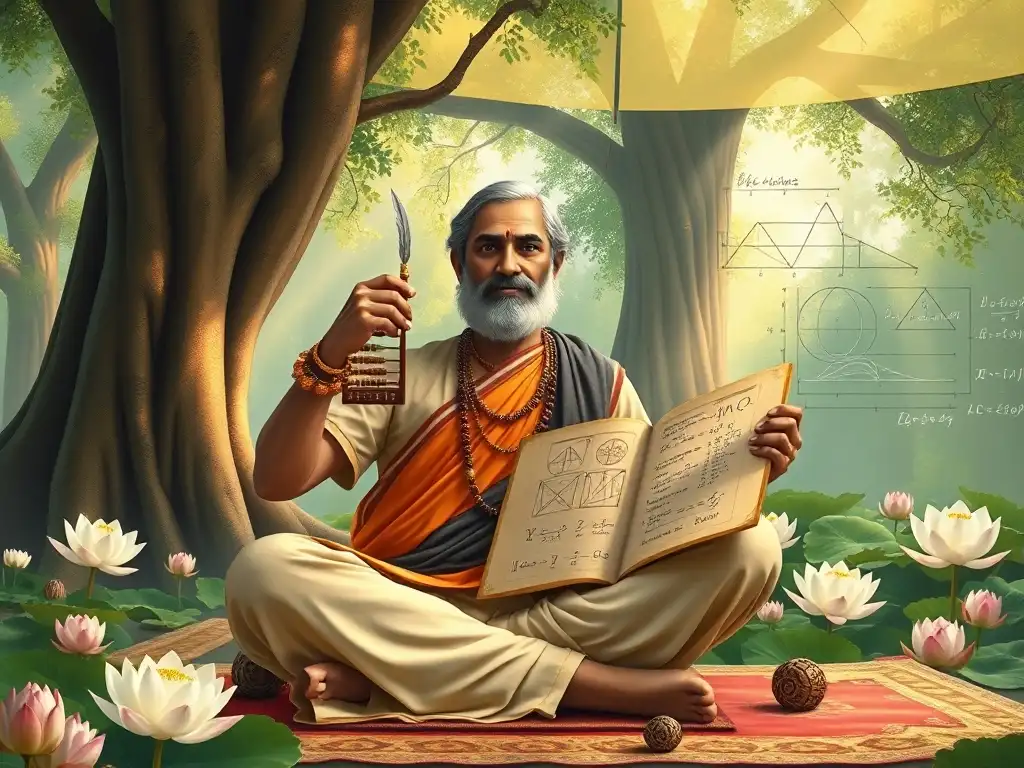
Introduction to Nagarjuna's Mathematical Contributions
Nagarjuna, a prominent figure in ancient Indian mathematics, is often celebrated for his exceptional contributions that extend far beyond mere arithmetic. Living during the 2nd century CE, during the flourishing period of Indian civilization, Nagarjuna's work not only laid foundational principles in mathematics but also influenced various fields such as philosophy and science.
His ideas and innovations reflect a profound understanding of mathematical concepts that resonate through history, shaping the evolution of mathematics in India and beyond. This article delves into Nagarjuna's mathematical contributions, examining his life, the historical context in which he operated, and the key areas where his influence is most evident.
Overview of Nagarjuna's Life and Era
Nagarjuna was born into a period marked by intellectual and cultural advancements in ancient India. He is best known as a philosopher and a mathematician, with his works often blending these two realms. His contributions emerged during the time of the Gupta Empire, a golden age known for its significant advancements in various disciplines, including mathematics, astronomy, and the arts.
Nagarjuna's most notable work, the Ganita Sutra, is a testament to his mathematical prowess. This text explored various mathematical concepts, including arithmetic operations, algebra, and geometry, showcasing his innovative approach to problem-solving. His ability to intertwine philosophical thought with mathematical reasoning made him a unique figure in the history of mathematics.
Importance of Nagarjuna in the History of Mathematics
Nagarjuna's importance in the mathematical landscape of ancient India cannot be overstated. His contributions are pivotal for several reasons:
- Integration of Philosophy and Mathematics: Nagarjuna's work exemplifies the seamless integration of philosophical inquiry with mathematical reasoning, influencing future generations of thinkers.
- Innovative Techniques: He introduced novel methods and techniques in arithmetic, paving the way for advancements in mathematical thought and practice.
- Cultural Influence: His ideas transcended regional boundaries, impacting mathematical practices in neighboring cultures and contributing to a broader understanding of mathematics across civilizations.
Through his innovative approach and profound insights, Nagarjuna has left an indelible mark on the history of mathematics, inspiring countless mathematicians and scholars for centuries.
Key Areas of Nagarjuna's Mathematical Contributions
Arithmetic Innovations and Techniques
Nagarjuna made significant strides in the field of arithmetic, introducing various techniques that simplified calculations and enhanced mathematical understanding. His methods included:
- Use of Zero: One of the most groundbreaking concepts introduced by Nagarjuna was the use of zero as a placeholder, which revolutionized numerical representation and computation.
- Fractions and Ratios: He advanced the understanding and manipulation of fractions, laying the groundwork for more complex mathematical calculations.
- Practical Applications: Nagarjuna emphasized the practical applications of arithmetic, demonstrating how mathematical techniques could be utilized in everyday life, including trade and commerce.
Development of Algebraic Concepts
Nagarjuna's contributions to algebra were remarkable, as he explored equations and their solutions in a way that was innovative for his time. Key aspects of his work in algebra include:
- Algebraic Equations: He formulated and solved various types of equations, contributing to the evolution of algebraic thought.
- Symbolic Representation: Nagarjuna's work hinted at the symbolic representation of mathematical ideas, which would later become a cornerstone of algebraic theory.
- Problem Solving: His approach to problem-solving emphasized logical reasoning and systematic methods, which are still relevant in modern mathematical practices.
Contributions to Geometry and Measurement
Nagarjuna's influence extended into geometry, where he made notable contributions that enhanced the understanding of spatial relationships and measurements. His key geometric innovations included:
- Geometric Principles: He formulated principles that governed the properties of shapes and figures, which played a crucial role in the development of geometry.
- Measurement Techniques: Nagarjuna developed techniques for measuring land and other physical entities, which were vital for agricultural and architectural advancements.
- Theoretical Foundations: His work laid the groundwork for future geometric studies in ancient India, influencing mathematicians who followed in his footsteps.
Nagarjuna's mathematical contributions were not only significant but transformative, bridging arithmetic, algebra, and geometry in ways that continue to resonate throughout the history of mathematics. His legacy inspires ongoing exploration and appreciation of ancient Indian mathematics.
Philosophical Context of Nagarjuna's Mathematics
Nagarjuna, a pivotal figure in Indian philosophy, is best known for his development of the concept of emptiness (śūnyatā) within Mahayana Buddhism. His philosophical inquiries extend into the realm of mathematics, where he explored the nature of concepts and their implications on mathematical thought. Nagarjuna's work emphasizes the idea that understanding the nature of reality—particularly through the lens of interdependence—can lead to a deeper comprehension of mathematical principles.
In his seminal text, the Mūlamadhyamakakārikā (Fundamental Verses on the Middle Way), Nagarjuna critiques the notion of inherent existence, suggesting that all phenomena, including mathematical entities, are contingent and relational. This philosophical stance invites a reevaluation of mathematical truths, urging scholars to consider the implications of relativity and context on mathematical propositions. As such, Nagarjuna's contributions lay the groundwork for a unique intersection of philosophy and mathematics that continues to inspire contemporary discussions.
Relationship Between Mathematics and Philosophy
The interplay between mathematics and philosophy in Nagarjuna's work is profound. He posits that mathematical statements are not merely abstract truths but are deeply intertwined with the philosophical understanding of reality.
- Conceptual Analysis: Nagarjuna believed that mathematical concepts, like numbers and operations, should be analyzed in terms of their relational properties rather than as fixed entities. This perspective challenges the traditional view of mathematics as a purely logical framework.
- Dialectical Reasoning: His dialectical method encourages a critical examination of mathematical assumptions, inviting mathematicians to question the validity of their foundational principles. By applying these philosophical techniques, Nagarjuna enriches the field of mathematics with a deeper understanding of its epistemological roots.
Influence of Buddhist Thought on Mathematical Concepts
Buddhist thought, particularly as espoused by Nagarjuna, has significantly shaped mathematical concepts in ancient India.
- Non-duality: The Buddhist principle of non-duality reflects in Nagarjuna's approach to mathematics, where he blurs the lines between the absolute and the relative. This is particularly evident in his treatment of mathematical infinities and limits, which can be understood as non-dualistic concepts rather than absolute states.
- Interdependence: Nagarjuna's idea of interdependence finds parallels in mathematical relationships, such as functions and variables, which are defined by their interactions. This holistic approach to understanding mathematical entities encourages a more integrated view of mathematical operations.
Nagarjuna's Influence on Later Mathematicians
Nagarjuna's philosophical insights had a lasting impact on the development of mathematics in India and beyond. His innovative ideas not only shaped Indian mathematicians but also resonated with scholars from diverse traditions.
Impact on Indian Mathematics
Nagarjuna's contributions to mathematical thought laid the foundation for subsequent Indian mathematicians, such as Brahmagupta and Bhaskara II, who further developed concepts related to zero, infinity, and algebra.
- Zero and Place Value: The philosophical discussions on emptiness and non-entity significantly influenced the conceptualization of zero as a number, allowing for advancements in arithmetic and number systems.
- Algebraic Approaches: The dialectical methods introduced by Nagarjuna encouraged later mathematicians to adopt more abstract algebraic approaches, leading to innovations in solving equations and understanding mathematical relationships.
Legacy in Global Mathematical Traditions
Nagarjuna's influence transcended geographical boundaries, leaving an indelible mark on global mathematical traditions. His ideas found resonance in various cultures, particularly through the transmission of Buddhist philosophies along trade routes.
- Transmission of Ideas: As Buddhism spread to regions such as China and Tibet, Nagarjuna's mathematical and philosophical concepts were integrated into local traditions. This cross-cultural exchange enriched the understanding of mathematics and philosophy in these areas.
- Modern Relevance: Today, Nagarjuna's ideas continue to inform discussions in mathematics and philosophy, particularly in the realms of theoretical mathematics and the philosophy of mathematics. His work invites contemporary mathematicians to reconsider the foundational aspects of their discipline, emphasizing the importance of philosophical inquiry in mathematical practice.
Nagarjuna's mathematical contributions extend far beyond arithmetic, deeply intertwining with philosophical thought and leaving a legacy that continues to inspire and challenge mathematicians across the globe.
Comparative Analysis of Nagarjuna's Work with Other Mathematicians
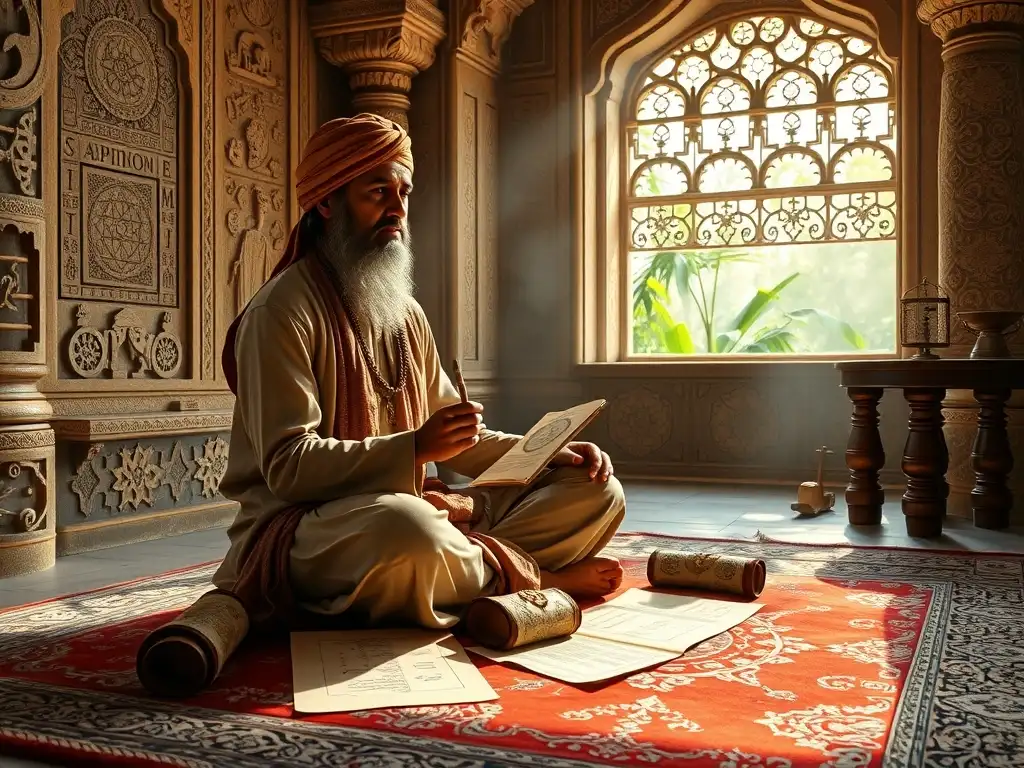
Nagarjuna, a prominent figure in ancient Indian mathematics, is often celebrated for his innovative approaches, particularly in the realm of arithmetic and numerical representation. When comparing his work with other mathematicians of his time, such as Aryabhata and Brahmagupta, distinct similarities and differences emerge that highlight the unique aspects of Nagarjuna's contributions.
One of the notable similarities between Nagarjuna and Aryabhata is their shared focus on the application of mathematics in astronomy. Both mathematicians used mathematical concepts to develop sophisticated astronomical models. However, while Aryabhata's work primarily emphasized the computation of planetary positions and the development of sine tables, Nagarjuna's focus extended to the conceptual understanding of numbers and their properties.
In contrast, Brahmagupta's contributions are better known for formulating rules for arithmetic operations on negative numbers and zero. Nagarjuna's work, while also dealing with these concepts, approached them through a philosophical lens, intertwining arithmetic with metaphysical ideas. This distinction places Nagarjuna's contributions in a unique philosophical context that sets him apart from both Aryabhata and Brahmagupta.
Similarities and Differences with Aryabhata
Nagarjuna and Aryabhata both made significant strides in the field of mathematics, but their methodologies and applications diverged in notable ways. Aryabhata is often credited with introducing the place value system and the concept of zero, which had profound implications for mathematics as a whole. He focused on practical applications, especially in astronomy, where precise calculations were vital.
Nagarjuna, while also concerned with astronomy, approached mathematics through a philosophical lens, emphasizing the underlying principles of numbers and their relationships. One of the key differences lies in Nagarjuna's exploration of arithmetic operations beyond mere calculation; he delved into the philosophical implications of numbers, which enriched mathematical discourse in ancient India.
While both mathematicians contributed significantly to the development of mathematics, Aryabhata laid the groundwork for computational techniques, whereas Nagarjuna expanded the discussion to include philosophical considerations and the nature of numbers.
Contributions of Brahmagupta and Their Relation to Nagarjuna
Brahmagupta is renowned for his foundational work in arithmetic and algebra, notably for his rules concerning the manipulation of zero and negative numbers. His seminal text, the Brahmasphutasiddhanta, established key principles that would influence future generations of mathematicians.
Nagarjuna's contributions can be seen as a philosophical extension of Brahmagupta's arithmetic principles. While Brahmagupta provided the rules for operations, Nagarjuna explored the deeper implications of these operations, questioning the nature of numbers and their existence. For instance, both mathematicians dealt with the concept of zero, but Nagarjuna's approach questioned the ontological status of zero, giving rise to debates that would resonate in philosophical circles.
Moreover, Nagarjuna's work in mathematical reasoning can be seen as building upon the foundations laid by Brahmagupta. By integrating Brahmagupta's arithmetic rules with philosophical inquiry, Nagarjuna enriched the mathematical landscape of ancient India, paving the way for future explorations in both mathematics and philosophy.
Conclusion: The Lasting Impact of Nagarjuna's Mathematical Innovations
Nagarjuna's mathematical innovations have left an indelible mark on the field of mathematics, transcending the boundaries of arithmetic to encompass philosophical inquiry. His ability to engage with mathematical concepts at a deep level has ensured that his work remains relevant even in contemporary discussions surrounding mathematics and philosophy.
Summary of Key Contributions
Nagarjuna’s contributions can be summarized as follows:
- Philosophical Approach: He intertwined mathematics with philosophical inquiry, exploring the nature of numbers and their relationships.
- Arithmetic Innovations: Nagarjuna provided significant insights into operations involving zero and negative numbers, complementing the work of his predecessors.
- Influence on Future Generations: His philosophical discourse on mathematics laid the groundwork for later mathematicians and thinkers, influencing both mathematical and philosophical traditions.
Reflection on the Relevance of Nagarjuna's Work Today
Today, Nagarjuna's work continues to resonate within both mathematical and philosophical contexts. As mathematics evolves, the fundamental questions he posed regarding the nature of numbers and their existence remain pertinent.
In educational settings, Nagarjuna's emphasis on understanding mathematical concepts beyond computation encourages a more profound engagement with mathematics. Moreover, his integration of philosophy into mathematics serves as a reminder of the discipline's rich historical legacy and the importance of interdisciplinary approaches. As society grapples with complex mathematical concepts in various fields, Nagarjuna’s insights offer a valuable perspective that encourages critical thinking and philosophical reflection.
Further Reading and Resources on Nagarjuna's Mathematical Contributions
To gain a comprehensive understanding of Nagarjuna's mathematical contributions, several resources can provide deeper insights into his work and the broader context of mathematics in ancient India. Below are some recommended books, articles, and online resources that delve into Nagarjuna's innovations and the significance of his contributions.
Recommended Books and Articles
-
"Nagarjuna: The Philosophy of the Middle Way" by Mark Siderits
This book explores the philosophical underpinnings of Nagarjuna's work, offering insights into how his ideas intersect with mathematical principles.
-
"Mathematics in Ancient India" by Kim Plofker
A detailed examination of the evolution of mathematics in India, this book places Nagarjuna's contributions within the broader narrative of Indian mathematical history.
-
"The History of Mathematics: A Brief Course" by Roger L. Cooke
This course offers a concise overview of significant mathematicians, including Nagarjuna, and discusses their contributions to the development of mathematical thought.
-
"The Life and Works of Nagarjuna" by N. S. Raghunandan
An in-depth analysis of Nagarjuna's life, this book focuses on his contributions to mathematics and philosophy, shedding light on his methodologies and innovations.
-
Research Articles in Journals
Academic journals often publish articles focusing on specific aspects of Nagarjuna's work. Searching databases like JSTOR or Google Scholar can yield valuable peer-reviewed papers that discuss his mathematical contributions in depth.
Online Resources for Deeper Exploration
-
Indian Mathematical Society
The Indian Mathematical Society's website offers a collection of articles and papers focusing on prominent Indian mathematicians, including Nagarjuna. It is a great platform for accessing academic discussions and resources related to his work.
-
The Digital Library of India
This online repository includes digitized texts from ancient Indian scholars. Searching for Nagarjuna can lead to primary sources and translations that provide direct insights into his mathematical theories.
-
YouTube Channels on Ancient Indian Mathematics
Several educational YouTube channels focus on ancient Indian mathematics and its pioneers. Look for videos that specifically discuss Nagarjuna’s contributions to get a visual and engaging perspective on his work.
-
Online Courses on Ancient Indian Philosophy and Mathematics
Platforms like Coursera and edX occasionally offer courses on ancient Indian philosophy, which may include modules specifically discussing Nagarjuna and his contributions to mathematics.
These resources will not only broaden your knowledge of Nagarjuna's mathematical contributions but also enhance your understanding of the historical context and the evolution of mathematics in ancient India.
- Introduction to Nagarjuna's Mathematical Contributions
- Key Areas of Nagarjuna's Mathematical Contributions
- Philosophical Context of Nagarjuna's Mathematics
- Nagarjuna's Influence on Later Mathematicians
- Comparative Analysis of Nagarjuna's Work with Other Mathematicians
- Conclusion: The Lasting Impact of Nagarjuna's Mathematical Innovations
- Further Reading and Resources on Nagarjuna's Mathematical Contributions
Frequently Asked Questions
What were Nagarjuna's mathematical contributions?
Nagarjuna is renowned for his innovative concepts in mathematics, particularly in algebra and the use of zero. His work laid the groundwork for advanced mathematical theories in India.
How did Nagarjuna influence Indian mathematics?
Nagarjuna's approach to mathematical problems and his introduction of new methodologies significantly influenced later mathematicians, helping to establish a more systematic study of arithmetic and algebra.
What is the significance of zero in Nagarjuna's work?
Nagarjuna's exploration of zero as a number was groundbreaking, allowing for more complex calculations and enhancing the understanding of numerical systems in ancient mathematics.
Did Nagarjuna contribute to any fields outside of mathematics?
Yes, Nagarjuna was also a prominent philosopher and is known for his contributions to Buddhist philosophy, particularly in the development of Madhyamaka thought, which emphasizes the concept of emptiness.
Why is Nagarjuna considered a pioneer in mathematics?
Nagarjuna's innovative ideas, particularly in the realms of fractions and early algebra, mark him as a pioneer whose work influenced not only Indian mathematics but also contributed to the development of mathematical thought globally.
Final Reflection: Embracing the Legacy of Nagarjuna's Mathematical Contributions
The mathematical innovations of Nagarjuna are not merely historical footnotes; they resonate profoundly with our contemporary understanding of mathematics and its applications. As we navigate an increasingly complex world, the principles and methodologies introduced by Nagarjuna continue to influence not only mathematical theory but also the way we approach problem-solving in various fields. His work reminds us that mathematics is not just about numbers; it is a language that can articulate the intricacies of our universe.
The impact of Nagarjuna's contributions extends far beyond the confines of arithmetic; it has shaped the cultural and intellectual landscape of mathematics as we know it today. His pioneering ideas on zero and negative numbers, for instance, laid the groundwork for modern mathematical concepts that we often take for granted. Mathematics is the music of reason,
said James Joseph Sylvester, and indeed, Nagarjuna's work composes a symphony that continues to inspire mathematicians and thinkers around the globe.
As we reflect on the lessons derived from Nagarjuna's mathematical contributions, let us challenge ourselves to embrace curiosity and creativity in our own pursuits. Consider how the principles of innovation and exploration that Nagarjuna embodied can be applied in your life. Whether you are a student, a professional, or simply a lover of knowledge, let his legacy inspire you to think critically, question assumptions, and push the boundaries of what is possible in your own journey.
Unveil the Wonders of Nagarjuna's Innovations!
Thank you for journeying through the remarkable mathematical contributions of Nagarjuna with us! By exploring his genius, you’ve gained insights into how ancient wisdom can still inspire our understanding today. Now, let’s take that enthusiasm further and dive deeper into the legacy Nagarjuna has left behind.
- Explore Nagarjuna's Works: Visit a local library or an online archive to read his original texts or summaries of his groundbreaking mathematical theories.
- Share Your Discoveries: Connect with friends or engage in social media communities to discuss how Nagarjuna's ideas can be applied to contemporary challenges.
- Join a Historical Mathematics Group: Look for or establish a local group dedicated to exploring ancient mathematics, where you can share insights and resources.
What insights from Nagarjuna's innovations resonate most with you, and how might they influence your approach to mathematics today?