
The Role of Mathematics in Ancient Indian Religious Texts

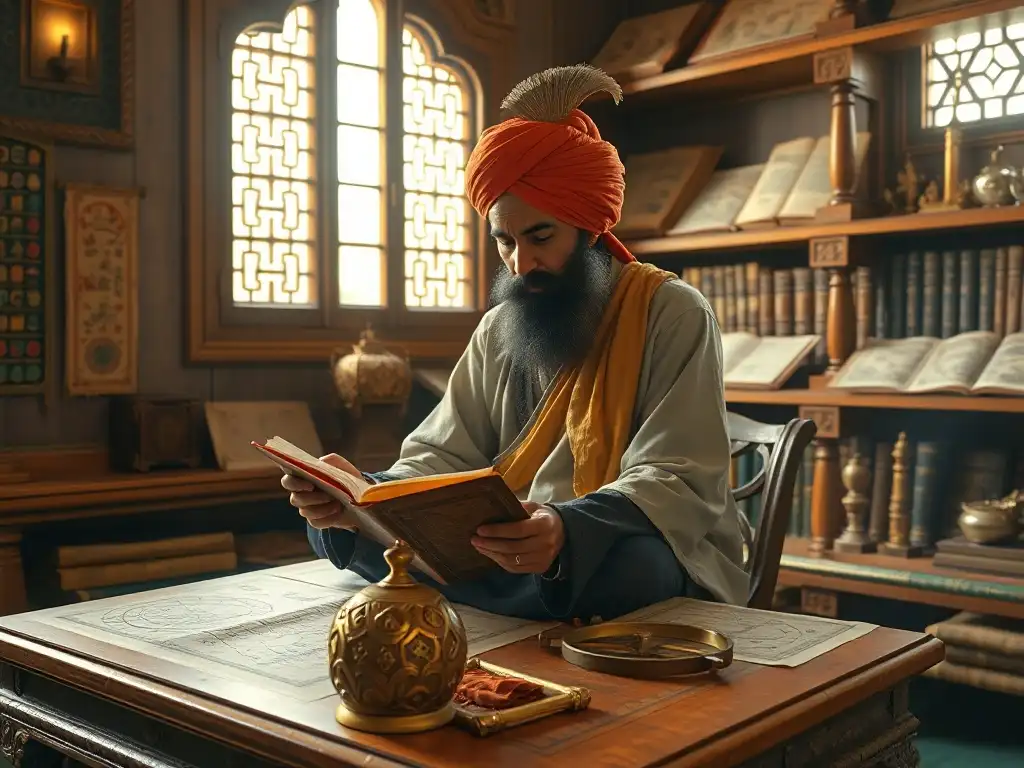
Welcome to Ancient India History, where we embark on a fascinating journey through the rich tapestry of Indian civilization! As we delve into the depths of time, you'll discover the remarkable contributions to mathematics that emerged from ancient Indian texts, shaping not only the region but also the world. In our featured article, "The Role of Mathematics in Ancient Indian Religious Texts," we unveil the intricate connections between spirituality and numerical wisdom. Are you ready to explore how these ancient scholars laid the groundwork for modern mathematics? Dive in and uncover the secrets that lie within!

Mathematics has long been a cornerstone of human civilization, and its roots can be traced back to ancient cultures. In the context of Ancient India, mathematical concepts were not only pivotal for practical applications but were also deeply intertwined with religious and philosophical ideologies.
The study of Mathematics in ancient Indian texts reveals a landscape where numbers and spirituality coalesce, illustrating how mathematics served as a tool for understanding the universe and its divine order. This article delves into the significant role mathematics played in ancient Indian religious texts, showcasing how mathematical principles were integral to various religious practices and beliefs.
Introduction to Mathematics in Ancient Indian Texts
Overview of Ancient Indian Mathematics
Ancient India was home to some of the world's earliest mathematicians who made substantial contributions to various fields, including arithmetic, geometry, and algebra. Texts such as the Sulbasutras and Aryabhatiya highlight the sophistication of mathematical thought. The Sulbasutras, dating back to around 800 BCE, are ancient texts that provide instructions on constructing altars for religious rituals. They reveal the use of geometry and measurement, showcasing how mathematics was essential in performing religious ceremonies accurately.
The contributions of mathematicians like Brahmagupta and Bhaskara II further advanced the field, with works that included concepts like zero, negative numbers, and sophisticated algorithms. These developments laid the groundwork for future mathematical exploration and influenced subsequent scholars across the world.
Importance of Religious Context in Mathematics
In ancient Indian civilization, mathematics was not merely an abstract discipline; it was deeply embedded within the fabric of religious life. Many mathematical concepts were developed to serve practical religious purposes, such as optimizing ritual performances and astronomical calculations for religious observances. The alignment of mathematics with spiritual beliefs illustrates how ancient Indians perceived numbers and calculations as a means to connect with the divine.
For instance, the intricate calculations required for determining auspicious timings for rituals, or the geometric designs of temple architecture, reveal the sacred nature of mathematical practices. This religious context not only elevated the status of mathematics but also ensured its preservation and transmission through generations.
Historical Background of Ancient Indian Religious Texts
Key Religious Texts Featuring Mathematical Concepts
Several key religious texts from ancient India feature mathematical concepts that have been vital in understanding the intersection of spirituality and mathematics. Among them:
- Vedas: The Rigveda and Yajurveda contain hymns and rituals that often require precise calculations for timing and offerings.
- Sulbasutras: As mentioned earlier, these texts are crucial for understanding the mathematical principles used in constructing altars and performing rituals.
- Puranas: Texts such as the Bhagavata Purana and Vishnu Purana incorporate astronomical calculations that were essential for determining calendar dates for festivals and rituals.
- Aryabhatiya: Written by Aryabhata in the 5th century, this work synthesizes various mathematical concepts and their applications, including arithmetic and trigonometry, within a cosmological framework.
These texts not only highlight the mathematical sophistication of ancient Indian civilization but also underscore the significance of mathematics in religious practices, shaping the spiritual landscape of the time. Through this exploration, we can appreciate the rich tapestry of mathematics interwoven with the spiritual beliefs of ancient Indian society.
Significant Mathematical Contributions Found in Ancient Indian Texts
Ancient Indian texts are treasure troves of mathematical knowledge, reflecting the integration of mathematics with spirituality, architecture, and astronomy. These contributions extend beyond mere calculations; they embody philosophical and theological implications that shaped the understanding of the universe. Texts such as the Vedas, the Sulbasutras, and the Aryabhatiya reveal a deep appreciation for mathematical concepts, showcasing significant advancements in various fields, particularly geometry, arithmetic, and astronomy.
The Sulbasutras, for instance, are ancient texts that detail the rules for constructing altars and sacrificial fire pits, emphasizing geometric principles. These texts provided guidelines on measurements and ratios, indicating that mathematics was not only practical but also a sacred endeavor. The Aryabhatiya, authored by Aryabhata, further advanced mathematical knowledge, introducing concepts such as zero and place value, which played crucial roles in both religious and secular contexts.
Geometry and Its Application in Religious Architecture
Geometry held a prominent place in ancient Indian architecture, especially in the construction of temples and altars. The Sulbasutras outlined various geometric shapes and their properties, enabling architects to design structures that adhered to specific religious requirements. For example, the square and rectangle were preferred shapes, as they symbolized stability and alignment with cosmic principles.
The application of geometry extended to the mandala, a spiritual symbol representing the universe. Mandalas were often constructed using intricate geometric patterns, serving as a guide for meditation and worship. The precision required in these designs reflects a profound understanding of geometric concepts, illustrating how mathematics influenced the spiritual experience in ancient Indian culture.
Arithmetic and Rituals: The Role of Numbers in Sacrifices
In ancient Indian religious practices, numbers held symbolic significance, particularly in rituals and sacrifices. The Vedic texts emphasize the importance of specific numbers, such as three, seven, and twelve, which were often associated with deities and cosmic events. The number of offerings, the arrangement of items, and the timing of rituals were meticulously calculated to align with astrological positions, showcasing the intersection of arithmetic and spirituality.
Additionally, the concept of sankhya (counting) was integral to the performance of yajnas (sacrificial rituals). The precise counting of offerings was believed to ensure the efficacy of the ritual, thus highlighting the necessity of arithmetic in religious practices. This numerical symbolism not only facilitated the rituals but also reinforced the connection between the material and the divine.
Astronomy and Calendar Calculations in Religious Observances
Astronomy played a vital role in ancient Indian religious observances, with calendar calculations determining auspicious timings for rituals. The ancient Indians developed sophisticated astronomical models to predict celestial events, which were crucial for aligning religious activities with cosmic cycles. Texts such as the Surya Siddhanta provided guidelines for calculating planetary positions and eclipses, emphasizing the importance of celestial movements in spiritual practices.
The establishment of lunar and solar calendars allowed for the synchronization of festivals and rituals with seasonal changes, ensuring that religious observances aligned with the natural rhythms of the universe. This connection between mathematics, astronomy, and spirituality underscores the holistic approach ancient Indian scholars took towards understanding their world.
Influential Mathematicians and Scholars in Ancient India
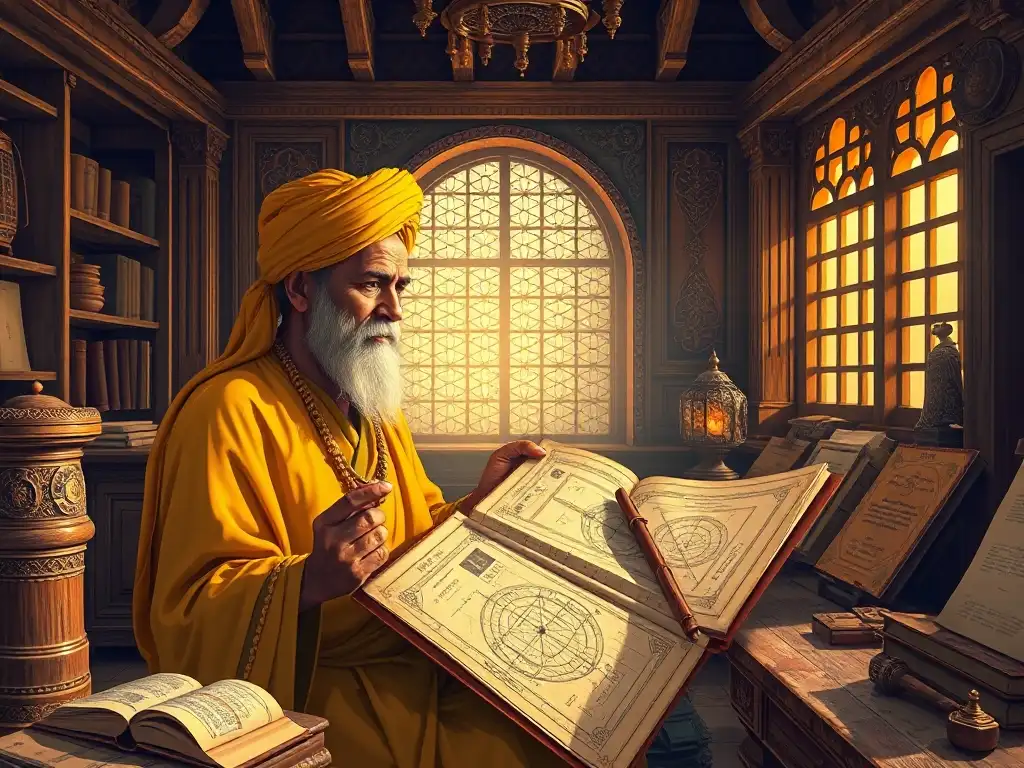
Ancient India produced several influential mathematicians and scholars whose contributions significantly impacted both mathematics and religious thought. Their works not only advanced mathematical knowledge but also intertwined with the philosophical and spiritual fabric of ancient Indian society.
Aryabhata: His Contributions to Mathematics and Astronomy
Aryabhata, one of the earliest mathematicians from ancient India, made groundbreaking contributions to both mathematics and astronomy. His seminal work, the Aryabhatiya, introduced concepts such as the place value system and the concept of zero, which have become fundamental in modern mathematics. Aryabhata's insights into arithmetic, algebra, and trigonometry were profound, and he used these mathematical principles to explain astronomical phenomena.
His calculations regarding the Earth's rotation, eclipses, and planetary motions were remarkably accurate for his time. Aryabhata's work laid the foundation for future scholars and integrated mathematical thought into the realm of astronomy and religious observance, emphasizing the importance of precise calculations for astrological predictions.
Brahmagupta: Innovations in Mathematics and Religious Texts
Brahmagupta, a notable mathematician and astronomer, is best known for his work Brahmasphutasiddhanta, where he expanded upon Aryabhata’s ideas and introduced rules for arithmetic operations involving zero and negative numbers. His innovative approaches to solving quadratic equations and defining mathematical operations were groundbreaking.
Incorporating religious themes, Brahmagupta also discussed the significance of numbers in rituals and their relationship to cosmic principles. His writings reflect a deep understanding of how mathematics intersects with spirituality, illustrating the reverence ancient Indians had for numbers not just as tools for calculation but as symbols of divine order.
Bhaskara I and II: Commentaries on Mathematical Concepts in Religion
Bhaskara I and II were pivotal figures in the development of mathematics in ancient India. Bhaskara I is known for his commentaries on Aryabhata's work, where he elucidated complex concepts in mathematics and astronomy, making them accessible to a broader audience. His writings emphasized the practical applications of mathematics in religious rituals and calendar calculations.
Bhaskara II, often referred to as Bhaskara the Great, wrote the Lilavati and Bija Ganita, where he explored mathematical concepts through poetic language, making them engaging and relatable. His work often included discussions on the significance of numbers in religious contexts, demonstrating how mathematics was woven into the spiritual life of ancient India. Both Bhaskaras exemplified the synergy between mathematics and religion, marking a significant period in the history of mathematics in ancient Indian texts.
The Interconnection Between Mathematics and Philosophy in Ancient Indian Texts
In ancient India, mathematics and philosophy were deeply intertwined, reflecting a broader understanding of the universe and the human experience. Texts such as the Vedas and Upanishads reveal a sophisticated grasp of mathematical concepts that were often used to illustrate philosophical ideas. This interrelationship can be seen in the way numbers and geometric principles were employed to express metaphysical concepts, such as the nature of the cosmos and the self.
The philosophical inquiry into the nature of reality often led scholars to explore mathematical ideas. For instance, the concept of infinity, which is central to both mathematics and philosophical thought, finds its roots in ancient Indian texts. Scholars like Aryabhata and Brahmagupta not only engaged with numerical calculations but also contemplated the implications of these numbers in understanding the universe and human existence.
Furthermore, the use of mathematics in rituals and cosmology underscores how these fields were not merely academic pursuits but integral to spiritual life. The alignment of mathematical principles with philosophical teachings allowed for a more profound exploration of existence, making ancient Indian texts rich sources for both mathematical and philosophical inquiry.
Mathematical Concepts Reflecting Philosophical Ideas
Several mathematical concepts found in ancient Indian texts reflect profound philosophical ideas. One prominent example is the concept of zero, which was not only a numerical value but also symbolized the void or the concept of nothingness, a topic extensively discussed in philosophical circles. This duality of zero embodies the philosophical debate on existence and non-existence, highlighting how deeply mathematics was woven into the fabric of Indian thought.
Another significant mathematical idea is the concept of infinity, articulated through the notion of "Ananta." This idea extends beyond mathematics into the philosophical realms of eternity and the infinite nature of the universe. The mathematical formulations involving infinite series and limits can still be traced back to ancient Indian scholars who explored these concepts within their philosophical frameworks.
Moreover, the use of geometric patterns in temples and religious art reflects a mathematical precision that aligns with the philosophical ethos of harmony and balance in nature. The intricate designs often symbolize cosmic order and spiritual truths, demonstrating how mathematical concepts were used to convey deeper philosophical meanings.
The Influence of Mathematics on Spiritual Practices
Mathematics played a crucial role in the spiritual practices of ancient India, influencing rituals, astronomy, and architecture. The precise calculations required for determining auspicious timings for rituals (muhurtas) were grounded in mathematical principles, showcasing the practical application of mathematics in religious life.
Astrological texts, such as the "Surya Siddhanta," illustrate the use of mathematics in predicting celestial events, which were critical for religious observances. The alignment of celestial bodies was believed to have a direct impact on human affairs, thus making mathematical calculations essential for spiritual practitioners.
In architecture, the design of temples incorporated mathematical principles to create spaces that were not only aesthetically pleasing but also spiritually significant. The proportions and symmetries used in temple architecture often reflected cosmic order, with mathematical ratios signifying harmony between the earthly and the divine.
Conclusion: The Enduring Legacy of Mathematics in Ancient Indian Religious Texts
The exploration of mathematics within ancient Indian religious texts reveals a rich tapestry of intellectual thought where mathematics was not merely a tool for calculation but a means to understand the universe and one's place within it. This legacy continues to influence both religious practices and the field of mathematics itself.
Summary of Key Points
- Ancient Indian texts demonstrate a profound interconnection between mathematics and philosophy, highlighting their roles in exploring metaphysical concepts.
- Mathematical ideas, such as zero and infinity, were intertwined with philosophical inquiries, reflecting a dual understanding of existence and non-existence.
- The influence of mathematics extended to spiritual practices, impacting rituals, astrology, and temple architecture, where mathematical precision underscored spiritual significance.
The Impact of Ancient Indian Mathematics on Modern Mathematical Thought
The contributions of ancient Indian mathematicians have had a lasting impact on modern mathematical thought. The introduction of the decimal system and the concept of zero laid the groundwork for numerous advancements in mathematics worldwide. These innovations facilitated the development of algebra and calculus, influencing key mathematical developments in both the Islamic Golden Age and the European Renaissance.
Moreover, the philosophical underpinnings of ancient Indian mathematics continue to resonate, prompting contemporary scholars to revisit these texts for insights into the relationship between mathematics, philosophy, and spirituality. As such, the legacy of mathematics in ancient Indian religious texts endures, shaping not only historical perspectives but also modern mathematical discourse.
- Introduction to Mathematics in Ancient Indian Texts
- Historical Background of Ancient Indian Religious Texts
- Significant Mathematical Contributions Found in Ancient Indian Texts
- Influential Mathematicians and Scholars in Ancient India
- The Interconnection Between Mathematics and Philosophy in Ancient Indian Texts
- Conclusion: The Enduring Legacy of Mathematics in Ancient Indian Religious Texts
- What is the significance of mathematics in ancient Indian texts?
- Which ancient Indian texts are known for their mathematical contributions?
- How did religion influence mathematics in ancient India?
- What are some mathematical concepts found in ancient Indian texts?
- How did ancient Indian mathematics impact the world?
Frequently Asked Questions
What is the significance of mathematics in ancient Indian texts?
Mathematics in ancient Indian texts plays a crucial role in understanding the scientific advancements and the cultural heritage of ancient civilizations. These texts highlight various mathematical concepts that influenced subsequent developments in the field.
Which ancient Indian texts are known for their mathematical contributions?
Key texts such as the Sulba Sutras and Aryabhata's Aryabhatiya contain significant mathematical theories and principles that laid the groundwork for future mathematical exploration and education in India.
How did religion influence mathematics in ancient India?
Ancient Indian religious texts often integrated mathematical concepts with astronomy and rituals, showcasing how spiritual practices required precise calculations for timing rituals and constructing altars.
What are some mathematical concepts found in ancient Indian texts?
Ancient Indian texts introduced concepts such as zero, decimal system, and geometry, which were essential for calculating areas, volumes, and solving equations, demonstrating a deep understanding of mathematical principles.
How did ancient Indian mathematics impact the world?
The mathematical advancements in ancient Indian texts significantly influenced other cultures, especially during the Golden Age, contributing to the global development of mathematics and laying the foundation for modern mathematical practices.
Final Reflection: The Enduring Legacy of Mathematics in Ancient Indian Texts
The exploration of mathematics in ancient Indian texts reveals a profound connection between numerical concepts and spiritual philosophy that resonates powerfully in today's world. As we navigate an era dominated by technology and data, the foundational principles laid out in these ancient scriptures remind us that mathematics is not merely a tool for calculation but a language that articulates the universe's mysteries. The intricate relationship between mathematics and spirituality in these texts serves as a striking reminder of the holistic nature of knowledge.
Cultural and social landscapes are continually shaped by the wisdom embedded in ancient traditions. The teachings found in texts like the Vedas and the Sulbasutras not only laid the groundwork for mathematical thought but also influenced various aspects of life, from architecture to astronomy. This legacy continues to inspire modern thinkers and practitioners. As the mathematician Srinivasa Ramanujan once said, An equation for me has no meaning unless it represents a thought of God.
This perspective highlights the ongoing dialogue between mathematics and spirituality, urging us to appreciate the depth of understanding that these ancient texts offer.
As we reflect on the insights gained from the study of mathematics in ancient Indian texts, I invite you to consider how these lessons can be applied in your own life. Embrace the idea that mathematics is not just a subject to be studied but a way of thinking that can enhance your understanding of the world.
Let the wisdom of the past guide you in your pursuit of knowledge, encouraging you to explore the intersections of different disciplines and to appreciate the beauty that arises from their convergence. In doing so, you honor the legacy of those who came before us and contribute to the ongoing journey of discovery and enlightenment.
Uncover the Divine Connections of Mathematics!
Thank you for exploring the fascinating relationship between mathematics and ancient Indian religious texts! You've gained valuable insights into how numbers and geometry played a pivotal role in spirituality and philosophy. Now, let’s take this exploration a step further.
Here’s how you can deepen your understanding and share this knowledge with others:
- Explore further: Dive into ancient texts to uncover specific examples of mathematical concepts and their spiritual significance.
- Join the conversation: Share this article with friends and family to ignite discussions about the influence of mathematics on religious practices.
- Reflect and apply: Consider how these ancient principles can enrich your own spiritual or daily practices—what numerical patterns or concepts resonate with you personally?
Which mathematical concept do you believe holds the most significance in contemporary spiritual practices?