
The Role of Ancient Indian Agriculture in Urban Development


Welcome to Ancient India History, where we embark on a captivating journey through the vibrant tapestry of ancient Indian civilizations. Delve into the remarkable contributions and cultural richness that shaped one of the world's oldest societies. This week, we turn our focus to the impact of ancient Indian agriculture, a cornerstone of urban development that revolutionized both society and technology. Discover how innovative farming practices not only nourished the land but also laid the groundwork for thriving cities and complex economies. Are you ready to uncover the secrets of the past that continue to influence our present? Let’s explore!

Ancient Indian agriculture played a pivotal role in shaping the urban landscape of early Indian civilizations. From the fertile plains of the Indus Valley to the expansive fields of the Gangetic basin, agriculture not only provided sustenance but also laid the groundwork for complex societies and thriving urban centers.
This article delves into how ancient Indian agricultural practices influenced urban development, examining the innovations that emerged and the profound connection between agriculture and the growth of cities. By understanding the impact of ancient Indian agriculture, we can appreciate the essential contributions that these early practices made towards the development of urban life.
Introduction to Ancient Indian Agriculture
Ancient Indian agriculture has a rich history characterized by a variety of practices and innovations that enabled societies to flourish. The cultivation of crops such as rice, wheat, and barley, alongside the domestication of animals, facilitated the establishment of stable communities. This stability was crucial for the rise of urbanization, as it allowed populations to grow and settle in one place, leading to the development of cities.
Overview of Ancient Indian Agricultural Practices
The agricultural practices of ancient India were diverse and region-specific, often tailored to the local climate and geography. Key methods included:
- Irrigation Techniques: Early civilizations, particularly in the Indus Valley, developed sophisticated irrigation systems to manage water resources effectively.
- Crop Rotation: This practice helped maintain soil fertility and combat pests, ensuring sustainable agricultural output.
- Use of Fertilizers: Organic materials, such as animal manure and compost, were utilized to enhance soil nutrient levels.
These practices not only increased agricultural productivity but also supported the larger population densities necessary for urban development.
Significance of Agriculture in Early Civilizations
Agriculture was foundational to the economic and social structures of ancient Indian civilizations. Its significance can be observed through:
- Economic Stability: A reliable food supply allowed communities to thrive, leading to trade and economic diversification.
- Social Organization: Agricultural surplus enabled the specialization of labor, fostering the emergence of various professions and social hierarchies.
- Cultural Development: Agriculture influenced religious practices, festivals, and community gatherings, integrating it into the cultural fabric of society.
The Impact of Ancient Indian Agriculture on Urban Development
The relationship between agriculture and urban development in ancient India is profound, as agricultural advancements directly contributed to the growth and sustainability of urban centers.
Agricultural Innovations and Their Role in City Growth
Innovations in agriculture were critical in supporting urban populations and facilitating city growth. Some notable innovations include:
- Plowing Techniques: The introduction of plows increased efficiency in farming, allowing for larger areas to be cultivated.
- Seed Selection: The development of selective breeding techniques improved crop yields and resilience.
- Storage Methods: The establishment of granaries and storage facilities enabled communities to stockpile surplus produce, ensuring food security.
These innovations not only sustained growing urban populations but also promoted trade, as surplus goods could be exchanged for other resources.
The Connection Between Farming and Urbanization in Ancient India
The interdependence of farming and urbanization is evident in the development of major cities such as Mohenjo-Daro and Harappa. As agriculture advanced, populations migrated towards fertile areas, leading to the establishment of urban centers characterized by:
- Infrastructure Development: Cities were designed around agricultural hubs, with roads and trade routes facilitating the movement of goods.
- Cultural Exchange: Urban centers became melting pots of cultures, where agricultural products were traded, leading to a vibrant exchange of ideas and traditions.
Ancient Indian agriculture was not merely a means of sustenance; it was a driving force that shaped urban development and contributed to the rich tapestry of Indian civilization. Understanding its impact provides valuable insights into the intricate relationship between agriculture and urban life in ancient India.
Key Agricultural Techniques in Ancient India
Ancient Indian agriculture was marked by a variety of innovative techniques that played a crucial role in supporting urban development. These techniques were not only designed to maximize crop yields but also to ensure sustainable practices that could support growing populations in burgeoning urban centers. The various agricultural practices laid the groundwork for a stable food supply, which in turn enabled the flourishing of trade, the arts, and complex societal structures.
The agricultural innovations included advanced irrigation systems, crop rotation, diversification of crops, and the use of fertilizers. These practices were essential for enhancing productivity and maintaining soil health. As agricultural methods evolved, they contributed significantly to the economy, social structure, and cultural life in ancient Indian civilizations.
Irrigation Systems and Their Benefits
One of the most significant advancements in ancient Indian agriculture was the development of sophisticated irrigation systems. These systems included canals, wells, and water harvesting techniques, which allowed farmers to divert water from rivers to their fields.
- Canal Systems: Major river systems, such as the Indus and Ganges, facilitated the construction of extensive canal networks. These canals helped in distributing water evenly across agricultural land, thus mitigating the risks associated with droughts and erratic rainfall.
- Well Irrigation: The use of wells became widespread, especially in regions with less reliable rainfall. Farmers dug deep wells to access underground water, ensuring a steady supply for crop cultivation.
The benefits of these irrigation systems were manifold:
- Increased Crop Yields: Consistent water supply led to higher productivity and allowed for multiple cropping seasons.
- Expansion of Arable Land: With reliable irrigation, previously barren lands could be cultivated, contributing to urban growth.
- Stabilization of Food Supply: Enhanced irrigation methods reduced the risk of famine, supporting larger populations in cities.
Crop Rotation and Diversification Practices
Crop rotation and diversification were integral to ancient Indian agricultural practices, helping farmers maintain soil fertility and reduce pest populations.
- Crop Rotation: Farmers rotated different crops in the same field across seasons. This method not only prevented soil depletion but also disrupted the life cycles of pests and diseases that thrived on specific crops.
- Diversification: Ancient Indian farmers grew a variety of crops, including cereals, pulses, vegetables, and fruits. This practice ensured that if one crop failed, others could still provide sustenance and income.
The implementation of these practices brought several advantages:
- Enhanced Soil Health: Rotating crops improved soil structure and nutrient availability, promoting sustainable farming.
- Increased Resilience: By diversifying crops, farmers could mitigate risks associated with market fluctuations and climate variations.
- Support for Urban Populations: The surplus produced through these practices allowed for the sustenance of urban centers, fueling trade and commerce.
The Use of Fertilizers and Soil Management
Fertility management was another critical aspect of ancient Indian agriculture. Farmers utilized various natural fertilizers to enrich their soils and improve crop productivity.
- Organic Fertilizers: The use of animal manure, compost, and green manure from leguminous plants helped add essential nutrients back into the soil.
- Soil Management Techniques: Ancient texts, such as the Arthashastra, documented soil management practices that included tillage and the application of organic matter to improve soil structure and fertility.
The impacts of these practices were significant:
- Sustainable Agriculture: The use of organic materials reduced dependency on chemical inputs, promoting environmentally friendly farming.
- Increased Productivity: Healthy soils led to improved crop yields, which supported the growing needs of urban populations.
- Long-term Soil Health: These practices ensured that the land remained productive over generations, fostering long-term agricultural stability.
Economic Contributions of Agriculture to Urban Centers
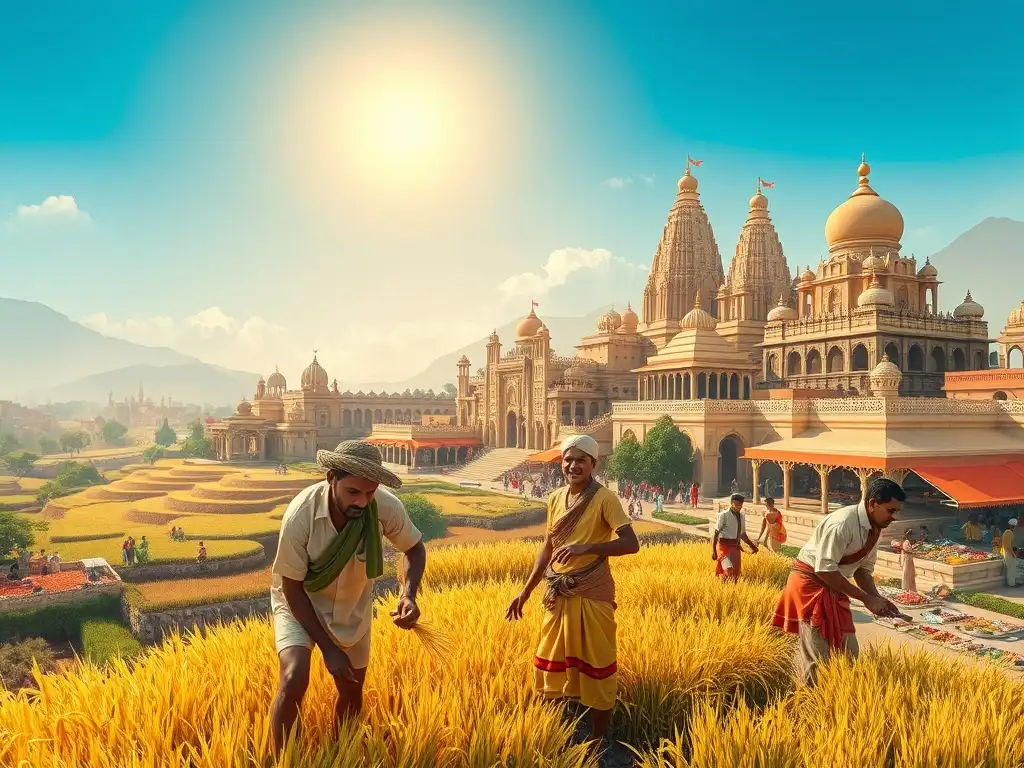
The economic contributions of ancient Indian agriculture were pivotal in the development of urban centers. Agriculture not only provided sustenance but also served as a foundation for trade, commerce, and various economic activities.
Trade and Commerce Arising from Agricultural Surplus
Agricultural surplus played a crucial role in enabling trade and commerce across ancient Indian civilizations.
- Market Development: With excess production, farmers could sell their surplus in local markets, leading to the emergence of trade centers and marketplaces.
- Regional Trade Networks: Agricultural products such as grains, spices, and textiles were traded both locally and with distant regions, connecting urban centers to broader trade networks.
The effects of this agricultural surplus on the economy were profound:
- Economic Growth: Increased trade led to the circulation of wealth, fostering economic prosperity within urban areas.
- Cultural Exchange: Trade facilitated interactions between different cultures, leading to the exchange of ideas, technologies, and practices.
- Urbanization: As trade flourished, urban centers expanded, attracting populations seeking economic opportunities.
Employment Opportunities Created by Agricultural Growth
The agricultural sector created numerous employment opportunities that significantly contributed to urban development.
- Direct Employment: Many individuals were engaged directly in farming, with roles ranging from laborers to skilled artisans involved in processing agricultural products.
- Indirect Employment: The rise of agriculture fostered various ancillary occupations, including those in trade, transportation, and food processing, contributing to a thriving economy.
The employment landscape transformed by agricultural growth included:
- Skill Development: People acquired skills related to farming techniques, trade practices, and resource management, enhancing their livelihoods.
- Community Building: As people settled in urban areas for employment, communities formed, leading to the development of social structures and cultural identities.
- Economic Stability: A diverse range of job opportunities provided economic resilience to families, supporting the growth and sustainability of urban centers.
Agriculture in ancient India was not merely a means of sustenance but also a driving force behind the social and cultural fabric of urban life. The surplus produced through agricultural activities allowed for the growth of cities, leading to increased trade and commerce. As urban centers developed, they became melting pots of various cultures, ideas, and practices.
The prosperity generated by agriculture fostered a sense of community, where people engaged in collective agricultural activities such as harvesting and festivals, which strengthened social bonds. The agricultural surplus also enabled a division of labor, allowing individuals to pursue specialized crafts and trades, further enriching urban life. As cities expanded, they became hubs of learning, spirituality, and artistic expression, all heavily influenced by agrarian practices and cycles.
The Role of Agriculture in Community Building
Agriculture played a pivotal role in fostering community ties among ancient Indian societies. Villages often functioned as tight-knit communities where agricultural practices were shared and celebrated. The communal nature of farming encouraged collaboration, leading to the establishment of social structures based on mutual support and interdependence.
In urban areas, this communal spirit extended to various aspects of city life. Markets flourished as a result of agricultural surplus, where farmers brought their produce to trade, promoting economic interactivity. The inherent need for cooperation in farming also translated into social gatherings, where rituals, festivals, and communal decision-making took place, thereby reinforcing social cohesion and a collective identity.
Festivals and Traditions Rooted in Agricultural Cycles
The agricultural calendar in ancient India was marked by numerous festivals and traditions that celebrated the cycles of sowing and harvesting. Festivals like Makar Sankranti, Pongal, and Baisakhi not only honored the agricultural bounty but also served to unify communities through shared celebrations.
These events were rich in cultural significance, often involving elaborate rituals, music, dance, and feasting. They provided an opportunity for urban dwellers to reconnect with their agrarian roots, fostering a deep appreciation for the land and its cycles. Additionally, these festivals often attracted traders and visitors from surrounding regions, stimulating economic activity and cultural exchange within urban settings.
Case Studies of Ancient Indian Cities Influenced by Agriculture
Ancient Indian cities were profoundly shaped by agricultural practices and innovations. Understanding this relationship provides insight into how agriculture influenced urban development across different civilizations.
The Indus Valley Civilization: Agriculture and Urban Planning
The Indus Valley Civilization (c. 3300–1300 BCE) exemplifies the intricate relationship between agriculture and urban planning. Its cities, such as Harappa and Mohenjo-Daro, were strategically laid out with advanced drainage systems and standardized bricks, showcasing the importance of agricultural surplus in supporting large populations.
Agriculture was the backbone of this civilization, with evidence of wheat, barley, and cotton cultivation. The need for efficient storage and distribution of agricultural products led to the development of granaries and marketplaces, which were central to urban life. Furthermore, the planning of these cities reflects a sophisticated understanding of resource management, essential for sustaining urban populations.
The Role of Agriculture in the Growth of the Mauryan Empire
The Mauryan Empire (c. 322–185 BCE) saw agriculture as a cornerstone of its economic and political stability. Under the leadership of Emperor Ashoka, agricultural innovations such as improved irrigation techniques and crop rotation were widely adopted.
The resulting agricultural surplus enabled the Mauryan Empire to support a vast bureaucracy and military, facilitating the expansion of urban centers like Pataliputra. The interdependence between agriculture and urbanization during this period illustrated how agricultural advancements directly contributed to the empire's growth, fostering trade routes that connected cities and bolstered economic activities.
Gupta Empire: Agricultural Advancements and Urban Expansion
The Gupta Empire (c. 240–550 CE) is often regarded as a golden age of ancient India, marked by significant agricultural advancements that propelled urban expansion. Innovations such as the introduction of new crops, including rice and sugarcane, along with enhanced irrigation systems, led to increased agricultural productivity.
This agricultural boom supported the rapid growth of cities like Ujjain and Nalanda, turning them into vibrant centers of commerce, education, and culture. The Gupta period also witnessed the establishment of trade networks that extended beyond Indian borders, further integrating agriculture into the urban economy. The symbiotic relationship between agriculture and urbanization during this era underscored the profound impact of agricultural practices on the development of ancient Indian civilization.
Conclusion: The Lasting Legacy of Ancient Indian Agriculture
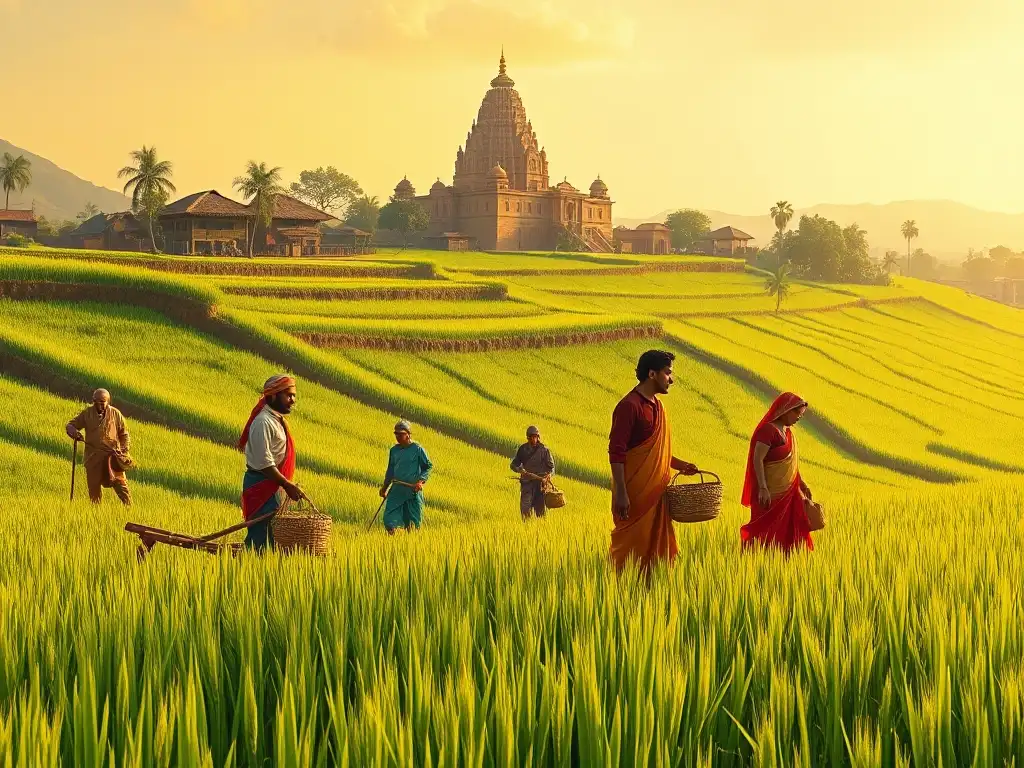
The legacy of ancient Indian agriculture extends far beyond its immediate contributions to food production; it played a pivotal role in shaping urban development and societal structures that influenced subsequent civilizations. The intricate irrigation systems, crop diversity, and agricultural practices laid the groundwork for thriving urban centers, where commerce, culture, and innovation flourished. The agrarian lifestyle not only sustained the population but also facilitated the establishment of trade networks and economic stability, which were crucial for urban growth.
The advancements made during ancient times, such as crop rotation, the use of plows, and the domestication of various plants and animals, have had a lasting impact on agricultural practices around the world. These innovations fostered increased productivity and efficiency, enabling communities to support larger populations and leading to the rise of complex societies. This legacy is evident in the urban layouts of ancient cities, where agricultural surplus often dictated the socio-economic dynamics and the development of public infrastructure.
Summary of Agricultural Impact on Urban Development
The impact of ancient Indian agriculture on urban development can be summarized through several key aspects:
- Food Security and Surplus: The ability to produce an abundance of crops ensured food security for growing populations, which directly supported urbanization. Cities such as Harappa and Mohenjo-Daro thrived due to the agricultural surplus generated by the fertile Indus Valley.
- Economic Growth: Agriculture became the backbone of trade, allowing for the exchange of goods not only within India but also with neighboring regions. This economic interdependence stimulated urban centers and contributed to their prosperity.
- Cultural Exchange and Social Structure: With urbanization came the rise of diverse communities, leading to cultural exchange and the establishment of social hierarchies. Agricultural practices influenced societal roles, with certain groups specializing in farming, while others engaged in trade or craft production.
- Technological Advancements: Innovations in farming techniques, such as the introduction of new tools and irrigation methods, propelled both agricultural and urban development. This technological progress laid the foundation for future advancements in various fields.
Reflection on the Modern Relevance of Ancient Agricultural Practices
The practices of ancient Indian agriculture hold significant relevance even in today's context. As contemporary societies face challenges such as climate change, food security, and sustainable development, revisiting these ancient methods can provide valuable insights.
- Sustainable Practices: Ancient practices such as crop rotation and organic farming techniques are increasingly recognized for their sustainability. These methods can help mitigate environmental impacts and promote biodiversity, echoing the principles of ancient agricultural wisdom.
- Community Involvement: The communal farming practices seen in ancient India emphasize the importance of community collaboration and local knowledge in agriculture. Modern agricultural initiatives that foster community involvement and support local farmers can lead to more resilient food systems.
- Cultural Heritage: Understanding and preserving ancient agricultural practices contribute to cultural heritage and identity. This knowledge not only fosters appreciation for historical contributions but also encourages the integration of traditional methods with modern agriculture.
The impact of ancient Indian agriculture is profound and multifaceted, influencing urban development, cultural evolution, and contemporary agricultural practices. By embracing the lessons of the past, modern societies can forge a path toward sustainable and equitable agricultural futures.
- Introduction to Ancient Indian Agriculture
- The Impact of Ancient Indian Agriculture on Urban Development
- Key Agricultural Techniques in Ancient India
- Economic Contributions of Agriculture to Urban Centers
- Social and Cultural Impacts of Agriculture on Urban Life
- Case Studies of Ancient Indian Cities Influenced by Agriculture
- Conclusion: The Lasting Legacy of Ancient Indian Agriculture
- Summary of Agricultural Impact on Urban Development
- Reflection on the Modern Relevance of Ancient Agricultural Practices
- What was the significance of ancient Indian agriculture?
- How did agriculture influence urban development in ancient India?
- What were the major crops grown in ancient India?
- How did ancient Indian agriculture impact social structures?
- What innovations in agriculture were developed during ancient Indian times?
Frequently Asked Questions
What was the significance of ancient Indian agriculture?
Ancient Indian agriculture played a crucial role in sustaining urban populations and supporting complex societies, contributing to the development of trade and economy.
How did agriculture influence urban development in ancient India?
The growth of agricultural surplus enabled the rise of cities, fostering trade, specialization, and the establishment of social hierarchies, which were vital for urbanization.
What were the major crops grown in ancient India?
Wheat, barley, and rice were among the principal crops, with extensive cultivation techniques that showcased the innovative agricultural practices of ancient Indian civilizations.
The reliance on agriculture led to the formation of communities and social classes, where land ownership and farming practices significantly influenced power dynamics and social organization.
What innovations in agriculture were developed during ancient Indian times?
Ancient Indians developed advanced techniques such as crop rotation, irrigation systems, and the use of organic fertilizers, which had a lasting impact on agricultural productivity and sustainability.
Final Reflection: The Enduring Impact of Ancient Indian Agriculture on Urban Development
The legacy of ancient Indian agriculture is not just a relic of the past; it is a foundational pillar that continues to shape our urban landscapes today. As we explore the intricate connections between agricultural practices and urban growth, we uncover a profound truth: the innovations and sustainability principles established by our ancestors are more relevant than ever in addressing contemporary challenges such as food security and urbanization. The wisdom of ancient Indian agriculture offers us a roadmap for creating resilient cities that honor both tradition and progress.
The influence of ancient agricultural practices extends far beyond mere food production; it has woven itself into the very fabric of our cultural and social identity. From the intricate irrigation systems that supported thriving civilizations to the communal farming practices that fostered social cohesion, the impact of these ancient methods is palpable in our modern society. As we reflect on this legacy, we are reminded of the words of Mahatma Gandhi: The future depends on what you do today.
This sentiment resonates deeply as we consider how the lessons from ancient agriculture can guide us in nurturing sustainable urban environments.
As we move forward, I invite you to reflect on the role that ancient Indian agriculture can play in your own life and community. Consider how the principles of sustainability, community engagement, and innovation can be integrated into your daily practices. Whether it's supporting local farmers, advocating for sustainable urban planning, or simply educating yourself about the historical significance of agriculture in urban development, every small action contributes to a larger movement. Let us honor the past while actively shaping a future that is rooted in the wisdom of those who came before us.
Uncover the Secrets of Ancient Indian Agriculture!
Thank you for diving into the fascinating world of ancient Indian agriculture and its impact on urban development! You’ve uncovered essential insights that connect our roots to modern urban life. Now, let's take that knowledge and make it actionable!
- Explore the Techniques: Research and implement an ancient agricultural technique you discovered today in your own gardening or community project.
- Share Your Insights: Discuss what you learned about ancient agriculture with friends or on social media to inspire others.
- Join a Community: Connect with local historical societies or online forums focused on ancient agricultural practices and their relevance to urban development.
Which ancient agricultural practice intrigues you the most, and how do you believe it could be applied in today’s urban environments?