
Gender and Philosophy: Women’s Contributions to Ancient Indian Thought

Welcome to Ancient India History, where we embark on a fascinating journey through the rich tapestry of ancient Indian civilizations! Dive into our latest article, “Gender and Philosophy: Women’s Contributions to Ancient Indian Thought,” and uncover the profound impact women have had on Indian philosophy. From the insightful musings of ancient thinkers to the powerful voices that shaped spiritual and intellectual traditions, this exploration will not only enlighten you but also challenge the narratives of history.
Are you ready to discover the untold stories that have shaped our understanding of philosophy? Let’s delve deeper into the remarkable legacies of women in ancient India!
- Introduction to Women's Contributions to Indian Philosophy
- Historical Context of Women in Ancient Indian Thought
- Key Figures: Influential Women in Indian Philosophy
- Philosophical Themes Explored by Women
- The Impact of Women's Contributions on Indian Philosophy
- Conclusion: The Legacy of Women in Indian Philosophy
-
Frequently Asked Questions
- What are the primary contributions of women to ancient Indian philosophy?
- How did social norms affect women's roles in ancient Indian philosophy?
- Can you name some notable women philosophers from ancient India?
- What impact did women's contributions have on the development of Indian philosophy?
- How can we learn more about women's contributions to Indian philosophy today?
- Final Reflection: Celebrating Women's Contributions to Indian Philosophy
- Unveil the Hidden Voices of Ancient Philosophy!
Introduction to Women's Contributions to Indian Philosophy
The exploration of women's contributions to Indian philosophy unveils a rich tapestry of thought that has often been overlooked in mainstream historical narratives. Ancient Indian civilization, with its profound philosophical traditions, not only shaped the contours of intellectual discourse but also provided a platform for women to engage in philosophical inquiry and expression.
From the early days of the Indus Valley Civilization to the flourishing of ideas during the Gupta Empire, women played pivotal roles, contributing to various philosophical schools, texts, and dialogues. This article aims to illuminate the significant yet often unrecognized contributions of women in shaping Indian philosophical thought, highlighting their influence on ethics, metaphysics, and social philosophy.
Overview of Ancient Indian Philosophy
Ancient Indian philosophy is characterized by its diverse schools of thought, which can be broadly categorized into six orthodox (astika) systems and three heterodox (nastika) schools.
- Orthodox Schools:
- Nyaya: Focused on logic and epistemology.
- Vaisheshika: Concerned with metaphysics and the nature of reality.
- Sankhya: A dualistic philosophy emphasizing the distinction between spirit and matter.
- Yoga: Integrating physical practices with mental discipline.
- Purva Mimamsa: Centered on the interpretation of Vedic texts and rituals.
- Vedanta: Exploring the nature of Brahman and the self.
- Heterodox Schools:
- Buddhism: Examining the nature of suffering and the path to enlightenment.
- Jainism: Focusing on non-violence and the soul's liberation.
- Charvaka: Emphasizing materialism and empirical evidence.
Women, while often marginalized in historical texts, contributed significantly to these philosophical traditions, engaging in debates, composing texts, and influencing thought. Figures like Gargi Vachaknavi and Maitreyi stand out as prominent philosophers whose ideas resonated through centuries, offering insights into ethics, metaphysics, and the nature of existence.
Importance of Gender in Philosophical Discourse
The role of gender in philosophical discourse is vital for a comprehensive understanding of ancient Indian thought. Recognizing women's contributions allows scholars to challenge the traditional narratives that often portray philosophy as a male-dominated field.
- Diversity of Perspectives: Women's viewpoints enriched philosophical discussions, introducing alternative perspectives on ethics, spirituality, and social justice.
- Access to Knowledge: Women like Gargi and Maitreyi had access to education and philosophical debates, showcasing that the pursuit of knowledge transcended gender barriers in certain contexts.
- Inspiration for Future Generations: The legacy of these women serves as an inspiration for contemporary discourse, encouraging a reevaluation of women's roles in philosophy and society.
By examining the contributions of women to Indian philosophy, we not only honor their legacy but also deepen our understanding of the philosophical landscape of ancient India, paving the way for more inclusive narratives in the study of history and philosophy.
Historical Context of Women in Ancient Indian Thought
Ancient Indian thought is deeply enriched by the philosophical contributions of women, whose roles have often been overlooked in historical narratives. To fully appreciate Women's Contributions to Indian Philosophy, it is essential to understand the historical context in which these women operated.
In ancient India, societal norms were predominantly patriarchal, yet women were not entirely excluded from intellectual pursuits. The Vedic texts, dating back to around 1500 BCE, reveal that women were sometimes engaged in philosophical discussions and rituals. The presence of women in sacred texts indicates that they had roles beyond domestic spheres, contributing to the shaping of early Indian philosophical thought.
Women Philosophers in the Vedic Period
The Vedic period is marked by the emergence of significant philosophical and spiritual ideas, many of which were articulated by women. Notable figures include:
- Gargi Vachaknavi: A prominent philosopher known for her dialogues in the Brahmanas, Gargi challenged male scholars in debates about the nature of the universe and the self. She famously posed questions about the ultimate reality and is often cited as a symbol of women's intellectual prowess.
- Maitreyi: Another illustrious figure, Maitreyi engaged in philosophical discussions with her husband, Yajnavalkya. Her inquiry into the nature of the self and the pursuit of knowledge highlights the intellectual agency women possessed during this era. She is especially known for her question on the nature of immortality, indicating her deep engagement with metaphysical concepts.
- Vachana Sadhaka: While less documented, women like Vachana Sadhaka contributed to the spiritual and philosophical discourse through oral traditions, emphasizing the need for personal experience in understanding the divine.
These women not only contributed to philosophical debates but also influenced spiritual practices, asserting their presence in both intellectual and religious spheres. They exemplified that women were not merely passive recipients of knowledge but active participants in the formation of philosophical thought.
Contributions of Women in the Upanishadic Era
Transitioning into the Upanishadic era (circa 800-200 BCE), women continued to make significant strides in philosophical contributions. The Upanishads, which delve into metaphysics and ethics, reflect a more inclusive approach to wisdom and knowledge.
Key contributions include:
- Philosophical Dialogues: Women like Gargi and Maitreyi continued their philosophical inquiries, engaging in deep metaphysical discussions. Their dialogues often centered around the nature of Brahman (the ultimate reality) and Atman (the individual self), showcasing their understanding of complex philosophical concepts.
- Spiritual Teachings: Female figures in the Upanishads often conveyed teachings related to self-realization and enlightenment. For example, Maitreyi’s inquiry into the nature of the soul led to profound discussions about the interconnectedness of all beings, emphasizing the universal pursuit of truth.
- Role of Women as Spiritual Leaders: The Upanishadic period saw women taking on roles as spiritual guides and mentors, illustrating that they were not only thinkers but also educators. Their teachings often emphasized personal experience in the quest for knowledge, which was a departure from traditional doctrinal teachings.
The Upanishadic era expanded the philosophical landscape and allowed women to emerge as critical thinkers and spiritual leaders. Their contributions laid the groundwork for future philosophical explorations and demonstrated that women played an integral role in shaping ancient Indian thought.
By examining the historical context and the contributions of women philosophers from the Vedic and Upanishadic periods, it becomes evident that Women's Contributions to Indian Philosophy are foundational to understanding the rich tapestry of ancient Indian thought.
Key Figures: Influential Women in Indian Philosophy
Gargi Vachaknavi stands out as one of the most prominent figures in ancient Indian philosophy, often celebrated for her intellectual prowess and fearless engagement in philosophical debates. She is primarily known from the Brahadaranyaka Upanishad, where she boldly questions the sage Yajnavalkya during a philosophical assembly, challenging the very foundations of metaphysical thought.
Her inquiries revolved around the nature of reality and the ultimate essence of existence. Gargi famously asked Yajnavalkya about the nature of the Brahman, the ultimate reality, demonstrating her critical thinking and deep understanding of complex philosophical concepts. Her dialogues not only highlight her role as a philosopher but also serve as a significant testament to women's participation in intellectual discourses during the Vedic period.
Gargi's approach to philosophy emphasized the importance of questioning and dialogue, which influenced later philosophical traditions. Her contributions laid the groundwork for future discussions on metaphysics and epistemology in Indian philosophy, making her a key figure in understanding women's contributions to Indian philosophical thought.
Maitreyi: Exploring the Nature of Self and Reality
Maitreyi, another cornerstone figure in ancient Indian philosophy, is renowned for her profound reflections on the self and reality. Featured prominently in the Brahadaranyaka Upanishad, she engages in a deep and transformative dialogue with her husband, Yajnavalkya, about the nature of the self ( Atman) and its relation to the universal consciousness.
In a pivotal moment, Maitreyi expresses her desire to understand the nature of immortality and the essence of existence, leading Yajnavalkya to unveil profound insights about the interconnectedness of all beings. Her philosophical inquiries underscore the significance of self-knowledge and the pursuit of truth, which are central themes in Indian philosophy.
Maitreyi's contributions extend beyond mere philosophical discourse; she exemplifies the role of women as seekers of knowledge and wisdom. Her legacy continues to inspire contemporary discussions on gender and philosophy, emphasizing the vital role of women's contributions to Indian thought.
Other Notable Women Thinkers in Ancient India
While Gargi and Maitreyi are often highlighted, there were several other influential women thinkers in ancient India who contributed significantly to the philosophical landscape.
- Leela: Another noteworthy figure, Leela is mentioned in various texts as a philosopher who engaged in discussions on ethics and morality, advocating for the importance of dharma in personal conduct.
- Vasuki: Known for her contributions to discussions on the nature of knowledge and perception, Vasuki's work emphasized the importance of experience in understanding reality.
- Annapurna: A philosopher who focused on the relationship between knowledge and devotion, she explored the intersection of bhakti and philosophical inquiry.
These women, along with Gargi and Maitreyi, played crucial roles in shaping the discourse of ancient Indian philosophy. Their contributions are often overlooked, yet they provide a richer understanding of the diverse perspectives that characterized philosophical thought in ancient India. By recognizing these figures, we can appreciate the breadth of Women's Contributions to Indian Philosophy, which continues to influence contemporary philosophical dialogues.
Philosophical Themes Explored by Women
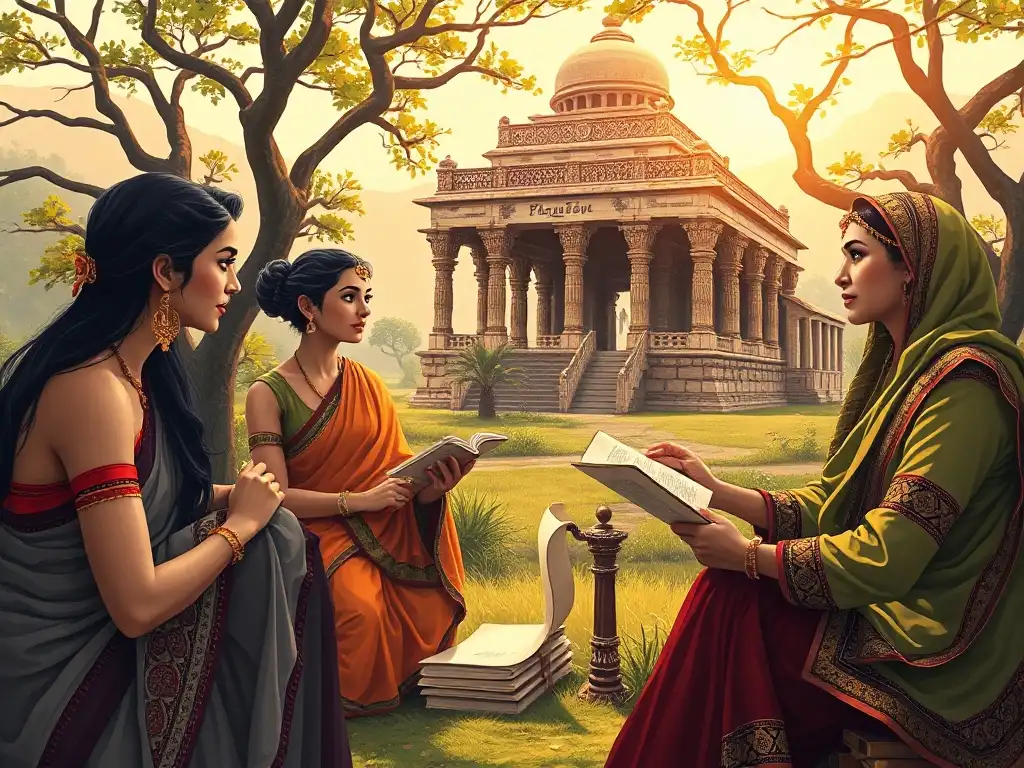
The contributions of women to Indian philosophy have often been overshadowed by their male counterparts. However, a closer examination reveals that women have played a significant role in shaping various philosophical themes, particularly in the realms of spirituality, ethics, and societal norms. Their perspectives not only enrich philosophical discourse but also provide a unique glimpse into the values and beliefs of ancient Indian society.
Spirituality and the Concept of the Self
Women in ancient India contributed profoundly to the discourse on spirituality and the nature of the self. Texts such as the Upanishads and various Bhakti movements feature female figures and poets who articulated a deep understanding of the individual’s relationship with the divine.
- Mystical Experience: Women like Mirabai, a 15th-century poet-saint, expressed their spiritual experiences through poetry that emphasized personal devotion to Krishna. Her verses often reflect a sense of surrender and intimacy with the divine, illustrating a unique perspective on spirituality that transcends traditional gender roles.
- Self-Realization: Philosophers like Gargi Vachaknavi and Maitreyi posed pivotal questions about the nature of the self. Gargi, known for her participation in philosophical debates, questioned the essence of existence and the universe, emphasizing a quest for knowledge that aligns with self-realization.
- Integration of Feminine Principles: The writings of female thinkers often integrate feminine principles, highlighting compassion, nurturing, and interconnectedness as essential aspects of the self, thus contributing to a more holistic understanding of spirituality.
Ethics and Morality: Women’s Perspectives
Women have also significantly influenced ethical and moral philosophy in ancient India. Their perspectives often challenged the patriarchal norms of their time and brought forth unique insights into morality.
- Moral Dilemmas: The Mahabharata features characters like Draupadi, who navigates complex moral dilemmas in a patriarchal society. Her responses to her circumstances provide a critical lens on justice and gender ethics, emphasizing the importance of agency and voice in moral discussions.
- Compassion and Non-violence: Women philosophers often emphasized values such as compassion and ahimsa (non-violence). The Buddhist tradition, with figures like Sanghamitta, highlights the role of women in promoting non-violent ethics, significantly influencing the moral framework of the time.
- Community and Family Ethics: Women’s contributions to ethical thought often revolved around familial and communal responsibilities. Their philosophies underscore the importance of relationships and social harmony, advocating for moral actions that consider the well-being of the community.
The Role of Women in Societal Norms and Philosophical Debate
The participation of women in philosophical debates and discussions about societal norms has been pivotal in shaping their roles within ancient Indian society.
- Challenging Norms: Women like Vishnu Sharma, the author of the Panchatantra, included female characters who often challenged societal expectations through wit and wisdom. These narratives not only entertained but also served as platforms for critiquing social norms.
- Philosophical Dialogues: The Upanishads and other texts reveal instances of women engaging in philosophical dialogues, asserting their right to question and debate. Their contributions often highlighted the need for gender equality and the importance of women’s voices in philosophical discussions.
- Legacy of Thought: The legacy of women philosophers has influenced later generations, inspiring movements for social reform and gender equality. Their thoughts on societal norms have laid the groundwork for ongoing dialogues about women’s rights and roles in contemporary philosophy.
The examination of women’s contributions to Indian philosophy reveals a rich tapestry of thought that addresses key philosophical themes. Their unique perspectives on spirituality, ethics, and societal norms continue to resonate, underscoring the importance of inclusivity in the study of philosophy.
The Impact of Women's Contributions on Indian Philosophy
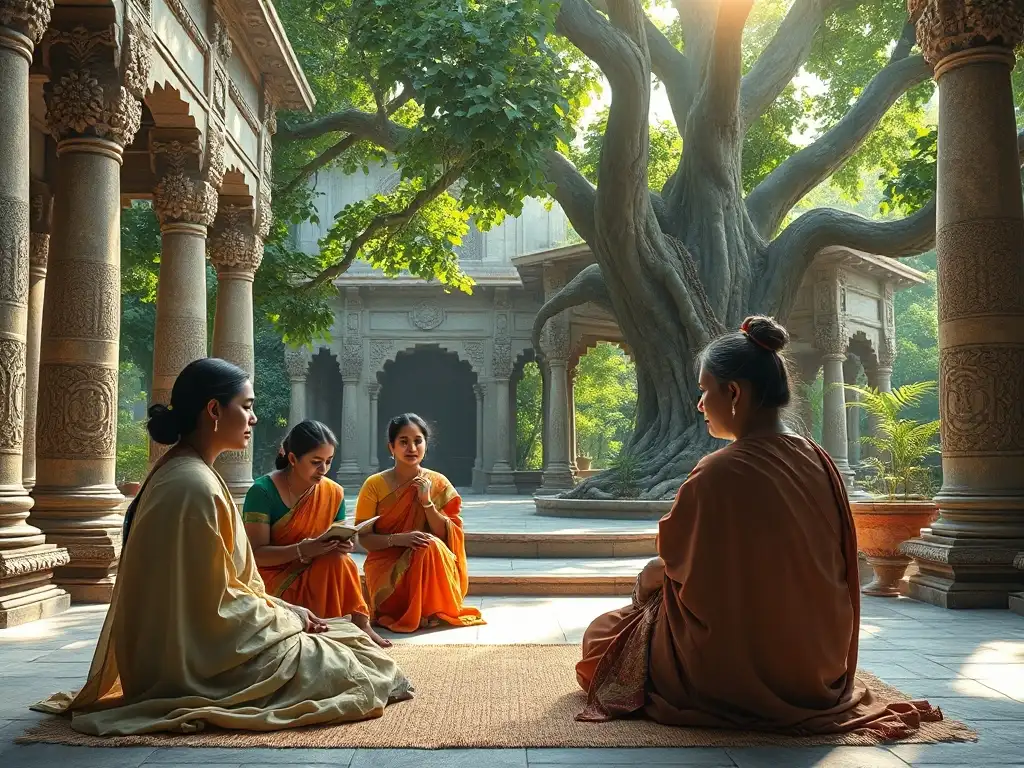
The contributions of women to Indian philosophy have been significant, often overlooked or underrepresented in traditional narratives. As we explore the impact of these contributions, it is essential to recognize how women shaped philosophical thought, challenged prevailing norms, and introduced new perspectives that continue to resonate in contemporary discussions. Women's contributions to Indian philosophy are not merely historical footnotes; they represent a profound influence on the evolution of philosophical inquiry, ethics, and metaphysics.
Shifting Perspectives on Gender Roles in Philosophy
Historically, Indian philosophy has been dominated by male thinkers, yet women have played crucial roles in shaping various philosophical schools. The Brahmanical texts of ancient India, while often patriarchal, contain references to women philosophers and sages who contributed to spiritual and ethical discourse. Figures such as Gargi Vachaknavi and Maitreyi challenge the notion that women were passive recipients of wisdom.
- Gargi Vachaknavi: A prominent figure in the Brahmanas, Gargi is known for her intellectual prowess and her participation in philosophical debates. She famously posed challenging questions about the nature of the universe during a royal assembly, showcasing her depth of understanding in metaphysics.
- Maitreyi: Another esteemed philosopher, Maitreyi is recognized for her dialogues in the Brahmanas and her exploration of the nature of self and existence. Her contributions emphasize the importance of personal experience in philosophical inquiry, highlighting an essential shift towards subjective understanding.
These women not only contributed ideas but also influenced the social status of women in philosophical contexts. Their participation in philosophical discussions began to shift gender roles, illustrating that women could engage in rigorous intellectual discourse and lay claim to philosophical legitimacy.
Influence on Later Philosophical Traditions in India
The philosophical contributions of women in ancient India significantly influenced later traditions, including Buddhism, Jainism, and the Bhakti movement.
- Buddhism: Women like Sankhya, who founded the Bhikkhuni Sangha, played an important role in the early Buddhist community. Their teachings and practices emphasized equality and the potential for enlightenment, irrespective of gender.
- Jainism: Female figures such as Vasundhara and Siddhartha contributed to Jain philosophy, advocating for the principles of non-violence and asceticism. Their teachings influenced the Jain community and fostered a philosophical environment that valued both male and female insights.
- Bhakti Movement: The Bhakti movement saw the emergence of female saints like Mirabai and Akka Mahadevi, whose poetry and philosophies centered on devotion and personal connection to the divine. Their work inspired a more inclusive approach to spirituality and ethics that transcended gender barriers.
The legacy of these women is evident in the continuing dialogue on gender and philosophy in contemporary Indian thought. Their contributions serve as a reminder that the exploration of philosophical ideas is enriched by diverse voices, and recognizing women's contributions to Indian philosophy is crucial for a comprehensive understanding of the field.
The impact of women's contributions to Indian philosophy is profound and far-reaching. Their intellectual engagement and philosophical insights not only challenged existing norms but also laid the groundwork for future generations, emphasizing the importance of inclusivity in philosophical discourse.
Conclusion: The Legacy of Women in Indian Philosophy
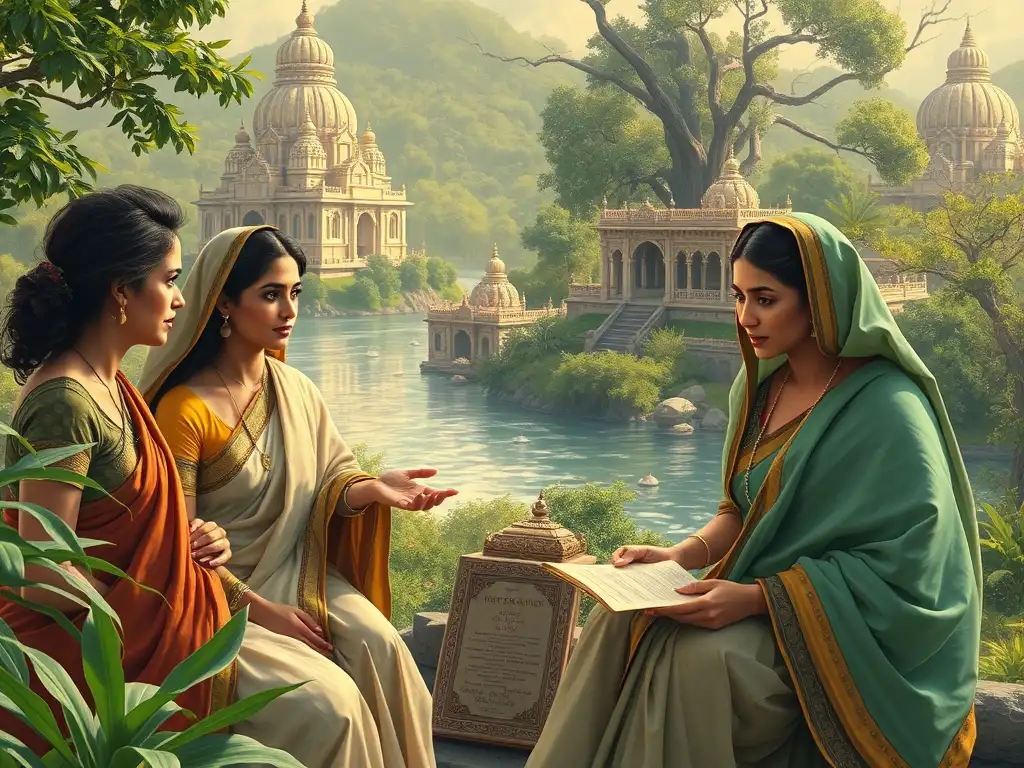
The contributions of women to Indian philosophy represent a significant yet often overlooked aspect of ancient Indian thought. Throughout history, women have played crucial roles in shaping philosophical discourse, challenging societal norms, and influencing spiritual practices. From the Vedic texts to the philosophies of the Gupta period, women such as Gargi, Maitreyi, and Vasavadatta have left an indelible mark on the intellectual landscape.
Their philosophies not only contributed to the understanding of metaphysics, ethics, and epistemology but also provided a unique perspective on gender roles and the nature of knowledge. Recognizing these contributions allows for a more inclusive understanding of Indian philosophy, showcasing the diversity of thought and the impact of women in this field.
Reflection on the Importance of Recognizing Women’s Contributions
Acknowledging women's contributions to Indian philosophy is essential for several reasons:
- Historical Accuracy: It is vital to present a comprehensive history that includes the voices of women, which enriches our understanding of philosophical developments.
- Inspiration for Future Generations: Highlighting the achievements of women in philosophy serves as an inspiration for contemporary scholars and thinkers, encouraging more inclusive participation in philosophical discourse.
- Challenging Stereotypes: Recognizing these contributions helps dismantle stereotypes about women's roles in society, emphasizing their capabilities and influence in intellectual realms.
The acknowledgment of figures like Gargi, who famously contested the learned men of her time, and Maitreyi, who engaged in profound conversations about the nature of the self and reality, illustrates how women's perspectives have shaped philosophical inquiry.
Future Directions for Research in Women's Philosophy in Ancient India
As we reflect on the past, it is crucial to consider future avenues for research that can further illuminate the role of women in ancient Indian philosophy. Some potential directions include:
- Interdisciplinary Studies: Scholars should explore the intersections of philosophy with literature, sociology, and history to provide a richer context for women's contributions.
- Translation and Interpretation: There is a need for translating and interpreting ancient texts that highlight female philosophers, making them accessible to a broader audience.
- Comparative Analysis: Future research could benefit from comparative studies between the contributions of women in Indian philosophy and those in other ancient civilizations, revealing universal themes and unique perspectives.
- Focus on Lesser-Known Figures: While prominent figures have garnered attention, exploring the works and thoughts of lesser-known women philosophers could uncover new insights into philosophical traditions.
The legacy of women in Indian philosophy is a vital component of understanding the rich tapestry of ancient Indian thought. By recognizing and researching these contributions, we not only honor the past but also pave the way for a more equitable philosophical discourse in the future.
Frequently Asked Questions
What are the primary contributions of women to ancient Indian philosophy?
Women made significant contributions to Indian philosophy through literary works and commentaries that addressed moral, ethical, and metaphysical questions, influencing various schools of thought.
Social norms often restricted women's access to education and philosophical discourse, yet many overcame these barriers, contributing to the intellectual landscape of ancient India.
Can you name some notable women philosophers from ancient India?
Yes, notable women include Maitreyi and Gargi, who are known for their philosophical dialogues in the Upanishads, showcasing deep insights into knowledge and existence.
What impact did women's contributions have on the development of Indian philosophy?
Women’s contributions enriched the diversity of thought, introducing perspectives that challenged prevailing gender norms and emphasized the importance of inclusivity in philosophical discussions.
How can we learn more about women's contributions to Indian philosophy today?
To learn more, one can explore historical texts, attend lectures, and read contemporary analyses that highlight the undervalued contributions of women in the evolution of Indian thought.
Final Reflection: Celebrating Women's Contributions to Indian Philosophy
The exploration of women's contributions to Indian philosophy is not only a journey through history but a vital reminder of the enduring impact of diverse voices in shaping thought. As we delve into the rich tapestry of ancient Indian thought, it becomes clear that the insights and philosophies offered by women are not merely footnotes but foundational elements that deserve recognition and celebration.
The influence of these women philosophers resonates deeply within our contemporary cultural and social landscape, challenging the long-held narratives that often overlook their contributions. Their wisdom and perspectives have the power to inspire current and future generations, reminding us that philosophy is enriched by inclusivity and diversity. The most important thing we can do is to make sure that women’s voices are heard in every aspect of society.
As we reflect on the lessons from this article, I invite you to consider how you can honor and amplify the voices of women in your own life and community. Let us commit to recognizing and celebrating the contributions of women in all fields, ensuring that their legacies continue to inspire and shape our understanding of philosophy and beyond. By doing so, we not only enrich our own perspectives but also pave the way for a more inclusive future where every voice is valued.
Thank you for exploring the remarkable contributions of women to ancient Indian thought! Your curiosity about gender and philosophy not only enriches your understanding but also acknowledges the vital roles these voices played. Now, let’s take the next step together in celebrating and sharing this incredible wisdom.
Here are some actions you can take:
- Explore further: Read additional texts and resources on women philosophers in ancient India to deepen your knowledge and appreciation of their impact.
- Engage with the community: Join online forums or local discussion groups to share insights and perspectives on gender in philosophy—your voice matters!
- Share the knowledge: Spread the word on social media about these lesser-known contributions by posting a quote or insight from an ancient woman philosopher.
What ideas or contributions resonate most with you from what you've learned today? Let's keep the conversation going!