
Understanding the Philosophy in Classical Indian Prose: Lessons from Ashoka


Welcome to Ancient India History, where we invite you to journey through the rich tapestry of India’s past. Discover the profound insights of classical Indian philosophy as we unravel the lessons from Ashoka, a figure whose wisdom transcends time and resonates in today’s world. In our featured article, "Understanding the Philosophy in Classical Indian Prose: Lessons from Ashoka," we delve into the depths of philosophical thought that shaped an entire civilization.
Are you ready to explore how these ancient teachings continue to influence our understanding of ethics, governance, and human connection? Join us as we uncover the treasures of a bygone era and enrich your knowledge of India's historical legacy!

Exploring the depths of classical Indian philosophy reveals a rich tapestry of insights that have shaped not only literature but also the ethical and moral frameworks of Indian society. Among the figures who significantly contributed to this philosophical discourse is Emperor Ashoka, whose reign marked a pivotal transformation in the Indian cultural landscape. This article delves into the profound lessons embedded in Ashoka's edicts, showcasing how his thoughts resonate through classical Indian prose. By examining the intersections of philosophy and literature during Ashoka's time, we aim to illuminate the key insights that continue to inspire contemporary thought.
Introduction to Classical Indian Philosophy Insights
Classical Indian philosophy is a vast and intricate field that encompasses various schools of thought, each offering unique perspectives on life, ethics, and the universe. The insights derived from this philosophical landscape not only enhance our understanding of ancient texts but also provide timeless teachings applicable to modern-day dilemmas.
In this section, we will explore the foundational elements of classical Indian philosophy, focusing on its core tenets and the context in which these ideas flourished. The philosophies articulated during this period are not merely academic; they resonate with the lived experiences of individuals and communities, reflecting the socio-political realities of the time.
Overview of Classical Indian Philosophy
Classical Indian philosophy comprises several schools, including:
- Vedanta: Focuses on the nature of reality and the self.
- Sankhya: Emphasizes a dualistic approach to existence.
- Buddhism: Offers insights into suffering and the pathway to enlightenment.
- Jainism: Advocates for non-violence and the importance of asceticism.
These schools provide diverse perspectives on ethical behavior, the nature of the cosmos, and the path to liberation (moksha). The philosophical discussions from these traditions laid the groundwork for the moral and ethical frameworks that would influence subsequent Indian thought.
Importance of Ashoka in Indian Literature
Emperor Ashoka, who ruled during the 3rd century BCE, stands as a monumental figure in classical Indian literature and philosophy. His embrace of Buddhism and commitment to non-violence transformed his governance and left an indelible mark on Indian culture.
Ashoka’s edicts, inscribed on pillars and rocks throughout his empire, serve as a vital source of philosophical insights. They articulate principles of compassion, moral duty, and social responsibility, which resonate with the core teachings of various philosophical schools. Understanding Ashoka's contributions allows us to appreciate how philosophical insights were not only theoretical but also practical directives aimed at fostering a just and humane society.
Historical Context of Ashoka's Era
To fully grasp the significance of Ashoka's philosophical contributions, it is crucial to consider the historical context of his reign. The Mauryan Empire, under Ashoka's leadership, represented a remarkable period of unity and cultural flourishing in ancient India.
The Mauryan Empire and Its Significance
The Mauryan Empire, established in the 4th century BCE, was the first large-scale empire in India. It played a critical role in:
- Unifying diverse regions under a centralized governance.
- Facilitating trade and cultural exchange across vast territories.
- Promoting the spread of Buddhism beyond its origins.
Ashoka's reign (approximately 268 to 232 BCE) is particularly noted for its emphasis on ethical governance and the welfare of the populace. His policies aimed to create a harmonious society, reflecting the philosophical principles he adopted.
Cultural and Philosophical Landscape of Ancient India
During Ashoka's time, ancient India was a melting pot of ideas and beliefs. The philosophical landscape was characterized by:
- Religious Pluralism: Multiple religions coexisted, including Hinduism, Jainism, and Buddhism.
- Intellectual Discourse: Scholars and thinkers engaged in vibrant debates, contributing to the evolution of philosophical thought.
- Artistic Flourishing: Literature, sculpture, and architecture thrived, with significant works emerging that reflected the philosophical currents of the time.
This cultural milieu provided the backdrop for Ashoka's philosophical insights, as they were deeply intertwined with the prevailing intellectual and spiritual currents of ancient India.
In the following sections, we will further analyze Ashoka's contributions to classical Indian philosophy and how they resonate through subsequent literary traditions.
Ashoka's Edicts: A Window into His Philosophy
Ashoka, the third Mauryan emperor, is renowned for his transformative reign, marked by a profound commitment to the principles of non-violence and ethical governance. His edicts, inscribed on rocks and pillars across his empire, serve as a crucial source of insight into his philosophical beliefs and governance style. These inscriptions not only reflect his personal convictions but also encapsulate the ideals of Classical Indian philosophy, making them invaluable for understanding the socio-political landscape of ancient India.
The edicts are characterized by a universalist approach, articulating the need for compassion, tolerance, and respect for all living beings. Ashoka's emphasis on non-violence (ahimsa) and the welfare of his subjects resonates deeply with the core tenets of many Indian philosophical systems, including Buddhism and Jainism. By promoting values such as truthfulness, non-stealing, and charity, Ashoka’s edicts provide a practical guide for ethical living, thus offering a rich tapestry of Classical Indian philosophy insights.
The Role of Edicts in Ancient Governance
The edicts of Ashoka played a pivotal role in the governance of his vast empire, serving both as a means of communication and as a tool for reinforcing his ethical framework. They were strategically placed in public spaces to ensure maximum visibility and to promote his vision of a just society. Through these inscriptions, Ashoka sought to transcend the limitations of traditional authority, advocating for a governance model based on moral principles rather than mere coercion.
The edicts also functioned as a form of social contract between the ruler and his subjects. By publicly committing to the welfare of the people and outlining the responsibilities of both the ruler and the governed, Ashoka established a framework for accountability and transparency in governance. This innovative approach not only solidified his authority but also fostered a sense of community and shared values among diverse populations within his empire.
Key Themes in Ashoka's Edicts
Several key themes emerge from Ashoka's edicts, reflecting his philosophical underpinnings:
- Compassion and Non-violence: Ashoka’s commitment to ahimsa is evident in his call for kindness towards all living beings, emphasizing the importance of compassion in governance.
- Moral and Ethical Living: The edicts advocate for virtues such as truthfulness, benevolence, and self-control, encouraging individuals to lead a morally upright life.
- Social Welfare: Ashoka’s focus on the welfare of his subjects is paramount, as he promotes the establishment of hospitals, gardens, and educational institutions.
- Religious Tolerance: The edicts underscore the importance of respecting diverse belief systems, advocating for harmony among various religious communities.
These themes not only highlight Ashoka's philosophical insights but also illustrate his innovative approach to governance, which set a precedent for future rulers.
Lessons from Ashoka's Philosophy
Ashoka's philosophy offers profound lessons that continue to resonate in contemporary discussions of governance, ethics, and social responsibility. His edicts serve as a guide for modern leaders, emphasizing the importance of moral integrity and the welfare of the populace.
Understanding Ethical Governance
One of the most significant lessons from Ashoka's reign is the concept of ethical governance. He demonstrated that a ruler's legitimacy stems not only from power but also from moral authority. Ashoka’s edicts advocate for a governance model that prioritizes the well-being of citizens, challenging the notion that authority can be exercised without ethical considerations. This insight is particularly relevant today, as leaders grapple with the complexities of governance in diverse societies.
The Concept of Dhamma in Classical Indian Prose
The concept of Dhamma, as articulated in Ashoka's edicts, encapsulates a philosophy that transcends mere legalism. It emphasizes living in accordance with moral principles, fostering a sense of duty towards oneself and others. Dhamma encompasses not only personal ethics but also social responsibilities, urging individuals to contribute positively to their communities. This holistic understanding of ethics is a cornerstone of Classical Indian philosophy and remains relevant in discussions on moral philosophy and civic engagement.
The Influence of Ashoka's Philosophy on Later Thinkers
Ashoka's philosophical insights significantly influenced subsequent thinkers and movements within India and beyond. His emphasis on non-violence and ethical governance laid the groundwork for later reformers, including Mahatma Gandhi, who drew inspiration from Ashoka’s principles during India's struggle for independence. The reverberations of Ashoka's philosophy can also be traced in the teachings of various Buddhist scholars and the development of ethical thought in Indian philosophy.
Ashoka's edicts not only provide a window into his own philosophical beliefs but also offer timeless lessons that continue to inspire ethical governance and social responsibility in contemporary society.
Comparative Analysis: Ashoka and Other Philosophical Figures
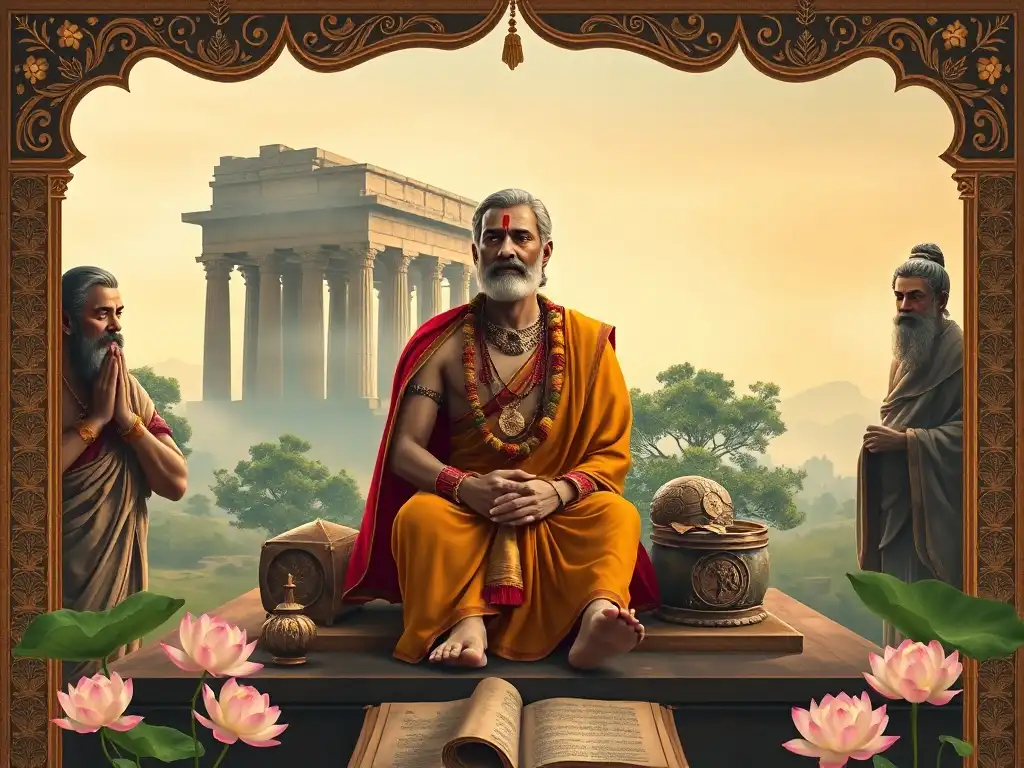
The philosophical insights offered by Ashoka, one of the most prominent emperors of ancient India, provide a unique lens through which we can view the broader landscape of Classical Indian philosophy. By comparing Ashoka with other notable philosophical figures, we can better understand the distinct nature of his contributions.
His adoption of Buddhist principles, particularly the emphasis on non-violence (Ahimsa) and compassion, contrasts with the more pragmatic and sometimes ruthless strategies employed by contemporaries like Chanakya. This comparative analysis reveals not only the diversity of philosophical thought in ancient India but also the lasting impact of Ashoka's ideals on subsequent generations.
Ashoka vs. Chanakya: Different Philosophical Approaches
Ashoka and Chanakya (also known as Kautilya) represent two different philosophical paradigms within the Indian context. Chanakya, a strategist and advisor to the Maurya Empire, is best known for his text, the Arthashastra, which emphasizes realpolitik, the importance of power, and the necessity of sometimes ruthless governance to achieve stability and prosperity. His approach is characterized by a pragmatic and often cynical view of human nature.
In contrast, Ashoka’s philosophy, especially post-conversion to Buddhism, revolves around moral governance, ethical conduct, and the welfare of all beings. He is known for his Edicts, which promote values such as tolerance, compassion, and respect for all religions. While Chanakya advocates for the shrewd use of power, Ashoka emphasizes the responsibility of rulers to act for the greater good, showcasing a profound shift from realpolitik to moralistic governance.
Similarities Between Ashoka and Jain Philosophy
Ashoka’s philosophy exhibits several similarities with Jain thought, particularly in its ethical considerations and emphasis on non-violence. Jainism, with its core tenets centered around Ahimsa, truth, and asceticism, resonates deeply with Ashoka’s post-conversion beliefs. Both philosophies advocate for the avoidance of harm to living beings, which is reflected in Ashoka's policies promoting animal welfare and vegetarianism.
Furthermore, Ashoka’s promotion of tolerance and coexistence among different religious communities aligns with the Jain principle of respecting all forms of life and beliefs. This ideological overlap highlights a broader trend in ancient Indian philosophy, where various schools of thought, including Buddhism and Jainism, influenced each other, leading to a rich tapestry of ethical and moral discourse.
The Legacy of Ashoka's Philosophy in Classical Indian Literature
Ashoka's philosophical insights have had a profound and lasting influence on classical Indian literature, shaping the thematic and ethical frameworks of subsequent works. His ideas not only penetrated the literary domain but also inspired a generation of writers and philosophers to explore themes of governance, morality, and humanity.
Influence on Later Prose and Poetry
The principles espoused by Ashoka can be traced through various classical Indian prose and poetry, where themes of compassion, ethical governance, and the importance of moral responsibility are prevalent. His Edicts served as a foundational text not just for governance but also for literary expression, encouraging poets and writers to reflect on the significance of righteousness (Dharma) in their works.
For instance, later poets such as Kalidasa and Bhasa often depicted ideal rulers who embodied Ashokan virtues, illustrating the moral dilemmas faced by leaders in their quest for justice and peace. The ongoing influence of Ashoka’s philosophy is evident in how subsequent literary figures grappled with the complexities of human nature and the moral responsibilities of those in power.
Reflection of Ashoka’s Ideas in Subsequent Literary Works
Ashoka's philosophical legacy is not only present in overt references but is also subtly woven into the fabric of later literary works. Writers and philosophers like Ashvaghosha and Nagarjuna expanded on themes of compassion and non-violence, reflecting Ashoka's influence in their discussions on ethics and governance.
Moreover, the concept of Dharma, which Ashoka championed, became central to many narratives, encouraging a sense of duty and ethical responsibility among rulers and citizens alike. This reflection of Ashoka’s ideals in subsequent literature underscores his role as a pivotal figure in shaping the moral and ethical discourse of Classical Indian thought, ensuring that his contributions continued to resonate long after his reign.
Conclusion: The Enduring Relevance of Ashoka's Classical Indian Philosophy Insights
The philosophical insights derived from Ashoka's reign remain profoundly relevant in contemporary society. Ashoka, known for his transformation from a fierce conqueror to a proponent of peace and non-violence, articulated principles that resonate deeply with modern ethical frameworks. His edicts, inscribed on rocks and pillars, emphasize values such as compassion, tolerance, and respect for all living beings. These themes are not only central to the understanding of Classical Indian philosophy but also serve as guiding principles in today's world, where conflict and discord often overshadow cooperation and understanding.
Ashoka's commitment to Dharma (righteousness) and his advocacy for moral governance offer a lens through which to evaluate current political and social systems. His emphasis on the welfare of his subjects and the prioritization of ethical leadership provides a blueprint for contemporary leaders who seek to balance power with responsibility. As societies grapple with issues like environmental degradation, social injustice, and inequality, the insights from Ashoka’s philosophy can inspire collective action and foster a commitment to holistic well-being.
Contemporary Applications of Ashoka's Teachings
In modern discourse, Ashoka's teachings find applications across various domains, including governance, education, and conflict resolution. For instance, the principle of Ahimsa (non-violence) is increasingly embraced by peace activists and movements advocating for social change. Influential figures such as Mahatma Gandhi drew heavily from Ashoka's ethos, emphasizing peaceful resistance and dialogue as means to achieve justice and equality.
In educational contexts, Ashoka's teachings encourage curricula that promote empathy and ethical reasoning. Schools and universities increasingly incorporate lessons on moral philosophy, drawing parallels to Ashoka’s edicts that stress the importance of character development alongside academic achievement. This holistic approach to education nurtures not just knowledgeable individuals but responsible citizens who are aware of their societal impact.
Moreover, in the realm of conflict resolution, Ashoka's emphasis on dialogue and understanding serves as a model for mediators and negotiators. His belief in the importance of listening to diverse perspectives and fostering mutual respect can guide contemporary efforts to resolve disputes, whether they be at local, national, or international levels.
Final Thoughts on the Impact of Ashoka on Indian Literary Traditions
Ashoka's influence extends beyond philosophy and governance; it permeates the fabric of Indian literary traditions. His edicts not only represent a pivotal moment in the evolution of prose as a medium for communication and policy but also mark a significant contribution to the literary heritage of India. The clarity and depth of his writings set a standard for subsequent generations, inspiring poets and prose writers alike to explore themes of morality, duty, and the human condition.
The integration of Ashoka's philosophical insights into classical literature has paved the way for rich narratives that explore the complexities of human nature and ethical dilemmas. His legacy can be seen in the works of later writers who grappled with similar questions of justice, morality, and social responsibility. By weaving philosophical reflections into their narratives, these authors not only honored Ashoka’s teachings but also contributed to a broader discourse on the significance of ethical living.
As we reflect on Ashoka's profound impact on Indian literary traditions, it becomes clear that his insights continue to inspire writers and thinkers to this day. The enduring relevance of his philosophy serves as a reminder of the power of literature to shape societal values and promote a culture of peace and understanding. In essence, the lessons from Ashoka not only enrich our understanding of Classical Indian philosophy but also challenge us to apply these timeless principles to our lives and communities.
- Introduction to Classical Indian Philosophy Insights
- Historical Context of Ashoka's Era
- Ashoka's Edicts: A Window into His Philosophy
- Lessons from Ashoka's Philosophy
- Comparative Analysis: Ashoka and Other Philosophical Figures
- The Legacy of Ashoka's Philosophy in Classical Indian Literature
- Conclusion: The Enduring Relevance of Ashoka's Classical Indian Philosophy Insights
- What is the significance of Ashoka in classical Indian philosophy?
- How does classical Indian prose reflect philosophical insights?
- What are the main themes in Ashoka's edicts?
- How did classical Indian philosophy influence other cultures?
- What lessons can contemporary society learn from Ashoka's philosophy?
Frequently Asked Questions
What is the significance of Ashoka in classical Indian philosophy?
Ashoka, the Mauryan Emperor, is celebrated for his transformative role in promoting Buddhist principles and non-violence, influencing both governance and philosophical thought in ancient India.
How does classical Indian prose reflect philosophical insights?
Classical Indian prose often embodies deep philosophical insights through narratives and teachings that explore ethical dilemmas, human nature, and the pursuit of truth.
What are the main themes in Ashoka's edicts?
Ashoka's edicts emphasize moral conduct, compassion, and the importance of following the Dharma, reflecting his commitment to creating a just society based on Buddhist values.
How did classical Indian philosophy influence other cultures?
Classical Indian philosophy, particularly through figures like Ashoka, has influenced various cultures by promoting ideas of tolerance, peace, and moral governance, resonating across Asia and beyond.
What lessons can contemporary society learn from Ashoka's philosophy?
Contemporary society can learn the value of non-violence, compassion, and the importance of ethical leadership, as exemplified by Ashoka's efforts to create a harmonious society.
Final Reflection: Embracing Classical Indian Philosophy Insights for a Modern World
The teachings of Ashoka and the principles of classical Indian philosophy resonate profoundly in today's society, reminding us that wisdom from the past can illuminate our path forward. In an age where ethical dilemmas and moral uncertainties abound, revisiting the insights of classical Indian prose offers a compass for navigating the complexities of modern life. The timeless lessons of compassion, governance, and self-reflection are not just historical artifacts; they are essential tools for fostering a more harmonious world.
_Classical Indian philosophy has shaped the cultural and social landscape for centuries, influencing not only the subcontinent but also the global discourse on ethics and governance. The principles of non-violence and dharma that Ashoka championed continue to inspire movements for peace and justice worldwide. As Mahatma Gandhi once said, Non-violence is the greatest force at the disposal of mankind.
This enduring legacy underscores the relevance of Ashoka's philosophy, urging us to integrate these values into our daily lives and societal structures.
As we reflect on the insights gleaned from classical Indian philosophy, let us take a moment to consider how we can embody these teachings in our own lives. I invite you to explore how the principles of compassion, mindfulness, and ethical leadership can shape your interactions and decisions.
By embracing these lessons, we not only honor the wisdom of our ancestors but also contribute to a future where understanding and empathy reign supreme. Together, we can weave the threads of classical philosophy into the fabric of our modern existence, creating a tapestry of hope and enlightenment for generations to come.
Unveil the Wisdom of Ashoka’s Philosophy
Thank you for immersing yourself in the rich tapestry of classical Indian prose! Through the exploration of Ashoka's philosophies, you've unlocked valuable insights that can significantly impact your understanding of leadership and ethics today. Now, it's time to take these lessons beyond the page and make them part of your personal journey.
- Reflect on Ashoka’s Principles: Take a moment to journal about how his ideas on **compassion** and **non-violence** can enhance your daily interactions.
- Share Your Thoughts: Connect with friends or fellow history enthusiasts to discuss how Ashoka's teachings resonate in contemporary society. Consider posting your insights on social media!
- Dive Deeper: Explore more about Ashoka by reading his edicts and other related materials. You might also visit a local library or a historical site that highlights Indian philosophy.
Which aspect of Ashoka’s philosophy do you find most relevant to your life today?