
The Ancient Silk Route: India’s Contribution to a Global Trade Network


Welcome to Ancient India History, where we embark on a fascinating journey through time to uncover the rich tapestry of ancient Indian civilizations. Today, we delve into India's pivotal role in the Silk Route, a vital artery of trade that connected cultures across continents. As we explore the intricate web of commerce, culture, and exchange that flourished along this historic path, you’ll discover how India not only contributed to the global economy but also enriched the world with its diverse heritage. Prepare to be captivated as we unveil the stories behind the trade routes that shaped civilizations!
The Ancient Silk Route was not merely a network of trade routes; it was a vital artery of cultural, economic, and technological exchange that connected the East and West. Spanning thousands of miles, this intricate web of pathways facilitated the movement of goods, ideas, and cultures, profoundly shaping the civilizations it linked. Among these, India stood out as a pivotal player, contributing significantly to the richness and diversity of the Silk Route.
From the luxurious silk and spices to intricate artworks and religious philosophies, India's role in the Silk Route was multifaceted and transformative. This article delves into the various ways India influenced and was influenced by this global trade network, highlighting the profound impact of these exchanges on both Indian society and the wider world.
The Origins of the Silk Route
The Silk Route originated during the Han Dynasty of China around the 2nd century BCE and expanded through various regions, including Central Asia, the Middle East, and eventually reaching Europe. This extensive network was not solely about silk; it also included the exchange of spices, precious stones, textiles, and even ideas. India's geographical position as a nexus between East and West enabled it to thrive as a major trading hub, facilitating the flow of goods and culture.
India’s Trade Goods and Commodities
India's contributions to the Silk Route were diverse and substantial. Among the most sought-after commodities were:
- Spices: India was renowned for its spices, such as black pepper, cardamom, and turmeric, which were highly valued in international markets.
- Textiles: Indian textiles, particularly silk and cotton, were exquisite and in great demand. The quality and craftsmanship of Indian fabrics made them a staple in trade.
- Jewels and Gemstones: The subcontinent was rich in precious stones, which attracted traders from various regions.
The demand for these goods not only enriched Indian traders but also influenced culinary practices, fashion, and art across the globe.
Cultural Exchanges Along the Silk Route
The Silk Route was also a conduit for cultural and intellectual exchanges. Indian philosophies, religions, and art forms traveled along these paths, leaving an indelible mark on various civilizations. Some key influences included:
- Buddhism: Originating in India, Buddhism spread throughout Central Asia and into China, profoundly shaping spiritual and cultural landscapes.
- Art and Architecture: Indian artistic styles influenced the architectural designs and artistic expressions of regions along the Silk Route, leading to a rich tapestry of cultural fusion.
- Scientific Knowledge: The exchange of knowledge in mathematics, astronomy, and medicine fostered advancements that benefitted various societies.
India’s Strategic Role in Silk Route Trade
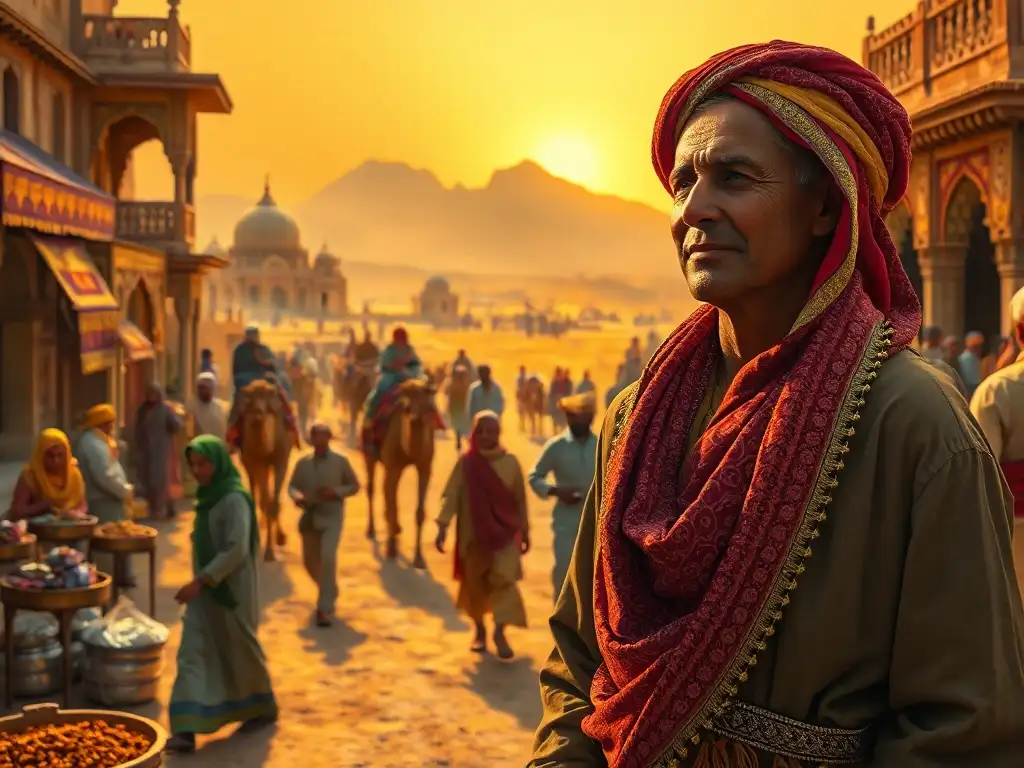
India was strategically positioned at the crossroads of several trade routes, allowing it to control and facilitate trade between diverse cultures. Major trade centers, such as Taxila and Pataliputra, became melting pots of commerce and culture, attracting merchants from far and wide. The Indian political landscape, particularly during empires like the Maurya and Gupta, further fostered a conducive environment for trade by ensuring stability and security for merchants.
Conclusion: Lasting Legacy of India's Role in the Silk Route
India's contribution to the Silk Route was not just in terms of goods but also in the exchange of ideas, cultures, and technologies. The interactions fostered along these trade routes laid the groundwork for a more interconnected world, with lasting effects on global trade, culture, and diplomacy. Understanding India's role in the Silk Route is essential to appreciate the complexities of ancient trade networks and their influence on modern economies and cultures. Through this exploration, we can better grasp how the past continues to shape our present.
- The Origins of the Silk Route
- India’s Trade Goods and Commodities
- Cultural Exchanges Along the Silk Route
- India’s Strategic Role in Silk Route Trade
- Conclusion: Lasting Legacy of India's Role in the Silk Route
Introduction to the Silk Route
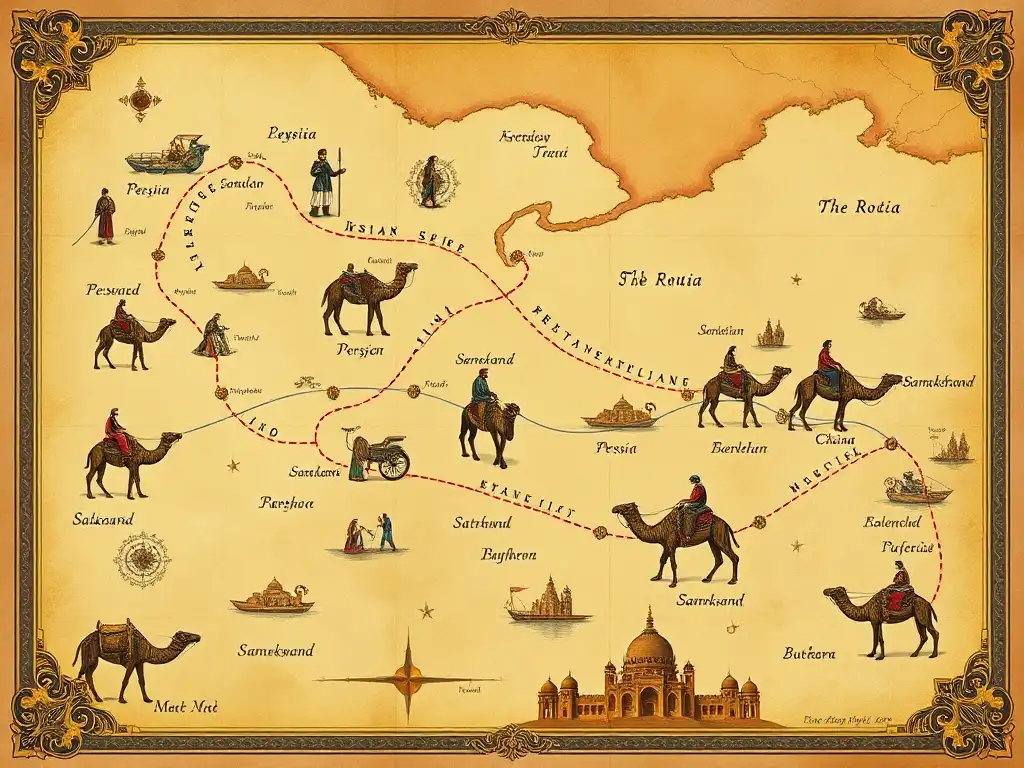
The Silk Route, an ancient network of trade routes connecting the East and West, played a crucial role in shaping the economies and cultures of the civilizations that thrived along its path. Spanning across Asia, the route facilitated not only the exchange of goods but also the transmission of ideas, technology, and culture between distant lands. This intricate web of trade routes allowed for the movement of silk, spices, precious metals, and a plethora of other commodities, establishing a conduit for commerce that would influence global trade for centuries.
Overview of the Silk Route
The Silk Route was not a single road but rather a series of interconnected paths that stretched over 4,000 miles. It originated during the Han Dynasty (206 BCE – 220 CE) in China and extended through Central Asia to the Mediterranean, eventually reaching Europe. This network included both land and maritime routes, with the overland paths running through regions such as modern-day China, Mongolia, Persia, and parts of the Middle East, while the maritime routes traversed the South China Sea, Indian Ocean, and the Red Sea.
Key Features of the Silk Route:
- Trade Hubs: Major cities such as Samarkand, Bukhara, and Constantinople emerged as bustling trade hubs along the route.
- Cultural Exchange: The Silk Route served as a melting pot of cultures, facilitating the exchange of languages, religions, and philosophies.
- Technological Innovations: The transmission of innovations such as papermaking, the compass, and gunpowder had profound impacts on societies along the route.
Importance of the Silk Route in Global Trade
The significance of the Silk Route in global trade cannot be overstated. It was instrumental in fostering economic ties between distant civilizations and promoting trade on an unprecedented scale. The exchange of goods along the route not only enriched the economies of the involved regions but also led to the diversification of markets.
Economic Impact:
- Increased Trade Volume: The Silk Route enabled merchants to transport large quantities of goods, significantly increasing trade volume.
- Cultural Commodities: Apart from tangible goods, cultural commodities such as art, literature, and religious beliefs were exchanged, enriching societies.
- Currency Exchange: The development of a more sophisticated banking and currency exchange system emerged due to increased commercial activity.
India's Role in Silk Route History
India's role in the Silk Route was pivotal, not only as a destination for traders but also as a vital source of many coveted goods. Indian merchants actively participated in the trade, exchanging silk, spices, gemstones, and textiles, which were highly sought after by traders from other regions.
Key Contributions of India:
- Spices and Aromatics: India was renowned for its spices, including pepper, cardamom, and cinnamon, which were in high demand across the world.
- Textiles: Indian cotton and silk textiles were prized commodities. The rich colors and intricate designs made Indian fabrics highly desirable in global markets.
- Cultural Exchange: As traders moved through India, they carried with them not only goods but also cultural influences, including Buddhism, which spread to Central Asia and beyond.
- Trade Cities: Cities like Taxila and Pataliputra flourished as commercial centers, providing hospitality and trade facilities for merchants from various regions.
India's role in the Silk Route was instrumental in facilitating a vibrant exchange of goods and culture, establishing its place as a key player in the early global trade network. The impact of this trade route continues to resonate today, illustrating the long-standing connections that have shaped global commerce and cultural interactions.
Historical Background of the Silk Route
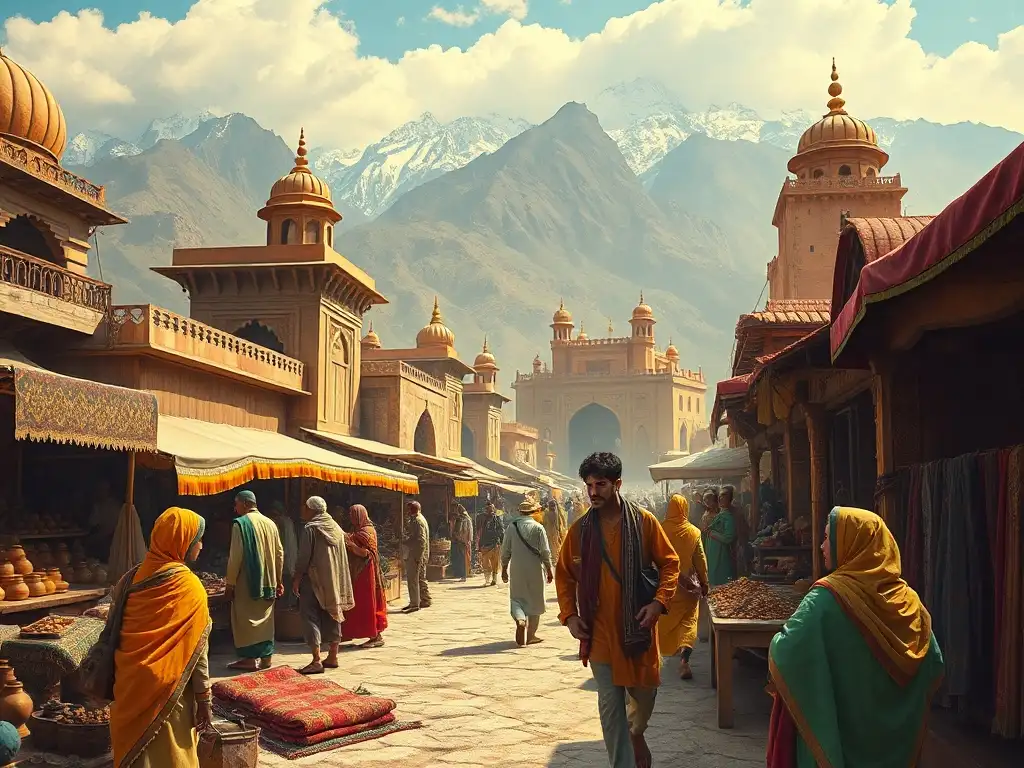
The Silk Route, a network of trade routes that connected the East and West, played a pivotal role in the economic, cultural, and political exchanges between various civilizations. This ancient pathway not only facilitated the trade of silk but also the exchange of goods, ideas, and innovations across continents. Understanding the historical context of the Silk Route is essential to grasp the significant contributions of India within this global trade network.
Emergence of the Silk Route
The origins of the Silk Route can be traced back to the Han Dynasty in China around 130 BCE when Emperor Wu initiated diplomatic relationships with Central Asian states. The desire for silk, a luxurious fabric that was highly sought after in the West, served as a catalyst for the development of these trade routes. As merchants began to traverse the treacherous terrains of deserts and mountains, a complex network emerged, linking various regions including China, Persia, the Mediterranean, and, importantly, the Indian subcontinent.
The route evolved over centuries, influenced by various empires and kingdoms. The Indo-Greek Kingdom in the 3rd century BCE, followed by the Mauryan Empire, and later dynasties like the Kushans and Guptas, contributed to the expansion and stability of these trade links. Indian merchants played a crucial role in facilitating trade by acting as intermediaries who transported goods like spices, textiles, and precious stones to far-off markets.
Key Trade Routes and Connections
The Silk Route consisted of several key trade routes, which can be categorized into overland and maritime paths. The overland routes connected China with the Mediterranean through Central Asia, while maritime routes linked ports in India with those in the Middle East and beyond.
- Overland Routes:
- The Northern Route traversed through regions like the Taklamakan Desert and connected cities such as Kashgar and Samarkand.
- The Southern Route passed through the Indian subcontinent, linking cities like Taxila and Pataliputra with major centers in Persia and beyond.
- Maritime Routes:
- The Indian Ocean trade network emerged as a significant connector, allowing for the exchange of goods such as textiles and spices from India with African and Middle Eastern markets.
India’s strategic geographical location allowed it to serve as a critical junction in these trade routes. Indian ports like Kalikot, Cochin, and Tamralipti became bustling trade hubs where merchants from different cultures converged, promoting not only commerce but also cultural exchanges.
Influence of Indian Civilizations on the Silk Route
Indian civilizations significantly influenced the Silk Route through various aspects, including trade goods, cultural practices, and knowledge dissemination.
Trade Goods
India was renowned for its high-quality textiles, particularly silk, cotton, and wool, which were highly sought after along the Silk Route. Spices such as black pepper, cardamom, and cloves were also major exports that attracted traders from distant lands. The demand for these products not only enriched Indian merchants but also established India as a key player in the global trade network.
Cultural Exchange
As traders traveled along the Silk Route, they also exchanged ideas, religions, and cultural practices. Buddhism, which originated in India, spread across the Silk Route, influencing regions such as Central Asia and China. Monasteries along the trade routes served as centers of learning and cultural exchange, facilitating the spread of Indian philosophies and arts.
Knowledge Dissemination
Indian contributions to mathematics, astronomy, and medicine also traveled along these trade routes, influencing other civilizations. For instance, the Indian numeral system and concepts of zero were adopted by Arab traders and eventually spread to Europe, revolutionizing mathematics.
India's role in the Silk Route was multifaceted, encompassing trade, cultural exchange, and knowledge dissemination. By acting as a bridge between East and West, ancient Indian civilizations not only contributed to the flourishing of the Silk Route but also left a lasting legacy that shaped the course of global trade and cultural interactions.
India's Role in the Silk Route
India's role in the Silk Route was pivotal in establishing it as a vibrant network of trade that connected the East and West. The Silk Route facilitated not only the exchange of goods but also ideas, cultures, and innovations, making it a cornerstone of ancient global commerce. India's strategic geographical position allowed it to become a central hub for traders from various civilizations, enabling the flow of commodities and culture between regions.
The exchange of goods on the Silk Route saw India emerge as a key player, particularly in the trade of luxury items that were in high demand across the continents. Through this route, Indian merchants transported goods that were not only significant for trade but also contributed to the cultural tapestry that enriched the civilizations along the route.
Major Indian Goods Traded on the Silk Route
The variety of goods traded by Indian merchants was extensive, with several commodities standing out due to their uniqueness and value. Here are some of the primary goods that India contributed to the Silk Route:
Spices and Their Significance
Spices were among the most coveted commodities traded along the Silk Route. Indian spices, such as black pepper, cardamom, cinnamon, and turmeric, were highly sought after for their flavor, preservation qualities, and medicinal properties.
- Culinary Appeal: Indian spices transformed culinary practices across Asia, the Middle East, and Europe, influencing local cuisines and introducing new flavors.
- Economic Impact: The high demand for spices led to significant economic growth for Indian traders, and cities like Kochi and Calicut became bustling trade centers.
Notably, the spice trade played a crucial role in fostering relations between different cultures and facilitating exchanges that went beyond mere commerce.
Textiles: The Fabric of Trade
India's textiles were renowned for their quality and intricate designs, making them a staple of the Silk Route trade.
- Cotton and Silk: Indian cotton, known for its softness and durability, and silk, produced in various regions, were significant exports.
- Dyeing Techniques: The unique dyeing methods, such as indigo dyeing, produced vibrant colors, attracting traders and consumers alike.
The fabric trade not only enhanced India's economy but also spread Indian craftsmanship techniques across the globe, influencing textile production in various regions.
Precious Stones and Jewelry
India was a major source of precious stones and exquisite jewelry along the Silk Route.
- Gems: Diamonds, rubies, sapphires, and emeralds were mined in India and became highly prized in markets across Asia and Europe.
- Jewelry Craftsmanship: Indian artisans were renowned for their intricate jewelry designs, often incorporating precious stones into elaborate pieces that were sought after by royalty and affluent individuals.
The trade of these luxury items not only showcased India's wealth but also established its reputation as a center for high-quality craftsmanship in jewelry.
Cultural Exchange Along the Silk Route
The Silk Route was not merely a conduit for goods; it was also a thriving avenue for cultural exchange. Through the interactions between traders and travelers, numerous cultural elements were shared, leading to a rich tapestry of influences.
Spread of Indian Religion and Philosophy
Indian religions, particularly Buddhism and Hinduism, spread along the Silk Route, influencing cultures in Central Asia, China, and beyond.
- Buddhism: The teachings of Buddha traveled from India to various regions, leading to the establishment of monasteries and the propagation of Buddhist art and philosophy.
- Philosophical Dialogues: The exchange of philosophical ideas contributed to a broader understanding of spirituality and ethics across civilizations.
This cultural diffusion fostered a sense of interconnectedness among diverse peoples along the route.
Influence of Indian Art and Architecture
The aesthetic contributions of India along the Silk Route were significant, with Indian art and architecture influencing various regions.
- Stupas and Temples: Architectural styles from India, such as stupas, were adopted in places like Central Asia and Southeast Asia, showcasing the spread of Indian architectural concepts.
- Artistic Styles: Indian styles of sculpture and painting also found their way into local art forms, enriching the artistic landscape of the regions along the Silk Route.
The artistic exchange contributed to the development of a hybrid cultural identity in many areas influenced by Indian traditions.
Language and Literature Exchange
The interactions facilitated by the Silk Route led to a vibrant exchange of languages and literature.
- Sanskrit and Other Languages: Sanskrit texts traveled along the route, influencing local languages and literary traditions.
- Literary Works: Works of Indian literature, including fables and epics, found audiences in various regions, contributing to a shared literary heritage.
This exchange enriched the intellectual and cultural landscape of the regions connected by the Silk Route, fostering a spirit of collaboration and mutual influence.
India's role in the Silk Route was multifaceted, with significant contributions in trade and cultural exchange that have left a lasting impact on global history. The goods traded, along with the cultural interactions, shaped the civilizations involved and established a legacy that continues to resonate today.
Economic Impact of the Silk Route on Ancient India
Trade Relations with Other Civilizations
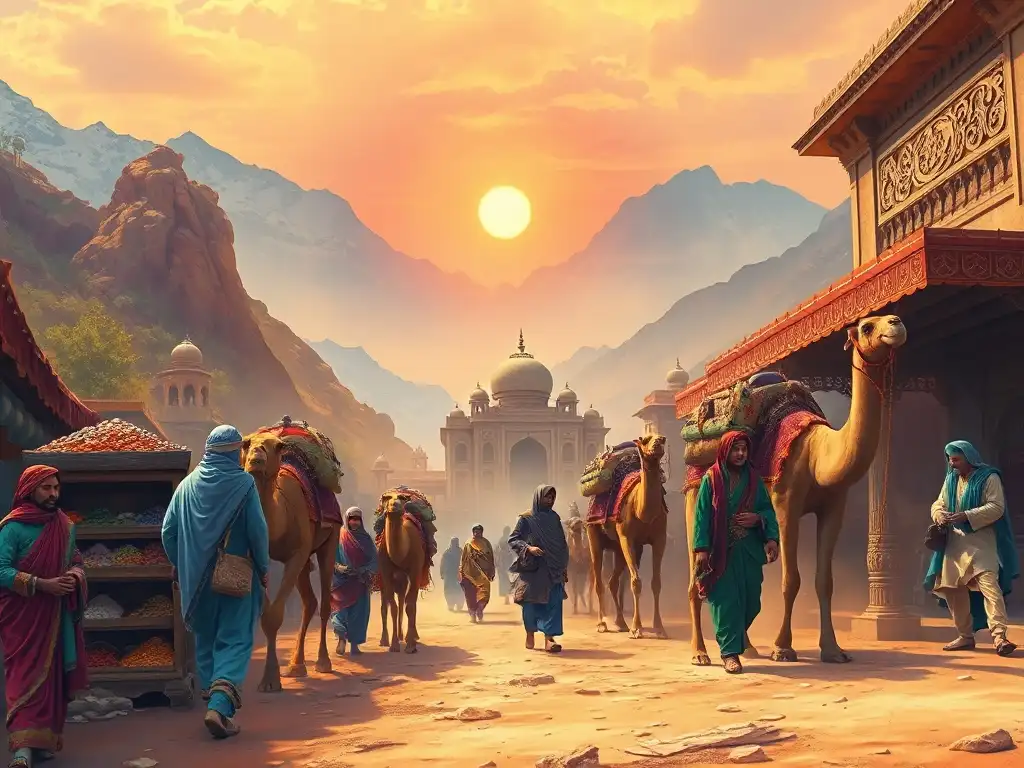
The Silk Route was not merely a series of trade routes; it was a dynamic network that facilitated the exchange of goods, culture, and ideas across continents. India's role in this network was pivotal, as it served as a crucial link between the East and the West. The trade relations established through the Silk Route allowed for the flow of not just merchandise but also knowledge and beliefs among various civilizations.
Interaction with Chinese Traders
India's interaction with Chinese traders was marked by the exchange of luxury goods such as silk, spices, and precious stones. The demand for Indian textiles and spices in China was immense, leading to a flourishing trade relationship. Notably, the Chinese silk was highly sought after in Indian markets, while Indian merchants introduced exotic items such as black pepper and saffron to Chinese consumers.
- Key Goods Exchanged:
- Indian spices like black pepper and cardamom
- Chinese silk and porcelain
The establishment of trade agreements and the dissemination of Buddhist teachings further solidified these relations, as Indian monks traveled to China, sharing cultural and religious insights that enriched both civilizations.
Trade with the Roman Empire
The Silk Route also enabled India to connect with the Roman Empire, which was one of the wealthiest civilizations of its time. Roman demand for Indian products was significant, particularly for spices, gemstones, and textiles. Indian merchants played a crucial role in this trade, often acting as intermediaries between the East and the West.
- Significant Exports:
- Spices: Cardamom, black pepper, and cinnamon
- Textiles: Fine cotton and silk
- Gemstones: Diamonds and pearls
The influx of gold and silver from Rome into India was another notable consequence of this trade. This not only enriched Indian merchants but also contributed to the overall economic stability and growth of ancient Indian states.
Connection with Middle Eastern Markets
The Middle Eastern markets were essential for the transference of goods between India and other regions, including Europe and Africa. Indian merchants actively participated in trade with various Middle Eastern empires, exchanging silk, spices, and agricultural products for luxury items and raw materials.
- Trade Routes:
- Overland routes through Persia
- Maritime routes through the Arabian Sea
The interaction with Middle Eastern traders facilitated the introduction of new technologies and agricultural practices to India, fostering innovation and growth in local economies.
Economic Growth and Urban Development in India
The Silk Route catalyzed significant economic growth and urban development in ancient India. As trade flourished, several cities emerged as major commercial centers, which played a vital role in the economic landscape of the region.
Rise of Trade Cities along the Silk Route
Cities like Taxila, Peshawar, and Ujjain became bustling trade hubs along the Silk Route. These urban centers were characterized by a vibrant marketplace, diverse populations, and flourishing crafts.
- Characteristics of Trade Cities:
- Taxila: Known for its educational institutions and cosmopolitan culture
- Ujjain: A significant center for trade in textiles and spices
The rise of these cities not only contributed to the wealth of their inhabitants but also attracted scholars, artisans, and travelers from various regions, leading to a rich cultural exchange.
Impact on Local Economies and Crafts
The economic interactions facilitated by the Silk Route had profound effects on local economies and crafts throughout India. The demand for goods in both domestic and foreign markets stimulated local industries, particularly in textile production, metallurgy, and ceramics.
- Crafts and Industries:
- Cotton weaving and dyeing
- Metalwork, including gold and silver jewelry
- Pottery and ceramics, often decorated with intricate designs
This boom in production not only improved the livelihoods of artisans but also laid the groundwork for the diverse cultural heritage that India is known for today. The wealth generated by trade enabled the patronage of arts and architecture, leading to significant developments in Indian civilization during this period.
India's role in the Silk Route was instrumental in shaping the economic landscape of ancient civilizations. The trade relations established through this network fostered interactions with diverse cultures, while the economic growth spurred by these exchanges contributed to the urban and industrial development of ancient India.
Challenges and Changes in the Silk Route Trade
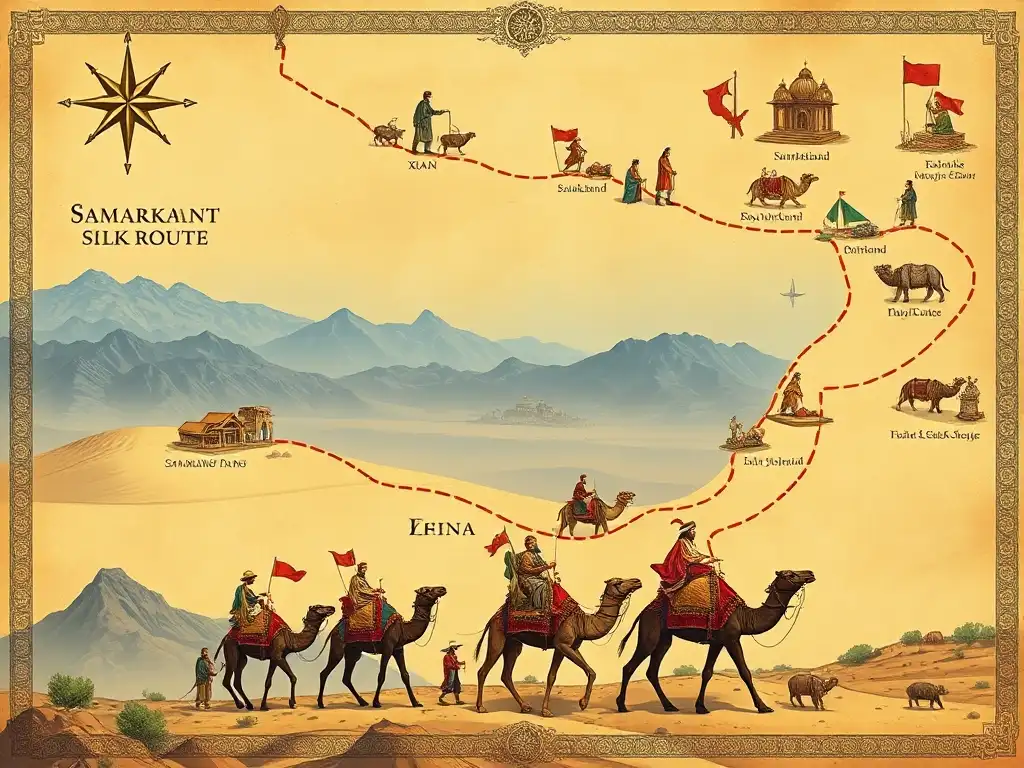
The Silk Route, a complex network of trade paths connecting East and West, was instrumental in the exchange of goods, cultures, and ideas. However, this vital trade route faced numerous challenges and underwent significant changes throughout its history. Understanding these obstacles is crucial to appreciating India's role in the Silk Route and how it adapted to an evolving global trade landscape.
Natural and Political Obstacles
The Silk Route was fraught with natural and political challenges that affected trade dynamics.
- Geographical Barriers:
- Mountain Ranges: The formidable Himalayas and Pamirs posed significant challenges for traders. High altitudes, treacherous passes, and harsh climates made many routes perilous.
- Deserts: The Taklamakan Desert and the Gobi Desert created vast stretches of inhospitable terrain, which limited trade and necessitated well-planned caravans equipped with sufficient supplies.
- Political Fragmentation:
- Changing Empires: The rise and fall of powerful empires, such as the Persian Empire and various Central Asian khanates, led to fluctuating control over trade routes. This often resulted in inconsistent taxation and tariffs.
- Conflict Zones: Frequent wars and disputes among local rulers disrupted trade, making certain routes unsafe. For instance, the Mongol invasions in the 13th century severely impacted trade flow across the region.
- Cultural Barriers:
- Language and Customs: Diverse cultures along the Silk Route created communication challenges. Traders often had to navigate different languages and customs, which could complicate negotiations and transactions.
The Decline of the Silk Route
The decline of the Silk Route in the late medieval period was influenced by several interrelated factors:
- Maritime Trade Expansion:
- The discovery of sea routes to Asia by European powers in the 15th and 16th centuries shifted trade dynamics significantly. The sea routes provided faster, safer, and more reliable transportation for goods, diminishing reliance on overland routes.
- Rise of New Trade Powers:
- Emerging powers, such as the Ottoman Empire and later European colonial nations, began to dominate trade routes, which caused a decline in the traditional Silk Route's significance.
- Technological Advances:
- Innovations in navigation and shipbuilding contributed to the growth of maritime trade, rendering the overland routes less favorable. Technologies such as the astrolabe and compass allowed for more accurate sea navigation.
- Declining Demand for Silk:
- As European tastes changed, the demand for silk and other luxury goods diminished, causing a significant drop in trade volume along the Silk Route.
India's Adaptation to Changing Trade Dynamics
India's response to the changing dynamics of Silk Route trade showcases its resilience and adaptability:
- Diversification of Trade Goods:
- While silk was a primary export, India diversified its offerings to include spices, textiles, and precious stones. This adaptability allowed Indian traders to remain competitive in the evolving market.
- Strengthening Maritime Links:
- India began to develop and strengthen its maritime trade routes, particularly with Southeast Asia and beyond. Indian merchants established significant trade networks that complemented overland routes, facilitating the exchange of goods and ideas.
- Cultural Exchanges:
- India continued to play a vital role as a cultural hub. The exchange of ideas, religions, and technologies between India and other cultures along the Silk Route fostered a rich tapestry of mutual influence, which persisted even as trade routes shifted.
- Formation of Trade Alliances:
- Indian merchants formed alliances with traders from different regions, enhancing cooperation and ensuring a steady flow of goods. These alliances were instrumental in adapting to the political and economic changes in the region.
While the Silk Route faced numerous challenges and ultimately declined as a primary trade network, India's role in Silk Route commerce demonstrated remarkable adaptability and resilience. The country's ability to navigate natural and political obstacles, coupled with its proactive approach to changing trade dynamics, solidified its place in the history of international trade.
Conclusion: The Legacy of India on the Silk Route
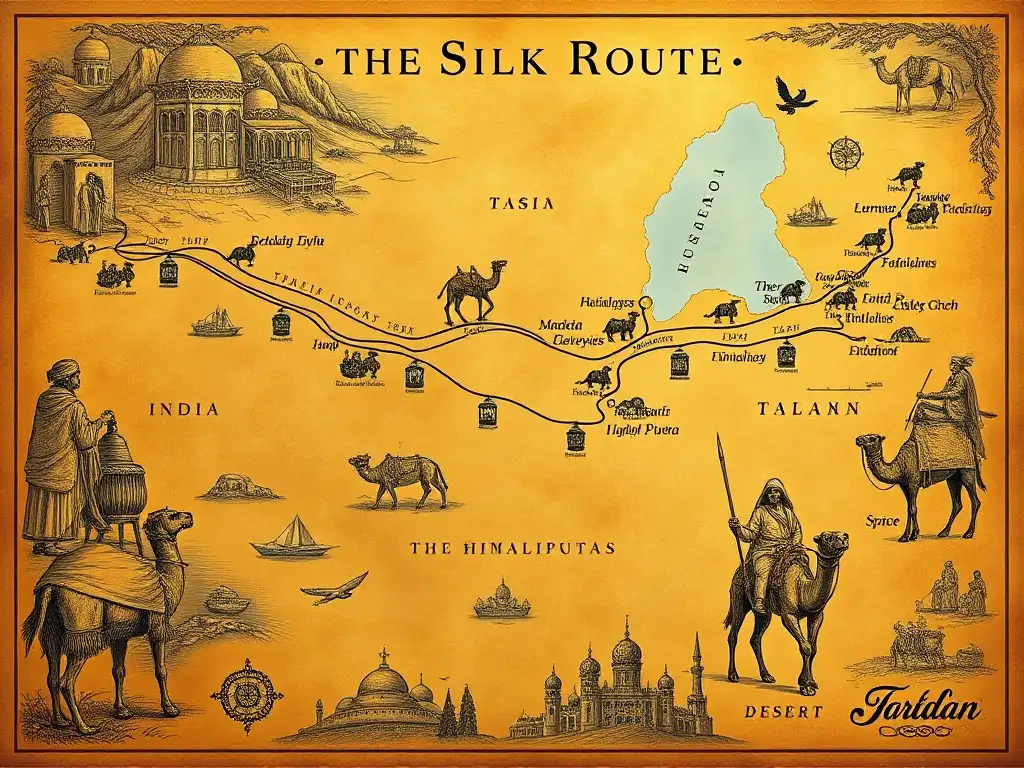
The legacy of India's role in the Silk Route cannot be overstated. As a vital link between the East and West, India facilitated not only the exchange of goods but also cultural, religious, and technological ideas that shaped civilizations. This intricate web of trade routes served as a conduit for various commodities such as spices, textiles, and precious stones, which were highly sought after across continents.
The Indian subcontinent's strategic position allowed it to become a melting pot of diverse cultures and practices. Merchants and travelers traversed these routes, leading to the establishment of vibrant trading cities like Taxila and Ujjain, which became hubs of commerce, learning, and innovation. The legacy of these interactions continues to influence global trade practices and cultural exchanges even today.
Lasting Impact of India's Contributions
India's contributions to the Silk Route extended beyond mere goods. The introduction of Indian textiles, particularly cotton and silk, revolutionized fashion and textile production in regions far beyond its borders. Additionally, the spices from India, including black pepper, cardamom, and turmeric, became staples in various cuisines worldwide, further enhancing the appeal of trade with India.
Moreover, the spread of Indian philosophies and religions, such as Buddhism and Hinduism, along these trade routes played a crucial role in cultural diffusion. This exchange laid the foundation for a shared cultural heritage that transcended regional boundaries, fostering a sense of unity among diverse civilizations. The art, architecture, and scientific advancements exchanged through these interactions have left an indelible mark on world history.
Modern Relevance of the Silk Route in Global Trade
In today's context, the Silk Route's relevance is more pronounced than ever. With globalization driving trade and commerce, the historical significance of these routes offers valuable insights for contemporary trade practices. Modern initiatives, such as China's Belt and Road Initiative, seek to revive and emulate the connectivity established by the Silk Route, highlighting the ongoing importance of trade networks in fostering international relationships.
India's strategic location continues to play a pivotal role in global trade dynamics. As countries seek to diversify their trade partners, India's historical connections along the Silk Route serve as a reminder of the benefits of collaboration and mutual exchange. The emergence of e-commerce and digital platforms further enhances this connectivity, allowing for unprecedented access to markets and resources.
Reflection on India’s Historical Trade Significance
Reflecting on India's historical trade significance reveals a narrative rich in complexity and interdependence. The Silk Route was not just a trade artery; it was a bridge that connected civilizations, fostering dialogue and cooperation. India's role in this vast network exemplifies the importance of trade in shaping societies and economies throughout history.
The lessons drawn from India's interactions along the Silk Route emphasize the value of understanding and respecting cultural differences in trade. As nations navigate the complexities of modern commerce, the principles of inclusivity, adaptability, and mutual benefit illuminated by India's ancient trade practices remain relevant.
India's contributions to the Silk Route have left an enduring legacy that continues to inspire and inform global trade practices today. By recognizing the historical significance of these trade routes, we can appreciate the rich tapestry of connections that have shaped our world, paving the way for future collaborations.
References
India's role in the Silk Route is a topic that has been widely studied and documented through various historical texts and archaeological findings. Below are some key references that provide insight into the significance of India within this global trade network.
Suggested Reading on India's Role in Silk Route
- "The Silk Roads: A New History of the World" by Peter Frankopan
- This book offers a comprehensive overview of the Silk Roads and includes discussions on how India contributed to trade, culture, and the exchange of ideas.
- "Silk Road: The History and Legacy of the World’s Most Famous Trade Route" by Charles River Editors
- An accessible introduction to the Silk Route, with sections specifically focused on India's interactions and influence along the trade network.
- "Ancient Indian History and Culture" by R. C. Majumdar
- A scholarly work that examines the broader context of ancient India, including its trade practices and contributions to the Silk Route.
- "India and the World: A History of Indian Commerce" by N. R. Ray
- This book delves into the commercial activities of ancient India, emphasizing its role in establishing trade links along the Silk Route.
- Research papers and journals like the "Journal of Indian History"
- Numerous articles discuss archaeological findings and historical analyses related to India's trade routes, including the Silk Route.
Historical Texts and Archaeological Findings
India's role in the Silk Route is illustrated through a rich tapestry of historical texts and archaeological discoveries:
- Kautilya's Arthashastra
- This ancient treatise on statecraft includes references to trade practices and diplomatic relations that highlight the importance of trade routes, including those connecting to the Silk Route.
- Accounts of Chinese Pilgrims
- Buddhist monks like Xuanzang and Fa-Hien documented their travels to India, providing insights into the interactions between Indian and Chinese civilizations along trade routes.
- Archaeological Sites
- Excavations at sites like Taxila and Pataliputra have uncovered artifacts, coins, and trade goods that evidence India's active participation in Silk Route commerce.
- The Indus Valley Civilization
- Evidence of trade with Mesopotamia and other regions suggests that even before the formalization of the Silk Route, Indian civilizations were engaged in extensive trade networks.
- Roman Texts
- Works by Roman historians such as Pliny the Elder mention trade with India, indicating the significance of Indian goods like spices, textiles, and precious stones along the Silk Route.
Through these sources, it becomes clear that India's role in the Silk Route was not only economic but also cultural, facilitating the exchange of ideas, religion, and technological advancements that shaped civilizations across continents.
Frequently Asked Questions
What was the significance of India's role in the Silk Route?
India served as a crucial hub for trade, connecting the East and West. Its strategic location facilitated the exchange of goods, ideas, and cultures, enhancing global commerce.
Which trade goods did India supply on the Silk Route?
India was renowned for its spices, silks, and gemstones, which were highly sought after in international markets. These goods not only boosted trade but also established India's economic significance.
How did the Silk Route influence Indian culture?
The exchange along the Silk Route led to a rich cultural amalgamation. It introduced new ideas, religions, and art forms, significantly shaping the socio-cultural landscape of ancient India.
What were the main civilizations involved in the Silk Route trade?
The primary civilizations included the Indus Valley, Persian Empire, Chinese dynasties, and later, the Gupta Empire. Each played a distinct role in the trade dynamics of the Silk Route.
How did the decline of the Silk Route impact India?
The decline led to a reduction in trade and economic activity, which affected India's prosperity. However, it also prompted the emergence of new trade routes and networks, shaping future commerce.
Final Reflection: Embracing India's Legacy on the Silk Route
The Ancient Silk Route serves as a powerful reminder of how interconnected our world has always been, and India's role in this global trade network is more relevant today than ever. As we navigate the complexities of globalization, understanding the historical significance of trade routes like the Silk Route can illuminate the pathways of cultural exchange and economic collaboration that continue to shape our societies. The lessons learned from this ancient network highlight the importance of cooperation and mutual respect in an increasingly divided world.
Culture, commerce, and connectivity have always been intertwined, and India's contributions to the Silk Route exemplify this enduring relationship. From spices to textiles, the exchange of goods fostered not only economic prosperity but also cultural dialogue that enriched civilizations. As historian John Green aptly stated, Trade is not just about goods; it's about the ideas and cultures that travel along with them.
This observation underscores the ongoing influence of the Silk Route in our modern context, where the sharing of knowledge and culture remains vital in fostering global understanding and unity.
As we reflect on the significance of India's role in the Silk Route, let us embrace the spirit of collaboration that defined this ancient network. I invite you to consider how you can contribute to a more interconnected world in your own life. Whether through supporting local artisans, engaging in cultural exchanges, or advocating for global trade policies that promote fairness and sustainability, each of us has the power to honor this legacy. Together, we can continue to weave the fabric of a global community that celebrates diversity and shared heritage, just as the Silk Route once did.
Unveil the Legacy of Trade: Take Action Today!
Thank you for exploring the fascinating world of the Ancient Silk Route and India's vital role in shaping global trade. You've gained insights into a rich history that connects cultures and economies, and now it's time to carry that knowledge forward!
Here are some ways you can engage further with this incredible topic:
- Explore more about India’s trade contributions by visiting local museums or cultural centers that showcase artifacts from the Silk Route era.
- Share your newfound knowledge with friends and family to spark conversations about historical trade networks and their impacts on our modern world.
- Consider joining or participating in online forums or discussions related to ancient trade routes to connect with like-minded history enthusiasts.
What aspect of the Silk Route intrigues you most—its cultural exchanges, its economic impacts, or the fascinating stories of those who traveled it? We’d love to hear your thoughts below!