
How Zero Empowered Ancient Indian Civilizations in Various Fields of Study

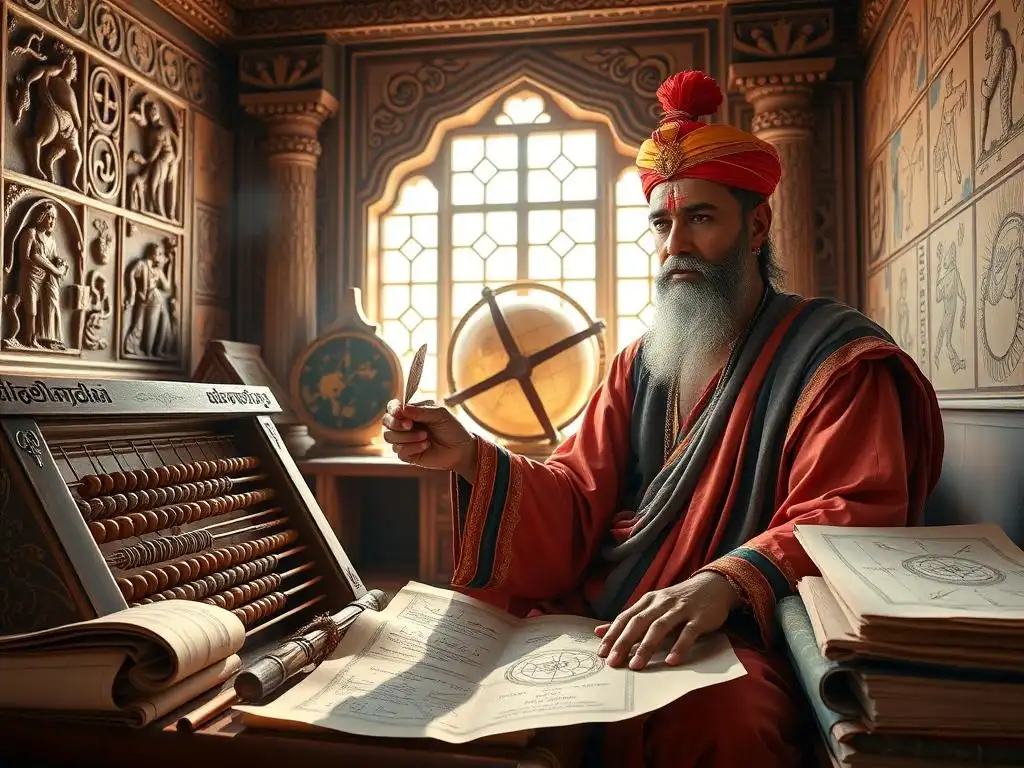
Welcome to Ancient India History, where we embark on a captivating journey through the rich and diverse tapestry of India's illustrious past. Delve into the fascinating world of mathematics as we explore the profound impact of zero in ancient India. This remarkable concept not only revolutionized numerical systems but also empowered civilizations to excel in various fields of study. Are you ready to uncover how this simple yet powerful figure transformed the intellectual landscape of ancient India? Join us as we unravel the mysteries and contributions that shaped the very foundations of modern mathematics!
- Introduction to the Impact of Zero in Ancient India
- Historical Context of Zero in Ancient Indian Civilizations
- The Development of Zero in Ancient Indian Mathematics
- The Influence of Zero on Various Fields of Study
- The Global Impact of Zero from Ancient India
- Conclusion: The Lasting Legacy of Zero in Ancient India
- Frequently Asked Questions
- Final Reflection: The Enduring Impact of Zero on Ancient Indian Civilizations
- Unleash the Power of Zero in Your Life!
Introduction to the Impact of Zero in Ancient India

The concept of zero is one of the most transformative inventions in the history of mathematics, and its origins can be traced back to ancient India. The impact of zero in ancient India is profound, influencing not just mathematics but also philosophy, astronomy, and various fields of science.
This article delves into how ancient Indian civilizations harnessed the power of zero, leading to significant advancements that shaped their cultural and intellectual landscape. By understanding the role of zero as both a placeholder and a symbol for the absence of quantity, we can appreciate its contributions to mathematical thought and its ripple effects across various disciplines.
Overview of Zero in Mathematics
Zero's journey in mathematics began around the 5th century CE, notably with the work of Indian mathematicians like Brahmagupta and later Aryabhata. Brahmagupta's seminal text, "Brahmasphutasiddhanta," not only defined zero but also established rules for arithmetic operations involving zero. His work outlined the following key points:
- Definition of Zero: Brahmagupta described zero as a number that represents the absence of a quantity.
- Arithmetic Operations: He introduced rules for addition, subtraction, multiplication, and division involving zero, which laid the groundwork for modern arithmetic.
- Negative Numbers: Brahmagupta also dealt with negative numbers, treating zero as a neutral element in calculations.
This foundational understanding of zero allowed for more complex mathematical concepts to emerge, influencing later scholars and civilizations.
Importance of Zero in Ancient Civilizations
The significance of zero in ancient civilizations extends far beyond mathematics. Its introduction facilitated advancements in various fields:
- Astronomy:
- Ancient Indian astronomers used zero to simplify calculations related to celestial movements, contributing to more accurate astronomical models.
- Aryabhata’s work, which incorporated zero, enabled predictions of eclipses and planetary positions.
- Commerce and Trade:
- The use of zero as a placeholder revolutionized trade by simplifying the representation of large numbers, making calculations more efficient.
- Merchants could easily indicate quantities, prices, and profits, enhancing trade practices.
- Philosophy and Religion:
- Philosophically, zero represented the concept of "nothingness," which had significant implications in Indian philosophy and religion.
- It prompted discussions about existence and the universe, influencing spiritual thought.
- Architecture and Engineering:
- The principles derived from mathematical advancements involving zero contributed to architectural feats, such as the design of complex temples and structures.
The impact of zero in ancient India is a testament to the ingenuity of its civilizations, highlighting its role not merely as a mathematical tool but as a catalyst for progress across various domains of knowledge. The legacy of zero continues to influence contemporary mathematics and our understanding of the universe.
Historical Context of Zero in Ancient Indian Civilizations

The Indus Valley Civilization and Early Numerical Systems
The Indus Valley Civilization, which thrived from approximately 3300 to 1300 BCE, is one of the earliest urban cultures in the world. While much of their script remains undeciphered, archaeological evidence suggests that the inhabitants had developed a sophisticated understanding of numerical systems.
- Weights and Measures: Standardized weights made of stone and bronze have been discovered, indicating a system of trade that required precise measurements. This suggests an early understanding of quantitative relationships.
- Numerical Symbols: Various seals from the Indus Valley exhibit symbols that may represent numerical values. Though the exact meanings of these symbols remain unknown, they are believed to reflect an early form of counting and record-keeping.
- Base Systems: The mathematics of the Indus people likely included base-10 counting systems, as suggested by the artifacts that denote counts in tens and hundreds. This early numerical understanding laid the groundwork for more complex mathematical concepts, including the eventual development of zero.
The legacy of the Indus Valley can be seen as a precursor to the more advanced mathematical ideas that emerged in subsequent periods, particularly as societies began to require more sophisticated calculations for trade, astronomy, and administration.
The Vedic Period: Birth of Mathematical Concepts
The Vedic Period (approximately 1500 to 500 BCE) marked a significant evolution in mathematical thought in ancient India. This era is characterized by the composition of texts known as the Vedas, which included philosophical, spiritual, and practical knowledge.
- Mathematical Texts: The Sulba Sutras, texts associated with Vedic mathematics, provided rules for constructing altars and rituals. These texts contained geometrical principles and approximations of square and cube roots, showcasing an early understanding of geometry.
- Concept of Zero: Although the explicit concept of zero was not fully formed during the Vedic texts, the foundations for its development were laid. The Vedic mathematicians utilized a form of placeholder notation, essential for expanding numerical systems.
- Counting and Calculation: The Vedic texts also introduced methods for arithmetic operations such as addition, subtraction, multiplication, and division. The use of words to denote numbers reflects an early inclination toward a more abstract understanding of mathematics, pivotal for the later conceptualization of zero.
The contributions during the Vedic Period were instrumental in shaping mathematical thought, paving the way for the systematic study of numbers and the eventual recognition of zero as a separate numeral, which would profoundly influence various fields including astronomy, commerce, and science in ancient India.
The historical context surrounding the concept of zero in ancient Indian civilizations illustrates a gradual evolution from basic numerical systems in the Indus Valley to the more complex mathematical concepts of the Vedic Period. Each phase contributed significantly to the eventual recognition of zero, showcasing the rich tapestry of mathematical innovation in ancient India.
The Development of Zero in Ancient Indian Mathematics
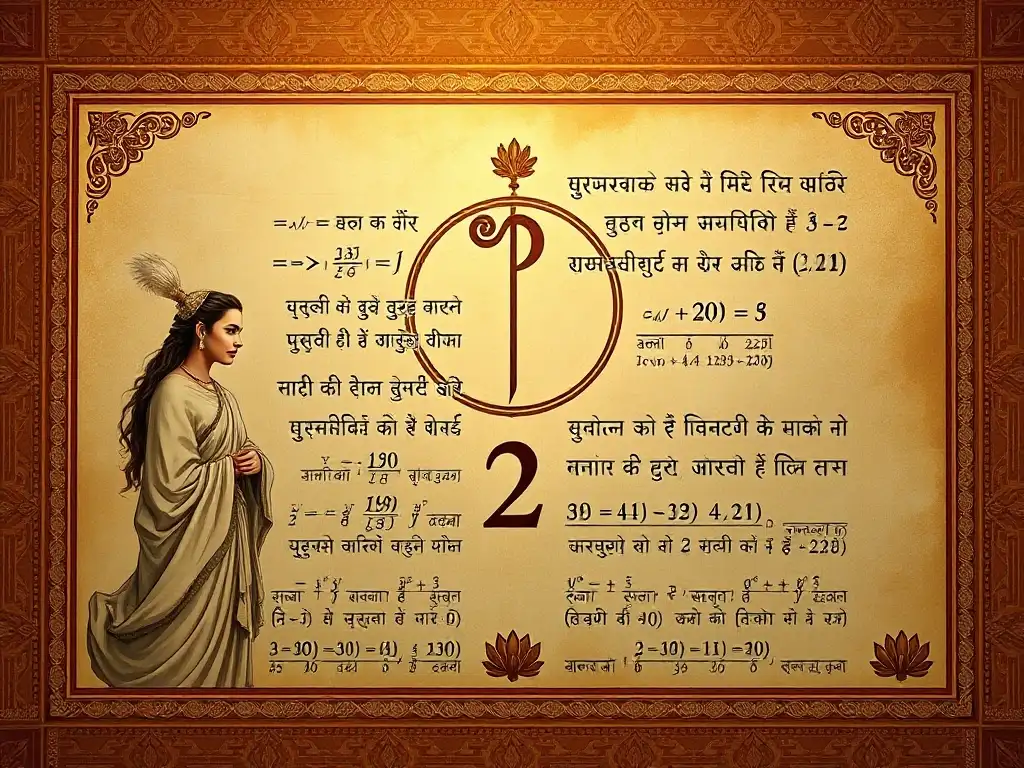
The concept of zero, represented as a symbol and a number, emerged as a revolutionary idea in ancient Indian mathematics. Its development marked a significant turning point not only in mathematical calculations but also in various fields such as astronomy, physics, and economics. The journey of zero began in the early centuries of the Common Era, evolving from a mere placeholder to a foundational element of numerical systems.
The earliest records of the use of zero can be traced back to the Bakhshali Manuscript, believed to date from the 2nd century CE. This ancient text illustrated the use of a dot to signify the absence of a quantity, laying the groundwork for the later symbol of zero.
The Role of Mathematicians in Advancing Zero
In ancient India, a cadre of brilliant mathematicians played a pivotal role in the advancement of the concept of zero. Notable figures such as Aryabhata, Brahmagupta, and later mathematicians contributed significantly to the formalization and application of zero in mathematical operations.
- Aryabhata (476–550 CE):
- Introduced the concept of zero as a placeholder in positional notation.
- Emphasized the importance of zero in calculations, especially in astronomy.
- Brahmagupta (598–668 CE):
- Expanded on Aryabhata's work and provided rules for arithmetic operations involving zero.
- Clarified the use of zero in both positive and negative contexts.
The collaborative efforts of these mathematicians paved the way for zero's acceptance and application across various domains, ultimately influencing mathematical practices worldwide.
Key Texts and Manuscripts Featuring Zero
The legacy of zero in ancient Indian mathematics is well-documented in several key texts and manuscripts. These works not only illustrate the concept of zero but also highlight its practical applications in calculations and problem-solving.
- The Bakhshali Manuscript:
- Contains early evidence of the use of zero as a placeholder.
- Demonstrates arithmetic operations with zero in various mathematical problems.
- Aryabhata's Aryabhatiya:
- Discusses the significance of zero in astronomical calculations.
- Introduces methods for solving quadratic equations that incorporate zero.
- Brahmagupta's Brahmasphutasiddhanta:
- Provides explicit rules for arithmetic involving zero, such as addition, subtraction, and division.
- Explains the implications of zero in calculating areas and volumes.
These texts are critical in understanding how the concept of zero was not only theoretical but also deeply embedded in practical mathematical applications.
Aryabhata's Contributions to Mathematics
Aryabhata, one of the most celebrated mathematicians of ancient India, made groundbreaking contributions that laid the foundation for the use of zero in mathematics. His seminal work, Aryabhatiya, composed in 499 CE, was instrumental in formalizing the understanding of zero and positional notation.
- Positional System: Aryabhata introduced the idea of using zero as a placeholder within the decimal system, which allowed for more efficient calculations and representations of large numbers.
- Astronomical Calculations: He applied zero in various astronomical contexts, enabling accurate predictions of celestial events. His methods demonstrated the importance of zero in geolocation and timekeeping.
Aryabhata's innovative approach made complex calculations more manageable and set a precedent for future mathematicians.
Brahmagupta's Innovations with Zero
Brahmagupta's work in the 7th century further expanded the concept of zero, providing comprehensive rules that governed its use in arithmetic. His treatise, Brahmasphutasiddhanta, is a cornerstone in the history of mathematics and serves as a bridge between Aryabhata's theories and later developments.
- Arithmetic Operations: Brahmagupta established clear guidelines for performing arithmetic operations involving zero, including:
- Addition: \( a + 0 = a \)
- Subtraction: \( a - 0 = a \) and \( 0 - a = -a \)
- Multiplication: \( a \times 0 = 0 \)
- Division: Provided insights into division by zero, recognizing it as an indeterminate form.
- Negative Numbers: Brahmagupta also introduced the concept of negative numbers, further enriching the mathematical landscape and demonstrating the versatility of zero in various calculations.
His innovations not only solidified the role of zero in arithmetic but also influenced mathematical thought across cultures and epochs, culminating in its integral place in modern mathematics.
The impact of zero in ancient India was profound, leading to significant advancements in various fields of study, and its legacy continues to resonate in contemporary mathematics.
The Influence of Zero on Various Fields of Study
Zero in Astronomy: Calculations and Predictions
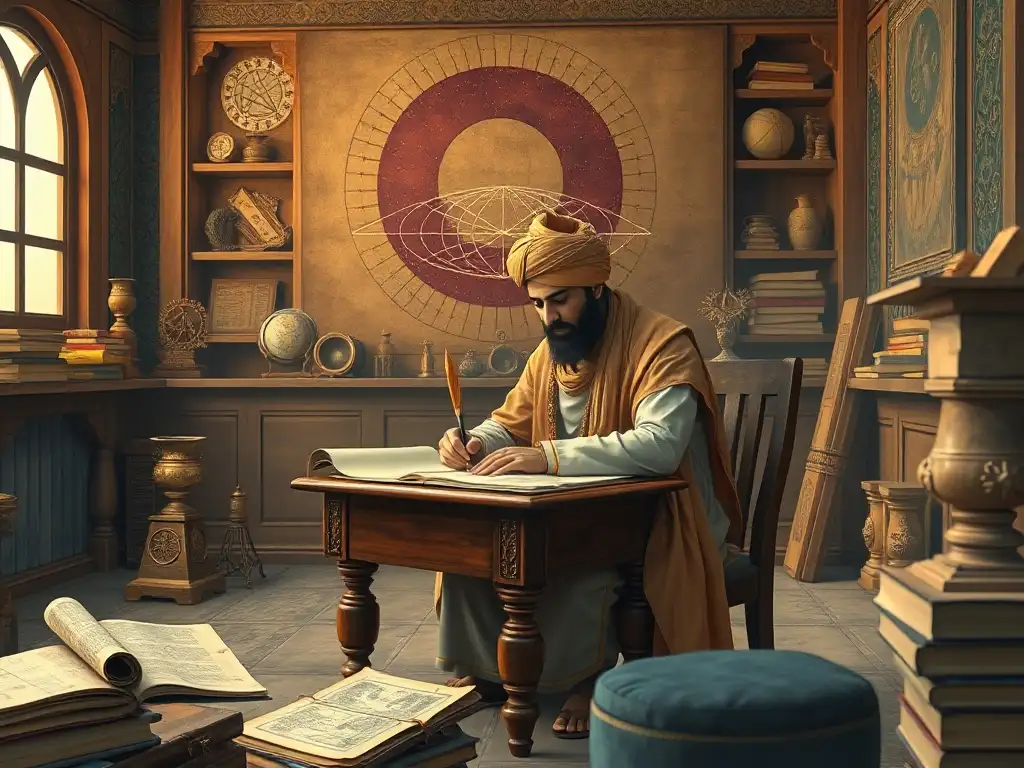
The advent of zero had a profound impact on astronomy in ancient India. Astronomers like Aryabhata and Brahmagupta utilized the concept of zero to enhance their calculations of celestial bodies and planetary movements. By incorporating zero into their numerical systems, they could represent large numbers and perform complex calculations more efficiently.
One of the most notable contributions was Aryabhata’s work, where he calculated the circumference of the Earth to be approximately 39,968 kilometers, which is remarkably close to the actual figure of about 40,075 kilometers. The use of zero allowed for greater precision in these measurements, facilitating accurate predictions of solar and lunar eclipses. Brahmagupta also made significant advances, including the calculation of the positions of planets and the timing of eclipses, which relied heavily on the arithmetic principles enabled by zero.
The influence of zero is not merely academic; it transformed practical applications in navigation and agricultural calendars. By enabling astronomers to calculate and predict celestial events with accuracy, zero significantly enhanced the understanding of time and space in ancient Indian civilizations.
Zero in Philosophy: Concepts of Nothingness
In ancient Indian philosophy, the concept of zero transcended mere mathematics and entered the realm of metaphysical thought. Philosophers such as the Jains and Buddhists explored the idea of śūnyatā, or emptiness, which aligns closely with the mathematical notion of zero. This philosophical approach posited that understanding nothingness is critical to comprehending the nature of existence itself.
The exploration of zero in philosophy raises profound questions regarding the nature of reality. For instance, the idea of "nothingness" challenges the binary understanding of existence versus non-existence. This philosophical discourse influenced various schools of thought, leading to an enriched dialogue between mathematics and metaphysics.
The interplay of zero and philosophical inquiry also led to ethical considerations about attachment and desire in the pursuit of knowledge. The acceptance of nothingness as a valid concept encouraged scholars to approach problems with an open mind, ultimately impacting other fields of study, including science and ethics.
Zero in Commerce: Advancements in Trade and Accounting
The introduction of zero revolutionized commerce in ancient India, particularly in trade and accounting practices. Merchants and traders began to use zero as a placeholder, which streamlined the recording of transactions and enabled more sophisticated accounting methods. This innovation facilitated the growth of trade networks across the Indian subcontinent and beyond.
For instance, the use of zero allowed traders to represent large sums of money without cumbersome notation. This efficiency was critical in an era where accurate accounting was essential for successful trade. The decimal system, which incorporated zero, became the foundation for financial transactions, leading to more reliable bookkeeping practices.
Moreover, zero played a pivotal role in the calculation of interest rates and profit margins. By simplifying complex calculations, it enabled merchants to make better financial decisions and fostered an environment conducive to economic growth. This advancement in commerce ultimately contributed to the prosperity of various ancient Indian civilizations, reinforcing the significance of zero in daily life and economic activities.
The impact of zero in ancient India is multifaceted, influencing not just mathematics but also astronomy, philosophy, and commerce. Its integration into various fields underscores its importance as a foundational element that empowered ancient Indian civilizations to achieve remarkable advancements.
The Global Impact of Zero from Ancient India
Transmission of Zero to the Islamic Golden Age
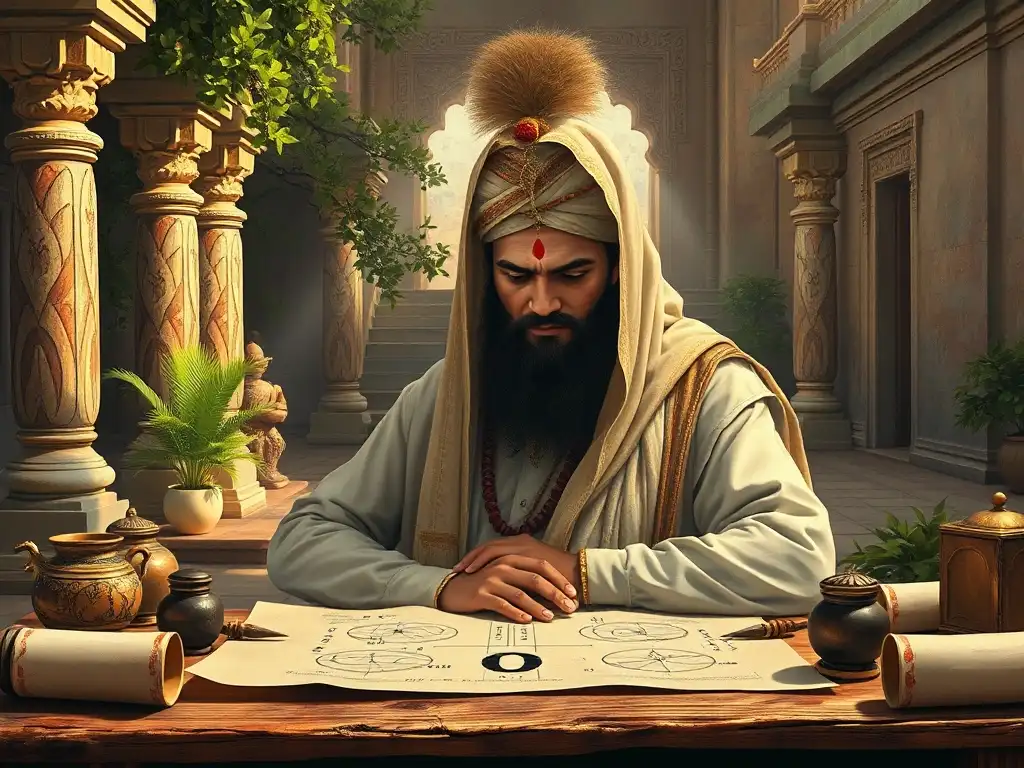
The concept of zero, originating from ancient Indian mathematicians, was a pivotal development in the history of mathematics. By the 7th century CE, the numeral system, including zero, had made its way into the Islamic world, primarily through translations of Indian texts. This transmission occurred during a period known as the Islamic Golden Age, which not only embraced the knowledge of the ancients but also advanced it further.
Key Points in the Transmission Process:
- Translation Movement: Scholars in the Abbasid Caliphate, particularly in cities like Baghdad, translated numerous Sanskrit texts that included mathematical concepts. The work of mathematicians such as Brahmagupta and Aryabhata became central to this knowledge transfer.
- Al-Khwarizmi’s Contributions: The Persian mathematician Al-Khwarizmi played a notable role in popularizing the decimal positional number system, including zero, through his works. His book, "Al-Kitab al-Mukhatasar fi Hisab al-Jabr wal-Muqabala" (The Compendious Book on Calculation by Completion and Balancing), introduced algebra and emphasized the importance of zero in calculations.
- Cultural Exchange: The flourishing trade routes between India and the Islamic world facilitated not only the movement of goods but also ideas. This cultural exchange allowed for the seamless integration of zero into the broader mathematical discourse of the time.
The acceptance of zero by Islamic scholars led to significant advancements in mathematics, astronomy, and engineering, showcasing how the impact of zero in ancient India extended far beyond its place of origin.
The Spread of Zero to Europe and Its Significance
The introduction of zero to Europe was a gradual process, significantly influenced by the interactions between Islamic and European scholars during the Middle Ages. This transmission marked a transformative period for European mathematics.
Influential Factors in the Spread of Zero:
- The Translation of Arabic Texts: As European scholars began to engage with the works of Islamic mathematicians, they encountered the Indian numeral system, which included zero. The translation of key texts into Latin during the 10th and 11th centuries played a crucial role in this process.
- Fibonacci’s Liber Abaci: One of the most significant events in the spread of zero occurred in 1202 with the publication of "Liber Abaci" by Leonardo of Pisa, known as Fibonacci. In this book, Fibonacci advocated for the use of the Hindu-Arabic numeral system, which included zero. He demonstrated its superiority over the Roman numeral system, facilitating its acceptance in European mathematics.
- Impact on Mathematics and Science: The adoption of zero revolutionized mathematical calculations and record-keeping in Europe. It enabled the development of algebra, calculus, and various scientific disciplines. The ability to perform arithmetic operations with ease changed the landscape of commerce, navigation, and engineering.
| Impact of Zero | Field | Significance |
|---|---|---|
| Mathematics | Algebra and Calculus | Facilitated complex calculations and theories. |
| Commerce | Trade and Accounting | Simplified bookkeeping and financial records. |
| Science | Astronomy and Physics | Enabled precise calculations and predictions. |
The integration of zero into European mathematics not only reflects the profound impact of this ancient Indian invention but also underscores its role as a cornerstone of modern mathematics, shaping the way we understand and interact with numbers today. The legacy of zero continues to resonate, illustrating the remarkable interconnectedness of global knowledge throughout history.
Conclusion: The Lasting Legacy of Zero in Ancient India

The invention of zero in ancient India has left an indelible mark on mathematics and various fields of study, establishing a foundation that continues to influence our modern world. This revolutionary concept, first documented by mathematicians such as Brahmagupta in the 7th century, transformed mathematical thought by introducing a symbol for the absence of quantity. This was not merely a numerical innovation; it was a conceptual leap that enabled the development of arithmetic, algebra, and calculus.
By allowing calculations to be performed with greater efficiency and accuracy, the impact of zero in ancient India facilitated advancements in various fields including astronomy, engineering, and commerce. For instance, the ability to represent large numbers and perform complex calculations contributed to more precise astronomical predictions, which were crucial for navigation and timekeeping.
The legacy of zero is also evident in the way it paved the path for positional numeral systems, which are integral to modern computing and digital technology. The numerical framework established by ancient Indian mathematicians has transcended cultural and geographical boundaries, influencing mathematicians across the globe.
Reflection on the Impact of Zero in Modern Mathematics
The impact of zero in ancient India resonates profoundly within modern mathematics. Its introduction enabled a more sophisticated understanding of numerical systems. The positional value system, which relies heavily on the concept of zero, revolutionized calculations and laid the groundwork for complex mathematical operations.
- Facilitating Advanced Calculations:
- The concept of zero allows mathematicians to differentiate between numbers such as 10 and 100, enhancing clarity in calculations.
- It is essential in functions and equations, serving as a crucial element in algebraic expressions.
- Enabling Mathematical Innovations:
- The introduction of zero has been fundamental in the development of calculus, particularly in limits and derivatives.
- It plays a critical role in computer science, where binary systems (0s and 1s) form the basis of all programming languages.
- Global Influence:
- As mathematical knowledge spread from India to the Arab world and eventually to Europe, the importance of zero became universally recognized, shaping mathematical practices worldwide.
Final Thoughts on the Contributions of Ancient Indian Civilizations
Ancient Indian civilizations made significant contributions to various fields, with the invention of zero standing out as a pivotal achievement in mathematics. The collaborative efforts of scholars and mathematicians across centuries led to a rich legacy of knowledge that not only advanced mathematics but also had profound implications in fields such as astronomy, architecture, and commerce.
- Cultural Interactions:
- The exchange of ideas among cultures facilitated the spread of mathematical concepts. Ancient Indian texts, such as the "Aryabhatiya," exemplify the integration of mathematics with philosophical and astronomical inquiries.
- Enduring Influence:
- The principles established by ancient Indian mathematicians continue to be taught and revered today, affirming their relevance in contemporary education and research.
The impact of zero in ancient India serves as a testament to the ingenuity and intellectual spirit of its civilizations. The legacy of zero has not only empowered mathematical thought but has also inspired generations of scholars across the globe, ensuring that the contributions of ancient Indian civilizations remain an integral part of our shared human heritage.
Frequently Asked Questions
What is the significance of zero in ancient India?
The impact of zero in ancient India was monumental, as it provided a foundation for mathematics and allowed for advanced calculations, influencing various fields such as astronomy and commerce.
How did the invention of zero affect mathematics?
The introduction of zero enabled the creation of a place-value system, transforming mathematical operations and paving the way for complex calculations that are essential in modern mathematics.
In what ways did zero contribute to scientific advancements?
Zero facilitated innovations in astronomy and engineering, allowing ancient Indian scholars to make precise observations and calculations, which influenced both medieval and modern science.
Who were the key figures in the development of zero in ancient India?
Prominent mathematicians like Brahmagupta and Aryabhata played crucial roles in the formalization of zero and its applications in various scientific disciplines during ancient times.
How did the concept of zero spread beyond India?
The concept of zero, along with other mathematical ideas, spread to the Arab world and later to Europe through translations and trade, significantly influencing global mathematics and science.
Final Reflection: The Enduring Impact of Zero on Ancient Indian Civilizations
The exploration of how zero empowered ancient Indian civilizations reveals a profound truth about the interconnectedness of mathematics, science, and culture in shaping human progress. Today, as we navigate an increasingly complex world driven by technology and innovation, the significance of zero transcends its numerical value; it symbolizes the limitless possibilities that arise from foundational concepts. The legacy of zero is not just a historical footnote but a powerful reminder of how a single idea can revolutionize entire fields of study and influence generations.
The impact of zero extends far beyond mathematics; it has woven itself into the very fabric of our cultural and social landscapes. As we reflect on the contributions of ancient Indian scholars, we recognize their role in laying the groundwork for future advancements across disciplines. Their insights continue to inspire modern thinkers and innovators. The greatest discoveries are born from the simplest ideas.
This quote encapsulates the essence of zero's influence, reminding us that profound change often stems from fundamental concepts that challenge our understanding of the world.
As we conclude this exploration, I invite you to reflect on the lessons of zero and consider how they apply to your own life. What foundational ideas can you embrace to foster innovation and creativity in your pursuits? Let the story of zero inspire you to think beyond conventional boundaries and recognize the transformative power of a single thought. Embrace the potential within you to create, innovate, and contribute to the ongoing legacy of knowledge and discovery.
Unleash the Power of Zero in Your Life!
Thank you for diving into the fascinating world of Ancient Indian civilizations and their groundbreaking contributions! You've uncovered how the concept of zero revolutionized various fields, paving the way for innovation and progress. Now, it's time to harness this powerful idea for your own journey.
Here are some actionable steps to keep the momentum going:
- Incorporate ‘zero-based thinking’: Challenge assumptions and deconstruct problems to discover innovative solutions in your life and work.
- Explore ancient mathematics: Investigate the history of mathematics and understand how the introduction of zero transformed modern practices.
- Share your insights: Engage with friends or use social media to discuss how the concept of zero influences both ancient and contemporary cultures—who knows what meaningful conversations you might inspire!
As you embark on this enlightening path, consider this: How can you apply the principles of zero to overcome challenges and foster a new way of thinking within your community?