
The Role of Mathematics in the Ancient Indian Calendar System


Welcome to Ancient India History, where we delve into the fascinating tapestry of historical significance, cultural richness, and intellectual achievements of ancient Indian civilizations. In this exploration, we shine a light on the intriguing world of ancient Indian calendar mathematics—a remarkable contribution that shaped not only the way time was measured but also influenced various aspects of daily life and astronomical studies.
Prepare to be captivated as we unravel the complexities of how these ancient mathematicians wove their knowledge into the fabric of timekeeping. Join us on this journey and discover the profound impact of mathematics on the ancient Indian calendar system!

Introduction to Ancient Indian Calendar Mathematics
The ancient Indian calendar system is a remarkable testament to the advanced mathematical understanding and astronomical knowledge possessed by early Indian civilizations. Mathematics played a pivotal role in the formulation and refinement of these calendars, which were vital for agricultural, religious, and social activities.
The ancient Indian calendar mathematics illustrates how complex calculations were employed to track time, align agricultural practices with seasonal changes, and determine auspicious dates for rituals and festivals. This article delves into the intricacies of how ancient Indian mathematicians utilized mathematical principles to develop an effective and accurate calendar system, reflecting the profound connection between mathematics and daily life in ancient India.
Importance of Calendars in Ancient Civilizations
Calendars have been integral to human society, serving as tools for:
- Agricultural Planning: Farmers relied on calendars to plant and harvest crops at the optimal times, ensuring food security.
- Religious Observances: Rituals and festivals were often scheduled according to specific dates, necessitating precise timekeeping.
- Cultural Events: Calendars helped organize social events and community gatherings, fostering a sense of unity.
In many ancient civilizations, including India, the development of a reliable calendar system was paramount for sustaining societal functions and cultural identity.
Overview of the Ancient Indian Calendar System
The ancient Indian calendar system is characterized by:
- Lunar and Solar Cycles: It combines both lunar months and solar years, leading to a sophisticated system that accommodates the variations in celestial movements.
- Tithi and Nakshatras: The month is divided into tithis (lunar days) and nakshatras (lunar mansions), which are essential for determining the timing of religious festivals and observances.
- Adjustment Mechanisms: Intercalation methods were employed to synchronize lunar months with the solar year, ensuring that seasons remain consistent with the calendar.
This dual approach to timekeeping reflects the mathematical ingenuity of ancient Indian scholars, who developed intricate calculations to maintain the accuracy of their calendars.
Historical Context of Ancient Indian Calendar Mathematics
Development of Time Measurement in Ancient India
The evolution of time measurement in ancient India was marked by significant milestones, including:
- Vedic Texts: The earliest references to time measurement can be found in the Vedas, which detail rituals that depend on precise timing.
- Mathematical Texts: Works such as the Aryabhatiya by Aryabhata and the Surya Siddhanta provide insights into the mathematical calculations used to define time units and celestial phenomena.
- Astronomical Observations: Observations of celestial bodies led to advancements in understanding cycles, which were then translated into mathematical formulas for calendar creation.
The meticulous approach to measuring time reflects the broader intellectual pursuits of ancient Indian mathematicians and astronomers.
Influence of Astronomy on Calendar Systems
Astronomy played a crucial role in shaping the ancient Indian calendar system. Key influences include:
- Celestial Events: The observation of solar and lunar eclipses, solstices, and equinoxes informed the calendar's structure and adjustments.
- Planetary Movements: The positions of planets and stars were meticulously recorded and factored into calendar calculations, enhancing the system's accuracy.
- Cultural Significance: Many festivals and important events were timed to coincide with astronomical phenomena, highlighting the intertwining of science and spirituality in ancient Indian culture.
Through the lens of astronomy, the ancient Indian calendar mathematics not only served practical purposes but also reflected the civilization's profound respect for the cosmos and its influence on terrestrial life.
Key Mathematical Concepts in the Ancient Indian Calendar
The ancient Indian calendar system is a remarkable fusion of various mathematical principles that demonstrate the civilization's sophisticated understanding of timekeeping. Central to this system are several key mathematical concepts, including cyclical patterns, arithmetic calculations, and geometric interpretations.
One of the most notable features is the use of lunar cycles and solar years. The lunar month, which lasts about 29.5 days, is pivotal in determining the months of the calendar. This led to the creation of a lunisolar calendar, where both lunar months and solar years are considered. To synchronize these cycles, ancient mathematicians devised methods such as the intercalation of extra months, ensuring that the festivals and agricultural events aligned with the seasons.
Additionally, ancient Indian mathematicians employed modular arithmetic to handle the complexities of timekeeping. This allowed them to efficiently calculate the days of the month, the year, and even predict eclipses with remarkable accuracy. The integration of these mathematical concepts showcases the intelligence and creativity behind the ancient Indian calendar system.
Use of Arithmetic in Calendar Calculations
Arithmetic played a crucial role in the calculations necessary for maintaining the ancient Indian calendar. The foundational aspects of addition, subtraction, multiplication, and division were utilized to determine the lengths of months and years. The mathematicians of the time developed sophisticated algorithms to perform these calculations, enabling them to predict future dates and astronomical events accurately.
For example, the calculation of the lunar month involved determining the time it took for the moon to complete its phases. By using the average lunar month of approximately 29.53 days, mathematicians could calculate the start of each month and the occurrence of festivals that depended on lunar phases. This arithmetic precision was vital, as many cultural and religious events were tied to specific dates in the lunar calendar.
Moreover, the concept of the solar year, which is approximately 365.25 days, required careful consideration. Ancient mathematicians would add an intercalary month every few years to reconcile the difference between the lunar calendar and the solar year, demonstrating their adeptness in arithmetic operations to maintain seasonal accuracy.
Geometrical Principles Influencing Calendar Design
Geometrical principles significantly influenced the design and structure of the ancient Indian calendar. The use of geometric shapes, such as circles and squares, was integral in representing celestial movements. For instance, the circle symbolizes the cyclical nature of time, reflecting the perpetual motion of celestial bodies.
The ancient Indian mathematicians applied geometry to create astronomical instruments like gnomons and sundials, which aided in assessing time through shadows cast by the sun. These instruments were essential for observing the sun's path and determining the correct times for rituals and agricultural activities.
Additionally, the division of the day into 24 hours was based on geometric considerations, emphasizing the importance of angles and divisions in calculating time. The concept of eclipses, too, was understood through geometric alignments of the Earth, Moon, and Sun, showcasing how deeply mathematics and geometry were intertwined in the ancient Indian calendar system.
Trigonometry's Role in Astronomical Predictions
Trigonometry emerged as a crucial component in the ancient Indian calendar system, especially in making astronomical predictions. The mathematicians of ancient India utilized trigonometric functions to calculate the positions of celestial bodies, which were essential for astrological and agricultural calendars.
By employing sine and cosine functions, they could predict the timings of solar and lunar eclipses with remarkable accuracy. The sine table developed during this period was instrumental in these calculations, allowing astronomers to determine angles and distances between celestial objects.
Furthermore, trigonometry facilitated the understanding of the zodiac system, which played a significant role in astrology. Ancient Indian mathematicians meticulously mapped the movements of planets and stars, utilizing trigonometric principles to guide agricultural activities and religious observances based on celestial positions.
Prominent Mathematicians and Their Contributions
The development of the ancient Indian calendar system was significantly influenced by several prominent mathematicians whose contributions laid the groundwork for advanced mathematical concepts and applications in timekeeping.
Aryabhata's Influence on Calendar Mathematics
Aryabhata, one of the earliest and most celebrated mathematicians and astronomers in ancient India, made profound contributions to calendar mathematics. His seminal work, the Aryabhatiya, outlines methods for calculating the lengths of the solar year and the lunar month. Aryabhata introduced the idea of intercalation, demonstrating how to add extra days or months to align the calendar with solar seasons.
He also articulated the concept of day and night being equal during equinoxes, providing insights into the cyclical nature of time. Aryabhata's innovative use of place value and zero in calculations revolutionized the way mathematicians approached numerical problems, making his work foundational for future calendar systems.
Varahamihira's Contributions to Astronomical Tables
Varahamihira, a prominent figure in the 6th century CE, built upon the mathematical foundations established by Aryabhata. His work, the Pancha Siddhantika, is a comprehensive compilation of astronomical knowledge that includes tables for calculating planetary positions and eclipses.
Varahamihira emphasized the importance of accurate astronomical observations for calendar calculations, leading to the development of various astronomical tables that detailed planetary movements and their implications on daily life. His contributions not only refined calendar mathematics but also enhanced the understanding of the interaction between astronomy and agriculture.
Bhaskara I and II: Advancements in Calendar Accuracy
Bhaskara I and Bhaskara II, two influential mathematicians from the 7th and 12th centuries respectively, made significant advancements in the accuracy of the ancient Indian calendar. Bhaskara I is known for his work on the sine function, which improved the precision of astronomical calculations.
Bhaskara II furthered these developments by introducing methods to calculate the mean motion of planets and refining the principles of intercalation. His work, Siddhanta Shiromani, included comprehensive astronomical tables that provided crucial data for calendar calculations, ensuring that festivals and agricultural activities were aligned with celestial events.
Both Bhaskaras' contributions underscore the evolution of calendar mathematics in ancient India, showcasing a legacy of rigorous mathematical inquiry and astronomical observation that has influenced timekeeping practices across cultures.
The Techniques Used in Ancient Indian Calendar Mathematics
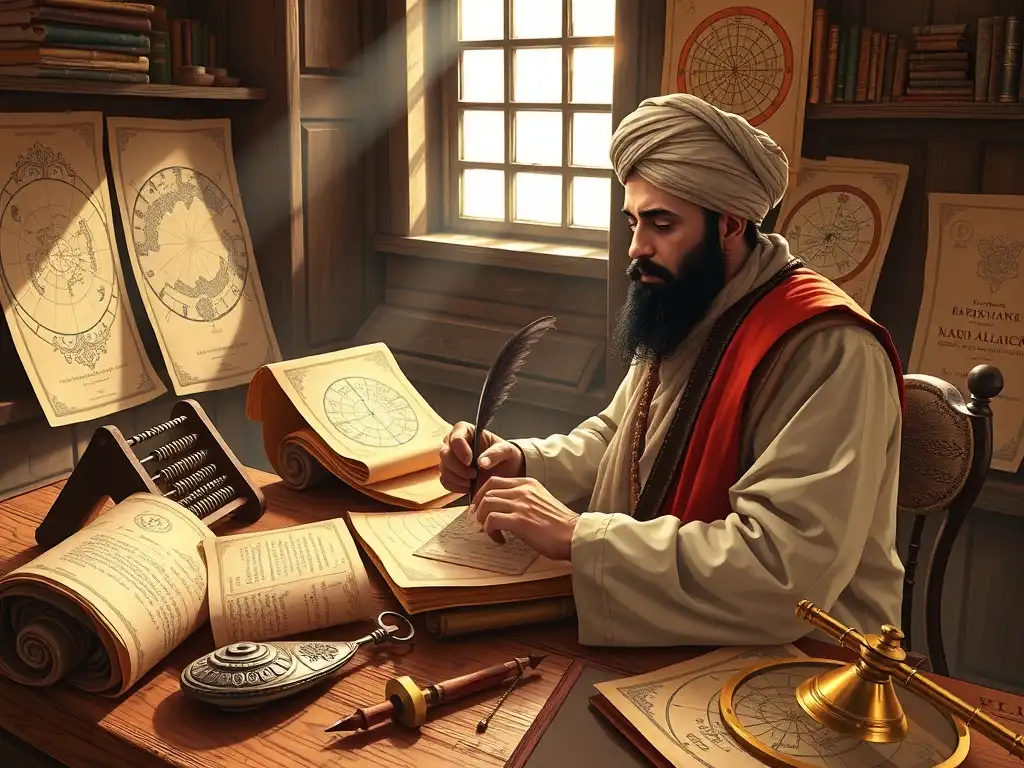
The ancient Indian calendar system was a sophisticated and intricate framework that relied heavily on mathematical techniques to determine time. This system was not merely about tracking days; it involved precise calculations that helped align agricultural activities, religious festivals, and social events with astronomical phenomena. The mathematicians of ancient India devised various techniques to address the complexities of solar and lunar cycles, leading to a unique and functional calendar system.
Calculation of Solar and Lunar Months
In ancient India, the calculation of solar and lunar months was foundational to the calendar system. The lunar month, known as a "Paksha," was based on the phases of the moon, which lasts approximately 29.5 days. To account for the variation in days, two types of lunar months were recognized:
- Shukla Paksha: The waxing phase of the moon, leading up to the full moon.
- Krishna Paksha: The waning phase, from the full moon to the new moon.
On the other hand, the solar month, which corresponds to the sun's position in the zodiac, is approximately 30 days long. To synchronize these lunar and solar months, mathematicians developed a method of intercalation where an extra month, known as "Adhik Maas," was occasionally added. This meticulous calculation ensured that the lunar calendar remained aligned with the solar year, reflecting the annual cycle of seasons effectively.
Methods for Determining Leap Years
The concept of leap years was critical in the ancient Indian calendar to maintain accuracy over long periods. Unlike the Gregorian calendar, which includes a leap day every four years, ancient Indian mathematicians employed a different approach. They recognized that the solar year is about 365.25 days long, requiring adjustments to keep the calendar in sync with the seasons.
To manage this, they introduced a system where a leap month was added every three years, making it a trikala system. This system was based on meticulous observations and calculations, which involved:
- Identifying discrepancies: By comparing lunar cycles with solar cycles, they could determine when the calendar was lagging.
- Adding an extra month: This adjustment not only kept the calendar accurate but also ensured that festivals and agricultural practices occurred at the right times.
Such mathematical precision showcased the advanced understanding of timekeeping that existed in ancient Indian civilization.
Aligning Festivals with Astronomical Events
Mathematics played a pivotal role in aligning festivals with astronomical events, which is a hallmark of the ancient Indian calendar. This alignment was crucial, as many festivals were tied to specific celestial occurrences, such as solstices and equinoxes.
The techniques employed included:
- Astronomical calculations: Ancient astronomers used mathematical models to predict the positions of celestial bodies, ensuring that festivals like Makar Sankranti (celebrating the sun's transit into Capricorn) were celebrated at the appropriate time.
- Observational astronomy: By accurately observing celestial events and recording them, ancient mathematicians could refine their calendar system, ensuring that it remained relevant to agricultural cycles and cultural practices.
This deep intertwining of mathematics and astronomy in festival alignment illustrates the holistic approach ancient Indian civilization took towards timekeeping and cultural practices.
Comparison of Ancient Indian Calendar Mathematics with Other Civilizations
The ancient Indian calendar mathematics presents a fascinating comparison with the calendar systems of other civilizations. While each culture developed its own methods for tracking time, the approaches varied significantly, reflecting the unique philosophical and practical needs of each society.
Ancient Indian Calendar vs. Roman Calendar
The ancient Indian calendar system and the Roman calendar system had notable differences, particularly in their structure and adjustments.
- Lunar vs. Solar Basis: The ancient Indian calendar is primarily lunisolar, incorporating both lunar phases and solar cycles, whereas the Roman calendar was more solar-oriented, leading to a different rhythm of months and years.
- Leap Year Considerations: The Romans introduced a more straightforward leap year system, where an extra day was added to February every four years. In contrast, the ancient Indian system utilized leap months, which created a more complex yet effective method of synchronization.
- Cultural Significance: Festivals in India were deeply tied to agricultural and astronomical events, while Roman festivals often centered around political and military achievements, reflecting differing societal values.
These variations highlight the adaptability and ingenuity of ancient cultures in addressing the fundamental human need to understand and organize time.
Insights from the Mayan Calendar System
Similar to the ancient Indian calendar, the Mayan calendar system also exemplified advanced mathematical principles and a profound understanding of astronomical cycles.
- Complex Cycles: The Mayans employed a complex system of interlocking cycles, including the Tzolk'in (260-day ceremonial calendar) and the Haab' (365-day solar calendar), which were used simultaneously. This dual calendar approach is somewhat analogous to the Indian system's integration of lunar and solar months.
- Mathematical Precision: Both civilizations demonstrated a remarkable ability to calculate time accurately. The Mayans had a sophisticated understanding of the concept of zero, which allowed them to perform complex calculations, much like their Indian counterparts.
- Cultural Integration: Festivals and rituals in the Mayan civilization were also intricately tied to astronomical events, showcasing a common thread across ancient cultures in their reliance on mathematical precision to dictate social and ceremonial life.
While the ancient Indian calendar mathematics shares similarities with the Mayan system, each civilization's unique cultural context shaped its approach to timekeeping, illustrating the diverse ways humans have sought to understand and organize the cycles of nature.
The Legacy of Ancient Indian Calendar Mathematics
The ancient Indian calendar system is a remarkable testament to the mathematical ingenuity of Indian civilization. It was not just a tool for tracking time but a sophisticated framework that integrated astronomy, mathematics, and cultural practices. The ancient Indian mathematicians, such as Aryabhata and Brahmagupta, developed intricate methods for calculating lunar cycles, solar movements, and the timing of festivals and rituals. These calculations were often based on complex algorithms and geometric principles, showcasing an advanced understanding of mathematics that was ahead of its time.
The Saka and Vikram Samvat calendars are prime examples of this legacy, with their origins rooted in ancient mathematical concepts. These calendars utilized a lunisolar system, where months were based on lunar cycles while the year was adjusted to align with the solar year. This duality required precise calculations to maintain synchronization, reflecting a deep mathematical knowledge of both arithmetic and geometry. The legacy of these methods continues to influence contemporary calendar systems, particularly in how months and festivals are determined in modern India.
Impact on Modern Indian Calendars
The influence of ancient Indian calendar mathematics is evident in the design and structure of modern Indian calendars. The traditional Hindu calendar, which is widely used today, retains many elements from its ancient predecessors. For instance, the calculation of auspicious dates, known as "muhurta," is still based on the principles developed by ancient mathematicians. This practice emphasizes the importance of celestial alignments, highlighting the enduring relevance of their mathematical techniques.
Moreover, the Vikram Samvat and Saka Samvat calendars serve as official calendars in various regions of India today. Their adoption illustrates how ancient mathematical concepts have been preserved and adapted over centuries, ensuring that the rich heritage of Indian calendar mathematics remains integral to contemporary society. The innovative methodologies that were established in ancient times continue to shape the way time is perceived and organized in modern India.
Continuing Relevance in Contemporary Mathematics
The principles of ancient Indian calendar mathematics have not only influenced cultural practices but have also contributed significantly to contemporary mathematical discourse. The techniques employed by ancient mathematicians, such as interpolation and approximation methods, are foundational in modern computational mathematics. For example, Aryabhata's work on astronomical calculations paved the way for advancements in trigonometry and algebra, which are crucial for various fields today.
Additionally, the concepts of cyclical patterns and periodicity found in ancient calendars resonate within modern mathematical theories, including number theory and chaos theory. Researchers exploring these ancient techniques often find parallels in current mathematical frameworks, demonstrating a continuity of thought that transcends time. The exploration of ancient Indian calendar mathematics is, therefore, not merely a historical inquiry but a rich field of study that continues to inspire contemporary mathematical research.
Conclusion: The Significance of Ancient Indian Calendar Mathematics
The role of mathematics in the ancient Indian calendar system exemplifies a unique blend of scientific rigor and cultural significance. The sophisticated methods developed by ancient Indian mathematicians not only facilitated accurate timekeeping but also enriched the cultural and religious practices of the time. This interplay between mathematics and society highlights the importance of understanding how mathematical knowledge can shape human experience across different eras.
Reflection on the Mathematical Heritage of Ancient India
Reflecting on the mathematical heritage of ancient India reveals a profound legacy of knowledge that has shaped not only Indian civilization but also the broader field of mathematics. The insights gained from the study of ancient calendars underscore the importance of preserving and recognizing traditional mathematical practices. This heritage is a source of pride and identity, showcasing the brilliance of ancient thinkers whose work laid the groundwork for future generations.
Future Research Directions in Ancient Indian Mathematics
Future research in ancient Indian mathematics should focus on uncovering lesser-known texts and manuscripts that may contain valuable mathematical principles related to the calendar system. Interdisciplinary studies that combine archaeology, history, and mathematics can yield new insights into the practical applications of these ancient techniques. Furthermore, the examination of how these mathematical concepts evolved over time can provide a clearer understanding of their impact on both ancient and modern societies.
Engaging with the global mathematical community to highlight the significance of ancient Indian contributions can foster greater appreciation and recognition of this rich heritage. In doing so, we not only honor the legacy of the past but also inspire future generations of mathematicians to explore the depths of ancient knowledge.
- Introduction to Ancient Indian Calendar Mathematics
- Historical Context of Ancient Indian Calendar Mathematics
- Key Mathematical Concepts in the Ancient Indian Calendar
- Prominent Mathematicians and Their Contributions
- The Techniques Used in Ancient Indian Calendar Mathematics
- Comparison of Ancient Indian Calendar Mathematics with Other Civilizations
- The Legacy of Ancient Indian Calendar Mathematics
- Conclusion: The Significance of Ancient Indian Calendar Mathematics
- What was the significance of the ancient Indian calendar mathematics?
- How did ancient Indian civilizations develop their calendar systems?
- Which mathematical concepts were used in the ancient Indian calendar?
- How did the calendar system influence daily life in ancient India?
- What legacy did ancient Indian calendar mathematics leave for future generations?
Frequently Asked Questions
What was the significance of the ancient Indian calendar mathematics?
The ancient Indian calendar mathematics played a crucial role in agricultural planning and religious rituals, helping societies align their activities with seasonal changes.
How did ancient Indian civilizations develop their calendar systems?
Ancient Indian civilizations, notably the Indus Valley and later cultures, utilized astronomical observations to create complex calendar systems that reflected their understanding of celestial cycles.
Which mathematical concepts were used in the ancient Indian calendar?
Key mathematical concepts included the use of geometry, trigonometry, and the calculation of solar and lunar cycles, aiding in accurate timekeeping.
How did the calendar system influence daily life in ancient India?
The calendar system influenced various aspects of daily life, such as festivals, agriculture, and trade, ensuring that activities were synchronized with the seasons.
What legacy did ancient Indian calendar mathematics leave for future generations?
The legacy of ancient Indian calendar mathematics can be seen in modern calendar systems and astronomical calculations, showcasing the advanced knowledge of ancient Indian scholars.
Final Reflection: The Timeless Legacy of Ancient Indian Calendar Mathematics
The intricate relationship between mathematics and the ancient Indian calendar system reveals a profound understanding of time that remains relevant today. As we navigate our fast-paced modern lives, the precision and sophistication of these ancient calculations remind us of the importance of aligning ourselves with the natural rhythms of the universe. The ancient Indian calendar mathematics not only served practical purposes but also fostered a deep connection to the cosmos, illustrating how mathematics can transcend mere numbers to become a vital part of cultural identity.
The influence of ancient Indian calendar mathematics extends far beyond its historical context; it continues to shape our understanding of time and cycles in contemporary society. The principles embedded within these calendars have inspired various fields, from astronomy to agriculture, and have left an indelible mark on cultural practices. As we reflect on this legacy, we are reminded of the words of the great mathematician Aryabhata, who said, “There is no greater knowledge than that which leads to the understanding of time.” > This quote encapsulates the essence of how ancient wisdom can guide our present and future.
As we conclude this exploration, I invite you to reflect on the lessons of the ancient Indian calendar system and consider how they can enrich your own life. Embrace the rhythms of nature and the wisdom of the past, allowing them to inform your understanding of time and your place within it. By integrating these insights into our daily lives, we can cultivate a deeper appreciation for the cycles that govern our existence and honor the mathematical brilliance of those who came before us.
Unveil the Secrets of Ancient Indian Calendars!
Thank you for exploring the fascinating world of mathematics in ancient Indian calendar systems! You've discovered how these intricate calculations shaped timekeeping thousands of years ago. Now, let's take that inspiration and turn knowledge into action.
Here’s how you can dive deeper into this captivating subject:
- Engage with a Local Historical Society: Connect with a group or organization that focuses on ancient history to learn more about these calendars and their significance in today’s world.
- Start a Discussion: Share what you've learned with friends or on social media. Spark a conversation about the role of mathematics in culture—your insights could inspire others!
- Explore Related Resources: Check out books, documentaries, or online courses that delve into ancient Indian mathematics and astronomy for a broader perspective.
How do you think ancient timekeeping influences our modern-day calendar systems? We would love to hear your thoughts!