
Zero as a Mathematical Concept: Unpacking Its Importance in Ancient Indian Society

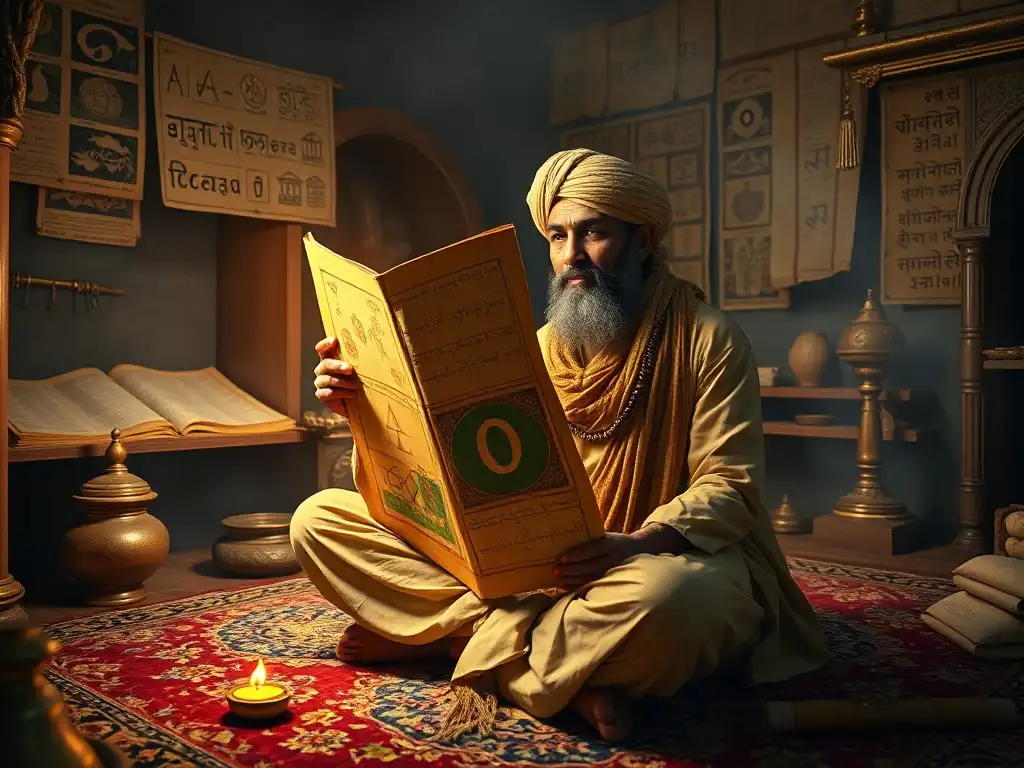
Welcome to Ancient India History, where we embark on a captivating journey through the rich tapestry of ancient Indian civilizations. Have you ever pondered the origins of the number zero? In our featured article, "Zero as a Mathematical Concept: Unpacking Its Importance in Ancient Indian Society," we delve into the groundbreaking contributions of ancient Indian mathematicians and explore how this simple yet profound numeral transformed the world of mathematics.
Prepare to uncover the depths of knowledge that shaped not only a civilization but also the foundation of modern mathematics. Join us as we unravel the secrets of the past and illuminate the brilliance of ancient India’s intellectual legacy!
- Introduction to Zero in Ancient Indian Mathematics
- The Origin of Zero in Ancient Indian Society
- The Role of Zero in Ancient Indian Mathematics
- The Cultural Significance of Zero in Ancient India
- The Evolution of Zero Beyond Ancient India
- Conclusion: The Lasting Legacy of Zero in Ancient Indian Mathematics
-
Frequently Asked Questions
- What is the significance of zero in ancient Indian mathematics?
- How did the concept of zero influence other cultures?
- Who were the key figures in the development of zero in ancient India?
- What role did zero play in the evolution of mathematics?
- How is zero viewed in modern mathematics compared to ancient times?
- Final Reflection: The Enduring Legacy of Zero in Ancient Indian Mathematics
- Unlock the Secrets of Zero!
Introduction to Zero in Ancient Indian Mathematics

The concept of zero is not merely a numerical figure; it is a profound philosophical idea that has transformed the landscape of mathematics. In ancient Indian mathematics, zero emerged as a pivotal element that revolutionized calculations and mathematical thought. This article delves into the historical significance of zero in ancient Indian society, tracing its roots, understanding its definition, and exploring the rich mathematical context that fostered its development. By understanding the importance of zero in ancient Indian mathematics, we can appreciate how it laid the groundwork for modern mathematics and influenced mathematical systems worldwide.
Definition of Zero as a Concept
Zero, represented by the symbol "0," serves dual purposes in mathematics. Primarily, it functions as a placeholder in our number system, enabling the representation of large numbers and simplifying calculations. For instance, in the number 205, zero indicates the absence of tens, allowing for a clear understanding of the number's value. Additionally, zero is recognized as an integer that signifies the absence of quantity. Its introduction into the number system was revolutionary, enabling mathematicians to perform complex operations with unprecedented ease.
The philosophical implications of zero are equally significant. In ancient Indian thought, zero was not merely a void; it represented the concept of "shunya," or emptiness. This philosophical view transformed our understanding of mathematics, allowing for the exploration of infinity and the concept of nothingness. The acceptance of zero as a legitimate number provided a foundation for advanced mathematical concepts, such as negative numbers and algebra.
Historical Context of Mathematics in Ancient India
The development of zero can be traced back to the rich tapestry of mathematical thought in ancient India, which dates back to at least the 3rd century BCE. The ancient Indian mathematicians were pioneers in various fields, including arithmetic, geometry, and astronomy. Renowned texts such as the Aryabhatiya by Aryabhata and the Bakhshali Manuscript provide evidence of sophisticated mathematical practices that predated the formal introduction of zero in other cultures.
- Indus Valley Civilization (c. 3300–1300 BCE): Early signs of mathematical knowledge can be seen in the sophisticated urban planning, standardized weights, and measures of the Indus Valley Civilization.
- Gupta Empire (c. 320–550 CE): The Gupta period is often referred to as the "Golden Age of Indian Mathematics." It was during this time that the systematic use of zero in calculations flourished, particularly in the works of mathematicians like Brahmagupta, who articulated rules for arithmetic involving zero.
The evolution of zero in ancient Indian mathematics exemplifies the culture's innovative spirit and intellectual rigor. The contributions of ancient Indian mathematicians not only advanced their own civilization but also laid the groundwork for future generations across the globe, making the study of zero in ancient Indian mathematics an essential area of exploration.
The Origin of Zero in Ancient Indian Society
The concept of zero is one of the most significant contributions of ancient Indian mathematics, serving as a cornerstone for modern mathematical thought. This revolutionary idea not only transformed calculations but also influenced various branches of science and philosophy. The development of zero in ancient Indian society reflects a unique blend of cultural and intellectual evolution, which paved the way for advancements in mathematics.
The journey of zero's emergence can be traced back to several historical texts and inscriptions that suggest its early usage, primarily in the context of place value systems. The cultural and philosophical underpinnings of Indian society during the early centuries CE provided fertile ground for the acceptance and integration of zero into mathematical practices.
Early References to Zero in Historical Texts
The earliest recorded reference to zero in ancient Indian mathematics appears in the Bakhshali Manuscript, dating back to approximately the 2nd century CE. This text, discovered in modern-day Pakistan, contains a sophisticated mathematical treatise that employs a dot to signify the absence of a value, laying the groundwork for the development of the numeral system. The use of zero as a placeholder in this context illustrates an advanced understanding of numerical representation.
Another significant text is Aryabhata's Aryabhatiya, written in the 5th century CE, where Aryabhata discussed the importance of zero in calculations, although he did not explicitly use the term. By the time of Brahmagupta in the 7th century CE, zero was further defined and formalized in his work, the Brahmasphutasiddhanta. Here, Brahmagupta described rules for arithmetic operations involving zero, such as addition, subtraction, and multiplication, thus solidifying its mathematical significance.
| Text | Author | Date | Key Contributions |
|---|---|---|---|
| Bakhshali Manuscript | Unknown | 2nd century | Early use of zero as a placeholder |
| Aryabhatiya | Aryabhata | 5th century | Discussed the importance of zero |
| Brahmasphutasiddhanta | Brahmagupta | 7th century | Formal rules for operations with zero |
Influence of Other Civilizations on the Concept of Zero
While ancient India is credited with the formalization and conceptualization of zero, it is essential to acknowledge the influence of other civilizations on this mathematical idea. The development of zero was not an isolated phenomenon; it evolved through interactions with various cultures, including the Babylonians and the Greeks.
The Babylonians, who had a place value system around 300 BCE, used a placeholder symbol to indicate the absence of a value in their cuneiform writing. However, their system was not as versatile as the Indian approach, as they lacked a true concept of zero as a number. In contrast, the Greeks struggled with the notion of void and absence, which limited their mathematical progress in this area.
As ancient Indian mathematicians began to communicate and exchange knowledge with these civilizations, they refined the concept of zero, integrating it into their own numeral system. The transmission of mathematical knowledge facilitated the spread of zero beyond India's borders, eventually influencing the Islamic Golden Age and later, European mathematics during the Renaissance.
The journey of zero transcended geographical boundaries, showcasing its profound impact on global mathematical development. This cross-cultural exchange underscores the importance of zero in ancient Indian mathematics, establishing it as a crucial concept that shaped the future of math and science worldwide.
The Role of Zero in Ancient Indian Mathematics
The concept of zero is fundamental in mathematics, serving as a cornerstone for various numerical systems and calculations. In ancient Indian mathematics, zero was not merely a symbol but a revolutionary idea that transformed mathematical thought and practice. This section delves into the multifaceted role of zero in ancient Indian society, exploring its significance as a placeholder, its applications in calculations and algebra, and the contributions of prominent mathematicians who advanced this concept.
Zero as a Placeholder in Numerical Systems
One of the most critical innovations in ancient Indian mathematics was the introduction of zero as a placeholder in numerical systems. This concept allowed for the representation of large numbers effectively and facilitated more complex calculations.
- Positional Value: The use of zero enabled the positional value system, where the value of a digit is determined by its position in a number. For example:
- In the number 205, the zero signifies that there are no tens, thereby allowing the numeral to represent two hundred and five instead of just two and five.
- Reduction of Ambiguity: Zero eliminated ambiguity in numerical representation. For instance, without zero, the numbers 12, 120, and 1200 could be confused. With zero, these values are distinctly represented.
- Cultural Transmission: The concept of zero in ancient India was transmitted to other cultures, significantly influencing the development of mathematics in the Islamic world and later in Europe. The numeral system we use today, known as Hindu-Arabic numerals, owes much to this innovation.
The Use of Zero in Calculations and Algebra
The application of zero in calculations marked a significant advancement in mathematical operations within ancient Indian society.
- Arithmetic Operations: Zero played a crucial role in the basic arithmetic operations—addition, subtraction, multiplication, and division. For instance:
- When adding zero to any number, the value remains unchanged, which is articulated as \( a + 0 = a \).
- In subtraction, zero serves as an identity element, as seen in \( a - 0 = a \).
- Algebraic Expressions: Ancient Indian mathematicians used zero in algebraic expressions, which allowed them to solve equations more systematically. The use of zero in equations can be observed in works such as the Bakhshali Manuscript and writings by mathematicians like Brahmagupta.
- Negative Numbers: The acceptance of zero also paved the way for the understanding of negative numbers. In ancient texts, zero was used to denote the absence of a quantity, and later, it helped in representing debts or losses, which are fundamentally negative.
Contributions of Prominent Mathematicians in Ancient India
Several prominent mathematicians in ancient India played a pivotal role in the development and dissemination of the concept of zero.
- Brahmagupta (598–668 CE): He is often credited with formalizing the rules for arithmetic operations involving zero in his seminal work, Brahmasphutasiddhanta. He established important rules such as:
- The result of subtracting a number from itself is zero.
- The definition of zero itself as a number.
- Aryabhata (476–550 CE): As one of the earliest mathematicians and astronomers, Aryabhata contributed to the understanding of zero in the context of astronomical calculations. His work emphasized the significance of zero in calculations related to time and space.
- Bhaskara I (c. 600–680 CE): He further elaborated on the mathematical properties of zero and was instrumental in spreading knowledge about the positional number system through translations and commentaries.
These mathematicians, among others, not only contributed to the understanding of zero but also laid the groundwork for future mathematical advancements that would shape mathematics for centuries to come.
The role of zero in ancient Indian mathematics was transformative. From serving as a placeholder that clarified numerical representation to enabling complex calculations and algebraic expressions, zero was a revolutionary concept. The contributions of mathematicians like Brahmagupta and Aryabhata were essential in establishing zero as a fundamental element of mathematics, influencing cultures far beyond ancient India.
The Cultural Significance of Zero in Ancient India
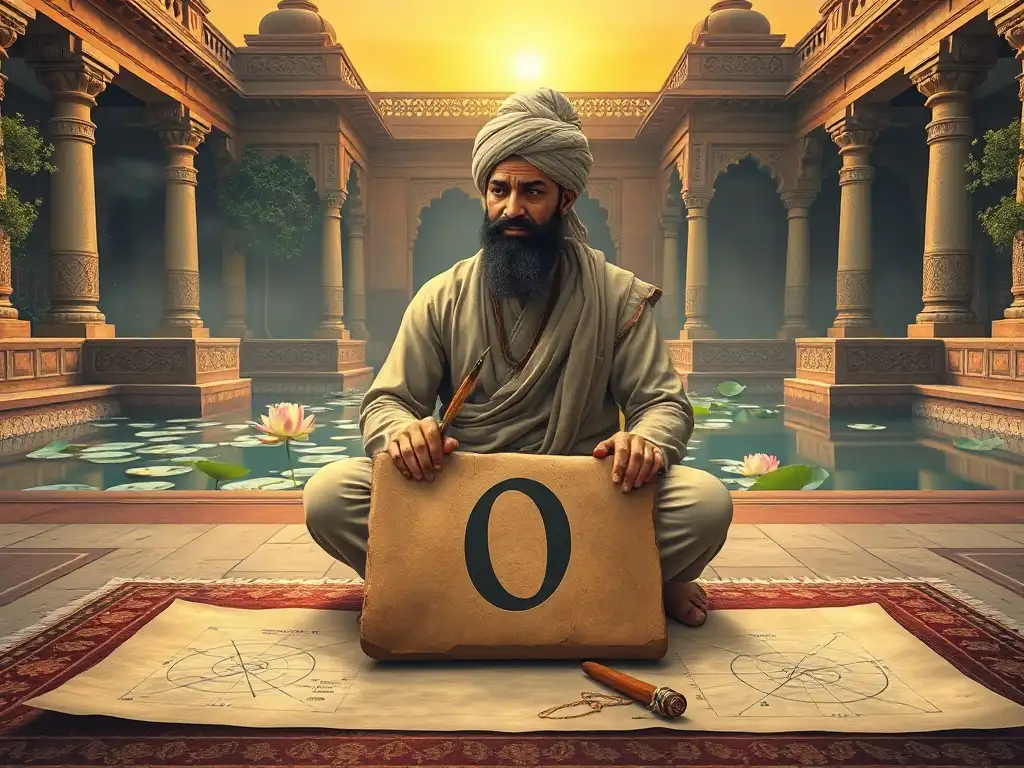
Zero in Religious and Philosophical Contexts
Zero, as a concept, transcended mere numerical representation in ancient Indian society; it was deeply interwoven with the religious and philosophical ideologies of the time. The numeral "0" was not just a placeholder but a symbol of the infinite, void, and the spiritual journey towards enlightenment.
In Hinduism, the notion of "Shunya" (शून्य), or emptiness, reflects a philosophical understanding that aligns with the idea of zero. This concept is critical in various texts, including the Brahmasphutasiddhanta, authored by the mathematician Brahmagupta in the 7th century. Here, he discussed the properties of zero and its role in arithmetic, linking it to broader metaphysical ideas. The idea of nothingness in Buddhism also parallels the significance of zero, emphasizing the importance of detachment from material possessions and the cycle of life.
Moreover, ancient Indian philosophies often contemplated the nature of existence and non-existence. The duality of "being" and "non-being" can be seen as a reflection of how zero functions in mathematics—representing the absence of quantity while simultaneously allowing for the representation of complex calculations. This duality is echoed in many philosophical discourses, where the idea of void is essential for understanding the universe's complexities.
The Impact of Zero on Trade and Commerce
The advent of zero in ancient Indian mathematics revolutionized trade and commerce practices, providing a robust framework for accounting and transactions. Prior to the introduction of zero, merchants faced significant challenges in record-keeping, particularly when dealing with large numbers or debts.
With the implementation of a positional numeral system that included zero, merchants could express large quantities succinctly. For instance, the number "100" could be represented as "1" followed by two zeros, facilitating easier calculations. This efficiency drastically reduced errors in trade transactions, enhancing trust and reliability in trade agreements.
Furthermore, zero enabled the development of complex mathematical operations, such as multiplication and division, which were essential for calculating prices, taxes, and profits. The use of zero in calculations allowed for more sophisticated financial models, which were crucial for managing the increasingly complex trade networks that spanned across the Indian subcontinent and beyond.
The introduction of zero also impacted the creation of more advanced trading tools and methods. Merchants began utilizing abacuses and other counting devices that incorporated zero, leading to more accurate and efficient commerce. Consequently, this innovation not only advanced local economies but also contributed to the flourishing of regional trade routes, fostering cultural and economic exchanges that shaped ancient Indian civilization.
The significance of zero in ancient Indian mathematics extends far beyond mere arithmetic; it was a catalyst for cultural, philosophical, and economic developments that profoundly influenced society. The integration of zero into daily life and commerce was a testament to the innovative spirit of ancient Indian scholars and their enduring legacy in the world of mathematics.
The Evolution of Zero Beyond Ancient India
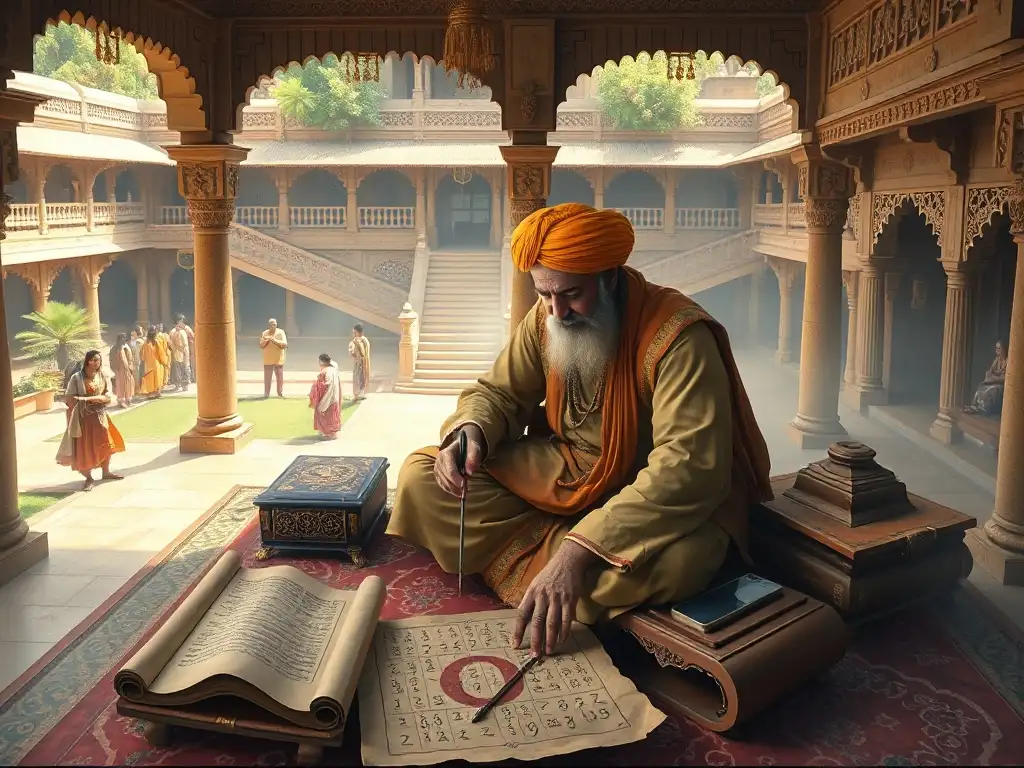
Transmission of Zero to Other Cultures
The concept of zero, rooted in ancient Indian mathematics, experienced significant transmission across cultures, shaping mathematical practices globally. The journey began with the work of Indian mathematicians, notably Brahmagupta in the 7th century CE, who formalized the rules for arithmetic involving zero. His seminal text, Brahmasphutasiddhanta, laid the groundwork for understanding zero as both a placeholder and a number in its own right.
Following the establishment of zero in Indian thought, the numeral system, including zero, traveled westward through trade and cultural exchanges. By the 8th century, Arab mathematicians began to adopt these concepts, primarily through translations of Indian texts. The Persian mathematician Al-Khwarizmi, often called the "father of algebra," played a crucial role in introducing zero into the Islamic Golden Age, emphasizing its utility in calculations and equations.
This cultural transmission is evidenced by the following key points:
- Trade Routes: The Silk Road facilitated interactions among traders, scholars, and mathematicians, enabling the spread of mathematical knowledge.
- Arabic Numerals: The adoption of the Hindu-Arabic numeral system in the Islamic world, which included zero, revolutionized mathematics, making calculations more efficient.
- European Introduction: By the 10th century, European scholars began to encounter these numerals, notably through the works of translators in Spain, leading to the eventual acceptance of zero in European mathematics.
The influence of zero continued to expand, culminating in its integration into modern mathematical frameworks, fundamentally altering how numbers were conceptualized and utilized.
Zero’s Influence on Modern Mathematics
The introduction of zero has had profound implications for modern mathematics, extending far beyond its origins in ancient India. As a foundational element of the numeral system, zero is indispensable in various mathematical operations and concepts.
- Place Value System: Zero's role as a placeholder allows for the representation of large numbers efficiently. For example, in the number 205, the zero indicates the absence of tens, differentiating it from 25.
- Arithmetic Operations: Zero is integral in arithmetic, serving as the identity element for addition (any number plus zero equals the number itself) and the annihilator for multiplication (any number multiplied by zero equals zero).
- Algebra and Calculus: In algebra, zero is crucial for solving equations, particularly in finding roots of polynomials. In calculus, the concept of limits and derivatives often involves approaching zero, leading to profound insights into functions and continuity.
- Set Theory: Zero also finds its place in set theory, representing the cardinality of the empty set, which is foundational in understanding mathematical logic and structures.
Overall, the concept of zero, originating in ancient Indian mathematics, has transcended cultural boundaries and become a cornerstone of contemporary mathematical thought. Its evolution has not only transformed numerical representation but has also paved the way for advances in various fields, highlighting its enduring significance in the history of mathematics.
Conclusion: The Lasting Legacy of Zero in Ancient Indian Mathematics

Summary of Zero's Importance in Ancient Indian Society
The concept of zero in ancient Indian mathematics emerged as a revolutionary idea that transformed not only mathematics but also the entire framework of numerical understanding. Originating in the early centuries of the Common Era, scholars such as Aryabhata and Brahmagupta were instrumental in formalizing the use of zero as both a numeral and a placeholder. This innovation allowed for the representation of large numbers and the execution of complex calculations, paving the way for advancements in fields such as astronomy, commerce, and engineering.
Zero's significance can be encapsulated through several key contributions:
- Numerical System: The introduction of zero enabled the development of the decimal system, which is foundational to modern mathematics.
- Arithmetical Operations: It facilitated the execution of operations like addition, subtraction, multiplication, and division, which were crucial for trade and scientific calculations.
- Mathematical Theorems: Ancient Indian mathematicians formulated important theorems involving zero, such as the rules for division by zero and the concept of negative numbers.
The legacy of zero is not merely historical; it reshaped the trajectory of mathematical thought, influencing subsequent civilizations and becoming an integral part of global mathematics.
Reflection on the Continued Relevance of Zero in Mathematics Today
The journey of zero from ancient Indian mathematics to its current applications underscores its vital role in contemporary society. Today, zero is not just a number; it symbolizes the foundation of mathematical reasoning and computational technology.
- In Computing: The binary system, which underpins modern computing, relies heavily on the concept of zero and one. Each bit of data is represented as either a '0' or a '1', forming the basis for all digital technology.
- In Mathematics: Zero serves as a critical element in algebra, calculus, and further advanced mathematical theories. It is essential for defining functions, limits, and derivatives, illustrating its enduring importance.
- In Economics and Finance: The concept of zero plays a crucial role in financial modeling and economic theories, where it can represent break-even points, losses, and profit margins.
The enduring influence of zero reflects its initial conception in ancient India, demonstrating how a single idea can transcend time and geographical boundaries, shaping the very fabric of mathematics and technology as we know it today. The legacy of zero is a testament to the ingenuity of ancient Indian scholars and their contributions to mathematics, which continue to resonate in our modern world.
Frequently Asked Questions
What is the significance of zero in ancient Indian mathematics?
Zero was a revolutionary concept in ancient Indian mathematics, serving as a placeholder and enabling the development of the decimal system. Its introduction allowed for complex calculations and advancements in mathematics.
How did the concept of zero influence other cultures?
The concept of zero from ancient India spread to the Arab world and later to Europe, significantly impacting mathematical practices worldwide. This exchange facilitated the development of modern mathematics.
Who were the key figures in the development of zero in ancient India?
Prominent mathematicians like Brahmagupta and Aryabhata contributed to the understanding and utilization of zero in calculations, establishing its importance in mathematical texts of the time.
What role did zero play in the evolution of mathematics?
The introduction of zero allowed for the representation of negative numbers and the concept of nothingness, which paved the way for advanced mathematical theories and practices in algebra and calculus.
How is zero viewed in modern mathematics compared to ancient times?
Today, zero is recognized as both a number and a concept, essential in mathematics for operations like addition, subtraction, and defining the number line, building on the foundational work of ancient Indian scholars.
Final Reflection: The Enduring Legacy of Zero in Ancient Indian Mathematics
The concept of zero is not merely a number; it represents a profound shift in mathematical thought that continues to resonate in our modern world. As we explore the historical significance of zero in ancient Indian mathematics, we uncover its transformative power in shaping not only mathematical practices but also the very way we perceive and interact with the universe. The journey of zero from an abstract idea to a fundamental component of mathematics is a testament to human ingenuity and intellectual evolution.
Clearly, the influence of zero extends far beyond the realm of mathematics; it has permeated our cultural and social landscapes. The introduction of zero allowed for advancements in science, technology, and philosophy, fostering a spirit of inquiry and innovation that is still evident today. As we reflect on this legacy, we are reminded of the words of the mathematician and philosopher Bhaskara II: What is a number? It is a symbol of the infinite.
This insight encapsulates the essence of zero, highlighting its role as a bridge between the finite and the infinite, the known and the unknown.
As we conclude our exploration of zero's importance in ancient Indian society, I invite you to reflect on how this seemingly simple concept can inspire us in our daily lives. Consider the power of starting from zero—whether in your personal growth, professional endeavors, or creative pursuits. Embrace the idea that every great achievement begins with a blank slate, and let the legacy of zero motivate you to explore new possibilities and challenge conventional boundaries. In a world that often values the finished product, remember that the journey from zero to infinity is where true innovation begins.
Unlock the Secrets of Zero!
Thank you for diving into the fascinating world of zero and its significance in ancient Indian society. You've just uncovered how this remarkable concept transformed mathematics and influenced cultures across the globe! Now, let’s take the next step together to deepen your understanding and connect with this historical journey.
- Explore more! Visit our other articles on ancient Indian innovations that reshaped our world. You might discover surprising insights about mathematics, astronomy, and philosophy.
- Share your knowledge! Start a discussion with friends or on social media about how the concept of zero has impacted modern mathematics and technology. Your perspective could spark curiosity in others!
- Get involved! Join our community forum at our website to engage with fellow history enthusiasts. Share your thoughts and learn from others who are passionate about the rich heritage of India.
What surprises you most about the role of zero in shaping mathematics today? Let's discuss!