
Bridging Cultures: How the Invention of Zero Influenced Global Mathematics


Welcome to Ancient India History, where we embark on an enchanting journey through the rich tapestry of ancient Indian civilizations. From the sophisticated urban planning of the Indus Valley to the intellectual triumphs of the Gupta Empire, the legacies of these cultures continue to influence our world today. In our featured article, "Bridging Cultures: How the Invention of Zero Influenced Global Mathematics," we delve into the profound impact of zero on mathematics—a concept that not only transformed numerical systems but also reshaped the very way we understand the universe.
Join us as we uncover the remarkable stories behind this groundbreaking innovation and its far-reaching effects that resonate through time. Dive in and discover how ancient wisdom still echoes in modern mathematics!
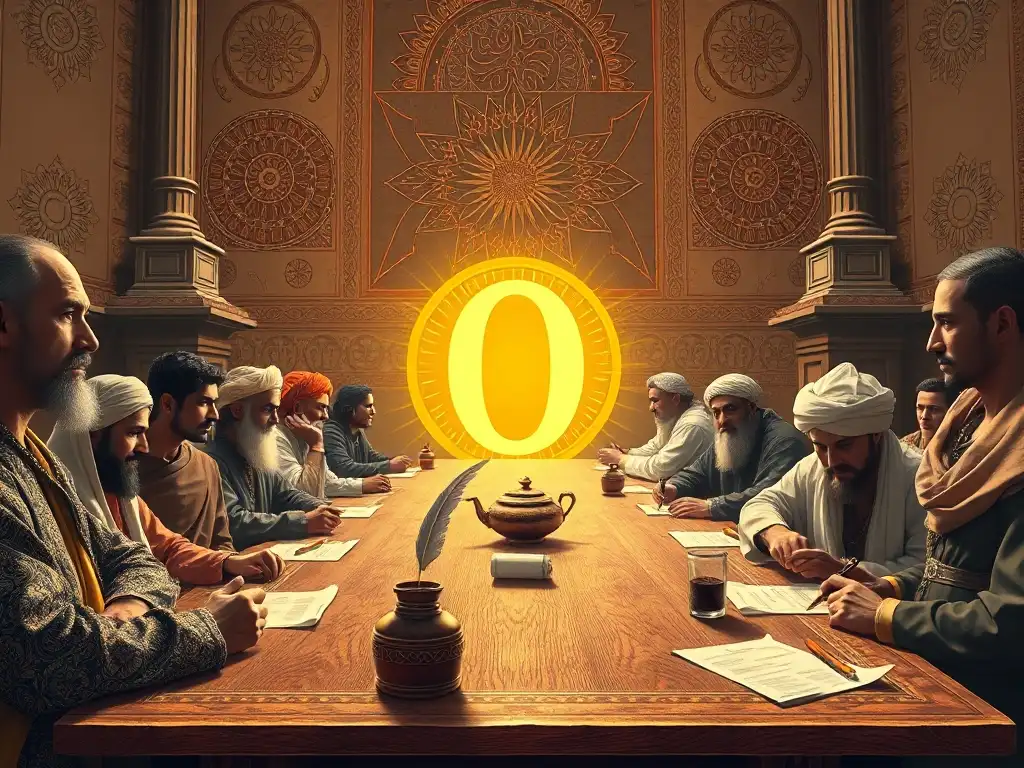
Introduction to the Invention of Zero
The invention of zero stands as a monumental achievement in the realm of mathematics, representing a pivotal moment that transcended the boundaries of culture and geography. Originating in ancient India, the concept of zero not only revolutionized mathematical thought but also laid the groundwork for a wide array of mathematical operations that we take for granted today. As we delve into the impact of zero on mathematics, we will explore its origins, its significance within Indian mathematics, and how this simple yet profound concept bridged cultures and influenced mathematical practices across the globe.
The Origin of Zero in Ancient India
The journey of zero dates back to ancient Indian civilization, specifically to the Indus Valley Civilization around 3000 BCE, where early forms of numerical notation emerged. However, the formal recognition and use of zero as a numeral is attributed to Brahmagupta, an Indian mathematician who lived in the 7th century CE. He described zero as a number and established its operations, which marked a significant leap in mathematical understanding. This innovation not only represented a numerical value but also encapsulated the philosophical notion of 'nothingness,' a concept deeply rooted in Indian thought.
The Role of Zero in Indian Mathematics
Zero played a critical role in the development of mathematical concepts in ancient India. It served as a foundational element in the decimal system, which facilitated complex calculations and record-keeping. Indian mathematicians utilized zero in various mathematical operations, allowing for the development of sophisticated calculations in fields such as astronomy and commerce. The combination of zero with other numbers enabled the representation of vast quantities and the execution of calculations that were previously impossible, thereby advancing mathematical knowledge significantly.
The Impact of Zero on Mathematics
The impact of zero on mathematics extends far beyond its origins in ancient India. This seemingly simple digit has transformed numerical systems and mathematical operations worldwide.
Understanding the Concept of Zero
At its core, zero is more than just a placeholder; it represents a profound philosophical and mathematical concept. Understanding zero involves recognizing its dual nature: it serves as both a symbol for nothingness and a crucial component in the arithmetic framework. This duality is what makes zero unique and powerful in mathematical contexts.
Zero as a Placeholder: Revolutionizing Numerical Systems
One of the most significant impacts of zero is its role as a placeholder in positional numeral systems. This innovation allows for the differentiation between numbers like 10 and 100, fundamentally altering how we understand and work with quantities. By incorporating zero into the numerical system, ancient Indian mathematicians provided a more efficient way to perform calculations, paving the way for modern mathematics.
The Mathematical Operations Enabled by Zero
The introduction of zero has enabled a variety of mathematical operations that are essential for advanced calculations. It allows for:
- Addition and Subtraction: Facilitating the manipulation of numbers without altering their value.
- Multiplication and Division: Providing a basis for more complex calculations in algebra and beyond.
- Algebraic Formulations: Enabling the development of equations and functions that are foundational to modern mathematics.
The invention of zero has had a profound and lasting impact on mathematics, bridging cultures and influencing mathematical thought and practice across the globe. Its journey from ancient India to the modern-day underscores the importance of cultural exchanges in shaping the world we live in today.
Cross-Cultural Transmission of Zero
The invention of zero in ancient India represents a significant milestone in the evolution of mathematics and its transmission across cultures. This innovation was not merely a numerical placeholder but a conceptual breakthrough that transformed mathematical thinking. As the concept of zero traveled beyond the Indian subcontinent, it facilitated the development of complex mathematical systems, thereby bridging various cultures and enhancing mathematical practices worldwide.
One of the most fascinating aspects of zero's journey is its adaptability across different mathematical traditions. While the Indians initially utilized zero in a sophisticated manner, its adoption by neighboring cultures showcased how it could be integrated into diverse mathematical frameworks. The interactions between scholars, traders, and explorers played a pivotal role in this cross-cultural transmission, enabling a rich exchange of ideas that shaped the future of mathematics.
The Spread of Zero from India to the Arab World
The spread of zero from India to the Arab world during the 7th to 9th centuries was a transformative event in the history of mathematics. Indian mathematicians such as Brahmagupta were instrumental in formalizing the rules governing zero, including its operations within arithmetic. As trade routes expanded, Indian mathematical texts were translated into Arabic, allowing scholars in the Islamic Golden Age to access and further develop these concepts.
The Arabic numeral system, which incorporated zero, emerged as a revolutionary improvement over the Roman numeral system, as it allowed for simpler calculations and record-keeping. Notably, the work of mathematicians like Al-Khwarizmi, who wrote extensively about Indian numerals and zero, helped disseminate these ideas across the Islamic world and into Europe, establishing a foundation for future mathematical advancements.
The Role of Trade and Scholarship in Spreading Mathematical Ideas
Trade and scholarship were crucial in facilitating the spread of zero and other mathematical ideas. Merchants traveling along the Silk Road and other trade routes brought not only goods but also knowledge and innovations. The bustling trade centers in cities like Baghdad, Cairo, and Cordoba became melting pots of culture and learning, where scholars from various backgrounds gathered to share and refine mathematical concepts.
Institutions such as the House of Wisdom in Baghdad exemplified how scholarship played a vital role in this exchange. Here, translators and mathematicians worked collaboratively, translating texts from Sanskrit into Arabic, which enabled the preservation and dissemination of Indian mathematical knowledge. This collaborative spirit fueled the growth of mathematics, leading to significant developments in algebra, geometry, and astronomy, all of which were greatly influenced by the introduction of zero.
The Influence of Zero on Global Mathematics
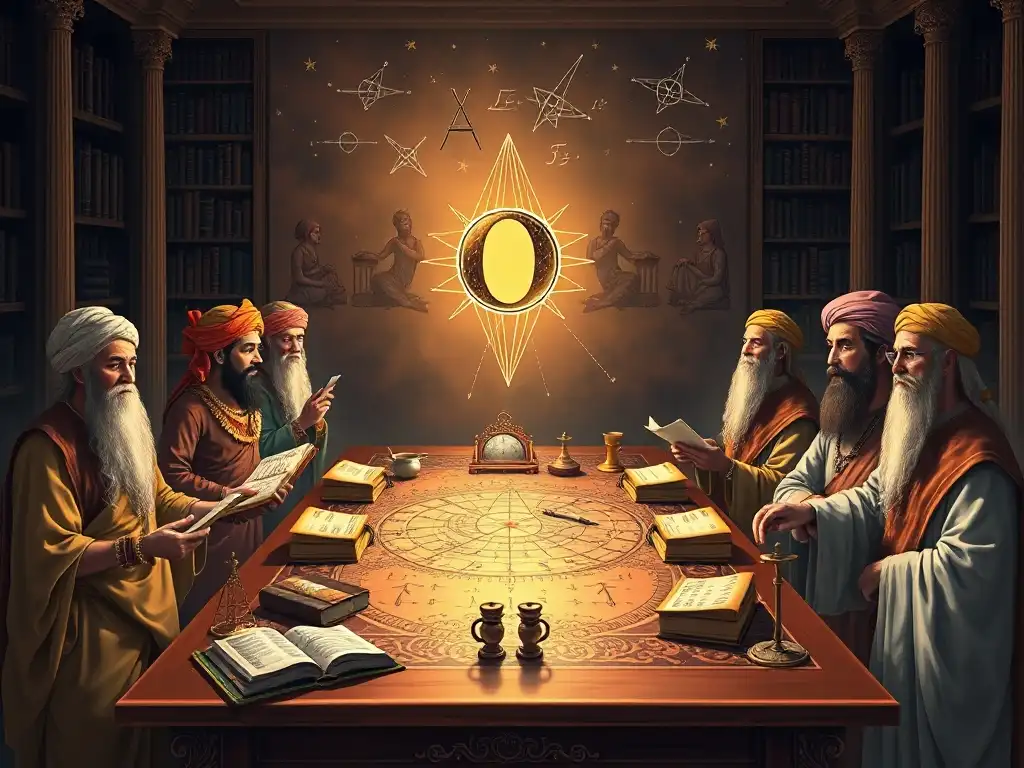
The influence of zero on global mathematics cannot be overstated. It served as a catalyst for mathematical innovation that transcended cultural boundaries, leading to advancements in various fields. The introduction of zero allowed for the development of place-value systems, simplifying calculations and enabling new mathematical operations. Consequently, it laid the groundwork for modern mathematics as we know it today.
Moreover, zero's incorporation into mathematical systems facilitated the transition from simple arithmetic to more complex fields such as calculus and algebra. This evolution marked a significant shift in mathematical thought, allowing for the representation of abstract concepts and the formulation of advanced theories.
Zero's Contribution to Algebra and Calculus
Zero's impact on algebra and calculus is profound. In algebra, the introduction of zero as a variable permitted the formulation of equations that could be solved more efficiently. It allowed mathematicians to express relationships more clearly and represented unknown quantities, which is essential for solving equations.
In calculus, zero plays a critical role in limits and continuity. The concept of approaching zero is fundamental in understanding the behavior of functions, particularly in determining derivatives and integrals. This foundational aspect of calculus has enabled mathematicians to develop theories that underpin much of modern science and engineering, demonstrating the lasting legacy of the invention of zero.
Case Studies of Mathematics in Different Cultures Utilizing Zero
Examining case studies from various cultures reveals how the concept of zero has been utilized in diverse mathematical systems. For instance, the Mayans independently developed a sophisticated numerical system that included a symbol for zero, enabling them to perform complex calculations related to astronomy and calendar systems. This illustrates that the need for zero transcended cultural boundaries, emphasizing its universal importance in mathematical development.
In China, the concept of zero was understood and applied in a different context, notably in the context of accounting and commerce. The Chinese abacus utilized a form of zero for calculations, showcasing its practical applications even before it was fully integrated into mathematical theory.
These case studies highlight how different cultures embraced and adapted the concept of zero, leading to unique mathematical innovations that continue to influence modern mathematics. The shared understanding of zero across these cultures underscores its significance as a foundational concept, bridging the gap between ancient and contemporary mathematical practices.
The Legacy of Zero in Modern Mathematics
The invention of zero is one of the most profound contributions of ancient Indian civilizations to the field of mathematics. This concept, which transcended geographical and cultural boundaries, laid the groundwork for modern mathematical practices. By enabling the representation of nothingness, zero allowed mathematicians to develop a positional number system that is foundational in contemporary mathematics. This legacy is evident in various mathematical disciplines, including algebra, calculus, and computer science, where the utilization of zero as a placeholder and a number in its own right has become indispensable.
Zero's legacy is not just limited to arithmetic operations; it also encompasses the realms of theoretical mathematics and computer programming. The capability to express large numbers succinctly and perform complex calculations with ease owes much to the introduction of zero. Furthermore, zero facilitated the development of mathematical theorems and principles that have shaped modern scientific thought and technology. The legacy of zero is a testament to the innovative spirit of ancient civilizations and their profound impact on the evolution of mathematics.
Zero in Contemporary Mathematical Practices
In today’s mathematical landscape, zero plays a critical role across various domains. Its function as a placeholder in the decimal system allows for the clear representation of numbers, making calculations more efficient and understandable. For example, the difference between 205 and 25 is made clear through the use of zero, which indicates the absence of tens in the former. This distinction is crucial for accurate mathematical communication and computation.
Moreover, zero is central to algebra, where it acts as the identity element for addition. The equation \( x + 0 = x \) illustrates how zero does not alter the value of numbers, allowing for various algebraic manipulations. In calculus, the concept of limits involves approaching zero, leading to critical developments in understanding continuity and instantaneous rates of change. The use of zero in modern programming languages further exemplifies its versatility; it is often used to represent false values or the starting point of arrays, showcasing its integral place in technology and computation.
How Zero Shaped Modern Numerals and Calculations
The introduction of zero revolutionized numeral systems, particularly the base-10 system that is prevalent today. Before the acceptance of zero, numeral systems were often cumbersome and lacked the efficiency of positional notation. The ability to denote a lack of quantity with zero enabled mathematicians and scholars to represent numbers in a more structured and efficient manner.
Zero's influence extends beyond mere representation; it has also transformed mathematical operations. Calculations that once required cumbersome methods became streamlined with the use of zero. For instance, operations involving subtraction and multiplication are significantly simplified, allowing for more rapid problem-solving and complex calculations. Furthermore, zero has also paved the way for advancements in computational algorithms and computer science, where its role in binary code is fundamental to modern computing.
Conclusion: The Lasting Impact of Zero on Mathematics
The invention of zero has left an indelible mark on the history of mathematics. It is not merely a number; it represents a pivotal conceptual leap that has influenced countless mathematical theories and practices. The systemic use of zero has allowed for more complex mathematical thought, enabling humanity to explore and understand the universe with unprecedented precision. The impact of zero on mathematics is evidenced by its omnipresence in academic curricula and real-world applications, from basic arithmetic to advanced scientific research.
Reflections on the Cultural Exchange and its Significance
The journey of zero from ancient India to the rest of the world is a remarkable example of cultural exchange that highlights the interconnectedness of human thought. This exchange underscores the significance of collaboration across cultures, illustrating how ideas can transcend boundaries and lead to monumental advancements. The spread of zero facilitated a more profound understanding of mathematics in various regions, leading to developments in Islamic, European, and eventually global mathematical practices. This cross-cultural sharing not only enriched mathematics but also fostered a spirit of inquiry and innovation that remains pertinent today.
The Future of Mathematical Innovation Inspired by Ancient Concepts
As we look to the future, the influence of ancient concepts like zero continues to inspire mathematical innovation. Researchers and mathematicians are exploring new realms of mathematical theory, often revisiting and reinterpreting ancient ideas to solve contemporary problems. Zero, with its profound implications, serves as a foundation for ongoing explorations in fields such as artificial intelligence, quantum computing, and advanced algorithms. The legacy of zero reminds us that the seeds of innovation often lie in the rich history of human thought, and by understanding these roots, we can cultivate new ideas that will shape the future of mathematics.
- Introduction to the Invention of Zero
- The Impact of Zero on Mathematics
- Cross-Cultural Transmission of Zero
- The Influence of Zero on Global Mathematics
- The Legacy of Zero in Modern Mathematics
- Conclusion: The Lasting Impact of Zero on Mathematics
Frequently Asked Questions
What is the significance of the invention of zero in mathematics?
The invention of zero provided a conceptual framework for counting and calculations, enabling the development of advanced mathematical systems and algorithms.
How did zero travel from ancient India to the rest of the world?
Zero was introduced to the Islamic world through translations of Indian texts, eventually reaching Europe by the Middle Ages, influencing Western mathematics.
What civilizations contributed to the development of zero?
The Indus Valley Civilization and later mathematicians during the Gupta Empire played crucial roles in the formalization and spread of the concept of zero.
How did zero change mathematical operations?
The introduction of zero allowed for place value notation, simplifying arithmetic operations and making calculations more efficient and effective.
What is the impact of zero on mathematics today?
The impact of zero is profound, as it is fundamental in modern mathematics, serving as a placeholder and enabling complex calculations in various fields, including science and engineering.
Final Reflection: The Transformative Impact of Zero on Mathematics
The invention of zero has not only revolutionized mathematics but has also woven a thread of interconnectedness across cultures, highlighting its profound relevance in today's global society. In an era where technology and communication transcend borders, understanding the historical significance of zero allows us to appreciate the collaborative nature of human knowledge. The impact of zero on mathematics is a testament to how a single concept can bridge diverse cultures and foster innovation.
Culturally, the concept of zero has reshaped our understanding of mathematics and its applications in various fields, from science to economics. The journey of zero from ancient civilizations to modern mathematics exemplifies the power of shared ideas and the importance of cultural exchange. As we navigate a world increasingly reliant on data and technology, we must recognize that the foundations of our current systems are built upon the contributions of many. The greatest discoveries are made when we dare to think differently.
This quote encapsulates the essence of zero's journey, reminding us that innovation often arises from the blending of diverse perspectives.
As you reflect on the impact of zero on mathematics, consider how this simple yet profound concept can inspire you in your own life. Embrace the idea that every small contribution matters, and be open to learning from different cultures and perspectives. Just as zero has transformed mathematics, your unique insights can create ripples of change in your community. Let the legacy of zero motivate you to explore, connect, and innovate, forging new paths in your personal and professional journey.
Embrace the Legacy of Zero and Transform Your Perspective!
Thank you for immersing yourself in the incredible journey of how the invention of zero has shaped global mathematics! We hope you found the insights both enlightening and inspiring. Now, it's time to take that inspiration and make a difference—both in your understanding and in sharing this knowledge with others.
Here are a few steps you can actively take:
- Dive deeper into the world of ancient mathematics by exploring books or documentaries that delve into its evolution and impact on various cultures.
- Share your newfound knowledge with friends or on social media to spark conversations about the significance of cultural contributions to science.
- Consider joining a local or online community focused on mathematics or history; engaging with others can enhance your understanding and appreciation of these subjects.
As you reflect on the incredible journey of the number zero, here's a question for you: How do you believe the concept of zero has influenced modern technology and science in today's world? We invite you to share your thoughts in the comments below!