
Celebrating the Confluence of Mathematics and Art in Ancient India

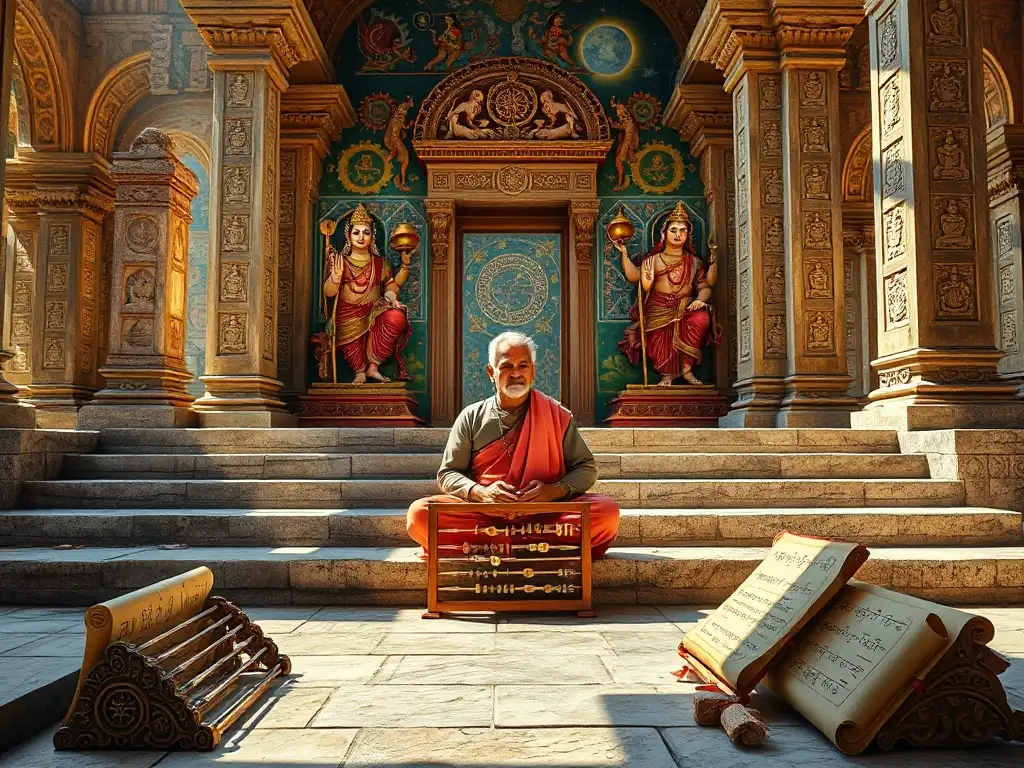
Welcome to Ancient India History, where we embark on a fascinating journey through the rich tapestry of ancient Indian civilizations. In this exploration, we delve into the remarkable confluence of mathematics and art, revealing how these two disciplines intertwined to shape a vibrant cultural legacy. From the ingenious calculations of the Indus Valley to the intricate artistry of the Gupta Empire, the contributions of ancient Indian scholars continue to inspire awe. Are you ready to uncover the secrets behind these timeless achievements? Let’s dive deeper into the captivating world of Ancient Indian mathematics and art!
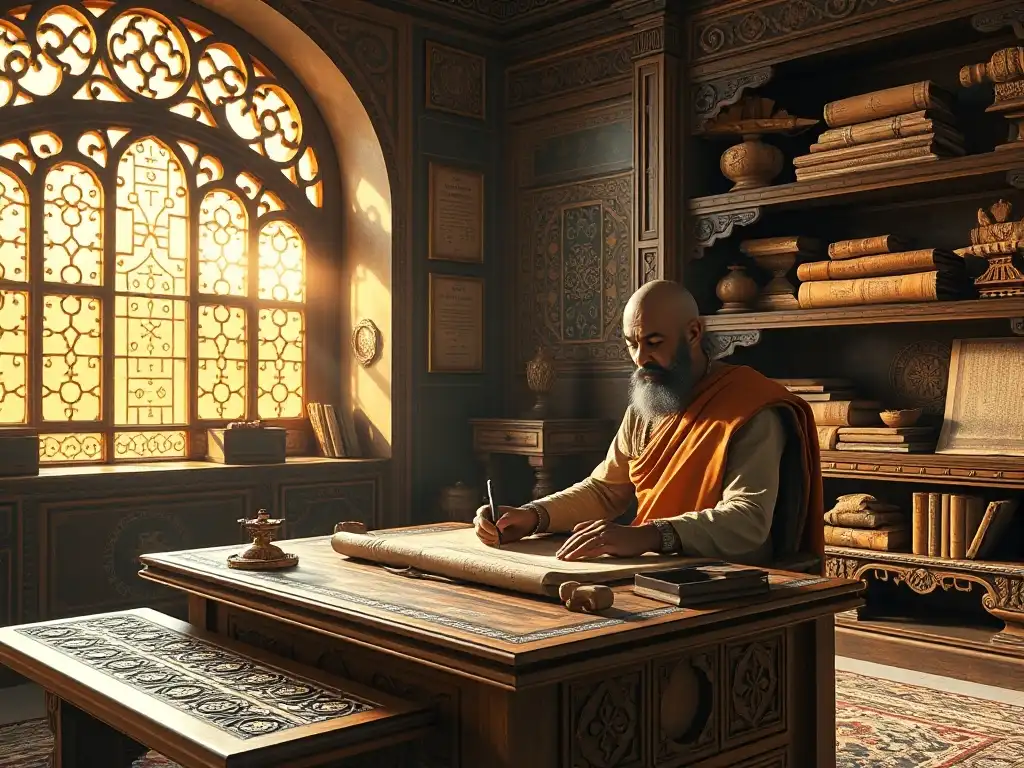
Introduction to Ancient Indian Mathematics and Art
The intersection of mathematics and art in ancient India is a fascinating realm that showcases the ingenuity and creativity of its civilizations. From the sophisticated numerical systems of the Indus Valley to the intricate designs of Gupta architecture, this synergy reflects a deep understanding of both quantitative and aesthetic principles. Ancient Indian mathematics and art were not merely practical or decorative; they served as vital expressions of the cultural and philosophical ethos of their time. This article delves into how these two disciplines intertwined, enhancing the intellectual and artistic landscape of ancient India.
The Significance of Mathematics in Ancient Indian Culture
Mathematics held a place of profound importance in ancient Indian society, influencing various aspects of life, including trade, astronomy, and architecture. The ancient Indians developed several mathematical concepts that not only advanced their own civilization but also laid the groundwork for future innovations worldwide.
- Numerical Systems: The introduction of the decimal system and the concept of zero are among the most notable contributions. This numerical framework enabled complex calculations and was foundational for advancements in various scientific fields.
- Astronomy and Timekeeping: Mathematics was crucial in the formulation of calendars and the understanding of celestial movements. The ancient Indian astronomers, such as Aryabhata, utilized mathematical principles to predict solar and lunar eclipses accurately.
The Role of Art in Expressing Mathematical Concepts
Art in ancient India was often imbued with mathematical significance, serving not only as a form of expression but also as a medium for illustrating mathematical ideas.
- Geometric Patterns: Many traditional art forms, such as mandalas and rangoli, feature intricate geometric designs that embody mathematical precision. These patterns often symbolize cosmic order and harmony, reflecting the mathematical principles underlying the universe.
- Architectural Marvels: Ancient Indian architecture, exemplified by temples and stupas, showcases a remarkable integration of mathematics and aesthetics. The use of symmetry, proportion, and geometry in their designs reveals a sophisticated understanding of spatial relationships.
Historical Context of Ancient Indian Mathematics and Art
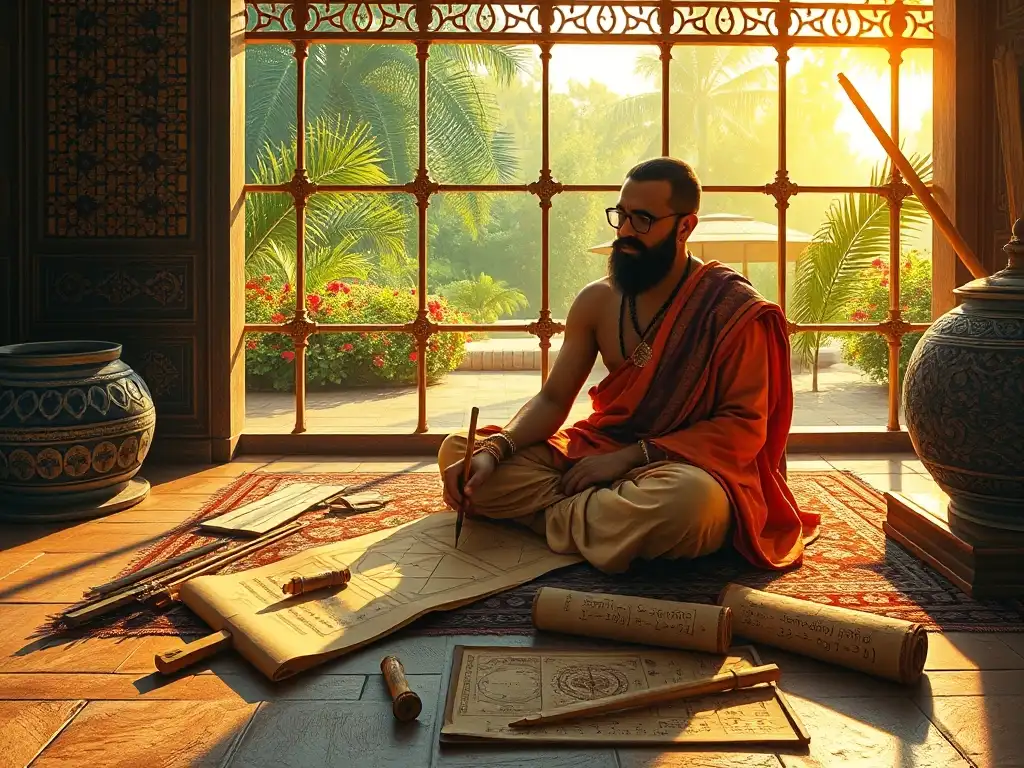
Understanding the historical context of ancient Indian mathematics and art provides insight into their development and significance. The flourishing of these disciplines can be traced through various periods and civilizations.
Ancient Indian Civilizations and Their Contributions to Mathematics
The contributions of ancient Indian civilizations to mathematics are immense and varied.
- Indus Valley Civilization: Known for its advanced urban planning, the Indus Valley civilization utilized weight systems and standardized measurements, indicating an early understanding of geometry and mathematics.
- Vedic Period: This era witnessed the emergence of mathematical texts, such as the Shulba Sutras, which provided guidelines for constructing altars. These texts reveal an integration of geometry with religious practices.
- Gupta Empire: The Gupta period is often referred to as the Golden Age of Indian mathematics, where scholars like Aryabhata and Brahmagupta made significant contributions, including the formulation of algorithms and the introduction of the concept of negative numbers.
Artistic Movements in Ancient India: A Brief Overview
The artistic movements in ancient India reflect the cultural richness and diversity of the region.
- Buddhist Art: This movement, characterized by its intricate sculptures and stupas, often contained mathematical symbolism, representing spiritual concepts through geometric forms.
- Hindu Temple Architecture: The temples of ancient India are masterpieces of art and engineering, employing mathematical principles to achieve aesthetic balance and structural integrity.
- Mughal Influence: The Mughal era introduced a fusion of Persian and Indian artistic styles, employing geometric patterns and symmetrical layouts that demonstrated the ongoing relationship between mathematics and art.
Through this exploration, we can appreciate the profound impact of ancient Indian mathematics and art on the global cultural landscape, highlighting a legacy that continues to inspire and influence contemporary practices.
Key Mathematical Concepts in Ancient Indian Art
Ancient Indian art is not merely a display of aesthetic beauty; it is deeply intertwined with mathematical concepts that reflect the advanced understanding of geometry, symmetry, and numerical systems in ancient Indian civilization. This confluence of mathematics and art is evident in various forms, from temple architecture to decorative patterns. The mathematical principles that underpin these artistic expressions demonstrate the innovative and sophisticated nature of ancient Indian scholars and artisans.
Geometric Patterns and Their Mathematical Foundations
Geometric patterns are a hallmark of ancient Indian art, often characterized by intricate designs that embody mathematical precision. These patterns utilize basic geometric shapes such as circles, triangles, and squares, arranged in complex configurations. The use of tessellation is prevalent, where shapes fit together without gaps, creating visually stimulating effects.
Mathematically, these patterns can be analyzed through concepts like symmetry, transformations, and ratios. For instance, the concept of the golden ratio, a proportion often found in nature and art, can be seen in several ancient artworks. This mathematical foundation not only enhances the aesthetic appeal but also reflects a deep understanding of space and form.
Symmetry and Proportion in Ancient Indian Architecture
Symmetry and proportion play a crucial role in the architecture of ancient Indian structures, such as temples and palaces. Architects employed mathematical principles to achieve balance and harmony in their designs. The use of axial symmetry, where one side mirrors the other, is a common feature in temple layouts, ensuring a sense of order and tranquility.
The proportions were often derived from sacred geometry, which involves specific ratios that were believed to resonate with cosmic harmony. For example, the ratio of height to width in temple towers was meticulously calculated, contributing to the building's visual impact and structural integrity. This mathematical approach allowed for the creation of monumental structures that have withstood the test of time.
Number Systems and Their Artistic Representations
The evolution of number systems in ancient India, particularly the decimal system, significantly influenced artistic representations. Artists incorporated numerical symbolism into their works, embedding meanings that transcended mere decoration. For example, the use of specific numbers to denote spiritual concepts can be seen in the arrangement of motifs and figures within paintings and sculptures.
Moreover, the representation of numbers through symbols and patterns can be observed in inscriptions and artworks. The use of dots, lines, and other symbols to convey numerical values illustrates a sophisticated understanding of mathematics intertwined with artistic expression. This fusion of numerical systems and art reflects the intellectual richness of ancient Indian culture.
Notable Examples of the Intersection of Mathematics and Art
Ancient Indian civilization offers numerous examples where mathematics and art converge, showcasing the ingenuity of its people. From architectural marvels to intricate decorative arts, the influence of mathematical concepts is profoundly evident.
The Mathematical Precision in Ancient Indian Temples
The construction of ancient Indian temples is a testament to the mathematical precision employed by architects and builders. Temples like the Brihadeeswarar Temple in Thanjavur exemplify how mathematical calculations were applied to ensure structural stability and aesthetic beauty.
The layout of the temple complex is meticulously planned, with each element reflecting geometric proportions and symmetry. The use of vertical and horizontal lines creates a sense of balance, while the ratios used in designing the sanctum sanctorum enhance its spiritual significance. The mathematical precision in these temples not only serves a functional purpose but also elevates them to masterpieces of art.
Mandalas: The Mathematical and Artistic Symbolism
Mandalas are intricate geometric designs that hold significant spiritual and artistic value in ancient Indian culture. These designs often symbolize the universe, with patterns radiating from a central point, reflecting both order and chaos.
Mathematically, mandalas are constructed using principles of symmetry, radial balance, and geometric shapes. The creation of mandalas involves precise measurements and calculations, ensuring that each element aligns harmoniously with the others. Artists often use mandalas in rituals, emphasizing their role as both art and a tool for meditation and spiritual exploration.
Traditional Art Forms: Rangoli and Its Mathematical Patterns
Rangoli, a traditional Indian art form, showcases the intersection of mathematics and creativity through its vibrant patterns and designs. Typically made during festivals, rangoli involves the use of colored powders, rice, and flour to create intricate floor designs.
The patterns often feature geometric shapes and symmetrical arrangements, emphasizing the importance of spatial awareness and mathematical concepts in their creation. Artists meticulously plan their designs, often using grids or geometric frameworks to ensure precision. The mathematical patterns in rangoli not only beautify spaces but also serve as expressions of cultural identity and community participation.
Influential Mathematicians and Artists of Ancient India
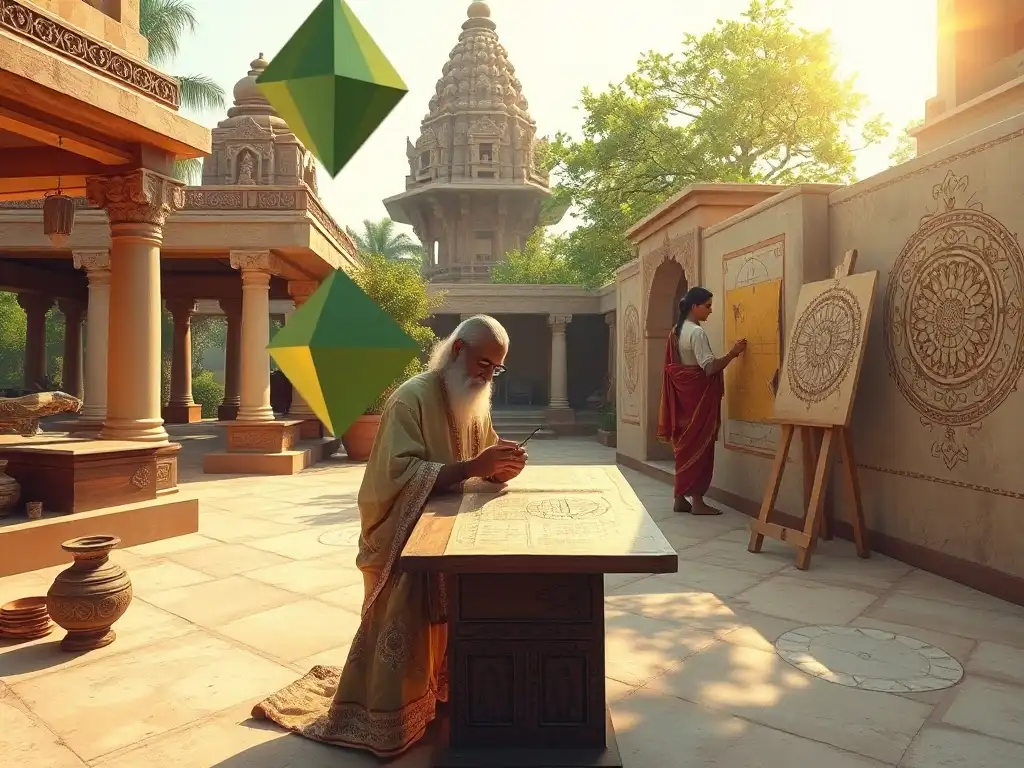
Ancient India was home to a remarkable fusion of mathematics and art, with several influential figures emerging during this period. These mathematicians and artists not only contributed to the advancement of mathematical concepts but also seamlessly integrated these ideas into artistic expressions. Their works laid the groundwork for future generations, establishing a unique tradition that celebrates the beauty of numbers and aesthetics.
Among these figures, Aryabhata and Brahmagupta stand out for their significant contributions, along with other notable scholars whose ideas permeated various fields. The collaboration between mathematicians and artists during ancient times is a testament to the holistic approach that characterized Indian intellectual traditions, where knowledge was pursued across disciplines, enhancing both mathematical precision and artistic creativity.
Aryabhata: Bridging Mathematics and Art
Aryabhata, one of the earliest and most renowned mathematicians of ancient India, lived in the 5th century CE. His seminal work, the Aryabhatiya, not only laid the foundation for algebra and trigonometry but also influenced artistic representations in various forms. Aryabhata introduced innovative concepts such as the place value system and the concept of zero, which revolutionized mathematical thought.
His mathematical principles, particularly in astronomy, were often reflected in the artistic works of the time. For example, Aryabhata’s calculations of eclipses and planetary motions were depicted in intricate carvings and paintings, showcasing the interplay between science and art. His ability to synthesize complex mathematical ideas with aesthetic expressions has left a lasting legacy, inspiring both mathematicians and artists for centuries.
Brahmagupta: Contributions to Art through Mathematical Principles
Brahmagupta, who flourished in the 7th century CE, made significant advancements in mathematics, particularly in arithmetic and algebra. His works, especially the Brahmasphutasiddhanta, included practical applications of mathematics that were often used in architectural designs and artistic endeavors of the time.
Brahmagupta's contributions extended beyond theoretical mathematics; he developed rules for calculating areas and volumes, which directly influenced the construction of temples and other structures. The geometric principles he articulated were essential for artists and architects, allowing them to create works that were not only visually appealing but also mathematically sound. His integration of mathematics into art exemplifies how ancient Indian scholars viewed these disciplines as interconnected rather than separate entities.
Other Key Figures and Their Impact on Mathematics and Art
In addition to Aryabhata and Brahmagupta, several other mathematicians and artists contributed to the rich tapestry of ancient Indian mathematics and art. Mathematicians like Bhaskara I and Bhaskara II further advanced mathematical concepts, focusing on geometry and calculus, which influenced architectural design and artistic expression.
The artistic depiction of mathematical concepts also found its way into various forms of sculpture, painting, and textile design. Artists sought to represent mathematical principles visually, leading to intricate patterns and designs that reflect a deep understanding of geometry. This collaboration between artists and mathematicians fostered a culture where numbers and aesthetics coexisted, enriching both fields and leading to the development of unique artistic styles that bore mathematical significance.
The Legacy of Ancient Indian Mathematics and Art
The legacy of ancient Indian mathematics and art is profound, influencing cultures and civilizations well beyond the subcontinent. The mathematical innovations and artistic expressions of ancient India became a source of inspiration for scholars in the Islamic Golden Age and later in the European Renaissance.
The integration of mathematical concepts within art not only elevated the aesthetic value of creations but also demonstrated the practical applications of mathematics in everyday life and architecture. This legacy continues to be celebrated today, as modern scholars and artists explore the connections between these fields.
The Influence of Ancient Indian Mathematical Art on Later Cultures
The influence of ancient Indian mathematical art extended into various cultures, particularly through the interactions established along trade routes. The dissemination of mathematical texts, such as the Aryabhatiya and Brahmasphutasiddhanta, introduced concepts like the decimal system and zero to scholars in the Islamic world and Europe.
This cross-cultural exchange facilitated the integration of Indian mathematical art into broader artistic traditions. For instance, the geometric designs and patterns found in Islamic art often bear similarities to those originating in ancient India, reflecting the shared mathematical principles that guided both cultures. The ripple effects of this influence continue to resonate, highlighting the universal language of mathematics and art.
Preservation and Revival of Mathematical Art in Modern India
In contemporary India, there is a growing movement to preserve and revive the traditions of mathematical art that flourished in ancient times. Educational initiatives and art programs are increasingly focusing on the historical significance of ancient Indian mathematics and its artistic applications.
Workshops and exhibitions showcase traditional art forms that incorporate mathematical concepts, fostering a renewed appreciation for this unique heritage. Additionally, researchers and artists are collaborating to create new works that honor ancient techniques while exploring modern interpretations. This revival serves not only to educate future generations about the rich history of ancient Indian mathematics and art but also to inspire a new wave of creativity that bridges the past and the present.
Conclusion: The Enduring Connection Between Mathematics and Art in Ancient India
The intricate relationship between mathematics and art in ancient India is a testament to the intellectual and cultural achievements of its civilizations. This connection is evident in various forms of artistic expression, from architecture and sculpture to intricate textile designs and manuscripts. The principles of geometry and symmetry, foundational to both mathematics and artistic endeavors, can be observed in the construction of temples, the layout of cities, and the creation of decorative motifs. Ancient Indian mathematicians and artists did not see their disciplines as separate; rather, they viewed them as complementary, each enriching the other.
The legacy of ancient Indian mathematics and art continues to influence contemporary practices. Modern artists and mathematicians alike draw inspiration from the harmonious blend of these fields, fostering a renewed appreciation for the precision and creativity inherent in both. This enduring connection invites us to recognize the universal language of mathematics that transcends time and culture, revealing the shared human experience of creativity and inquiry.
Reflection on the Importance of Understanding Ancient Contributions
Understanding the contributions of ancient Indian mathematics and art is crucial for several reasons. Firstly, it highlights the advanced knowledge systems that existed in India long before the advent of modern science. The concepts of zero, decimal systems, and geometric principles developed by ancient Indian scholars laid the groundwork for various mathematical advancements worldwide. By studying these contributions, we gain insight into how ancient civilizations approached complex problems and sought to understand their world.
Moreover, recognizing the cultural context of these contributions allows us to appreciate the multifaceted nature of knowledge. Ancient Indian mathematicians often collaborated with artists, leading to innovations that were not only practical but also aesthetically pleasing. This interdisciplinary approach fosters a holistic understanding of how knowledge evolves and manifests in different forms, encouraging us to value diverse perspectives in problem-solving and creativity.
Encouraging Further Exploration of Ancient Indian Mathematics and Art
To truly appreciate the richness of ancient Indian mathematics and art, further exploration is essential. Engaging with historical texts, archaeological findings, and contemporary interpretations can deepen our understanding of how these fields intersected in ancient times. Museums, academic institutions, and cultural organizations often host exhibitions and lectures that delve into this fascinating topic, providing opportunities for learning and engagement.
Additionally, resources such as books, documentaries, and online courses can offer insights into specific aspects of ancient Indian mathematics and art. By actively seeking out these materials, individuals can cultivate a broader appreciation for the ingenuity of ancient Indian civilizations. Encouraging curiosity and exploration not only honors the legacy of these contributions but also inspires future generations to continue the tradition of blending art and mathematics in innovative ways.
- Introduction to Ancient Indian Mathematics and Art
- The Significance of Mathematics in Ancient Indian Culture
- The Role of Art in Expressing Mathematical Concepts
- Historical Context of Ancient Indian Mathematics and Art
- Key Mathematical Concepts in Ancient Indian Art
- Notable Examples of the Intersection of Mathematics and Art
- Influential Mathematicians and Artists of Ancient India
- The Legacy of Ancient Indian Mathematics and Art
- Conclusion: The Enduring Connection Between Mathematics and Art in Ancient India
- What are the key contributions of Ancient Indian mathematics?
- How did art and mathematics intersect in ancient India?
- What role did the Indus Valley Civilization play in the development of mathematics?
- Can you give examples of mathematical concepts found in ancient Indian art?
- How did the Gupta Empire influence the fields of mathematics and art?
Frequently Asked Questions
What are the key contributions of Ancient Indian mathematics?
Ancient Indian mathematics is renowned for its innovations, including the concept of zero, the decimal system, and sophisticated geometry used in various fields like astronomy and architecture.
How did art and mathematics intersect in ancient India?
In ancient India, art and mathematics were intertwined, with geometric patterns and symmetry evident in temple architecture, frescoes, and sculptures, reflecting the mathematical precision in artistic designs.
What role did the Indus Valley Civilization play in the development of mathematics?
The Indus Valley Civilization showcased early examples of measuring techniques and standardized weights, highlighting their advanced understanding of quantities and geometry, which laid a foundation for future mathematical advancements.
Can you give examples of mathematical concepts found in ancient Indian art?
Ancient Indian art features intricate mandalas and rangoli designs that incorporate geometry and symmetry, illustrating the mathematical principles that governed their creation and aesthetic appeal.
How did the Gupta Empire influence the fields of mathematics and art?
The Gupta Empire is often referred to as the Golden Age of India, where significant advancements in mathematics, such as algebra and trigonometry, paralleled a flourishing of art, resulting in masterpieces like the Ajanta Caves and Gupta sculptures.
Final Reflection: The Timeless Harmony of Ancient Indian Mathematics and Art
In exploring the intricate relationship between ancient Indian mathematics and art, we uncover a profound legacy that continues to resonate in our modern world. The seamless integration of these two disciplines not only showcases the brilliance of ancient scholars and artists but also serves as a reminder of the enduring power of creativity and logic. Today, as we navigate an increasingly complex society, the lessons drawn from this confluence can inspire us to embrace interdisciplinary thinking and foster innovation in our own lives.
The influence of ancient Indian mathematics and art extends far beyond historical significance; it has shaped cultural narratives and artistic expressions across generations. This rich heritage invites us to appreciate the beauty of mathematical precision and artistic creativity as complementary forces. As the renowned mathematician and artist, Leonardo da Vinci, once said, Simplicity is the ultimate sophistication.
This quote encapsulates the essence of ancient Indian practices, where simplicity in mathematical concepts often led to profound artistic expressions, reminding us that the most intricate ideas can emerge from the simplest foundations.
As we reflect on the lessons from this remarkable intersection, I encourage you to consider how you can incorporate the principles of balance, creativity, and precision into your own pursuits. Whether you are an artist, a mathematician, or simply someone seeking inspiration, let the legacy of ancient Indian mathematics and art guide you in your journey. Embrace the beauty of interdisciplinary connections, and allow them to enrich your understanding of the world around you. Together, let us celebrate this timeless harmony and strive to create a future where art and mathematics continue to inspire and elevate one another.
Uncover the Beauty of Mathematics and Art!
Thank you for taking the time to explore the fascinating intersection of mathematics and art in ancient India! You’ve gained insights into a rich heritage that continues to inspire creativity and innovation. Now, it's time to dive even deeper and connect with this incredible legacy.
Here are some actions you can take to further your journey:
- Explore a Local Museum: Visit an art gallery or museum that showcases intricate mathematical patterns or the stunning art of ancient India to experience this unique confluence firsthand.
- Join a Community Workshop: Participate in workshops that focus on geometric art-making or craft traditional patterns inspired by our discussions, allowing you to engage with these concepts practically.
- Share Your Thoughts: Discuss what you learned in this article with friends or family. You may inspire someone else to discover the beauty of this unique subject!
What aspect of the interplay between mathematics and art fascinates you the most?