
The Astronomical Observatories of Ancient India: A Glimpse into the Past


Welcome to Ancient India History, where we embark on an enthralling journey through the vibrant tapestry of ancient Indian civilizations. Here, you’ll discover the profound contributions of cultures that shaped our understanding of the world, particularly through the lens of science and medicine. In our featured article, “The Astronomical Observatories of Ancient India: A Glimpse into the Past,” we delve into the fascinating realm of ancient Indian astronomical observatories.
These structures not only reveal the remarkable scientific prowess of their time but also offer a window into the philosophical and cultural insights of an era long past. Are you ready to uncover the mysteries that lie within? Dive in, and let the exploration begin!
The exploration of ancient Indian astronomical observatories reveals a profound connection between the celestial realm and the intellectual pursuits of early Indian civilizations. From the meticulous observations of the stars to the intricate calculations of cosmic phenomena, these observatories served as critical hubs of knowledge that shaped not only astronomy but also mathematics, architecture, and cultural practices in ancient India.
The rich tapestry of ancient Indian astronomical traditions, exemplified by notable sites such as Jantar Mantar and the observatories of the Indus Valley, offers a remarkable glimpse into the advanced scientific understanding possessed by scholars of the time. This article delves into the significance, structure, and contributions of these observatories, highlighting their role in positioning ancient Indian civilizations as pioneers in the field of astronomy.
Historical Context of Astronomy in Ancient India
The history of astronomy in ancient India is deeply intertwined with the cultural and religious practices of the time. Ancient texts, such as the Vedas and the Siddhantas, illustrate a long-standing fascination with celestial bodies. Scholars like Aryabhata and Varahamihira made significant contributions to astronomical knowledge, laying the groundwork for future studies.
- Key Contributions:
- Aryabhata's introduction of the heliocentric model.
- Varahamihira's comprehensive treatises on astrology and astronomy.
- The influence of lunar and solar cycles on agricultural practices.
Major Astronomical Observatories
Among the various astronomical observatories in ancient India, several stand out due to their architectural sophistication and scientific contributions.
- Jantar Mantar (Jaipur and Delhi):
- Constructed in the 18th century, these observatories feature a series of large instruments designed for tracking celestial bodies.
- Notable Instruments:
- Samrat Yantra: A massive sundial used for measuring time.
- Jai Prakash: A hemispherical device for locating celestial bodies.
- Indus Valley Civilization Sites:
- Evidence suggests that the people of the Indus Valley had advanced knowledge of astronomy, as indicated by their urban planning and alignment of structures with celestial events.
Significance and Impact
The astronomical observatories of ancient India were more than just structures for observation; they were symbols of interconnectedness between science, philosophy, and spirituality. Their contributions laid the foundation for modern astronomy and mathematics, influencing scholars across the globe.
- Enduring Legacy:
- The principles and methods developed in these observatories continue to resonate in contemporary scientific practices.
- The preservation of ancient texts and instruments provides invaluable resources for future generations of astronomers and mathematicians.
Conclusion
The ancient Indian astronomical observatories represent a remarkable chapter in the history of science, illustrating the ingenuity and intellectual prowess of their creators. As we explore these monumental achievements, we gain insight into the rich legacy of ancient Indian civilizations that continues to inspire and educate us today.
- Historical Context of Astronomy in Ancient India
- Major Astronomical Observatories
- Significance and Impact
- Conclusion
- What were the primary functions of ancient Indian astronomical observatories?
- Which civilizations are known for their astronomical observatories in ancient India?
- How did ancient Indian astronomers influence global astronomy?
- What is the significance of Jantar Mantar in the context of ancient Indian observatories?
- Are there any surviving structures from ancient Indian astronomical observatories?
Introduction to Ancient Indian Astronomical Observatories

Ancient Indian astronomical observatories serve as remarkable testaments to the advanced scientific understanding and technological prowess of ancient Indian civilizations. These observatories, often characterized by their unique architectural designs and intricate instruments, played a crucial role in the development of astronomy and mathematics in India. Throughout history, they not only facilitated celestial observations but also contributed significantly to the evolution of calendars, navigation, and timekeeping.
Significance of Astronomy in Ancient Indian Civilization
Astronomy held a central place in ancient Indian civilization, deeply intertwined with various aspects of daily life, religion, and science. The following points highlight its significance:
- Cultural and Religious Importance: Celestial bodies were often associated with deities and played a vital role in Hindu rituals and festivals. Observing celestial events helped in determining auspicious timings for religious ceremonies.
- Agricultural Calendar: Agricultural practices relied heavily on astronomical observations. The timing of sowing and harvesting seasons was often based on lunar phases and solar positions, ensuring optimal crop yields.
- Navigation and Timekeeping: Ancient Indian mariners utilized stars for navigation, while observatories provided the necessary tools for accurate timekeeping. The construction of sundials and water clocks were crucial for daily life and trade.
- Mathematical Advances: The need for precise calculations in astronomy led to significant advancements in mathematics. The development of trigonometry, algebra, and geometry can be traced back to astronomical requirements.
Overview of Ancient Indian Astronomical Practices
Ancient Indian astronomical practices encompassed a range of methods and instruments, reflecting a sophisticated understanding of celestial phenomena.
- Notable Observatories:
- Jantar Mantar: Built in the 18th century by Maharaja Jai Singh II in various locations (Jaipur, Delhi, Ujjain, and Varanasi), these observatories featured large instruments for measuring time, predicting eclipses, and tracking stars.
- Aryabhata's Contributions: The famous mathematician and astronomer Aryabhata (476–550 CE) proposed theories related to the earth's rotation and the concept of zero, which were foundational to later astronomical studies.
- Instruments Used:
- Gnomon: A simple yet effective tool used to measure the altitude of the sun and create shadow clocks.
- Yantras: These were elaborate devices designed for specific astronomical calculations. For instance, the Samrat Yantra was a giant sundial that could measure time with remarkable precision.
- Astronomical Texts: Ancient Indian scholars documented their findings in texts such as the "Surya Siddhanta" and "Aryabhatiya," which outlined astronomical calculations, celestial phenomena, and mathematical concepts. These texts were not only instructional but also served as reference points for future astronomers.
- Observational Techniques: Ancient astronomers employed both naked-eye observations and the use of instruments to study celestial motions. The systematic recording of star positions and celestial events laid the groundwork for more advanced astronomical theories.
The astronomical observatories of ancient India were centers of knowledge and innovation, reflecting a civilization that placed great importance on the study of the cosmos. The legacy of these observatories continues to influence modern astronomy and mathematics, showcasing the intellectual heritage of ancient India.
Key Ancient Indian Astronomical Observatories
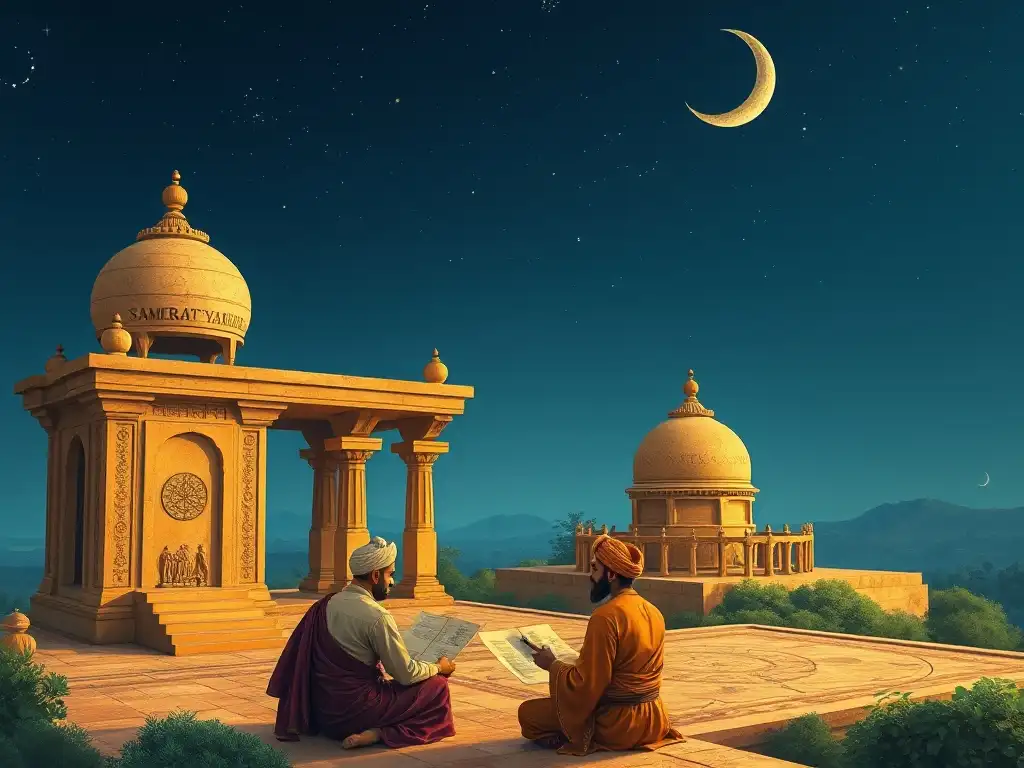
Ancient India was home to several remarkable astronomical observatories, reflecting the civilization's profound understanding of the cosmos and its influence on various aspects of life. These observatories were not merely structures; they were intricate systems designed for precise astronomical observations and calculations. Among the most prominent are Jantar Mantar and the Surya Mandir, each embodying unique architectural and functional characteristics that showcase the advanced scientific knowledge of their time.
Jantar Mantar: The Architectural Marvel
Jantar Mantar, built in the 18th century by Maharaja Jai Singh II, is a series of astronomical observatories located in several cities across India, with the most famous being in Jaipur. These structures exemplify the blend of science and architecture, with each instrument meticulously designed for specific astronomical calculations.
Instruments and Their Functions
The Jantar Mantar comprises various instruments, each serving distinct purposes:
- Samrat Yantra (Supreme Instrument): A massive sundial that measures local time with remarkable accuracy. Its high gnomon casts a shadow that moves throughout the day, allowing for precise timekeeping.
- Jaiprakash Yantra: A set of concave hemispherical structures used to observe celestial bodies' positions and determine altitudes and azimuths.
- Chakra Yantra: A circular instrument that aids in measuring the angular distance between celestial objects.
These instruments not only demonstrate advanced engineering but also the deep understanding of astronomy possessed by ancient Indian scholars.
Historical Context and Construction
Constructed in the early 18th century, Jantar Mantar was built during a time when India was experiencing a renaissance in science, particularly in the fields of astronomy and mathematics. Maharaja Jai Singh II, a patron of the sciences, commissioned these observatories motivated by his interest in astronomy and the need for accurate timekeeping.
The observatory's design integrates geometric principles and aligns with celestial phenomena, showcasing the architectural ingenuity of the period. The use of local materials and traditional craftsmanship further highlights the cultural significance of these structures in ancient Indian society.
The Surya Mandir: A Temple of the Sun
The Surya Mandir, dedicated to the Sun God, is another significant astronomical site in ancient India. While primarily a temple, its design incorporates elements that align with astronomical observations, emphasizing the importance of celestial bodies in religious and daily life.
Unique Architectural Features
The Surya Mandir is characterized by:
- Orientation: The temple is oriented in such a way that the first rays of the sun illuminate the deity's idol at dawn, reflecting the significance of the sun in Hindu cosmology.
- Sundial Elements: The temple’s structure includes sundial features that serve both religious and astronomical purposes, highlighting the integration of spirituality and science in ancient Indian architecture.
These features not only served religious practices but also facilitated the observation of solar movements, indicating a sophisticated understanding of astronomy.
Role in Ancient Indian Astronomy
The Surya Mandir played a crucial role in ancient Indian astronomy, serving as a site for astronomical observations and calculations. It epitomizes how temples were often centers of scientific inquiry, where priests and scholars would study celestial movements to create calendars and predict seasonal changes.
The temple’s alignment with the sun’s path exemplifies the ancient Indian belief in the connection between the cosmos and human existence, showcasing the dual role of such structures in both religious and scientific realms.
Ancient Indian astronomical observatories like Jantar Mantar and the Surya Mandir exemplify the civilization's rich contributions to the field of astronomy. These structures not only reflect advanced scientific understanding but also the cultural and spiritual values of ancient Indian society, making them invaluable to the history of science and medicine.
The Aryabhata Observatory: A Center of Learning
The Aryabhata Observatory, established in the 5th century CE, stands as a testament to the advanced astronomical knowledge of ancient India. Named after the renowned mathematician and astronomer Aryabhata, this observatory is often credited with laying the foundation for various astronomical practices in India. The observatory was not just a physical structure; it was a hub of learning where scholars gathered to study celestial phenomena and develop mathematical theories.
Aryabhata's contributions to astronomy were revolutionary for his time, encompassing not only observations of planetary movements but also the formulation of precise mathematical algorithms. The Aryabhata Observatory, likely located in the ancient city of Kusumapura (modern-day Patna), facilitated rigorous academic discourse and empirical research, promoting a culture of intellectual curiosity within the ancient Indian scholarly community.
Contributions of Aryabhata to Astronomy

Aryabhata, one of the first to propose a heliocentric model, significantly advanced ancient Indian astronomy. His seminal work, the Aryabhatiya, encapsulated his theories and findings, influencing generations of scholars. Some notable contributions include:
- Introduction of Zero: Aryabhata is often credited with the introduction of the concept of zero, which transformed mathematics and subsequently influenced astronomical calculations.
- Value of Pi: He provided an approximation of π (pi) as 3.1416, which was remarkably accurate for that era.
- Planetary Motions: Aryabhata described the motion of celestial bodies and posited that the Earth rotates on its axis, providing explanations for day and night.
- Eclipses: He formulated explanations for solar and lunar eclipses, attributing them to the shadows of the Earth and the Moon.
Aryabhata's work laid the groundwork for future astronomers, and his methodologies emphasized observation and calculation, integral components of scientific inquiry.
Key Discoveries and Innovations
The Aryabhata Observatory was pivotal in several key discoveries and innovations in ancient Indian astronomy, which included:
- Trigonometry: Aryabhata introduced sine functions and established trigonometric principles that were essential for calculating positions of celestial bodies.
- Calculation of Time: The observatory contributed to the development of precise timekeeping methods, including the division of the day into hours and minutes.
- Calendrical Systems: Aryabhata's insights into the lunar and solar calendars improved agricultural planning and religious observances in ancient society.
- Astronomical Instruments: The observatory likely utilized advanced instruments, such as gnomons and armillary spheres, to facilitate accurate observations of celestial movements.
These innovations not only advanced the field of astronomy in ancient India but also significantly impacted mathematics and science on a global scale. The legacy of the Aryabhata Observatory continues to resonate, highlighting the rich tradition of astronomical inquiry that flourished in ancient Indian civilizations.
The Influence of Ancient Indian Astronomical Observatories

Ancient Indian astronomical observatories played a crucial role in enhancing navigation and agriculture, significantly influencing the socio-economic structure of their time. These observatories, such as Jantar Mantar in Jaipur and Delhi, were not merely sites for celestial observation but served a practical purpose in everyday life.
- Navigation:
- The precise tracking of celestial bodies allowed sailors and traders to navigate the vast seas and rivers. By observing the position of stars and planets, navigators could determine their latitude and make informed decisions about their routes.
- The use of the North Star (Polaris) as a fixed point in navigation is a prime example of how ancient Indian astronomers contributed to maritime exploration.
- Agriculture:
- The agricultural calendar was closely tied to celestial events. Farmers relied on the timings of solstices and equinoxes, as well as lunar phases, to determine planting and harvest times.
- Observatories helped establish seasonal cycles, which improved crop yields. For instance, the Kharif and Rabi cropping seasons were determined using astronomical observations, leading to more efficient farming practices.
The integration of astronomical knowledge into navigation and agriculture underscores the practical applications of ancient Indian astronomical observatories, highlighting their importance in shaping the agricultural and trade dynamics of the time.
Contributions to Calendar Systems and Timekeeping
The development of sophisticated calendar systems in ancient India is a testament to the advanced astronomical knowledge possessed by Indian scholars. Observatories were instrumental in the formulation and refinement of these systems, which had far-reaching implications for society.
- Lunar and Solar Calendars:
- Ancient Indian astronomers developed both lunar and solar calendars, allowing for a comprehensive understanding of time. The 'Shaka Samvat', for instance, is a solar calendar that is still in use today.
- The lunar calendar facilitated the observation of festivals and rituals, ensuring that they aligned with the right celestial events.
- Timekeeping Innovations:
- Devices like the Gnomon and Water Clock were utilized in observatories to measure time accurately. These innovations not only aided in daily life but also contributed to the scientific understanding of time.
- The establishment of a systematic division of time into hours, minutes, and seconds can be traced back to these early astronomical practices.
The development of calendar systems and timekeeping methods illustrates the profound impact of ancient Indian astronomical observatories on societal organization, agriculture, and cultural practices.
Influence on Global Astronomical Knowledge
Ancient Indian astronomical observatories were pivotal in the transmission of astronomical knowledge across civilizations, influencing both contemporary and later scholars in various parts of the world.
- Cross-Cultural Exchanges:
- The translation of ancient texts, such as the Surya Siddhanta, facilitated the dissemination of Indian astronomical knowledge to other cultures, including the Islamic Golden Age scholars who built upon these ideas.
- Indian concepts of mathematics and astronomy were integrated into Islamic astronomy, further enriching the field.
- Mathematical Contributions:
- The use of trigonometry and the introduction of the concept of zero, both of which were advanced in ancient Indian astronomy, significantly contributed to global mathematical practices.
- Astronomers like Aryabhata and Brahmagupta provided insights that laid the groundwork for future astronomical studies, influencing thinkers like Copernicus and Galileo.
The influence of ancient Indian astronomical observatories extends beyond regional borders, demonstrating their importance in the broader narrative of global scientific progress. The legacy of their contributions continues to inspire contemporary astronomical research and understanding.
Techniques and Instruments Used in Ancient Indian Astronomy

The field of ancient Indian astronomy is marked by a rich tradition of observational techniques and innovative instruments that played a crucial role in understanding celestial phenomena. These techniques and instruments were not only crucial for tracking the movements of celestial bodies but also for developing calendars and astrological predictions.
Observational Techniques of Ancient Astronomers
Ancient Indian astronomers employed various observational techniques that were both systematic and precise. Utilizing their keen observations of the night sky, they were able to discern patterns and cycles in celestial movements. Some of the key techniques included:
- Naked-Eye Observations: Astronomers relied primarily on their naked eyes to observe stars, planets, and other celestial phenomena. This method required a deep understanding of the sky, as they tracked the positions of celestial bodies over time.
- Chronometric Methods: Timekeeping was essential for astronomical observations. By using specific events such as solstices, equinoxes, and lunar cycles, astronomers could mark significant points in time. This helped in understanding the periodicity of celestial events.
- Geometrical Methods: Ancient astronomers developed geometrical approaches to model celestial movements. They created intricate diagrams and models to represent the positions and movements of celestial bodies relative to Earth.
The combination of these observational techniques laid the groundwork for the development of more sophisticated astronomical instruments that further enhanced their understanding of the cosmos.
Instruments Developed for Celestial Measurements
To refine their observations, ancient Indian astronomers created several innovative instruments that allowed for more accurate celestial measurements. These instruments were pivotal in advancing the field of astronomy in ancient India.
The Gnomon
The gnomon, or shanku, is one of the earliest instruments used in ancient Indian astronomy. It consists of a vertical stick or pillar placed in the ground, which casts a shadow. The gnomon's applications included:
- Measuring Time: By observing the length and direction of the shadow cast by the gnomon at different times of the day, astronomers could estimate the time of day and the changing seasons.
- Determining Latitude: The angle of the shadow could also help in calculating the latitude of a location, providing essential geographical data for astronomical studies.
- Solar Observations: The gnomon was particularly useful during solar events like solstices and equinoxes, allowing astronomers to gain insights into the solar cycle.
The Armillary Sphere
Another significant instrument in ancient Indian astronomy was the armillary sphere, which is a model of celestial objects. This device included various rings that represented the celestial equator, ecliptic, and meridian, among others. Its uses included:
- Modeling Celestial Movements: The armillary sphere allowed astronomers to visualize and track the movement of stars and planets relative to the Earth, facilitating a better understanding of celestial mechanics.
- Teaching Tool: It served as an educational instrument, helping students and scholars comprehend complex astronomical concepts by demonstrating the relationship between different celestial bodies.
- Calendar Creation: By observing the positions of celestial bodies, astronomers could develop calendars based on lunar and solar cycles, which were essential for agricultural and religious activities.
The ingenuity of these instruments reflects the advanced understanding and appreciation of astronomy in ancient India, showcasing their contributions to the field and their lasting impact on future generations of astronomers.
The Legacy of Ancient Indian Astronomical Observatories

The legacy of ancient Indian astronomical observatories is a testament to the sophistication and depth of knowledge possessed by early Indian scholars. These observatories, such as Jantar Mantar and the observatories in various temples, played a crucial role in the development of astronomical sciences. The meticulous observations made by astronomers like Aryabhata, Brahmagupta, and Varahamihira have left a lasting imprint on the field of astronomy, influencing not only Indian thought but also disseminating knowledge across cultures.
Ancient Indian astronomical observatories were equipped with unique instruments that allowed astronomers to track celestial bodies with remarkable precision. They employed a combination of geometry, mathematics, and observational techniques that showcased an advanced understanding of celestial mechanics. The use of large-scale instruments such as the Samrat Yantra (the supreme instrument) at Jantar Mantar in Jaipur enabled astronomers to calculate time, predict eclipses, and determine the positions of stars and planets.
The architectural design of these observatories was not just functional but also reflected the cultural and philosophical values of the time. They were often built in alignment with celestial bodies, emphasizing the connection between the universe and human existence. This holistic approach to astronomy combined scientific inquiry with spiritual contemplation, showcasing the deep reverence ancient Indian civilizations had for the cosmos.
Preservation and Restoration Efforts
Preservation and restoration efforts of ancient Indian astronomical observatories have become increasingly crucial in recent years, as many of these sites face deterioration due to environmental factors and urban encroachment. Organizations such as the Archaeological Survey of India (ASI) and various cultural heritage groups are actively involved in documenting and restoring these significant sites to ensure they remain a part of India’s rich cultural heritage.
Key Preservation Initiatives:
- Documentation: Comprehensive surveys are conducted to document the current condition of observatories, including detailed architectural plans and descriptions of each instrument.
- Restoration Projects: Specialized restoration projects aim to repair and maintain the structural integrity of observatories such as Jantar Mantar, which has been designated a UNESCO World Heritage Site.
- Public Awareness Campaigns: Educational programs and community engagement initiatives are designed to raise awareness about the importance of these historical sites and encourage local participation in preservation efforts.
These preservation efforts not only protect the physical structures but also promote research and education about ancient Indian astronomical practices. By ensuring that these observatories are maintained, future generations can learn from the astronomical techniques and insights developed by ancient scholars.
Modern Applications of Ancient Techniques
The techniques developed in ancient Indian astronomical observatories continue to find relevance in modern science and technology. Many contemporary astronomers and mathematicians draw inspiration from the methods employed by ancient scholars, integrating these principles into current research.
Notable Applications:
- Celestial Navigation:
- Modern navigators utilize concepts derived from ancient Indian astronomy, such as the use of celestial bodies for navigation. Ancient techniques of observatory-based star tracking are revisited to enhance navigation systems today.
- Mathematical Models:
- The mathematical formulations created by astronomers like Aryabhata are foundational in fields such as astrophysics and cosmology. Techniques for calculating planetary positions developed centuries ago are still applicable in today's astronomical calculations.
- Sustainable Practices:
- The ancient observatories often employed sustainable architectural practices that minimized environmental impact. Today, these principles are revisited in eco-friendly building design, emphasizing the blend of functionality and sustainability.
By studying the astronomical methodologies from ancient Indian observatories, researchers can uncover valuable insights that inform modern scientific practices and enhance our understanding of the universe.
The Role of Ancient Indian Astronomy in Contemporary Science
The contributions of ancient Indian astronomy have significantly shaped contemporary scientific discourse, influencing various fields such as mathematics, physics, and even philosophy. The rigorous scientific method practiced by ancient astronomers laid the groundwork for modern scientific inquiry.
Contributions to Contemporary Science:
- Astronomical Calculations:
- Ancient Indian mathematicians were pioneers in developing algorithms for astronomical calculations, which laid the foundation for more complex formulas used in modern astrophysics.
- Calendrical Systems:
- The sophisticated calendrical systems devised by ancient Indian astronomers have influenced modern calendar systems, providing insights into the cyclical nature of time and celestial events.
- Interdisciplinary Approaches:
- The integration of astronomy with other disciplines, such as astrology and medicine, reflects an early understanding of interdisciplinary approaches in science. This holistic perspective is increasingly relevant in contemporary scientific research, where collaboration across fields is essential.
The ancient Indian astronomical observatories not only served as centers of knowledge in their time but continue to inspire and inform modern scientific practices, demonstrating the enduring legacy of these remarkable institutions.
Conclusion: The Enduring Impact of Ancient Indian Astronomical Observatories
The legacy of ancient Indian astronomical observatories is profound, revealing the sophistication and depth of astronomical knowledge possessed by ancient Indian civilizations. From the remarkable structures of Jantar Mantar to the intricate calculations of celestial bodies by scholars such as Aryabhata and Varahamihira, these observatories were not merely tools for measurement; they were epicenters of knowledge that influenced not only India but also the broader world of astronomy.
These sites exemplified a fusion of art, science, and architecture, illustrating how ancient Indian astronomers meticulously observed celestial phenomena. Their work laid the groundwork for future astronomical studies and contributed immensely to the global understanding of celestial mechanics. The impact of these contributions can still be felt today, as they continue to inspire modern astronomers and historians alike.
Reflection on the Contributions of Ancient Indian Astronomers
The contributions of ancient Indian astronomers to the field of astronomy are remarkable and multifaceted. They were among the first to systematically document celestial events, develop methods for predicting eclipses, and create calendars based on lunar and solar cycles.
- Innovative Techniques:
- Spherical Astronomy: Ancient Indian astronomers utilized spherical trigonometry to understand the movements of celestial bodies. This was a significant leap in the methodology used for astronomical calculations.
- Zij Tables: The creation of Zij tables, which compiled data on celestial positions, was crucial for navigation and timekeeping.
- Notable Figures:
- Aryabhata: Often regarded as the father of Indian astronomy, he introduced concepts such as the rotation of the Earth on its axis and the approximation of π (pi).
- Varahamihira: His work, "Brihat Samhita," encompassed a wide range of topics, including meteorology and astrology, and provided insights into the importance of celestial bodies in daily life.
- Cultural Integration:
- Astronomy in ancient India was deeply intertwined with religion and philosophy. Celestial events were often interpreted through the lens of mythology, which enriched the cultural narratives of the time.
The legacy of these astronomers extends beyond their immediate contributions; they inspired subsequent generations and laid a foundation for future advancements in both astronomy and mathematics.
Future Prospects in the Study of Ancient Indian Astronomy
The study of ancient Indian astronomical observatories is poised for growth, as new methodologies and technologies emerge. Scholars are increasingly recognizing the importance of these sites in the broader context of global scientific history.
- Interdisciplinary Research: Combining archaeology, history, and astronomy, researchers can gain a holistic understanding of ancient practices. Techniques such as satellite imagery and ground-penetrating radar may reveal hidden structures and artifacts related to astronomical observations.
- Global Context: By examining ancient Indian astronomical practices alongside those from other cultures, scholars can better appreciate the interconnectedness of ancient civilizations. This approach could lead to new insights about the transmission of knowledge across borders.
- Public Engagement: There is a growing interest in engaging the public with the rich history of ancient Indian astronomy. Educational programs and exhibitions can foster a deeper appreciation for the achievements of these ancient civilizations.
As we delve deeper into the study of ancient Indian astronomical observatories, we are not only uncovering the past but also illuminating pathways for future exploration and understanding of the cosmos, ensuring that the legacy of ancient Indian astronomers will continue to inspire generations to come.
Frequently Asked Questions
What were the primary functions of ancient Indian astronomical observatories?
Ancient Indian astronomical observatories served to track celestial bodies, understand time, and improve navigation. They played a crucial role in both astronomy and astrology.
Which civilizations are known for their astronomical observatories in ancient India?
The Indus Valley Civilization and later the Gupta Empire are notable for their advancements in astronomy, with several observatories contributing to astronomical studies.
How did ancient Indian astronomers influence global astronomy?
Ancient Indian astronomers made significant contributions, including the concept of zero and sophisticated calculations of planetary movements, influencing both Islamic and European astronomical traditions.
What is the significance of Jantar Mantar in the context of ancient Indian observatories?
Jantar Mantar is a famous collection of astronomical instruments built in the 18th century that continues the legacy of ancient observatories, showcasing Indian ingenuity in astronomy.
Are there any surviving structures from ancient Indian astronomical observatories?
Yes, many historic structures like the Jantar Mantar in Jaipur and Delhi still stand today, serving as important sites for understanding the astronomical practices of ancient India.
Final Reflection: Illuminating the Cosmos of Ancient India
The exploration of ancient Indian astronomical observatories reveals not only the remarkable scientific advancements of the past but also their profound relevance in today's world. As we stand on the shoulders of these ancient giants, we are reminded that the quest for knowledge transcends time and culture.
The intricate designs and methodologies employed by these observatories serve as a testament to humanity's enduring curiosity about the cosmos and our place within it. In an era where science and technology continue to evolve at an unprecedented pace, the wisdom of our ancestors offers invaluable insights into the interconnectedness of all things.
The impact of these observatories extends far beyond their physical structures; they have shaped our cultural and social landscapes in ways that resonate to this day. The pursuit of astronomical knowledge in ancient India fostered a spirit of inquiry and innovation that continues to inspire scientists and thinkers around the globe. As we reflect on this legacy, we are reminded of the words of the great philosopher Carl Sagan: Somewhere, something incredible is waiting to be known.
This sentiment encapsulates the essence of our ongoing journey toward understanding the universe, a journey that began long before our modern telescopes and satellites.
As we conclude this exploration of ancient Indian astronomical observatories, I invite you to reflect on the lessons they impart about curiosity, perseverance, and the pursuit of knowledge. Consider how you can apply these principles in your own life, whether through scientific inquiry, artistic expression, or simply by gazing up at the stars with wonder. Let the legacy of these ancient observatories inspire you to seek out the incredible in your own journey, reminding you that the quest for understanding is a timeless endeavor that connects us all.
Explore the Wonders of Ancient Indian Astronomy!
Thank you for diving into the fascinating world of ancient Indian astronomical observatories! You've uncovered unique insights into how our ancestors understood the cosmos. Now, let's carry this exploration forward and deepen your connection to this rich history.
Here’s how you can continue your journey:
- Visit a local museum or planetarium to experience the wonders of astronomy firsthand and see exhibits that feature insights into ancient observatories.
- Join online forums or social media groups dedicated to historical astronomy to share your thoughts and learn from enthusiasts around the world.
- Share this article with friends and family to spark discussions about the brilliance of ancient Indian science and technology!
What aspect of ancient astronomy intrigues you the most, and how do you think it has influenced modern practices?