
The Role of Astronomy in Ancient Indian Trade and Commerce

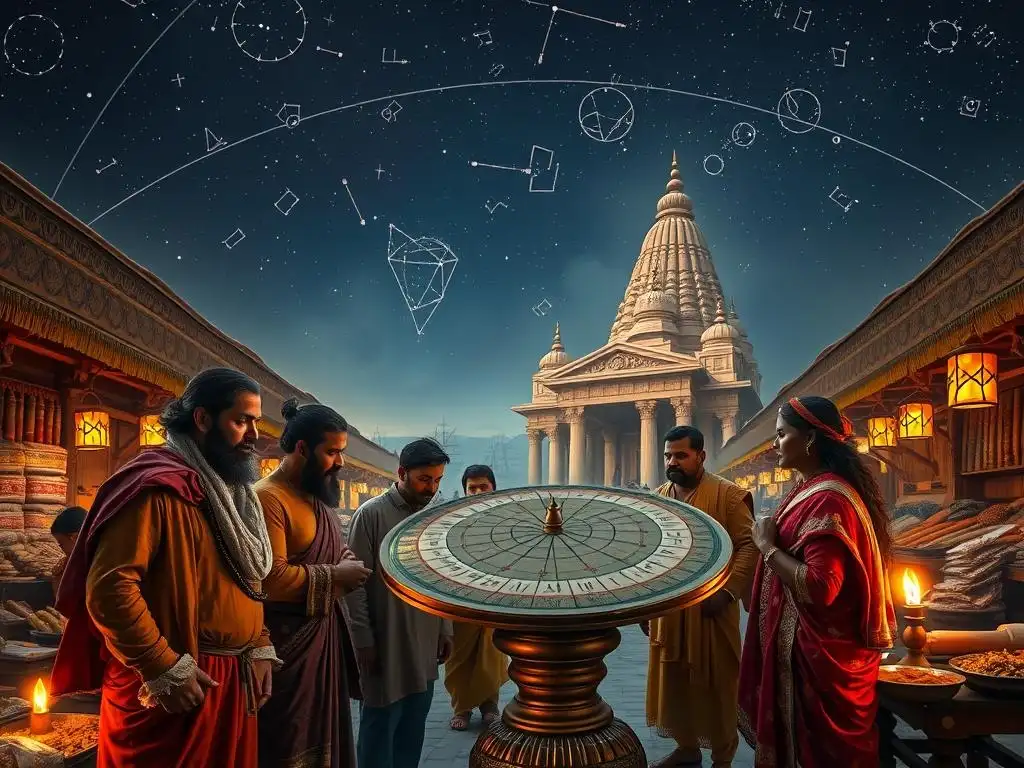
Welcome to Ancient India History, where we embark on a journey through the fascinating tapestry of ancient Indian civilizations. Explore the rich contributions of our ancestors, from the innovative Indus Valley to the enlightening Gupta Empire. In this illuminating article, we delve into the intricate relationship between ancient Indian astronomy and trade, uncovering how celestial knowledge not only guided merchants but also shaped commerce across vast distances.
Prepare to be captivated as we reveal the secrets of the stars that influenced trade routes and economic prosperity in a time long past. Dive in and discover the profound impact of astronomy on ancient Indian trade!
Introduction to Ancient Indian Astronomy and Trade
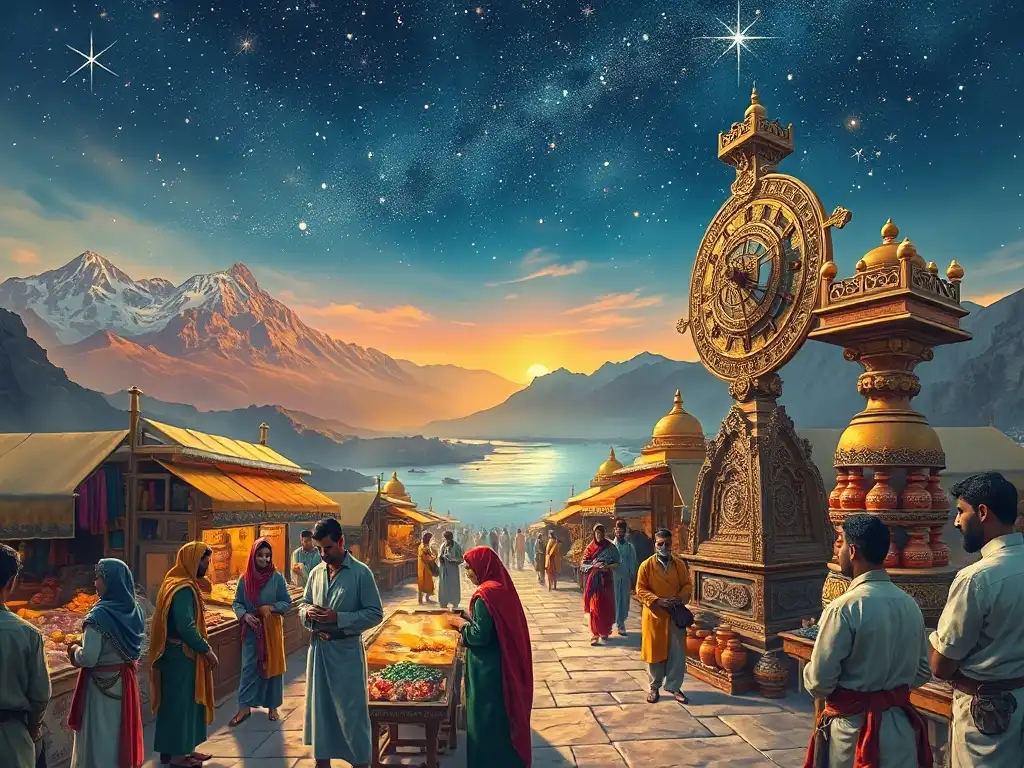
Ancient Indian astronomy played a pivotal role not only in scientific advancement but also in the realm of trade and commerce. As one of the oldest civilizations, India was home to a sophisticated understanding of celestial phenomena, greatly influencing various aspects of daily life, including navigation, agriculture, and economic activities.
The integration of astronomy into trade practices was crucial, as it enabled merchants to determine optimal times for travel, establish trade routes, and enhance maritime navigation. This article delves into the intricate relationship between ancient Indian astronomy and trade, shedding light on how celestial knowledge facilitated commerce across vast distances.
Overview of Ancient Indian Astronomy
Ancient Indian astronomy is characterized by its remarkable precision and comprehensive methodologies. The early scholars, influenced by both indigenous traditions and interactions with other cultures, developed sophisticated astronomical models and techniques. Key contributions include:
- Observational Astronomy: Ancient Indian astronomers meticulously observed celestial bodies, documenting their movements and cycles.
- Mathematical Innovations: The use of advanced mathematical principles, including trigonometry and calculus, enabled accurate calculations of celestial events.
- Calendrical Systems: The development of various calendars, such as the Hindu lunar calendar, played a crucial role in agricultural planning and trade activities.
These contributions established a solid foundation for the integration of astronomy into various sectors, including trade.
Importance of Trade in Ancient Indian Civilization
Trade was a cornerstone of ancient Indian civilization, facilitating not only economic growth but also cultural exchange. The following points highlight the significance of trade during this period:
- Economic Prosperity: Trade routes connected India to various regions, including the Middle East, Southeast Asia, and beyond, leading to the exchange of goods such as spices, textiles, and precious metals.
- Cultural Exchange: Interaction with diverse cultures through trade fostered the exchange of ideas, technology, and traditions, enriching Indian society.
- Urbanization: The growth of trade led to the establishment of thriving cities and trade hubs, which became centers of commerce and cultural activities.
Understanding the importance of trade provides insight into how astronomical knowledge was harnessed to optimize these economic activities.
Connection Between Astronomy and Commerce
The connection between astronomy and commerce in ancient India was multifaceted. Key aspects include:
- Navigation: Astronomical knowledge allowed merchants to navigate the seas effectively, using celestial bodies such as stars for guidance.
- Timing of Trade: Understanding seasonal changes and celestial events enabled traders to determine the best times for travel and trade expeditions.
- Market Planning: Calendrical knowledge helped in planning market days and festivals, ensuring that trade activities aligned with agricultural cycles and religious observances.
This synergy between astronomy and commerce not only facilitated trade but also contributed to the overall advancement of ancient Indian society.
Historical Context of Astronomy in Ancient India
Key Astronomical Texts and Contributions
The history of ancient Indian astronomy is documented in several key texts that illustrate its advancements:
- Aryabhatiya by Aryabhata: This seminal work presents mathematical and astronomical principles, including calculations of planetary movements.
- Surya Siddhanta: An ancient treatise that outlines methods for calculating eclipses and planetary positions, demonstrating the sophistication of Indian astronomical knowledge.
- Brahmasphutasiddhanta by Brahmagupta: This text addressed both astronomy and mathematics, emphasizing the importance of astronomical calculations in various applications.
These texts exemplify the rich intellectual tradition of ancient Indian astronomy and its relevance to trade.
Prominent Astronomers of Ancient India
Several astronomers made significant contributions to the field, shaping the understanding of astronomy in ancient India:
- Aryabhata (476–550 CE): Renowned for his work in mathematics and astronomy, Aryabhata introduced the concept of zero and calculated the circumference of the Earth.
- Varahamihira (505–587 CE): A prominent scholar who contributed to the field of astrology and astronomy, emphasizing their practical applications in daily life.
- Brahmagupta (598–668 CE): Known for his comprehensive works that merged astronomy with mathematics, Brahmagupta's insights greatly influenced navigation and trade practices.
These figures not only advanced astronomical knowledge but also played critical roles in its application to commerce.
The Impact of Astronomy on Navigation and Trade Routes
The impact of astronomy on navigation and trade routes in ancient India was profound. Key points include:
- Sea Navigation: Astronomers developed methods for using the North Star and other celestial bodies to guide maritime navigation, enabling traders to traverse vast oceans.
- Land Routes: Knowledge of celestial movements assisted merchants in determining directions and distances on land, facilitating trade across the Indian subcontinent and beyond.
- Trade Networks: The establishment of trade networks, influenced by astronomical calculations, connected India with various regions, enhancing economic prosperity and cultural exchange.
The interplay between ancient Indian astronomy and trade was instrumental in shaping the economic landscape of the civilization, leaving a lasting legacy that continues to be appreciated today.
The Influence of Astronomy on Trade Practices
Astronomy played a pivotal role in shaping trade practices in ancient India, influencing navigation, timing, and agricultural cycles. The understanding of celestial bodies not only facilitated maritime and overland trade but also helped traders and farmers optimize their operations. Ancient Indian traders were adept at using the stars as reference points, allowing them to traverse vast distances with confidence. This reliance on astronomical knowledge was essential for maintaining the flow of goods and services across the Indian subcontinent and beyond, establishing trade networks that spanned diverse terrains and cultures.
Celestial Navigation and Maritime Trade
Ancient Indian sailors utilized celestial navigation techniques to guide their vessels across the seas. By observing the positions of stars and constellations, such as the North Star (Polaris), and using the sun's path throughout the day, mariners could determine their latitude and longitude. This knowledge was crucial for long-distance maritime trade routes, particularly those connecting India to regions like Southeast Asia and the Arabian Peninsula.
The maritime trade was not limited to merely following the stars; sailors developed intricate maps and records that included the positions of the moon and planets. These celestial charts were essential for planning voyages, ensuring that trade ships could navigate safely and efficiently. The monsoon winds, which were also closely linked to astronomical observations, dictated the timing of voyages, further emphasizing the importance of astronomy in facilitating trade.
Use of Astronomical Events in Trade Planning
Ancient Indian traders often aligned their commercial activities with significant astronomical events such as eclipses, solstices, and equinoxes. These events were viewed as auspicious times for trade, often coinciding with the opening or closing of markets. For instance, traders would plan their expeditions around full moons, as the increased visibility would allow for safer travel during the night.
Moreover, festivals and religious observances tied to astronomical events created peak trading periods. For example, the harvest festivals, which were celebrated after the winter solstice, brought traders and farmers together, fostering a vibrant marketplace where goods could be exchanged. This synchronization of trade with celestial events not only optimized commercial opportunities but also reinforced cultural connections within communities.
Seasonal Changes and Agricultural Trade
Astronomy significantly influenced agricultural practices in ancient India, which in turn impacted trade. The alignment of the sun and moon with seasonal changes determined planting and harvesting times. Farmers would observe celestial patterns to predict monsoon rains, which were crucial for successful crop cultivation.
As agricultural products became ready for harvest, traders could estimate the volume of goods available for sale, allowing for better planning in the marketplace. The knowledge of celestial cycles helped in predicting both the yield and quality of crops, enabling traders to make informed decisions regarding pricing and stock levels. This relationship between astronomy, agriculture, and trade created a robust economy where surplus goods could be exchanged across regions.
Case Studies of Astronomy in Commerce
Case Study 1: The Role of Astronomy in Maritime Trade
One notable example of astronomy's impact on maritime trade is the extensive trade network established between ancient India and Southeast Asia. Indian merchants relied on celestial navigation to travel the Indian Ocean, often using the stars to plot courses to key trading ports like Sumatra and Java. This trade was vital for exchanging spices, textiles, and precious stones, with astronomical knowledge being critical to the success of these journeys, ensuring safe arrivals and profitable exchanges.
Case Study 2: Land Trade Routes and Astronomical Guidance
Land trade routes, such as the Silk Road, also benefited from astronomical insights. Indian traders traversed these routes, utilizing the positions of celestial bodies to guide their journeys through deserts and mountains. Notably, the ancient texts, such as the "Aryabhatiya," documented techniques for determining direction and distance based on observations of the night sky, helping traders navigate vast and challenging terrains.
Case Study 3: Astronomical Events and Market Timing
Astronomical events played a crucial role in determining market timing in ancient India. For instance, merchants would often wait for auspicious moments, such as solar eclipses or lunar festivals, to launch major trading activities. Historical records indicate that significant trade fairs were held during these times, attracting traders from various regions. This strategic use of astronomy not only maximized profits but also fostered a sense of community among traders and buyers, reinforcing the cultural significance of these celestial events in commerce.
The Legacy of Ancient Indian Astronomy in Modern Trade
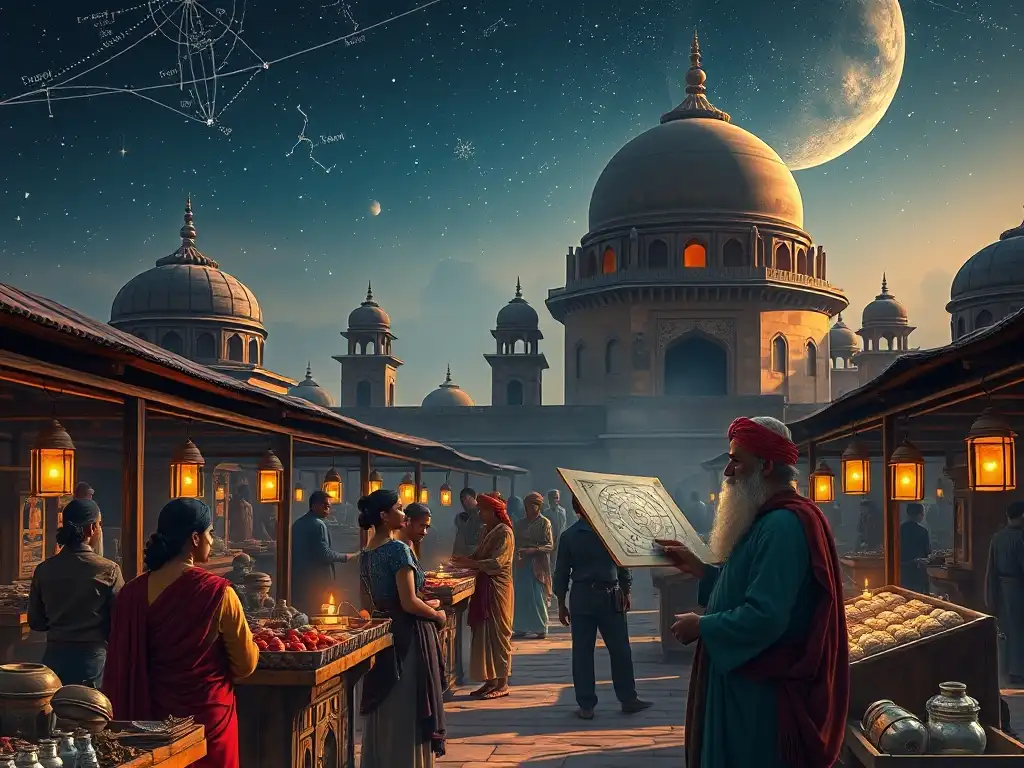
The influence of ancient Indian astronomy on trade and commerce has left an indelible mark that persists in modern practices. Ancient Indian astronomers, such as Aryabhata and Varahamihira, developed sophisticated methods for celestial navigation, which were pivotal for maritime trade routes. Their techniques not only facilitated long-distance trade across the Indian Ocean but also helped in determining optimal trade seasons based on celestial events, such as the monsoon patterns. This legacy of astronomical knowledge continues to inform contemporary navigation practices and agricultural cycles, showcasing the enduring relevance of ancient wisdom in modern commerce.
Continuation of Astronomical Practices in Trade
Even today, certain practices rooted in ancient Indian astronomy endure within the trade sector. For instance, many Indian traders still refer to traditional calendars that are influenced by astronomical observations to plan their activities. These calendars, known as Panchangas, guide various aspects of trade, including auspicious timings for transactions or the launch of new products. Furthermore, the principles of astrology, which are deeply intertwined with astronomical knowledge, continue to play a significant role in decision-making for many business owners, showcasing a unique blend of science and cultural traditions.
Influence on Modern Indian Commerce
The principles derived from ancient Indian astronomy have shaped the operational frameworks of modern Indian commerce. For example, the awareness of seasonal changes and weather patterns, initially informed by celestial observations, has led to the development of industries such as agriculture, textiles, and handicrafts. This alignment with natural rhythms has not only optimized production cycles but has also fostered sustainability in practices. Additionally, the global trade landscape acknowledges the significance of Indian astronomical knowledge, as it has influenced trade negotiations and partnerships with a focus on timing and seasonal strategies.
Comparisons with Other Ancient Civilizations’ Trade Practices
When comparing ancient Indian astronomy with other civilizations, such as the Greeks and the Chinese, notable similarities and differences emerge. Like the Indians, the Greeks utilized celestial navigation for maritime trade, but their focus was more on philosophical interpretations of the cosmos.
In contrast, the Chinese excelled in the practical applications of astronomy for agriculture and calendar systems, which also influenced trade but in a more localized context. The integration of astronomy into trade practices across these cultures underscores the universal importance of celestial knowledge in commerce, while also highlighting the unique contributions of ancient Indian astronomers to the global tapestry of trade practices.
Conclusion
Summary of Key Contributions of Ancient Indian Astronomy to Trade
Ancient Indian astronomy played a crucial role in shaping trade and commerce practices. From facilitating navigation and timing for maritime trade to influencing agricultural cycles and market decisions, the contributions of Indian astronomers were instrumental in establishing trade networks that thrived across vast distances. The methodologies developed during this era continue to resonate within modern practices, underscoring the significance of astronomy in economic exchanges.
Reflection on the Importance of Understanding Historical Context
Understanding the historical context of ancient Indian astronomy enriches our appreciation of its contributions to trade. By examining how celestial observations were integrated into daily commerce, we gain insight into the ingenuity of ancient civilizations. This reflection not only honors their legacy but also emphasizes the importance of preserving such knowledge for future generations, ensuring that the lessons of the past continue to inform contemporary practices.
Future Research Directions in Ancient Indian Astronomy and Trade
Future research should focus on uncovering more specific case studies that illustrate the direct impact of ancient Indian astronomy on trade routes and economic policies. Additionally, interdisciplinary studies that combine history, astronomy, and economics could provide a more comprehensive understanding of how celestial knowledge influenced trade over time. Exploring archaeological findings, historical texts, and cross-cultural interactions will further illuminate the rich narrative of ancient Indian astronomy and its enduring legacy in trade and commerce.
References
Key Texts and Sources on Ancient Indian Astronomy and Trade
The study of ancient Indian astronomy and its interplay with trade practices is well-documented in various historical texts and scholarly sources. Key texts include:
- Surya Siddhanta: This ancient astronomical treatise outlines mathematical and astronomical principles that governed celestial movements. It served as a guide for navigators and traders who relied on celestial navigation during their maritime journeys.
- Aryabhatiya by Aryabhata: Aryabhata's seminal work explores the mathematical concepts of astronomy, including timekeeping and planetary motions, which were essential for traders to plan their voyages and trade expeditions.
- Brahmasphutasiddhanta by Brahmagupta: This text includes discussions on mathematics and astronomy, providing insights into the methods used for calculating time and understanding celestial phenomena that influenced trade cycles.
- Jaina and Buddhist texts: Various Jaina and Buddhist scriptures reference the importance of astronomy in trade, particularly in relation to the timing of festivals and trade fairs that coincided with specific celestial events.
These texts collectively highlight how ancient Indian scholars integrated astronomical knowledge into the practical aspects of trade, demonstrating the sophistication of their understanding of the cosmos and its impact on commerce.
Suggested Further Reading on Trade Practices in Ancient Civilizations
To gain a deeper understanding of the trade practices in ancient civilizations and their connection to astronomy, the following readings are recommended:
- "Trade in Ancient India" by N. S. R. Sastri: This book provides an overview of the trade networks, goods exchanged, and the role of geography and astronomy in facilitating trade in ancient India.
- "The Maritime Silk Road: A History" by Ying-shih Yu: This work examines the maritime trade routes, including those that connected India to other civilizations, and discusses how navigational astronomy played a crucial role in these exchanges.
- "Ancient Indian Trade and Commerce" by R. C. Majumdar: This comprehensive text delves into the commercial practices of ancient India, emphasizing the significance of astronomy in trade logistics and timing.
- "The Role of Astronomy in Ancient Civilizations" by S. S. K. Wadhwa: This book explores how various ancient civilizations, including India, utilized astronomical observations to enhance their trade practices and economic strategies.
These readings will provide valuable insights into the complex relationship between astronomy and trade, highlighting the innovative approaches of ancient Indian civilizations in navigating their economic landscapes.
- Introduction to Ancient Indian Astronomy and Trade
- Historical Context of Astronomy in Ancient India
- The Influence of Astronomy on Trade Practices
- Case Studies of Astronomy in Commerce
- The Legacy of Ancient Indian Astronomy in Modern Trade
- Conclusion
- References
- What was the significance of astronomy in ancient Indian trade?
- How did ancient Indian astronomers contribute to trade practices?
- What were the key astronomical tools used in ancient Indian trade?
- How did the Indus Valley civilization utilize astronomy in trade?
- What is the connection between trade networks and astronomy in ancient India?
Frequently Asked Questions
What was the significance of astronomy in ancient Indian trade?
Astronomy played a crucial role in navigation and timing for traders, allowing them to accurately determine their positions and plan their journeys, which enhanced trade efficiency.
How did ancient Indian astronomers contribute to trade practices?
Ancient Indian astronomers developed calendrical systems and tools that helped traders track seasonal changes, making it easier to predict the best times for sailing and trading.
What were the key astronomical tools used in ancient Indian trade?
Tools such as the astrolabe and sundials were commonly used by traders for navigation and determining the best times for conducting business, significantly impacting trade routes.
How did the Indus Valley civilization utilize astronomy in trade?
The Indus Valley civilization integrated astronomical observations into their urban planning and trade routes, ensuring efficient movement towards marketplaces and harbors.
What is the connection between trade networks and astronomy in ancient India?
The development of trade networks was closely linked to astronomical knowledge, as it allowed for the synchronization of commercial activities across vast distances, enhancing economic growth.
Final Reflection: The Cosmic Ties of Ancient Indian Trade
The intricate relationship between ancient Indian astronomy and trade is not just a historical curiosity; it is a testament to how celestial navigation and astrological knowledge shaped economic exchanges and cultural interactions. In today's world, where global trade is often driven by technology and data, the wisdom of our ancestors reminds us that understanding the universe can guide our paths in commerce and collaboration. The legacy of ancient Indian astronomy serves as a beacon, illuminating the ways in which knowledge can transcend borders and foster connections.
The influence of ancient Indian astronomy on trade and commerce is a profound reminder of how interconnected our societies have always been. As merchants relied on the stars to navigate vast oceans and bustling trade routes, they also exchanged ideas, cultures, and innovations. This exchange laid the groundwork for a rich tapestry of cultural heritage that continues to inspire us today. The stars are not just distant suns; they are the threads that weave our stories together.
This quote encapsulates the essence of how celestial bodies have historically guided human endeavors, including trade.
As we reflect on the lessons of ancient Indian astronomy in trade, let us consider how we can apply these insights to our modern lives. I invite you to explore the connections between knowledge and commerce in your own journey. Whether you are an entrepreneur, a student, or simply a curious mind, think about how understanding the world around you can enhance your endeavors. Embrace the spirit of exploration and collaboration that defined ancient trade routes, and let it inspire you to forge new paths in your own life.
Illuminate Your Understanding of Ancient Trade Practices!
Thank you for exploring the fascinating interplay between astronomy and ancient Indian trade! Your interest in this topic not only enriches your knowledge but also sheds light on how our ancestors navigated both the skies and commerce. Now, let’s take the next step in your journey of discovery and action.
- Visit a local planetarium or observatory to see how ancient principles are still relevant today.
- Share this article with friends to spark a discussion about the influence of astronomy in your own culture and its historical significance.
- Explore books or documentaries on ancient trade routes to broaden your understanding—who knows what surprising connections you might uncover!
What aspect of ancient Indian trade excites you the most? Have you considered how astronomy influences modern commerce? We would love to hear your thoughts!