
Nyaya Philosophy and Its Impact on Scientific Inquiry in Ancient India

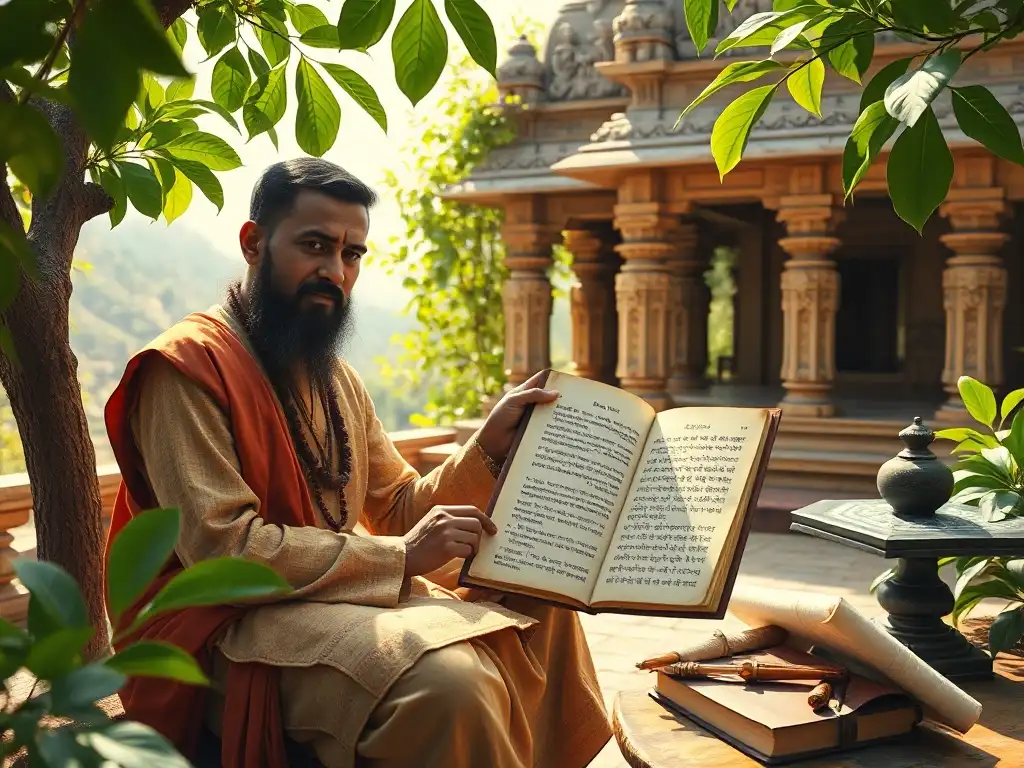
Welcome to Ancient India History, where we embark on a captivating journey through the rich tapestry of India's past. In this exploration, we delve into the profound realm of Nyaya philosophy and scientific inquiry, uncovering how ancient thinkers shaped the foundations of logical reasoning and empirical investigation. Prepare to be intrigued as we reveal the intricate connections between philosophical thought and scientific advancements during a time when curiosity sparked innovation.
Join us as we unfold the remarkable legacy of the Nyaya school and its lasting influence on the quest for knowledge in ancient India. Your adventure into this fascinating topic begins now!
- Introduction to Nyaya Philosophy and Scientific Inquiry
- The Foundations of Nyaya Philosophy
- Nyaya Philosophy and Its Approach to Knowledge
- The Influence of Nyaya Philosophy on Scientific Inquiry
- The Impact of Nyaya Philosophy on Ancient Indian Sciences
- Critiques and Limitations of Nyaya Philosophy in Scientific Inquiry
- Conclusion: The Legacy of Nyaya Philosophy in Modern Scientific Discourse
- References
- Frequently Asked Questions
- Final Reflection: The Enduring Legacy of Nyaya Philosophy in Scientific Inquiry
- Unveil the Depths of Knowledge – Take Action Today!
Introduction to Nyaya Philosophy and Scientific Inquiry
The Nyaya philosophy, one of the six orthodox schools of Indian philosophy, holds a pivotal role in the intellectual tapestry of ancient India. This philosophical system, which primarily focuses on logic and epistemology, laid the groundwork for rigorous scientific inquiry that has influenced various fields of study, including mathematics, astronomy, and metaphysics.
By analyzing the principles of perception, inference, and reasoning, Nyaya philosophy not only contributed to the understanding of knowledge but also fostered a culture of inquiry that sought to unravel the complexities of the natural world. This article aims to delve into the core tenets of Nyaya philosophy and explore its profound impact on the scientific pursuits of ancient Indian civilizations.
Definition of Nyaya Philosophy
Nyaya, derived from the Sanskrit word for "rule" or "method," is fundamentally concerned with the processes of reasoning and the means through which knowledge is acquired. It emphasizes the importance of logical analysis and critical thinking, asserting that valid knowledge can be obtained through four primary sources:
- Pratyaksha (Perception): Direct sensory experience.
- Anumana (Inference): Logical deduction based on observed phenomena.
- Upamana (Comparison): Knowledge derived from analogy.
- Shabda (Testimony): Knowledge acquired through verbal communication and authority.
The Nyaya philosophers argued that a systematic approach to inquiry is essential for distinguishing between true knowledge and false beliefs, thereby establishing a foundation for scientific reasoning.
Historical Context of Nyaya Philosophy in Ancient India
Emerging around the 6th century BCE, Nyaya philosophy was rooted in the rich intellectual traditions of ancient India. It was articulated by the sage Gautama (also known as Akshapada) in his foundational text, the Nyaya Sutras. This period was characterized by vibrant philosophical debates, with Nyaya interacting with other schools of thought such as Samkhya, Yoga, and Buddhism.
The contributions of Nyaya thinkers extended beyond philosophy; they engaged in discussions on topics such as:
- Metaphysics: Understanding the nature of reality and existence.
- Ethics: Defining the principles of right action and moral reasoning.
- Epistemology: Investigating the nature and limits of human knowledge.
This rich dialogue fostered an environment where scientific inquiry could flourish, as scholars sought to apply logical methods to various domains of knowledge.
Importance of Scientific Inquiry in Ancient Indian Thought
Scientific inquiry in ancient India was not merely an abstract concept; it was an integral part of everyday life and intellectual discourse. The Nyaya school emphasized the necessity of a methodical approach to knowledge, which encouraged scholars to pursue questions about the universe, life, and existence through observation and logical reasoning.
Key aspects of scientific inquiry influenced by Nyaya philosophy include:
- Empirical Observations: Encouraging careful observation of natural phenomena.
- Systematic Analysis: Promoting structured methods for testing hypotheses.
- Philosophical Discourse: Engaging in debates to refine understanding and counter misconceptions.
As a result, the contributions of Nyaya philosophy laid the groundwork for advancements in various scientific fields, fostering a legacy of inquiry that would resonate through the ages in Indian thought.
The Foundations of Nyaya Philosophy

Nyaya philosophy, one of the six orthodox schools of Indian philosophy, is primarily concerned with the study of logic and epistemology. Founded by the sage Gautama (also known as Akṣapāda), Nyaya's core aim is to provide a systematic approach to understanding knowledge, which is crucial for scientific inquiry. This school emphasizes the significance of valid reasoning and argumentation, establishing a foundation for critical thinking that has influenced various domains, including science.
The philosophical framework of Nyaya is based on several key elements:
- Pramāṇas (Means of Knowledge): Nyaya identifies four primary means of acquiring knowledge—perception (pratyakṣa), inference (anumāna), comparison (upamāna), and testimony (śabda). Each of these pramāṇas plays a vital role in validating knowledge claims and forming the basis of scientific inquiry.
- Nyāya Sūtras: The foundational text of Nyaya philosophy, the Nyāya Sūtras, outlines the principles of logic and reasoning. It serves as a guide for disputation and argumentation, emphasizing clarity and precision in thought.
- The Method of Debate: Nyaya introduces a formal method of debate (vāda) that is crucial for the scientific method. This involves presenting arguments, counterarguments, and rebuttals, fostering an environment of critical evaluation.
These foundations not only established a robust philosophical system but also provided tools that significantly impacted the scientific endeavors of ancient India.
Key Principles of Nyaya Logic
Nyaya logic (Nyaya Tarka) is characterized by its structured approach to reasoning. The key principles include:
- Pratyakṣa (Perception): Nyaya asserts that direct experience is the most fundamental means of knowledge. Perception is divided into two categories:
- Ordinary Perception: Gained through the five senses.
- Extraordinary Perception: Involves intuitive insights and non-sensory experiences.
- Anumāna (Inference): This principle involves deriving conclusions based on premises. Anumāna is further categorized into:
- General Inference: Drawing generalized conclusions from specific instances.
- Specific Inference: Formulating specific conclusions based on general premises.
- Upamāna (Comparison): This principle allows for knowledge acquisition through analogy. By comparing a known entity to an unknown one, an understanding of the latter can be achieved.
- Śabda (Testimony): The authority of texts and trusted sources is emphasized in Nyaya. Knowledge derived from credible witnesses is considered valid, which is particularly relevant in the context of ancient scriptures and teachings.
These principles not only facilitate logical reasoning but also ensure that scientific inquiry remains grounded in systematic thought and empirical validation.
The Role of Perception and Inference in Scientific Methodology
In the context of scientific inquiry, perception and inference serve as the cornerstones of knowledge acquisition in Nyaya philosophy.
- Perception as the Starting Point: Empirical observation is essential in the scientific method. Nyaya posits that valid knowledge begins with pratyakṣa, where scientists gather data through careful observation of phenomena.
- Inference as a Logical Framework: Following initial observations, scientists utilize anumāna to form hypotheses and predictions. This logical reasoning allows one to move from specific observations to broader generalizations. For instance, if a scientist observes that a specific chemical reaction produces heat, they can infer that heat is generally produced in similar reactions.
- Critical Evaluation: The interplay between perception and inference fosters a culture of critical analysis. Nyaya promotes rigorous scrutiny of premises and conclusions, ensuring that scientific claims are not only based on observations but also logically sound.
Through this structured approach, Nyaya philosophy significantly contributes to the development of scientific methodologies, encouraging a culture of inquiry that values evidence and rationality.
Nyaya's Contributions to Epistemology
Nyaya philosophy has made significant contributions to the field of epistemology, particularly in understanding the nature and scope of knowledge. Key contributions include:
- Defining Knowledge: Nyaya distinguishes between valid knowledge (pramā) and invalid knowledge (apramā). This distinction is crucial in evaluating the credibility of various claims, reinforcing the necessity of logical reasoning in scientific inquiry.
- The Theory of Error: Nyaya systematically analyzes the nature of error (bhrānti). Understanding how misinterpretations occur allows scientists to refine their methodologies and avoid pitfalls in reasoning.
- Interconnectedness with Other Schools: Nyaya philosophy engages with other philosophical systems, such as Mimamsa and Vedanta, broadening the discourse on knowledge and reality. This dialogue enriches the epistemological landscape, fostering diverse perspectives and approaches.
- Application to Modern Contexts: The principles of Nyaya continue to resonate in contemporary discussions on logic and scientific methodology. Its emphasis on rational inquiry and empirical validation remains relevant in today’s scientific debates.
Nyaya philosophy not only laid the groundwork for logical reasoning and epistemology in ancient India but also continues to influence modern scientific inquiry, highlighting the timeless relevance of its principles.
Nyaya Philosophy and Its Approach to Knowledge

Nyaya philosophy, one of the six orthodox schools of Indian philosophy, emphasizes the importance of logic and reasoning in the pursuit of knowledge. This system, founded by the sage Gautama (also known as Gotama or Akṣapāda), focuses on epistemology, the study of knowledge, its nature, and how it can be acquired. Nyaya philosophy uniquely combines metaphysical and epistemological inquiries, making it a pivotal framework for understanding the principles underlying scientific inquiry in ancient India.
The Nyaya school asserts that knowledge is essential for liberation (moksha) and that it can be systematically categorized and examined. According to Nyaya, knowledge is not merely subjective but must be grounded in objective reality. This perspective laid the foundation for rigorous methodologies that sought to differentiate between truth and fallacy, which is intrinsic to both philosophical discourse and scientific investigation.
The Nature of Knowledge According to Nyaya
In Nyaya philosophy, knowledge is understood as a perception of reality that can be validated through logical reasoning. The Nyaya theorists categorized knowledge into two fundamental types: pratyakṣa (perception) and anumana (inference).
- Pratyakṣa refers to knowledge acquired through direct sensory experience. For instance, seeing a tree provides direct knowledge of its existence.
- Anumana, on the other hand, allows for indirect knowledge through logical inference. For example, if one sees smoke, one can infer the presence of fire, even if the fire itself is not visible.
Nyaya also identifies upamana (comparison) and shabda (testimony) as valid forms of knowledge, which further enrich the understanding of epistemology. These categories illustrate that knowledge is not static but dynamic, capable of evolving through various interactions with the world.
Types of Valid Knowledge: Pramaṇas in Nyaya
Nyaya philosophy identifies four main pramaṇas (means of valid knowledge), each contributing to the broader understanding of knowledge acquisition:
- Pratyakṣa (Perception): As noted, this is knowledge gained through sensory experience. It is regarded as the most immediate and reliable form of knowledge.
- Anumana (Inference): This involves drawing conclusions based on premises that lead to a logical result. An example includes deducing the existence of a particular object based on observable effects.
- Upamana (Comparison): This type of knowledge arises when one recognizes similarities between known and unknown entities. For example, learning about a new animal by comparing it to a familiar one.
- Shabda (Testimony): This refers to knowledge obtained through authoritative sources or scriptures. In the context of ancient India, texts such as the Vedas were regarded as credible sources of knowledge.
The classification of these pramaṇas illustrates Nyaya’s systematic approach to knowledge, emphasizing the need for a robust methodology in discerning truth, which parallels the scientific method in modern inquiry.
Comparison of Nyaya Philosophy with Other Indian Philosophies
When comparing Nyaya philosophy with other Indian philosophical traditions, such as Vedanta and Buddhism, notable distinctions arise in their approaches to knowledge and existence.
- Vedanta emphasizes the ultimate reality (Brahman) and focuses on spiritual knowledge, often advocating for the idea of non-duality and mystical experience over logical reasoning.
- In contrast, Buddhism challenges the notion of a permanent self and emphasizes experiential knowledge gained through meditation and moral practice. While it values direct experience, it does not rely on the same systematic categorization of knowledge as Nyaya.
Nyaya's rigorous logical framework stands out as an essential precursor to scientific inquiry in ancient India. Its methodologies not only contributed to philosophical discourse but also influenced fields such as mathematics and astronomy, where logical reasoning and observational evidence are paramount.
By establishing a foundation for analyzing and validating knowledge, Nyaya philosophy has left a lasting legacy on both philosophical thought and the scientific endeavors that followed in ancient India, demonstrating the interconnectedness of philosophical inquiry and scientific exploration.
The Influence of Nyaya Philosophy on Scientific Inquiry

Nyaya's Methodological Contributions to Science
Nyaya philosophy, one of the six orthodox schools of Indian philosophy, is primarily concerned with logic, epistemology, and the nature of knowledge. Its methodological contributions to scientific inquiry are profound and multifaceted. The Nyaya Sutras, authored by Gautama (or Gotama), emphasize the importance of rigorous reasoning and systematic analysis.
- Pramana (Means of Knowledge): Nyaya identifies four valid means of acquiring knowledge: perception (pratyakṣa), inference (anumāna), comparison (upamana), and testimony (śabda). This classification encourages a structured approach to inquiry, where assertions must be backed by sound reasoning.
- Epistemic Foundations: The Nyaya school posits that true knowledge must be both justified and reliable. This emphasis on the justification of beliefs fosters a critical mindset essential for scientific inquiry, urging scholars to seek evidence before forming conclusions.
- Critical Analysis: Nyaya philosophy advocates for the examination of counterarguments, promoting a culture of skepticism and critical thinking. This analytical approach is vital in scientific methodology, where hypotheses must withstand rigorous testing and scrutiny.
By laying these foundational principles, Nyaya philosophy has significantly influenced the development of scientific methods in ancient India, encouraging a systematic and evidence-based approach to knowledge.
The Intersection of Logic and Empirical Observation
The interplay between logic and empirical observation is a hallmark of Nyaya philosophy, which underscores the importance of both theoretical reasoning and practical evidence in the pursuit of knowledge.
- Deductive Reasoning: Nyaya employs deductive reasoning to derive conclusions from general premises. This logical framework allows for the formulation of hypotheses that can be empirically tested. For example, Nyaya logicians might argue that if all substances have a cause, then a specific substance must also have one.
- Empirical Validation: While logic provides a necessary foundation, Nyaya also stresses the importance of empirical validation. Knowledge is only deemed true if it can be corroborated through direct observation or experience. This dual emphasis ensures that scientific claims are not only logically sound but also grounded in reality.
- Syllogism in Scientific Inquiry: The use of syllogistic reasoning in Nyaya is analogous to the scientific method, where a hypothesis is tested against empirical data. The structure of Nyaya syllogism (pakṣa, hetu, and udāharaṇa) parallels the formulation, testing, and validation of scientific theories.
The integration of logical reasoning with empirical observation in Nyaya philosophy has played a pivotal role in shaping the methodologies of scientific inquiry in ancient India, fostering a holistic approach to understanding the natural world.
Case Studies: Scientific Advancements Inspired by Nyaya Philosophy
Nyaya philosophy did not merely influence theoretical discourse; it also spurred tangible scientific advancements in ancient India. Here are notable case studies that illustrate this impact:
- Astronomy:
- Aryabhata: The renowned astronomer Aryabhata, influenced by Nyaya's empirical approach, developed theories on the rotation of the Earth and the calculation of eclipses. His insistence on observational evidence reflects the Nyaya principle that knowledge must be validated through experience.
- Medicine:
- Sushruta Samhita: The ancient text on surgery and medicine, attributed to Sushruta, incorporates Nyaya principles in its systematic classification of ailments and surgical procedures. The emphasis on observation and logical categorization mirrors the Nyaya method of inquiry.
- Mathematics:
- Brahmagupta: The mathematician Brahmagupta utilized logical reasoning to develop rules for arithmetic and geometry. His methods of solving quadratic equations demonstrate the application of Nyaya's logical frameworks in mathematical inquiry.
These case studies exemplify how Nyaya philosophy served as a catalyst for scientific advancements in ancient India, highlighting its enduring legacy in fostering a culture of inquiry that values both logic and empirical evidence.
The Impact of Nyaya Philosophy on Ancient Indian Sciences

Contributions to Mathematics and Astronomy
Nyaya philosophy significantly influenced the development of mathematics and astronomy in ancient India. The Nyaya school's emphasis on logic and reasoning provided a robust framework for scholars to analyze and interpret mathematical concepts and astronomical phenomena. One of the key contributions was the formulation of logical proofs, which allowed mathematicians to establish theorems systematically.
For instance, the famed mathematician Aryabhata (476–550 CE), who is often regarded as the father of Indian mathematics and astronomy, incorporated Nyaya principles in his works. His seminal text, the Aryabhatiya, reflects the rigorous application of logical reasoning, particularly in his calculations of the Earth's circumference and the positions of celestial bodies. This application of Nyaya philosophy enhanced the accuracy of astronomical measurements, enabling a deeper understanding of planetary movements, eclipses, and calendars.
Moreover, the concept of zero as a numeral was further refined through Nyaya logic, which facilitated complex calculations. The dialogues between mathematicians and philosophers fostered an environment ripe for innovation in arithmetic and geometry, leading to significant advancements that laid the groundwork for modern mathematics.
Influence on Medicine and Health Sciences
The impact of Nyaya philosophy extended to the fields of medicine and health sciences, particularly through the Ayurveda system, which emphasizes systematic observation and logical reasoning. The Nyaya school's principles of inference and epistemology were instrumental in developing comprehensive medical texts that relied on empirical evidence and deductive reasoning.
Charaka, one of the principal figures in ancient Indian medicine, utilized Nyaya logic in his work, the Charaka Samhita. This text illustrates the importance of observation and reasoning in diagnosing diseases and prescribing treatments. The emphasis on understanding cause and effect, a hallmark of Nyaya philosophy, allowed practitioners to establish correlations between symptoms and ailments, leading to more effective medical practices.
Additionally, the integration of Nyaya reasoning into Ayurvedic texts facilitated a structured approach to health sciences, encouraging practitioners to engage in rigorous debate and clarification of concepts. This scientific inquiry not only advanced medical knowledge but also established a tradition of critical thinking in healthcare that persists in various forms today.
Nyaya Philosophy in the Development of Linguistics
Nyaya philosophy also played a crucial role in the evolution of linguistics in ancient India. The rigorous analysis of language and its components was significantly influenced by Nyaya's focus on logic and semantics. Scholars from the Nyaya school engaged in detailed discussions about the nature of language, meaning, and communication, which contributed to the development of linguistic theories.
The Nyaya approach to linguistics emphasized the importance of pramanas (means of knowledge), particularly in understanding how language conveys meaning. This inquiry led to the exploration of grammar and syntax, with notable figures like Panini (c. 520–460 BCE) developing comprehensive grammatical frameworks that incorporated Nyaya principles. Panini's Ashtadhyayi exemplifies the systematic analysis of language, showcasing how logical reasoning can be applied to understand and structure linguistic elements.
Furthermore, the dialogues between Nyaya philosophers and grammarians fostered an interdisciplinary approach that enriched both fields. The scrutiny of language not only enhanced communication but also encouraged the philosophical contemplation of meaning and interpretation, paving the way for future developments in linguistic theory and philosophy.
Overall, the influence of Nyaya philosophy on scientific inquiry in ancient India is profound, demonstrating its role in shaping mathematics, medicine, and linguistics. By fostering a culture of logical reasoning and empirical investigation, Nyaya philosophy laid the foundation for a scientific tradition that continues to resonate in contemporary thought.
Critiques and Limitations of Nyaya Philosophy in Scientific Inquiry

Challenges Faced by Nyaya Philosophers
Nyaya philosophy, one of the six orthodox schools of Hindu philosophy, laid a significant foundation for logical reasoning and epistemology in ancient India. However, it faced several challenges that limited its influence on scientific inquiry during its development.
-
Epistemological Constraints:
Nyaya philosophers primarily focused on pramanas (means of knowledge), emphasizing perception and inference as the primary avenues for acquiring knowledge. However, the rigid adherence to these sources often led to limitations in exploring more abstract concepts or phenomena that could not be directly perceived. This epistemological constraint restricted the scope of scientific inquiry, particularly in fields such as mathematics and theoretical physics.
-
Internal Disputes:
The Nyaya school was not monolithic; it experienced various internal debates and disagreements among its scholars. Prominent figures like Gautama (the founder) and later thinkers like Uddyotakara and Vatsyayana contributed to a rich dialogue, but these debates sometimes led to fragmentation rather than a unified approach to scientific thought. The lack of consensus hindered cohesive advancement in scientific methodologies.
-
Cultural and Religious Influences:
The prevailing cultural and religious milieu of ancient India often intermingled with philosophical discourse. Nyaya philosophers sometimes prioritized doctrinal correctness over empirical evidence, which could skew scientific reasoning. This intertwining of philosophy with religious dogma often complicated the objective analysis that is crucial for scientific inquiry.
Comparisons with Western Scientific Thought
When comparing Nyaya philosophy with Western scientific thought, several key differences emerge that illustrate the unique context in which each developed.
| Aspect | Nyaya Philosophy | Western Scientific Thought |
|---|---|---|
| Foundation of Knowledge | Primarily based on perception and inference | Empirical observation and experimentation |
| Methodology | Logical reasoning and dialectical analysis | Hypothesis testing and the scientific method |
| Scope of Inquiry | Limited to ontological and epistemological issues | Broad, including physical, biological, and social sciences |
| Adaptability | More rigid, adhering to traditional texts | Flexible, allowing for new theories and models |
The reliance on direct experience and logical inference in Nyaya contrasts sharply with the Western tradition's emphasis on experimentation and empirical validation. While Nyaya contributed significantly to logical reasoning, it did not fully embrace the iterative and experimental nature of modern scientific inquiry. This divergence can be attributed to the different socio-cultural contexts in which these philosophies arose.
The Evolution of Nyaya Philosophy and Its Adaptations
Despite its challenges, Nyaya philosophy has shown a remarkable capacity for evolution and adaptation over the centuries.
-
Integration with Other Philosophical Traditions:
Nyaya philosophers engaged with other schools of thought, such as Vaisheshika, which focused on atomic theory and categorization of reality. The dialogue between these schools allowed for a more nuanced understanding of reality and contributed to advancements in logical analysis and scientific inquiry.
-
Influence on Later Thinkers:
The rigorous methods of Nyaya philosophy influenced later Indian scholars, including those in the Medieval period and during the Renaissance in India. Figures like Madhusudana Saraswati incorporated Nyaya principles into their works, bridging traditional philosophy with emerging scientific ideas.
-
Modern Contextualization:
In contemporary discussions, Nyaya philosophy is being revisited and reinterpreted in light of modern scientific paradigms. Scholars are exploring how Nyaya's logical frameworks can complement contemporary scientific methodologies, particularly in fields such as cognitive science and artificial intelligence.
The ability of Nyaya philosophy to adapt to new contexts and integrate with different philosophical traditions showcases its enduring relevance in the ongoing dialogue about the nature of knowledge and inquiry. By acknowledging its limitations and evolving in response to critique, Nyaya philosophy continues to contribute to the understanding of scientific inquiry in ancient India and beyond.
Conclusion: The Legacy of Nyaya Philosophy in Modern Scientific Discourse

The Nyaya philosophy, one of the six orthodox schools of Indian philosophy, has left an indelible mark on the landscape of modern scientific inquiry. Rooted in the principles of logic and epistemology, Nyaya emphasizes the importance of reasoning and evidence, which resonates strongly with contemporary scientific methodologies. As such, the legacy of Nyaya philosophy extends beyond ancient texts and traditions, influencing how we understand and approach knowledge today.
Central to Nyaya is the concept of pramana, or valid means of knowledge, which includes perception, inference, comparison, and testimony. This framework has shaped critical thinking and logical reasoning in various fields, including philosophy, mathematics, and the sciences. The rigorous analytical methods pioneered by Nyaya philosophers have laid the groundwork for systematic inquiry, promoting a culture of questioning and verification that is vital in modern scientific discourse.
Furthermore, the intersection of Nyaya philosophy with other disciplines, such as ethics and metaphysics, provides a holistic approach to understanding complex phenomena. By advocating for a comprehensive examination of evidence and logical consistency, Nyaya philosophy has fostered a conducive environment for interdisciplinary research—an essential aspect of contemporary scientific exploration.
Lasting Impact on Contemporary Philosophy and Science
The lasting impact of Nyaya philosophy on contemporary philosophy and science can be observed in several key areas:
- Logical Framework: Nyaya's emphasis on logical reasoning has been foundational in developing formal logic and critical thinking skills in modern education systems.
- Scientific Methodology: The insistence on evidence and inference in Nyaya philosophy parallels the scientific method, which relies on observation, hypothesis formation, experimentation, and conclusion. This alignment illustrates the timeless relevance of Nyaya in the realm of empirical inquiry.
- Interdisciplinary Approach: Nyaya philosophy encourages synthesizing knowledge from various domains, promoting collaborative research efforts that are increasingly essential in tackling complex global issues, such as climate change and public health.
- Ethical Considerations: Nyaya's integration of ethical inquiry with epistemology enhances discussions about the moral implications of scientific advancements, ensuring that advancements in science are aligned with societal values.
The principles of Nyaya philosophy continue to shape not only philosophical discourse but also the methodologies and ethical considerations in modern science. Its enduring legacy serves as a reminder of the rich intellectual tradition of ancient India and its relevance in contemporary contexts.
Recommendations for Further Reading on Nyaya and Scientific Inquiry
For those interested in delving deeper into the relationship between Nyaya philosophy and scientific inquiry, the following resources are highly recommended:
- "Nyaya: The Science of Logic": - This work provides a comprehensive overview of Nyaya principles and their implications for logical reasoning and scientific discourse.
- "The Nyaya Sutras: An Introduction": - A detailed exploration of the foundational texts of Nyaya philosophy, offering insights into its methods of inquiry and epistemological frameworks.
- "Indian Philosophy: A Very Short Introduction": by Sue Hamilton - This accessible guide includes a section on Nyaya philosophy and its impact on various fields, including science.
- "Logic and Epistemology in Indian Philosophy" - This collection of essays examines the contributions of Nyaya and other Indian philosophical schools to logical reasoning and knowledge acquisition.
- "Philosophy and Science in the Indian Tradition" - A critical analysis of how ancient Indian philosophies, including Nyaya, have influenced modern scientific thought and practice.
By engaging with these resources, readers can gain a deeper understanding of how Nyaya philosophy continues to inform and enrich scientific inquiry today.
References
Annotated Bibliography of Key Texts on Nyaya Philosophy
-
Nyaya Sutras by Gautama
This foundational text of Nyaya philosophy is attributed to the sage Gautama and outlines the principles of logic, epistemology, and metaphysics in ancient Indian thought. The Nyaya Sutras serve as a critical reference for understanding the methods of reasoning and argumentation that characterize Nyaya philosophy.
- Key Concepts: Prama (valid knowledge), Pramana (means of obtaining knowledge), and the importance of debate (tarka).
-
Bhasya on Nyaya Sutras by Vatsyayana
Vatsyayana’s commentary on the Nyaya Sutras provides an in-depth interpretation of Gautama's work, elaborating on the logical constructs and epistemological theories. This text is essential for scholars studying the evolution of Nyaya thought and its application in various domains, including science.
- Key Concepts: Clarification of epistemic categories, refinement of logical arguments, and the role of perception and inference.
-
Nyaya Philosophy and its Modern Relevance by Daya Krishna
This contemporary analysis discusses the relevance of Nyaya philosophy in modern scientific discourse. Daya Krishna examines how ancient Indian logic and reasoning can contribute to current philosophical debates, particularly in the realm of scientific inquiry.
- Key Concepts: Bridging ancient and modern thought, the continuity of logical principles, and the application of Nyaya in contemporary epistemology.
-
The Nyaya School of Logic by K. P. Jaiswal
Jaiswal’s work provides a comprehensive overview of the Nyaya school, detailing its historical context, key philosophers, and contributions to logic and reasoning. This book is invaluable for understanding the broader implications of Nyaya philosophy in the development of scientific inquiry in ancient India.
- Key Concepts: Interconnections with other philosophical schools, historical development of logic, and influence on scientific methodology.
Suggested Academic Articles on the Impact of Nyaya Philosophy on Science
-
"The Role of Nyaya in the Development of Scientific Methodology in Ancient India"
This article explores how the principles of Nyaya philosophy influenced the methods of inquiry and experimentation in ancient Indian sciences. By examining specific case studies, the author illustrates the practical applications of Nyaya logical frameworks in fields such as medicine, astronomy, and mathematics.
-
"Epistemology and Science: Analyzing Nyaya’s Contribution to the Scientific Revolution"
This research paper discusses the epistemological underpinnings of Nyaya philosophy and how they facilitated scientific advancements in ancient India. The author argues that the emphasis on valid reasoning and empirical evidence in Nyaya directly contributed to the evolution of scientific thought during the Gupta Empire.
-
"Nyaya and the Art of Reasoning: Implications for Scientific Inquiry"
Focusing on the logical constructs of Nyaya philosophy, this article investigates how its methodologies shaped scientific inquiry in ancient Indian traditions. It highlights the relevance of dialectical reasoning in developing hypotheses and testing them against empirical data.
-
"From Nyaya to Modern Science: The Logical Continuity of Indian Thought"
This academic piece traces the lineage of logical reasoning from the Nyaya school to contemporary scientific practices. It emphasizes the enduring influence of Nyaya principles on both philosophical discourse and scientific methodologies throughout history.
Frequently Asked Questions
What is Nyaya philosophy?
Nyaya philosophy is a school of thought in ancient Indian philosophy that emphasizes logic and reasoning as a means to gain knowledge and truth.
How did Nyaya philosophy influence scientific inquiry?
Nyaya philosophy laid the groundwork for scientific inquiry by advocating for rigorous logical processes and critical thinking, which are essential in formulating hypotheses and testing theories.
What are some key contributions of Nyaya philosophers?
Nyaya philosophers contributed significantly to the fields of logic, epistemology, and debate techniques, helping to enhance the overall understanding of knowledge and perception in ancient India.
How does Nyaya philosophy compare to Western philosophical traditions?
While both Nyaya philosophy and Western traditions value logic and reasoning, Nyaya also integrates elements of metaphysics and ethics, thus providing a more holistic approach to understanding reality.
Is Nyaya philosophy still relevant today?
Yes, Nyaya philosophy remains relevant as it provides valuable insights into critical thinking, debate, and scientific reasoning, which are essential skills in contemporary academic and professional settings.
Final Reflection: The Enduring Legacy of Nyaya Philosophy in Scientific Inquiry
In exploring the intricate relationship between Nyaya philosophy and scientific inquiry, we uncover a profound legacy that continues to resonate in contemporary discourse. The principles of Nyaya, with their emphasis on logic, reasoning, and empirical validation, laid the groundwork for a systematic approach to knowledge that is as relevant today as it was in ancient India. The assertion that "knowledge is not merely a collection of facts, but a structured understanding of the world" encapsulates the essence of Nyaya’s contribution to scientific thought.
The impact of Nyaya philosophy extends beyond its historical context, influencing the cultural and intellectual landscape of modern society. This philosophical framework has inspired generations of thinkers, fostering a culture of inquiry and critical analysis. The enduring relevance of Nyaya is evident in the way it encourages us to question assumptions and seek evidence in our pursuit of truth. As the philosopher Jayanta Bhatta articulated, The path of inquiry is illuminated by the light of reason, guiding us through the shadows of ignorance.
This perspective remains a guiding principle in our quest for knowledge, urging us to embrace inquiry as a vital part of our intellectual journey.
As we reflect on the teachings of Nyaya philosophy, I invite you to consider how these ancient insights can inform your own approach to learning and discovery. Engage with the world around you through critical thinking and reasoned analysis, just as the Nyaya philosophers did. Let their legacy inspire you to cultivate a mindset that values inquiry, fosters curiosity, and seeks to understand the complexities of existence. In doing so, we not only honor the past but also pave the way for a future enriched by the wisdom of ancient thought.
Unveil the Depths of Knowledge – Take Action Today!
Thank you for diving deep into the fascinating world of Nyaya philosophy and its transformative impact on scientific inquiry in ancient India! Your curiosity not only enriches your understanding but also honors the wisdom of our ancestors. Now, let's turn this newfound knowledge into action!
- Explore further: Delve into more writings on Nyaya philosophy and its relevance in modern science. Visit our website for additional resources that will broaden your understanding!
- Engage with others: Share your insights with friends or in online forums. Initiate a conversation about how ancient philosophies shape today’s methodologies!
- Uncover connections: Seek out parallels between Nyaya principles and contemporary scientific practices in your own life or work.
Which aspect of Nyaya philosophy captivates you the most, and how do you believe it could influence modern scientific thought?