
The Role of Nyaya in Shaping Ethical Thought in Ancient India


Welcome to Ancient India History, where we embark on a captivating journey through the rich tapestry of India’s past. Here, we delve deep into the diverse cultures and pivotal contributions of ancient civilizations, from the sophisticated cities of the Indus Valley to the intellectual flourishing during the Gupta Empire. Today, we invite you to explore a fascinating aspect of this legacy: Nyaya philosophy.
Discover how this profound school of thought not only shaped ethical discourse in ancient India but also continues to influence modern philosophical frameworks. Get ready to unlock the secrets of Nyaya and its enduring impact on the moral landscape of Indian society!
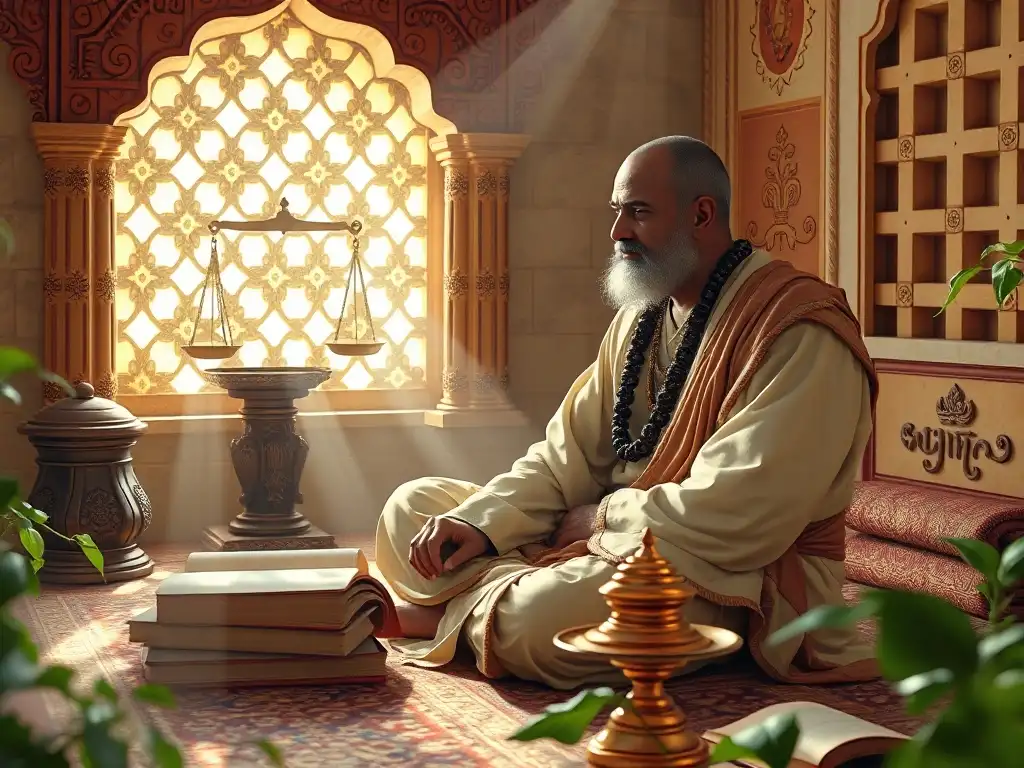
Introduction to Nyaya Philosophy in Ancient India
Nyaya philosophy, often referred to as the logic school of ancient Indian thought, holds a significant place in the rich tapestry of Indian philosophy. Emerging around the 6th century BCE, Nyaya provides a systematic framework for analyzing arguments, establishing truths, and constructing ethical principles. This philosophical school emphasizes the importance of reasoning and logic, making it a cornerstone for subsequent philosophical discussions. The term "Nyaya" itself translates to "justice" or "rule," reflecting its foundational role in ethical discourse.
The relevance of Nyaya extends beyond mere logic; it intricately weaves into the broader fabric of ethical thought in ancient India. Through its analytical approach, Nyaya has influenced various schools of thought, including Vaisheshika, Mimamsa, and Advaita Vedanta, by providing tools for critical analysis and debate. As a result, the study of Nyaya philosophy is essential for understanding how ethical frameworks developed in ancient Indian civilization, shaping moral and ethical practices that resonate even today.
Historical Context of Nyaya Philosophy
Origin and Development of Nyaya School
The origins of the Nyaya school can be traced back to the foundational text known as the Nyaya Sutras, composed by Gautama Nyaya around the 2nd century BCE. This text serves as a comprehensive guide on logic and epistemology, outlining the principles of reasoning, inference, and debate. The Nyaya Sutras not only laid the groundwork for Nyaya philosophy but also established a methodology for discerning truth through rigorous analysis.
Over the centuries, the Nyaya school evolved significantly. Key figures like Vatsyayana, who commented on the Nyaya Sutras, and Uddyotakara, who further developed Nyaya thought, played crucial roles in refining its doctrines. The school expanded its scope to address various philosophical inquiries, including metaphysics, epistemology, and ethics, thereby becoming a central pillar of classical Indian philosophy.
Key Figures in Nyaya Philosophy
Several prominent philosophers have contributed to the evolution of Nyaya philosophy, each adding depth and insight to its core principles.
- Gautama Nyaya: The founder of the Nyaya school, Gautama introduced the foundational texts that established the principles of logic and reasoning.
- Vatsyayana: A significant commentator on the Nyaya Sutras, Vatsyayana's works bridged the gap between ancient texts and contemporary thought, enhancing the understanding of Nyaya principles.
- Uddyotakara: Known for his analytical approach, Uddyotakara expanded Nyaya's reach into various philosophical debates, influencing other schools of thought.
Through the contributions of these key figures, Nyaya philosophy not only flourished but also became an essential component of ethical discussions, highlighting the interplay between logic and morality in ancient Indian civilization.
Core Principles of Nyaya Philosophy
Nyaya philosophy, one of the six orthodox schools of Indian philosophy, primarily focuses on the principles of logic, epistemology, and ethics. Central to Nyaya is the concept of "Nyaya," which translates to "justice" or "right." The system emphasizes the process of logical reasoning to arrive at truth and understanding. The core principles of Nyaya philosophy include:
- Pramana (Means of Knowledge): Nyaya identifies four valid means of obtaining knowledge: perception (pratyakṣa), inference (anumāna), comparison (upamāna), and testimony (śabda). These pramanas form the foundation of ethical reasoning, as they guide individuals in discerning right from wrong.
- Tarka (Logical Reasoning): Nyaya employs rigorous logical analysis to evaluate arguments and beliefs. This method of tarka is essential for ethical decision-making, as it allows individuals to systematically approach moral dilemmas.
- Apavada (Exceptions): The philosophy acknowledges that general rules may have exceptions. This principle is crucial in ethical discussions, as it promotes flexibility and adaptability in moral judgments.
- Siddhanta (Conclusions): Nyaya aims to reach well-founded conclusions that uphold justice and truth. The pursuit of siddhanta is a guiding principle that encourages ethical practitioners to seek the most just outcomes in their decisions.
The Concept of Justice (Nyaya)
In Nyaya philosophy, justice is not merely a legal concept but a fundamental part of moral and ethical considerations. The term "Nyaya," which means justice, encompasses fairness, equity, and the moral rectitude in human actions. It posits that ethical behavior arises from understanding and applying justice in everyday life.
Nyaya emphasizes that justice should be understood through logical reasoning, ensuring that decisions are not arbitrary but based on evidence and rational thought. This perspective encourages individuals to act in accordance with the principles of fairness, promoting social harmony and ethical conduct. The idea of justice in Nyaya also involves the acknowledgment of rights and duties, suggesting that ethical behavior is tied to fulfilling one’s obligations to others and society.
The Role of Logic in Ethical Decision-Making
Logic plays a critical role in Nyaya's approach to ethical decision-making. The philosophy asserts that sound reasoning is essential for evaluating moral dilemmas. Nyaya utilizes logical tools to dissect arguments, identify fallacies, and arrive at rational conclusions that uphold ethical standards.
Through the application of inference and deduction, practitioners of Nyaya can assess the implications of their choices and actions. This logical framework allows individuals to weigh the consequences of their decisions, fostering a deeper understanding of how their actions align with ethical principles. Moreover, the emphasis on logical consistency ensures that ethical beliefs are coherent and justifiable, contributing to more reliable moral judgments.
The Relationship Between Knowledge and Ethics
In Nyaya philosophy, knowledge and ethics are intricately intertwined. The pursuit of knowledge through valid means (pramanas) is seen as essential to ethical living. Nyaya posits that true understanding leads to ethical behavior; ignorance, on the other hand, can result in unethical actions.
The philosophy maintains that ethical knowledge is not merely theoretical but practical. It involves understanding the consequences of one’s actions and the moral implications of decisions made. Thus, the cultivation of knowledge supports ethical development, enabling individuals to make informed choices that reflect justice and fairness.
Influence of Nyaya on Ethical Thought

The influence of Nyaya on ethical thought in ancient India is profound and far-reaching. Its emphasis on logic and justice shaped various aspects of moral philosophy, impacting not only other schools of thought but also societal norms and legal frameworks.
Nyaya's Contribution to Ancient Indian Ethics
Nyaya philosophy provided a systematic approach to ethics that integrated logic with moral reasoning. Its contributions include the development of a framework for ethical discourse that encouraged critical thinking and rational analysis. By emphasizing the importance of justice, Nyaya fostered a culture where ethical considerations were paramount in decision-making processes.
Furthermore, Nyaya's focus on the means of knowledge ensured that ethical conclusions were based on sound reasoning rather than mere tradition or authority. This innovative approach enabled a more dynamic and responsive ethical landscape, allowing for the evolution of moral thought in ancient Indian society.
Comparison with Other Philosophical Schools in Ancient India
Nyaya philosophy stands out among the various philosophical schools in ancient India due to its unique integration of logic and ethics. Unlike the more metaphysical focus of Vedanta or the ascetic principles of Jainism, Nyaya prioritizes rational discourse and empirical inquiry.
When compared to Buddhist philosophy, which also values ethical conduct, Nyaya’s systematic approach to logic provides a different lens through which to understand moral issues. While both traditions emphasize the importance of ethical behavior, Nyaya’s methods of logical reasoning offer a more structured framework for addressing moral dilemmas.
This comparative analysis highlights how Nyaya philosophy complements and contrasts with other schools, enhancing the overall discourse on ethics in ancient Indian thought.
Nyaya and the Concept of Dharma
The relationship between Nyaya and the concept of Dharma is significant in shaping ethical thought in ancient India. Dharma represents the moral order and duties that govern individual conduct within society. Nyaya philosophy contributes to this understanding by advocating for justice and logical reasoning as guiding principles in the interpretation and application of Dharma.
Nyaya emphasizes that ethical behavior should align with the principles of justice, ensuring that individuals uphold their duties while considering the broader implications of their actions. This synergy between Nyaya and Dharma fosters a holistic view of ethics that balances personal responsibilities with societal expectations, ultimately promoting a just and harmonious community.
Nyaya's Relevance in Contemporary Ethical Discussions
Nyaya philosophy, with its roots in ancient India, continues to hold significant relevance in contemporary ethical discussions. As a school of thought that emphasizes logic, reasoning, and the pursuit of knowledge, Nyaya provides a framework for evaluating moral dilemmas and ethical principles today. Its systematic approach encourages rigorous analysis of arguments and the validation of claims, which is crucial in our increasingly complex moral landscape.
In today's world, where ethical issues often intersect with technology, law, and social justice, Nyaya's principles offer a methodical way to dissect these concerns. By promoting critical thinking and logical consistency, Nyaya empowers individuals to engage in ethical debates that are not only informed but also rooted in a philosophical tradition that values truth and clarity. This relevance is evident in various fields, including legal philosophy, environmental ethics, and bioethics, where the need for sound reasoning is paramount.
Modern Interpretations of Nyaya Philosophy
Modern interpretations of Nyaya philosophy have evolved to address contemporary ethical issues while remaining true to its foundational principles. Scholars and ethicists have drawn on Nyaya's emphasis on epistemology and logic to analyze modern ethical dilemmas. For instance, the Nyaya framework encourages a critical examination of the sources of knowledge and beliefs, urging individuals to differentiate between mere opinion and substantiated fact.
In the realm of applied ethics, these interpretations can be seen in discussions around justice, rights, and moral responsibility. The Nyaya perspective aids in evaluating the implications of social policies and legal frameworks, ensuring that ethical considerations are grounded in sound reasoning. This modern adaptation of Nyaya philosophy serves not only as a bridge between ancient wisdom and contemporary thought but also as a tool for fostering deeper ethical understanding in various societal contexts.
The Impact of Nyaya on Current Ethical Theories
The impact of Nyaya on current ethical theories is profound, particularly in the development of consequentialist and deontological frameworks. By emphasizing the importance of logical reasoning and evidence in moral judgments, Nyaya has influenced contemporary thinkers who seek to ground their ethical theories in rational analysis. This philosophical lineage is evident in the works of modern ethicists who advocate for a balanced approach that incorporates both logical evaluation and ethical intuition.
Furthermore, Nyaya's focus on the interconnectedness of knowledge, belief, and action has inspired discussions around virtue ethics and moral character. The notion that ethical behavior arises from a well-reasoned understanding of one's duties and consequences resonates with contemporary ethical practices, where integrity and accountability are paramount. This impact highlights Nyaya's enduring legacy in shaping not only philosophical discourse but also practical ethical behavior in modern society.
Conclusion
Summary of Nyaya's Role in Ethical Thought
Nyaya philosophy has played a crucial role in shaping ethical thought throughout history and continues to do so in contemporary discussions. Its rigorous approach to logic and reasoning has provided a solid foundation for evaluating moral issues, influencing various ethical theories and practices. The relevance of Nyaya in today's ethical landscape underscores its importance as a philosophical framework that encourages critical thinking and informed decision-making.
Final Thoughts on Nyaya Philosophy in Ancient India
Final thoughts on Nyaya philosophy in ancient India reveal a rich tapestry of intellectual inquiry that has significantly contributed to the evolution of ethical thought. As a system that prioritizes clarity, coherence, and rationality, Nyaya has not only informed ancient debates but also laid the groundwork for ongoing ethical discussions.
Its teachings encourage an exploration of the moral dimensions of human life, emphasizing the necessity of understanding and applying ethical principles in a manner that is both reasoned and just. As we continue to engage with Nyaya philosophy, we are reminded of its timeless relevance and the profound insights it offers to the ethical challenges of our time.
- Introduction to Nyaya Philosophy in Ancient India
- Historical Context of Nyaya Philosophy
- Core Principles of Nyaya Philosophy
- Influence of Nyaya on Ethical Thought
- Nyaya's Relevance in Contemporary Ethical Discussions
- Conclusion
Frequently Asked Questions
What is Nyaya philosophy in ancient India?
Nyaya philosophy is a system of logic and epistemology that originated in ancient India. It focuses on valid reasoning and the process of acquiring knowledge, significantly influencing ethical thought.
How did Nyaya philosophy impact ethical thought?
Nyaya philosophy emphasized rational inquiry and logical analysis, shaping ethical frameworks and promoting justice and truth in decision-making processes within ancient Indian society.
Who were the key figures in Nyaya philosophy?
Key figures include Gautama, the founder, and later philosophers such as Vatsyayana and Uddyotakara, who expanded and refined the principles of logic and debate in their works.
In what ways did Nyaya interact with other philosophies?
Nyaya philosophy engaged with other schools like Vaisheshika and Mimamsa, fostering a rich dialogue that contributed to the development of Indian philosophy as a whole.
What are the lasting contributions of Nyaya philosophy?
Nyaya's contributions include the establishment of logical reasoning techniques and frameworks for ethical discourse, influencing not only Indian philosophy but also modern philosophical thought globally.
Final Reflection: The Enduring Legacy of Nyaya Philosophy in Ancient India
Nyaya philosophy in ancient India remains a cornerstone of ethical thought, shaping not only the intellectual landscape of its time but also influencing contemporary discussions on morality and justice. The principles of Nyaya, with their emphasis on logic and reasoning, provide a framework that is increasingly relevant in today's world, where ethical dilemmas abound and critical thinking is essential for navigating complex societal issues. As we reflect on the teachings of Nyaya, we recognize that its insights into the nature of truth and justice are not merely historical artifacts but living ideas that continue to resonate.
The impact of Nyaya philosophy extends beyond the realm of ancient texts; it has woven itself into the very fabric of Indian culture and ethics. Its teachings encourage a rigorous examination of beliefs and practices, fostering a culture of inquiry that is vital in our rapidly changing society. As philosopher Gauri Ma once said, The pursuit of truth is the noblest of all endeavors.
This sentiment encapsulates the essence of Nyaya, urging us to seek clarity and understanding in our moral choices, thereby enriching our collective consciousness.
As we conclude our exploration of Nyaya, I invite you to reflect on how these ancient principles can inform your own ethical journey. Consider the role of reason and inquiry in your decision-making processes, and strive to embody the spirit of Nyaya in your interactions with others. By embracing the lessons of this profound philosophy, we can contribute to a more just and thoughtful world, honoring the legacy of Nyaya while paving the way for future generations to engage with its timeless wisdom.
Embrace the Wisdom of Nyaya: Shape Your Ethical Journey!
Thank you for exploring the fascinating world of Nyaya and its profound impact on ethical thought in ancient India. We hope you’ve gained valuable insights that inspire you to reflect on your own ethical principles! Now is the perfect time to take the wisdom you’ve discovered and apply it to your life.
Here are some actions you can take right now:
- Reflect on a current ethical dilemma you face and apply the principles of Nyaya to analyze the situation. Consider how logical reasoning can guide you in making a more informed decision.
- Discuss your thoughts with friends or family. Engage them in a conversation about how ancient philosophies like Nyaya can influence contemporary ethical challenges.
- Explore further! Delve deeper into related topics in ancient Indian philosophy and share insightful resources on social media to inspire broader discussions.
What modern ethical issue do you believe could benefit from the insights offered by an ancient perspective like Nyaya’s?