
The Transformation of Ancient Indian Landscapes Through Agricultural Innovations


Welcome to Ancient India History, where we embark on a fascinating journey through the rich tapestry of India's remarkable past. In this exploration, we delve into the transformative era of agricultural innovations, a pivotal force that shaped ancient Indian landscapes and civilizations. From revolutionary techniques to groundbreaking tools, these innovations not only enhanced productivity but also fostered the growth of vibrant communities. Are you curious about how these advancements influenced the cultural and technological legacy of ancient India? Join us as we uncover the intricate connections between agriculture and the flourishing societies of the past!

Introduction to Ancient Indian Agricultural Innovations
The evolution of agriculture in ancient India stands as a testament to the ingenuity and adaptability of its civilizations. From the fertile plains of the Indus Valley to the expansive fields cultivated during the Gupta Empire, agricultural innovations played a pivotal role in shaping the social and economic landscapes of these ancient societies. These advancements not only enhanced crop yields but also transformed the way communities interacted with their environment, leading to a more settled and prosperous way of life.
In ancient India, agriculture was deeply intertwined with culture, religion, and daily life. The introduction of various tools and techniques, such as irrigation systems, crop rotation, and the domestication of plants and animals, significantly impacted agricultural productivity. Furthermore, these innovations laid the groundwork for trade, urbanization, and the rise of complex societies. Understanding these ancient Indian agricultural innovations provides valuable insights into the technological prowess and the socio-economic dynamics of early Indian civilizations.
The Significance of Agriculture in Ancient Indian Civilizations
Agriculture served as the backbone of ancient Indian civilizations, influencing not only economic stability but also social structures and cultural practices.
- Economic Foundation: The agrarian economy allowed for surplus production, which facilitated trade both locally and with neighboring regions. This surplus was crucial for the growth of cities and the development of a merchant class.
- Cultural Integration: Festivals and rituals often revolved around agricultural cycles, reflecting the deep connection between farming and spiritual life. The worship of deities associated with fertility and harvest was common, showcasing the reverence for agricultural practices.
- Social Structure: The division of labor in agricultural activities led to the establishment of various social classes. Land ownership and agricultural productivity determined wealth and status, shaping societal hierarchies.
The innovations in agriculture not only transformed the physical landscape but also fostered a cultural identity that is still evident in modern India. As we delve deeper into the specific innovations that emerged throughout different periods, we will uncover the profound impact these advancements had on the trajectory of ancient Indian civilizations, setting the stage for future developments in technology and society.
- Introduction to Ancient Indian Agricultural Innovations
- The Significance of Agriculture in Ancient Indian Civilizations
- What are some key agricultural innovations in ancient India?
- How did the Indus Valley Civilization contribute to agriculture?
- What role did the Gupta Empire play in agricultural advancements?
- How did climate impact agricultural practices in ancient India?
- What was the significance of trade in ancient Indian agriculture?
Key Agricultural Innovations in Ancient India
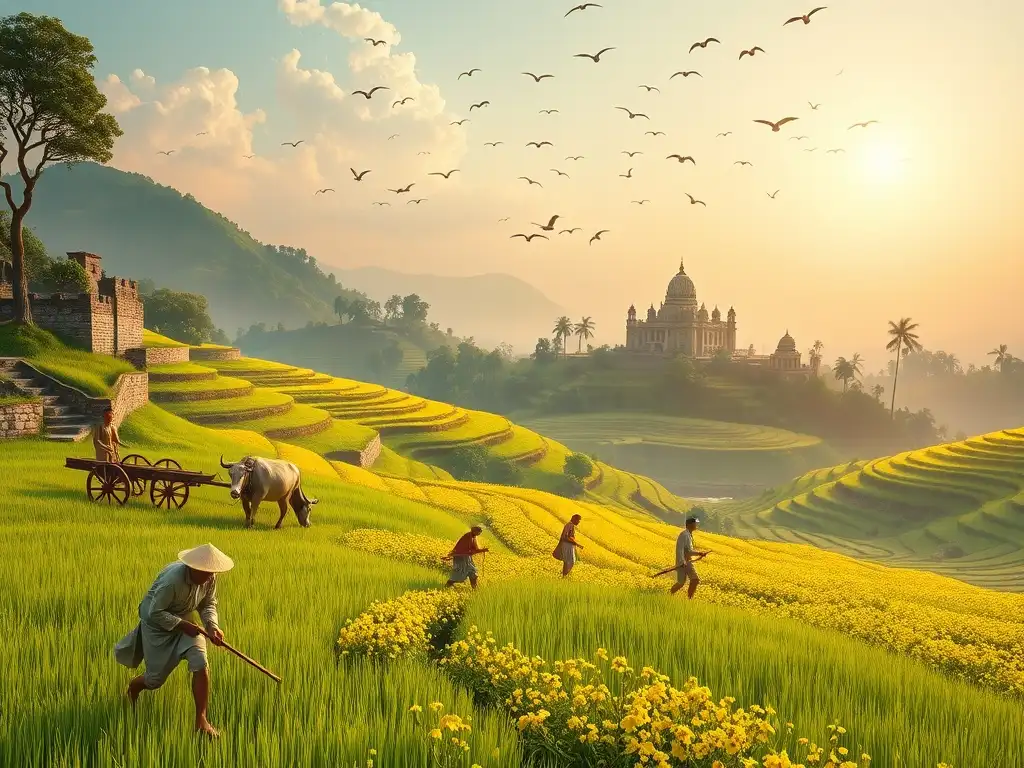
The evolution of agriculture in ancient India was marked by several groundbreaking innovations that significantly transformed the landscape and lifestyle of its civilizations. These agricultural innovations not only improved food production but also laid the groundwork for the complex societies that flourished across the subcontinent. Below, we explore three major advancements: irrigation techniques, crop rotation practices, and the use of ploughs and tools.
The Inception of Irrigation Techniques
Irrigation was one of the most crucial agricultural innovations in ancient India, allowing civilizations to thrive in diverse climatic conditions. Early communities recognized the importance of water management, leading to the development of intricate irrigation systems.
- Types of Irrigation:
- Surface Irrigation: This method involved directing water from rivers and streams to fields through channels. It was prevalent in regions like the Indus Valley.
- Well Irrigation: The use of wells became common, especially in arid regions. Farmers dug wells to access underground water, which was crucial for sustaining crops during dry spells.
- Tank Irrigation: Man-made tanks were constructed to collect rainwater, particularly in areas with seasonal rainfall. These tanks served as reservoirs, supporting agriculture during droughts.
The implementation of these irrigation techniques not only enhanced crop yields but also facilitated the growth of urban centers, as reliable food supplies allowed for population increases and trade.
Development of Crop Rotation Practices
Crop rotation emerged as another vital agricultural innovation that improved soil fertility and crop productivity. This practice involved alternating different crops on the same land over different seasons.
- Benefits of Crop Rotation:
- Soil Fertility: By rotating crops, farmers could prevent nutrient depletion in the soil. For instance, legumes such as lentils and peas enriched the soil with nitrogen, benefiting subsequent crops.
- Pest and Disease Management: Different crops attracted various pests, reducing the risk of infestations. This natural pest management reduced the reliance on chemical treatments, which were non-existent at the time.
- Diverse Harvests: Crop rotation allowed farmers to produce a variety of crops, ensuring food security and dietary diversity.
Records from ancient texts, such as the Arthashastra, indicate that crop rotation was a well-understood practice, contributing to agricultural sustainability in ancient Indian societies.
The Use of Ploughs and Tools in Ancient Agriculture
The introduction of advanced tools and ploughs marked a significant leap in agricultural techniques in ancient India. The plough, in particular, revolutionized farming practices, making it easier to cultivate the land.
- Types of Ploughs:
- Wooden Ploughs: Early ploughs were made of wood, often drawn by oxen. These simple yet effective tools allowed farmers to till the soil more efficiently than by hand.
- Iron Ploughs: With advancements in metallurgy, iron ploughs emerged, offering greater durability and effectiveness. These ploughs could penetrate tougher soil, enabling the cultivation of previously uncultivated land.
The development of these agricultural tools not only increased productivity but also reduced labor intensity. As farming became more efficient, it contributed to the growth of agrarian economies and allowed individuals to engage in other trades, fostering urbanization.
The agricultural innovations of ancient India were pivotal in shaping its civilizations. The sophisticated irrigation systems, strategic crop rotation practices, and advanced farming tools created a resilient agricultural framework that supported diverse and flourishing societies across the subcontinent. These innovations laid the foundation for future advancements, reflecting the ingenuity and adaptability of ancient Indian farmers.
The Role of Organic Fertilizers in Soil Enrichment
Organic fertilizers played a crucial role in enhancing soil fertility and structure in ancient India. Utilizing naturally occurring materials, these fertilizers contributed significantly to the sustainability of agricultural practices. The ancient Indian farmers recognized the importance of maintaining soil health to ensure consistent crop yields, which led to the development and use of various organic fertilizers.
One of the primary forms of organic fertilizer used in ancient India was animal manure. Farmers often mixed cow dung, which was abundant due to the prominence of cattle in agrarian society, into their fields. This practice not only provided essential nutrients like nitrogen, phosphorus, and potassium but also improved soil texture and moisture retention. The high organic matter content in animal manure facilitated microbial activity, which is vital for nutrient cycling in the soil.
In addition to manure, ancient Indian agronomists also utilized crop residues—the remains of harvested plants—as a form of organic fertilizer. By incorporating leftover stalks and leaves back into the soil, farmers enriched the soil with organic matter and nutrients, preventing erosion and promoting a healthy ecosystem. This practice reflects a deep understanding of sustainable agriculture, as it allowed for the continuous replenishment of soil nutrients.
Another significant organic fertilizer was compost, produced through the decomposition of plant materials, kitchen scraps, and other organic wastes. The fermentation process not only transformed waste into a valuable resource but also enhanced soil fertility. Ancient texts, such as the Artha Shastra, emphasize the importance of composting, showcasing its significance in agricultural practices of that time.
Furthermore, ancient Indian farmers practiced green manuring, where specific crops, such as legumes, were cultivated and then plowed back into the soil. This practice not only added organic matter but also fixed atmospheric nitrogen, enriching the soil further. The use of green manure was particularly beneficial for maintaining soil productivity over time, demonstrating an early understanding of crop rotation and biodiversity.
Through these methods, organic fertilizers contributed to the long-term sustainability of agricultural systems in ancient India. The holistic approach to soil enrichment ensured that farmers could cultivate diverse crops while maintaining soil health, reflecting an advanced understanding of ecological balance that continues to inspire modern agricultural practices.
Major Ancient Indian Civilizations and Their Agricultural Practices
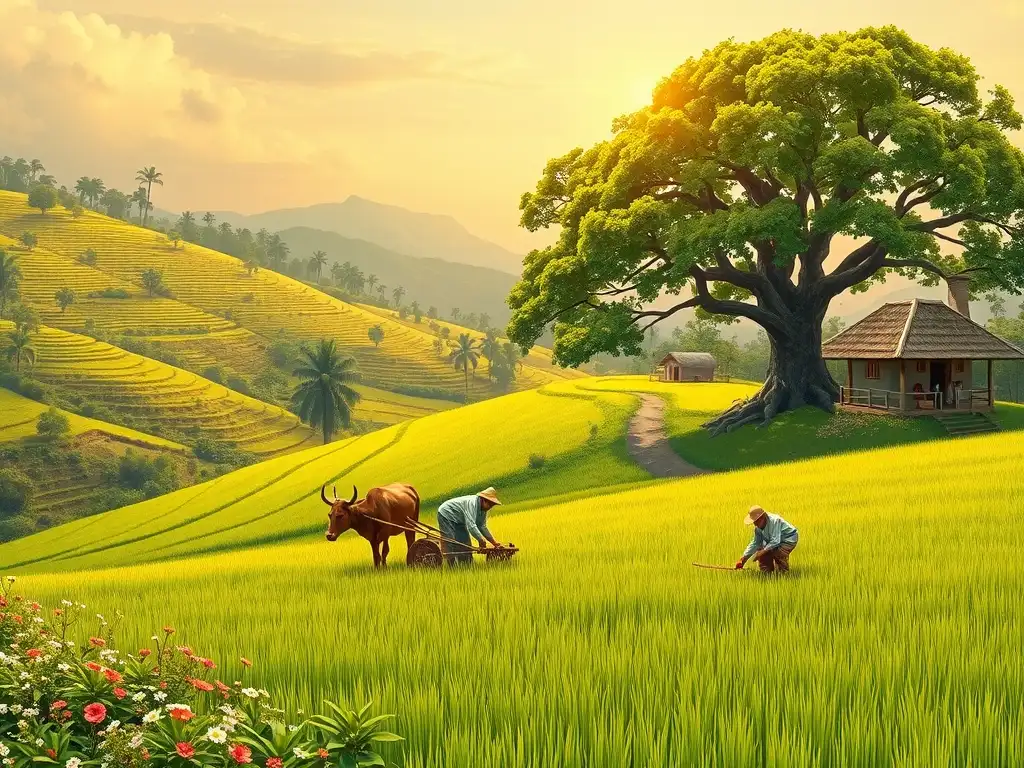
The agricultural practices of ancient Indian civilizations played a pivotal role in shaping the landscapes, societies, and economies of the region. From the fertile plains of the Indus Valley to the expansive fields under the Maurya Empire, innovations in agriculture were not only essential for sustaining large populations but also contributed to the development of trade, culture, and technology. Each major civilization introduced unique practices and innovations that significantly impacted their agricultural productivity and societal structure.
Agricultural Innovations in the Indus Valley Civilization
The Indus Valley Civilization (c. 3300–1300 BCE) is renowned for its advanced urban planning and sophisticated agricultural techniques. The fertile lands along the Indus River provided a perfect environment for early agricultural innovations. Key features of their agricultural practices include:
- Irrigation Systems: The Indus Valley people developed intricate irrigation systems, utilizing canals and reservoirs to manage water supply effectively. This allowed them to cultivate crops even during dry spells.
- Crop Diversification: They cultivated a variety of crops, including wheat, barley, peas, and cotton. The presence of cotton indicates an early understanding of textile production, further highlighting the civilization's agricultural diversity.
- Use of Plough Technology: They utilized wooden ploughs, which helped in tilling the soil more efficiently, thereby enhancing productivity. The introduction of the plough is considered a significant advancement in ancient Indian agricultural innovations.
- Granaries: Evidence of massive granaries in cities like Harappa and Mohenjo-Daro suggests a sophisticated approach to food storage and management, indicating foresight in ensuring food security.
The agricultural practices of the Indus Valley set a foundation for future civilizations in India, showcasing their ability to adapt to and manipulate their environment for agricultural success.
The Agricultural Advances during the Vedic Period
The Vedic Period (c. 1500–500 BCE) marked a significant transformation in agricultural practices, influenced by the migration of Indo-Aryans and the subsequent cultural shifts. During this time, several agricultural innovations emerged:
- Shift to Mixed Farming: The Vedic people practiced mixed farming, integrating animal husbandry with crop cultivation. This diversification provided a more stable food source and improved soil fertility through natural manure.
- Introduction of New Crops: The period saw the introduction of rice cultivation, particularly in the eastern regions of India. This was a significant addition, as rice became a staple food in many communities.
- Farming Techniques: The use of iron tools became prevalent, leading to improved agricultural efficiency. Iron sickles and ploughshares allowed for more effective harvesting and tilling.
- Rituals and Agriculture: The connection between agriculture and religion was emphasized, with various rituals and hymns dedicated to agricultural deities. This reflects a cultural integration of farming practices within the societal framework.
The Vedic Period laid the groundwork for agricultural practices that would continue to evolve in subsequent centuries, emphasizing the importance of agriculture in both the economy and religious life.
Innovations in Agriculture during the Maurya Empire
The Maurya Empire (c. 322–185 BCE) is often heralded as one of the most influential periods in ancient Indian history, and its agricultural innovations played a crucial role in its prosperity:
- State Control of Agriculture: The Mauryan administration implemented a system of state control over agriculture, including land taxation and regulation of crop production, which ensured a stable food supply for the growing population.
- Improved Irrigation Techniques: The empire witnessed advancements in irrigation, including the construction of canals and reservoirs, which improved water management across vast regions. These innovations significantly increased agricultural output.
- Agricultural Manuals: The Mauryan period saw the emergence of texts like Kautilya’s Arthashastra, which included guidelines on agricultural practices, crop rotation, and market regulation. This reflected a more systematic approach to agriculture and economics.
- Trade Expansion: Enhanced agricultural productivity supported trade networks. Surpluses of grains and other agricultural products facilitated commerce, both within the empire and with neighboring regions.
The agricultural innovations during the Maurya Empire were instrumental in establishing a strong economic foundation, demonstrating the integral role of agriculture in the development and expansion of ancient Indian civilizations.
Ancient Indian agricultural innovations were pivotal across various civilizations, each contributing uniquely to the agricultural landscape. These developments not only sustained populations but also fostered economic growth, cultural advancements, and technological progress that would resonate throughout history.
Gupta Empire's Contributions to Agricultural Techniques
The Gupta Empire, often regarded as a golden age in Indian history, flourished from approximately 320 to 550 CE. This period was marked by significant advancements in various fields, including mathematics, science, and agriculture. The agricultural innovations during the Gupta Empire played a crucial role in enhancing agricultural productivity and ensuring food security, which in turn supported the empire's economic stability and growth.
One of the notable contributions of the Gupta Empire to agriculture was the development of advanced irrigation techniques. The Guptas recognized the importance of water management in agriculture, leading to the construction of extensive irrigation systems that included canals and reservoirs. These systems enabled farmers to cultivate crops more efficiently, particularly in regions with erratic rainfall. The effective use of irrigation not only helped in increasing crop yields but also allowed for the cultivation of a wider variety of crops throughout the year.
In addition to irrigation, the Gupta period saw the introduction of improved plowing techniques. The use of the iron plowshare became more widespread during this time, allowing for deeper tilling of the soil. This innovation facilitated better soil aeration and nutrient absorption, resulting in healthier crops. The enhanced plowing methods also made it possible to farm on previously uncultivated lands, expanding agricultural areas and contributing to a surplus in food production.
Crop rotation and diversification were also significant agricultural practices that emerged during the Gupta Empire. Farmers began to understand the benefits of planting different crops in succession, which helped in maintaining soil fertility and reducing pest infestations. This practice not only improved yields but also contributed to a more stable food supply, reducing the risk of famine and ensuring the well-being of the population.
Furthermore, the Gupta Empire promoted agricultural research and knowledge dissemination. Scholars and agronomists of the time documented their findings on various crops, farming techniques, and seasonal cycles. This knowledge was pivotal in educating farmers about best practices, which ultimately led to increased agricultural efficiency. The emphasis on education and the sharing of agricultural knowledge laid the groundwork for future innovations in farming.
The Gupta Empire's contributions to agricultural techniques were instrumental in transforming the agricultural landscape of ancient India. Through advancements in irrigation, plowing, crop rotation, and the promotion of agricultural knowledge, the Guptas not only enhanced food production but also supported the overall prosperity of their civilization. These innovations left a lasting legacy that would influence agricultural practices in India for centuries to come.
Impact of Agricultural Innovations on Ancient Indian Landscapes

Transformation of Rural Landscapes through Agriculture
The transformation of rural landscapes in ancient India can be traced back to several key agricultural innovations that fundamentally altered the way communities interacted with their environment. Among the most significant changes were the development of irrigation techniques, advancements in crop rotation, and the introduction of new agricultural tools.
- Irrigation Techniques: The establishment of irrigation systems, particularly in regions like the Indus Valley, allowed for the efficient management of water resources. Canals and wells were constructed, which facilitated the cultivation of crops in areas that were previously unproductive. This not only increased agricultural output but also led to the expansion of arable land.
- Crop Rotation: The practice of rotating crops helped maintain soil fertility and reduced the risk of crop failure. Ancient farmers learned to alternate between legumes and cereals, which enriched the soil with nitrogen and improved overall yields. This practice was essential for sustaining agricultural productivity over generations.
- Agricultural Tools: Innovations such as the plow and sickle transformed farming practices. The introduction of iron tools enabled farmers to till the land more effectively, leading to greater efficiency in planting and harvesting. These tools played a crucial role in enhancing agricultural productivity, contributing to the flourishing of rural economies.
As a result of these innovations, rural landscapes became more structured and organized, with fields, irrigation channels, and settlements developing in harmony with agricultural practices. The once barren lands transformed into productive landscapes, supporting larger populations and fostering a sense of community.
Shifts in Population and Settlement Patterns due to Agricultural Advances
The agricultural advancements in ancient India significantly influenced population dynamics and settlement patterns. As agricultural productivity increased, it created a surplus of food, which had profound implications for societal structures.
- Urbanization: With the rise of agricultural surpluses, populations began to concentrate in specific areas, leading to the growth of urban centers. Cities such as Mohenjo-Daro and Harappa emerged as hubs of trade and culture, attracting people from surrounding rural areas. The availability of food allowed these urban centers to flourish, enabling specialization of labor and the development of complex societies.
- Migration Patterns: As certain regions became more agriculturally viable due to innovations, people migrated towards these areas in search of better livelihoods. This movement not only influenced demographic trends but also facilitated cultural exchanges among diverse populations, contributing to the rich tapestry of ancient Indian civilization.
- Social Stratification: The surplus generated by agricultural innovations led to the emergence of different social classes. Wealth accumulation became more pronounced, resulting in distinct social hierarchies. Landowners and skilled artisans began to occupy higher social positions, while laborers and farmers formed the backbone of agrarian society. This stratification set the stage for the development of complex societal structures that characterized ancient Indian civilizations.
Overall, the shifts in population and settlement patterns due to agricultural advances contributed to the evolution of ancient Indian societies, laying the groundwork for future cultural and economic developments.
The Relationship between Agriculture and Trade in Ancient India
Agricultural innovations in ancient India were closely intertwined with trade, creating a symbiotic relationship that fueled economic growth and cultural exchange. Several factors illustrate this connection:
- Surplus Production and Trade: Increased agricultural productivity not only supported local populations but also generated surpluses that could be traded with neighboring regions. Staple crops such as rice, wheat, and barley were exchanged for goods like textiles, pottery, and metals, fostering inter-regional trade networks.
- Market Development: The rise of agricultural surplus facilitated the establishment of markets where farmers could sell their produce. This led to the emergence of merchant classes that specialized in trade, contributing to the economic complexity of ancient Indian society. Markets became vital centers of commerce, where agricultural products were exchanged, and new ideas were shared.
- Cultural Exchange through Trade: Trade routes established for the exchange of agricultural goods also served as conduits for cultural interaction. As merchants traveled between regions, they carried not only products but also ideas, technologies, and cultural practices. This exchange played a significant role in the dissemination of agricultural techniques and innovations across ancient India.
The relationship between agriculture and trade in ancient India was pivotal to the region's economic and cultural development. The innovations in agriculture not only transformed rural landscapes but also laid the groundwork for a vibrant trading economy that connected diverse communities and facilitated the growth of ancient Indian civilization.
Case Studies of Specific Agricultural Innovations

Ancient Indian agricultural innovations played a pivotal role in shaping the landscapes, economies, and societies of the region. Through various techniques and practices, these innovations not only enhanced agricultural productivity but also facilitated trade and cultural exchanges. This section delves into specific case studies that illustrate the profound impact of these innovations.
The Hydraulic Engineering of Ancient India
Ancient India is renowned for its advanced hydraulic engineering systems, which were instrumental in managing water resources for agriculture. From the Indus Valley Civilization to the Chola Dynasty, intricate irrigation systems were developed to harness the power of rivers and monsoon rains.
- Indus Valley Civilization: One of the earliest examples of hydraulic engineering can be traced back to the Indus Valley Civilization (c. 3300–1300 BCE). The cities of Harappa and Mohenjo-Daro featured sophisticated drainage systems and wells that ensured a consistent water supply for agricultural activities.
- Stepwells and Tanks: In later periods, particularly in the medieval era, stepwells and tanks were constructed across the Indian subcontinent. These structures not only provided water for irrigation but also served as communal gathering places, reflecting the social and cultural significance of water management.
- Canal Systems: The Maurya and Gupta Empires further advanced hydraulic engineering by establishing extensive canal systems. These canals facilitated the diversion of river water to arid regions, significantly increasing the arable land and boosting agricultural output.
The Role of Rice Cultivation in Southern India
Rice cultivation emerged as a cornerstone of ancient Indian agriculture, particularly in the southern regions. The climatic conditions and fertile river valleys made it an ideal crop for cultivation.
- Terrace Farming: In areas like the Western Ghats, farmers developed terrace farming techniques to maximize land use. This method not only controlled soil erosion but also optimized water retention, making rice cultivation feasible in hilly terrains.
- Paddy Varieties: Ancient texts, such as the Agricultural Treatise by Varahamihira, document the cultivation of numerous rice varieties suited to different climatic conditions. These local adaptations reflected the innovative spirit of ancient farmers.
- Cultural Significance: Rice was not merely a staple food but also held cultural significance in various societies. Festivals such as Pongal in Tamil Nadu celebrate the harvest, showcasing the deep-rooted connection between agriculture and cultural identity.
The Impact of Spice Cultivation on Trade Networks
Spice cultivation in ancient India significantly influenced both local economies and global trade networks. The subcontinent became a hub for the production of valuable spices like black pepper, cardamom, and cinnamon, which were highly sought after in international markets.
- Trade Routes: The establishment of trade routes, such as the Silk Road, facilitated the exchange of spices between India and regions as far as Europe and the Middle East. Spice traders played a crucial role in connecting diverse cultures and economies.
- Agricultural Techniques: The cultivation of spices necessitated specific agricultural innovations, including intercropping and agroforestry. These practices not only enhanced biodiversity but also improved soil fertility.
- Economic Impact: The spice trade contributed significantly to the wealth of various kingdoms, enabling them to foster advancements in art, architecture, and technology. The Chola Dynasty, for instance, thrived on the profits from spice trade, leading to a flourishing of culture and civilization.
The case studies of hydraulic engineering, rice cultivation, and spice cultivation highlight the diverse agricultural innovations that transformed ancient Indian landscapes. These innovations not only enhanced agricultural productivity but also played a fundamental role in shaping the socio-economic fabric of ancient Indian civilization.
Conclusion: The Legacy of Ancient Indian Agricultural Innovations

The legacy of ancient Indian agricultural innovations is profound, influencing not only the agrarian practices of subsequent generations but also shaping the socio-economic structures of ancient Indian civilizations. From the intricacies of the Indus Valley Civilization's urban planning to the advanced irrigation techniques employed during the Gupta Empire, these innovations laid the groundwork for sustainable agricultural practices.
Many of the techniques developed in ancient India, such as crop rotation and intercropping, continue to resonate in modern agricultural practices. The shift from subsistence farming to more organized agricultural systems facilitated the rise of trade and commerce, enabling ancient Indian societies to flourish. These innovations were not merely technological; they were intertwined with cultural and spiritual beliefs, emphasizing the importance of harmony with nature.
Reflections on the Influence of Ancient Agricultural Techniques on Modern Practices
Ancient Indian agricultural innovations have left an indelible mark on contemporary farming methods, particularly in terms of sustainability and biodiversity. Here are some key influences:
- Crop Diversity: Ancient farmers understood the significance of cultivating a variety of crops to maintain soil health and prevent pests. This practice has led to the modern emphasis on agro-biodiversity, where multiple crops are grown together to enhance resilience against climate change.
- Irrigation Systems: Techniques such as the construction of step wells and the use of canals were pioneered in ancient India. These methods are echoed in today's water management systems, which prioritize efficient water use in agriculture.
- Organic Farming: The use of natural fertilizers and methods to enhance soil fertility, such as vermicomposting and green manures, can trace their origins back to ancient practices. These techniques are increasingly relevant today as the world shifts towards organic farming to combat soil degradation and chemical dependency.
- Traditional Knowledge: The wisdom accumulated over centuries by farmers regarding local ecosystems, plant varieties, and climatic conditions is now recognized as invaluable. This traditional ecological knowledge informs modern agroecological practices that aim to balance productivity with sustainability.
The integration of these ancient techniques into modern farming not only aids in enhancing productivity but also fosters a deeper connection to the land and its history.
The Importance of Preserving Agricultural Heritage in India Today
Preserving the agricultural heritage of ancient India is crucial for several reasons:
- Cultural Identity: The farming practices of ancient India are intrinsically linked to the cultural identity of various communities. Protecting these practices helps maintain a sense of belonging and continuity within these populations.
- Sustainability: As the world faces environmental challenges, ancient practices offer lessons in sustainable agriculture. By preserving this heritage, contemporary farmers can adapt and innovate while respecting ecological balance.
- Biodiversity Conservation: Many traditional crops and farming methods are at risk of extinction due to modernization and monoculture practices. By advocating for the preservation of these ancient agricultural systems, we can protect biodiversity and enhance food security.
- Education and Research: Understanding ancient agricultural innovations can provide invaluable insights for researchers and educators. This knowledge can be harnessed to develop new agricultural technologies that are both innovative and respectful of traditional wisdom.
The transformation of ancient Indian landscapes through agricultural innovations not only set the stage for the development of sophisticated civilizations but also offers rich lessons for modern agricultural practices. By reflecting on these ancient techniques and preserving our agricultural heritage, we can cultivate a sustainable future that honors the past.
Frequently Asked Questions
What are some key agricultural innovations in ancient India?
Ancient India saw numerous agricultural innovations such as the development of irrigation systems, the use of crop rotation, and the introduction of high-yielding varieties of crops that significantly boosted productivity.
How did the Indus Valley Civilization contribute to agriculture?
The Indus Valley Civilization is credited with advanced farming techniques, including the construction of drainage systems and the cultivation of cotton, which laid the foundation for subsequent agricultural practices in the region.
What role did the Gupta Empire play in agricultural advancements?
During the Gupta Empire, there was a notable increase in agricultural productivity due to innovations in plowing techniques and the development of new crops, which supported a flourishing economy and population growth.
How did climate impact agricultural practices in ancient India?
The diverse climate of ancient India influenced agricultural practices by determining the types of crops grown, leading to regional specializations, such as rice cultivation in the monsoon areas and wheat in the northwest.
What was the significance of trade in ancient Indian agriculture?
Trade played a crucial role in spreading agricultural innovations across regions, allowing for the exchange of seeds, techniques, and knowledge, which enhanced the overall agricultural landscape of ancient India.
Final Reflection: The Enduring Legacy of Ancient Indian Agricultural Innovations
The transformation of ancient Indian landscapes through agricultural innovations is not just a historical narrative; it is a testament to human ingenuity and resilience that remains profoundly relevant today. As we face pressing global challenges such as climate change and food security, the wisdom embedded in ancient practices offers invaluable insights. The ability of these innovations to adapt and thrive in diverse environments underscores a striking truth: innovation rooted in tradition can pave the way for sustainable futures.
The influence of ancient Indian agricultural innovations extends far beyond their historical context; they continue to shape our cultural and social landscapes. From the intricate irrigation systems of the Indus Valley to the diverse crop rotations practiced in various regions, these methods have laid the groundwork for modern agricultural practices. As we navigate contemporary agricultural dilemmas, we can draw inspiration from the past. The greatest innovations often stem from the simplest ideas, deeply rooted in the soil of our ancestors.
This perspective encourages us to honor and learn from the agricultural heritage that has sustained civilizations for millennia.
As we reflect on the lessons of ancient Indian agricultural innovations, let us consider how we can integrate these timeless principles into our lives and communities. Take a moment to ponder how the wisdom of the past can inform our choices today. Whether it’s adopting sustainable practices in our gardens or advocating for policies that honor traditional knowledge, each action contributes to a more resilient future. Embrace the call to reconnect with our agricultural roots, and together, let’s cultivate a world that respects and learns from the landscapes shaped by our ancestors.
Unleash the Power of Agricultural Transformations!
Thank you for diving into the remarkable journey of ancient Indian landscapes shaped by agricultural innovations! You’ve uncovered the profound impact of farming techniques that transformed not just the land, but entire societies. Now, it’s time to take this knowledge and put it into practice!
Here are a few engaging ways you can further explore and celebrate this fascinating topic:
- Visit local farms or agricultural exhibitions to witness traditional practices that have roots in ancient techniques.
- Share your insights on social media or within community groups to spark conversations about the importance of agricultural innovation throughout history.
- Join a workshop or class that focuses on sustainable farming practices inspired by ancient methods to experience hands-on learning.
Which unique agricultural innovation from ancient India do you believe could inspire modern practices today? We would love to hear your thoughts!