
Women as Innovators: Exploring Their Contributions to Ancient Indian Philosophy

Welcome to Ancient India History, where we embark on a fascinating journey through the rich tapestry of ancient Indian civilizations. Here, we delve into the profound contributions of women, particularly in our featured article, "Women as Innovators: Exploring Their Contributions to Ancient Indian Philosophy." As you explore this captivating topic, prepare to uncover the remarkable roles that women played in shaping philosophical thought, challenging norms, and inspiring generations.
Join us in celebrating these unsung heroines and discover how their legacies continue to resonate in our understanding of history and culture. The story of women in ancient Indian philosophy is just the beginning—dare to dive deeper and uncover the treasures that await!
- Introduction to Women in Ancient Indian Philosophy
- Historical Context of Women in Ancient Indian Philosophy
- Influential Women Philosophers in Ancient India
- Themes Explored by Women in Ancient Indian Philosophy
- Challenges Faced by Women Philosophers in Ancient India
- Legacy of Women in Ancient Indian Philosophy
- Conclusion: Recognizing Women as Innovators in Ancient Indian Philosophy
-
Frequently Asked Questions
- What role did women play in ancient Indian philosophy?
- Were there any notable women philosophers in ancient India?
- How did societal views affect women's contributions to philosophy?
- What texts highlight the contributions of women in ancient Indian philosophy?
- How can we learn from the contributions of women in ancient Indian philosophy today?
- Final Reflection: Celebrating Women as Pioneers in Ancient Indian Philosophy
- Unveil the Legacy: Honor Women Innovators in Ancient Indian Philosophy!
Introduction to Women in Ancient Indian Philosophy
The exploration of ancient Indian philosophy reveals a rich tapestry of thought that spans centuries, deeply intertwined with the cultural, religious, and social fabric of its time. While much attention has historically been given to male philosophers and thinkers, the contributions of women in ancient Indian philosophy are equally significant and deserve recognition. These women not only participated in philosophical discourse but also shaped ideas and practices that influenced the course of Indian thought.
From the early Vedic texts to the later developments in schools of thought, women emerged as innovators, thought leaders, and spiritual guides, challenging societal norms and expanding the boundaries of philosophical inquiry. This article seeks to illuminate the vital role of women in ancient Indian philosophy, showcasing their contributions and the impact they had on shaping philosophical traditions.
Overview of Ancient Indian Philosophy
Ancient Indian philosophy is characterized by a diversity of thoughts and schools, each offering unique perspectives on existence, ethics, knowledge, and the nature of the universe. Key philosophical traditions such as Vedanta, Sankhya, Buddhism, and Jainism emerged, each contributing to a holistic understanding of life and the cosmos. The Vedas and Upanishads are foundational texts, exploring profound metaphysical questions and ethical dilemmas. Throughout this period, women philosophers, sages, and scholars were not merely passive observers; they actively engaged with these texts and ideas, offering critical insights and interpretations that enriched the philosophical landscape.
Importance of Women's Contributions in Philosophy
The significance of women's contributions to ancient Indian philosophy cannot be overstated. Their roles as thinkers and leaders challenged the patriarchal structures of their time, paving the way for future generations of women in philosophy and spirituality. Women like Gargi, a renowned philosopher, and Maitreyi, who engaged in crucial dialogues on metaphysics and ethics, exemplified the intellectual rigor and depth of thought that women brought to the philosophical discourse.
The inclusion of women's voices in philosophy not only diversified the perspectives presented but also highlighted the interconnectedness of gender and philosophical inquiry. By recognizing and celebrating these contributions, we gain a more comprehensive understanding of ancient Indian philosophy and its evolution, fostering a narrative that honors the diverse and rich contributions of women throughout history.
In this article, we will delve deeper into specific examples of women philosophers, their teachings, and the lasting impact of their work on the broader philosophical traditions of ancient India.
Historical Context of Women in Ancient Indian Philosophy
The Role of Women in Ancient Indian Society
The role of women in ancient Indian society was multifaceted and evolved over time, particularly within the philosophical landscape. Women were not merely passive participants; they actively engaged in various intellectual and cultural pursuits. Historical texts and archaeological evidence suggest that women held significant positions in society, especially during the Vedic period (1500 - 500 BCE).
- Educational Opportunities: Women had access to education in some contexts. The Rigveda, one of the oldest texts, mentions women scholars and philosophers like Gargi and Maitreyi, who participated in philosophical debates. Gargi, in particular, is renowned for her contributions to metaphysical inquiries, demonstrating that women were not only educated but also respected as intellectual equals.
- Spiritual Roles: Women played crucial roles in religious rituals and practices. They were often seen as the custodians of family traditions and rituals, which were integral to the spiritual life of communities. This spiritual prominence also allowed women to influence philosophical discourse, as many philosophical ideas were intertwined with religious beliefs.
- Social Status: Despite their contributions, the status of women varied across different regions and periods. While some texts celebrate women's wisdom and agency, others indicate a decline in their status during later periods, particularly in medieval India. It is essential to recognize this complexity when discussing women's roles in ancient Indian philosophy.
Key Philosophical Texts Reflecting Women's Contributions
Several philosophical texts from ancient India highlight the contributions of women, showcasing their intellectual prowess and influence on philosophical thought.
- The Upanishads: These texts, composed between 800 and 200 BCE, contain dialogues between male and female philosophers. Maitreyi and Gargi are prominently featured, engaging in profound discussions about the nature of reality and the self. For example, in the Brihadaranyaka Upanishad, Maitreyi questions her husband about immortality, illustrating her deep philosophical insight.
- The Manusmriti: Although often criticized for its patriarchal stance, this ancient legal text also includes references to women's education and roles in society. It emphasizes the importance of women's contributions to household and spiritual life, indirectly underscoring their philosophical significance.
- Buddhist Texts: The role of women in Buddhism is another vital area of study. Texts such as the Pali Canon include female figures like Khema and Upalavanna, who were not only disciples of the Buddha but also contributed to discussions on ethical and philosophical matters.
- Tantric Texts: The rise of Tantric philosophy in the first millennium CE introduced a new perspective on gender and spirituality. Many Tantric texts celebrate the divine feminine and illustrate women's roles as spiritual leaders and innovators in philosophical thought.
The exploration of women's contributions to ancient Indian philosophy reveals a rich tapestry of intellectual engagement. Far from being sidelined, women were instrumental in shaping philosophical discourse, and their legacies continue to resonate in contemporary discussions about gender and philosophy. The examination of these texts and historical contexts is crucial for a comprehensive understanding of "Women in Ancient Indian Philosophy".
Influential Women Philosophers in Ancient India
Gargi: The Pioneer of Philosophical Discourse
Gargi Vachaknavi stands as a monumental figure in ancient Indian philosophy, recognized for her profound contributions to the philosophical discourse of her time. She is prominently featured in the Brahadaranyaka Upanishad, where her dialogues showcase her intellectual prowess and her commitment to exploring the fundamental questions of existence.
Gargi's inquiries often revolved around the nature of the ultimate reality, often referred to as Brahman. Her famous challenge to the sage Yajnavalkya is a testament to her boldness and intellect:
If the Brahman is the source of all, then what is the source of the Brahman itself?
Her philosophical contributions reflect not only her understanding of metaphysics but also her pioneering role in a male-dominated field. Gargi's legacy continues to inspire contemporary discussions on the role of women in philosophy and their capability to engage critically with complex ideas.
Maitreyi: The Advocate of Knowledge and Self-Realization
Maitreyi, another significant figure in ancient Indian philosophy, is revered for her insights on knowledge and self-realization. She appears in the Brahadaranyaka Upanishad, engaging with her husband, Yajnavalkya, in discussions about the nature of immortality and self-knowledge.
In her dialogue, Maitreyi expresses a profound understanding of the self, asserting that true knowledge is essential for achieving lasting happiness. Her philosophical stance can be summarized as follows:
- Self-Realization: Maitreyi emphasizes that understanding one's true self is more valuable than material wealth.
- Knowledge as Liberation: She advocates for knowledge as a means to attain liberation ( moksha), positioning herself as an early proponent of the idea that intellectual pursuits lead to spiritual enlightenment.
Maitreyi's contributions to the discourse on knowledge and self-awareness highlight the essential role women played in shaping philosophical thought in ancient India.
Other Notable Women in Philosophy
While Gargi and Maitreyi are often celebrated for their contributions, several other women in ancient India made significant philosophical strides, enriching the landscape of thought during their time.
Aditi: Contributions to Cosmology and Ethics
Aditi, often regarded as the mother of gods in Vedic texts, also contributed to cosmological and ethical discussions. She represents the concept of infinity and the boundless universe, playing a crucial role in ancient Indian cosmology.
- Cosmological Insights: Aditi is associated with the creation of the universe and the ethical implications of existence. Her philosophical perspectives encourage a holistic view of the cosmos, connecting moral conduct with universal harmony.
- Ethical Teachings: By embodying the principles of compassion and nurturing, Aditi underscores the importance of ethics in philosophical discourse, particularly in relation to the interconnectedness of all beings.
Lilavati: Insights on Mathematics and Philosophy
Lilavati, a mathematician and philosopher, is celebrated for her contributions to mathematics, but her work also intertwines with philosophical inquiry.
- Mathematical Philosophy: Her texts, particularly the Lilavati, not only present mathematical problems but also explore the philosophical implications of mathematical concepts.
- Logical Reasoning: Lilavati's approach to problem-solving reflects a deep understanding of logic and reasoning, illustrating how mathematical thought can inform philosophical discourse.
The contributions of women like Aditi and Lilavati demonstrate the multifaceted roles women played in ancient Indian philosophy, encompassing a wide range of subjects from ethics to logic, enriching the intellectual tapestry of the time.
Themes Explored by Women in Ancient Indian Philosophy
Gender and Spirituality in Ancient Texts
In ancient Indian philosophy, gender and spirituality are deeply intertwined, revealing a nuanced perspective on the roles of women. Texts such as the Vedas and Upanishads highlight the spiritual aspirations of women, often portraying them as seekers of truth and enlightenment. Notably, women like Gargi and Maitreyi are celebrated for their profound philosophical inquiries, challenging the patriarchal norms of their time.
Key Contributions:
- Gargi Vachaknavi: A philosopher and scholar, Gargi engaged in debates with prominent sages, questioning the nature of reality and the essence of the self. Her dialogues underscore the intellectual capabilities of women in philosophical discourse.
- Maitreyi: Known for her discussions with her husband, the sage Yajnavalkya, Maitreyi's quest for knowledge reflects the spiritual agency women held in ancient times. Her pursuit of the ultimate truth highlights the importance of women's voices in philosophical traditions.
The presence of these figures in sacred texts not only affirms women’s spiritual roles but also challenges the traditional narratives that often marginalize them. This exploration of gender and spirituality illustrates how women contributed to the philosophical landscape by advocating for their rights to intellectual and spiritual pursuits.
The Intersection of Philosophy and Religion for Women
The intersection of philosophy and religion in ancient India provided a unique platform for women to express their thoughts and beliefs. Religious texts often served as a backdrop for philosophical exploration, allowing women to engage with complex ideas about existence, ethics, and the divine.
Notable Aspects:
- Philosophical Schools: Many women participated in various philosophical schools, such as the Samkhya and Yoga traditions, which emphasized the importance of self-realization and ethical living. Their contributions helped shape the discourse around personal and collective spirituality.
- Role of Devotion: The Bhakti movement, which flourished during the medieval period, saw women poets and saints like Mirabai, who expressed deep philosophical insights through their devotional practices. Their works illustrate the blending of personal experience with philosophical inquiry, offering a unique perspective on the divine.
Women’s involvement in these areas reflects a significant contribution to the understanding of the human experience in relation to the divine, showcasing their vital role in shaping both religious and philosophical thought.
Ethical and Moral Contributions of Women Philosophers
Women philosophers in ancient India made substantial ethical and moral contributions that continue to resonate in contemporary discussions on morality and ethics. Their insights often centered around the concepts of dharma (duty/righteousness) and the ethical implications of one’s actions.
Ethical Frameworks:
- Dharma and Ethics: Women philosophers emphasized the importance of dharma, not only for personal fulfillment but also for societal harmony. Their teachings often addressed the moral responsibilities of individuals within the family and community, highlighting the interconnectedness of all beings.
- Influence on Later Thought: The ethical viewpoints articulated by women in ancient texts influenced later philosophical discussions, laying the groundwork for the development of moral philosophy in India. Their perspectives on compassion, justice, and righteousness continue to inspire philosophical inquiry today.
By examining the ethical and moral contributions of women philosophers, we gain insight into the rich tapestry of thought that has shaped Indian philosophy. Their voices remind us of the integral role women have played in advancing philosophical discourse and moral understanding throughout history.
Challenges Faced by Women Philosophers in Ancient India
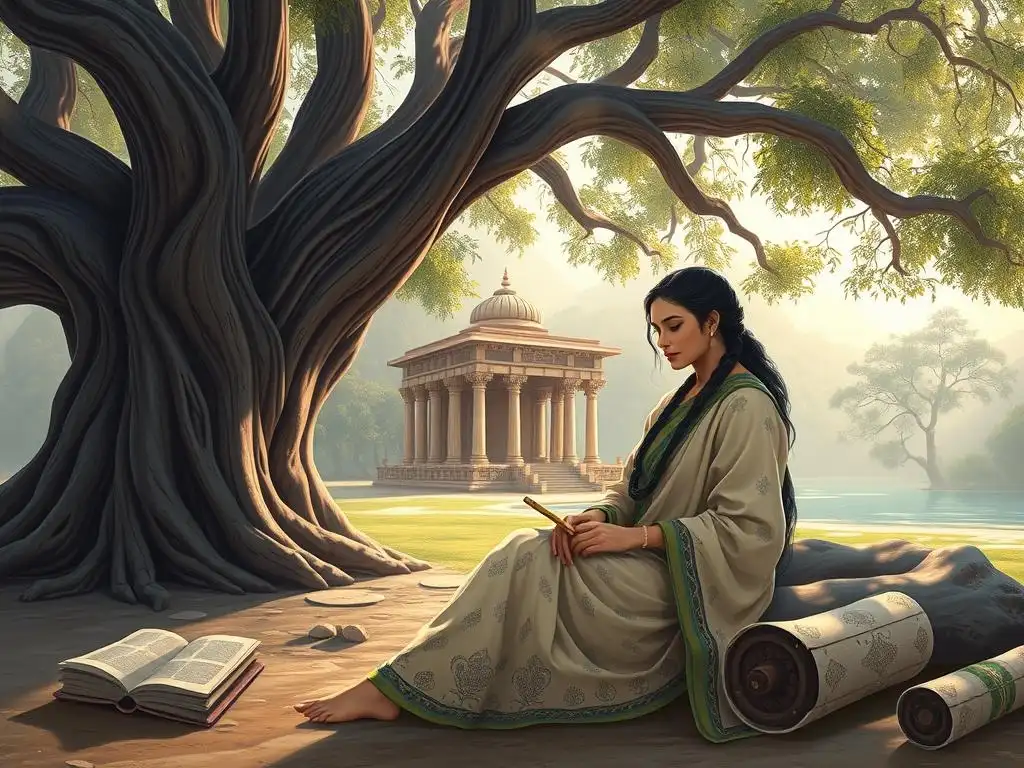
Societal Limitations and Gender Roles
In ancient India, the societal structure was predominantly patriarchal, which imposed significant limitations on women's participation in various fields, including philosophy. These limitations were deeply rooted in cultural norms and traditions, which often prioritized male voices and perspectives. Women were frequently relegated to domestic roles, which restricted their access to education and intellectual discourse.
- Education Barriers:
- Access to formal education was largely reserved for men. Although some women from affluent families received education, it was limited in scope and often focused on domestic skills rather than philosophy or rigorous intellectual training.
- Texts like the Arthashastra and Manusmriti outlined roles for women that discouraged their involvement in public life and intellectual pursuits.
- Cultural Expectations:
- Women were primarily expected to fulfill roles as wives and mothers, which left little room for them to engage in philosophical thought or debate.
- The societal expectation of women being submissive and obedient further hampered their ability to voice their thoughts and ideas publicly.
These societal limitations created an environment where women's potential as philosophers remained largely unrecognized and underappreciated. However, some women managed to transcend these barriers, leaving a lasting impact on Indian philosophical thought.
Resistance to Women's Voices in Philosophical Discourse
The resistance to women's voices in philosophical discourse was not merely a reflection of societal limitations but also a manifestation of entrenched biases within philosophical traditions themselves. This resistance can be observed through several key aspects:
- Historical Narratives:
- Many historical texts and philosophical discourses from ancient India often overlooked or marginalized the contributions of women. They primarily focused on male philosophers and their teachings, thereby creating a narrative that excluded women's voices.
- Prominent philosophers like Adi Shankaracharya and Ramanuja rarely mentioned their female contemporaries, which contributed to the perception that philosophical thought was a male domain.
- Patriarchal Philosophical Frameworks:
- The philosophical frameworks developed during ancient times were predominantly male-centric, which perpetuated the notion that women were incapable of contributing meaningfully to philosophical discussions. This bias was evident in the way philosophical arguments were constructed and articulated.
- Additionally, texts authored by male philosophers often included arguments that undermined women's intellectual capabilities, further reinforcing gender stereotypes.
- Limited Recognition of Female Philosophers:
- While there were exceptional women philosophers like Gargi and Maitreyi who contributed significantly to philosophical debates, their recognition was limited. The lack of documentation and promotion of their works meant that their contributions were not widely acknowledged.
- The absence of institutional support for women philosophers led to a lack of platforms where they could express their ideas and engage in intellectual discourse.
Despite these challenges, the legacy of women in ancient Indian philosophy persists, illustrating their resilience and intellectual prowess. By studying their contributions, we can gain a deeper understanding of the rich philosophical landscape of ancient India and the diverse voices that shaped it.
Legacy of Women in Ancient Indian Philosophy
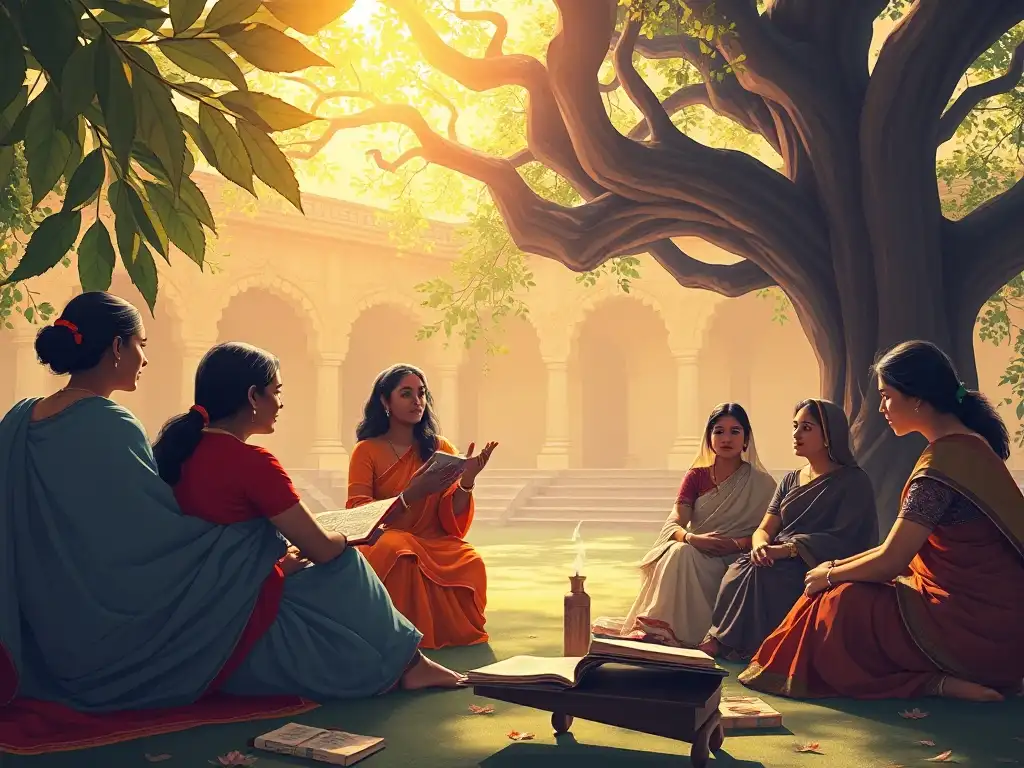
The legacy of women in ancient Indian philosophy is profound and multifaceted, encompassing various schools of thought, spiritual practices, and textual contributions. While historical documentation often sidelines women's roles, evidence suggests that women were not only participants but significant contributors to philosophical discourse. Prominent among these contributions are the teachings of female sages, philosophers, and poets, whose insights shaped the ethical and metaphysical dimensions of ancient Indian thought.
Lasting Impact on Later Philosophical Thought
The influence of women in ancient Indian philosophy can be traced through various texts and teachings that have persisted through the ages. Noteworthy figures such as Gargi and Maitreyi stand out as exemplars of intellectual prowess. Gargi, known for her participation in philosophical debates, posed challenging questions regarding the nature of reality and the self during the Vedic period. Her contributions are celebrated in the Brahmanas, where her dialogues emphasize the quest for knowledge beyond the physical world.
Similarly, Maitreyi, a philosopher depicted in the Upanishads, engaged in profound discussions about the nature of the soul and the universe. Her reflections on the interconnectedness of all beings highlight a philosophical framework that resonates with contemporary ecological and ethical considerations. These early female philosophers laid the groundwork for later thinkers in the Mimamsa and Vedanta traditions, ultimately influencing the trajectory of Indian philosophy as a whole.
The philosophical inquiries posed by these women not only enriched the dialogues of their time but also set the stage for future generations of scholars and thinkers. Their legacies are echoed in the writings of later philosophers such as Shankara and Ramanuja, who, while predominantly male, were undoubtedly influenced by the rich tapestry of thought woven by their female predecessors.
Contemporary Relevance of Ancient Women Philosophers
In today's context, the contributions of women in ancient Indian philosophy are increasingly recognized for their relevance to modern philosophical and ethical discussions. As contemporary society grapples with issues of gender equality, environmental ethics, and social justice, the insights of ancient female philosophers provide valuable perspectives.
For instance, the concept of Dharma articulated by women like Gargi and Maitreyi can be seen as an early exploration of ethical responsibilities, which resonates with current discussions on moral philosophy. Their emphasis on the intrinsic value of knowledge and understanding continues to inspire feminist philosophical movements that advocate for inclusive and equitable discourse.
Moreover, the exploration of self-knowledge and the nature of consciousness, central themes in the teachings of these ancient women, aligns with contemporary interests in psychology and spirituality. The holistic frameworks they proposed encourage a deeper understanding of the self in relation to the cosmos, a theme that finds echoes in modern holistic and integrative approaches.
By revisiting the works and ideas of women in ancient Indian philosophy, scholars and practitioners today can draw connections between historical perspectives and contemporary challenges. This not only honors the legacy of these pioneers but also enriches current philosophical discourses with diverse viewpoints and insights.
The legacy of women in ancient Indian philosophy is not merely a historical footnote but a vibrant field of inquiry that continues to shape our understanding of philosophical thought today. By recognizing and celebrating their contributions, we embrace a more inclusive narrative that acknowledges the vital roles women played in the evolution of philosophical traditions.
Conclusion: Recognizing Women as Innovators in Ancient Indian Philosophy
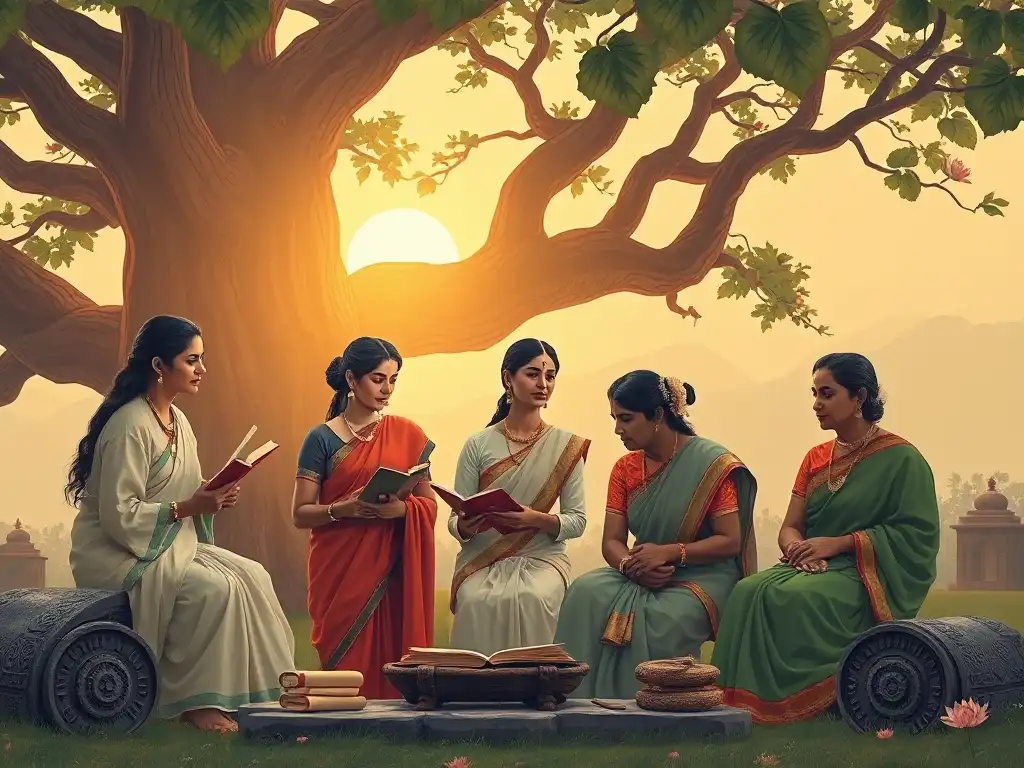
In the tapestry of ancient Indian philosophy, the contributions of women often remain overshadowed by their male counterparts. However, as we have explored throughout this article, women played a pivotal role in shaping philosophical thought, ethics, and spiritual discourse in ancient India. Their insights and innovations not only enriched the philosophical landscape but also laid the groundwork for future generations of thinkers.
Summary of Contributions by Women in Philosophy
Women in ancient Indian philosophy were not mere passive participants; they were active innovators and thinkers. Figures such as Gargi and Maitreyi emerged as formidable philosophers, engaging in profound dialogues that challenged and expanded contemporary thought.
- Gargi Vachaknavi: Renowned for her participation in the philosophical debates of the Upanishads, Gargi posed critical questions about the nature of the universe and the self. Her inquiries into the nature of reality and existence highlighted her deep understanding of metaphysics and epistemology.
- Maitreyi: Another prominent figure, Maitreyi, is celebrated for her dialogues with sage Yajnavalkya in the Brihadaranyaka Upanishad. Her discussions on love, identity, and the nature of the self exemplify the intersection of personal and philosophical exploration.
- Other Influential Thinkers: Additionally, there were many other women, such as Lopamudra and Aditi, who contributed to the dialogue on ethics, spirituality, and the role of women in society. Their voices added significant dimensions to various philosophical discourses, addressing themes of ethics, duty, and the moral status of women.
These women not only contributed to philosophical texts but also inspired future generations, influencing thinkers and shaping the societal understanding of women's roles in philosophy.
The Importance of Reviving Women's Voices in Historical Narratives
The historical narrative surrounding women in ancient Indian philosophy needs to be revitalized. Recognizing and integrating the contributions of women into the broader discourse is essential for several reasons:
- Inclusivity in Historical Records: Reviving women’s voices brings a more inclusive perspective to the understanding of ancient Indian philosophy. It challenges the traditional narratives that often overlook or marginalize women's contributions.
- Inspiration for Future Generations: Highlighting the achievements of women in philosophy serves as a source of inspiration for contemporary thinkers and scholars. It empowers women today by demonstrating that they have a rich legacy of intellectual pursuit to draw upon.
- Broader Understanding of Philosophical Development: Acknowledging the insights of women leads to a more comprehensive understanding of philosophical developments in ancient India. This broader perspective can foster interdisciplinary studies, encouraging connections between philosophy, sociology, and gender studies.
- Cultural Re-evaluation: By bringing women's contributions to the forefront, societies can engage in a cultural re-evaluation that acknowledges the diverse influences that shaped their histories. This can lead to a richer appreciation of the philosophical traditions that continue to impact modern thought.
The recognition of women as innovators in ancient Indian philosophy is not just an academic pursuit; it is a vital step towards a more equitable understanding of history. By celebrating and reviving the contributions of women, we enrich our understanding of the past and pave the way for a more inclusive future in philosophical inquiry.
Frequently Asked Questions
What role did women play in ancient Indian philosophy?
Women were pioneers and innovators in ancient Indian philosophy, contributing significantly to spiritual and philosophical discourses, often leading schools of thought.
Were there any notable women philosophers in ancient India?
Yes, figures like Gargi and Maitreyi are celebrated for their intellectual contributions, engaging in profound discussions on metaphysics and ethics in texts like the Upanishads.
How did societal views affect women's contributions to philosophy?
Despite their significant roles, societal norms often limited women's visibility in philosophical texts, though many continued to influence thought behind the scenes.
What texts highlight the contributions of women in ancient Indian philosophy?
The Upanishads and Brahmanas contain discussions featuring women philosophers, showcasing their intellectual prowess and contributions to philosophical debates.
How can we learn from the contributions of women in ancient Indian philosophy today?
By recognizing and studying their innovative ideas, we can gain a more comprehensive understanding of philosophy, encouraging inclusivity in contemporary philosophical discourse.
Final Reflection: Celebrating Women as Pioneers in Ancient Indian Philosophy
The contributions of women in ancient Indian philosophy are not just historical footnotes; they are vital threads woven into the fabric of intellectual thought that resonate profoundly in today's world. As we explore the rich tapestry of philosophical discourse, it becomes increasingly clear that the voices of women have shaped, challenged, and enriched the philosophical landscape, urging us to recognize their pivotal roles in shaping ideas that continue to influence contemporary thought.
Clearly, the impact of these women extends beyond their time, echoing through the ages and inspiring future generations. Their insights and philosophies remind us that innovation is not limited by gender, but rather flourishes in diversity. As philosopher and activist Simone de Beauvoir once said, One is not born, but rather becomes, a woman.
This statement underscores the importance of recognizing the contributions of women who have historically been marginalized, urging us to celebrate their legacies and acknowledge their influence on the evolution of philosophical thought.
As we reflect on the lessons gleaned from the remarkable women in ancient Indian philosophy, let us invite ourselves to embrace the spirit of inquiry and innovation in our own lives. Consider how you can contribute to the ongoing dialogue of ideas, challenge existing narratives, and ensure that diverse voices are heard and valued. By doing so, we not only honor the contributions of those who came before us but also pave the way for a richer, more inclusive future in philosophy and beyond.
Unveil the Legacy: Honor Women Innovators in Ancient Indian Philosophy!
Thank you for taking the time to explore the remarkable contributions of women to ancient Indian philosophy. Your interest enriches the dialogue surrounding their pivotal roles in shaping thought and culture. Now that you've delved into their incredible legacies, it's time to take meaningful action!
- Dive deeper into this fascinating history by reading further resources on women philosophers in ancient texts. Consider starting with influential figures such as Gargi and Maitreyi!
- Share this article with friends or on social media to inspire others to recognize and celebrate the achievements of women throughout history.
- Join our community discussions by subscribing to our newsletter or participating in forums, where you can connect with fellow history enthusiasts.
How do you believe women philosophers like Gargi and Maitreyi have influenced modern thought? Share your insights below!