
Tracing the Roots: The Indus Valley Civilization and Early Numerical Systems


Welcome to Ancient India History, where we embark on a fascinating journey through the rich tapestry of ancient Indian civilizations. Here, we delve into the remarkable culture, innovations, and contributions that have shaped the world as we know it today. In our featured article, “Tracing the Roots: The Indus Valley Civilization and Early Numerical Systems,” we unravel the mysteries of the Indus Valley civilization history, a cornerstone of mathematical ingenuity.
What secrets lie within the ruins of this ancient society, and how did their numerical systems influence the future? Join us as we explore these compelling questions and much more!
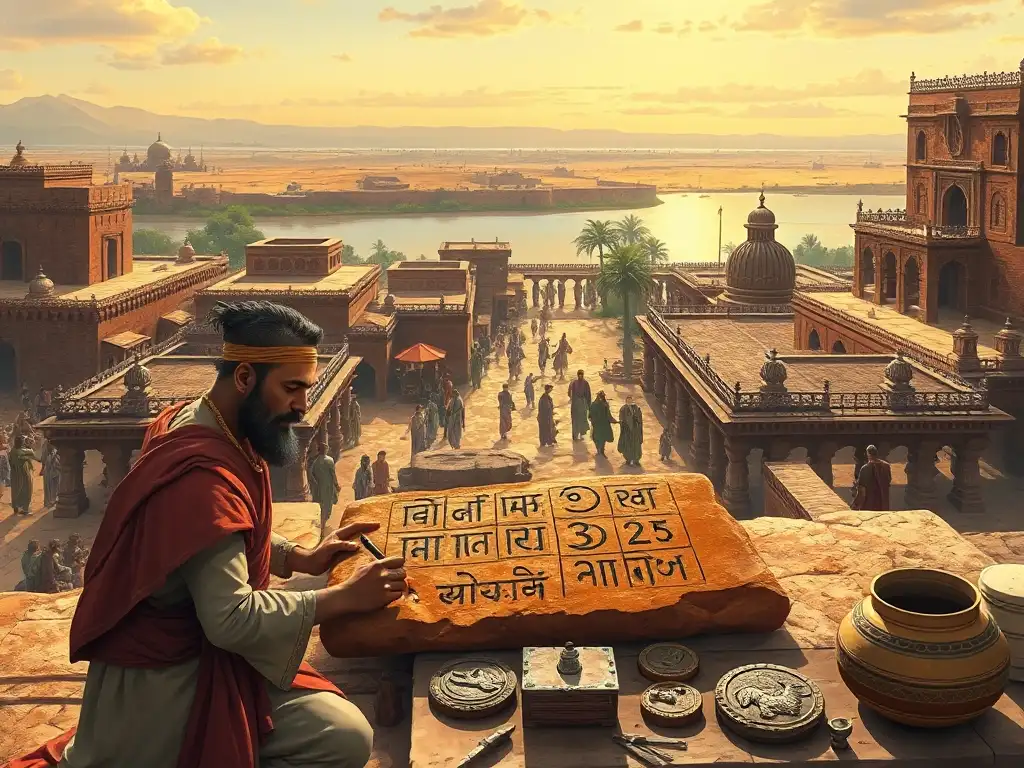
The Indus Valley Civilization (IVC), one of the world's earliest urban cultures, flourished around 2500 BCE in the northwestern regions of South Asia. Known for its advanced city planning, architecture, and social organization, the IVC played a pivotal role in shaping the early foundations of mathematics, particularly through its numerical systems.
This article aims to explore the rich history of the Indus Valley civilization, highlighting its contributions to numerical systems and how these innovations laid the groundwork for future mathematical advancements in ancient India. By delving into the intricacies of this remarkable civilization, we can better appreciate its enduring impact on mathematics and culture.
Introduction to the Indus Valley Civilization History
Overview of the Indus Valley Civilization
The Indus Valley Civilization, primarily located in present-day Pakistan and northwest India, is renowned for its well-planned cities like Harappa and Mohenjo-Daro. This civilization extended across a vast area, encompassing diverse cultures and communities. Notable for its urban infrastructure, the IVC included features such as:
- Grid-patterned streets
- Advanced drainage systems
- Public baths and granaries
Despite its remarkable achievements, much about the IVC remains enigmatic, particularly due to the undeciphered script found on seals and other artifacts. However, archaeological findings suggest that the IVC had a sophisticated understanding of mathematics, evident in their trade practices and architectural planning.
Significance of the Indus Valley in Ancient Indian History
The Indus Valley Civilization holds a crucial place in ancient Indian history, not only for its technological advancements but also for its influence on subsequent Indian cultures. The following points highlight its significance:
- Foundation of Urban Culture: The IVC set the stage for urban development in the Indian subcontinent, influencing future civilizations.
- Cultural Interactions: The civilization engaged in extensive trade with neighboring regions, facilitating cultural and technological exchanges.
- Mathematical Foundations: The IVC's early numerical systems contributed to the evolution of mathematics in India, impacting later civilizations such as the Vedic culture.
The Emergence of Numerical Systems in the Indus Valley
Historical Context of Early Numerical Systems
The emergence of numerical systems in the Indus Valley can be traced back to its complex societal needs. The IVC's economy relied heavily on trade, agriculture, and resource management, necessitating a system of counting and measurement. Evidence suggests that the IVC utilized a form of decimal system, as indicated by artifacts such as weights and measures used in trade. These early numerical systems included:
- Counting systems based on units of ten
- Standardized weights for trade
- Markings on pottery and seals, which may represent numerical values
The Role of Trade in Developing Numerical Concepts
Trade was a catalyst for the development of numerical systems in the Indus Valley. The need to manage transactions, weigh goods, and quantify resources led to the innovation of various numerical concepts. Key aspects of this development include:
- Standardized Measures: The establishment of uniform weights and measures to facilitate trade among diverse communities.
- Transactional Records: The use of seals and inscriptions to document trade agreements and inventory, hinting at advanced record-keeping practices.
- Cultural Exchange: Interaction with neighboring regions, such as Mesopotamia, likely influenced the evolution of numerical systems, blending ideas and practices.
The Indus Valley Civilization not only represents a significant chapter in ancient Indian history but also serves as a foundational pillar for the mathematical advancements that followed. The exploration of its numerical systems reveals the sophistication of this ancient society and its lasting contributions to the field of mathematics.
Analyzing the Indus Script and Numerical Representations
The Indus Valley Civilization, one of the earliest urban cultures, flourished between approximately 3300 and 1300 BCE. This civilization is renowned not only for its impressive urban planning and architecture but also for its unique script and numerical representations. The analysis of the Indus script and its numerical symbols reveals much about the society's communication, trade, and administrative practices.
Characteristics of the Indus Script
The Indus script is a collection of symbols that remain largely undeciphered, comprising around 400 distinct signs. This script was primarily found on seals, pottery, and other artifacts, suggesting its use for administrative and trade purposes. Some key characteristics include:
- Pictographic Nature: Many of the symbols appear to be pictographic, representing objects or concepts directly. This indicates that the script may have served as a means of communication in trade.
- Brevity: The inscriptions are typically short, often consisting of just a few characters. This brevity suggests that the script was used for labeling or denoting ownership, rather than for lengthy narratives.
- Lack of Bilingual Texts: Unlike other ancient scripts, such as Egyptian hieroglyphs or cuneiform, the absence of bilingual texts makes deciphering the Indus script particularly challenging. Scholars have proposed various theories about its structure, including the possibility of it being logographic or syllabic in nature.
- Direction of Writing: The script appears to have been written in various orientations—left to right, right to left, and top to bottom—adding complexity to its interpretation.
These characteristics indicate that the Indus script was a sophisticated form of communication, integral to the functioning of this advanced civilization.
Evidence of Numerical Symbols in Indus Valley Seals
Numerical symbols in the Indus Valley are predominantly identified on seals, which were used for trade and administrative purposes. Some notable aspects of these symbols include:
- Distinctive Symbols: Archaeological findings have revealed symbols that may represent numbers, including a series of strokes and geometric shapes. These symbols likely conveyed numerical information related to goods and transactions.
- Inscriptions on Seals: Many seals feature inscriptions that appear to include numerical representations alongside pictographs. For example, some seals show symbols that could indicate quantities or units of measure, suggesting an advanced understanding of trade and accounting.
- Standardization: The repetition of certain numerical symbols across various seals points to a standardized system of numerical representation, indicating that merchants and administrators likely relied on a common understanding of these symbols.
- Connection to Trade: The presence of numerical symbols on seals suggests their role in commerce and trade, facilitating transactions and record-keeping in this complex society.
This evidence of numerical symbols highlights the administrative sophistication of the Indus Valley Civilization and its reliance on an organized system for economic activities.
Comparing Indus Valley Numerical Systems with Contemporary Civilizations
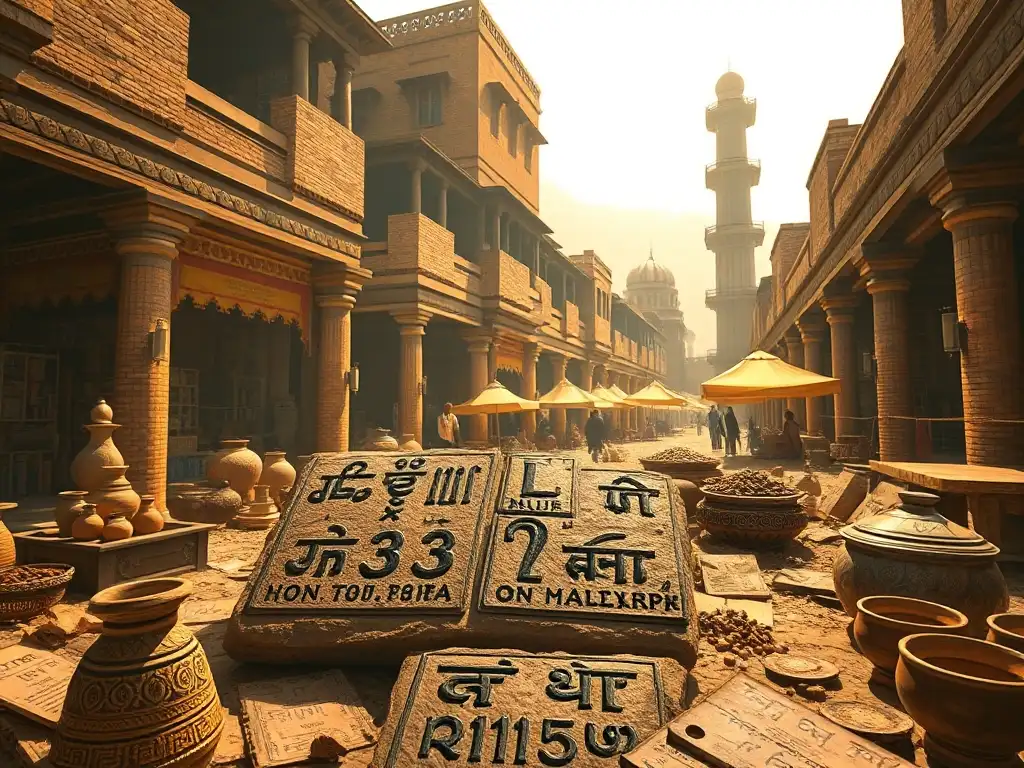
The numerical systems of the Indus Valley Civilization can be compared and contrasted with those of contemporary civilizations, particularly Mesopotamia. This comparison sheds light on the innovations and exchanges that occurred in ancient times.
Numerical Innovations in Mesopotamia
The Mesopotamian civilization, which thrived around the same period as the Indus Valley, is known for its pioneering contributions to mathematics and numerical systems. Some key innovations include:
- Base-60 System: The Sumerians developed a sexagesimal (base-60) system, which allowed for sophisticated calculations, including geometry and astronomy. This system laid the foundation for our current measurements of time (60 seconds in a minute, 60 minutes in an hour).
- Cuneiform Writing: The use of cuneiform symbols allowed for detailed record-keeping, including trade transactions, agricultural outputs, and legal agreements. This system is among the earliest forms of written language, showcasing their advanced administrative capabilities.
- Mathematical Texts: The discovery of clay tablets with mathematical problems demonstrates their knowledge of arithmetic, geometry, and algebra, indicating a complex understanding of numerical concepts.
These innovations highlight the significant advancements made in numerical systems in Mesopotamia, contrasting with the more enigmatic nature of the Indus Valley's numerical representations.
Similarities and Differences in Numerical Concepts
While the Indus Valley and Mesopotamian civilizations developed their numerical systems independently, there are notable similarities and differences:
- Similarities:
- Trade Facilitation: Both civilizations employed numerical systems primarily to facilitate trade and manage economic transactions.
- Use of Seals: Seals in both cultures served as important tools for marking ownership and recording transactions, indicating a shared understanding of the importance of standardization in commerce.
- Differences:
- Base System: The Indus Valley appears to have used a system that is not yet fully understood, while Mesopotamia's base-60 system enabled more complex calculations.
- Complexity of Records: Mesopotamian records are more extensive and detailed, reflecting a more developed mathematical tradition compared to the relatively simpler numerical representations found in the Indus Valley.
While the numerical systems of the Indus Valley and Mesopotamia share common purposes in trade and administration, they exhibit distinct characteristics that reflect their unique cultural and technological contexts. The study of these systems offers valuable insights into the mathematical contributions of ancient civilizations.
The Influence of the Indus Valley Civilization on Later Indian Mathematics
The Indus Valley Civilization (IVC), which thrived from approximately 3300 to 1300 BCE, laid the groundwork for various aspects of Indian culture, including mathematics. The inhabitants of this ancient civilization demonstrated a sophisticated understanding of numerical systems, as evidenced by archaeological findings of weights, measures, and seals inscribed with symbols. These numerical practices influenced subsequent Indian mathematical traditions, particularly during the Vedic period.
One significant aspect of the IVC's influence on later mathematics is the establishment of standardized weights and measures. The use of a binary system for trade and commerce not only facilitated economic activities but also laid the foundation for more complex mathematical concepts in later Indian societies. The precision of IVC weights, which were often made from stone and calibrated, hints at an advanced understanding of measurement that would inform future mathematical developments.
Moreover, the IVC's symbol system is thought to be one of the earliest forms of writing in the Indian subcontinent. Although the script remains undeciphered, the potential numerical significance of these symbols suggests that the people of the IVC possessed a level of mathematical sophistication that would resonate through the ages, influencing the emergence of Vedic mathematics and beyond.
Transition to Vedic Mathematics
The transition from the numerical practices of the Indus Valley Civilization to Vedic mathematics marks a significant evolution in the mathematical landscape of ancient India. As the IVC declined and the Vedic period emerged around 1500 BCE, new mathematical concepts began to take shape, heavily influenced by the earlier practices in the valley.
Vedic mathematics introduced a more systematic approach to arithmetic and algebra, employing techniques that can be traced back to the practical calculations used in the IVC. The Vedas, particularly the Sulba Sutras, showcase geometric principles and the application of mathematical rules in rituals, architecture, and astronomy. This transition highlights the continuity of mathematical thought from the IVC, where practical applications of mathematics were essential for trade, agriculture, and urban planning, to the more theoretical and spiritual dimensions found in Vedic texts.
The legacy of the IVC's numerical systems is evident in the methodologies employed in Vedic mathematics, such as the use of fractions, geometry, and algorithms. These developments not only reflect the progression of mathematical understanding but also underscore the enduring impact of the Indus Valley Civilization on later Indian mathematical traditions.
Lasting Legacy of Indus Numerical Practices in Ancient India
The numerical practices established during the Indus Valley Civilization have left a profound and lasting legacy on the mathematical developments in ancient India. The influence of the IVC can be seen in various aspects of Indian culture, including trade, astronomy, and architecture, where mathematical precision was paramount.
For instance, the knowledge of geometry and measurements derived from the IVC's practices played a crucial role in the construction of temples and other monumental architecture in later periods. The meticulous planning seen in structures such as the great bath of Mohenjo-Daro reflects a deep understanding of spatial relationships and measurements, which were later echoed in ancient Indian architectural texts.
Furthermore, the integration of IVC numerical systems into the broader context of Indian mathematics facilitated the advancement of concepts such as zero, the decimal system, and various mathematical operations that would eventually permeate global mathematics. The continuity of these practices is a testament to the ingenuity of the early inhabitants of the Indus Valley and their significant contribution to the mathematical heritage of India.
Conclusion: The Indus Valley Civilization as a Foundation for Mathematical Advancements
The Indus Valley Civilization stands as a critical foundation for the mathematical advancements that followed in ancient India. The sophisticated numerical practices and measures established during this period not only influenced the development of Vedic mathematics but also laid the groundwork for subsequent mathematical thought that would flourish in the centuries to come.
The interplay between practical applications and theoretical underpinnings in the mathematics of the IVC exemplifies the civilization's role as a precursor to the rich mathematical heritage of ancient India. Understanding these connections is vital for appreciating the evolution of mathematics in the subcontinent and its contributions to global knowledge.
Reflection on the Importance of Understanding Indus Valley Civilization History
Reflecting on the history of the Indus Valley Civilization allows us to recognize the importance of this ancient society in shaping the mathematical landscape of India. By exploring the numerical systems and practices of the IVC, we gain insight into how early civilizations approached concepts of measurement and calculation, paving the way for future innovations.
This understanding not only enriches our knowledge of ancient Indian culture but also highlights the interconnectedness of historical developments across time. The mathematical achievements that arose from the foundations laid by the IVC are a testament to the enduring legacy of this civilization and its profound impact on subsequent generations.
Future Research Directions in Ancient Indian Numerical Systems
Future research directions in the study of ancient Indian numerical systems should focus on several areas to further our understanding of the mathematical contributions of the Indus Valley Civilization and its successors.
- Deciphering Indus Script: Continued efforts to decipher the Indus script may reveal more about the mathematical practices of the civilization and their implications for later mathematical systems.
- Comparative Studies: Engaging in comparative studies between Indus Valley practices and contemporary mathematical systems, both within and outside India, can shed light on the unique contributions of the IVC.
- Archaeological Investigations: Ongoing archaeological excavations can uncover additional artifacts related to weights, measures, and numerical practices, enriching the narrative of ancient Indian mathematics.
- Interdisciplinary Approaches: Collaborating with fields such as anthropology, history, and linguistics can provide a more holistic view of the mathematical developments in ancient India, tracing their roots back to the Indus Valley Civilization.
By pursuing these research directions, we can deepen our understanding of the Indus Valley Civilization's influence on mathematics and appreciate the rich tapestry of numerical systems that have evolved throughout ancient Indian history.
- Introduction to the Indus Valley Civilization History
- The Emergence of Numerical Systems in the Indus Valley
- Analyzing the Indus Script and Numerical Representations
- Comparing Indus Valley Numerical Systems with Contemporary Civilizations
- The Influence of the Indus Valley Civilization on Later Indian Mathematics
- Conclusion: The Indus Valley Civilization as a Foundation for Mathematical Advancements
- What is the Indus Valley Civilization?
- What were the key contributions of the Indus Valley Civilization?
- How did the early numerical systems emerge in the Indus Valley?
- What are the main archaeological sites associated with the Indus Valley Civilization?
- How did the fall of the Indus Valley Civilization occur?
Frequently Asked Questions
What is the Indus Valley Civilization?
The Indus Valley Civilization was an ancient civilization that flourished around 2500 BCE in the northwestern regions of South Asia, notable for its advanced urban planning and architecture.
What were the key contributions of the Indus Valley Civilization?
The civilization is known for its innovative urban planning, including sophisticated drainage systems, as well as early numerical systems and trade networks that influenced later cultures.
How did the early numerical systems emerge in the Indus Valley?
The early numerical systems in the Indus Valley were linked to trade and commerce, utilizing symbols for quantities, which were essential for record-keeping and economic activities.
What are the main archaeological sites associated with the Indus Valley Civilization?
Key sites include Mohenjo-Daro, Harappa, and Dholavira, each showcasing advanced urban layouts, public baths, and granaries indicative of a complex society.
How did the fall of the Indus Valley Civilization occur?
The decline of the Indus Valley Civilization remains debated, with theories suggesting climate change, shifting river patterns, and possible invasions leading to its eventual disintegration.
Final Reflection: Unveiling the Legacy of the Indus Valley Civilization
The exploration of the Indus Valley civilization history reveals not only the remarkable achievements of an ancient society but also their enduring influence on contemporary culture and knowledge. As we delve into the intricacies of their early numerical systems, we uncover a profound connection to our modern understanding of mathematics and urban planning.
This civilization, often overshadowed by its more famous counterparts, stands as a testament to human ingenuity and adaptability in the face of challenges. Their legacy is not merely a relic of the past; it is a foundation upon which we continue to build our present and future.
The impact of the Indus Valley civilization resonates deeply within our cultural and social frameworks. Their innovative approaches to trade, governance, and urban design serve as a reminder of the power of collaboration and foresight. As we navigate the complexities of our modern world, we can draw inspiration from their achievements. Civilizations are not defined by their monuments, but by the legacy they leave behind.
This quote encapsulates the essence of our reflection on the Indus Valley, urging us to recognize the importance of learning from history to shape a better future.
As we conclude this journey through the annals of the Indus Valley civilization, I invite you to reflect on the lessons embedded within their history. Consider how the principles of innovation, sustainability, and community can be applied in your own life. Let the story of this ancient civilization inspire you to seek knowledge, embrace diversity, and contribute positively to the world around you. Together, we can honor their legacy by fostering a future that values the wisdom of the past while striving for progress.
Unveil the Secrets of Ancient Numerals!
Thank you for diving into the fascinating world of the Indus Valley Civilization and its groundbreaking numerical systems! We hope you've gained valuable insights into how these early innovators shaped our understanding of mathematics and culture.
Now, let’s turn that knowledge into action! Here are a few steps you can take to further explore this rich topic:
- Dig deeper: Research the impact of the Indus Valley's numerical systems on modern mathematics. What connections can you draw between these ancient methods and contemporary practices?
- Share your insights: Discuss what you've learned with friends or within your community. Consider starting a book club or an online discussion group focused on ancient civilizations!
- Join the conversation: Engage with others who share an interest in ancient history by visiting forums or social media groups dedicated to this captivating subject.
What key takeaway from the Indus Valley Civilization’s numerical systems has inspired you the most, and how do you think it influences our understanding of mathematics today?