
Ancient Indian Mathematicians: The Pioneers Behind the Concept of Zero

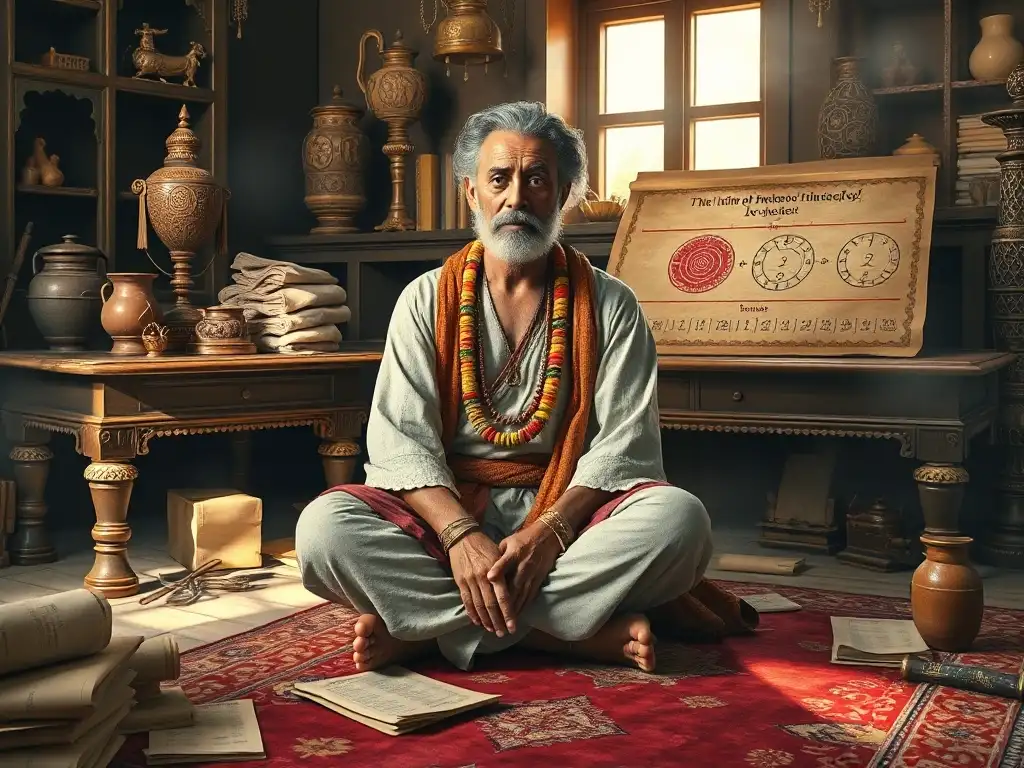
Welcome to Ancient India History, where we embark on a journey through the vibrant tapestry of one of the world's oldest civilizations. Delve into the remarkable contributions of ancient Indian mathematicians, who not only laid the groundwork for mathematical principles but also introduced groundbreaking concepts such as zero. Are you ready to uncover the genius behind these pioneers and their lasting impact on mathematics as we know it today? Join us as we explore their extraordinary legacy and the cultural richness that shaped their discoveries. Your adventure into the depths of ancient wisdom starts here!
-
Ancient Indian Mathematicians Contributions: Pioneers Behind the Concept of Zero
- Introduction to Ancient Indian Mathematicians
- The Concept of Zero in Ancient India
- Key Ancient Indian Mathematicians and Their Contributions
- The Influence of Ancient Indian Mathematicians on Global Mathematics
- Legacy of Ancient Indian Mathematicians
- Modern Mathematical Concepts Derived from Ancient Indian Methods
- Continued Recognition of Contributions to Mathematics
- Conclusion: The Enduring Impact of Ancient Indian Mathematicians
- Summary of Contributions to Mathematics and the Concept of Zero
-
Frequently Asked Questions
- What are the key contributions of ancient Indian mathematicians?
- Who is credited with the invention of zero in ancient India?
- How did ancient Indian mathematicians influence modern mathematics?
- What role did the Gupta Empire play in the advancement of mathematics?
- Are there any notable texts on mathematics from ancient India?
- Final Reflection: Celebrating the Legacy of Ancient Indian Mathematicians
- Unveil the Legacy of Ancient Indian Mathematics!
Ancient Indian Mathematicians Contributions: Pioneers Behind the Concept of Zero

The legacy of ancient Indian mathematicians is a remarkable testament to their profound understanding of mathematics, which has left an indelible mark on the field globally. In particular, their contributions to the concept of zero stand out as a transformative breakthrough that revolutionized numerical systems and mathematical thought.
This article delves into the lives and achievements of these pioneering scholars, exploring how their work laid the foundation for modern mathematics. From the sophisticated calculations of the Indus Valley civilization to the systematic approaches of the Gupta Empire, ancient Indian mathematicians not only advanced numerical theory but also influenced mathematics across cultures.
Introduction to Ancient Indian Mathematicians
Brief Overview of Ancient Indian Mathematics
Ancient Indian mathematics boasts a rich history characterized by innovative techniques and profound concepts. The roots of this mathematical tradition can be traced back to the Indus Valley Civilization (circa 2500-1900 BCE), where residents utilized advanced methods for trade, agriculture, and architectural planning. The Bakhshali Manuscript, an ancient Indian mathematical treatise, and the works of notable mathematicians such as Aryabhata and Brahmagupta exemplify this tradition. They not only explored arithmetic and algebra but also ventured into geometry and trigonometry, establishing an impressive body of knowledge that would influence subsequent generations.
Importance of Contributions to Mathematics
The contributions of ancient Indian mathematicians extend far beyond their time; they represent foundational developments that shaped the trajectory of mathematics as we know it today. Key achievements include:
- Development of place value systems.
- Introduction of negative numbers and their operational rules.
- Formulation of methods for solving quadratic equations.
- Pioneering work in trigonometry and calculus concepts.
These advancements facilitated a deeper understanding of mathematical principles and laid the groundwork for future innovations, making ancient Indian mathematicians pivotal figures in the history of mathematics.
The Concept of Zero in Ancient India
Historical Context of Zero in Mathematical Development
The concept of zero, often regarded as one of the most significant mathematical inventions, found its origins in ancient India. The earliest recorded use of zero dates back to around the 5th century CE, with the work of Aryabhata, who utilized a symbol for zero in his numeral system. This revolutionary idea was not merely a placeholder but represented a unique numeric value, enabling mathematicians to perform complex calculations with greater efficiency. The transition from a numeral system that relied on counting to one that incorporated zero marked a pivotal moment in mathematical evolution.
Significance of Zero in Number Systems
The introduction of zero transformed number systems across cultures. It allowed for the representation of large numbers and facilitated operations like addition and subtraction without ambiguity. Zero's role as both a numeral and an operator opened up new avenues for mathematical exploration. Its adoption in the decimal place-value system is a prime example of how zero enhanced numerical clarity and efficiency, influencing not just Indian mathematics but also spreading to the Islamic world and eventually to Europe, reshaping the way mathematics is practiced globally.
By understanding the contributions of ancient Indian mathematicians to the concept of zero, we gain insight into a pivotal chapter in the history of mathematics that continues to resonate in contemporary mathematical practices.
Key Ancient Indian Mathematicians and Their Contributions
Ancient Indian mathematicians played a pivotal role in shaping the foundations of mathematics, particularly through their contributions to the concept of zero. This innovative idea transformed mathematical thought and enabled advances in arithmetic and algebra. Below, we explore some of the key figures who significantly influenced mathematics in ancient India and beyond.
Aryabhata: The Innovator of Zero
Aryabhata, who lived in the 5th century CE, is often regarded as one of the first pioneers of mathematics and astronomy in ancient India. His seminal work, the Aryabhatiya, details his revolutionary ideas, including the introduction of zero as a numeral. Aryabhata’s system of place value allowed for more sophisticated calculations, and he emphasized the use of zero not just as a placeholder but as a number with its own value.
His contributions to mathematics extended beyond zero; he developed methods for calculating the area of triangles, the volume of spheres, and even approximated π (pi) to an impressive degree. Aryabhata's work laid the groundwork for future mathematicians and demonstrated the profound understanding of mathematical principles in ancient India.
Brahmagupta: The Mathematician Who Defined Zero
Brahmagupta, a contemporary of the 7th century CE, further advanced the study of zero. In his influential text, Brahmasphutasiddhanta, he explicitly defined zero and its operations, presenting rules for arithmetic involving zero. For instance, he established that any number added to zero remains unchanged, while zero added to itself equals zero.
Brahmagupta’s work was critical in solidifying the understanding of zero within the framework of arithmetic. He also contributed to algebra, providing methods for solving quadratic equations and discussing the properties of negative numbers. His insights were crucial for integrating zero into broader mathematical concepts, making him a key figure in the history of mathematics.
Bhaskara I and II: Building on the Concept of Zero
The contributions of Bhaskara I and II, two influential mathematicians from the 7th and 12th centuries respectively, further expanded the role of zero in mathematics. Bhaskara I is known for his translations of Aryabhata's work and for introducing the rules of sine and cosine, which incorporated the use of zero in trigonometric calculations. His work set the stage for future developments in trigonometry.
Bhaskara II, also known as Bhaskaracharya, is celebrated for his monumental work, the Lilavati and Bijaganita. In these texts, he explored arithmetic and algebra, often using zero in calculations. His explanations of mathematical concepts were clear and accessible, making his texts widely used for centuries. Bhaskara II's innovations in mathematics, particularly regarding zero, had a lasting impact on both Indian and global mathematical traditions.
The Influence of Ancient Indian Mathematicians on Global Mathematics
The contributions of ancient Indian mathematicians to the concept of zero had a profound influence on the development of mathematics worldwide. Their ideas spread across continents and centuries, shaping the mathematical practices of various cultures.
Transmission of Mathematical Knowledge
The transmission of mathematical knowledge from ancient India occurred through trade routes and scholarly exchanges, particularly during the Gupta Empire's Golden Age. Indian mathematicians traveled to regions such as the Middle East and Southeast Asia, bringing their innovative concepts, including zero.
As a result, zero became integrated into the Arabic numeral system, which later influenced European mathematics during the Renaissance. The work of scholars like Al-Khwarizmi and Al-Kindi in the Islamic Golden Age built upon the foundations laid by ancient Indian mathematicians, showcasing the far-reaching effects of their contributions.
The Role of Ancient Indian Mathematics in the Islamic Golden Age
During the Islamic Golden Age, the mathematical advancements of ancient India became crucial to the development of mathematics in the Islamic world. The concept of zero, along with the place-value system, facilitated complex calculations and contributed to the advancement of algebra and trigonometry.
Prominent Islamic mathematicians incorporated Indian mathematical practices into their works, leading to significant developments in mathematics. This cross-cultural exchange not only preserved ancient Indian knowledge but also enhanced global mathematics, allowing for the collaborative growth of mathematical thought. Through this enduring legacy, the contributions of ancient Indian mathematicians continue to resonate in contemporary mathematics.
Legacy of Ancient Indian Mathematicians
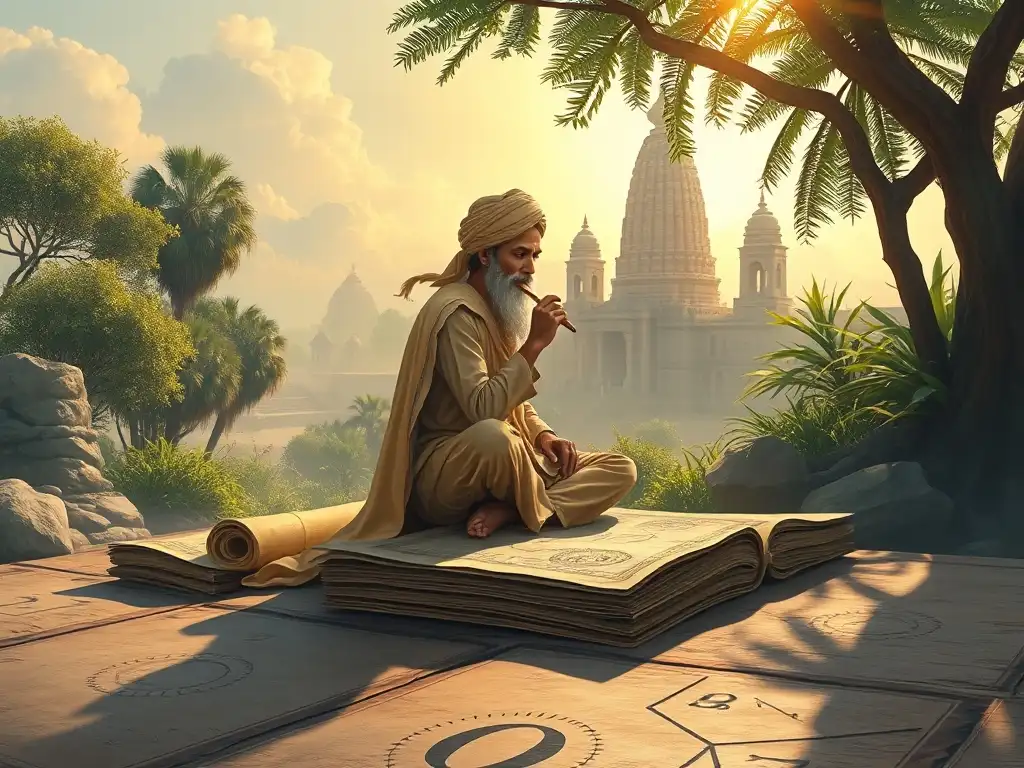
The legacy of ancient Indian mathematicians is profound, shaping not only the mathematical concepts of their time but also laying the groundwork for future generations. Their work in fields such as algebra, geometry, and arithmetic has influenced mathematicians around the globe. One of their most significant contributions is the development of the numeral system that we use today, including the concept of zero, which was revolutionary in the history of mathematics.
Prominent mathematicians such as Aryabhata, Brahmagupta, and Bhaskara made substantial advancements in mathematical theories and practices. Aryabhata's work, particularly in trigonometry and astronomy, showcased an early understanding of the Earth's rotation and the calculation of time. Brahmagupta introduced rules for arithmetic and algebra, including the treatment of zero in calculations. These contributions have been foundational in establishing a rich mathematical tradition that continues to inspire and inform contemporary mathematics.
Modern Mathematical Concepts Derived from Ancient Indian Methods
Ancient Indian mathematicians pioneered several concepts that have become fundamental in modern mathematics. For instance, the positional decimal system, which allows for the representation of large numbers and complex calculations, was significantly advanced by these mathematicians. This system includes the vital role of zero, which serves as a placeholder and enables the representation of numbers in a concise manner.
Additionally, methods of solving quadratic equations and the concept of negative numbers can be traced back to ancient Indian texts. Brahmagupta’s rules for solving these equations laid the groundwork for algebraic formulations that are still taught today. Furthermore, the use of mathematical proofs and rigorous methodologies in works such as Bhaskara's "Lilavati" demonstrates an early understanding of mathematical reasoning that is crucial in today's mathematical education.
Continued Recognition of Contributions to Mathematics
The contributions of ancient Indian mathematicians are increasingly recognized in modern academia and beyond. Educational institutions around the world are beginning to incorporate teachings from ancient Indian mathematics into their curriculums, highlighting the relevance of these historical contributions. Scholars and researchers are continually uncovering ancient texts that reveal the depth of knowledge possessed by these mathematicians, further validating their significance in the history of mathematics.
In recent years, various conferences and publications have focused on ancient Indian mathematics, showcasing its relevance to contemporary mathematical theories and practices. This renewed interest helps to bridge the gap between ancient and modern mathematical thought, recognizing the invaluable insights that ancient Indian mathematicians offered.
Conclusion: The Enduring Impact of Ancient Indian Mathematicians

The contributions of ancient Indian mathematicians to the field of mathematics, particularly their work surrounding the concept of zero, have left an indelible mark on the discipline. Their innovative ideas and methods not only advanced mathematics in their time but also laid the foundation for future developments.
Summary of Contributions to Mathematics and the Concept of Zero
Ancient Indian mathematicians made groundbreaking contributions that transformed mathematics. Their development of the concept of zero as a number, as well as their advancements in arithmetic, algebra, and geometry, played a crucial role in the evolution of mathematical thought. The numeral system we use today owes much to their pioneering work, allowing for complex calculations and abstract thinking.
The importance of ancient mathematics in today's world cannot be overstated. As we navigate an increasingly complex and data-driven society, the principles and concepts developed by ancient Indian mathematicians remain relevant. Their work serves as a reminder of the rich intellectual heritage that informs modern mathematics and the continuous journey of knowledge. Emphasizing the contributions of these mathematicians not only enriches our understanding of history but also inspires future generations to explore and innovate within the field of mathematics.
Frequently Asked Questions
What are the key contributions of ancient Indian mathematicians?
Ancient Indian mathematicians made significant contributions such as the development of the concept of zero, advancements in algebra, and the introduction of the decimal system.
Who is credited with the invention of zero in ancient India?
Brahmagupta, a 7th-century mathematician, is widely recognized for formalizing the concept of zero and its mathematical operations in his works.
How did ancient Indian mathematicians influence modern mathematics?
The innovations of ancient Indian mathematicians laid the groundwork for many modern mathematical concepts, including geometry, trigonometry, and the decimal system.
What role did the Gupta Empire play in the advancement of mathematics?
The Gupta Empire is often referred to as the Golden Age of Indian mathematics, where scholars made remarkable progress in numerical systems, astronomy, and mathematical texts.
Are there any notable texts on mathematics from ancient India?
Yes, texts such as Aryabhatiya by Aryabhata and Brahmasphutasiddhanta by Brahmagupta are crucial works that detail the mathematical advancements of ancient Indian scholars.
Final Reflection: Celebrating the Legacy of Ancient Indian Mathematicians
The contributions of ancient Indian mathematicians are not just historical footnotes; they are the very foundation upon which modern mathematics stands. Today, as we navigate a world increasingly driven by technology and data, the significance of concepts like zero and the decimal system becomes ever more apparent. These pioneers laid the groundwork for mathematical thought, and their innovations continue to shape our understanding of the universe.
The impact of ancient Indian mathematicians extends far beyond their time, influencing cultures and societies across the globe. Their work has permeated various fields, from astronomy to engineering, and has inspired countless generations of scholars. As we reflect on their contributions, we are reminded of the words of the mathematician Carl Friedrich Gauss: Mathematics is the queen of the sciences and number theory is its crown jewel.
This sentiment underscores the enduring relevance of the mathematical principles established by these ancient thinkers, which remain integral to our scientific advancements today.
As we close this exploration of ancient Indian mathematicians, I invite you to reflect on the profound influence of their discoveries in your own life. Consider how the principles of mathematics shape your daily experiences, from the simplest calculations to the complexities of technology. Let their legacy inspire you to appreciate the beauty of mathematics and encourage you to delve deeper into the wonders of this discipline. Embrace the spirit of inquiry and innovation that these pioneers embodied, and carry their torch forward into the future.
Unveil the Legacy of Ancient Indian Mathematics!
Thank you for diving into the fascinating world of Ancient Indian mathematicians and discovering their monumental contributions—most importantly, the groundbreaking concept of zero! Your curiosity and interest in this rich history are crucial in keeping these remarkable achievements alive and inspiring future generations.
Now, it’s time to take action and strengthen your connection with this legacy:
- Explore more about the lives and discoveries of these pioneers by visiting our dedicated pages on Ancient Indian Mathematics.
- Share your newfound knowledge with fellow history enthusiasts or in your social circles—help spread the word about these incredible mathematicians!
- Participate in discussions within our online community. Engage with others who share your passion by commenting below or joining our forum.
Which aspect of Ancient Indian mathematics has intrigued you the most, and in what ways do you believe it continues to shape modern mathematical practices today?