
The Influence of Vedic Mathematics on Modern Mathematical Practices


Welcome to Ancient India History! Here, we invite you to embark on a fascinating journey through time, uncovering the rich tapestry of ancient Indian civilizations that have shaped our world today. In our featured article, “The Influence of Vedic Mathematics on Modern Mathematical Practices,” we delve into the profound contributions of Vedic mathematics and its surprising relevance in contemporary mathematics.
What secrets does this ancient system hold that can enhance our understanding and application of math today? Join us as we explore the connections between past and present, and discover how the wisdom of the ancients continues to inspire innovation in our modern age.
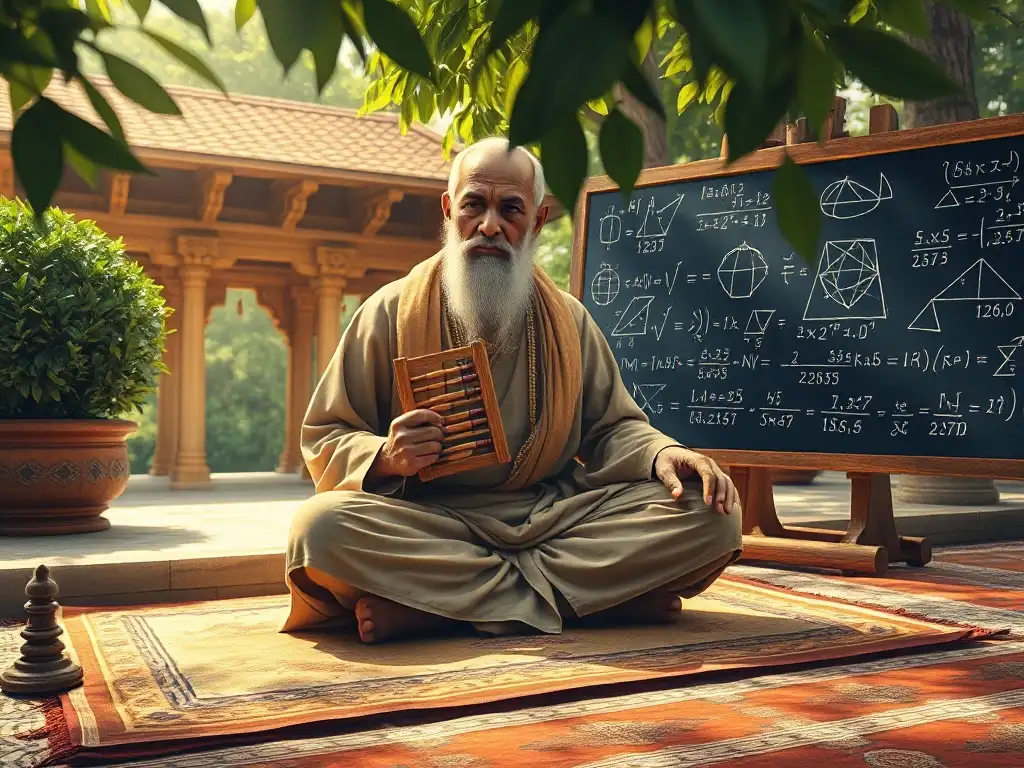
Vedic Mathematics, an ancient system of mathematics rooted in the Vedas, has left a profound impact on mathematical practices today. This system, rich in techniques and philosophies, offers unique methods for calculations and problem-solving that resonate with modern mathematical approaches. As we delve into the intricacies of Vedic Mathematics, we uncover its historical significance, key concepts, and the ways in which it continues to influence contemporary mathematics. This exploration not only highlights the contributions of ancient Indian civilizations but also emphasizes the relevance of Vedic techniques in enhancing mathematical understanding and efficiency in the modern era.
Introduction to Vedic Mathematics
What is Vedic Mathematics?
Vedic Mathematics is a collection of techniques or sutras derived from ancient Indian texts known as the Vedas. These techniques enable quick and efficient calculations, often simplifying complex mathematical operations into manageable steps. The core idea behind Vedic Mathematics is to utilize mental math strategies that can be applied across various branches of mathematics, including arithmetic, algebra, geometry, and calculus. This system promotes a deeper understanding of numbers and relationships, fostering an intuitive grasp of mathematical concepts.
Historical Context of Vedic Mathematics
The origins of Vedic Mathematics can be traced back to around 1500 BC, during the time of the Vedic period in ancient India. The Vedic texts, particularly the "Atharva Veda," contain various mathematical principles that were traditionally used for rituals, astronomy, and trade. However, it wasn't until the 20th century that Swami Bharati Krishna Tirthaji, a prominent scholar, systematically compiled these techniques into a cohesive framework. His work aimed to revive the ancient knowledge and adapt it for contemporary education, illustrating its timeless relevance.
Key Concepts and Techniques in Vedic Mathematics
Vedic Mathematics is characterized by several key concepts and techniques that facilitate mental calculations, including:
- Sutras: Short, aphoristic formulas that provide specific methods for solving mathematical problems. For example, the sutra "Nikhilam Navatashcaramam Dasatah" (All from Nine and the Last from Ten) enables quick subtraction and multiplication.
- Vertically and Crosswise: A method for multiplication that simplifies the process by breaking down numbers into manageable components.
- Base Number System: Utilizing number bases effectively, allowing for quick calculations and conversions.
These techniques not only streamline calculations but also enhance mathematical creativity and problem-solving skills.
The Impact of Vedic Mathematics on Modern Math
Vedic Mathematics in Modern Math: A Brief Overview
In recent years, Vedic Mathematics has garnered attention in educational settings, particularly in India and among mathematics enthusiasts worldwide. Its emphasis on mental calculations and alternative problem-solving strategies has made it a valuable tool for educators and students alike. Modern curricula are increasingly integrating Vedic techniques to complement traditional methods, fostering a more comprehensive understanding of mathematics.
Comparison of Vedic Techniques with Contemporary Methods
When comparing Vedic Mathematics with contemporary mathematical methods, several distinctions and similarities emerge. Vedic techniques often emphasize speed and efficiency, allowing for rapid calculations without the reliance on calculators or lengthy algorithms. In contrast, modern methods may focus more on systematic approaches, often requiring more steps for problem resolution. However, the underlying principles of logical reasoning and numerical relationships remain consistent across both paradigms, highlighting a shared foundation in mathematical understanding.
Case Studies: Successful Applications of Vedic Mathematics
The practical applications of Vedic Mathematics are evident in various fields. For instance, educators have reported improved performance in students who practice Vedic techniques, showcasing enhanced mental agility and confidence in problem-solving. Additionally, industries that require rapid calculations, such as finance and data analysis, have begun to adopt Vedic methods to improve efficiency and accuracy. Real-world case studies illustrate how these ancient techniques can provide modern solutions, bridging the gap between history and contemporary practices.
Contributions of Vedic Mathematicians
The contributions of Vedic mathematicians are foundational to the development of mathematics in ancient India and have had a lasting impact on modern mathematical practices. Rooted in the Vedic texts, these mathematicians developed numerous techniques that simplified complex calculations, enabling advancements in various fields such as astronomy, architecture, and commerce.
The methodologies introduced by Vedic scholars emphasized speed and efficiency, which were especially crucial in a time when calculations had to be performed manually. Techniques such as sutras (aphorisms) and sub-sutras allowed mathematicians to tackle arithmetic problems with remarkable agility. For instance, the Vedic sutra "Urdhva-Tiryagbhyam" provides a systematic approach for multiplication that is still taught in some modern educational contexts.
The legacy of these contributions is evident not only in historical texts but also in how they influence the teaching of mathematics today, allowing educators to introduce students to alternative methods of problem-solving that are both intuitive and engaging.
Prominent Mathematicians in Vedic Tradition
Several prominent mathematicians emerged from the Vedic tradition, each contributing significantly to the field. Among them, Aryabhata (476–550 CE) stands out for his pioneering work in mathematics and astronomy. His treatise, the Aryabhatiya, introduced concepts such as zero, place value, and the approximation of π (pi), which were groundbreaking at the time.
Another notable figure is Brahmagupta (598–668 CE), who made significant advances in algebra and introduced rules for arithmetic operations involving zero and negative numbers. His work, Brahmasphutasiddhanta, not only addressed practical problems but also provided a systematic approach to solving quadratic equations.
Bhaskara I and Bhaskara II (also known as Bhaskara the Younger), further advanced the field with their works on calculus, trigonometry, and astronomical calculations. Their contributions reflect a blend of mathematical rigor and practical application, paving the way for subsequent generations of mathematicians.
Contributions to Algebra and Geometry
Vedic mathematics made substantial contributions to both algebra and geometry, establishing principles that are still relevant today. In algebra, Vedic scholars developed methods for solving equations, including linear and quadratic forms. The use of symbolic representation, although not as developed as in later European mathematics, laid the groundwork for algebraic thinking.
In geometry, Vedic mathematicians excelled in deriving formulas for calculating areas and volumes of various shapes. The sutras provided techniques for constructing geometric figures and understanding their properties, which were crucial for architectural design and land measurement. The principle of Pythagorean triples, for instance, was known and utilized by Indian mathematicians long before it was formally described by Pythagoras in Greece.
These contributions reflect a deep understanding of mathematical concepts and their practical applications, influencing not only Indian mathematics but also contributing to the global mathematical heritage.
Legacy of Vedic Scholars in Today's Mathematical Practices
The legacy of Vedic scholars continues to permeate modern mathematical practices, as their techniques offer alternative approaches to problem-solving. Vedic mathematics emphasizes mental calculation and visualization, allowing students to engage with mathematics in a more intuitive way. This is particularly beneficial in a world where computational skills are increasingly important.
Many educational institutions around the globe have begun to incorporate Vedic mathematics into their curricula, recognizing its potential to enhance mathematical understanding and performance. The techniques facilitate quicker calculations and foster a deeper conceptual grasp of mathematical principles, making them invaluable tools in contemporary education.
Moreover, Vedic mathematics has influenced various fields beyond pure mathematics. Applications in computer science, engineering, and finance demonstrate the versatility and relevance of these ancient techniques in solving complex modern problems.
Vedic Mathematics Techniques in Education

Vedic mathematics techniques are gaining traction in educational settings as educators seek to provide students with diverse mathematical tools. These techniques are rooted in simplicity and efficiency, which makes them appealing in a learning environment that often emphasizes standardized testing and rote memorization.
Incorporating Vedic Math in Modern Curricula
Incorporating Vedic mathematics into modern curricula involves integrating its principles into existing math programs rather than replacing them entirely. This can be achieved through workshops, specialized courses, and teacher training programs that focus on Vedic methods.
Teachers can introduce Vedic sutras to enhance lessons on multiplication, division, and even algebra. For example, the sutra "Nikhilam Navatashcaramam Dasatah" simplifies multiplication by rounding numbers to the nearest base, which can significantly speed up calculations.
Educational institutions that have adopted Vedic mathematics report improved student engagement and performance, as students find these techniques not only effective but also enjoyable. The approach encourages creative thinking and nurtures a love for mathematics.
Benefits of Vedic Mathematics in Learning
The benefits of Vedic mathematics in learning are manifold. One of the primary advantages is the enhancement of mental calculation skills, which is crucial in today's fast-paced world. Vedic techniques enable students to perform calculations in their heads quickly and accurately, fostering confidence in their mathematical abilities.
Additionally, Vedic mathematics promotes a deeper understanding of mathematical concepts. By breaking down complex problems into simpler steps, students are better equipped to grasp underlying principles. This holistic understanding can lead to improved problem-solving skills and greater retention of mathematical knowledge.
Moreover, the use of Vedic techniques can help reduce math anxiety, as students learn to approach problems with a mindset focused on strategies rather than memorization. This shift in perspective can transform the learning experience, making mathematics more accessible and enjoyable.
Challenges and Limitations of Vedic Methods in Education
Despite its benefits, the integration of Vedic mathematics into education faces several challenges and limitations. One significant hurdle is the lack of awareness and understanding among educators regarding Vedic techniques. Many teachers are trained in traditional methods and may be hesitant to adopt unfamiliar approaches.
Moreover, the emphasis on standardized testing in many educational systems can limit the scope of integrating Vedic mathematics. Teachers may feel pressured to cover specific curricular content that aligns with testing requirements, leaving little room for innovative teaching methods.
Another challenge is the need for comprehensive training programs to equip educators with the skills necessary to effectively teach Vedic mathematics. Without proper training, the potential of Vedic techniques may not be fully realized, and students may miss out on the advantages offered by these ancient methods.
While Vedic mathematics presents unique opportunities for enhancing mathematical education, overcoming these challenges will require concerted efforts from educators, institutions, and policymakers to embrace and promote this rich mathematical heritage.
Real-World Applications of Vedic Mathematics
Vedic mathematics, originating from ancient Indian scriptures known as the Vedas, comprises a collection of techniques and principles that can simplify complex mathematical problems. In modern times, these techniques have found numerous applications across various fields, enhancing efficiency and accuracy in calculations. The unique methods in Vedic mathematics, such as sutras and algorithms, are not only beneficial for students but also for professionals in multiple sectors. This section explores the practical implications of Vedic mathematics in engineering, finance, competitive exams, and more.
Vedic Mathematics in Engineering and Science
Engineers and scientists increasingly recognize the value of Vedic mathematics for its ability to simplify calculations and enhance problem-solving capabilities. Techniques such as Nikhilam Sutra (all from nine) allow for quick multiplication and division, which is particularly advantageous in fields requiring rapid computations, such as civil engineering and computer science.
In civil engineering, for instance, precise measurements and calculations are essential for project success. Vedic methods enable engineers to perform rapid estimations, improving project planning and execution. In computer science, algorithms derived from Vedic principles can optimize programming processes, making code more efficient.
Moreover, fields like physics and chemistry benefit from Vedic mathematics through enhanced analytical skills. Students and professionals alike can leverage these techniques to tackle complex equations and enhance their understanding of mathematical concepts, leading to improved outcomes in experimental results and theoretical studies.
The Role of Vedic Techniques in Financial Calculations
In the finance sector, Vedic mathematics plays a crucial role in simplifying calculations, enabling quicker decision-making. Financial analysts and accountants utilize techniques such as Urdhva-Tiryagbhyam (vertically and crosswise) for rapid multiplication and division, which can streamline budgeting, forecasting, and investment analysis.
For instance, when evaluating different investment options, professionals can quickly calculate returns using Vedic methods, allowing for more informed decisions in a fast-paced environment. Additionally, these techniques are particularly useful in risk assessment, where rapid calculations can lead to timely insights, ultimately enhancing financial strategies.
Furthermore, Vedic mathematics can aid in personal finance management, enabling individuals to manage budgets and expenses more effectively. By incorporating these ancient techniques into modern financial practices, individuals and organizations can achieve greater accuracy and efficiency in their calculations.
Vedic Mathematics in Competitive Exams and Skill Development
Vedic mathematics has gained substantial popularity in competitive exam preparation, especially in India. Many coaching institutes incorporate these techniques into their curricula for subjects like mathematics and aptitude tests. The methods promote mental agility and quick calculations, which are essential for success in exams such as the SAT, GRE, and various entrance tests.
Students trained in Vedic mathematics often outperform their peers due to their enhanced speed and accuracy. Techniques like Anurupyena (proportionately) allow students to solve problems in a fraction of the time typically required, providing a significant advantage during timed tests.
Additionally, learning Vedic mathematics fosters critical thinking and problem-solving skills, which are invaluable beyond examinations. As students master these techniques, they develop a deeper understanding of mathematical concepts, ultimately preparing them for advanced studies and professional challenges.
Conclusion
Summary of Vedic Mathematics' Influence on Modern Math
Vedic mathematics has undeniably influenced modern mathematical practices across various domains. Its techniques have not only simplified complex calculations but have also enhanced analytical and problem-solving skills among users. From engineering to finance and competitive exams, Vedic mathematics provides tools that promote efficiency and accuracy, making it a valuable asset in today’s fast-paced world.
Future Prospects: The Evolution of Vedic Mathematics in Contemporary Practices
As the world increasingly embraces holistic approaches to education and skill development, the future of Vedic mathematics looks promising. Educational institutions are beginning to recognize the importance of integrating these ancient techniques into their curricula, promoting a more diverse mathematical education.
Incorporating Vedic mathematics into STEM (Science, Technology, Engineering, and Mathematics) fields could lead to innovative solutions and improved methodologies. Additionally, with advancements in technology, online platforms and applications that teach Vedic mathematics are becoming more prevalent, making these techniques accessible to a broader audience.
Final Thoughts on Embracing Ancient Wisdom in Modern Mathematics
Embracing the principles of Vedic mathematics in contemporary practices not only honors ancient wisdom but also enhances modern mathematical education and applications. By integrating these techniques into daily calculations and academic curricula, individuals can unlock new levels of efficiency and understanding. In a world where speed and accuracy are paramount, the resurgence of Vedic mathematics offers a unique bridge between ancient knowledge and modern needs, encouraging a deeper appreciation for the rich mathematical heritage of ancient India.
- Introduction to Vedic Mathematics
- The Impact of Vedic Mathematics on Modern Math
- Contributions of Vedic Mathematicians
- Vedic Mathematics Techniques in Education
- Real-World Applications of Vedic Mathematics
- Conclusion
Frequently Asked Questions
What is Vedic Mathematics?
Vedic Mathematics is an ancient system of mathematics derived from the Vedas, characterized by its sutras or aphorisms that provide shortcuts for calculations and problem-solving.
How has Vedic Mathematics influenced modern math?
Vedic Mathematics has contributed to modern mathematical practices by offering efficient methods for arithmetic, algebra, and geometry, making complex calculations easier and faster.
Are there specific techniques from Vedic Mathematics used today?
Yes, techniques such as cross-multiplication, digit-based calculations, and complementary techniques are commonly used in calculators and software to enhance computational efficiency.
Can Vedic Mathematics be applied in education?
Absolutely! Incorporating Vedic Mathematics in educational curricula can help students develop a stronger numerical intuition and improve their problem-solving skills in mathematics.
Where can I learn more about Vedic Mathematics?
There are various resources available, including books, online courses, and tutorials that cover the principles and applications of Vedic Mathematics in depth.
Final Reflection: The Timeless Legacy of Vedic Mathematics in Modern Math
The exploration of Vedic mathematics in modern math reveals a profound connection between ancient wisdom and contemporary practices. As we navigate an increasingly complex world, the principles of Vedic mathematics offer not only innovative techniques for problem-solving but also a reminder of the rich intellectual heritage that continues to shape our understanding of mathematics today. The resurgence of interest in these ancient methods underscores their relevance and potential to enhance mathematical education and application in our daily lives.
Cultural and social landscapes are continually influenced by the integration of Vedic mathematics into modern curricula and practices. This ancient system encourages a holistic approach to learning, fostering creativity and critical thinking among students. As we embrace these techniques, we witness a shift in how mathematics is perceived—not merely as a set of rules and formulas, but as a dynamic and engaging discipline. Mathematics is not about numbers, equations, computations, or algorithms: it is about understanding.
This quote encapsulates the essence of Vedic mathematics, inviting us to appreciate the deeper connections within the subject.
As we reflect on the lessons of Vedic mathematics, let us challenge ourselves to incorporate its principles into our own mathematical journeys. Whether you are a student, educator, or simply a math enthusiast, consider how these ancient techniques can enhance your understanding and appreciation of mathematics. Embrace the opportunity to explore new methods, think creatively, and foster a lifelong love for learning. The legacy of Vedic mathematics is not just a historical curiosity; it is a vibrant and transformative force that can enrich our lives and the future of mathematics itself.
Unleash Your Mathematical Potential Today!
Thank you for diving into the fascinating world of Vedic Mathematics with us! You've discovered how ancient techniques continue to shape modern mathematical practices, revealing the remarkable connections between the past and present. Now, it's time to put that knowledge into action!
Here are some engaging steps you can take right now:
- Start practicing Vedic techniques: Challenge yourself to apply Vedic methods in your daily math tasks—whether it's calculating percentages or solving complex equations. You'll be amazed at how quickly you can enhance your skills!
- Share your journey: Connect with friends or family and teach them a Vedic technique that you found intriguing. Learning together can create a supportive community and encourage deeper exploration of these unique concepts.
- Explore more resources: Seek out books, courses, or online communities dedicated to Vedic Mathematics. You might even discover unexpected applications that can transform your understanding of math!
What mathematical challenges are you excited to tackle using the wisdom of Vedic Mathematics?