
The Role of Zero in Ancient Indian Education and Mathematical Learning

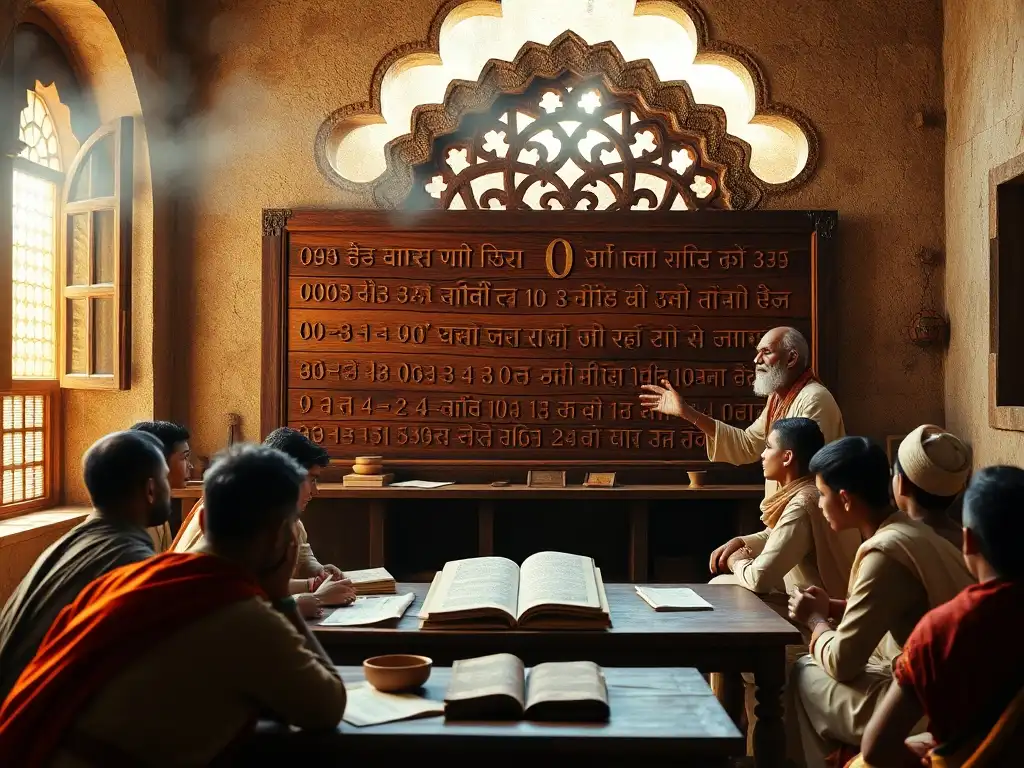
Welcome to Ancient India History, where we embark on a fascinating journey through the rich tapestry of ancient civilizations that shaped the world as we know it. Today, we delve into a groundbreaking concept that revolutionized mathematics: the zero. In our featured article, "The Role of Zero in Ancient Indian Education and Mathematical Learning," we uncover how this remarkable innovation from ancient Indian mathematicians not only transformed numerical systems but also paved the way for modern mathematical thought.
Join us as we explore the profound impact of zero, and discover the intriguing connections between education, culture, and the legacy of ancient Indian mathematics. Prepare to be inspired!
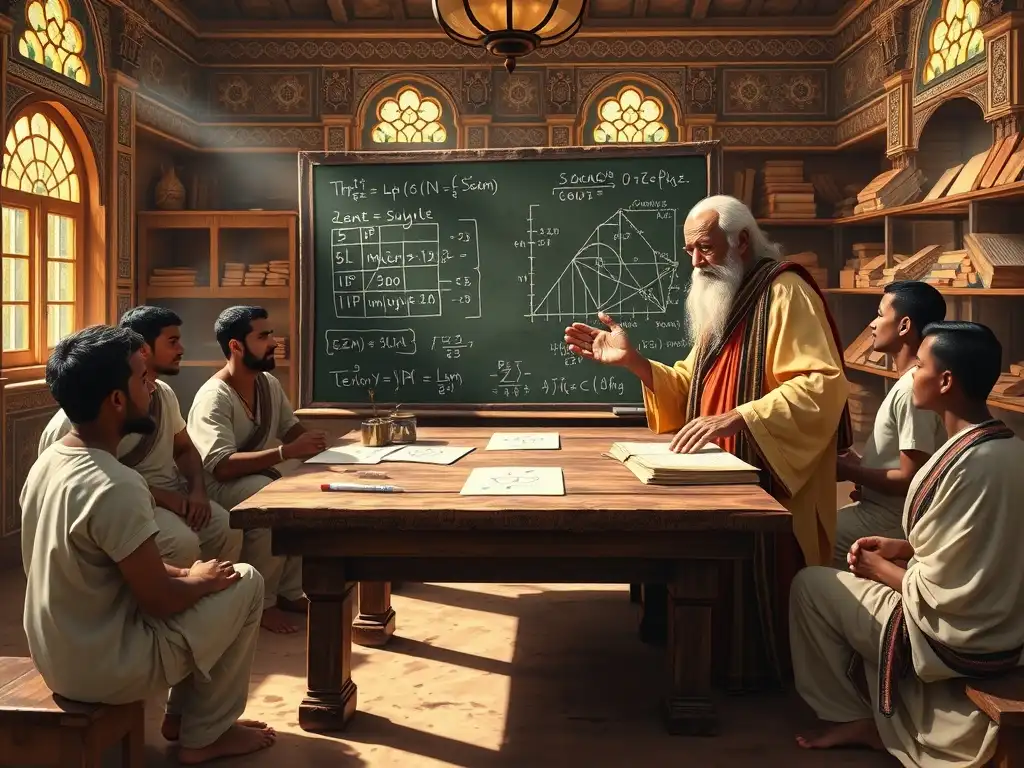
The exploration of the role of zero in ancient Indian education and mathematical learning unveils a pivotal chapter in the history of mathematics that significantly shaped the way we understand numerical systems today. The concept of zero, often regarded as a simple placeholder, carries profound implications that extend far beyond its apparent simplicity.
In ancient India, zero was not merely a number; it represented a revolutionary leap in mathematical thought that laid the groundwork for advanced calculations and theoretical mathematics. Through a comprehensive examination of the origins, educational practices, and intellectual contributions surrounding zero, we can appreciate how this seemingly innocuous digit transformed mathematical learning and facilitated the advancement of various scientific disciplines.
Introduction to Zero in Ancient Indian Mathematics
Zero in ancient Indian mathematics is a topic of great significance that reflects the ingenuity and intellectual prowess of Indian scholars. Unlike in many cultures where the concept of nothingness was often dismissed or overlooked, Indian mathematicians embraced and formalized zero as a fundamental part of their numerical system. This inclusion not only enabled more complex arithmetic operations but also influenced mathematical practices around the world.
Understanding the Concept of Zero
The concept of zero (or "shunya" in Sanskrit) is unique in that it represents both the absence of quantity and the potential for a numerical value. This duality prompted a profound understanding of mathematics, allowing for the development of algorithms and computations that were previously unimaginable. For instance, the introduction of zero enabled the formulation of the decimal place value system, which revolutionized arithmetic by simplifying calculations and facilitating the representation of large numbers.
- Key Features of Zero:
- Serves as a placeholder in positional notation
- Represents the concept of null or absence
- Enables the formulation of mathematical operations such as addition, subtraction, and multiplication
Historical Context of Mathematics in Ancient India
To fully grasp the significance of zero, it is essential to consider the historical context of mathematics in ancient India. The roots of Indian mathematics can be traced back to the Vedic period (1500 - 500 BCE), where early numerical systems began to take shape. Over time, these systems evolved, leading to the emergence of sophisticated mathematical concepts in the subsequent centuries.
- Timeline of Key Developments:
- Vedic Period: Introduction of early counting systems
- Brahmagupta (7th century CE): Formalization of rules for arithmetic operations involving zero
- Bakhshali Manuscript (circa 250 CE): Early evidence of the use of zero as a placeholder
The Origin of Zero in Ancient Indian Education
The educational practices surrounding mathematics in ancient India were deeply intertwined with the philosophical and cultural ethos of the time. Scholars and mathematicians played a crucial role in integrating the concept of zero into their teachings, thereby influencing generations of learners.
Early Mathematical Texts and Treatises
Numerous ancient texts and treatises from India provide insight into the development and application of zero in mathematics. Notable works such as the "Aryabhatiya" by Aryabhata and "Brahmasphutasiddhanta" by Brahmagupta laid the framework for mathematical learning that incorporated zero as a central element. These texts not only documented mathematical theories but also served as educational resources for students and scholars alike.
- Influential Texts:
- Aryabhatiya: Introduced innovative methods for calculating square roots and the concept of zero
- Brahmasphutasiddhanta: Established rules for arithmetic operations with zero, highlighting its importance in mathematical calculations
Contributions of Indian Scholars to the Concept of Zero
Indian scholars made significant contributions to the understanding and formalization of zero, which impacted not only their own civilization but also the mathematical traditions of other cultures. The intellectual legacy of mathematicians such as Aryabhata, Brahmagupta, and later scholars like Bhaskara II illustrates the depth of understanding surrounding zero and its foundational role in mathematics.
- Notable Contributions:
- Aryabhata's introduction of the place value system
- Brahmagupta's rules for using zero in calculations
- Bhaskara II's further advancements in algebra and calculus that utilized zero
The role of zero in ancient Indian education and mathematical learning is a testament to the innovative spirit of Indian scholars. Their contributions not only enriched mathematical understanding but also set the stage for future developments in mathematics across the globe. The legacy of zero continues to resonate in modern mathematics, underscoring the importance of ancient Indian contributions to the field.
Zero as a Fundamental Element in Mathematics
Zero, often regarded as one of the most significant concepts in mathematics, serves as a fundamental element that underpins many mathematical theories and practices. In ancient Indian mathematics, zero was not merely a placeholder but a revolutionary concept that allowed for the representation of nothingness and the facilitation of complex calculations. It enabled scholars to develop a more sophisticated number system and laid the groundwork for algebra and calculus.
The introduction of zero transformed how calculations were conducted, making arithmetic more efficient and accessible. Furthermore, its adoption into the number system heralded a new era of mathematical thought, allowing for the exploration of negative numbers and the concept of infinity.
The Significance of Zero in Number Systems
The significance of zero in number systems cannot be overstated. In ancient Indian numeral systems, zero was introduced as a digit, which allowed for the representation of large numbers without ambiguity. For instance, the number 205 is distinct from 25 or 2050 due to the role of zero in indicating the absence of a value in a specific place.
This innovation was crucial in developing a positional numeral system, which is the foundation of modern mathematics. The Indian mathematician Brahmagupta, in the 7th century, elaborated on the properties of zero in his seminal work "Brahmasphutasiddhanta," where he defined rules for arithmetic operations involving zero. This laid the groundwork for further advancements in mathematics, as it provided a framework for understanding and manipulating numbers systematically.
Zero's Role in Arithmetic and Algebraic Operations
Zero plays a pivotal role in both arithmetic and algebraic operations. In arithmetic, it acts as the additive identity, meaning that any number added to zero remains unchanged (e.g., \(a + 0 = a\)). This property is essential for maintaining the integrity of numerical operations.
In algebra, zero facilitates the solution of equations; for instance, setting an equation equal to zero helps in finding roots or solutions, thus playing a critical role in algebraic expressions and polynomial equations. The concept of zero also enables calculations involving negative numbers, which were explored extensively in ancient Indian mathematics. This comprehensive understanding of zero allowed mathematicians to develop more complex mathematical theories and operations, cementing its place as a cornerstone of mathematics.
Influence of Zero on Mathematical Learning in Ancient India
The influence of zero on mathematical learning in ancient India was profound, as it transformed educational practices and the way mathematics was taught. The introduction of zero into the curriculum not only enhanced students' understanding of numerical concepts but also encouraged critical thinking and problem-solving skills. Schools, particularly in regions like Nalanda and Takshashila, integrated zero into their teaching methods, fostering an environment where mathematics could be explored deeply and creatively.
Zero in the Context of Mathematical Education
In the context of mathematical education, zero represented a significant pedagogical shift. It served as a foundational element in teaching arithmetic and geometry, allowing students to grasp more abstract mathematical concepts. Educators employed zero to illustrate the importance of place value, facilitating a deeper understanding of number systems. The application of zero in various mathematical problems helped students engage with the subject matter more effectively, promoting a culture of inquiry and innovation in mathematical thought. The ability to manipulate and reason with zero empowered learners, enabling them to approach mathematical challenges with confidence.
Teaching Methods Incorporating Zero in Ancient Schools
Ancient Indian schools employed a variety of teaching methods that incorporated zero into the learning process. These methods included the use of oral traditions, written texts, and practical exercises that emphasized the application of zero in calculations. Teachers would often use examples from everyday life to illustrate the concept of zero, making it relatable and easier to understand.
Additionally, problem-solving sessions encouraged collaborative learning, where students would work together to explore the implications of zero in various mathematical scenarios. This hands-on approach not only solidified students' understanding of zero but also fostered a communal learning environment that celebrated mathematical exploration. Through these innovative teaching methods, zero became an integral part of the educational landscape in ancient India, shaping the future of mathematical learning for generations to come.
Key Figures in the Development of Zero
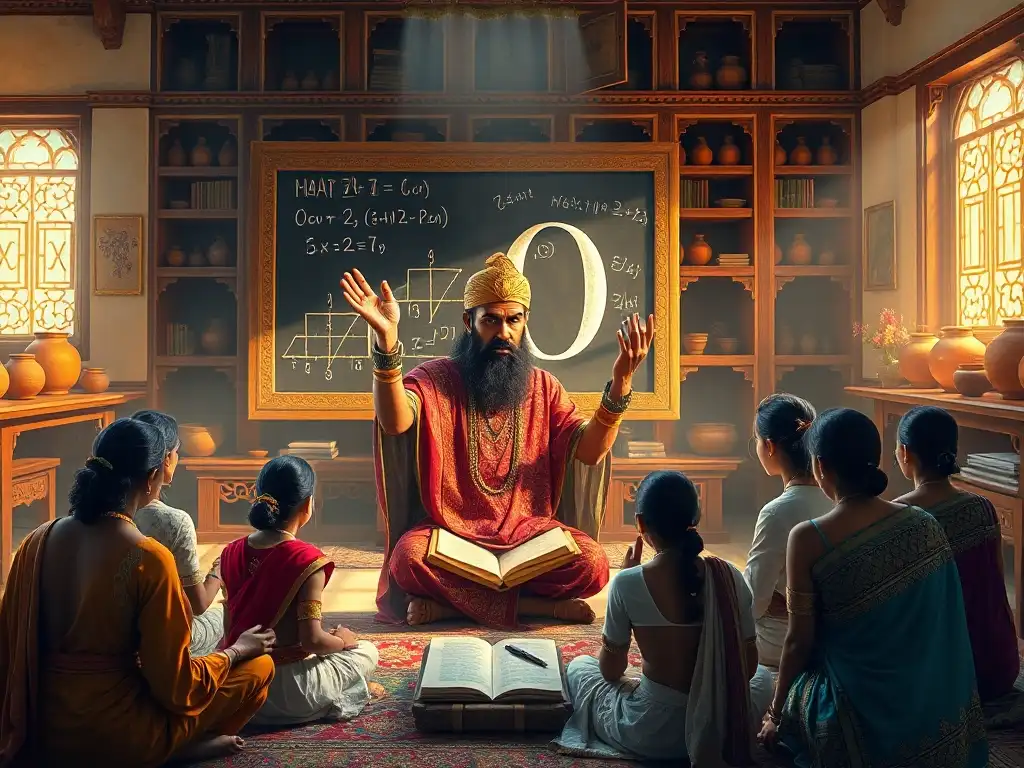
The development of zero in ancient Indian mathematics is attributed to several key figures who made significant contributions to the conceptualization and use of this revolutionary numeral. These mathematicians not only advanced mathematical learning but also laid the groundwork for future generations to understand the importance of zero as a number and a concept. Among these figures, Aryabhata and Brahmagupta stand out for their groundbreaking work, which would eventually influence global mathematics.
Aryabhata and His Contributions to Zero
Aryabhata, who lived in the 5th century CE, is often celebrated as one of the first major mathematicians to systematically use zero. In his seminal work, the "Aryabhatiya," he introduced the place-value system, which is foundational for understanding zero's function in mathematics. Aryabhata's approach allowed for the representation of large numbers and simplified calculations by using a placeholder for zero. His work on arithmetic, algebra, and trigonometry also emphasized the importance of zero in astronomical calculations, showcasing its utility beyond mere arithmetic.
Aryabhata's contributions did not just stop at theoretical frameworks; he also provided methods for solving equations and calculating the value of π (pi) with remarkable accuracy. His insights into zero helped in refining mathematical techniques, which were crucial for later developments in mathematics.
Brahmagupta’s Innovations in Mathematical Concepts
Following Aryabhata, Brahmagupta emerged in the 7th century CE as a pivotal figure in the history of zero. His treatise, "Brahmasphutasiddhanta," is one of the earliest texts to provide formal rules regarding arithmetic operations involving zero. Brahmagupta defined zero as a number and provided detailed rules for its use in calculations, including how to handle operations like addition and subtraction with zero.
One of his key innovations was the concept of zero as a result of subtracting a number from itself, which marked a fundamental understanding of zero in the context of the number line. Additionally, Brahmagupta explored negative numbers and their relationship with zero, further enriching the mathematical discourse of his time. His work laid a solid foundation for the arithmetic that would be expanded upon in the centuries to come.
The Impact of Zero on Later Mathematical Developments
The introduction and formalization of zero had profound implications for the further development of mathematics not only in India but also across the globe. As a pivotal element in the numeral system, zero facilitated more complex calculations and paved the way for advancements in algebra, calculus, and beyond.
The Spread of Zero Beyond Ancient India
The concept of zero began to spread beyond the borders of ancient India through trade and cultural exchanges. By the 9th century, zero had made its way to the Islamic world, where scholars translated Indian mathematical texts and incorporated the numeral into their own systems. The work of mathematicians like Al-Khwarizmi and Al-Kindi played a crucial role in popularizing zero in the Islamic Golden Age, further cementing its importance in mathematics.
As the Islamic scholars traveled to Europe, they brought with them the numeral system that included zero, which eventually influenced the Renaissance. The adoption of zero in Europe marked a significant shift in mathematical practices and was instrumental in the development of modern mathematics.
Zero's Influence on Global Mathematical Practices
Zero's influence extends far beyond its origins in ancient India. It became a fundamental concept in mathematics worldwide, enabling more complex calculations and theories. In Western mathematics, the concept of zero paved the way for the development of calculus and advanced algebra, profoundly shaping the mathematical landscape.
Furthermore, zero's role in computer science cannot be understated. The binary numeral system, which forms the basis of modern computing, relies heavily on the concept of zero. Hence, the contributions of ancient Indian mathematicians regarding zero not only transformed mathematics but also laid the groundwork for technological advancements in the centuries that followed.
The development of zero in ancient Indian mathematics represents a pivotal moment in the history of numerical systems, significantly impacting both historical and contemporary mathematical practices globally.
Conclusion: The Legacy of Zero in Ancient Indian Mathematics
The concept of zero in ancient Indian mathematics represents a monumental shift in mathematical thought and education. It was not merely a placeholder but a revolutionary idea that allowed for the development of complex mathematical theories and calculations. The earliest documented use of zero can be traced back to the 5th century CE, particularly in the works of mathematicians like Aryabhata and Brahmagupta. Their innovation laid the groundwork for modern mathematics and profoundly influenced other cultures, including Islamic and European mathematicians, who would later adopt and adapt these concepts.
The legacy of zero transcends its numerical value. It embodies the philosophical and scientific advancements of ancient Indian civilization, illustrating a deep understanding of mathematics as a language to describe the universe. The introduction of zero facilitated the development of algebra, calculus, and the number system we utilize today. This profound contribution continues to resonate, reminding us of the intellectual heritage that shapes our contemporary mathematical frameworks.
Reflection on the Importance of Zero in Education
The role of zero in ancient Indian education was pivotal, not just for mathematics but for the broader spectrum of knowledge. Schools and universities, such as the ancient Nalanda University, emphasized the importance of mathematics, integrating it into various disciplines including astronomy, philosophy, and even art. The teaching methods utilized included practical applications of zero, which fostered critical thinking and problem-solving skills among students.
Zero enabled students to grasp more abstract concepts, paving the way for innovative approaches to teaching mathematics. It encouraged learners to think about numbers not just as quantities but as concepts that could represent the absence of value, thus enhancing their cognitive flexibility. The emphasis on zero in education demonstrated an understanding of the need for foundational concepts to facilitate complex learning, a principle that remains relevant in educational systems today.
The Continuing Relevance of Ancient Indian Mathematical Innovations
The innovations stemming from the discovery and use of zero in ancient Indian mathematics continue to influence modern mathematical practices and education across the globe. The decimal system, which is intrinsically linked to the concept of zero, is fundamental to contemporary mathematics, commerce, and technology. Today, we utilize this system in everything from basic arithmetic to advanced computational methods.
Furthermore, the philosophies surrounding mathematical learning in ancient India, emphasizing logical reasoning and the interconnectedness of disciplines, are increasingly relevant in today's interdisciplinary educational approach. Current educational frameworks that promote critical thinking and problem-solving are echoes of ancient Indian methodologies. The integration of zero into mathematical thought not only transformed mathematics itself but also set a precedent for how knowledge can be structured and taught, ensuring that the legacy of ancient Indian mathematics endures in our modern world.
- Introduction to Zero in Ancient Indian Mathematics
- The Origin of Zero in Ancient Indian Education
- Zero as a Fundamental Element in Mathematics
- Influence of Zero on Mathematical Learning in Ancient India
- Key Figures in the Development of Zero
- The Impact of Zero on Later Mathematical Developments
- Conclusion: The Legacy of Zero in Ancient Indian Mathematics
- What is the significance of zero in ancient Indian mathematics?
- How did ancient Indian scholars contribute to the development of zero?
- In what ways was zero integrated into ancient Indian education?
- How did the concept of zero influence later mathematical developments?
- What are some key texts that discuss the role of zero in ancient Indian mathematics?
Frequently Asked Questions
What is the significance of zero in ancient Indian mathematics?
Zero was a revolutionary concept in ancient Indian mathematics, serving not only as a placeholder but also as a symbol for the absence of quantity, which laid the groundwork for modern mathematics.
How did ancient Indian scholars contribute to the development of zero?
Ancient Indian mathematicians, such as Brahmagupta and Aryabhata, were pivotal in formalizing the rules of zero, establishing its operations and its importance in arithmetic and algebra.
In what ways was zero integrated into ancient Indian education?
Zero was taught as part of the mathematics curriculum in ancient Indian educational institutions, emphasizing its role in calculations and contributing to a broader understanding of numerical systems.
How did the concept of zero influence later mathematical developments?
The introduction of zero allowed for advancements in calculus, algebra, and geometry, influencing global mathematics and enabling complex calculations in various fields.
What are some key texts that discuss the role of zero in ancient Indian mathematics?
Important texts, such as Brahmagupta's Brahmasphutasiddhanta and Aryabhata's Aryabhatiya, provide insight into the mathematical principles involving zero and its applications in ancient Indian education.
Final Reflection: The Enduring Legacy of Zero in Ancient Indian Mathematics
The exploration of zero in ancient Indian mathematics reveals not only a pivotal moment in the history of mathematics but also a profound understanding of the universe that resonates with us today. The concept of zero transformed numerical systems and paved the way for advancements in mathematics, science, and technology. As we navigate a world increasingly reliant on complex calculations and digital innovations, the significance of zero remains a cornerstone of our mathematical framework and a testament to human ingenuity.
The influence of zero extends beyond mere calculations; it has shaped our cultural and intellectual landscape. The introduction of zero was not just a mathematical breakthrough; it was a philosophical shift that encouraged abstract thinking and innovation.
This legacy is echoed in the words of the mathematician Carl Friedrich Gauss, who stated, "> Mathematics is the queen of the sciences and number theory is its crown jewel." The acceptance and integration of zero into mathematical thought exemplify how ancient Indian scholars laid the groundwork for future generations, fostering a culture of inquiry and exploration that continues to inspire mathematicians and thinkers around the globe.
As we reflect on the lessons of zero's journey through history, I invite you to consider how this simple yet profound concept can inspire your own life. Think about the areas where you can embrace the power of nothingness to create space for new ideas, innovations, and possibilities. Let the story of zero remind you that even the smallest concepts can lead to monumental changes. Embrace the spirit of inquiry, challenge the status quo, and remember that every great achievement often begins with the courage to start from zero.
Unveil the Secrets of Ancient Indian Mathematics!
Thank you for taking the time to explore the fascinating role of zero in ancient Indian education and mathematical learning! By diving into this rich history, you’ve gained insight into how this revolutionary concept shaped not only mathematics but also logic and thought itself. Now, let’s take the next step on this enlightening journey!
- Engage with the history: Visit reputable websites dedicated to ancient Indian history to explore more articles and resources that delve deeper into the incredible achievements of ancient Indian scholars.
- Share your findings: Discuss what you’ve learned with friends or on social media— your insights might spark a conversation!
- Explore modern applications: Investigate how the concept of zero continues to influence contemporary mathematics, technology, and education.
What aspect of zero’s impact on education do you find most surprising, and how do you think it has shaped our current understanding of mathematics?