
The Role of Mathematics in Ancient Indian Medicine and Healing Practices

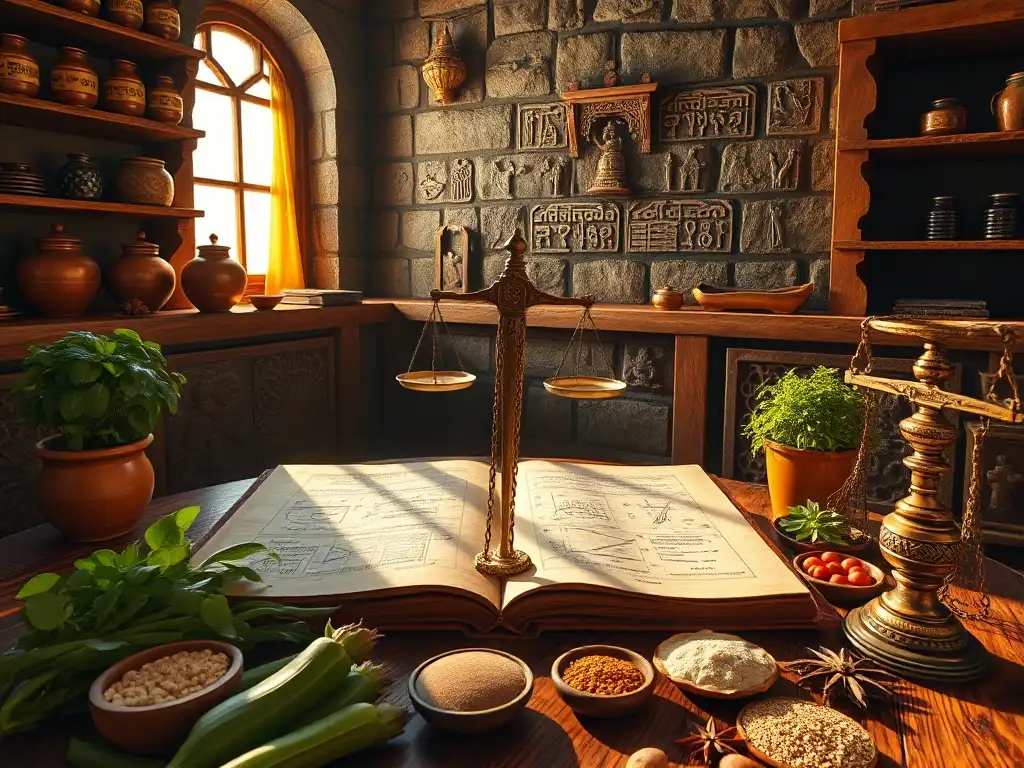
Welcome to Ancient India History, where we embark on a journey through the rich tapestry of India's past! In our exploration today, we delve into the fascinating intersection of mathematics and medicine in ancient Indian civilizations. Ever wondered how ancient healers utilized mathematical principles to enhance their medical practices?
Discover the profound contributions of Indian scholars to the field of mathematics in ancient Indian medicine and unlock the secrets of healing that have shaped the world. Join us as we unravel this captivating narrative and reveal the synergy between numbers and wellness—your adventure into the depths of history begins now!

Mathematics has played a pivotal role in shaping various aspects of ancient Indian civilization, and one of the most fascinating intersections of this discipline is found within the realm of medicine and healing practices. From the precise measurements used in surgical procedures to the intricate calculations involved in astrological medicine, the integration of mathematics into ancient Indian medicine reflects a sophisticated understanding of both the human body and the natural world.
This article explores the significant contributions of mathematics to ancient Indian medicine, examining how cultural, historical, and scientific advancements intertwined to form a rich tapestry of healing practices that were both innovative and effective.
Introduction to Mathematics in Ancient Indian Medicine
In ancient India, the practice of medicine was not merely an empirical endeavor; it was deeply intertwined with complex mathematical principles. Healers and physicians utilized mathematics to develop various medical texts and surgical techniques, illustrating a profound comprehension of anatomy, physiology, and the cosmos. The use of calculations in determining dosages, timing of treatments, and alignment of astrological influences highlights how mathematics was essential in guiding medical practices. This synergy between mathematics and medicine laid the groundwork for numerous advancements that would influence not only Indian medicine but also practices worldwide.
Historical Context of Mathematics and Medicine in Ancient India
The historical context of mathematics in ancient Indian medicine reveals a rich legacy of knowledge that has been passed down through generations. The evolution of mathematical concepts during significant periods in Indian history had a direct impact on medical practices, illustrating how these two fields were mutually beneficial.
The Influence of the Indus Valley Civilization
The Indus Valley Civilization, one of the earliest urban cultures in South Asia, showcased advanced urban planning and infrastructure, which included sophisticated drainage systems and standardized weights and measures. These developments indicate an early application of mathematical principles in daily life and suggest a foundational understanding that would later influence medicinal practices. Archaeological evidence points to the presence of medical tools and procedures, suggesting that the inhabitants of this civilization employed mathematics in various healing practices, including surgery and herbal medicine.
The Vedic Period and Mathematical Developments
The Vedic Period marked a significant advancement in the integration of mathematics with medicine. During this time, texts such as the Atharva Veda introduced concepts of healing that were deeply rooted in ritualistic practices, many of which required precise calculations.
The development of numerals and mathematical operations during this period facilitated the documentation of medicinal knowledge, allowing for the systematic study of diseases and treatments. Furthermore, the emergence of Ayurveda as a formalized system of medicine saw the incorporation of mathematical concepts in areas like pulse diagnosis and the timing of therapeutic interventions, showcasing the enduring legacy of mathematics in ancient Indian medicine.
Key Mathematical Concepts in Ancient Indian Medicine
Mathematics played a pivotal role in shaping ancient Indian medicine, particularly in the detailed practices of Ayurveda and Siddha systems. These medical systems relied heavily on mathematical concepts to ensure precision in diagnosis, treatment, and the preparation of medicinal formulations. Key mathematical concepts included geometry, arithmetic, and ratios, which were instrumental in developing effective healing practices.
One of the most significant applications of mathematics in ancient Indian medicine was the use of geometric shapes to design surgical instruments and to create diagrams for anatomical studies. This not only facilitated accurate surgical procedures but also enhanced the understanding of bodily structures. Additionally, arithmetic was essential for calculating dosages of herbal medicines, ensuring that patients received the correct amount for effective treatment without adverse effects.
The integration of these mathematical principles into medical practices highlights the sophisticated nature of ancient Indian healing systems. It reflects a deep understanding of both numbers and nature, allowing practitioners to devise holistic treatments that considered the balance of body, mind, and spirit.
Geometry in Medical Practices
Geometry was a fundamental aspect of ancient Indian medical practices. Practitioners employed geometric principles to create accurate models of the human body and to design surgical instruments, which were often shaped in ways that optimized their effectiveness. For instance, the use of geometric shapes like circles and triangles was prominent in diagrams that illustrated anatomical features and surgical techniques.
Moreover, geometric calculations were essential for determining the proportions of ingredients in compound medicines. The careful measurement and division of these ingredients often relied on geometric principles, ensuring that the medicinal concoctions were both potent and safe for consumption. This meticulous attention to geometry not only improved the quality of medical treatments but also showcased the advanced understanding of mathematics among ancient Indian scholars.
Arithmetic in Dosage Calculations
Arithmetic played a crucial role in calculating dosages in ancient Indian medicine. Healers utilized basic arithmetic operations—addition, subtraction, multiplication, and division—to determine the appropriate amounts of herbs and minerals needed for various treatments. This mathematical precision was vital, as incorrect dosages could lead to ineffective treatments or harmful side effects.
For example, the ancient texts often provided formulas that required practitioners to adjust dosages based on the patient's age, weight, and overall health condition. This personalization of medicine through arithmetic calculations ensured that treatments were tailored to individual needs, enhancing the efficacy of healing practices. The systematic approach to dosage calculations reflected a sophisticated understanding of pharmacology and patient care in ancient India.
Prominent Mathematicians and Their Contributions to Medicine
Ancient India was home to several prominent mathematicians whose contributions significantly impacted the field of medicine. These scholars not only advanced mathematical knowledge but also integrated it into medical practices, bridging the gap between two disciplines. Their work laid the foundation for future advancements in both mathematics and medicine.
Aryabhata: Bridging Mathematics and Medicine
Aryabhata, one of the most renowned mathematicians of ancient India, made significant contributions that extended beyond mathematics into the realm of medicine. His work in astronomy and mathematics provided a framework for understanding time and space, which was crucial for medical practitioners in determining the best times for treatment based on astrological calculations.
In his seminal work, the "Aryabhatiya," Aryabhata introduced concepts such as the place value system and zero, which were essential for precise calculations in various fields, including medicine. His mathematical innovations allowed for more accurate measurements in pharmacology and the formulation of medical texts. Aryabhata’s ability to intertwine mathematics with medicine exemplified the holistic approach of ancient Indian scholars, who viewed these disciplines as interconnected.
Bhaskara II: Advancements in Healing Techniques
Bhaskara II, another luminary in ancient Indian mathematics, made remarkable strides that influenced medical practices significantly. His work, particularly in the "Siddhanta Shiromani," encompassed not only mathematical theories but also applications in astronomy and medicine. Bhaskara II’s contributions to trigonometry and calculus provided advanced methods for calculating dosages and the timing of treatments.
His focus on practical applications of mathematics enabled healers to apply precise calculations in preparing herbal medicines. For instance, Bhaskara II’s methods allowed physicians to assess the potency of various herbs based on their geographic location and seasonal availability, ensuring that treatments were both effective and timely. His innovative approaches reinforced the importance of mathematics in enhancing the efficacy of ancient healing practices, leaving a lasting legacy in the field of medicine.
The Role of Algorithms in Ancient Healing Practices

In ancient Indian medicine, the use of algorithms played a crucial role in developing systematic approaches to diagnosis and treatment. Algorithms, in this context, refer to step-by-step procedures or formulas that guided physicians in making medical decisions based on the symptoms presented by patients. This methodical approach allowed practitioners to categorize ailments, prescribe remedies, and predict outcomes with a level of precision that was remarkable for its time.
The integration of algorithms into healing practices not only facilitated better patient outcomes but also contributed to the standardization of medical knowledge. By establishing a framework for diagnosis and treatment, ancient Indian physicians could compare results and refine their techniques over generations. This emphasis on systematic methodology laid the groundwork for future advancements in medical sciences within India and beyond.
Development of Medical Algorithms
The development of medical algorithms in ancient India is largely attributed to the texts of Ayurveda, which is one of the oldest systems of medicine in the world. The Charaka Samhita and the Sushruta Samhita are two seminal texts that contain detailed descriptions of various diseases, their symptoms, and corresponding treatments. In these texts, algorithms were crafted to guide practitioners through the complex decision-making process involved in diagnosing and treating patients.
These algorithms were often based on a combination of observational data and mathematical principles. For example, practitioners would assess a patient's symptoms, their dosha (body constitution), and other factors such as lifestyle and environment to arrive at a diagnosis. The structured approach outlined in these texts allowed for the categorization of diseases and the rationalization of treatment methods, paving the way for a more scientific understanding of health.
Case Studies: Success Stories of Mathematical Applications
Several historical case studies highlight the successful application of mathematical principles in ancient Indian medicine. One notable example is the treatment of swastha (health) through the calculation of doshas and prakriti (body types). By applying mathematical ratios and formulas, physicians could determine the balance of the three fundamental energies— Vata, Pitta, and Kapha—in an individual.
Another example is the surgical practices described in the Sushruta Samhita, where Sushruta, often regarded as the "father of surgery," utilized geometrical principles to perform complex surgeries, including rhinoplasty. His algorithms for surgery not only included detailed measurements but also the angles and techniques necessary for successful outcomes. These case studies underscore the significant impact of mathematics on ancient healing practices, illustrating how a systematic approach led to remarkable success in medical treatments.
The Interconnection of Mathematics and Ayurveda
The interconnection between mathematics and Ayurveda is profound, as mathematical principles underlie many of the methodologies employed within this ancient healing system. Ayurveda emphasizes a holistic approach to health, where understanding the balance of physical, mental, and spiritual aspects is essential. Mathematics facilitates this understanding by providing the means to quantify and analyze various elements that contribute to health.
The application of mathematical concepts in Ayurveda enhances its efficacy and allows practitioners to tailor treatments to individual needs. This integration of disciplines reflects a sophisticated understanding of health that was advanced for its time, influencing not only Indian medicine but also contributing to global medical practices.
Mathematical Principles in Ayurvedic Medicine
Mathematical principles in Ayurvedic medicine manifest in various ways, such as in the calculation of dosha balance and the timing of treatments. The concept of Ritu (season) and its relation to doshas is one area where mathematics plays a critical role. Ayurvedic texts often include charts and tables that illustrate how different seasons affect the body's constitution and health, allowing practitioners to create personalized treatment plans based on these calculations.
Moreover, the use of measurements in herbal medicine, such as dosage calculations for various herbs and spices, is rooted in mathematical precision. This quantitative approach ensures that patients receive appropriate amounts of remedies, maximizing efficacy while minimizing potential side effects.
The Influence of Mathematics on Ayurvedic Dosha Calculations
The influence of mathematics on Ayurvedic dosha calculations is significant, as these calculations are essential for determining an individual's health profile. The three doshas— Vata, Pitta, and Kapha—represent different combinations of the five elements and govern various physiological and psychological functions.
To achieve a proper balance, practitioners employ mathematical methods to assess the proportions of each dosha in a patient. This involves analyzing various factors, including physical characteristics, mental state, and lifestyle choices. By applying formulas and algorithms, practitioners can derive insights into a patient's prakriti (constitution) and vikriti (current state of imbalance), enabling them to suggest targeted interventions.
The integration of mathematics into Ayurvedic practices fosters a deeper understanding of health and wellness, emphasizing the importance of balance and harmony in the body. Through these mathematical applications, ancient Indian medicine has provided a comprehensive framework that continues to influence modern practices today.
Conclusion: The Lasting Impact of Mathematics in Ancient Indian Medicine
The integration of mathematics into ancient Indian medicine has left a profound legacy that continues to influence modern practices. Ancient Indian scholars utilized mathematical principles to enhance their understanding of complex medical concepts, enabling them to develop precise methods for diagnosis, treatment, and the preparation of medicines.
Mathematics played a crucial role in various aspects of Ayurvedic practices, including the calculation of dosages, the timing of treatments, and the formulation of medicinal compounds. The meticulous nature of these calculations ensured that patients received the correct treatment based on their unique constitutions and conditions. This precision paved the way for a more systematic approach to health and healing, emphasizing the importance of tailored therapies in medical practice.
Moreover, the mathematical techniques developed by ancient Indian physicians contributed to the advancement of medical knowledge in areas such as surgery and pharmacology. By applying geometry and arithmetic to anatomical studies, practitioners could better understand the human body, leading to safer and more effective surgical procedures. The legacy of these mathematical approaches is evident in today’s holistic and integrative medicine, where personalized care remains a cornerstone.
As we reflect on the contributions of mathematics in ancient Indian medicine, it becomes clear that these early innovations laid the groundwork for future generations of healers and scientists. The blend of empirical observation and mathematical reasoning not only enriched the field of medicine but also showcased the intellectual prowess of ancient Indian civilization.
Further Reading on Mathematics and Medicine in Ancient India
For those interested in diving deeper into the fascinating intersection of mathematics and medicine in ancient India, several resources provide valuable insights and scholarly discussions. Here are some noteworthy recommendations:
-
"Ayurveda: The Science of Self-Healing" by Dr. Vasant Lad
This book explores the principles of Ayurveda, including the mathematical foundations that underpin treatment methodologies.
-
"Mathematics in Ancient India" by Kim Plofker
A comprehensive study that highlights the contributions of Indian mathematicians and their influence on various fields, including medicine.
-
"The History of Medicine in India" by Dr. N. R. S. and Dr. S. K.
This resource offers a historical overview of medical practices in India, with specific attention to the mathematical aspects of treatment and diagnosis.
-
Research Articles and Journals
Academic journals focusing on the history of science and medicine often publish articles analyzing the role of mathematics in ancient Indian healing traditions.
-
Online Courses and Lectures
Platforms like Coursera and edX may offer courses on the history of Indian medicine, which often incorporate discussions on the mathematical techniques employed by ancient practitioners.
Exploring these resources will provide a richer understanding of how mathematics intertwined with medicine in ancient India, revealing the depth of knowledge that continues to inspire modern practices.
- Introduction to Mathematics in Ancient Indian Medicine
- Historical Context of Mathematics and Medicine in Ancient India
- Key Mathematical Concepts in Ancient Indian Medicine
- Prominent Mathematicians and Their Contributions to Medicine
- The Role of Algorithms in Ancient Healing Practices
- The Interconnection of Mathematics and Ayurveda
- Conclusion: The Lasting Impact of Mathematics in Ancient Indian Medicine
- Further Reading on Mathematics and Medicine in Ancient India
- What was the significance of mathematics in ancient Indian medicine?
- How did ancient Indian physicians utilize mathematical techniques?
- Were there any specific mathematical texts related to medicine in ancient India?
- How did the Indus Valley Civilization contribute to this mathematical knowledge?
- What impact did mathematics have on the evolution of healing practices in ancient India?
Frequently Asked Questions
What was the significance of mathematics in ancient Indian medicine?
Mathematics played a crucial role in ancient Indian medicine, aiding in calculations for dosages, timings, and understanding anatomy through geometric principles.
How did ancient Indian physicians utilize mathematical techniques?
Ancient Indian physicians applied mathematical techniques to create accurate diagnostic tools and to develop complex treatment plans based on individual patient needs.
Yes, texts such as the Sushruta Samhita and Charaka Samhita incorporated mathematical concepts, showcasing the integration of science and medicine in their teachings.
How did the Indus Valley Civilization contribute to this mathematical knowledge?
The Indus Valley Civilization laid the foundation for early mathematical practices, particularly in urban planning and measurement, which influenced later medical practices.
What impact did mathematics have on the evolution of healing practices in ancient India?
The use of mathematics enhanced the precision and effectiveness of healing practices, allowing for more tailored approaches to treatment and contributing to the overall advancement of Ayurveda.
Final Reflection: The Enduring Legacy of Mathematics in Ancient Indian Medicine
The intricate relationship between mathematics and ancient Indian medicine is not just a historical curiosity; it is a testament to the profound understanding of the universe that our ancestors possessed. Today, as we navigate complex health challenges and seek holistic approaches to well-being, the principles of mathematics that underpinned ancient healing practices resonate with a renewed urgency. The wisdom of integrating quantitative analysis with medicinal practices serves as a reminder that healing is as much an art as it is a science.
The influence of mathematics in ancient Indian medicine extends beyond mere calculations; it shapes our cultural and social landscapes by emphasizing the interconnectedness of knowledge systems. This integration fosters a holistic view of health that is increasingly relevant in our modern world, where we often compartmentalize disciplines. As we reflect on this, we are reminded of the words of the ancient scholar Charaka, who said, The physician who is well-versed in the science of mathematics will achieve great success in his practice.
This insight underscores the importance of interdisciplinary approaches in medicine, encouraging us to embrace a broader understanding of health and healing.
As we look to the future, let us take a moment to reflect on how we can incorporate the lessons from ancient Indian medicine into our lives today. Consider how mathematics can enhance your understanding of health, whether through data analysis, nutritional planning, or even mindfulness practices. Embrace the idea that healing is a multifaceted journey, and challenge yourself to explore the connections between different fields of knowledge. By doing so, we honor the legacy of those who came before us and pave the way for a more integrated approach to health and well-being in our own lives.
Unveil the Wisdom of Ancient Healing Through Mathematics!
Thank you for joining us on this enlightening journey into the intersection of mathematics and ancient Indian medicine. We hope you discovered fascinating insights into how numbers played a crucial role in healing practices. Now it’s time to take that knowledge and use it to deepen your understanding!
Here are a few inspiring actions to amplify your exploration of this rich topic:
- Delve deeper into the sources of ancient mathematical texts related to medicine. Consider forming a study group or a book club dedicated to exploring ancient Indian healing practices!
- Share your insights on social media to spark conversations with friends and family about the surprising connections between mathematics and healthcare.
- Look for local workshops or online courses that focus on holistic medicine and integrative practices rooted in ancient traditions.
What aspect of ancient Indian medicine or mathematics intrigued you the most, and how do you envision it influencing modern practices today?