
Why Zero is More Than Just a Number: Insights from Ancient Indian Mathematics

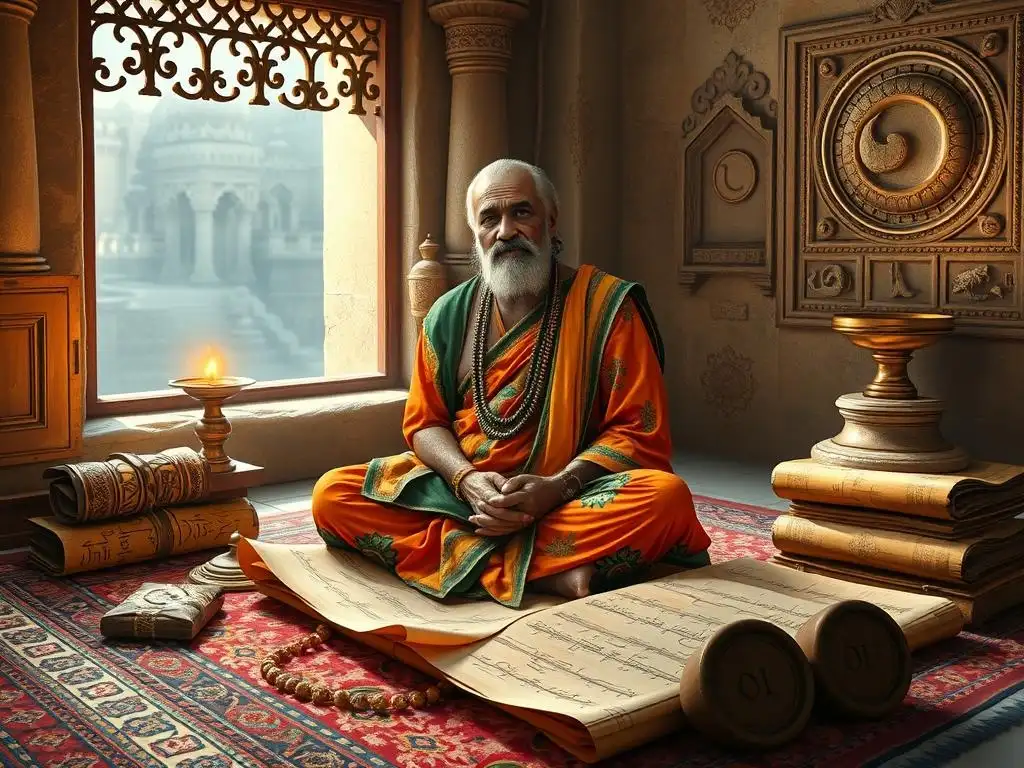
Welcome to Ancient India History, where we unravel the fascinating tapestry of one of the world's oldest civilizations. Dive deep into the realm of Ancient Indian mathematics contributions, where concepts like zero revolutionized the world of numbers. In our featured article, "Why Zero is More Than Just a Number," we’ll explore how this seemingly simple digit laid the groundwork for modern mathematics. Are you ready to discover the profound impact of ancient Indian thinkers and their groundbreaking discoveries? Join us on this intellectual journey and let the numbers speak for themselves!

Introduction to Ancient Indian Mathematics Contributions
The history of mathematics is a fascinating journey through time, marked by significant milestones that have shaped our understanding of numbers and calculations. Among these milestones, the invention of zero stands out as one of the most profound contributions, particularly from ancient Indian civilization. Ancient Indian mathematics, which flourished between the 3rd century BCE and the 12th century CE, was not just about numbers; it was a sophisticated system that integrated concepts of arithmetic, geometry, and algebra with a unique philosophical underpinning.
The contributions of ancient Indian mathematicians such as Aryabhata, Brahmagupta, and Bhaskara II were pivotal in the development of mathematical concepts that are still relevant today. Their work laid the foundation for modern mathematics, with zero as a central figure in this narrative. This article explores the significance of zero beyond its numerical value, highlighting how it revolutionized mathematics and influenced various fields, including astronomy, engineering, and commerce.
The Importance of Zero in Mathematics History
Zero is often described as a mere placeholder, but its significance transcends this simplistic view. In ancient Indian mathematics, zero represented a groundbreaking conceptual leap that allowed for the representation of large numbers and the execution of complex calculations. The introduction of zero enabled mathematicians to perform operations that were previously unimaginable, transforming the landscape of mathematics.
- A Symbol of Nothingness:
- Zero symbolizes the concept of nothingness, which was a radical idea for ancient cultures. In this context, it represented the absence of quantity, paving the way for more advanced mathematical theories.
- Facilitating Place Value System:
- The incorporation of zero into the base-10 numeral system allowed for the development of a positional notation system, where the value of a digit is determined by its position. This innovation simplified calculations and made it easier to understand large numbers.
- Influence on Algebra:
- The use of zero allowed for the formulation of algebraic equations, leading to the development of algebra as a distinct field of mathematics. Mathematicians could now express and solve equations that included the unknown as well as zero.
- Impact on Calculus and Beyond:
- The concept of zero laid the groundwork for the development of calculus and other advanced mathematical theories. Its application in limits and derivatives is fundamental in modern mathematics.
The contributions of ancient Indian mathematics, particularly the invention and adoption of zero, were crucial in advancing mathematical thought. This understanding of zero as more than just a number reshapes our appreciation for ancient Indian civilization and its profound impact on the world of mathematics.
Understanding the Concept of Zero in Ancient Indian Culture
The concept of zero is often regarded as one of the most significant contributions of ancient Indian mathematics to the world. In ancient Indian culture, zero was not merely considered as a numerical value; it was a profound philosophical and spiritual symbol that represented the void, nothingness, and the potential for creation. This duality of zero—both a mathematical entity and a philosophical idea—allowed for a richer understanding of the universe and its complexities.
In ancient texts, zero is referred to as "shunya," which translates to "void" or "emptiness." This term reflects the Indian perspective on the nature of existence and non-existence, reinforcing the idea that nothingness can be as significant as something. The introduction of zero into the number system facilitated advanced calculations and paved the way for more sophisticated mathematical concepts, making it a cornerstone of mathematical innovation in ancient India.
Historical Context of Zero in Ancient Civilizations
The origins of zero can be traced back to ancient civilizations, but it was in India that the concept flourished and was formally recognized within a numerical framework. Early notations of zero appeared in the Brahmi script as early as the 3rd century BCE. However, it was in the 5th century CE with the works of mathematicians like Aryabhata and later Brahmagupta that zero gained prominence.
Brahmagupta, in his seminal work "Brahmasphutasiddhanta," not only defined zero but also established the rules for arithmetic operations involving it. He articulated how zero could be used in calculations, such as in addition and subtraction, and he addressed its role in division, laying the groundwork for the mathematical principles we understand today. This historical context highlights the pivotal role ancient Indian mathematicians played in developing the concept of zero, which was previously unacknowledged in other cultures.
The Role of Zero in Indian Philosophy and Spirituality
Beyond mathematics, zero holds significant philosophical and spiritual implications in ancient Indian thought. In Hindu philosophy, the concept of "shunya" is linked to the idea of the cosmos, where the void represents the primordial state of the universe before creation. This aligns with the philosophical notion that everything emerges from nothingness, making zero a symbol of potential and transformation.
In Buddhism, the idea of emptiness is central to understanding the nature of reality. The concept of "śūnyatā" reflects a similar philosophical stance, emphasizing the idea that all things are devoid of inherent self-nature. This spiritual interpretation of zero influenced mathematical thought, encouraging ancient Indian mathematicians to view numbers not just as quantitative measures but as reflections of deeper cosmic truths.
The Evolution of Mathematical Ideas in Ancient India
The evolution of mathematical ideas in ancient India is a testament to the civilization's intellectual prowess. From rudimentary counting systems to complex calculations, ancient Indian mathematicians laid the groundwork for advanced mathematics. The introduction of zero marked a significant turning point in this evolution, allowing for a more comprehensive understanding of numbers and their relationships.
Early Numerical Systems in Ancient India
Prior to the formal adoption of zero, ancient Indian societies employed various numeral systems for trade and record-keeping. The earliest known system, the Indus Valley script, utilized symbols to represent quantities, but lacked a concept for zero. As society evolved, so too did the need for a more sophisticated numerical system.
By the 1st century CE, the Hindu-Arabic numeral system began to take shape, incorporating symbols for numbers and the concept of zero. This system facilitated arithmetic operations and calculations, enabling advancements in astronomy, commerce, and engineering. The use of a positional decimal system, which included zero, was revolutionary and laid the foundation for modern mathematics.
The Transition from Counting to Abstract Concepts
The transition from basic counting to abstract mathematical concepts marks a key development in ancient Indian mathematics. Initially, numbers were used primarily for practical purposes, such as trade and timekeeping. However, with the introduction of zero, mathematicians began exploring abstract ideas, leading to profound advancements in algebra and geometry.
Mathematicians such as Brahmagupta and Bhaskara II expanded upon these abstract concepts by developing rules for equations and algorithms. They explored topics such as negative numbers, quadratic equations, and mathematical proofs, all of which were influenced by the inclusion of zero as a fundamental element in their calculations. This shift not only advanced mathematics in India but also influenced mathematical thought across the globe, demonstrating the far-reaching impact of ancient Indian mathematical contributions.
Key Contributions of Ancient Indian Mathematicians
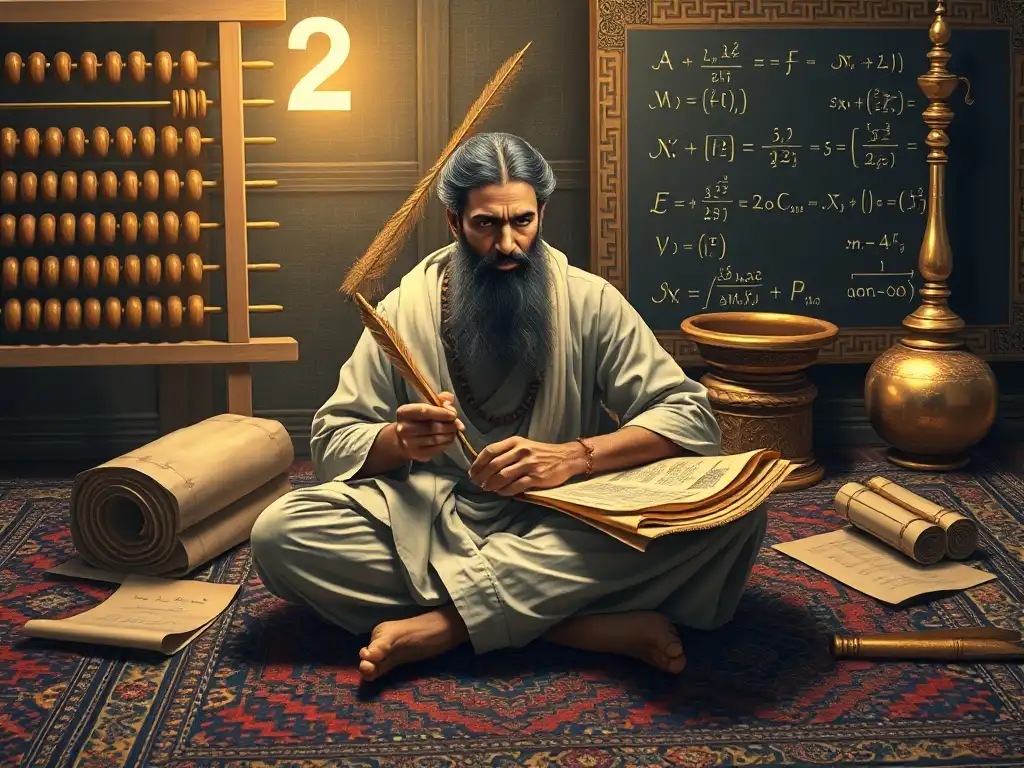
Ancient Indian mathematicians made groundbreaking contributions that fundamentally shaped the understanding of mathematics, particularly with the invention and formalization of zero as a number. Their work laid the foundation for various mathematical concepts that continue to be essential today. Key mathematicians such as Aryabhata, Brahmagupta, and Bhaskara II not only advanced the abstraction of numerical systems but also introduced rules and operations involving zero, negative numbers, and the decimal place value system. This section delves into the pivotal roles played by these scholars in the development of ancient Indian mathematics and their enduring influence on the global mathematical landscape.
Aryabhata and His Influence on Zero and Mathematics
Aryabhata, one of the earliest and most influential mathematicians of ancient India, lived in the 5th century CE. His seminal work, the Aryabhatiya, established foundational concepts in mathematics and astronomy. Aryabhata is credited with the introduction of zero as a placeholder, allowing for the representation of large numbers and facilitating complex calculations. He adopted a decimal system, which is crucial for modern arithmetic.
In addition to zero, Aryabhata made significant advancements in trigonometry, introducing sine functions and providing precise values for the sine of various angles. His methods for calculating the area of a triangle and the volume of geometrical shapes further exemplify his mathematical prowess. Aryabhata's influence extended far beyond his era, inspiring later mathematicians and establishing a legacy that cemented zero's role in mathematics.
Brahmagupta's Rules for Zero and Negative Numbers
Brahmagupta, an eminent mathematician and astronomer of the 7th century CE, expanded upon Aryabhata's work and made significant strides in the understanding of zero and negative numbers. In his text, Brahmasphutasiddhanta, he provided clear rules for arithmetic operations involving zero, addressing both addition and subtraction.
One of his notable contributions is the formulation of rules for combining positive and negative numbers, which paved the way for future developments in algebra. Brahmagupta famously stated that subtracting a number from zero yields its negative, and he also explored the concept of division by zero, although he approached it with caution. His insights into zero's role in calculations marked a significant advancement in mathematics, establishing principles that remain relevant in contemporary mathematical practice.
Bhaskara II: Advancements in Mathematics and the Use of Zero
Bhaskara II, also known as Bhaskara the Great, was a prominent mathematician and astronomer in the 12th century CE. His work, Lilavati, is perhaps one of the most celebrated texts in Indian mathematics, covering a wide range of topics, including arithmetic, algebra, and geometry. Bhaskara II's contributions to zero were particularly notable; he emphasized its importance in calculations and problem-solving.
In his writings, he elaborated on the rules of arithmetic operations involving zero and negative numbers, further refining the work of his predecessors. Bhaskara II also introduced the concept of "bijaganita," or algebra, where he used zero in equations and provided methods for solving quadratic equations. His innovative approach helped to integrate zero into various mathematical frameworks, advancing the field significantly.
The Impact of Zero on Modern Mathematics
The introduction of zero by ancient Indian mathematicians has had a profound and lasting impact on modern mathematics. The adoption of a positional decimal system, which relies heavily on zero, has made arithmetic operations more efficient and manageable. This framework allows for the representation of large numbers, simplification of calculations, and the development of complex mathematical theories.
How Ancient Indian Mathematics Contributions Shaped Modern Number Systems
The contributions of ancient Indian mathematicians have fundamentally shaped modern number systems. The decimal system, which includes the concept of zero, is now the standard for numerical representation across the globe. This innovation not only simplified calculations but also facilitated advancements in various fields such as science, engineering, and economics.
Furthermore, the rules established for operations involving zero and negative numbers have become foundational in algebra and calculus. The clarity and precision with which these mathematicians approached mathematical problems have influenced educational systems, mathematical research, and the overall understanding of mathematics as a discipline.
The Global Spread of Zero and Its Influence on Mathematics Worldwide
The concept of zero was eventually transmitted to the Islamic world and later to Europe through trade routes and scholarly exchanges. This global spread transformed mathematics, enabling the development of more sophisticated mathematical techniques and systems. The acceptance of zero within the Western mathematical tradition marked a significant departure from previous numeral systems, which often lacked a symbol for zero.
As a result, mathematics evolved into a more abstract discipline, allowing for the exploration of complex theories and applications. The introduction of zero and its acceptance into various mathematical systems worldwide has had a lasting influence, reshaping not only mathematics but also the sciences, philosophy, and technology. The contributions of ancient Indian mathematicians are thus celebrated as a cornerstone of mathematical thought, illustrating that zero is indeed more than just a number; it is a gateway to infinite possibilities.
Conclusion: The Legacy of Zero in Ancient Indian Mathematics
The concept of zero, originating from ancient Indian mathematics, has left an indelible mark on the mathematical landscape worldwide. This innovation was not merely a numerical symbol but a profound philosophical and mathematical breakthrough that reshaped how we understand and manipulate numbers.
Ancient Indian mathematicians like Brahmagupta and Aryabhata recognized zero's potential, expanding its use beyond a placeholder to represent the absence of value. This shift allowed for the development of more complex calculations, paving the way for advancements in arithmetic, algebra, and even calculus. The introduction of zero also facilitated the creation of a positional number system, which is fundamental to modern mathematics.
The legacy of zero is evident in various fields, including science, engineering, and computer technology, where binary systems rely heavily on the concept of zero. Its historical significance is not only a testament to the ingenuity of ancient Indian scholars but also a reminder of the interconnectedness of human knowledge across cultures and epochs.
Final Thoughts on the Significance of Zero Beyond a Number
Zero is much more than a mere digit; it represents a transformative idea that has fundamentally changed our approach to mathematics and the sciences. Its introduction into the mathematical canon has implications that extend far beyond numerical calculations, influencing logic, philosophy, and even the way we perceive existence itself.
In many ways, zero embodies the concept of potentiality. It signifies not just emptiness but the possibility of creation and innovation. This duality inspires thinkers and innovators to explore new frontiers in mathematics and other disciplines. Today, as we ponder the vast universe and the intricate complexities of computational systems, we find ourselves continually relying on the principles introduced by ancient Indian mathematicians through their revolutionary understanding of zero.
The story of zero serves as a powerful reminder of the importance of cultural contributions to our collective knowledge. It underscores the need to celebrate and recognize the diverse historical narratives that have shaped human understanding and progress. In the grand tapestry of world history, the contributions of ancient Indian mathematics, particularly through the lens of zero, remain a significant thread that continues to influence modern thought and innovation.
- Introduction to Ancient Indian Mathematics Contributions
- The Importance of Zero in Mathematics History
- Understanding the Concept of Zero in Ancient Indian Culture
- The Evolution of Mathematical Ideas in Ancient India
- Key Contributions of Ancient Indian Mathematicians
- The Impact of Zero on Modern Mathematics
- Conclusion: The Legacy of Zero in Ancient Indian Mathematics
- Final Thoughts on the Significance of Zero Beyond a Number
- What are the key contributions of ancient Indian mathematics?
- How did the concept of zero evolve in ancient India?
- Who were the prominent mathematicians in ancient India?
- How did ancient Indian mathematics influence the world?
- What is the significance of ancient Indian mathematics in modern education?
Frequently Asked Questions
What are the key contributions of ancient Indian mathematics?
Ancient Indian mathematics has made significant contributions, including the concept of zero, the decimal system, and advancements in algebra and geometry.
How did the concept of zero evolve in ancient India?
The concept of zero was developed in ancient India as a placeholder and a number in its own right, greatly influencing mathematical calculations and theoretical mathematics.
Who were the prominent mathematicians in ancient India?
Notable ancient Indian mathematicians include Aryabhata, who introduced concepts of trigonometry, and Brahmagupta, who made advancements in algebra and rules for arithmetic with zero.
How did ancient Indian mathematics influence the world?
Ancient Indian mathematics, particularly through texts like Aryabhata's Aryabhatiya, influenced mathematicians in the Islamic Golden Age and later European mathematics, spreading its concepts globally.
What is the significance of ancient Indian mathematics in modern education?
The foundational concepts from ancient Indian mathematics, such as the decimal system and the use of zero, are essential in modern mathematics education and underscore the historical impact of these ancient contributions.
Final Reflection: The Profound Legacy of Zero in Ancient Indian Mathematics
The contributions of ancient Indian mathematics, particularly the concept of zero, resonate deeply in our modern world, illustrating that the simplest ideas can have the most profound impact. Today, as we navigate an increasingly digital landscape, the foundational principles laid down by ancient mathematicians continue to shape our understanding of mathematics and technology. The concept of zero is not merely a placeholder; it represents a revolutionary shift in thought that has enabled countless advancements in various fields.
The influence of ancient Indian mathematics extends beyond mere numbers; it has woven itself into the very fabric of our cultural and intellectual heritage. The introduction of zero transformed mathematical operations and paved the way for complex calculations that underpin modern science and engineering. As we reflect on this legacy, we are reminded of the words of the mathematician Bhaskara II: Mathematics is the language of the universe.
This quote encapsulates the idea that the innovations of the past continue to illuminate our path forward, bridging the gap between ancient wisdom and contemporary knowledge.
As we conclude this exploration of zero's significance, I invite you to reflect on how the lessons from ancient Indian mathematics can inspire your own journey. Consider the ways in which you can embrace simplicity and innovation in your life, recognizing that even the smallest concepts can lead to monumental change. Let the legacy of zero remind you that every great achievement begins with a single idea—an idea that has the power to transform not only our understanding of mathematics but also the world around us.
Unveil the Power of Zero: Take Action Today!
Thank you for diving into the fascinating world of ancient Indian mathematics with us! We hope you’ve gained valuable insights into the cultural significance and groundbreaking implications of the number zero. Now, it’s time to put that knowledge into action and explore the wonders of mathematical history further.
Here’s how you can engage with this intriguing subject:
- Dive deeper into the history by reading more articles on our site about the contributions of ancient Indian mathematicians. Discover how their innovations shaped modern mathematics!
- Share your thoughts and insights by joining our community discussions in the comments section below. Your perspective can spark enlightening conversations!
- Challenge yourself with a mathematical problem inspired by ancient techniques. Try creating your own numeral system and see how it compares to the significance of zero!
What new perspective did this exploration of zero give you on modern mathematics, and how do you think it influences our daily lives? Let's discuss!