
Exploring the Connection Between Language and Numerical Systems in Ancient India


Welcome to Ancient India History, where we embark on a fascinating journey through the rich tapestry of ancient Indian civilizations. Here, we delve into the profound connections between language and numerical systems, revealing how these elements shaped not only mathematics but also the very fabric of society during the time of the Indus Valley to the Gupta Empire. Curious about how ancient Indian language influenced numerical concepts?
Join us as we uncover the intricate relationships that laid the groundwork for modern mathematics and explore the remarkable contributions of this vibrant culture. Your adventure into the annals of history begins now!

Introduction to Ancient Indian Language and Numerals
The intricate relationship between language and numerical systems in ancient India is a fascinating aspect of the region's rich heritage. Ancient Indian civilizations, notably the Indus Valley Civilization, the Maurya Empire, and the Gupta Empire, not only made remarkable advancements in mathematics but also developed sophisticated languages that played a crucial role in the articulation and transmission of numerical concepts.
Understanding the interplay between ancient Indian language and numerals unveils insights into how these civilizations approached mathematics, commerce, and daily life. This exploration sheds light on the evolution of numerical systems and their linguistic representations, revealing the foundational contributions of ancient India to the field of mathematics.
Overview of Ancient Indian Civilizations
Ancient India was home to several advanced civilizations, each contributing to the development of language and numerical systems. The Indus Valley Civilization (circa 3300-1300 BCE) is one of the earliest known societies, characterized by its urban planning and trade networks, which necessitated a means of quantifying goods and transactions. Following this, the Vedic period saw the emergence of Sanskrit, a language that would become instrumental in the codification of mathematical concepts.
The Maurya Empire (circa 322-185 BCE) further advanced these ideas, with scholars like Aryabhata and Brahmagupta making significant contributions to mathematics, including the introduction of the concept of zero. The Gupta Empire (circa 240-550 CE) is often regarded as a golden age for mathematics and astronomy, where the use of numerals became more refined, and their linguistic expressions flourished. Each of these civilizations laid the groundwork for the ancient Indian language and numerals, establishing a legacy that would influence not only the subcontinent but the entire world.
Importance of Language in Numerical Systems
Language plays a pivotal role in shaping the way numerical concepts are understood and communicated. In ancient India, the development of numerical systems was closely tied to the linguistic framework of the time. The ability to express quantities, perform calculations, and document findings was greatly enhanced by the existence of a structured language.
Numerical systems in ancient India were not merely a means of counting; they represented a sophisticated understanding of mathematics. For instance, the Brahmi script, one of the earliest writing systems in India, included symbols that represented numbers, allowing for a seamless connection between language and numerals. This integration facilitated trade, astronomy, and various scientific endeavors, making it essential for the advancement of ancient Indian society.
The Development of Language in Ancient India
Early Scripts and Their Influence on Numerals
The evolution of early scripts in ancient India, such as Brahmi and Kharosthi, had a profound impact on the representation of numerals. These scripts incorporated specific symbols for numbers, which were used in various inscriptions and manuscripts. The Brahmi script, for instance, is known to have included a decimal system that laid the groundwork for modern numerical understanding.
As these scripts evolved, they influenced the way numbers were recorded and communicated across different regions of India. The adoption of these systems facilitated not only trade and commerce but also the transmission of mathematical knowledge through texts, enabling scholars to engage in more complex calculations and theories.
The Role of Sanskrit in Numerical Expression
Sanskrit emerged as a significant language for scholarly work in ancient India, particularly in mathematics. The Sanskrit numerals, which included distinct terms for numbers, greatly enhanced the clarity and precision of mathematical discourse. This language allowed mathematicians to articulate complex ideas and formulas, contributing to the sophistication of numerical systems.
Moreover, the use of Sanskrit in texts such as Aryabhata's Aryabhatiya and Brahmagupta's Brahmasphutasiddhanta showcases the integral role of language in the development of mathematical concepts. These texts not only provided mathematical rules but also illustrated how language can serve as a vehicle for conveying numerical ideas, thus enriching the field of mathematics in ancient India.
The connection between ancient Indian language and numerals is a testament to the intellectual achievements of these civilizations. By examining the interplay between language and numerical systems, we can better appreciate the foundational contributions of ancient India to mathematics and its lasting impact on the world.
Historical Context of Numerical Systems in Ancient India
Ancient India is renowned for its rich intellectual history, particularly in the realms of mathematics and language. The connection between the two can be traced back to various ancient civilizations that inhabited the region. Numerical systems in ancient India evolved through a series of stages, influenced by cultural, social, and economic factors.
The earliest evidence of numerical systems can be found in the Indus Valley Civilization (circa 3300–1300 BCE), where trade and commerce necessitated the development of counting systems. As society progressed, particularly through the Vedic period (circa 1500–500 BCE), the need for more sophisticated methods of calculation emerged, leading to significant advancements in both language and numerical representation. This period laid the groundwork for the development of the place value system and the concept of zero, which would later become pivotal in mathematics.
The interplay between language and numerical systems in ancient India is evident in the way numerals were represented in inscriptions and texts. The linguistic frameworks of ancient Indian languages, such as Sanskrit and Prakrit, facilitated the articulation of numerical concepts, demonstrating how language shaped mathematical thought. The development of these systems not only reflects the mathematical prowess of ancient Indian civilizations but also highlights the broader cultural and intellectual achievements of the time.
Numerical Systems in the Indus Valley Civilization
The Indus Valley Civilization is known for its early and sophisticated approach to urban planning, trade, and administration. Archaeological findings suggest that the inhabitants utilized a rudimentary form of numerical system, primarily for trade and record-keeping purposes. Various seals and inscriptions discovered at sites like Harappa and Mohenjo-Daro feature symbols that may represent numbers or quantities, indicating an early understanding of numerical representation.
While the exact nature of these symbols remains undeciphered, it is believed that they were employed in conjunction with weights and measures, suggesting a system that facilitated commerce. The presence of standardized weights indicates a need for consistency in trade practices, further underscoring the importance of numerical systems in this civilization.
The lack of extensive documentation from the Indus Valley Civilization leaves many questions unanswered about their numerical systems. However, it is clear that the groundwork for future developments in mathematics was laid during this period, setting the stage for the more complex systems that would emerge in subsequent eras.
Contributions of the Vedic Period to Mathematics and Language
The Vedic period marked a significant transformation in the development of mathematical concepts and their linguistic expressions. The Vedas, ancient texts composed in Sanskrit, contain references to various mathematical ideas, including arithmetic operations, geometric principles, and even early forms of algebra.
One of the notable contributions of this period was the formulation of the Shulba Sutras, which provided rules for constructing altars and performing rituals. These texts included detailed instructions on measurements and geometrical constructions, demonstrating an advanced understanding of mathematical principles. The use of language in these texts not only articulated mathematical concepts but also codified them for future generations.
Additionally, the Vedic period saw the emergence of specific terminology related to numbers and calculations, further establishing the connection between language and mathematics. The systematic study of numbers in this era laid the foundation for later mathematical innovations, including the introduction of the decimal system and the concept of zero.
Key Features of Ancient Indian Numerical Systems

Ancient Indian numerical systems are characterized by several key features that distinguish them from contemporary systems. These features include the use of a place value system, the incorporation of zero, and the linguistic representation of numbers. Each of these elements reflects the profound relationship between language and mathematics in ancient Indian culture.
The ancient Indian numerical system was not merely a means of counting; it was deeply embedded in the linguistic fabric of the society. The use of specific words to denote numbers and mathematical operations illustrates how language facilitated a deeper understanding of numerical concepts.
The Concept of Zero and Its Linguistic Implications
The concept of zero, or śūnya, is one of the most significant contributions of ancient India to mathematics and language. Unlike other numeral systems, where the absence of quantity may not be explicitly represented, ancient Indian scholars recognized the need for a symbol that denoted 'nothing' or 'void.' This understanding was revolutionary and had profound implications for mathematical calculations.
Linguistically, the term "zero" has roots in Sanskrit, where it signifies emptiness. The introduction of zero allowed for more complex calculations and paved the way for the development of advanced mathematical concepts, such as algebra. This linguistic representation of zero significantly changed the way numbers were understood and manipulated, leading to innovations in mathematics that would influence cultures worldwide.
The implications of zero extend beyond mathematics; the term is also reflective of philosophical ideas prevalent in ancient Indian thought, where concepts of void and absence were explored in various texts. This holistic approach to understanding numbers illustrates the interconnectedness of language, culture, and mathematics in ancient India.
Place Value System in Ancient Indian Language
The place value system is another hallmark of ancient Indian numerical systems, allowing for the representation of large numbers through a combination of digits and their positions. This system was revolutionary, as it enabled mathematicians to perform complex calculations efficiently.
In ancient Indian languages, each numeral was associated with a specific value depending on its position within a number. For example, the numeral '1' could represent one unit, ten units, or one hundred units based on its placement. This innovation simplified arithmetic operations and made it possible to express a vast array of numerical concepts succinctly.
The linguistic structure of ancient Indian languages complemented this numerical framework, as specific terms were developed to describe the place value system. This integration of language and mathematics facilitated a deeper understanding of numerical relationships and operations, which was critical for advancements in mathematics.
Overall, the place value system and its linguistic implications reflect the sophisticated understanding of mathematics among ancient Indian scholars and their ability to convey complex ideas through language. The legacy of this system continues to influence contemporary mathematical thought and practices.
The Relationship Between Language and Mathematics
The connection between language and mathematics has been a subject of interest for scholars, particularly in the context of ancient civilizations like those in India. Language serves as the medium through which numerical concepts are conveyed, and the structure of a language can significantly influence mathematical understanding and operations. In ancient India, the rich linguistic tradition played a crucial role in shaping the ways mathematical ideas were communicated and understood.
In essence, language not only aids in the expression of numerical values but also facilitates logical reasoning and problem-solving. The unique characteristics of ancient Indian languages, particularly Sanskrit, allowed for complex mathematical expressions and theories to be formulated with clarity. This interplay between language and mathematics underscores how linguistic frameworks can enhance or constrain mathematical thought.
Linguistic Structures That Influence Numerical Understanding
The structure of a language can profoundly impact how its speakers conceptualize numbers and perform calculations. In ancient Indian languages, particularly Sanskrit, a highly systematic organization of words and grammatical rules facilitated mathematical discourse. The use of compound words and specific terminologies allowed for the precise description of mathematical operations and concepts.
For instance, the way numbers are constructed in Sanskrit involves a systematic combination of roots, which can lead to a deeper understanding of mathematical relationships. The grammatical case system in Sanskrit also provides contextual clues that help in comprehending the functions of numbers within mathematical statements. This linguistic clarity enabled ancient Indian mathematicians to articulate complex theories and calculations effectively.
Moreover, the use of metaphors and analogies within the language enriched the mathematical narrative, allowing abstract concepts to be understood in more relatable terms. This linguistic versatility contributed significantly to the educational practices surrounding mathematics in ancient India, promoting a culture of inquiry and exploration.
Case Studies of Language Influencing Mathematical Thought
Several case studies highlight the profound effect of language on mathematical thought processes in ancient India. One notable example is the way the concept of zero was integrated into the numerical system. The term "shunya," meaning "empty" or "void," not only provided a linguistic basis for the concept of zero but also facilitated its acceptance and application in calculations.
Another example can be found in the use of poetic forms to teach mathematics. Ancient Indian mathematicians often employed verses to encapsulate mathematical principles, which made them easier to memorize and transmit across generations. This practice illustrates how the linguistic elements of rhythm and rhyme could enhance the retention and understanding of mathematical concepts.
Additionally, the use of specific terms for different types of numbers—such as "sama" for even and "vishama" for odd—indicates a linguistic distinction that reflects a deeper mathematical categorization. Such linguistic nuances not only shaped mathematical thought but also influenced pedagogical methods in ancient Indian education.
Major Contributions of Ancient Indian Mathematicians
Ancient Indian mathematicians made significant contributions that were deeply intertwined with their linguistic heritage. Their innovative approaches to numerals and mathematics were not only groundbreaking but also laid the foundation for subsequent mathematical developments across the globe.
Aryabhata and His Linguistic Approach to Mathematics
Aryabhata, one of the most renowned mathematicians of ancient India, showcased a unique linguistic approach in his seminal work, the "Aryabhatiya." He utilized precise language to express complex mathematical concepts, including algorithms for arithmetic operations and trigonometric functions. Aryabhata's use of language was instrumental in making abstract mathematical ideas accessible and comprehensible.
His systematic notation and terminology allowed for the clear communication of mathematical ideas, which was crucial for both teaching and further exploration. For instance, his treatment of the place-value system and the representation of large numbers through linguistic constructs demonstrated an advanced understanding of numerical representation. Aryabhata’s integration of language and mathematics exemplified how linguistic clarity can enhance mathematical reasoning.
Brahmagupta's Innovations in Language and Numerals
Brahmagupta, another luminary in the field of mathematics, made remarkable strides in the use of language within the context of numerals. His work, "Brahmasphutasiddhanta," introduced groundbreaking concepts, including rules for calculating with zero and negative numbers. The terminology he employed not only clarified these concepts but also facilitated their application in practical scenarios.
Brahmagupta's innovations extended beyond numerical systems; he also developed a language for expressing mathematical operations that was both systematic and logical. His ability to articulate complex ideas through simplified language made his contributions accessible to students and scholars alike. The impact of Brahmagupta’s work can still be seen in modern mathematical practices, demonstrating the enduring legacy of ancient Indian language and numerals in shaping mathematical thought.
Comparative Analysis of Ancient Indian Numerals and Other Civilizations
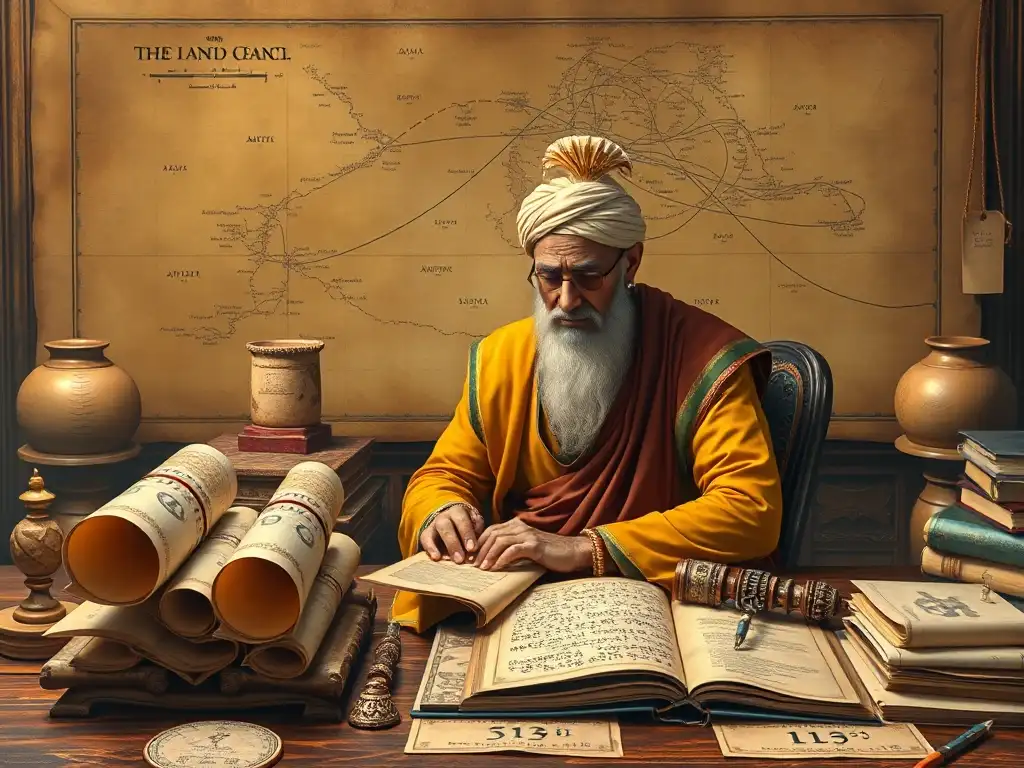
The study of ancient Indian numerals reveals a fascinating interplay between language and mathematics, particularly when compared to other contemporary civilizations. Ancient India developed a sophisticated numerical system that was closely tied to its linguistic framework, which not only facilitated trade and commerce but also enriched cultural and scientific discourse. This section will delve into the notable similarities and differences between ancient Indian numerals and those of other notable cultures, particularly the Babylonians and the influences that rippled through to the Arabic numeral systems.
Similarities and Differences with Babylonian Numerals
When comparing ancient Indian numerals with Babylonian numerals, one can identify both striking similarities and significant differences. Both civilizations contributed to the development of positional numeric systems; however, their approaches and foundational structures differed markedly.
- Base Systems:
- Babylonian Numerals: Utilized a base-60 (sexagesimal) system, which is evident in our current measurement of time (60 seconds in a minute, 60 minutes in an hour). Their numeral representation was primarily additive and multiplicative, relying on symbols that represented different values based on their position.
- Ancient Indian Numerals: Employed a base-10 (decimal) system, which is more intuitive for most modern applications. The use of a zero as a placeholder was a revolutionary advancement that set the Indian system apart from the Babylonians, who lacked a true zero.
- Symbol Representation:
- Babylonian numerals were cuneiform, making it complex to read and write, whereas ancient Indian numerals were simpler and more adaptable to various scripts, facilitating their use across different regions and eras.
- Cultural Context:
- The Babylonians' numerals were closely tied to their astronomical and administrative needs, while ancient Indian numerals reflected a broader cultural emphasis on mathematics that permeated literature, philosophy, and science.
This comparative analysis highlights how ancient Indian numerals not only developed independently but also laid the groundwork for subsequent numeral systems, demonstrating both unique advancements and shared mathematical heritage.
Influence on Arabic Numerical Systems
The influence of ancient Indian numerals on Arabic numerical systems is profound and well-documented. As trade routes expanded, especially during the medieval period, the transmission of knowledge between cultures became increasingly prevalent.
- Transmission through Trade:
- It is believed that Arab traders and scholars encountered Indian mathematicians and their numeral system during their travels, particularly via the Silk Road and maritime routes. This interaction facilitated the adoption of the decimal system, along with the concept of zero, which was vital for calculations.
- Arabic Numerals:
- The numerals we use today, often referred to as "Arabic numerals," are actually derived from the ancient Indian numeral system. The symbols were adapted by Arab mathematicians, who further developed and disseminated these ideas throughout Europe and the Islamic world.
- Mathematical Texts:
- Key texts, such as Al-Khwarizmi's "Al-Kitab al-Mukhtasar fi Hisab al-Jabr wal-Muqabala," played a crucial role in introducing these numeral systems to a broader audience. His work synthesized Indian mathematical concepts with Greek and Persian influences, ensuring that the legacy of ancient Indian numerals would endure through the ages.
The assimilation of ancient Indian numerals into Arabic systems marks a significant milestone in the history of mathematics, showcasing the interconnectedness of cultures and their contributions to numerical development.
Conclusion: The Legacy of Ancient Indian Language and Numerals
The legacy of ancient Indian language and numerals is a testament to the rich intellectual tradition of India. The intricate relationship between language and numerical systems fostered advancements that not only shaped ancient Indian society but also influenced global mathematical practices.
Lasting Impact on Modern Numerical Systems
The influence of ancient Indian numerals extends far beyond their original context. The decimal system, along with the concept of zero, remains foundational in modern mathematics and technology.
- Mathematics Education:
- The structure of our current numerical system is derived from ancient Indian contributions, making it essential for mathematical education worldwide. The simplicity and efficiency of the decimal system allow for easier learning and application in various fields, from engineering to finance.
- Global Usage:
- Today's digital technologies and computational systems owe much to the principles established by ancient Indian mathematicians. The global adaptation of these numerals signifies the universal nature of mathematical language, transcending cultural boundaries.
Reflections on the Interconnectedness of Language and Mathematics in Ancient India
The connection between language and mathematics in ancient India is a profound illustration of how these two domains inform and enrich one another.
- Philosophical Underpinnings:
- Ancient Indian texts often reflect a philosophical approach to mathematics, where numbers and language intertwine to express complex ideas and concepts. This interconnectedness is evident in the way mathematical principles were documented in Sanskrit, encouraging both literary and scientific exploration.
- Cultural Significance:
- The linguistic constructs inherent in ancient Indian numerals reflect a broader cultural appreciation for knowledge and learning. This synergy fostered a vibrant intellectual climate that not only advanced mathematical thought but also contributed to various fields such as astronomy, architecture, and philosophy.
The exploration of ancient Indian language and numerals reveals an intricate tapestry of cultural, mathematical, and philosophical developments that continue to resonate in contemporary society. The contributions of ancient Indian civilizations to the world of mathematics are not just historical facts; they represent a legacy that has shaped the very foundations of our modern numerical systems.
Further Reading and Resources
For those interested in delving deeper into the fascinating intersection of ancient Indian language and numerical systems, numerous resources are available that provide a wealth of knowledge. From scholarly texts to engaging online materials, these resources can enhance your understanding of how language shaped mathematics in ancient India and the contributions of its civilizations to the field.
Suggested Books on Ancient Indian Language and Numerical Systems
-
"The History of Mathematics: A Brief Course" by Roger L. Cooke
This book offers an overview of the development of mathematics through different cultures, including a significant focus on ancient India’s unique contributions and the role of language in conveying mathematical concepts.
-
"Mathematics in Ancient India" by Kim Plofker
Plofker provides an in-depth analysis of mathematical practices in ancient India, discussing the use of language in mathematical texts and the evolution of numerical systems throughout various epochs.
-
"The Indian Numerical System: A Historical Perspective" by D. S. Sharma
This book explores the origins and development of the Indian numerical system, examining how ancient languages influenced mathematical notation and terminology.
-
"Sanskrit and the Numerical System" by P. R. Rao
A focused study on the relationship between Sanskrit, the language of many ancient Indian texts, and the development of numerical systems in India, highlighting significant historical examples.
-
"A History of Indian Literature" by M. A. W. McCune
This comprehensive work covers the broader context of Indian literature, including the mathematical texts written in classical languages and their significance in the history of mathematics.
Online Resources for Exploring Ancient Indian Contributions to Mathematics
-
Digital Library of India
A vast repository of digitized books and manuscripts, including ancient texts on mathematics that illustrate the language and numerical systems used in ancient India.
-
The Mathematics Genealogy Project
This online resource provides information about mathematicians from ancient times to present, including contributions from ancient Indian scholars, offering insights into their works and the languages they used.
-
Ancient India: A Historical Overview
A comprehensive online platform that presents articles, research papers, and resources relating to ancient Indian civilizations, including sections dedicated to language and numerical systems.
-
Sanskrit Documents
An online archive of Sanskrit texts, including mathematical treatises, which can help scholars and enthusiasts study the language in its mathematical context.
-
Khan Academy: Indian Mathematics
This educational platform features sections dedicated to the history of mathematics in India, including videos and articles that discuss ancient numerical systems and their linguistic foundations.
These resources collectively provide a robust foundation for anyone looking to explore the intricate relationship between ancient Indian languages and their numerical systems, uncovering the rich heritage of mathematical thought in this remarkable civilization.
- Introduction to Ancient Indian Language and Numerals
- The Development of Language in Ancient India
- Historical Context of Numerical Systems in Ancient India
- Key Features of Ancient Indian Numerical Systems
- The Relationship Between Language and Mathematics
- Major Contributions of Ancient Indian Mathematicians
- Comparative Analysis of Ancient Indian Numerals and Other Civilizations
- Conclusion: The Legacy of Ancient Indian Language and Numerals
- Further Reading and Resources
- What were the primary ancient Indian languages used in historical texts?
- How did ancient Indian numerals influence modern mathematics?
- What is the connection between language and numerical systems in ancient India?
- Were there any notable contributions from ancient Indian scholars regarding language and numerals?
- How did the cultural diversity of ancient India impact its languages and numerals?
Frequently Asked Questions
What were the primary ancient Indian languages used in historical texts?
The primary languages included Sanskrit, Prakrit, and Tamil, each playing a crucial role in the literature and administration of ancient Indian civilizations.
How did ancient Indian numerals influence modern mathematics?
Ancient Indian numerals, particularly the Hindu-Arabic numeral system, introduced concepts like zero and positional notation, which significantly advanced mathematics globally.
What is the connection between language and numerical systems in ancient India?
The relationship lies in the linguistic development of numeral words in languages like Sanskrit, which facilitated the expression of numbers and mathematical concepts.
Were there any notable contributions from ancient Indian scholars regarding language and numerals?
Yes, scholars like Aryabhata and Brahmagupta made significant contributions to both linguistics and mathematics, establishing foundational principles still used today.
How did the cultural diversity of ancient India impact its languages and numerals?
The cultural diversity led to a rich tapestry of dialects and numerical systems, reflecting the varied traditions and practices across different regions and communities.
Final Reflection: The Enduring Legacy of Ancient Indian Language and Numerals
The intricate relationship between ancient Indian language and numerical systems remains profoundly relevant today, as it highlights the remarkable intellectual achievements of a civilization that laid the groundwork for modern mathematics and linguistics. The exploration of this connection not only enriches our understanding of history but also serves as a reminder of the innovative spirit that has shaped human knowledge across centuries.
The influence of ancient Indian language and numerals extends far beyond their historical context, permeating contemporary culture and education. This legacy is reflected in the way we approach mathematics and language today, fostering a deeper appreciation for the interconnectedness of these disciplines. Language is the road map of a culture. It tells you where its people come from and where they are going.
– Rita Mae Brown. This quote encapsulates the essence of our exploration, emphasizing how the study of ancient languages and numerical systems can illuminate our path forward.
As we reflect on the lessons drawn from ancient Indian language and numerals, I invite you to consider how these insights can inspire your own journey. Embrace the curiosity that drives exploration and learning, and recognize the value of understanding the roots of our knowledge. By engaging with the past, we can cultivate a richer, more nuanced perspective on the present and future, encouraging a lifelong quest for wisdom and connection in our own lives.
Unlock the Secrets of Ancient Indian Wisdom!
Thank you for diving into the fascinating exploration of how language intertwines with numerical systems in ancient India. By uncovering this rich history, you have gained valuable insights into the cultural depth and intellectual achievements of this remarkable civilization. Now, it's time to take those insights further!
Here’s how you can continue your journey of discovery:
- Dive deeper into ancient texts: Seek out original manuscripts or translations that elaborate on mathematical principles and language in ancient India to truly appreciate their wisdom.
- Join a community of enthusiasts: Connect with others who share your interest in ancient Indian history. Engage in forums, social media groups, or local meetups to exchange ideas and insights.
- Share your newfound knowledge: Write a blog post or share your thoughts on social media about the connections you've discovered between language and numeracy. You might inspire others to explore this topic!
What connections between language and numbers in ancient cultures do you find most intriguing, and how do they influence our understanding of modern societies?