
How Ancient Indian Mathematicians Approached Problem Solving

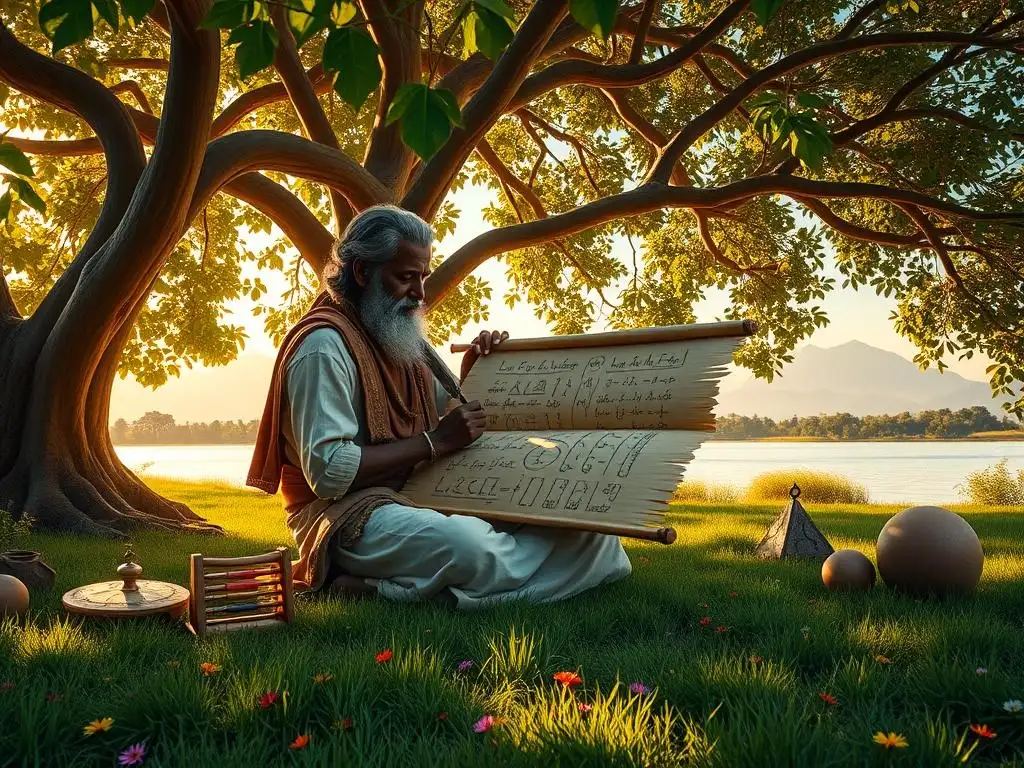
Welcome to Ancient India History, where we embark on a fascinating journey through the rich tapestry of ancient Indian civilizations. Here, we delve into the remarkable contributions that shaped the world, particularly in the realm of mathematics. In our feature article, "How Ancient Indian Mathematicians Approached Problem Solving," we uncover the ingenious methods employed by these brilliant minds and the profound impact they had on the discipline.
Prepare to be captivated by their innovative techniques and insights that continue to influence problem-solving today. Join us as we explore the legacy of these mathematicians and the vibrant culture that nurtured them—there's so much more to discover!
- Introduction to Ancient Indian Mathematicians and Problem Solving
- Key Ancient Indian Mathematicians and Their Contributions
- The Role of Texts in Ancient Indian Mathematics
- Techniques and Methods of Problem Solving
- Cultural Influences on Mathematical Problem Solving
- Legacy of Ancient Indian Mathematicians in Modern Mathematics
- Conclusion: The Lasting Impact of Ancient Indian Mathematicians on Problem Solving
-
Frequently Asked Questions
- What were the main contributions of ancient Indian mathematicians to problem solving?
- How did ancient Indian mathematicians approach mathematical problems?
- Who are some notable ancient Indian mathematicians?
- What role did the concept of zero play in ancient Indian mathematics?
- How did the cultural context of ancient India influence mathematics?
- Final Reflection: The Enduring Legacy of Ancient Indian Mathematicians in Problem Solving
- Unlock the Secrets of Ancient Wisdom!
Introduction to Ancient Indian Mathematicians and Problem Solving
The legacy of ancient Indian mathematicians is a testament to the profound intellectual achievements that have shaped mathematics as we know it today. From the sophisticated numerical systems of the Indus Valley Civilization to the intricate astronomical calculations of the Gupta Empire, ancient Indian mathematicians approached problem-solving with a unique blend of creativity, rigor, and practicality.
This article delves into the methodologies and philosophies that these mathematicians employed, revealing insights into their contributions to mathematics and the broader implications for Indian culture and education. By exploring the lives and works of these scholars, we can appreciate the depth of their understanding and the innovative techniques they developed to address complex mathematical challenges.
Overview of Ancient Indian Mathematics
Ancient Indian mathematics is characterized by its remarkable advancements and unique approach to problem-solving. The origins of mathematical thought in India can be traced back to the Indus Valley Civilization (approximately 2500-1900 BCE), where early forms of geometry and measurement were utilized in urban planning and architecture. However, it was during the later periods, particularly from 600 BCE to 1200 CE, that Indian mathematicians began to formalize mathematical concepts more systematically.
Key contributions from this era include:
- Numerical Systems: The introduction of the decimal system, including the concept of zero, revolutionized mathematics. Mathematicians like Brahmagupta (598-668 CE) articulated rules for arithmetic operations using zero and negative numbers.
- Algebra: The work of Bhaskara I and Bhaskara II laid the groundwork for algebraic equations and provided algorithms for solving quadratic equations.
- Geometry: Ancient Indian texts, such as the Sulba Sutras, contain geometrical principles that guided the construction of altars and other structures, illustrating practical applications of geometry in religious and social contexts.
These advancements reflect not only mathematical sophistication but also a cultural emphasis on problem-solving, which was deeply intertwined with daily life, religious practices, and trade.
Importance of Problem Solving in Ancient Indian Culture
Problem-solving was not merely an academic pursuit in ancient India; it was a vital component of everyday life and spiritual practice. The ability to tackle complex problems was esteemed, as it showcased not only intellectual prowess but also the application of knowledge to real-world scenarios. This cultural reverence for mathematical and logical reasoning influenced various aspects of society, including:
- Education: Ancient Indian universities, such as Nalanda and Takshashila, fostered environments where mathematics was studied rigorously alongside philosophy, astronomy, and other sciences. Students were trained to approach problems methodically, emphasizing critical thinking and analytical skills.
- Trade and Commerce: As trade flourished, so did the need for accurate calculations in commerce. Merchants employed mathematical techniques to manage finances, assess profits, and navigate trade routes, making problem-solving skills essential for economic success.
- Religious Practices: Mathematics played a crucial role in rituals and cosmology. The precise calculations for constructing altars and determining auspicious timings for ceremonies required a deep understanding of geometry and astronomy, reinforcing the connection between mathematics and spirituality.
Through these lenses, it becomes evident that ancient Indian mathematicians were not only problem solvers but also integral contributors to a rich tapestry of culture and knowledge that has influenced generations. Their innovative approaches and methods continue to inspire modern mathematical thought and serve as a reminder of the importance of interdisciplinary study in the pursuit of knowledge.
Key Ancient Indian Mathematicians and Their Contributions
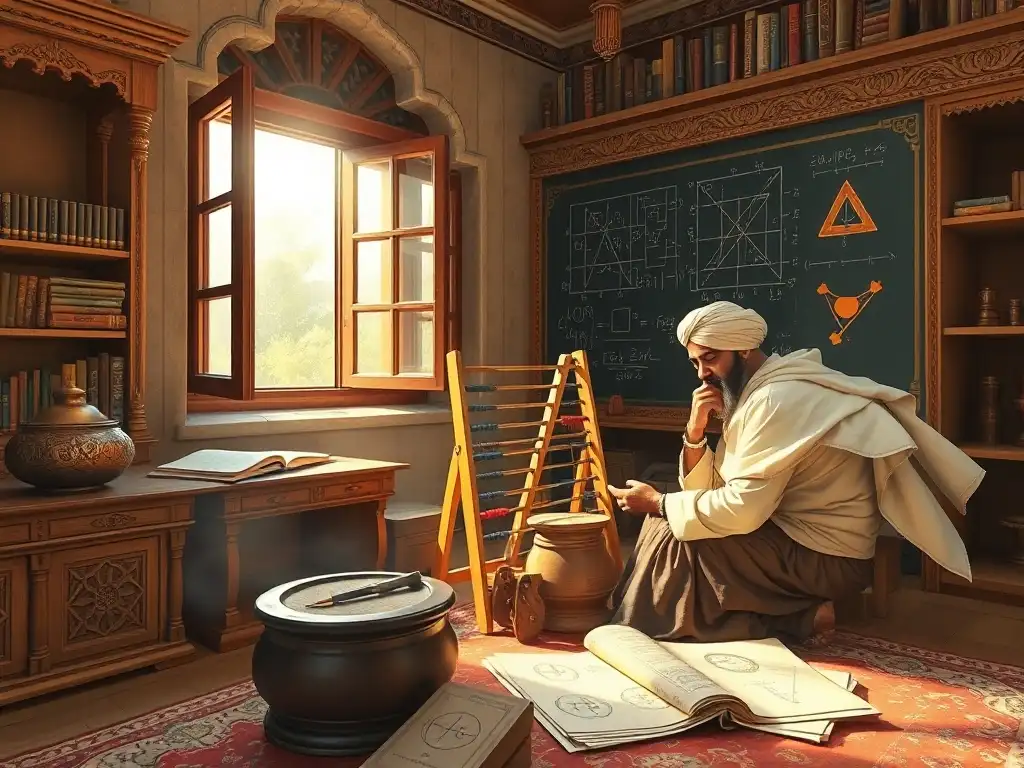
The legacy of ancient Indian mathematicians is marked by groundbreaking discoveries and innovative approaches to problem solving. Their contributions laid the foundation for many mathematical concepts that are still relevant today. This section highlights some key figures in ancient Indian mathematics, focusing on their unique methodologies and problem-solving techniques.
Aryabhata: The Pioneer of Mathematical Concepts
Aryabhata, who lived during the 5th century CE, is widely regarded as one of the first major mathematicians and astronomers in ancient India. His seminal work, the Aryabhatiya, encompasses a variety of mathematical topics including arithmetic, algebra, and trigonometry. Aryabhata's approach to problem solving was characterized by a blend of theoretical insight and practical application.
Problem Solving Techniques Used by Aryabhata
- Place Value System:
- Aryabhata was one of the earliest mathematicians to use a positional numeral system, which facilitated complex calculations and enhanced accuracy. This system allowed him to represent large numbers effectively.
- Algebraic Methods:
- He introduced various algebraic techniques, such as the use of indeterminate equations, which paved the way for solving problems involving unknowns. His approach included systematic methods for finding solutions to these equations.
- Trigonometric Innovations:
- Aryabhata also made significant contributions to trigonometry by introducing sine functions and developing algorithms for their computation. His work laid the groundwork for future advancements in this field.
- Astronomical Calculations:
- Aryabhata applied his mathematical skills to astronomy, creating formulas to calculate the positions of celestial bodies. His approach combined observation with mathematical principles, enabling accurate predictions of eclipses and planetary movements.
Brahmagupta: Algebra and Its Applications
Brahmagupta, a mathematician from the 7th century CE, is best known for his work Brahmasphutasiddhanta, which includes comprehensive discussions on arithmetic and algebra. His contributions significantly advanced the field of mathematics, particularly in the area of problem solving.
Innovative Approaches to Problem Solving in Brahmagupta's Work
- Rules for Zero:
- Brahmagupta was among the first to define the properties of zero and its role in calculations. He established rules for arithmetic operations involving zero, which were revolutionary for mathematical problem solving.
- Algebraic Equations:
- He provided systematic methods for solving linear and quadratic equations. Brahmagupta’s approach emphasized the importance of finding solutions, regardless of whether they were positive or negative.
- Geometric Applications:
- Brahmagupta also explored geometric problem solving, particularly in calculating areas and volumes. His formulas for the area of cyclic quadrilaterals showcased his innovative thinking and practical applications.
- Practical Problem Solving:
- His work often included practical examples, which made mathematical concepts accessible. Brahmagupta’s emphasis on real-world applications helped bridge the gap between theoretical mathematics and everyday problem solving.
The contributions of Aryabhata and Brahmagupta illustrate the advanced level of mathematical thought in ancient India. Their innovative problem-solving techniques not only advanced mathematics but also influenced future generations of mathematicians around the world.
Bhaskara I and II: Advancements in Trigonometry
Bhaskara I and II are two of the most prominent mathematicians in ancient India, renowned for their significant contributions to trigonometry. Bhaskara I (circa 600 CE) is often credited with the introduction of the sine function in Indian mathematics. He compiled the "Lilavati" and "Bijaganita," which served as foundational texts for understanding mathematical concepts. His work was instrumental in bridging the gap between the geometric approaches of earlier mathematicians and the more algebraic methods that would follow.
Bhaskara II, also known as Bhaskara Acharya (1114–1185 CE), expanded upon his predecessor's work, making notable advances in the field of trigonometry. He is best known for his text "Siddhanta Shiromani," which consists of four sections: Lilavati, Bijaganita, Grahaganita, and Goladhyaya. In this work, he meticulously detailed the properties of trigonometric functions, particularly focusing on the sine and cosine functions, and their applications in astronomy and geometry.
Both Bhaskara I and II emphasized the importance of problem-solving in mathematics. They introduced various techniques that facilitated the calculation of angles and distances, crucial for astronomical observations. Their trigonometric tables, based on the sine function, provided a systematic approach to solving complex problems that had practical applications in navigation, architecture, and astrology.
Problem Solving Methods of Bhaskara
Bhaskara II's approach to problem solving is characterized by a practical methodology that emphasizes clarity and systematic reasoning. One of his most famous problem-solving techniques is the use of "a systematic sequence of calculations" to arrive at solutions, which he demonstrated in the "Lilavati." This text is not just a mathematical manual but also a didactic tool that illustrates the application of mathematics in everyday life through various practical problems.
Key Techniques Used by Bhaskara:
- Algebraic Manipulation: Bhaskara often used algebraic equations to express problems succinctly. He employed techniques such as completing the square and solving quadratic equations, which laid the groundwork for algebra as we know it today.
- Geometric Visualization: He encouraged the use of geometric methods to visualize problems. By drawing diagrams and shapes, Bhaskara made complex problems more accessible and easier to understand.
- Iterative Approaches: Bhaskara was known for using iterative methods to refine solutions. For instance, he might suggest a rough estimate and then refine that estimate through successive approximations until a satisfactory answer was reached.
- Practical Applications: His problems often reflected real-life scenarios, such as calculating the area of fields, the volume of pots, and the distribution of grains, making the subject relatable and practical for students.
- Use of Rhymes and Verses: Bhaskara employed poetic verses to convey mathematical principles, making it easier for learners to memorize and understand complex concepts. This method not only preserved his teachings but also made them enjoyable to study.
Bhaskara's problem-solving methods combined rigorous mathematical reasoning with practical applications, ensuring that his contributions to ancient Indian mathematics were both innovative and impactful. Through his work, he set a high standard for mathematical clarity and problem-solving efficiency that influenced generations of mathematicians in India and beyond.
The Role of Texts in Ancient Indian Mathematics
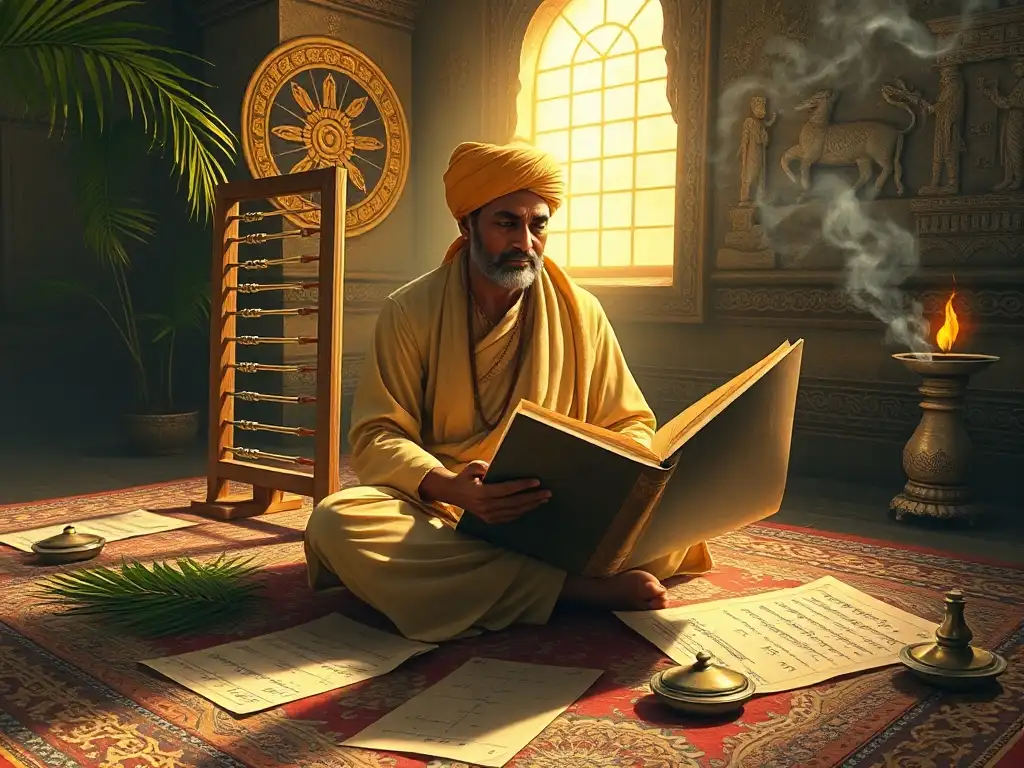
The development of mathematics in ancient India was significantly influenced by a variety of texts that served as foundational resources for mathematical knowledge and problem-solving techniques. These texts not only documented mathematical concepts but also provided frameworks for approaching various mathematical challenges. The role of these texts in shaping the methodologies of ancient Indian mathematicians cannot be overstated, as they encapsulated both theoretical insights and practical applications of mathematics.
Influential Mathematical Texts from Ancient India
Ancient Indian mathematicians produced several influential texts that contributed to the field of mathematics. These texts often combined rigorous theoretical foundations with practical problem-solving strategies. The most notable among these are:
- Aryabhatiya by Aryabhata
- Brahmasphutasiddhanta by Brahmagupta
- Lilavati by Bhaskara II
Each of these texts represents a unique approach to mathematical problems and provides insight into the sophisticated understanding of mathematics in ancient India.
"Aryabhatiya" and Its Problem-Solving Strategies
Written in the 5th century CE, Aryabhatiya is a seminal work by the mathematician Aryabhata. The text is divided into four sections, of which the Ganitapada focuses specifically on mathematical calculations. Aryabhata introduced several innovative problem-solving strategies, including:
- Place Value System: Aryabhata utilized a place value system that allowed for the representation of large numbers, making calculations more efficient.
- Methods for Solving Linear Equations: He provided methods for solving linear equations, showcasing a systematic approach to algebraic problem-solving.
- Approximation Techniques: Aryabhata emphasized the importance of approximation in calculations, particularly in astronomical contexts, which reflects a pragmatic approach to mathematical problems.
His work laid the groundwork for future mathematicians, illustrating the importance of clear communication and methodology in problem-solving.
"Brahmasphutasiddhanta": Algebraic Problem Solving Techniques
Brahmasphutasiddhanta, written in the 7th century CE by Brahmagupta, is another monumental text that contributed to the field of algebra. This work is particularly noteworthy for its systematic treatment of algebraic equations. Key features include:
- Rules for Zero: Brahmagupta was among the first to articulate rules for operations involving zero, such as its role as a placeholder and its implications in calculations.
- Solutions to Quadratic Equations: The text provides formulas for solving quadratic equations, demonstrating an advanced understanding of algebraic relationships.
- Practical Applications: Brahmagupta included problem-solving examples related to finance, inheritance, and land measurement, illustrating the applicability of algebra to real-world scenarios.
These techniques not only advanced mathematical theory but also enhanced practical problem-solving across various domains.
"Lilavati": A Comprehensive Guide to Problem Solving
Composed in the 12th century CE, Lilavati by Bhaskara II is celebrated for its extensive range of problems and solutions. This text serves as an instructional guide, emphasizing the art of problem-solving. Noteworthy aspects include:
- Variety of Problems: Lilavati contains a diverse array of problems, from arithmetic and geometry to combinatorial mathematics, catering to different skill levels and interests.
- Engaging Style: The text is written in poetic form, making it accessible and enjoyable, which reflects Bhaskara's belief in the importance of engaging students in mathematics.
- Step-by-Step Solutions: Bhaskara provided systematic solutions to problems, allowing learners to follow along and understand the underlying principles of mathematics.
Through its comprehensive approach, Lilavati not only educated its readers in mathematical techniques but also encouraged a deeper appreciation for the beauty of mathematics.
The evolution of problem-solving methods among ancient Indian mathematicians is intricately tied to these influential texts. They not only preserved mathematical knowledge but also facilitated the transfer of skills and techniques across generations, influencing mathematics well beyond the borders of India. The creativity and rigor displayed in these texts underscore the rich heritage of ancient Indian mathematicians and their contributions to the broader field of mathematics.
Techniques and Methods of Problem Solving
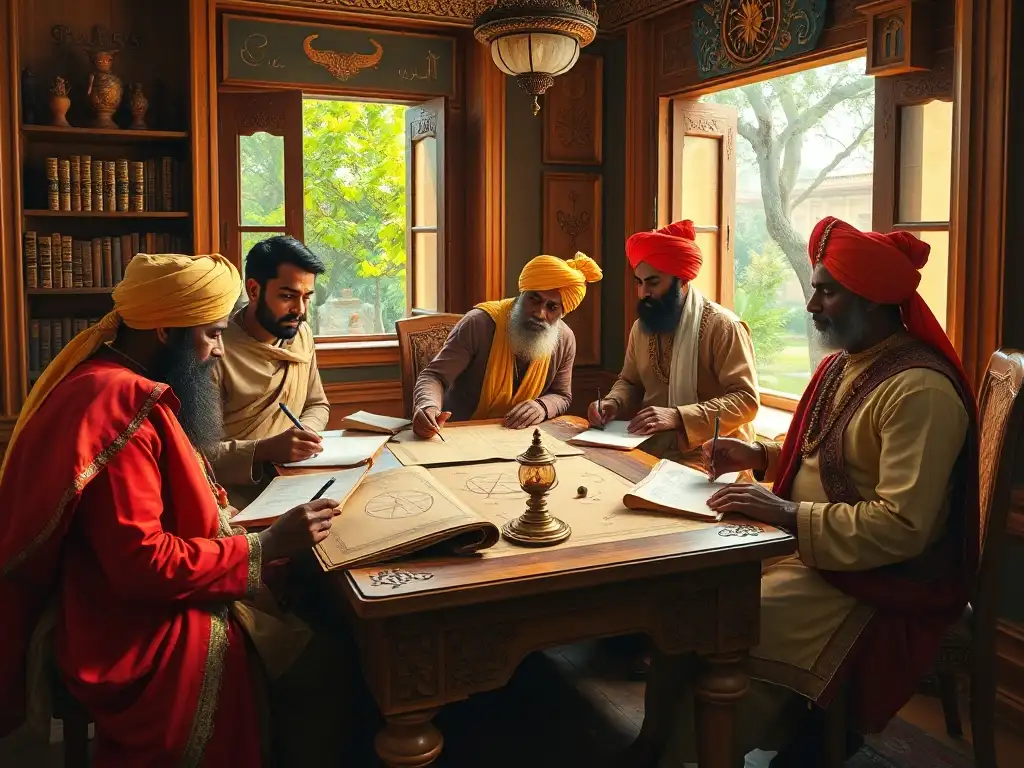
Ancient Indian mathematicians employed a variety of techniques and methods to tackle complex mathematical problems. Their approaches not only influenced the mathematical landscape of their time but also laid foundational principles that would be adopted and adapted by future generations. The ingenuity of these mathematicians is reflected in their use of algorithms, the revolutionary concept of zero, and distinctive geometric methods.
Use of Algorithms in Ancient Indian Mathematics
The development of algorithms in ancient Indian mathematics can be traced back to the works of prominent figures such as Brahmagupta and Aryabhata. These mathematicians formulated systematic procedures for solving various mathematical problems, particularly in arithmetic and algebra.
- Brahmagupta's Rule: In his seminal work, Brahmasphutasiddhanta, Brahmagupta introduced a set of rules for solving quadratic equations, a precursor to modern algebraic methodologies. His algorithms included techniques for determining the values of variables through iterative approaches, which enhanced the efficiency of problem solving.
- Aryabhata's Contributions: Aryabhata’s work, Aryabhatiya, also emphasized algorithmic thinking. He provided algorithms for various calculations, including the extraction of square roots and the determination of the area of geometrical shapes. His systematic approach reflects an early understanding of mathematical processes that can be applied to a wide range of problems.
These algorithms were not merely theoretical; they were practical tools, enabling ancient mathematicians to resolve real-world issues, from land measurement to trade calculations. The legacy of these algorithms continues to be relevant in modern computational methods.
The Concept of Zero and Its Impact on Problem Solving
The introduction of zero (represented as ‘shunya’ in Sanskrit) is one of the most profound contributions of ancient Indian mathematicians to mathematics. This concept fundamentally transformed problem solving in numerous ways:
- Placeholder Value: Zero serves as a placeholder in the decimal system, allowing for the representation of large numbers and simplifying calculations. For example, the number 105 is easily distinguishable from 15 due to the presence of zero.
- Facilitation of Operations: The ability to perform arithmetic operations involving zero led to the development of advanced mathematical techniques. Operations like addition and subtraction became more intuitive, as the rules surrounding zero (e.g., adding zero to a number does not change its value) streamlined calculations.
- Foundation for Algebra: The concept of zero was crucial in the formulation of algebraic equations. It allowed mathematicians to express equations that include variables set to zero, leading to significant advancements in algebraic problem solving.
The impact of zero on ancient Indian mathematics cannot be overstated; it not only enabled more complex calculations but also influenced mathematical thought across cultures, eventually reaching the Islamic world and Europe.
Geometric Approaches to Problem Solving in Ancient India
Ancient Indian mathematicians were also adept in geometric problem solving, employing various methods that showcased their understanding of shapes, sizes, and spatial relationships:
- Sūrya Siddhānta: This ancient text outlines geometric principles used for astronomical calculations. It includes algorithms for determining the areas and volumes of various shapes, showcasing a sophisticated understanding of geometry.
- Construction Techniques: Ancient texts often described methods for constructing geometric shapes using simple tools. The precision in constructions, such as the division of land or the design of temples, demonstrates the application of geometric problem-solving techniques in practical scenarios.
- Applications in Astronomy and Architecture: The geometric knowledge of ancient Indian mathematicians was applied not just in mathematics but also in fields like astronomy and architecture. For instance, their understanding of the angles and measurements was crucial for constructing observatories and temples aligned with celestial phenomena.
Overall, the geometric approaches adopted by ancient Indian mathematicians provided a robust framework for problem solving, enabling them to address practical challenges with precision and creativity.
The techniques and methods of problem solving utilized by ancient Indian mathematicians demonstrate an advanced level of mathematical thought and innovation. From algorithms to the concept of zero and geometric applications, their contributions have profoundly influenced both contemporary mathematics and the broader field of problem solving throughout history.
Cultural Influences on Mathematical Problem Solving
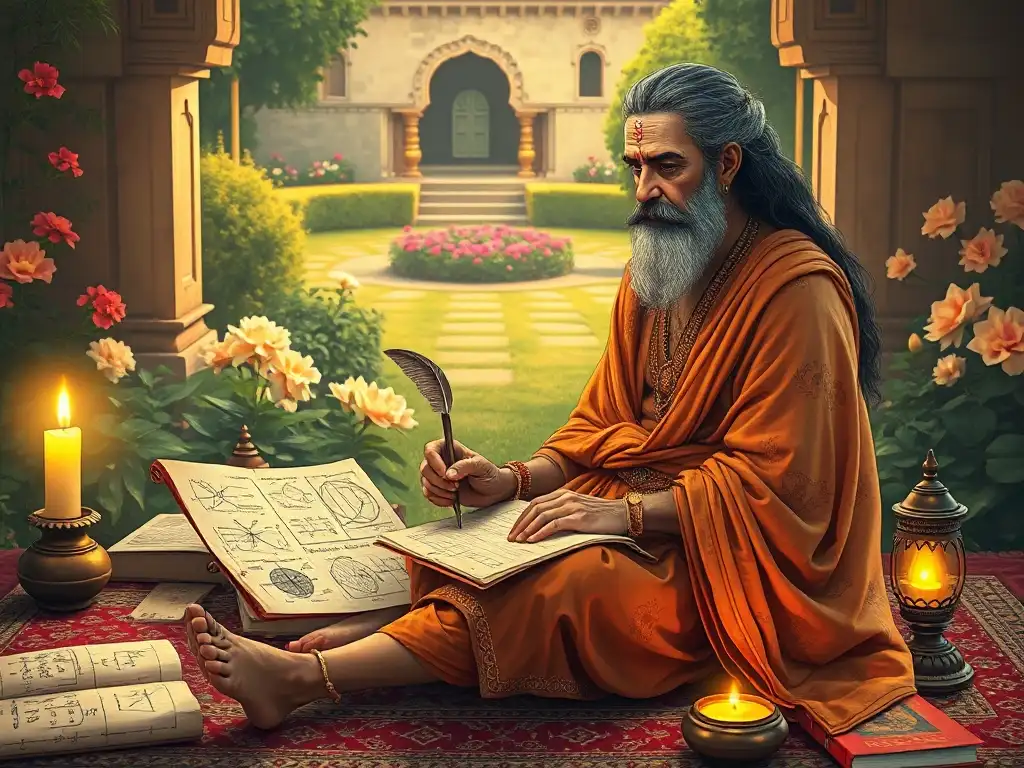
The mathematical practices of ancient Indian mathematicians were deeply intertwined with the cultural, religious, and philosophical contexts of their time. This interplay significantly influenced their approach to problem solving, leading to unique methodologies and innovations that set them apart from their contemporaries in other civilizations. Understanding these cultural influences provides insight into how ancient Indian mathematicians approached mathematical challenges and contributed to the field as a whole.
The Relationship Between Mathematics and Astronomy
Astronomy played a pivotal role in the development of mathematics in ancient India. Mathematicians such as Aryabhata and Brahmagupta made substantial contributions to both fields, illustrating the close relationship between the two.
- Astronomical Calculations: Ancient Indian mathematicians utilized mathematical techniques to calculate the positions of celestial bodies. This required advanced knowledge of trigonometry and geometry, which they developed to solve complex astronomical problems.
- Aryabhata's Contributions: Aryabhata's seminal work, Aryabhatiya, contains tables of sine values and methods for calculating the time of planetary positions. His innovative approach included using the concept of zero and positional notation, which were crucial for precise astronomical calculations.
- Eclipses and Calendar Systems: The need to predict solar and lunar eclipses led to the development of intricate mathematical formulas. These predictions were essential for religious ceremonies and agricultural planning, demonstrating how mathematics was applied in practical, everyday contexts.
The integration of astronomy and mathematics not only advanced problem-solving techniques but also elevated the status of mathematicians, who were often regarded as astronomers and vice versa.
How Religion and Philosophy Shaped Mathematical Practices
Religion and philosophy were foundational to the intellectual landscape of ancient India and significantly shaped mathematical practices.
- Sacred Texts and Rituals: Many mathematical concepts were derived from the need to understand and perform rituals described in sacred texts. The Vedas and Puranas often included references to calculations for constructing altars and performing sacrifices, which required precise measurements and geometric understanding.
- Philosophical Inquiry: The philosophical schools of thought, particularly those associated with mathematics, such as Nyaya and Vaisheshika, encouraged a systematic and logical approach to problem solving. Mathematicians adopted methods of reasoning and argumentation from these philosophies, which influenced their mathematical proofs and theories.
- The Role of Zero and Infinity: The concepts of zero and infinity, crucial to advanced mathematics, were also deeply philosophical. Ancient Indian mathematicians viewed zero not merely as a number but as a concept representing the void, which opened new avenues for problem solving in arithmetic and algebra.
- Cultural Exchanges: The interaction between different cultures, such as through trade and conquest, facilitated the exchange of ideas. This cultural diffusion enriched the mathematical practices in ancient India, leading to the incorporation of diverse problem-solving techniques.
The cultural influences on ancient Indian mathematicians were profound, with astronomy and religious practices playing critical roles in shaping their problem-solving methodologies. These factors not only propelled advancements in mathematics but also ensured that it was firmly rooted in the rich tapestry of ancient Indian civilization.
Legacy of Ancient Indian Mathematicians in Modern Mathematics

The legacy of ancient Indian mathematicians has played a pivotal role in shaping modern mathematics. Their contributions, ranging from the development of the decimal system to the introduction of concepts like zero, have laid the groundwork for many mathematical principles that are still in use today. The mathematicians of ancient India, such as Aryabhata, Brahmagupta, and Bhaskara II, not only excelled in theoretical mathematics but also had a profound understanding of practical applications, which enhanced their problem-solving capabilities.
One of the most significant legacies is the place value system and the concept of zero, which revolutionized numerical representation and calculations. Prior to this system, numerical values were often cumbersome and inefficient. The introduction of a base-10 system allowed for greater simplicity and efficiency in calculations, making it easier to handle large numbers.
Additionally, ancient Indian mathematicians were adept at solving complex problems involving algebra and geometry. They developed methods for solving quadratic equations and established rules that would later be foundational for algebra as we know it today. Their work laid the groundwork for future mathematicians around the globe, influencing the course of mathematical thought in both the East and West.
Influence of Ancient Indian Problem Solving Techniques on Contemporary Mathematics
The problem-solving techniques employed by ancient Indian mathematicians have had a lasting impact on contemporary mathematics. They utilized a systematic approach to tackle mathematical challenges, often breaking problems down into simpler components. This method can be seen in modern mathematical practices where complex problems are often solved using modular techniques or by applying algorithms.
One notable technique is the method of completion of squares, which was used by Brahmagupta to solve quadratic equations. This method is foundational in algebra today and is taught to students worldwide. Moreover, the ancient practice of using sūtras—concise rules or formulas—has parallels in modern mathematics where theorems and mathematical rules condense complex ideas into manageable forms.
Furthermore, ancient Indian mathematicians often engaged in collaborative problem solving, which fostered an environment where ideas could be exchanged and built upon. This collective approach is mirrored in today’s mathematical research, where collaboration across disciplines leads to innovative solutions and breakthroughs.
Comparison of Ancient and Modern Approaches to Problem Solving
While both ancient and modern approaches to problem solving share commonalities, they also exhibit distinct differences that highlight the evolution of mathematical thought.
- Methodology:
- Ancient Indian Mathematicians: Employed heuristic techniques and intuitive reasoning. They often relied on mental calculation and verbal reasoning to arrive at solutions.
- Modern Mathematicians: Utilize formalized methods, including algorithmic processes and computational tools. Problem-solving often involves technology, such as software and calculators, which were unimaginable in ancient times.
- Notation:
- Ancient: Used a more descriptive form of notation, often relying on words and phrases to explain mathematical concepts.
- Modern: Employs standardized symbols and notation (e.g., algebraic symbols, calculus notations) that allow for concise communication of complex ideas.
- Collaboration:
- Ancient: Collaboration was often localized within small communities or schools of thought, with knowledge being passed down through generations.
- Modern: Collaboration spans global networks, with mathematicians from diverse backgrounds contributing to a shared pool of knowledge through conferences, journals, and online platforms.
| Aspect | Ancient Indian Approach | Modern Approach |
|---|---|---|
| Methodology | Heuristic and intuitive | Algorithmic and computational |
| Notation | Descriptive and verbal | Standardized symbols |
| Collaboration | Localized communities | Global networks |
The comparison reveals not only how mathematics has advanced but also underscores the foundational principles established by ancient Indian mathematicians that continue to influence the discipline today. Their legacy remains a testament to the enduring nature of mathematical inquiry and problem solving.
Conclusion: The Lasting Impact of Ancient Indian Mathematicians on Problem Solving
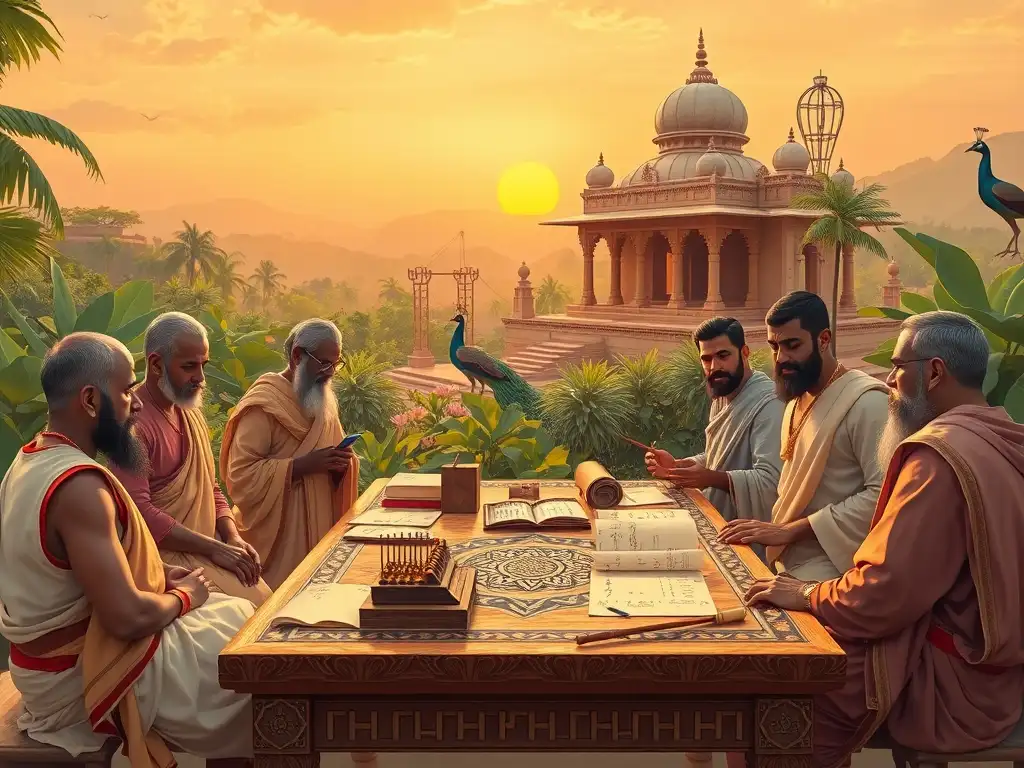
The legacy of ancient Indian mathematicians is a rich tapestry woven with innovation, creativity, and a unique approach to problem solving that has not only influenced their contemporaries but also laid foundational principles for future generations. Their methods were characterized by a blend of theoretical exploration and practical application, showcasing an extraordinary understanding of mathematics that transcended mere calculations.
Reflection on the Importance of Ancient Indian Contributions to Mathematics
Ancient Indian mathematicians, such as Aryabhata, Brahmagupta, and Bhaskara II, made significant contributions that transformed mathematical thought. These scholars developed advanced concepts in algebra, geometry, and trigonometry, which were instrumental in solving complex problems.
- Aryabhata introduced the concept of zero and the place value system, fundamentally changing the way numbers were understood and utilized.
- Brahmagupta provided rules for arithmetic operations involving negative numbers and formulated solutions for various types of quadratic equations.
- Bhaskara II advanced the study of calculus centuries before its formal inception in Europe, demonstrating early methods for calculating derivatives and integrals.
These contributions not only enriched mathematics but also influenced fields like astronomy, engineering, and architecture, proving the practical implications of their theoretical work.
The innovations of ancient Indian mathematicians are a testament to human intellect and creativity, demonstrating a sophisticated understanding of mathematics that continues to inspire scholars today.
Furthermore, the approaches of these mathematicians reflect a philosophical perspective on knowledge that emphasizes logical reasoning and deductive thinking. Their problem-solving techniques were often accompanied by detailed explanations and examples, promoting clarity and comprehension that resonate with modern mathematical education.
Future Research Directions in the Study of Ancient Indian Problem Solving Techniques
As we explore the tremendous contributions of ancient Indian mathematicians, several avenues for future research emerge:
- Comparative Studies: Investigating the similarities and differences between ancient Indian mathematical techniques and those developed in other ancient civilizations can yield insights into the evolution of mathematical thought.
- Manuscript Analysis: Many ancient texts, such as the Sulbasutras and Aryabhatiya, contain problem-solving strategies that warrant detailed examination. Analyzing these manuscripts can uncover lost techniques and enhance our understanding of ancient methodologies.
- Interdisciplinary Approaches: Collaborating with historians, linguists, and philosophers can enrich the study of ancient Indian mathematics, providing a multi-faceted view of its impact on broader cultural and intellectual movements.
- Digital Humanities: Utilizing technology to digitize, annotate, and analyze ancient texts can facilitate wider access to this knowledge, inspiring new generations of mathematicians and historians.
The study of ancient Indian mathematicians and their problem-solving approaches is a vibrant field with vast potential. By embracing interdisciplinary methodologies and leveraging modern technology, researchers can continue to unearth the profound insights of these ancient scholars, ensuring that their wisdom remains relevant in contemporary mathematics and beyond.
Frequently Asked Questions
What were the main contributions of ancient Indian mathematicians to problem solving?
Ancient Indian mathematicians made significant contributions to areas such as algebra, geometry, and number theory, laying the groundwork for modern mathematics.
How did ancient Indian mathematicians approach mathematical problems?
They utilized a methodical approach, often employing recursive techniques and geometric visualization to solve complex problems effectively.
Who are some notable ancient Indian mathematicians?
Prominent figures include Aryabhata, known for his work on the place value system, and Brahmagupta, recognized for his contributions to algebra and zero.
What role did the concept of zero play in ancient Indian mathematics?
The introduction of zero as a numeral was a revolutionary breakthrough, facilitating advanced calculations and significantly influencing mathematical thought worldwide.
How did the cultural context of ancient India influence mathematics?
The rich cultural and philosophical traditions of ancient India promoted intellectual inquiry, leading to innovative approaches in problem solving and the development of mathematics as a discipline.
Final Reflection: The Enduring Legacy of Ancient Indian Mathematicians in Problem Solving
The methodologies employed by ancient Indian mathematicians in problem solving remain profoundly relevant today, demonstrating that innovative thinking transcends time. Their unique approaches not only laid the groundwork for modern mathematics but also inspire contemporary problem solvers to embrace creativity and critical thinking. In an era where challenges are increasingly complex, revisiting these ancient techniques can provide us with invaluable insights into effective problem-solving strategies.
The influence of ancient Indian mathematicians on our cultural and intellectual landscape is undeniable. Their work has shaped not just mathematics, but also the way we approach challenges in various fields, from science to technology. As we navigate the complexities of the modern world, we can draw inspiration from their emphasis on logical reasoning and systematic exploration. Mathematics is the language in which God has written the universe.
– Galileo Galilei. This quote encapsulates the timeless nature of mathematical inquiry, reminding us of the profound connections between ancient wisdom and contemporary understanding.
As you reflect on the insights shared in this article, consider how you can apply the problem-solving techniques of ancient Indian mathematicians in your own life. Embrace curiosity, challenge conventions, and approach problems with an open mind. By integrating these lessons into your daily practices, you can cultivate a mindset that not only seeks solutions but also values the journey of discovery itself. Let the legacy of these mathematicians inspire you to tackle challenges with creativity and resilience, forging your own path in the ever-evolving landscape of knowledge.
Unlock the Secrets of Ancient Wisdom!
Thank you for diving into the fascinating world of ancient Indian mathematicians with us! You’ve explored their innovative approaches to problem-solving, gaining insights that are both valuable and timeless. Now, it's time to put that knowledge into action!
Here are some powerful steps you can take right now:
- Practice a classic problem: Challenge yourself by solving a traditional mathematical problem using methods inspired by ancient texts. Tap into the wisdom of the past!
- Share your insights: Discuss what you’ve learned with friends or join online forums. Engage with a community that appreciates the beauty of mathematics!
- Explore further: Delve deeper into ancient texts or online resources. Consider starting a personal research project to understand how these timeless principles can be applied in today's world.
Which ancient principle do you believe could revolutionize modern problem-solving? We invite you to share your thoughts in the comments!