
The Mathematics of Ancient Indian Music: A Harmonious Connection

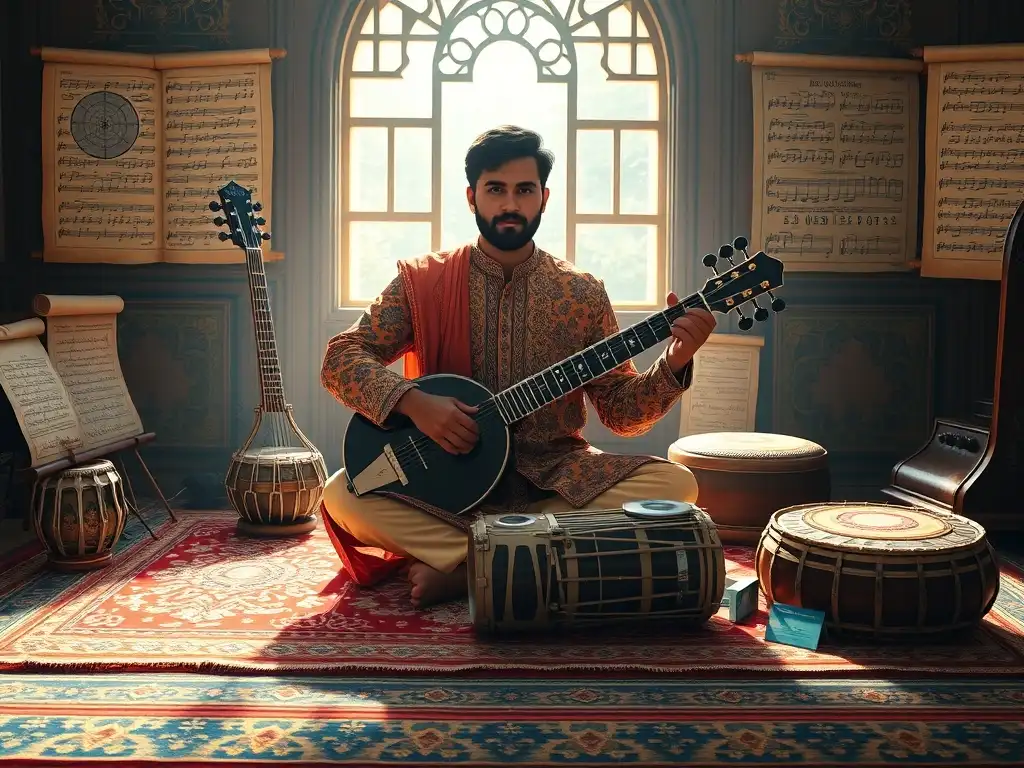
Welcome to Ancient India History! Discover the fascinating world of ancient Indian music theory, where the harmonious interplay of sound and mathematics reveals the profound contributions of ancient civilizations. Journey with us as we explore how the intricate rhythms and melodies of the past not only shaped cultural expressions but also laid foundational principles in mathematics. Are you ready to uncover the secrets behind this captivating connection? Dive into our main article, "The Mathematics of Ancient Indian Music: A Harmonious Connection," and let the exploration begin!
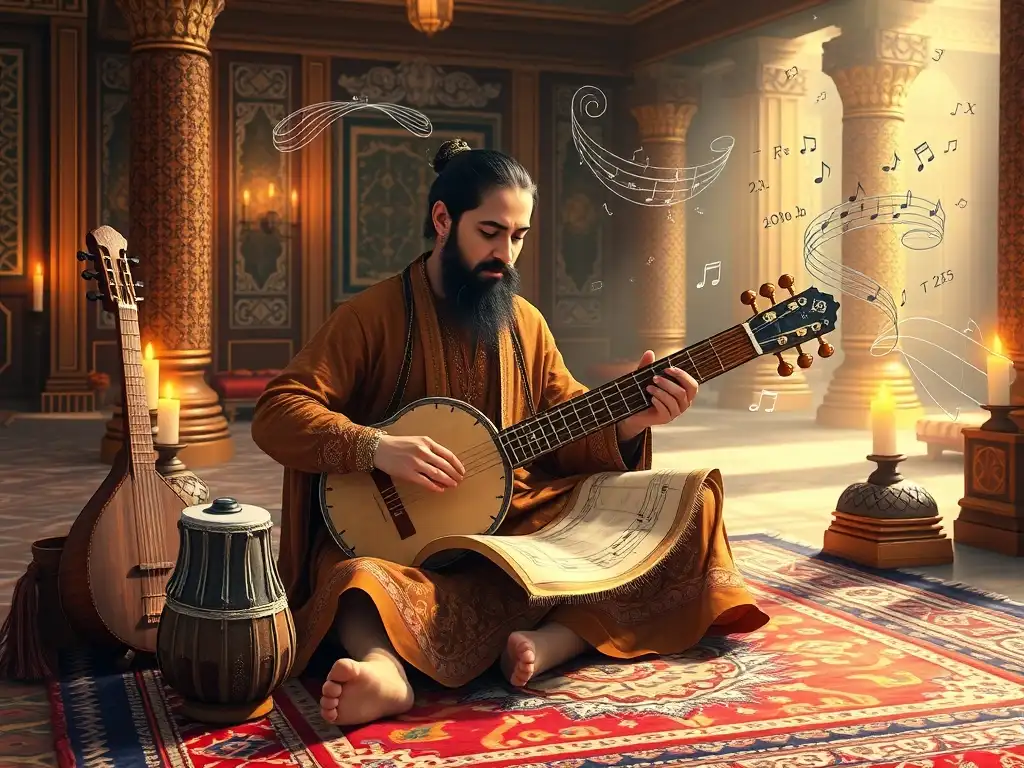
Introduction to Ancient Indian Music Theory
The intricate tapestry of ancient Indian music theory reveals a profound connection between mathematics and musical composition. As we delve into this harmonious realm, we uncover the sophisticated systems and structures that ancient Indian musicians employed to create their art. From the rhythmic patterns to melodic scales, the mathematical principles underpinning these musical frameworks highlight the advanced understanding of sound and rhythm possessed by ancient Indian scholars. This exploration not only sheds light on the creativity of these civilizations but also underscores their significant contributions to the fields of both music and mathematics.
Overview of Ancient Indian Music
Ancient Indian music, with its roots tracing back thousands of years, is characterized by its rich diversity and depth. The two primary forms of music in this context are Hindustani (North Indian) and Carnatic (South Indian), each with its unique characteristics yet sharing a common theoretical foundation.
Key features of ancient Indian music include:
- Ragas: Melodic frameworks that dictate the emotional and aesthetic aspects of music.
- Talas: Rhythmic cycles that provide structure to the performance.
- Improvisation: A cornerstone of performance, allowing artists to showcase their creativity within the rules of the ragas and talas.
The interplay of these elements not only creates a beautiful auditory experience but also reveals the intricate mathematical relationships governing musical compositions.
Importance of Mathematics in Music
Mathematics plays a crucial role in music, serving as the foundation for understanding sound frequencies, rhythmic patterns, and scales. In ancient Indian music, the relationship between mathematics and music can be observed through:
- Frequency Ratios: The intervals between notes are often expressed in simple numerical ratios, such as 2:1 for an octave or 3:2 for a perfect fifth.
- Rhythmic Patterns: Talas are constructed using mathematical principles, where the division of beats and subdivisions are carefully calculated to create complex rhythmic structures.
- Acoustics: The acoustical properties of musical instruments are grounded in mathematical concepts, influencing how sound is produced and perceived.
The integration of mathematics into music theory not only facilitated the development of sophisticated compositions but also allowed for the preservation and transmission of musical knowledge across generations.
Historical Context of Music in Ancient India
The historical significance of music in ancient India reflects the cultural and spiritual dimensions of its society. Music was not merely an art form but served as a vital element in religious rituals, social gatherings, and educational practices.
Music in the Vedic Period
During the Vedic period (circa 1500–500 BCE), music was deeply intertwined with spirituality and ritualistic practices. The Samaveda, one of the four Vedas, is a collection of hymns that emphasizes the melodic recitation of verses. This period marked the beginning of systematic music theory, where the integration of mathematical principles became evident in the chanting and melodic structures.
Some notable aspects of Vedic music include:
- Chanting Techniques: The precise modulation of voice and rhythm was crucial for the correct recitation of hymns.
- Mathematical Organization: The arrangement of verses and the use of repetitive patterns reflect a deep understanding of numerical relationships.
Influence of Ancient Indian Civilizations on Music
The evolution of music in ancient India was significantly influenced by various civilizations, including the Maurya and Gupta empires. These periods were marked by advancements in the arts and sciences, where music flourished as an important cultural expression.
Factors contributing to this influence include:
- Patronage of the Arts: Rulers and wealthy patrons supported musicians, allowing for the development of musical forms and theories.
- Cross-Cultural Exchanges: Trade and interaction with other civilizations enriched the musical landscape, leading to the incorporation of diverse elements into Indian music.
The mathematics of ancient Indian music is a testament to the ingenuity and creativity of its practitioners, demonstrating how these elements contributed to the rich cultural heritage that continues to resonate today.
Key Concepts in Ancient Indian Music Theory
Ancient Indian music theory is a sophisticated system that intertwines music with mathematics, emphasizing the importance of structure and organization. At the core of this theory are essential concepts like ragas, talas, and shrutis, each contributing to the overall framework of musical expression.
- Ragas are melodic frameworks that dictate the mood and emotion of a piece. Each raga is associated with specific times of the day or seasons, creating an emotional resonance that is pivotal in Indian music.
- Talas refer to the rhythmic cycles that provide a framework for the music. The intricate patterns of beats in talas allow for complex rhythmic variations and improvisations.
- Shrutis denote the microtonal intervals that define the pitch in Indian music. These subtle variations create a rich and nuanced sound that differs from the Western chromatic scale.
Through an understanding of these key concepts, one can appreciate how ancient Indian music theory is deeply rooted in mathematical principles, reflecting a harmonious connection between art and science.
Ragas and Their Mathematical Foundations
Ragas form the backbone of Indian classical music, serving as a foundation for improvisation and composition. Each raga consists of a specific set of notes, or swaras, which are derived from a larger scale. The selection and arrangement of these notes follow mathematical principles, often involving ratios and patterns that create a unique sound.
The structure of a raga can be analyzed mathematically through the concept of permutations and combinations. For instance, a raga may utilize a specific sequence of notes that can be arranged in various ways, leading to a multitude of melodic interpretations. The mathematical aspect becomes evident when considering the intervals between notes, which can be expressed as numerical ratios, such as 2:1 for an octave or 3:2 for a perfect fifth.
Moreover, ragas are often associated with specific moods or emotions (bhavas), which can be effectively conveyed through the precise manipulation of these mathematical relationships. This intersection of mathematics and artistry showcases the profound intellectual depth of ancient Indian music theory.
The Role of Talas in Rhythm
Talas are essential to the rhythmic aspect of ancient Indian music, providing a structured framework that governs the timing and flow of a performance. Each tala consists of a fixed number of beats (matras) that can be grouped into various cycles, often creating intricate rhythmic patterns.
The mathematical underpinnings of talas can be illustrated through their divisional properties. For example, a common tala like Teentaal consists of 16 beats divided into four groups of four. This division can be represented mathematically as:
- 4 + 4 + 4 + 4 (grouping)
Additionally, talas can incorporate complex rhythmic variations through techniques such as khanda (5 beats) and mishra (7 beats), showcasing the flexibility and versatility of rhythmic structures in Indian music.
By employing mathematical principles to organize these beats, musicians can create a rich tapestry of sound, allowing for both structured compositions and spontaneous improvisation. This mathematical precision in rhythm is a testament to the sophisticated nature of ancient Indian music theory.
The Significance of Shrutis in Pitch
Shrutis represent the microtonal divisions in Indian music, providing a nuanced understanding of pitch that goes beyond the standard Western scale. In ancient Indian theory, it is believed that there are 22 shrutis, each serving as a distinct pitch level that musicians can utilize to create subtle variations in their performance.
The mathematical significance of shrutis lies in their intervallic relationships. Unlike Western music, which is based on 12 equal semitones, the shruti system allows for a more fluid interpretation of pitch, enabling musicians to express emotions and nuances that are often lost in a rigid scale.
Mathematically, these intervals can be articulated through ratios, providing a framework for tuning instruments and vocalizations. For instance, the distance between two shrutis can be calculated using fractional representations, allowing for precise control over pitch and intonation.
This rich system of shrutis not only enhances the melodic aspects of music but also fosters a deeper emotional connection between the performer and the audience, illustrating the integral role of mathematics in ancient Indian music theory.
Notable Mathematicians and Their Contributions to Music Theory
Throughout history, several notable mathematicians have made significant contributions to the development of ancient Indian music theory. Their work has helped shape the understanding of music as a mathematical discipline, bridging the gap between the arts and sciences.
Bharata Muni and the Natyashastra
Bharata Muni, an influential figure in ancient Indian arts, is best known for his seminal work, the Natyashastra. This comprehensive treatise not only covers the principles of drama and dance but also delves into music theory.
In the Natyashastra, Bharata outlines the concept of ragas and their emotional expressions, establishing a mathematical framework for understanding the relationships between different musical elements. His exploration of rhythm and melody emphasizes the importance of structure, showcasing how mathematical ratios underpin the art of music.
Bharata's contributions have had a lasting impact on the evolution of Indian classical music, reinforcing the idea that music is not merely an art form but also a sophisticated mathematical system.
Pingala and the Chandaḥśāstra
Pingala, another prominent mathematician, is celebrated for his work in the Chandaḥśāstra, which focuses on the science of prosody and metrics in Sanskrit poetry. His analysis of poetic rhythms incorporates mathematical concepts, making it a vital resource for understanding the rhythmic structures used in music.
In the Chandaḥśāstra, Pingala introduces the concept of binary numbers and combinatorial mathematics to analyze the patterns of syllables in verses. This mathematical approach not only aids in the creation of rhythmic cycles but also enhances the understanding of how music and poetry are intertwined in ancient Indian culture.
Pingala's pioneering insights into the mathematical foundations of rhythm continue to influence contemporary studies of music theory and its relationship with mathematics.
Mathematicians of the Gupta Period and Their Influence on Music
The Gupta period, often referred to as the "Golden Age" of ancient India, witnessed significant advancements in mathematics and the arts. During this time, several mathematicians contributed to the evolution of music theory, further solidifying its mathematical roots.
Among these scholars, Brahmagupta and Varahamihira explored mathematical concepts that had implications for music, such as geometry and astronomy, which were often linked to musical timing and tuning systems. Their work encouraged a deeper exploration of how mathematical principles could enhance musical creation and performance.
Additionally, the Gupta period fostered an environment where the arts flourished alongside mathematical inquiry, leading to a rich exchange of ideas that would shape the future of Indian music theory. The interconnection of mathematics and music during this era exemplifies the harmonious relationship between these disciplines, paving the way for the sophisticated music systems that continue to thrive today.
The Interplay Between Mathematics and Music

The relationship between mathematics and music in ancient India is a profound one, with intricate links that have been explored by scholars for centuries. Ancient Indian music theory, particularly as seen in classical traditions, is deeply intertwined with mathematical principles, where rhythmic patterns, melodic structures, and harmonic relations are all governed by mathematical concepts. This interplay is evident in the way music is composed and performed, reflecting a systematic approach to sound that aligns closely with mathematical reasoning.
Mathematics in music manifests through various elements such as frequency, rhythm, and scales. The ancient Indian treatises, such as the "Natya Shastra" by Bharata Muni and the "Sangita Ratnakara" by Sharngadeva, illustrate the mathematical underpinnings of musical elements like swaras (notes) and talas (rhythmic cycles). By understanding these connections, one can appreciate how ancient Indian musicians utilized mathematical concepts to create harmonious and aesthetically pleasing compositions.
Patterns and Ratios in Ancient Indian Music
In ancient Indian music, patterns and ratios play a crucial role in the construction of melodies and rhythms. The concept of shruti, which refers to the smallest interval of pitch, is defined mathematically. The division of the octave into 22 shrutis exemplifies this, allowing for a rich variety of notes that musicians can explore.
Moreover, the tuning systems, such as Just Intonation, rely heavily on mathematical ratios. The most common ratios used are 1:1 (unison), 3:2 (perfect fifth), and 4:3 (perfect fourth). These ratios determine the relationships between different pitches, resulting in harmonious sounds that resonate with listeners.
Rhythmic patterns also exhibit mathematical precision, showcasing how time signatures and cycles are constructed. The use of tala systems—composed of various beats grouped into cycles—demonstrates this. For example, a teentaal, which consists of 16 beats, can be subdivided into 4 groups of 4 beats, illustrating how mathematical grouping enhances the performance structure.
The Geometry of Sound and Harmony
The geometry of sound relates to how different frequencies interact and create harmony. In ancient Indian music theory, the concept of nada (sound) is associated with geometric shapes, where different frequencies correspond to specific geometric forms. This relationship underscores the belief that music can be visualized and understood through spatial concepts.
For instance, the circle is a prominent motif in understanding sound waves, as they propagate in circular patterns. The swaras can be mapped onto geometric shapes, where the distance between pitches can be visualized, allowing musicians to comprehend the spatial relationships between notes.
Furthermore, the harmonic series—a mathematical model that explains how overtones are produced—can be illustrated geometrically. Each note has a fundamental frequency, with overtones appearing at specific intervals, creating a visual representation of sound that enhances the understanding of musical harmony.
Mathematical Relationships in Raga Composition
Raga composition in ancient Indian music is a complex process governed by mathematical relationships. Each raga is characterized by a specific set of notes, which are arranged in a particular order to create a unique melodic framework. The choice of notes, their sequences, and the emphasis placed on certain pitches or swaras create an emotional palette that resonates with listeners.
The mathematical structure of a raga can be analyzed through its ascending ( arohana) and descending ( avarohana) scales. The relationships among these notes can be expressed using combinatorial mathematics, where the arrangement of notes follows specific rules. For example, a raga may stipulate certain notes to be emphasized or avoided, leading to a structured yet creative approach to composition.
Additionally, the use of gamakas (ornamentations) in raga performance adds another layer of complexity. These nuances allow performers to express emotions while adhering to the inherent mathematical framework of the raga, illustrating the balance between structure and creativity in ancient Indian music.
Case Studies of Mathematical Applications in Ancient Indian Music
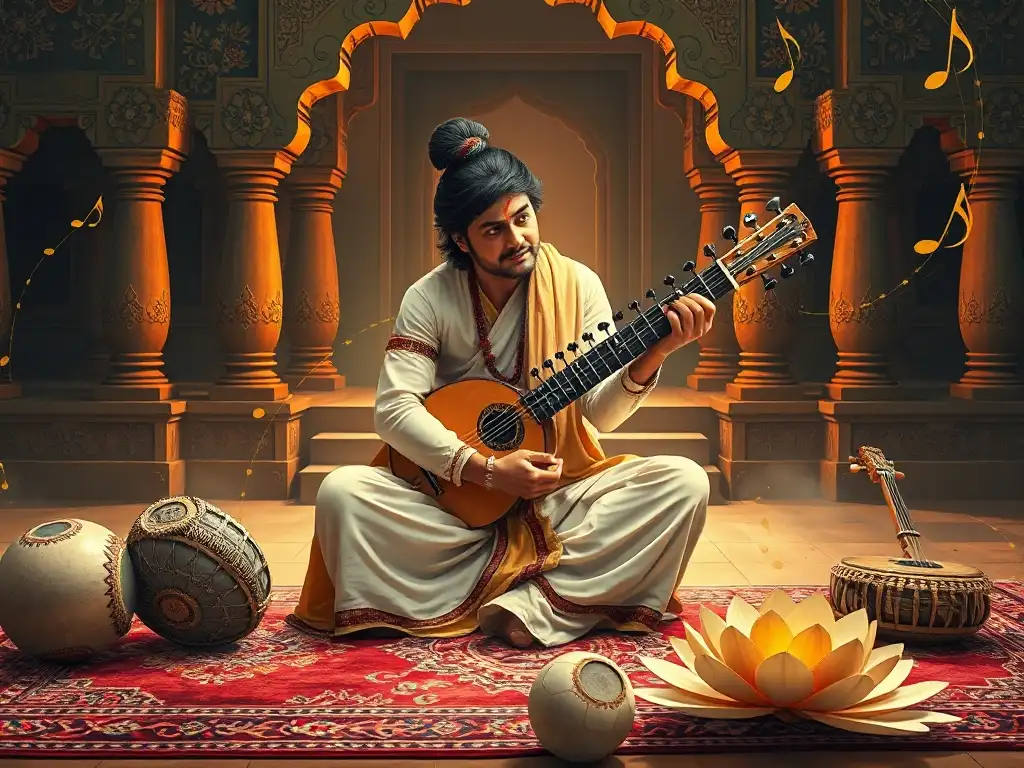
Analysis of Specific Ragas and Their Structures
Examining specific ragas provides insights into how mathematical principles are applied in ancient Indian music. For instance, Raga Yaman is known for its serene and soothing qualities, utilizing a specific set of notes that follow a defined structure. The raga consists of seven notes arranged in a manner that adheres to certain frequency ratios, enhancing its melodic appeal.
The analysis of Raga Bhimpalasi reveals its distinctive features, where the emphasis on particular notes creates a sense of longing. The mathematical relationships between the notes, along with their rhythmic patterns, contribute to the raga's emotional impact, illustrating how mathematics underpins musical expression.
Additionally, the intricate use of jodis (combinations) within ragas showcases how mathematical combinations lead to diverse expressions while maintaining the raga's identity. This highlights the systematic yet creative nature of ancient Indian music composition.
Talas and Mathematical Cycles in Performance
Talas, the rhythmic cycles in ancient Indian music, exhibit a fascinating interplay with mathematics. Each tala consists of a specific number of beats, grouped in various ways to create complex rhythmic patterns. For example, the Rupak Tala, with its 7 beats, can be divided into groups of 3 and 2, demonstrating how mathematical grouping influences performance dynamics.
The cyclical nature of talas aligns with mathematical principles, where the repetition of beats creates a predictable structure that musicians can navigate. This rhythmic precision is essential for maintaining synchronization among performers, especially in ensemble settings.
Moreover, the exploration of mathematical cycles in tala performance provides insights into improvisation techniques. Musicians often use mathematical concepts to develop variations within the cycle, adding depth and complexity to their performances. This relationship between rhythm and mathematics is a hallmark of ancient Indian music, exemplifying the sophistication of its theoretical underpinnings.
Legacy of Ancient Indian Music Theory
The legacy of ancient Indian music theory is a fascinating interplay of mathematics, culture, and spirituality. This theory, deeply rooted in the Vedic traditions, emphasizes the relationship between sound and mathematical principles. The ancient texts, such as the Natyashastra by Bharata Muni and the Sama Veda, laid the groundwork for understanding musical scales (ragas) and rhythms (talas) through geometric proportions and numerical patterns. This system was not only theoretical but also practical, influencing the performance and composition of music in ancient India.
Musical scales were meticulously categorized, with each raga associated with specific emotions and times of the day. The mathematical precision in defining these ragas reflects a sophisticated understanding of acoustics and harmony, which has left an indelible mark on both Indian classical music and world music. The legacy persists through the oral traditions of music passed down through generations, preserving the intricate connections between mathematics and music in a uniquely Indian context.
Influence on Modern Indian Music
Modern Indian music continues to draw heavily from the foundations established by ancient Indian music theory. The ragas and talas defined centuries ago still serve as the backbone for contemporary compositions in both classical and popular music genres. Artists often incorporate traditional ragas into modern songs, creating a fusion that respects the past while innovating for the present.
One notable example is the use of ragas in film music, where composers blend classical elements with popular melodies to create emotionally resonant soundtracks. Furthermore, the mathematical underpinnings of rhythm, such as the intricate tala system, are prevalent in modern drumming styles across genres, showcasing the enduring relevance of ancient theories. This influence not only enriches the musical landscape of India but also highlights the global appreciation for the mathematical aspects of Indian music.
Continued Relevance of Ancient Theories in Contemporary Music Education
The teachings of ancient Indian music theory remain vital in contemporary music education, where institutions and Gurus emphasize the importance of understanding the mathematical foundations of music. Students are taught the significance of ragas and talas, learning to appreciate not just the aesthetic aspects but also the underlying mathematical relationships.
Courses that explore the geometry of sound, the intricacies of rhythm, and the mathematical patterns within ragas allow students to develop a comprehensive understanding of music. This educational approach fosters a deeper appreciation for the complexities of Indian music and encourages creativity rooted in tradition. By bridging the gap between ancient theories and modern pedagogy, educators play a crucial role in ensuring that these rich musical traditions are preserved and celebrated.
Conclusion: The Enduring Harmony of Mathematics and Music in Ancient India
The relationship between mathematics and music in ancient India is a profound testament to the civilization's intellectual achievements. Ancient Indian music theory not only contributed to the development of a rich musical tradition but also demonstrated the intricate connections between sound, emotion, and mathematical principles. This harmonious interplay continues to resonate in modern music, influencing a wide range of genres and styles.
Summary of Key Points
- Ancient Indian music theory is rooted in Vedic traditions, emphasizing the connection between mathematics and music.
- The legacy of ragas and talas established in ancient texts significantly influences modern Indian music.
- Contemporary music education incorporates ancient theories, fostering a deeper understanding of musical structures.
- The mathematical underpinnings of music remain relevant, showcasing the enduring harmony of these two disciplines.
The Importance of Preserving Ancient Indian Music Theory for Future Generations
Preserving ancient Indian music theory is crucial for several reasons. It serves as a cultural heritage that enriches the identity of future generations and provides a profound understanding of the historical context from which modern music emerges. Furthermore, the mathematical principles embedded within this theory can inspire new innovations in music composition and education.
By ensuring that these ancient practices are not forgotten, future musicians and scholars can continue to explore and expand upon the rich tapestry of Indian music. This preservation will not only honor the legacy of the past but also cultivate a vibrant musical future that remains deeply connected to its roots.
- Introduction to Ancient Indian Music Theory
- Historical Context of Music in Ancient India
- Key Concepts in Ancient Indian Music Theory
- Notable Mathematicians and Their Contributions to Music Theory
- The Interplay Between Mathematics and Music
- Patterns and Ratios in Ancient Indian Music
- The Geometry of Sound and Harmony
- Mathematical Relationships in Raga Composition
- Case Studies of Mathematical Applications in Ancient Indian Music
- Legacy of Ancient Indian Music Theory
- Conclusion: The Enduring Harmony of Mathematics and Music in Ancient India
- What is the significance of ancient Indian music theory?
- How did mathematics influence ancient Indian music?
- What are some key contributions of ancient Indian civilizations to music?
- How does the Gupta Empire relate to music theory?
- Can you provide examples of ancient texts that discuss music theory?
Frequently Asked Questions
What is the significance of ancient Indian music theory?
Ancient Indian music theory is significant as it integrates mathematics and music, providing a unique perspective on how sound and rhythm were understood and utilized in ancient Indian civilizations.
How did mathematics influence ancient Indian music?
Mathematics played a crucial role in ancient Indian music, particularly in the development of scales and rhythmic patterns, which were meticulously calculated to create harmonious compositions.
What are some key contributions of ancient Indian civilizations to music?
Ancient Indian civilizations contributed significantly to music through the development of musical instruments, the formulation of ragas, and the establishment of music theory, which laid the groundwork for later musical traditions.
How does the Gupta Empire relate to music theory?
During the Gupta Empire, there was a flourishing of arts and culture, leading to the refinement of music theory and practices that emphasized the mathematical aspects of music, influencing generations to come.
Can you provide examples of ancient texts that discuss music theory?
Ancient texts like the Natya Shastra and Sama Veda detail the principles of music theory, including the use of mathematics in creating melodies and rhythms, showcasing the intellectual depth of ancient Indian musical practices.
Final Reflection: The Timeless Harmony of Ancient Indian Music Theory
The intricate relationship between mathematics and ancient Indian music theory remains profoundly relevant today, as it underscores the universal language of rhythm and melody that transcends cultural boundaries. In an era where globalization often dilutes unique traditions, the mathematical foundations of ancient Indian music serve as a reminder of the deep-rooted connections that exist between art and science. This harmonious blend not only enriches our understanding of music but also invites us to appreciate the cultural heritage that shapes our contemporary soundscapes.
The influence of ancient Indian music theory continues to resonate in modern musical practices, offering a rich tapestry of rhythms and scales that inspire artists worldwide. As we explore the depths of this ancient wisdom, we find that it informs not just music, but also the way we perceive patterns in our daily lives. Music is the shorthand of emotion,
said Leo Tolstoy, and through the lens of ancient Indian music, we see how mathematical principles can evoke profound feelings, bridging the gap between intellect and emotion.
As we conclude this exploration of ancient Indian music theory, I invite you to reflect on how these timeless principles can be woven into your own life. Consider how the rhythms and patterns of music can enhance your understanding of the world around you, encouraging you to find harmony in your daily experiences. Embrace the lessons of the past and let them inspire your creative journey, reminding you that the beauty of music lies not only in its sound but also in the intricate mathematics that underpins it.
Unveil the Harmony: Take Action Today!
Thank you for exploring the fascinating interplay of mathematics and music in ancient Indian culture! You've uncovered how these timeless principles shaped the musical landscape. Now, it's time to dive deeper and embrace this knowledge through actionable steps.
- Start listening to traditional Indian music and notice its mathematical rhythms and structures. Allow the melodies to inspire your understanding of the connection between mathematics and art.
- Join a local music group or workshop that focuses on Indian classical music; experience firsthand how mathematics plays a crucial role in creating harmony.
- Share your insights with friends or on social media to spark discussions about the significance of ancient practices in today’s world.
What aspect of the mathematics behind ancient Indian music resonates with you the most, and how do you think it can influence modern music today?