
Zero's Dual Nature: How Ancient Indian Scholars Understood Nothingness


Welcome to Ancient India History, where we embark on a journey through the rich tapestry of India's past. Dive deep into the fascinating contributions of ancient Indian civilizations, from the monumental Indus Valley to the enlightened Gupta Empire. In our featured article, "Zero's Dual Nature: How Ancient Indian Scholars Understood Nothingness," we unravel the profound concept of nothingness that shaped the foundations of mathematics. Why was nothingness considered so essential? Join us as we explore this intriguing theme and discover how ancient thinkers transformed the abstract into the essential. Your adventure into the depths of history starts here!
- Introduction to Ancient Indian Understanding of Nothingness
- Historical Context of the Concept of Nothingness
- Ancient Indian Scholars and Their Contributions
- The Dual Nature of Zero in Ancient Indian Thought
- Comparative Analysis
- Legacy of the Ancient Indian Understanding of Nothingness
- Conclusion
-
Frequently Asked Questions
- What is the significance of nothingness in ancient Indian philosophy?
- How did ancient Indian scholars contribute to the concept of zero?
- In what ways did zero influence mathematics globally?
- How does the ancient Indian understanding of nothingness differ from Western perspectives?
- What are some examples of texts that explore the idea of nothingness in ancient India?
- Final Reflection: Embracing the Essence of Nothingness
- Embrace the Concept of Nothingness!
Introduction to Ancient Indian Understanding of Nothingness
The exploration of ancient Indian understanding of nothingness offers profound insights into the philosophical and mathematical frameworks that shaped one of the world's earliest civilizations. In a time when many cultures grappled with the concept of existence and absence, Indian scholars delved deep into the nature of void and the significance of "zero."
This duality of nothingness not only influenced philosophical discourse but also laid the groundwork for mathematical innovations that would echo through the ages. By examining how ancient Indian thinkers approached the concept of zero, we uncover the intricate relationship between philosophy and mathematics, revealing a legacy that continues to impact our understanding of numbers and existence today.
Significance of Nothingness in Ancient Indian Philosophy
In ancient Indian philosophy, the concept of nothingness was not merely a void but a profound state of being that challenged the very notions of existence. Philosophers such as the Jain and Buddhist schools articulated the idea of śūnyatā (emptiness), which emphasized the transient nature of reality and the impermanence of all things. This perspective encouraged a deeper reflection on the essence of existence, leading to a unique understanding of how nothingness coexists with somethingness.
- Key Philosophical Concepts:
- Buddhism: Emphasized the idea of emptiness as a pathway to enlightenment.
- Jainism: Focused on the concept of anekāntavāda, which acknowledges multiple perspectives, including the notion of non-being.
- Vedanta: Explored the idea of ultimate reality (Brahman) being beyond all dualities, including existence and non-existence.
The significance of nothingness in these philosophies paved the way for a more nuanced view of reality, influencing not only spiritual practices but also the intellectual pursuits of ancient Indian scholars.
Overview of the Concept of Zero in Ancient Indian Mathematics
The invention of zero represents one of the most remarkable contributions of ancient Indian mathematicians. While the concept of zero as a placeholder was used in various cultures, it was in India that zero was recognized as a number in its own right, embodying both nothingness and a powerful mathematical tool. This dual nature of zero transformed arithmetic and calculus, allowing for innovations that would later influence mathematics globally.
- Historical Context:
- The earliest recorded use of zero dates back to the 5th century CE, found in the work of mathematician Brahmagupta.
- The Bakhshali Manuscript, an ancient Indian mathematical text, provides evidence of early calculations involving zero.
- Mathematical Implications:
- Zero enabled the development of complex calculations, including addition, subtraction, and the concept of negative numbers.
- Its introduction facilitated the formulation of algebra, allowing for the expression of equations using symbols and variables.
Through the lens of ancient Indian mathematics, zero evolved from a representation of nothingness into a fundamental element that enriched mathematical theory and practice. This transformation not only reflects the ingenuity of ancient thinkers but also underscores the interconnectedness of philosophy and mathematics in understanding the universe.
Historical Context of the Concept of Nothingness
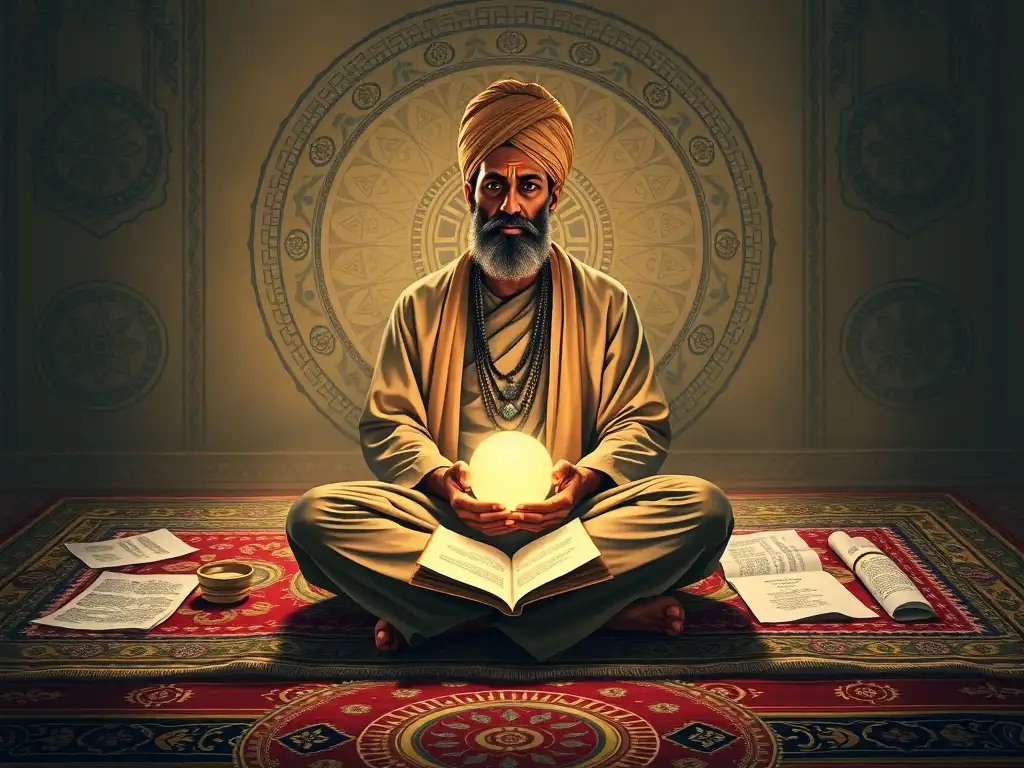
The concept of nothingness has long been a subject of intrigue and philosophical exploration in various cultures. In ancient India, this idea was intricately woven into the fabric of its philosophical and mathematical discourse. The historical context of the ancient Indian understanding of nothingness is marked by significant developments in philosophy, religion, and mathematics.
During the early centuries, Indian thinkers grappled with the nature of existence and non-existence, leading to profound insights that would later influence mathematical concepts, particularly the invention of zero. The ancient Indian scholars viewed nothingness not merely as an absence but as a critical component of existence, deeply intertwined with their metaphysical beliefs.
The philosophical schools such as Buddhism and Jainism played pivotal roles in shaping these ideas. They proposed that nothingness, or "śūnyatā" in Buddhist philosophy, represented a state that transcends dualities, emphasizing the impermanence and interconnectedness of all phenomena. This acceptance of nothingness as a fundamental aspect of reality laid the groundwork for a unique mathematical framework that would allow the representation of zero, transforming it from a mere concept of absence to a vital tool in calculations.
The integration of these philosophical insights with practical needs in commerce and astronomy led to a revolutionary advancement in mathematics, where the concept of zero emerged not just as a numeral but as an essential element in the numeral system. Thus, the historical context of nothingness in ancient India is foundational to understanding the dual nature of zero, highlighting its philosophical depth and mathematical significance.
Ancient Indian Philosophical Schools and Their Views on Nothingness
Ancient Indian philosophical schools offered diverse perspectives on the concept of nothingness. Two notable schools—Buddhism and Jainism—provide profound insights.
- Buddhism:
- Concept of Śūnyatā: In Buddhist philosophy, nothingness is articulated as "śūnyatā," meaning emptiness or void. This concept posits that all things are transient and lack inherent existence.
- Interconnectedness: The understanding of nothingness in Buddhism emphasizes that nothing exists in isolation; everything is interdependent. This realization challenges the perception of a fixed, permanent self or entity, leading to the idea that the absence of a permanent essence is a form of liberation.
- Mathematical Implications: This philosophical outlook influenced mathematical thought, allowing scholars to accept zero as an integral part of numbers. The realization that absence can have mathematical value was revolutionary.
- Jainism:
- Multiplicity of Perspectives: Jainism introduces the concept of "anekāntavāda," which suggests that reality is multifaceted and that nothingness can be understood from various viewpoints.
- Reality and Non-Existence: Jains argue that non-existence is a valid concept but should be viewed within the context of existence. They believed in the importance of understanding the limits of knowledge, which in turn highlighted the value of zero as a representation of unquantifiable or non-existent entities.
- Contributions to Mathematics: The Jain understanding of non-existence contributed to the acceptance of zero as a numeral, providing a framework for calculations involving absence or void.
The exploration of nothingness by these philosophical schools thus laid a strong foundation for the acceptance and development of zero in mathematics, illustrating how philosophical inquiry can deeply influence mathematical innovation.
Influence of Religion on the Understanding of Zero and Nothingness
The religious landscape of ancient India significantly influenced the understanding of zero and nothingness. Various religious traditions contributed to the philosophical discourse surrounding these concepts:
- Hinduism:
- Cosmology and Creation: In Hindu cosmology, the concept of nothingness is often linked to creation myths, where the universe emerges from a primordial state of chaos or void. This cyclical view of creation and destruction allows for a deeper understanding of emptiness as a precursor to existence.
- Mathematical Significance: The recognition of cycles and the infinite nature of the universe in Hindu thought reinforced the acceptance of zero as a representation of nothingness, crucial for calculations in astronomy and rituals.
- Buddhism:
- Rebirth and Transience: The Buddhist belief in rebirth and the transitory nature of life influenced the perception of nothingness. Emphasizing that all phenomena are impermanent, this view led to the acceptance of zero as a legitimate component of numerical systems, reflecting the absence of permanence.
- Jainism:
- Ethical Implications: Jainism's ethical principles, rooted in the idea of non-violence and respect for life, also extended to a recognition of the void. The understanding that non-existence should be acknowledged contributes to a broader acceptance of zero in mathematical practice.
The interplay between religion and the philosophical understanding of nothingness in ancient India created a fertile ground for the development of zero as a mathematical concept. This dual nature of zero, embodying both absence and potential, reflects the profound insights of ancient Indian scholars and their innovative contributions to mathematics.
Ancient Indian Scholars and Their Contributions
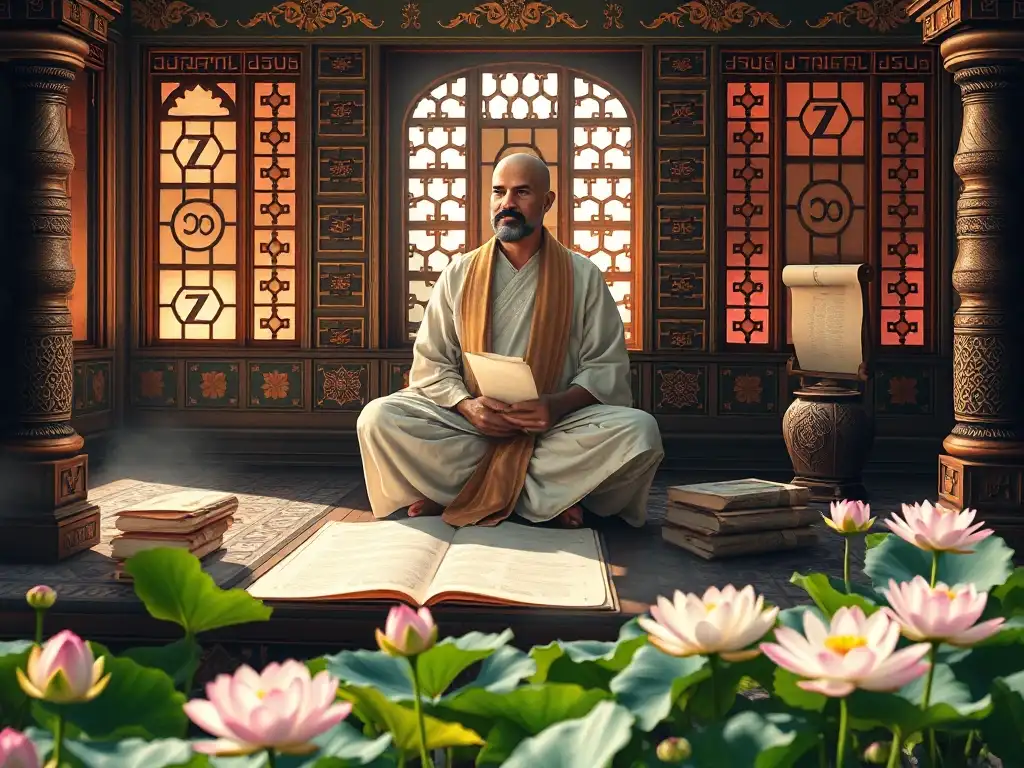
The ancient Indian understanding of nothingness was profoundly sophisticated and influenced the development of mathematical concepts, especially the concept of zero. Scholars from different periods made significant contributions, laying the groundwork for modern mathematics. Their works not only expanded numerical systems but also provided philosophical insights into the nature of existence and absence. Below, we explore the pivotal figures who shaped this understanding: Aryabhata, Brahmagupta, and Bhaskara.
Aryabhata: Pioneering Ideas on Zero and Nothingness
Aryabhata (476–550 CE) is often regarded as one of the first major mathematicians and astronomers of ancient India. His seminal work, the Aryabhatiya, introduced revolutionary ideas about numbers and their representation. Aryabhata was among the first to define the concept of zero, indicating its significance as a placeholder in the decimal system.
-
Concept of Zero:
Aryabhata's approach to zero distinguished it as an essential component of the number system. He identified zero's role in facilitating calculations, particularly in positional notation. In his works, he utilized the term "kha," which reflects the notion of void or emptiness, demonstrating his philosophical grasp of nothingness.
-
Mathematical Operations:
Aryabhata also explored mathematical operations involving zero. For instance, he addressed calculations involving the addition and subtraction of zero, illustrating how it functions without altering the values of other numbers. His ideas paved the way for a deeper understanding of arithmetic operations, particularly those involving zero.
-
Philosophical Implications:
Aryabhata's insights extended beyond mere calculations. He postulated that zero represents not just a numerical value but also a philosophical concept that embodies the idea of nothingness. This duality of zero as both a mathematical entity and a philosophical idea is a hallmark of ancient Indian thought.
Brahmagupta: Expanding the Concept of Zero
Following Aryabhata, Brahmagupta (598–668 CE) further advanced the understanding of zero in his influential work, the Brahmasphutasiddhanta. His contributions were pivotal in formalizing the rules of arithmetic that included zero.
-
Arithmetic Rules:
Brahmagupta explicitly outlined rules for arithmetic involving zero, providing clear guidelines for operations like addition, subtraction, multiplication, and division. For example:
- Adding zero to any number yields the number itself.
- Subtracting a number from itself results in zero.
- The product of any number and zero is zero, reinforcing its identity as a neutral element in multiplication.
This systematic approach was crucial in refining the understanding of mathematical operations that included zero.
-
Zero and Negative Numbers:
Brahmagupta also tackled the concept of negative numbers alongside zero, offering a novel perspective on their interactions. He defined rules for dealing with negative quantities, asserting that the subtraction of a larger number from a smaller results in negativity, which can also relate to the concept of nothingness.
-
Cosmological Implications:
Beyond mathematics, Brahmagupta's work intertwined with cosmological ideas. He viewed zero as a representation of the void from which creation emerges, linking numerical concepts with philosophical reflections on existence and nothingness.
Bhaskara: Advancements in the Mathematical Interpretation of Nothingness
Bhaskara II, also known as Bhaskara the Great (1114–1185 CE), synthesized the works of his predecessors and made notable advancements in the understanding of zero and nothingness.
-
Mathematical Innovations:
In his magnum opus, the Siddhanta Shiromani, Bhaskara elaborated on the arithmetic and algebraic properties of zero. He examined the implications of zero in calculations, ensuring clarity and consistency in mathematical operations. His work on the rules of zero was instrumental in establishing a comprehensive mathematical framework.
-
Philosophical Reflections:
Bhaskara extended the philosophical implications of zero, contemplating its significance in the context of the universe and existence. He viewed zero not merely as a numerical placeholder but as a concept that represents the absence of quantity and the potential for creation, aligning with ancient Indian philosophical traditions.
-
Influence on Later Mathematics:
Bhaskara's insights influenced subsequent generations of mathematicians both in India and beyond. His explorations into zero and nothingness contributed to developing mathematical logic, making a lasting impact on the global understanding of mathematics.
The contributions of these ancient Indian scholars underscore a profound duality in the understanding of nothingness—both as a mathematical concept and as a philosophical inquiry. Their pioneering works laid the foundation for modern mathematics, demonstrating the rich intellectual heritage of ancient India.
The Dual Nature of Zero in Ancient Indian Thought

The concept of zero in ancient Indian thought represents a fascinating duality that merges mathematical precision with profound philosophical inquiry. This dual nature of zero not only revolutionized mathematics but also influenced the understanding of existence and nothingness within the cultural context of ancient India. Scholars of the time recognized that zero was not merely a numerical digit but a significant philosophical idea that prompted deeper questions about reality and perception.
Zero as a Placeholder: Mathematical Implications
In the realm of mathematics, zero emerged as a revolutionary placeholder, transforming the way numerical systems functioned. The Indian numeral system, which included zero, allowed for efficient calculations and a clearer representation of large numbers. Here are some key aspects of zero's role as a placeholder:
- Positional Value: The introduction of zero as a placeholder enabled the development of positional numeral systems. For instance, the difference between 205 and 25 is dictated by the position of zero, illustrating how it signifies the absence of a value in a column.
- Facilitating Calculations: With the presence of zero, operations like addition, subtraction, multiplication, and division became simpler. This was crucial for trade and commerce, as accurate calculations were necessary for transactions.
- Mathematical Expressions: Ancient Indian mathematicians, such as Brahmagupta, articulated rules involving zero in mathematical expressions. For example, Brahmagupta's rules for arithmetic included operations involving zero, establishing a framework that later mathematicians would build upon.
- Influence on Other Cultures: The mathematical implications of zero spread beyond India, influencing other civilizations, including the Islamic Golden Age scholars, who translated and expanded upon Indian mathematical texts. This dissemination helped globalize the understanding and utilization of zero.
Zero as a Concept of Void: Philosophical Implications
Beyond its mathematical significance, zero held profound philosophical implications in ancient Indian thought, especially in the context of spirituality and metaphysics. The philosophical understanding of nothingness or void can be explored through several critical perspectives:
- Buddhist Philosophy: In Buddhist teachings, the concept of "śūnyatā" (emptiness) echoes the notion of zero as representing nothingness. This idea is fundamental to understanding the impermanent nature of reality and the illusion of self, emphasizing that what we perceive as solid and substantial is ultimately void of inherent existence.
- Hindu Thought: In Hindu philosophy, particularly in texts like the Upanishads, the concept of Brahman (the ultimate reality) is often juxtaposed with the idea of nothingness. Zero symbolizes the potential of creation from nothing, reflecting the belief that the universe arises from a state of void.
- Metaphysical Inquiry: The dual nature of zero prompted ancient Indian scholars to explore existential questions, such as the nature of reality and the essence of existence. The philosophical discourse surrounding zero encouraged thinkers to contemplate the relationship between being and non-being.
- Cultural Impact: The understanding of zero as both a mathematical entity and a philosophical concept influenced various aspects of society, including art, literature, and religion. This holistic approach to zero enriched the cultural fabric of ancient India, showcasing how mathematics and philosophy could intertwine.
The ancient Indian understanding of nothingness through the lens of zero reflects a sophisticated interplay between mathematics and philosophy. This duality not only highlights the innovative spirit of ancient Indian scholars but also offers valuable insights into the broader implications of zero on human thought and civilization.
Comparative Analysis

Ancient Indian Understanding of Nothingness vs. Other Civilizations
The concept of nothingness, particularly in the context of mathematics, has been a pivotal aspect of ancient Indian scholarship. Unlike many other civilizations, where the idea of zero was often seen as merely a placeholder, ancient Indian thinkers approached nothingness as a profound philosophical concept. This understanding had both mathematical and metaphysical implications.
-
Philosophical Context:
Ancient Indian texts, such as the Brahmasphutasiddhanta by Brahmagupta, articulated a nuanced view of nothingness. Here, zero was not just an absence but a concept that represented void and potentiality. This contrasts sharply with the ancient Greeks, who often viewed nothingness as a mere negation and struggled to incorporate it into their mathematical frameworks.
-
Mathematical Functionality:
In ancient India, zero was recognized for its functional utility in calculations. Brahmagupta's rules for arithmetic introduced the notion of zero in operations, such as addition and subtraction, which was revolutionary. In contrast, the Romans utilized their numeral system without a concept of zero, relying on additive and subtractive principles without the elegance of a zero placeholder.
-
Cultural Interpretations:
The philosophical implications of zero extended beyond mathematics into spirituality and cosmology. In contrast to other cultures, such as the Chinese, where the focus was primarily on the tangible, ancient Indian scholars integrated the idea of nothingness into their understanding of the universe, reflecting a holistic worldview.
Influence of Ancient Indian Concepts of Zero on Global Mathematics
The ancient Indian understanding of zero transformed not only local mathematical practices but also had profound implications for global mathematics. The dissemination of these ideas across cultures can be observed in several key developments:
-
Transmission through Trade:
As trade routes flourished, particularly during the Gupta Empire, the concept of zero traveled westward. By the 7th century, it had reached the Islamic world, where scholars such as Al-Khwarizmi began to adopt and adapt these concepts. This integration facilitated the development of algebra and advanced calculations.
-
Mathematical Revolution in the Islamic Golden Age:
The introduction of zero into Islamic mathematics marked a significant turning point. The scholars utilized this concept to develop sophisticated astronomical calculations, which were essential for navigation and timekeeping. This was a direct lineage from the Indian understanding of nothingness, showcasing the transformative power of zero.
-
Impact on European Mathematics:
The eventual transfer of these ideas to Europe during the Renaissance further illustrates the global impact of ancient Indian concepts. The adoption of the Hindu-Arabic numeral system, which included zero, revolutionized European mathematics, allowing for more complex calculations and the development of calculus.
-
Legacy and Continuing Relevance:
Today, the legacy of ancient Indian scholars is evident in modern mathematics, where the concept of zero is foundational. The understanding of nothingness as a positive entity continues to influence mathematical thought, philosophy, and even theoretical physics.
The ancient Indian understanding of nothingness, particularly through the lens of zero, not only enriched their own mathematical practices but also laid the groundwork for significant advancements in mathematics globally. This reflection on zero's dual nature showcases its critical role in shaping mathematical understanding across cultures and eras.
Legacy of the Ancient Indian Understanding of Nothingness

The ancient Indian understanding of nothingness, particularly through the concept of zero, has left an indelible mark on mathematics and philosophy. This legacy not only transformed mathematical thought but also influenced various fields, including science and philosophy, both in ancient times and in contemporary discussions.
Impact on Modern Mathematics and Science
The introduction of zero as a number and a concept represented a revolutionary shift in mathematics. Ancient Indian scholars, particularly those from the Gupta period, recognized zero as more than just a placeholder; they understood it as a number in its own right, with unique properties and functions. This understanding is documented in the works of mathematicians like Brahmagupta, who formulated rules for arithmetic operations involving zero.
-
Development of the Decimal System:
The ancient Indian numeral system, which included zero, laid the groundwork for the decimal system that is universally used today. This system allows for the representation of large numbers and complex calculations, facilitating advancements in mathematics and science.
-
Calculus and Algebra:
The inclusion of zero enabled mathematicians to explore new realms of algebra and calculus. Concepts such as limits, continuity, and functions became more accessible with the acceptance of zero in mathematical equations, paving the way for future developments in these fields.
-
Scientific Advancements:
The understanding of nothingness as a concept influenced scientific thought, particularly in fields like physics and computer science. The binary system, foundational for modern computing, relies on the existence of zero and one, showcasing the enduring impact of ancient Indian ideas.
The Role of Zero in Contemporary Philosophical Discussions
The philosophical implications of zero and nothingness extend beyond mathematics, sparking rich discussions in various fields of thought. Ancient Indian philosophies, especially in Buddhism and Jainism, delve deeply into the nature of existence, void, and the metaphysical implications of nothingness.
-
Buddhist Philosophy:
In Buddhist thought, the concept of "śūnyatā" (emptiness or voidness) aligns closely with the understanding of zero. It suggests that reality is ultimately devoid of inherent existence, prompting discussions about perception, reality, and the nature of being.
-
Existential and Metaphysical Debates:
Contemporary philosophers engage with the implications of zero in debates about existence and non-existence. The dual nature of zero raises questions about the nature of reality and the relationship between being and nothingness, echoing ideas present in ancient Indian philosophies.
-
Interdisciplinary Connections:
The discussions surrounding zero's philosophical significance have found resonance in various disciplines, including theology, metaphysics, and cognitive science. This interdisciplinary approach fosters a deeper understanding of how ancient concepts continue to influence modern thought.
The ancient Indian understanding of nothingness, epitomized by the invention and conceptualization of zero, has profoundly shaped both mathematical practices and philosophical inquiries. Its legacy is a testament to the innovative spirit of ancient Indian scholars, whose insights continue to resonate in contemporary discussions across various fields.
Conclusion
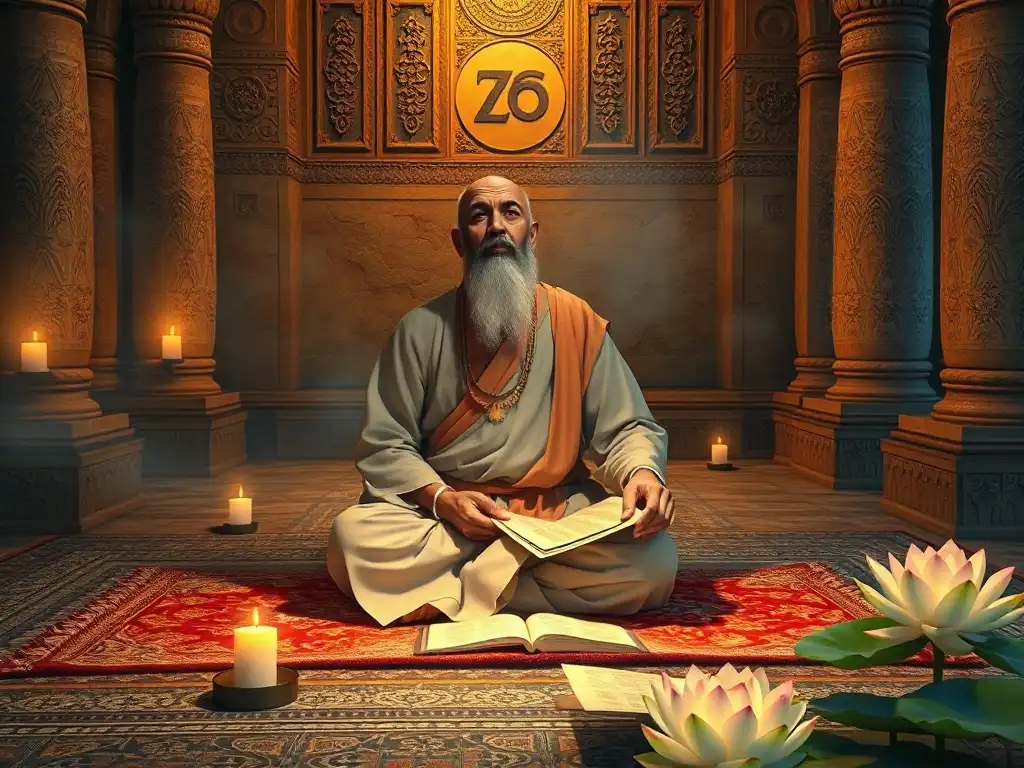
Summary of the Ancient Indian Understanding of Nothingness
The concept of nothingness, or śūnyatā, holds a significant position in ancient Indian philosophy and mathematics. Ancient Indian scholars approached the idea of nothingness not merely as an absence or void, but as a profound concept integral to understanding the universe. This nuanced understanding is most prominently reflected in the development of the numeral system and the invention of zero.
In the context of mathematics, the ancient Indian understanding of nothingness paved the way for the creation of the number zero, which is often represented by the symbol '0'. This symbol was not merely a placeholder but represented a distinct value, embodying the idea of emptiness or void. Ancient texts, such as the Bakhshali Manuscript, illustrate the practical application of zero in arithmetic operations, demonstrating how it facilitated calculations that were previously cumbersome without the concept of zero.
Furthermore, philosophical treatises from this era, including the works of Buddhist and Jain thinkers, explored the nature of existence and non-existence. The duality of being and non-being was discussed extensively, emphasizing that nothingness could lead to new forms of understanding and existence. Thus, the ancient Indian scholars' grasp of nothingness was not merely a mathematical abstraction but a philosophical inquiry into the nature of reality itself.
The Ongoing Relevance of Zero in Mathematics and Philosophy
The legacy of the ancient Indian understanding of nothingness continues to resonate profoundly in both mathematics and philosophy today. In mathematics, zero serves as a fundamental element within the number system, enabling the representation of large numbers and facilitating advanced calculations. The introduction of zero into the decimal system allowed for the development of algebra, calculus, and other mathematical fields, making it a cornerstone of modern mathematics.
Philosophically, the exploration of nothingness has gained traction in various disciplines, including metaphysics, existentialism, and Eastern philosophies. The concept challenges individuals to ponder the nature of existence, causality, and the universe. For instance, contemporary discussions about the nature of reality often reference ancient Indian philosophical insights into nothingness, showcasing its enduring relevance.
Moreover, the intersection of mathematics and philosophy through the lens of zero invites interdisciplinary dialogue. Scholars from various fields investigate the implications of nothingness in their respective areas, revealing a rich tapestry of thought that connects ancient wisdom with modern discourse.
The ancient Indian understanding of nothingness, exemplified by the invention of zero, not only transformed mathematics but also continues to influence philosophical thought, demonstrating the timeless significance of this concept in exploring the depths of existence and reality.
Frequently Asked Questions
What is the significance of nothingness in ancient Indian philosophy?
The concept of nothingness in ancient Indian philosophy often represented emptiness or the absence of material existence, leading to profound insights in metaphysics and spiritual practices.
How did ancient Indian scholars contribute to the concept of zero?
Ancient Indian scholars, particularly during the Gupta Empire, developed the concept of zero as a number, not just a placeholder, reflecting their advanced understanding of nothingness and its mathematical implications.
In what ways did zero influence mathematics globally?
The introduction of zero from ancient India transformed mathematics, allowing for the development of algebra and the decimal system, which were essential for advancements in various cultures worldwide.
How does the ancient Indian understanding of nothingness differ from Western perspectives?
While Western perspectives often view nothingness as a void, ancient Indian thought embraces it as a state of potentiality and wholeness, emphasizing a more holistic view of existence.
What are some examples of texts that explore the idea of nothingness in ancient India?
Key texts such as the Upanishads and the Brahmanas delve into the philosophical implications of nothingness, exploring its relationship with consciousness and the universe.
Final Reflection: Embracing the Essence of Nothingness
In exploring the ancient Indian understanding of nothingness, we uncover a profound philosophical insight that resonates deeply in today's world. The concept of zero, far from being merely a numerical placeholder, embodies a rich tapestry of thought that challenges our conventional perceptions of existence and non-existence. This understanding invites us to reconsider the significance of absence in our lives, revealing that nothingness can be a powerful catalyst for creativity and transformation.
The influence of this ancient wisdom continues to shape our cultural and social landscapes, encouraging us to embrace the void as a space of potential rather than fear. As we navigate the complexities of modern life, the teachings of ancient Indian scholars remind us that acknowledging nothingness can lead to greater self-awareness and enlightenment. In the midst of movement and chaos, keep stillness inside of you.
This quote encapsulates the essence of finding peace within the void, urging us to reflect on how we can integrate these timeless lessons into our daily lives.
As we conclude this exploration, I invite you to reflect on your own relationship with nothingness. Consider how moments of stillness and absence can serve as opportunities for growth and introspection. Embrace the lessons of ancient Indian thought, and allow the concept of zero to inspire you to find balance, creativity, and clarity in the spaces between your thoughts and actions.
Embrace the Concept of Nothingness!
Thank you for exploring the fascinating world of ancient Indian philosophy with us! By delving into the dual nature of zero, you’ve unlocked profound insights into how ancient thinkers approached the concept of nothingness—it's a true testament to the brilliance of their intellect. Now, let's take a step further in our journey of understanding.
Here are a few inspiring actions you can take right now:
- Dive into a related text: Explore ancient Indian scriptures or contemporary analyses to deepen your understanding of nothingness and its implications in mathematics and philosophy.
- Share your insights: Discuss these enlightening concepts with friends or in online communities. Consider writing your reflections on this topic and sharing them on social media!
- Join a discussion group: Participate in forums that focus on ancient philosophies to exchange ideas and learn from others who share your passion.
What new perspectives on nothingness can you incorporate into your daily life or discussions with others?