
The Role of Mathematics in Ancient Indian Agriculture and Resource Management

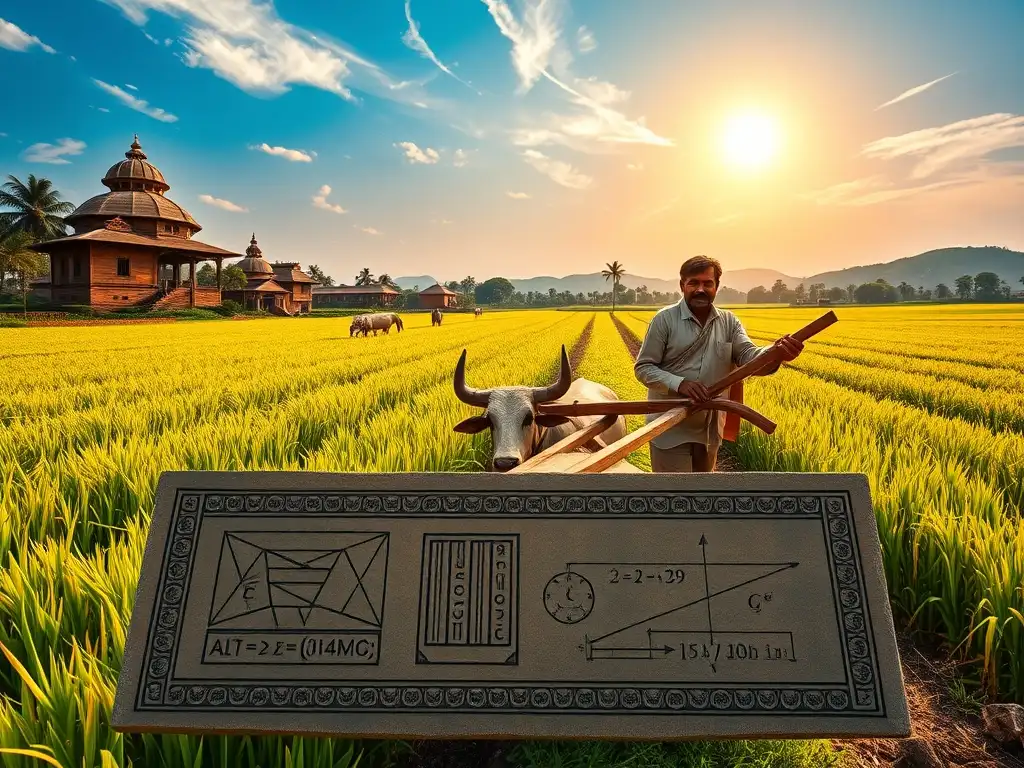
Welcome to Ancient India History, where we embark on an enlightening journey through the rich tapestry of ancient Indian civilizations. In this exploration, we delve into the remarkable contributions of ancient Indian mathematics, particularly its profound impact on agriculture and resource management. Have you ever wondered how these early mathematicians shaped the agricultural practices that sustained thriving societies?
Our main article, "The Role of Mathematics in Ancient Indian Agriculture and Resource Management," promises to unveil the intriguing connections between numbers and nature. Join us as we uncover the secrets of ancient wisdom that continue to resonate through time—your adventure through history begins now!

Introduction to Ancient Indian Mathematics and Agriculture
The intricate relationship between mathematics and agriculture in ancient India is a testament to the advanced understanding and application of numerical systems that characterized this civilization. Ancient Indian mathematics, much like its agricultural practices, was deeply woven into the fabric of daily life and economic stability. As agriculture was the backbone of the ancient Indian economy, the ability to measure, calculate, and predict outcomes was crucial for ensuring food security and efficient resource management.
From the Indus Valley Civilization, where early agricultural techniques were developed, to the flourishing of the Gupta Empire, ancient Indians employed mathematical concepts to enhance their agricultural productivity. This article delves into the rich mathematical heritage that underpinned agricultural practices in ancient India, highlighting the techniques and calculations that were essential for the success of farming communities.
Overview of Ancient Indian Civilization
Ancient Indian civilization was marked by its diversity, innovative spirit, and significant contributions to various fields, including mathematics. The agrarian roots of this civilization can be traced back to the Indus Valley (circa 3300–1300 BCE), where highly organized urban settlements thrived on agriculture. The inhabitants developed sophisticated irrigation systems and farming techniques, which required a certain level of mathematical knowledge.
As civilizations evolved, so did the complexity of agricultural practices. The Vedic period (1500–500 BCE) introduced significant advancements in mathematics, including the use of symbolic representation, which played a critical role in agricultural planning. The Gupta Empire (circa 240–550 CE), often referred to as the "Golden Age" of India, saw further developments in mathematics and astronomy, which were instrumental in refining agricultural techniques.
Importance of Mathematics in Ancient Indian Society
Mathematics was not merely an abstract discipline in ancient India; it served practical purposes in various aspects of life, particularly in agriculture. The ability to calculate land area, assess crop yields, and manage resources was vital for sustaining the growing population.
- Economic Stability: Accurate measurements and calculations helped farmers optimize their production, leading to surplus crops that could be traded or stored for future use.
- Predictive Planning: Mathematical skills allowed for better predictions regarding seasonal changes, rainfall patterns, and crop growth cycles, enhancing agricultural resilience.
- Community Development: The mathematical knowledge facilitated communal decision-making regarding land use, resource allocation, and crop management, fostering collaboration among farmers.
Mathematical Concepts Used in Ancient Indian Agriculture
Ancient Indian farmers employed various mathematical concepts to optimize agricultural practices. The following sections explore specific techniques used in measurement, land calculation, and geometric planning.
Measurement Techniques in Ancient Farming
Accurate measurement was essential for effective farming in ancient India. Farmers utilized simple tools and techniques to measure land, seeds, and irrigation levels.
- Standard Units: The use of standardized units of measurement, such as "kharva" (a unit of land), made it easier to communicate and trade resources.
- Measuring Tools: Farmers often used ropes, sticks, and even their own body measurements to establish boundaries and calculate areas, ensuring that each plot was adequately tended to.
Calculation of Land Area and Crop Yield
Calculating land area was crucial for determining the amount of seed needed, as well as predicting potential yields. Ancient Indian mathematicians developed formulas for calculating the area of various geometric shapes, which were then applied in agricultural contexts.
- Formulas: Basic formulas for calculating the area of rectangles and triangles were commonplace, allowing farmers to gauge the productivity of their fields.
- Crop Yield Estimates: By understanding the relationship between land area and crop yield, farmers could make informed decisions about planting and harvesting schedules.
Use of Geometry in Agricultural Planning
Geometry played a significant role in agricultural planning in ancient India. The application of geometric principles helped in designing efficient irrigation systems, planting layouts, and overall land management strategies.
- Irrigation Systems: Geometric calculations were used to design canals and water distribution systems that maximized water efficiency for crops.
- Field Layouts: Farmers applied geometric shapes to create optimal planting patterns, ensuring that crops received adequate sunlight and water.
The role of mathematics in ancient Indian agriculture was profound, influencing various aspects of farming and resource management. Understanding this connection not only highlights the ingenuity of ancient Indian civilizations but also serves as a testament to the foundational role of mathematics in societal development.
Resource Management in Ancient India
Resource management in ancient India was a sophisticated process, deeply intertwined with the agricultural practices of the time. As agriculture formed the backbone of the economy, effective management of resources such as water, soil, and crops was crucial for sustaining the population. Ancient Indian societies relied on a variety of mathematical techniques to optimize their agricultural practices and ensure food security.
The development of irrigation systems was one of the primary focuses of resource management. Ancient texts describe extensive networks of canals and reservoirs that were meticulously planned and constructed to channel water from rivers to fields. The application of geometry and arithmetic was essential for calculating the necessary dimensions and slopes to ensure efficient water flow. This mathematical approach allowed for the maximization of arable land and the minimization of water wastage.
Moreover, ancient Indian farmers utilized mathematical methods to assess soil fertility and crop yields. By observing patterns and applying simple arithmetic, they could determine the best times for planting and harvesting, as well as which crops to grow in specific seasons. This data-driven approach to agriculture was vital for maintaining the balance between crop production and resource availability.
Water Management Techniques and Mathematical Applications
Water management in ancient India was a critical aspect of agricultural sustainability. The civilization developed various techniques to harness and distribute water effectively. One notable method was the construction of step wells, known as "baolis," which allowed communities to access groundwater. The design and depth of these wells required precise calculations to ensure they reached the water table, highlighting the use of geometry in water resource management.
Additionally, ancient texts such as the "Arthashastra" and "Varahamihira’s Brihat Samhita" emphasized the importance of rainwater harvesting and the calculation of rainfall patterns. Farmers employed mathematical formulas to predict seasonal rains based on historical data, which aided in planning crop cycles. The integration of mathematics within these water management practices underscores the innovative spirit of ancient Indian agriculture.
Crop Rotation and Its Mathematical Implications
Crop rotation was another essential practice in ancient Indian agriculture, promoting soil health and maximizing yields. Farmers employed a systematic approach to rotate different crops in a specific sequence, which prevented soil depletion and reduced pest infestations. The effectiveness of crop rotation relied on mathematical principles to track the growth cycles and nutrient requirements of various plants.
By applying basic arithmetic, farmers could calculate the optimal intervals for planting different crops, ensuring that the soil was replenished adequately between harvests. This practice not only enhanced productivity but also allowed for a diverse agricultural output, catering to the dietary needs of the population. The mathematical foundation of crop rotation reflects the advanced understanding of ecological balance possessed by ancient Indian farmers.
Storage and Distribution of Agricultural Products
The efficient storage and distribution of agricultural products were vital for maintaining food security in ancient India. Farmers used various methods to store grains, including granaries and earthenware pots, which required careful planning and measurement. The size and capacity of these storage facilities were calculated based on anticipated harvests and consumption rates, illustrating the application of mathematics in resource management.
Moreover, the distribution of surplus produce to markets and neighboring regions relied on mathematical calculations to determine quantities and transportation logistics. Ancient traders and farmers employed weights and measures, governed by mathematical principles, to ensure fair trade practices. This organized approach to storage and distribution enabled ancient Indian societies to thrive economically and socially.
Historical Texts and Treatises on Agriculture
Historical texts and treatises on agriculture provide invaluable insights into the mathematical practices of ancient Indian civilizations. These writings not only document agricultural methods but also illustrate the sophisticated mathematical knowledge that underpinned these practices.
Key texts such as the "Krishi Sutra," attributed to various scholars over centuries, outline agricultural techniques alongside mathematical principles. These documents highlight the importance of mathematics in calculating areas of fields, determining irrigation needs, and planning crop cycles, showcasing a holistic understanding of agriculture.
Key Texts on Agriculture in Ancient India
Several key texts serve as primary sources for understanding ancient Indian agriculture and its mathematical applications. The "Brahmasphutasiddhanta," authored by Brahmagupta in the 7th century, contains sections on land measurement and agricultural calculations. This work emphasizes the significance of precise measurements in farming practices.
Another important text is the "Sushruta Samhita," primarily focused on medicine but also addressing agricultural practices relevant to medicinal plants. It provides mathematical insights into the spacing and planting of crops necessary for optimal growth, reflecting the interconnectedness of agriculture and other fields of knowledge.
Mathematical Principles in Ancient Agricultural Literature
Ancient agricultural literature in India is rich with mathematical principles that guided farmers in their practices. Texts often included formulas for calculating land area, crop yields, and the optimal amounts of seeds needed for planting. These mathematical insights were vital for efficient resource management and enhanced agricultural productivity.
For instance, the concept of "pariksha" (measurement) played a crucial role in determining the right amount of land to cultivate based on expected yields. The use of fractions and ratios in these calculations demonstrates the advanced level of mathematical understanding during this period. This knowledge, embedded within agricultural literature, underscores the integral role of mathematics in ancient Indian agriculture and resource management.
Case Studies of Agricultural Practices

The application of mathematics in agriculture during ancient India is exemplified through various case studies that highlight the ingenuity and practical applications of mathematical concepts. These case studies showcase how ancient Indian civilizations utilized mathematical techniques to enhance agricultural productivity, manage resources efficiently, and adapt to environmental challenges. Through meticulous planning and innovative methodologies, these civilizations laid the groundwork for sustainable agricultural practices that resonate even in contemporary times.
The Indus Valley Civilization: Agriculture and Mathematics
The Indus Valley Civilization, one of the earliest urban cultures in the world, showcased a remarkable understanding of agricultural practices intertwined with mathematics. Archaeological evidence suggests that the inhabitants engaged in systematic farming, employing techniques that required precise measurements and calculations. The use of grid patterns in field layouts indicated an advanced sense of geometry, allowing for efficient irrigation and crop management.
Mathematical principles were evident in their water management systems, where they constructed sophisticated drainage and irrigation channels. These systems were designed using ratios and proportions to optimize water distribution across fields, reflecting an understanding of hydraulic engineering. Additionally, the standardization of weights and measures facilitated trade and resource allocation, ensuring that agricultural products were fairly exchanged within and beyond the civilization.
Gupta Period Innovations in Agriculture and Resource Management
During the Gupta Period, which is often referred to as a golden age of Indian mathematics, significant advancements were made in agricultural practices and resource management. This era saw the emergence of new agricultural techniques, including crop rotation and the introduction of various crops that were suited to different climates and soils. The application of mathematical calculations was crucial in determining optimal planting times and assessing crop yields.
Scholars like Varahamihira and Brahmagupta contributed to agricultural mathematics by developing formulas for calculating land area and crop productivity. Their works incorporated arithmetic and geometric principles, enabling farmers to make informed decisions. Moreover, the Gupta Empire's administrative framework utilized mathematics for effective resource allocation and taxation, ensuring that agricultural outputs were maximally utilized for the benefit of society.
The Influence of Ancient Indian Mathematics on Future Generations
The mathematical innovations of ancient India, particularly in agriculture, have left an indelible mark on future generations. The techniques and concepts developed during ancient times not only influenced subsequent Indian civilizations but also reached other cultures through trade and scholarly exchanges. The integration of mathematics into agricultural practices established a framework that would be built upon in various fields, including astronomy, architecture, and engineering.
Contributions to Mathematics in the Context of Agriculture
Ancient Indian mathematicians recognized the necessity of mathematics in understanding and improving agricultural efficiency. Their contributions included the development of algorithms for calculating areas and volumes, which were essential for land management and crop planning. Texts such as the Aryabhatiya and the Brahmasphutasiddhanta included mathematical principles that directly addressed agricultural challenges, showcasing how theoretical knowledge was applied practically.
The mathematical techniques derived from these texts provided a foundation for future agricultural practices, illustrating the importance of combining empirical observations with mathematical reasoning. This synergy allowed for advancements in irrigation methods, crop selection, and land utilization, which continued to evolve over centuries, influencing agricultural practices beyond the Indian subcontinent.
Legacy of Ancient Indian Agricultural Practices in Modern Times
The legacy of ancient Indian agricultural practices is evident in modern agricultural methods and resource management strategies. Contemporary farming techniques still reflect the mathematical principles established by ancient civilizations, particularly in regions with significant historical agricultural ties. The emphasis on efficient irrigation, crop diversity, and sustainable practices can be traced back to these early innovations.
Moreover, modern agricultural research continues to draw upon ancient mathematical concepts, integrating them with contemporary technology to enhance productivity and sustainability. The principles of land measurement, resource allocation, and environmental management rooted in ancient Indian mathematics remain relevant, serving as a testament to the enduring influence of these early contributions on present-day agricultural practices. The rich agricultural heritage of ancient India not only informs current methodologies but also inspires ongoing innovation in the quest for food security and resource management.
Conclusion
The intersection of mathematics and agriculture in ancient India reveals a sophisticated understanding of numerical systems and their practical applications. Ancient Indian mathematicians developed advanced techniques that not only facilitated agricultural productivity but also contributed to resource management. This synergy between mathematics and agriculture underscores the ingenuity of ancient Indian civilizations in optimizing their agricultural practices for sustainable development.
Summary of the Role of Mathematics in Ancient Indian Agriculture
Mathematics played a pivotal role in ancient Indian agriculture, serving as a tool for various essential tasks. The cultivation of crops relied heavily on precise measurements, which were crucial for determining land area, calculating the amount of seed required, and estimating harvest yields. Ancient texts, including the Arthashastra by Kautilya and the Krishi Parashara, illustrate the application of mathematical principles in agricultural planning and management.
Key aspects of ancient Indian mathematics in agriculture included:
- Land Measurement: Techniques for measuring land, such as the use of geometric shapes and the application of simple arithmetic, allowed farmers to evaluate and optimize the use of their fields.
- Irrigation Systems: Mathematical calculations enabled the design and maintenance of efficient irrigation systems, crucial for maximizing crop yields in diverse climatic conditions.
- Crop Rotation and Yield Predictions: Farmers employed mathematical models to predict crop rotations and assess potential yields, ensuring food security and resource sustainability.
These mathematical practices not only enhanced agricultural productivity but also contributed to the economic stability of ancient Indian societies.
Reflection on the Importance of Understanding Ancient Indian Contributions to Mathematics and Agriculture
Understanding the contributions of ancient Indian mathematics to agriculture is vital for several reasons. Firstly, it highlights the advanced knowledge systems that existed long before the advent of modern agricultural science. The mathematical techniques developed by ancient Indian scholars reflect a deep understanding of nature and resource management, showcasing their ability to innovate and adapt.
Secondly, recognizing these contributions enriches our appreciation of the historical context of mathematics. It demonstrates how mathematical concepts were not merely theoretical but were deeply intertwined with daily life, particularly in agriculture, which was the backbone of ancient Indian society.
Lastly, this understanding can inspire contemporary agricultural practices. By studying ancient methods that integrated mathematics with agriculture, modern societies can draw lessons for sustainable farming and resource management, emphasizing the importance of a harmonious relationship between humans and the environment.
The legacy of ancient Indian mathematics in agriculture continues to resonate today, reminding us of the timeless relevance of these early innovations in our ongoing quest for sustainability and efficiency in food production.
- Introduction to Ancient Indian Mathematics and Agriculture
- Mathematical Concepts Used in Ancient Indian Agriculture
- Resource Management in Ancient India
- Historical Texts and Treatises on Agriculture
- Case Studies of Agricultural Practices
- The Influence of Ancient Indian Mathematics on Future Generations
- Conclusion
- What role did mathematics play in ancient Indian agriculture?
- How did ancient Indians use geometry in farming?
- What were some key mathematical texts related to agriculture in ancient India?
- Did ancient Indian civilizations contribute to mathematics beyond agriculture?
- How did ancient Indian agricultural practices influence modern agriculture?
Frequently Asked Questions
What role did mathematics play in ancient Indian agriculture?
Mathematics was crucial in ancient Indian agriculture for tasks like measuring land, calculating yields, and managing resources efficiently. It helped farmers optimize crop production and irrigation techniques.
How did ancient Indians use geometry in farming?
Ancient Indians applied geometry for land surveying and planning agricultural layouts. This allowed them to maximize arable land and improve irrigation systems, contributing to better crop management.
Key texts like the Arthashastra and various Siddhantas included mathematical principles for resource management, land measurement, and agricultural practices, reflecting the importance of math in their society.
Did ancient Indian civilizations contribute to mathematics beyond agriculture?
Yes, ancient Indian civilizations made significant contributions to mathematics in general, including the development of the decimal system, zero, and advancements in algebra, which influenced various fields, including agriculture.
How did ancient Indian agricultural practices influence modern agriculture?
The innovative techniques and mathematical principles used by ancient Indian civilizations laid the groundwork for modern agricultural practices, emphasizing resource management and efficient land use that are still relevant today.
Final Reflection: The Enduring Legacy of Ancient Indian Mathematics in Agriculture
The intricate relationship between mathematics and agriculture in ancient India underscores the profound impact of ancient Indian mathematics on resource management and agricultural practices. As we navigate the challenges of modern agriculture, from climate change to food security, the wisdom embedded in these ancient practices remains strikingly relevant. The mathematical techniques developed by our ancestors not only optimized crop yields but also fostered sustainable practices that resonate with contemporary environmental concerns.
The influence of ancient Indian mathematics on agriculture is a testament to the ingenuity of a civilization that prioritized harmony with nature. This legacy continues to shape our understanding of resource management today, reminding us of the importance of integrating traditional knowledge with modern science. As Mahatma Gandhi once said, "> The future depends on what you do today." This quote encapsulates the essence of learning from the past to inform our present and future decisions, particularly in the realm of agriculture.
As we reflect on the lessons of ancient Indian mathematics, let us embrace the call to action: consider how we can apply these time-tested principles in our own lives and communities. Whether it's through sustainable farming practices, efficient resource management, or simply valuing the knowledge passed down through generations, each of us has the power to contribute to a more sustainable future. Take a moment to ponder how you can integrate these ancient insights into your daily practices, ensuring that the wisdom of the past continues to guide us toward a more harmonious relationship with our environment.
Unveil the Secrets of Ancient Indian Agriculture!
Thank you for exploring the fascinating role of mathematics in ancient Indian agriculture and resource management! Your interest not only highlights the rich history but also the ingenuity of our ancestors in crafting sustainable practices. Now, let's put this knowledge into action and delve deeper into this incredible heritage.
Here are a few steps you can take to embrace and share the wisdom of ancient agricultural practices:
- Discover traditional farming techniques used by ancient Indian civilizations and experiment with them in your local gardening projects.
- Share your insights with others by initiating discussions on social media or within your community about how ancient practices can inspire modern sustainability efforts.
- Engage with local historians or agriculture enthusiasts to organize workshops or lectures that explore the connection between mathematics and agriculture in historical contexts.
How do you think ancient mathematical techniques could influence today’s agricultural practices? We invite you to share your thoughts below!