
The Role of Language and Rhetoric in Ancient Indian Courtrooms


Welcome to Ancient India History, where we delve into the captivating tapestry of India's rich past! In this exploration, we will uncover the intricate language and rhetoric that shaped the dynamics of ancient Indian courtrooms. How did the eloquence of words influence justice and governance in civilizations from the Indus Valley to the Gupta Empire?
Join us as we unravel the profound impact of courtroom language and discover the legacy it has left on modern legal systems. Prepare to be intrigued and inspired as you navigate through the depths of ancient wisdom and its remarkable contributions to our world today!
Introduction to Ancient Indian Courtroom Language
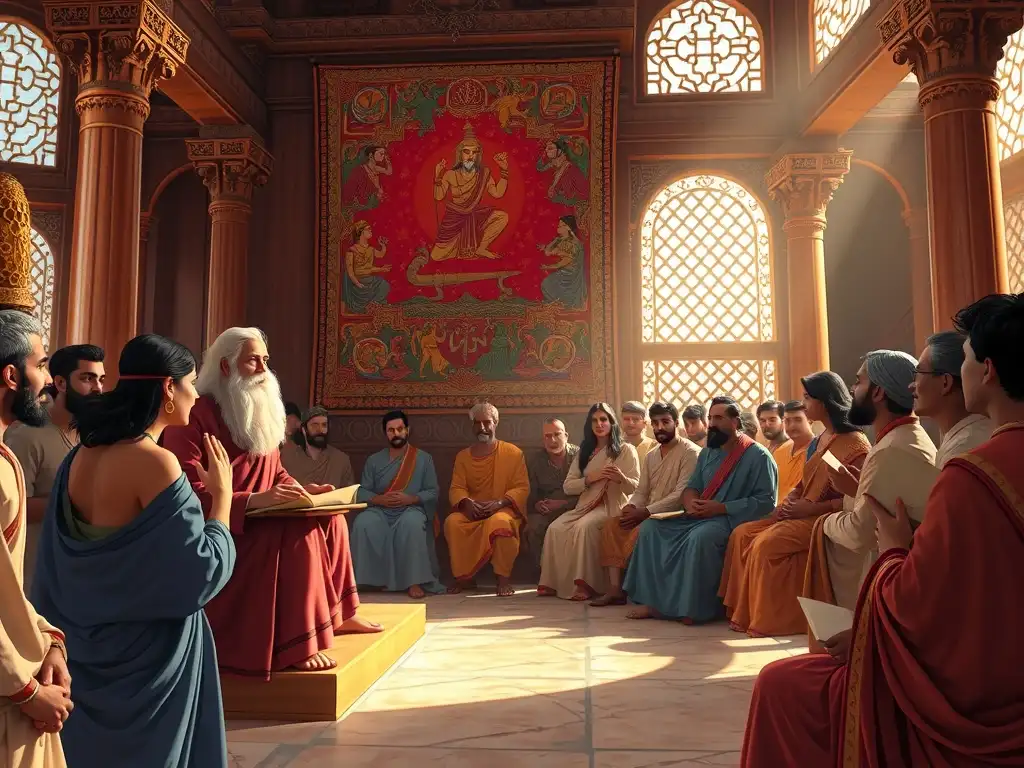
The examination of ancient Indian courtroom language reveals a fascinating intertwining of legal principles, cultural nuances, and rhetorical skills that defined the judicial practices of ancient India. In a society where language was not merely a tool for communication but a vehicle for persuasion and authority, the courtroom became a stage for eloquence and strategic discourse. This article delves into the myriad ways language shaped the judicial landscape, reflecting the values and beliefs of the time while influencing the outcomes of legal proceedings.
Overview of Ancient Indian Judicial Practices
Ancient Indian judicial practices date back to several millennia, with evidence found in texts such as the Arthashastra by Kautilya and the Manusmriti, which provide insights into the legal systems and the role of courts. Courts were not just places for settling disputes; they were integral to maintaining social order and justice. The processes involved in these courts were intricate, often relying on oral traditions and the mastery of language to articulate arguments and present evidence.
- Key Features of Ancient Courts:
- Oral Traditions: Legal proceedings often relied on oral testimonies, emphasizing the power of spoken language.
- Rhetoric and Persuasion: The ability to persuade through language was crucial, making orators highly respected in society.
- Cultural Context: The norms and values of the time heavily influenced judicial outcomes, often intertwining with the linguistic choices made by judges and litigants.
Importance of Language in Legal Proceedings
Language served as a fundamental pillar in ancient Indian legal proceedings, where it was not only the medium of communication but also a means of establishing authority and credibility. The nuanced use of language could significantly affect the perception of justice and the influence of the court's decisions.
- Functions of Language in Court:
- Communication of Laws: Precise language was essential for articulating laws and legal principles.
- Establishing Credibility: The eloquence of a speaker could sway the opinion of judges and juries.
- Cultural Representation: Language reflected societal norms and values, thus playing a role in shaping public perception of justice.
Historical Context of Language in Ancient Indian Courts
Language Evolution in Ancient India
The evolution of language in ancient India is marked by the transition from the early Dravidian languages to the emergence of Indo-Aryan languages, notably Sanskrit and its derivatives. This transition was pivotal in shaping the legal lexicon and rhetoric used in courts.
- Phases of Language Development:
- Vedic Period: The earliest forms of Sanskrit emerged, laying the groundwork for legal terminology.
- Classical Sanskrit: Flourished during the Gupta Empire, characterized by a rich vocabulary and grammatical precision that influenced legal texts.
- Prakrit Languages: Developed alongside Sanskrit, these vernacular languages made legal discourse more accessible to the general populace.
Influence of Sanskrit and Prakrit in Legal Discourse
Sanskrit, often regarded as the language of the elite and scholarly class, played a crucial role in formal legal proceedings, while Prakrit languages connected with the common people. This duality facilitated a broader understanding of the law among diverse social strata.
- Impact of Language Choices:
- Sanskrit: Used for official documentation and legal texts, ensuring precision and formality.
- Prakrit: Employed in local courts to engage the layperson, thus promoting a sense of inclusiveness in legal matters.
The role of language and rhetoric in ancient Indian courtrooms was multifaceted, deeply intertwined with the cultural and social fabric of the time. Understanding this dynamic not only sheds light on the legal practices of ancient India but also highlights the profound impact of language on justice and societal order.
Rhetoric in Ancient Indian Courtroom Settings

Rhetoric played a pivotal role in the ancient Indian courtroom, shaping not only the way justice was served but also how arguments were constructed and presented. The art of persuasion was deeply embedded in the legal practices of the time, reflecting the cultural and philosophical underpinnings of ancient Indian society. Legal disputes were often resolved through eloquent speeches where both the accuser and the defendant would employ various rhetorical strategies to sway the judgment in their favor.
The significance of rhetoric extended beyond mere persuasion; it was integral to the very fabric of legal proceedings, influencing the perception of law and justice. Rhetorical skill often determined the outcome of cases, as judges and listeners would be influenced by the clarity, emotional appeal, and logical structure of the arguments presented. As such, mastering rhetoric was essential for legal practitioners, who were expected to be not only knowledgeable in law but also skilled orators.
Definition and Importance of Rhetoric in Legal Contexts
Rhetoric can be defined as the art of effective or persuasive speaking or writing, particularly in a legal context where it serves to influence opinions and decisions. In ancient Indian courts, rhetoric was not merely an accessory; it was fundamental to the judicial process. The ability to articulate thoughts with precision and emotional resonance was crucial for lawyers, judges, and even witnesses.
The importance of rhetoric in legal contexts can be summarized as follows:
- Persuasion: Effective rhetoric enabled lawyers to present their cases convincingly, influencing the perspectives of judges and juries.
- Clarity: Rhetorical techniques helped to clarify complex legal arguments, making them accessible to all participants in the courtroom.
- Cultural Reflection: Rhetoric embodied the philosophical and ethical values of ancient Indian society, showcasing ideals of truth, justice, and fairness.
- Emotional Appeal: The use of pathos in rhetoric allowed advocates to connect with the emotions of the audience, fostering empathy and understanding.
Prominent Rhetorical Techniques Used in Ancient Indian Courts
Ancient Indian legal practitioners employed a variety of rhetorical techniques to enhance their arguments. Some of the most prominent techniques included:
- Ethos: Establishing credibility by referencing the advocate's experience, knowledge, and moral integrity.
- Pathos: Evoking emotions to sway the audience, often through personal anecdotes or vivid imagery.
- Logos: Utilizing logical reasoning and evidence to make a compelling case, often supported by precedents or traditional laws.
- Anaphora: Repeating key phrases or ideas for emphasis, reinforcing the main points of the argument.
- Rhetorical Questions: Engaging the audience by posing questions that provoke thought and lead to self-reflection.
These techniques were not only vital in the courtroom but also reflected the broader tradition of rhetoric in Indian philosophy, emphasizing the power of words and their impact on society.
Key Features of Ancient Indian Courtroom Language
The language used in ancient Indian courtrooms was characterized by its formality, structure, and rich imagery. This specialized legal language was designed to convey complex ideas succinctly while maintaining a sense of decorum and respect for the judicial process.
Formality and Structure in Legal Language
Ancient Indian courtroom language adhered to a formal structure, reflecting the seriousness of legal proceedings. The use of formal titles and respectful terms was commonplace, emphasizing the hierarchy within the courtroom. Legal arguments were often presented in a systematic manner, consisting of clearly defined sections that included:
- Introduction: A brief overview of the case and the parties involved.
- Statement of Facts: A detailed account of the events leading to the dispute.
- Legal Arguments: A structured presentation of the claims and defenses, supported by relevant laws and precedents.
- Conclusion: A summary of the argument, emphasizing the desired outcome.
This structured approach not only facilitated clarity but also ensured that all aspects of the case were addressed in a coherent manner.
Use of Metaphors and Analogies in Legal Arguments
Metaphors and analogies were powerful tools in ancient Indian courtroom language, providing vivid imagery that helped clarify complex legal concepts. By drawing parallels between legal issues and everyday experiences, advocates could make their arguments more relatable and persuasive. For instance, outcomes of legal disputes were often compared to natural events, like the flow of a river, to illustrate the inevitability of justice.
The strategic use of metaphors and analogies served several purposes:
- Simplification: Making intricate legal concepts more understandable to laypersons in the courtroom.
- Visualization: Helping judges and juries visualize the implications of the case, thereby enhancing emotional engagement.
- Memorability: Creating memorable phrases that could resonate with the audience long after the arguments were made.
In essence, the rich tapestry of language and rhetoric in ancient Indian courtrooms reflects a sophisticated legal culture that valued eloquence as much as legal acumen.
The Role of Oral Tradition in Ancient Indian Legal Practices
Oral tradition played a pivotal role in the legal practices of ancient India. Long before the advent of written texts, oral transmission was the primary means of conveying laws, customs, and judicial decisions. This reliance on spoken language shaped not only the legal framework but also the societal values surrounding justice and governance.
In ancient Indian courts, the ability to articulate arguments persuasively was often more critical than the existence of written evidence. Judges and legal practitioners utilized oral traditions to establish credibility, drawing upon a rich tapestry of cultural narratives, proverbs, and historical precedents that resonated with the community's shared values.
Moreover, oral traditions fostered a dynamic interaction between the speaker and the audience, allowing for immediate feedback and engagement. This interaction ensured that legal arguments were not merely monologues but rather dialogues that reflected the community's expectations and norms. The flexibility of oral discourse meant that arguments could be tailored on the spot, adapting to the responses and emotions of the listeners, thus enhancing the persuasive impact of the legal practitioners.
Oral vs. Written Language in Judicial Proceedings
In ancient Indian judicial proceedings, the distinction between oral and written language was significant. While oral language was favored for its immediacy and ability to connect with the audience, written language began to gain prominence as a tool for preserving legal codes and decisions. The shift towards written documentation, particularly during the Mauryan and Gupta periods, reflected a growing complexity in legal matters and the need for consistency in the application of laws.
Oral arguments allowed for a vibrant exchange of ideas, as lawyers and litigants could employ intonation, body language, and rhetorical flourishes to enhance their cases. In contrast, written language provided a more permanent record, ensuring that legal principles could be referenced and upheld over time. However, the reliance on written documents did not diminish the importance of oratory; instead, it complemented it. The best legal practitioners were those who could effectively navigate the two forms of communication, utilizing written texts as references while employing oral skills to persuade judges and juries.
Case Studies of Oral Arguments in Ancient Courts
Several historical accounts depict the use of oral arguments in ancient Indian courts, illustrating the effectiveness of this practice. One notable example is found in the legal texts known as the “Manusmriti,” which outlines various cases and the oral procedures followed during trials. The text emphasizes the importance of a well-crafted narrative, where the litigants would recount their versions of events compellingly and persuasively.
Another significant case study can be drawn from the Arthashastra, attributed to Kautilya. This ancient treatise emphasizes the strategic use of rhetoric in courtroom settings. Kautilya described how legal practitioners could manipulate language to sway judges and ensure favorable outcomes for their clients. These texts not only provide insights into the legal practices of the time but also highlight the essential role of oral tradition in shaping judicial outcomes.
Rhetorical Strategies Employed by Legal Practitioners
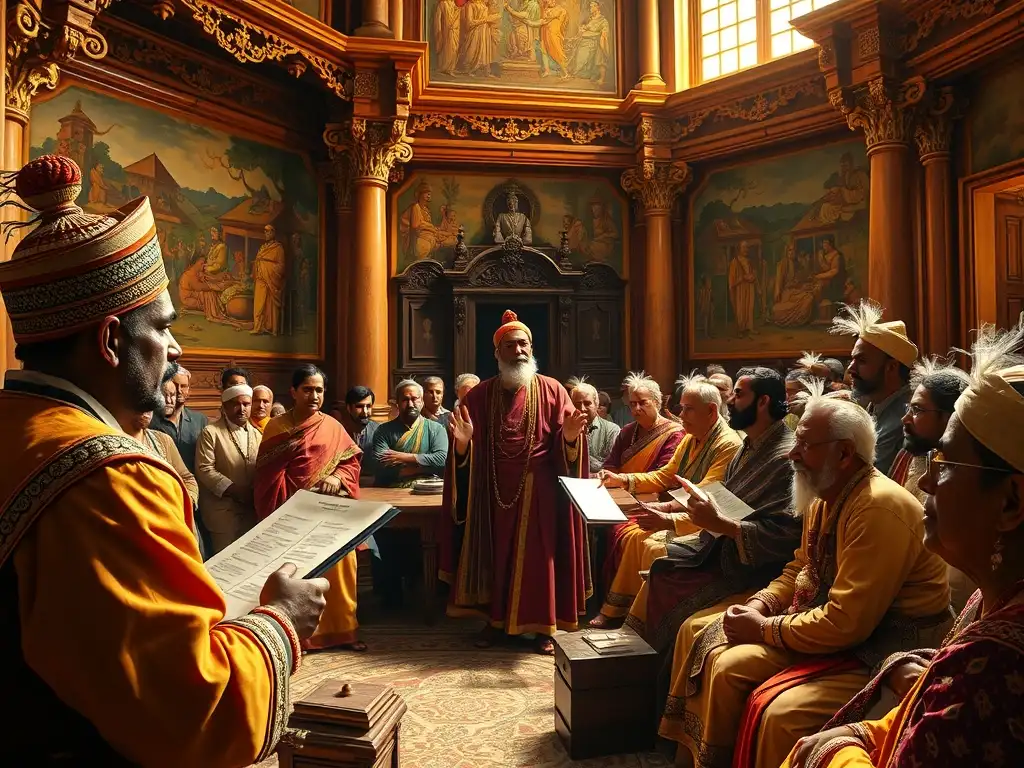
Legal practitioners in ancient Indian courtrooms employed various rhetorical strategies to enhance their arguments and persuade judges. The art of rhetoric was highly developed, with practitioners often trained in the nuances of language, delivery, and audience engagement. Key strategies included the use of anecdotes, metaphors, and appeals to authority, all of which served to strengthen their positions and create emotional resonance with the audience.
Additionally, the use of repetition and parallelism in oral arguments helped to reinforce key points, ensuring they remained memorable to the judges and jurors. These techniques not only aided in persuasion but also reflected the cultural values of eloquence and wisdom that were deeply revered in ancient Indian society.
Persuasion Techniques in Ancient Indian Courtroom Arguments
Persuasion in ancient Indian courtroom arguments relied heavily on techniques that appealed to both logic and emotion. Legal practitioners often employed pathos, engaging the feelings of the audience by narrating compelling stories or personal experiences related to the case. This emotional connection was crucial in eliciting empathy and support for the litigant’s position.
Furthermore, practitioners used logos by presenting logical reasoning, supported by precedents and relevant laws. The strategic use of questions was also common; advocates would pose rhetorical questions to challenge opposing arguments or to highlight contradictions in the opponent's case. This technique not only demonstrated critical thinking but also engaged the audience in the legal discourse.
Notable Figures and Their Rhetorical Styles
Several notable figures in ancient Indian history exemplified exceptional rhetorical skills in courtroom settings. For instance, Chanakya, the renowned philosopher and statesman, was not only a strategist but also a master orator. His ability to articulate complex ideas clearly and persuasively made him a formidable presence in any courtroom.
Another significant figure is Vishnu Sharma, the author of the "Panchatantra," whose fables often contained moral lessons and strategic insights applicable to legal matters. His storytelling ability showcased how narratives could be wielded as powerful tools in persuasion.
These figures not only influenced judicial practices but also contributed to the rich tradition of rhetoric in ancient India, emphasizing the importance of language and persuasion in the pursuit of justice.
Comparison of Ancient Indian Courtroom Language with Other Civilizations
The language used in ancient Indian courtrooms presents a fascinating study when compared to the legal languages of other prominent civilizations, such as those in Greece and Rome. Ancient Indian courtroom language was characterized by its rich vocabulary, nuanced expressions, and a blend of formal and colloquial styles, which catered to diverse audiences, including the literate elite and the common populace. This complexity stands in contrast to the more standardized and formalized legal languages seen in Greek and Roman contexts, where rhetoric often adhered to specific structures and styles.
One notable aspect of ancient Indian courtroom language was its emphasis on oral tradition, with verbal arguments and recitations playing a crucial role in legal proceedings. This oral culture allowed for flexibility and adaptability, enabling orators to adjust their arguments based on the reactions of their audience. In contrast, Greek and Roman legal language relied heavily on written texts and codified laws, leading to a more rigid and formalized approach to courtroom discourse.
Similarities and Differences with Greek and Roman Legal Language
When exploring the similarities and differences between ancient Indian courtroom language and that of Greece and Rome, several key points emerge:
- Rhetorical Techniques:
- Similarities: All three civilizations valued persuasive rhetoric. In India, techniques such as anvaya (coherence) and vyangya (irony) were pivotal in legal arguments, paralleling the Greek use of ethos, pathos, and logos.
- Differences: While Greek and Roman rhetoric often followed strict guidelines, Indian rhetoric allowed for a broader scope of expression, encouraging creativity and personal interpretation in legal arguments.
- Legal Documentation:
- Similarities: Each civilization produced legal texts, but their purposes differed. Ancient Indian texts like the Manusmriti served to codify laws, while Greek and Roman texts were more focused on procedural guidelines and precedents.
- Differences: The format and style varied significantly, with Indian texts often interspersed with philosophical and moral considerations compared to the more pragmatic approach of Greek and Roman legal texts.
- Audience Engagement:
- Similarities: All civilizations recognized the importance of audience engagement in legal matters.
- Differences: Ancient Indian courtroom practices emphasized direct engagement through dialogue and debate, whereas Greek and Roman systems were often more formalized, with set roles for speakers and limited interaction.
Influence of Ancient Indian Rhetoric on Neighboring Cultures
The influence of ancient Indian rhetoric extended beyond its borders, shaping the legal and rhetorical traditions of neighboring cultures. For instance, the profound impact of Indian philosophical texts on Southeast Asian countries, such as Thailand and Cambodia, led to the incorporation of Indian rhetorical styles into their legal systems. The concept of dharma, or moral duty, resonated deeply, influencing local governance and judicial practices.
In addition, the spread of Buddhism, which emphasized moral and ethical discourse, facilitated the exchange of ideas regarding argumentation and persuasion. This cross-cultural interaction enriched the rhetorical frameworks in these regions, blending Indian ideals with local customs and legal practices. Consequently, the legacy of ancient Indian courtroom language can be seen in the legal systems and rhetorical traditions of various cultures in Asia.
Conclusion: The Legacy of Ancient Indian Courtroom Language
The legacy of ancient Indian courtroom language is profound, with its intricate blend of rhetoric, philosophy, and legal practice influencing not only contemporary legal systems in India but also the broader landscape of judicial practices across Asia. The emphasis on oral tradition, combined with a rich vocabulary and innovative rhetorical techniques, has left an indelible mark on the way laws are articulated and understood within various cultures.
Lasting Impact on Modern Legal Systems
Modern legal systems in India still reflect the influences of ancient Indian courtroom language. Legal professionals today employ a mix of traditional and contemporary rhetorical strategies, underscoring the importance of persuasion in legal arguments. Furthermore, the principles of justice and equity, deeply rooted in ancient Indian philosophy, continue to guide legal frameworks and practices. This enduring legacy highlights the relevance of ancient courtroom language in shaping contemporary legal thought and practices.
Future Research Directions in Ancient Indian Legal History
There remains a wealth of untapped knowledge in the study of ancient Indian courtroom language and its broader implications. Future research could explore:
- The comparative analysis of ancient Indian legal texts with those of other civilizations to unearth deeper connections and influences.
- The examination of regional variations in courtroom language across different Indian states and their historical contexts.
- The impact of translations and interpretations of ancient texts on modern legal practices and educational systems.
By delving into these areas, scholars can further illuminate the complexities and nuances of ancient Indian legal history, enriching our understanding of its role within the global legal landscape.
- Introduction to Ancient Indian Courtroom Language
- Overview of Ancient Indian Judicial Practices
- Importance of Language in Legal Proceedings
- Historical Context of Language in Ancient Indian Courts
- Rhetoric in Ancient Indian Courtroom Settings
- Key Features of Ancient Indian Courtroom Language
- The Role of Oral Tradition in Ancient Indian Legal Practices
- Rhetorical Strategies Employed by Legal Practitioners
- Comparison of Ancient Indian Courtroom Language with Other Civilizations
- Conclusion: The Legacy of Ancient Indian Courtroom Language
- What was the significance of language in ancient Indian courtrooms?
- How did rhetoric influence legal arguments in ancient India?
- Were there specific languages used in ancient Indian courtrooms?
- What were the roles of judges and advocates in ancient Indian courtrooms?
- How did ancient Indian courtroom practices influence modern legal systems?
Frequently Asked Questions
What was the significance of language in ancient Indian courtrooms?
Language played a crucial role in legal proceedings and dispute resolution in ancient Indian courtrooms, facilitating communication between judges, litigants, and witnesses.
How did rhetoric influence legal arguments in ancient India?
Rhetoric was essential in persuading judges and audiences, as skilled orators could enhance their arguments through eloquent speech and logical reasoning.
Were there specific languages used in ancient Indian courtrooms?
Yes, Sanskrit and Prakrit were often used in legal contexts, reflecting the cultural and regional diversity of ancient India.
What were the roles of judges and advocates in ancient Indian courtrooms?
Judges acted as impartial arbiters, while advocates used their oratory skills to present cases, ensuring that both sides were heard fairly.
How did ancient Indian courtroom practices influence modern legal systems?
Many principles from ancient Indian courtroom practices, such as evidence presentation and oral arguments, laid the groundwork for contemporary legal systems in India and beyond.
Final Reflection: The Enduring Legacy of Ancient Indian Courtroom Language
The exploration of ancient Indian courtroom language reveals its profound impact on the foundations of legal discourse and societal norms today. As we navigate a world increasingly defined by communication, understanding the intricacies of how language shaped justice in ancient India invites us to appreciate the power of rhetoric in our own legal systems. The eloquence and precision of courtroom language not only influenced verdicts but also established a framework for dialogue and debate that resonates in contemporary society.
The legacy of ancient Indian courtroom language continues to shape our cultural and social landscapes, reminding us that the art of persuasion is timeless. The principles of clarity, respect, and eloquence that were paramount in these historical settings are still relevant in modern legal practices and public discourse. As Mahatma Gandhi once said, “The weak can never forgive. Forgiveness is the attribute of the strong.” This sentiment underscores the importance of language as a tool for reconciliation and understanding, a theme that echoes through the ages and remains vital in our interactions today.
As we reflect on the lessons drawn from ancient Indian courtroom language, let us consider how we can apply these insights in our own lives. I invite you to embrace the power of words in your daily interactions, recognizing that language is not merely a means of communication but a vehicle for justice, empathy, and connection. By honing our rhetorical skills and being mindful of our language, we can contribute to a more just and understanding society, echoing the wisdom of our ancestors in every conversation we engage in.
Unveil the Power of Language in Ancient India!
Thank you for diving deep into the fascinating world of ancient Indian courtrooms! You've gained valuable insights into how language and rhetoric shaped justice and governance centuries ago. Now, it's time to take that knowledge and transform it into action.
Here are some ways you can further explore this captivating subject:
- Dive into Historical Texts: Visit your local library or online archives to read original documents or translations of court proceedings from ancient India. This firsthand experience will deepen your understanding!
- Join Online Forums or Communities: Connect with others who share your passion for history. Share your thoughts on the use of language, or pose questions that spark lively discussions.
- Create a Visual Timeline: Illustrate key developments in rhetoric and courtroom practices throughout the ages. Share it on social media or within history groups to encourage broader exploration and interest!
As you reflect on these actions, ask yourself: How do you think the rhetorical strategies used in ancient Indian courtrooms compare to contemporary legal practices? Share your insights and let's ignite a meaningful conversation!