
The Global Journey of Zero: How Ancient India Influenced Mathematics Worldwide

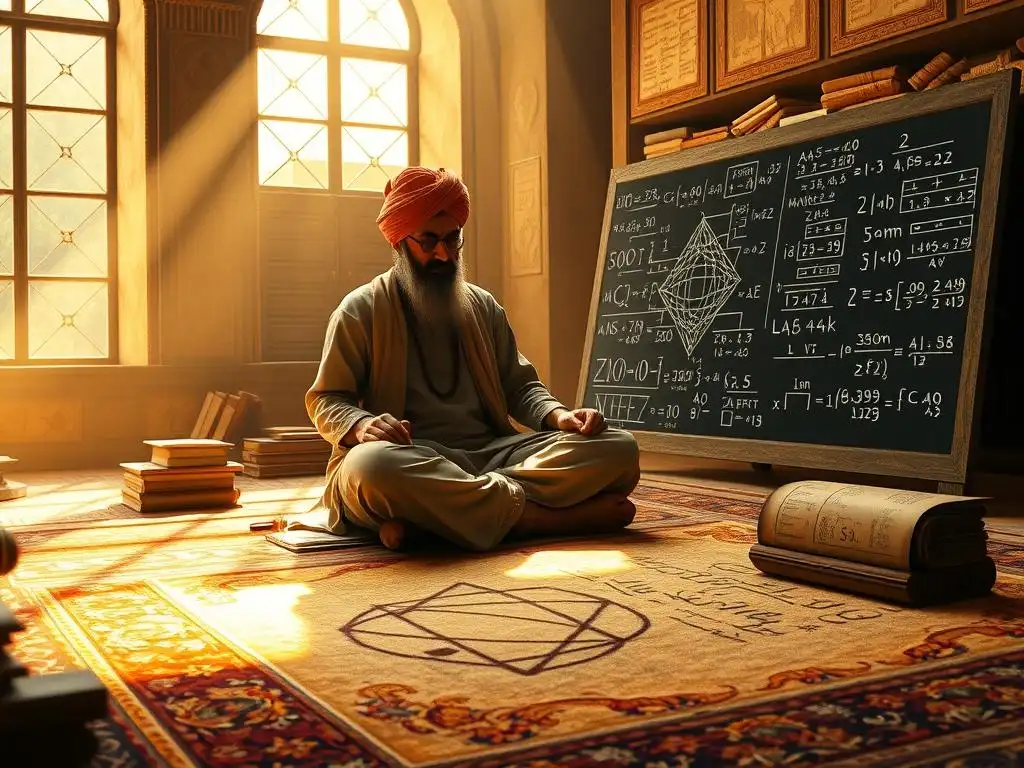
Welcome to Ancient India History, where we embark on a fascinating journey through time, uncovering the rich tapestry of ancient Indian civilizations. In our featured article, "The Global Journey of Zero: How Ancient India Influenced Mathematics Worldwide," we delve into the groundbreaking contributions of ancient Indian scholars to the field of mathematics, particularly the concept of zero—a notion that revolutionized the way we understand numbers today.
Join us as we explore how these early innovations not only shaped the mathematical landscape of their time but also laid the foundation for modern numerical systems across the globe. Prepare to be intrigued and inspired as you discover the profound impact of ancient Indian mathematics that continues to resonate through the ages!

Introduction
The concept of zero is one of the most profound contributions of ancient Indian civilization to the world of mathematics. This seemingly simple numeral has transformed the way we understand and manipulate numbers, laying the groundwork for modern mathematics.
The journey of zero, from its inception in the fertile plains of the Indus Valley to its adoption by civilizations across the globe, reflects the rich tapestry of ancient Indian intellectual heritage. This article explores the pivotal role that ancient India played in the development of zero and its significant influence on mathematics worldwide, shedding light on the broader theme of ancient Indian contributions to mathematics.
Overview of Ancient Indian Contributions to Mathematics
Ancient India was a cradle of mathematical innovation, producing groundbreaking ideas that shaped various fields of study. From the intricate calculations of the Indus Valley Civilization to the sophisticated theories of the Gupta Empire, Indian mathematicians made substantial contributions, including:
- The decimal system: A revolutionary numeral system that simplified calculations.
- Algebra: The development of algorithms and symbolic representation of numbers.
- Trigonometry: Advancements in the understanding of angles and their relationships.
The introduction of zero, however, stands out as one of the most significant milestones, fundamentally altering mathematical frameworks and enabling the development of advanced calculations.
Importance of Zero in Mathematical History
Zero is not just a number; it represents the concept of nothingness, a critical idea that has philosophical implications beyond mathematics. Its introduction allowed for the representation of large numbers and facilitated complex calculations. Key aspects of zero's importance include:
- Place Value System: Zero serves as a placeholder, allowing for the easy representation of large numbers, enhancing the efficiency of calculations.
- Algebraic Innovations: The use of zero in equations has paved the way for algebra as we know it today, enabling the solving of various mathematical problems.
- Scientific Advancements: Zero is foundational in calculus and computer science, influencing modern technology and scientific discoveries.
The mathematical revolution initiated by the introduction of zero has had a lasting impact, echoing through centuries and across cultures.
The Origins of Zero in Ancient India
Historical Context of Zero in Mathematics
The origins of zero can be traced back to ancient Indian texts, with the earliest known use appearing in the 5th century CE in the Bakhshali Manuscript. The mathematical context of ancient India was rich, characterized by a quest for knowledge that extended to astronomy, astrology, and commerce. This environment fostered innovative thinking and led to the formalization of the concept of zero by mathematicians who recognized its potential.
- The Aryabhatiya: Written by Aryabhata, this seminal work contains references to zero and its use in calculations.
- The Bijaganita: A treatise by Brahmagupta, which elaborates on rules for arithmetic and algebra, including operations involving zero.
These texts not only illustrate the early understanding of zero but also its integration into broader mathematical practices.
Key Figures in the Development of Zero
Several influential mathematicians played pivotal roles in the development and popularization of zero in ancient India. Among them are:
- Aryabhata (476–550 CE): Often regarded as the first major mathematician from ancient India, Aryabhata introduced concepts of place value and the use of zero in computations.
- Brahmagupta (598–668 CE): He formalized rules for arithmetic operations involving zero, addressing its behavior in equations and its interaction with other numbers.
- Bhaskara I (c. 600 CE): He expanded on Aryabhata's work and contributed to the understanding of zero in trigonometric contexts.
These mathematicians not only contributed to the understanding of zero but also laid the foundation for future mathematical advancements that would influence civilizations worldwide. Their work illustrates the depth of ancient Indian contributions to mathematics, particularly the invention and integration of zero into mathematical thought.
The Concept of Zero in Ancient Indian Civilization
The concept of zero is one of the most profound contributions of ancient Indian civilization to the world of mathematics. In Indian mathematics, zero was not merely a placeholder but a concept representing the absence of quantity. This philosophical understanding of zero was critical in developing a comprehensive numerical system. The earliest references to zero can be traced back to the 5th century CE, where it was symbolized by a dot in mathematical texts. This innovation allowed for the representation of large numbers and facilitated complex calculations.
Ancient Indian scholars, such as Brahmagupta, articulated the rules of arithmetic involving zero, which included operations like addition, subtraction, and multiplication. They recognized that adding or subtracting zero from a number does not change its value, laying the groundwork for future mathematical theories. The acceptance and use of zero fundamentally changed the approach to mathematics, allowing for advancements in algebra and calculus.
The Role of Zero in Indian Numerals
Zero's role in Indian numerals is pivotal, transforming the numeral system into a decimal place value system, which is now universally used. In this system, each digit's position indicates its value, making it easier to perform arithmetic operations. The introduction of zero allowed for the representation of numbers like 10, 100, and 1000, which denote not just quantity but the place value of each digit.
This innovation was crucial for calculations in trade, astronomy, and other scientific fields. The ability to represent and manipulate large numbers with ease enabled ancient Indian mathematicians to conduct complex calculations that were previously unattainable. The concept of zero, combined with the decimal system, provided the foundation for advanced mathematics and has influenced numeral systems worldwide.
The Influence of the Gupta Empire on Mathematical Thought
The Gupta Empire (c. 320-550 CE) is often referred to as the "Golden Age of India," particularly in the field of science and mathematics. During this period, mathematicians such as Aryabhata and Brahmagupta made significant advancements, further refining the concept of zero and its applications. Aryabhata's work introduced the use of zero in astronomical calculations, demonstrating its utility beyond mere arithmetic.
Moreover, the Gupta scholars developed methods for solving quadratic equations and calculated the value of π (pi) with remarkable accuracy. Their mathematical texts, rich with insights and instructions on using zero, laid a foundation for future generations. The intellectual environment of the Gupta Empire fostered critical thinking and innovation, making it a cornerstone of ancient Indian contributions to mathematics.
The Spread of Zero Beyond India
The dissemination of the concept of zero beyond India marks a significant chapter in the global history of mathematics. As ancient Indian mathematicians traveled and shared their knowledge, the concept of zero began to influence cultures across the world. Trade routes, such as the Silk Road, facilitated the exchange of ideas, allowing for the transmission of mathematical concepts, including the numeral system and zero.
How Ancient Indian Mathematics Reached Other Cultures
Ancient Indian mathematics reached other cultures primarily through trade and conquest. The translations of Indian mathematical texts into Arabic during the Islamic Golden Age played a crucial role in this exchange. Scholars in the Islamic world, fascinated by the Indian numeral system and the concept of zero, began to adopt and adapt these ideas, which later spread to Europe.
The adoption of zero by Arabic mathematicians was pivotal; they recognized its significance and integrated it into their own mathematical frameworks. The term "sifr," which means zero in Arabic, eventually evolved into the word "cipher" in English, showcasing the profound impact of Indian mathematics on global linguistic and mathematical development.
Translation and Adoption of Indian Mathematical Texts
The translation of Indian mathematical texts during the medieval period was a crucial factor in the widespread adoption of zero and the decimal system. Notable texts, such as Aryabhata's Aryabhatiya and Brahmagupta's Brahmasphutasiddhanta, were translated into Arabic and Latin, making these mathematical concepts accessible to scholars beyond India.
These translations facilitated a significant cultural exchange, as they were studied by mathematicians such as Al-Khwarizmi, who is often referred to as the father of algebra. His works introduced Indian numerals, including zero, to the European mathematical community, which eventually led to the widespread acceptance and use of these concepts in Europe. The ripple effect of these translations highlights the interconnectedness of ancient civilizations and their contributions to mathematical thought worldwide.
Impacts of Zero on Global Mathematics

The concept of zero, as developed by ancient Indian mathematicians, has had profound effects on the structure and evolution of mathematical thought worldwide. Before zero, mathematics was largely limited to counting and basic calculations, which often led to cumbersome methods of representing numbers. The introduction of zero transformed this landscape, allowing for the development of a positional number system that significantly simplified calculations and expanded mathematical possibilities.
Zero's role as both a placeholder and a symbol for the absence of value enabled new operations and the concept of negative numbers. This laid the groundwork for algebra and calculus, influencing various mathematical disciplines. The global spread of zero through trade routes and scholarly exchanges enriched mathematical methodologies across cultures, demonstrating its significance in the history of mathematics.
The Introduction of Zero in Islamic Mathematics
The transfer of knowledge from ancient India to the Islamic world was pivotal in the propagation of zero. By the 7th century, Indian mathematicians had established a numeral system that included zero, which traveled along trade routes and through scholarly exchanges. Arab scholars, recognizing the utility of this innovation, adopted and adapted these concepts.
The Persian mathematician Al-Khwarizmi, often referred to as the "father of algebra," played a crucial role in this translation and dissemination. His works, written in Arabic and later translated into Latin, introduced the Hindu-Arabic numeral system to Europe, which included the digit zero. This integration revolutionized mathematics in the Islamic Golden Age, leading to advancements in algebra, geometry, and astronomy, and setting the stage for later developments in Europe.
The Influence of Zero on European Mathematical Development
The introduction of zero and the Hindu-Arabic numeral system into Europe during the Renaissance marked a significant turning point in mathematical thought. Prior to this, Europe relied heavily on Roman numerals, which were inadequate for complex calculations. The adoption of zero allowed for more efficient arithmetic operations and the development of new mathematical concepts.
Notable figures such as Fibonacci, through his work "Liber Abaci" in 1202, championed the use of the Hindu-Arabic numeral system, which included zero. This text helped to popularize these numerals in Europe, facilitating the rise of modern mathematics. As a result, the mathematical landscape shifted dramatically, leading to advancements in accounting, engineering, and the sciences. The impact of zero continues to resonate in contemporary mathematics, affirming its role as a cornerstone of numerical representation and calculation.
Modern Implications of Ancient Indian Contributions to Mathematics
The Legacy of Zero in Contemporary Mathematics
The legacy of zero is deeply embedded in contemporary mathematics, influencing various fields such as computer science, engineering, and economics. Zero serves as a fundamental component in binary systems, which are essential for modern computing. Its role in algorithms and programming languages showcases its versatility and importance in the digital age.
Furthermore, zero is critical in calculus, where it is used in limits and functions to explore concepts of continuity and change. The mathematical notation and operations involving zero are central to various branches of mathematics, demonstrating its lasting impact from ancient Indian contributions to modern practices.
The Relevance of Ancient Indian Innovations in Today's Mathematical Practices
Ancient Indian innovations, particularly the concept of zero, continue to influence mathematical practices today. The positional decimal system allows for clear and concise communication of numerical data, essential in fields such as finance, statistics, and scientific research. Moreover, the exploration of mathematical concepts initiated by ancient Indian scholars, such as algebra and arithmetic, remains foundational in educational curricula worldwide.
In addition, the philosophical implications of zero—its representation of nothingness and infinity—invite deeper inquiry into mathematical theories and practices. The continued relevance of these ancient contributions highlights the enduring legacy of Indian mathematics and its role in shaping contemporary thought. As we explore mathematical concepts, we can trace the lineage of zero back to its origins, acknowledging the profound influence of ancient Indian mathematicians on the world today.
Conclusion
The invention of zero represents one of the most significant contributions of ancient Indian civilization to the field of mathematics. This revolutionary concept not only transformed mathematical practices within India but also laid the groundwork for mathematical advancements across the globe. The journey of zero from ancient Indian scholars to its eventual adoption in various cultures illustrates the profound impact that ancient Indian contributions to mathematics have had on the modern world.
Summary of Ancient Indian Contributions to Mathematics
Ancient India was a cradle of mathematical innovation, producing remarkable scholars who made substantial advances in various mathematical domains. Key contributions include:
- The Concept of Zero: Mathematicians like Brahmagupta and Aryabhata formalized the concept of zero, allowing for the development of a place-value system that revolutionized numerical representation.
- Decimal System: The use of the decimal system, which is foundational to contemporary mathematics, originated in ancient India, providing a systematic method for counting and calculations.
- Algebra: Ancient Indian mathematicians made significant strides in algebra, with texts like the Brahmasphutasiddhanta presenting rules for solving quadratic equations and working with algebraic identities.
- Geometry and Trigonometry: Contributions to geometry included the calculation of the area of geometric figures, while trigonometric concepts were also explored, influencing later mathematical developments in different cultures.
These contributions underscore the profound impact of ancient Indian mathematics, serving as a cornerstone for subsequent advancements in the field.
The Lasting Influence of Zero on Global Mathematics
The introduction of zero into the global mathematical community has had far-reaching implications. Its adoption facilitated the advancement of arithmetic, enabling complex calculations and the development of algorithms that form the basis of modern computing. Key impacts include:
- Simplification of Calculations: Zero allows for the simplification of mathematical expressions, making arithmetic operations more efficient and accessible.
- Advancement in Science and Engineering: The application of zero in mathematics has been critical in fields such as physics, engineering, and computer science, allowing for precise measurements and calculations.
- Global Spread: Through trade and scholarly exchanges along the Silk Road and other routes, the concept of zero spread to the Middle East and Europe, becoming integral to the world’s mathematical framework.
Overall, the legacy of zero, stemming from ancient Indian contributions to mathematics, continues to influence various aspects of modern science, technology, and everyday life, highlighting the timeless nature of this remarkable invention.
- Introduction
- The Origins of Zero in Ancient India
- The Concept of Zero in Ancient Indian Civilization
- The Spread of Zero Beyond India
- Impacts of Zero on Global Mathematics
- Modern Implications of Ancient Indian Contributions to Mathematics
- Conclusion
Frequently Asked Questions
What is the significance of the number zero in mathematics?
The concept of zero is a foundational element in mathematics, developed in ancient India. It revolutionized numerical representation and calculations, leading to major advancements worldwide.
How did ancient Indian mathematicians contribute to algebra?
Ancient Indian mathematicians like Brahmagupta and Aryabhata made significant strides in algebra, developing methods for solving equations and understanding negative numbers, which influenced later mathematical thought.
What role did the decimal system play in mathematics?
The decimal system, originating in ancient India, allowed for more efficient computation and record-keeping. It laid the groundwork for modern mathematical notation used globally today.
How did ancient Indian mathematics influence global mathematics?
Ancient Indian contributions, particularly the concept of zero and the decimal system, were transmitted through trade and scholarship, profoundly influencing Islamic and later European mathematics.
Who were some key figures in ancient Indian mathematics?
Prominent figures include Aryabhata, known for his work in astronomy and mathematics, and Brahmagupta, who made significant contributions to algebra and the understanding of zero and negative numbers.
Final Reflection: The Enduring Legacy of Ancient Indian Contributions to Mathematics
The journey of zero, originating from ancient India, is not just a mathematical concept; it is a profound testament to the intellectual prowess of a civilization that shaped the very foundations of mathematics as we know it today. In an era where the world is increasingly interconnected, the significance of these contributions resonates more than ever. As we navigate a complex global landscape, understanding the roots of our knowledge can empower us to innovate and solve modern challenges.
The influence of ancient Indian mathematics extends far beyond historical significance; it has woven itself into the fabric of contemporary culture and education. The principles established by mathematicians like Aryabhata and Brahmagupta continue to guide mathematical thought and practice worldwide. Their work reminds us that knowledge transcends borders and time, fostering a spirit of collaboration and curiosity.
> “Mathematics is the language in which God has written the universe.” – Galileo Galilei. This quote encapsulates the idea that the mathematical discoveries of the past are not merely relics but are alive and relevant in our quest to understand the universe today.
As we reflect on the rich legacy of ancient Indian contributions to mathematics, I invite you to consider how this knowledge can inspire your own journey. Let us honor the past by embracing the lessons it offers, applying them to our lives, and nurturing a passion for learning and discovery.
Whether you are a student, educator, or simply a curious mind, take a moment to explore the depths of mathematical history and recognize the brilliance that has shaped our world. Together, we can continue this journey of exploration and innovation, ensuring that the legacy of ancient Indian mathematics remains vibrant and influential for generations to come.
Embrace the Legacy of Zero: Take Action Today!
Thank you for exploring the fascinating journey of zero and its roots in ancient India! Your interest in this remarkable topic not only enriches your knowledge but also highlights the profound impact of Indian mathematics on the world. Now, it's time to transform that knowledge into meaningful action.
Here are some exciting steps you can take:
- Visit a local mathematics history exhibit or museum to deepen your understanding of mathematical developments across the globe.
- Share this article with friends and family who would appreciate the beauty of mathematics and its rich history!
- Join an online community or forum dedicated to mathematical history, allowing you to connect with like-minded enthusiasts and exchange ideas.
What aspect of zero’s journey surprised you the most, and in what ways do you believe it has influenced modern mathematics?