
The Enigma of Zero: Why Ancient Indian Scholars Saw Value in Nothing

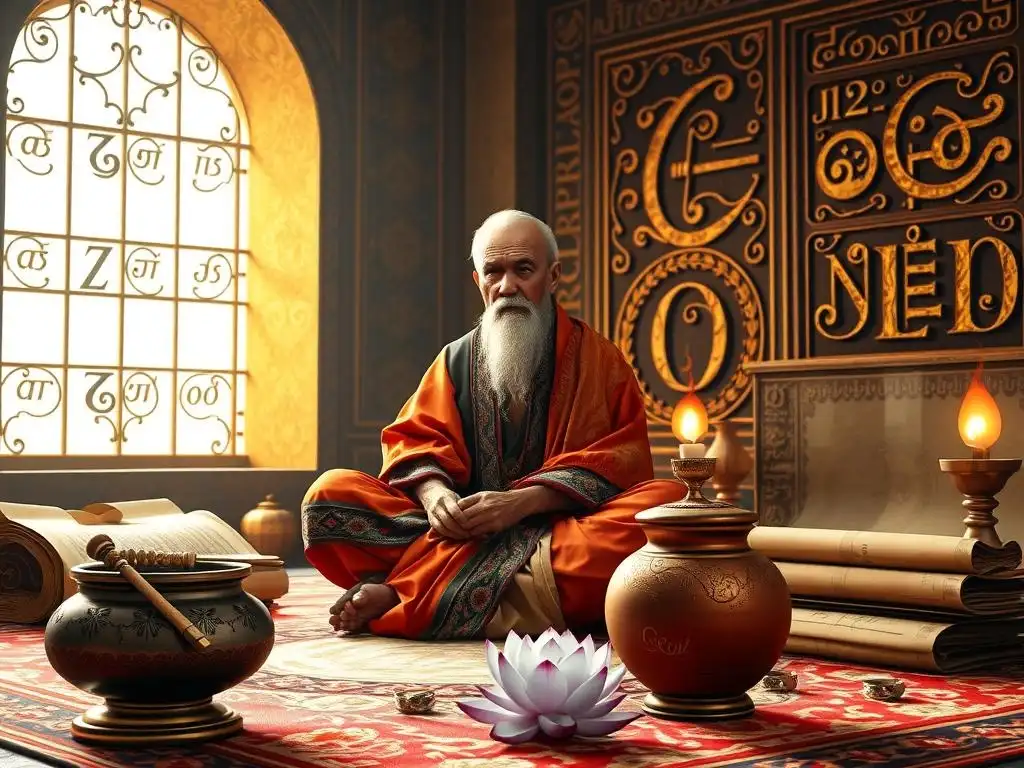
Welcome to Ancient India History, where we take you on a journey through the remarkable tapestry of ancient Indian civilizations. Delve into the intriguing contributions that have shaped the world, starting with a concept that revolutionized mathematics: the importance of zero in India. In our featured article, "The Enigma of Zero: Why Ancient Indian Scholars Saw Value in Nothing," we unravel the profound significance of this seemingly simple digit and how it paved the way for future mathematical advancements.
Prepare to ignite your curiosity as we explore how ancient Indian thinkers transformed the notion of nothing into a cornerstone of modern mathematics. Join us in this exploration—your adventure through history awaits!

The concept of zero, often perceived as a mere placeholder in our modern numerical system, holds immense significance in the realm of mathematics and philosophy, particularly within the context of ancient Indian civilization. The importance of zero in India transcends its mathematical utility; it symbolizes a profound understanding of nothingness and the infinite possibilities that arise from it.
Ancient Indian scholars recognized that zero was not just a number, but a powerful idea that could transform mathematical thought and practice. This article delves into the enigma of zero, exploring its origins, cultural significance, and the impact it had on the development of mathematical concepts in ancient India.
Introduction to the Importance of Zero in India
The journey of zero in India is a testament to the innovative spirit of ancient Indian mathematicians. Unlike many cultures that grappled with the concept of nothingness, Indian scholars embraced zero, integrating it seamlessly into their numeral systems. The introduction of zero was not just a mathematical advancement; it represented a philosophical shift that influenced various fields including astronomy, commerce, and computation.
Overview of Zero in Ancient Indian Mathematics
In ancient Indian mathematics, zero (शून्य, shunya) was recognized early on as a crucial element. It was first documented in the Bakhshali Manuscript, dating back to the 3rd or 4th century CE, where a dot was used to represent zero. This innovation allowed for the development of a positional decimal system, which significantly simplified calculations and record-keeping.
- Key Points:
- The concept of zero as a numeral.
- Use of a dot to symbolize zero.
- Facilitation of complex calculations.
Significance of Zero in Cultural Context
Zero's cultural significance in ancient India extends beyond mathematics; it reflects a deep philosophical understanding. In Hindu philosophy, the notion of shunya symbolizes emptiness or void, yet it is also associated with the creation of the universe. This duality illustrates how ancient Indian thinkers viewed zero as a bridge between existence and non-existence, making it a fundamental concept in both mathematics and spirituality.
Historical Context of Zero in Ancient India
To fully appreciate the importance of zero in India, it's essential to examine the historical backdrop against which this concept emerged. Ancient Indian scholars were pioneers in mathematical thought, laying the groundwork for future advancements not only in India but across the world.
Early Mathematical Concepts in Indian Civilization
The roots of zero in Indian mathematics can be traced back to the Vedic period, where early mathematicians developed basic arithmetic, geometry, and algebraic concepts. Texts such as the Sulba Sutras reveal insights into their mathematical practices, which included measuring land and constructing altars.
- Highlights:
- Emergence of arithmetic and geometry.
- Application of mathematics in rituals and agriculture.
- Influence of the Vedic texts on mathematical thought.
The Development of Numerical Systems in India
The evolution of numerical systems in ancient India was a significant step towards the formalization of zero. The Brahmi numerals, which eventually led to the development of the modern numeral system, incorporated the concept of zero as a distinct entity. This transition marked a pivotal moment in mathematics, allowing for more sophisticated calculations and record-keeping.
- Key Developments:
- Transition from Brahmi numerals to a decimal system.
- Integration of zero into numerical systems.
- Influence on mathematics in other cultures.
Understanding the importance of zero in India not only highlights the ingenuity of ancient Indian scholars but also underscores the profound impact this concept has had on mathematics and other fields throughout history. As we delve deeper into this intriguing topic, we will uncover how zero transformed mathematical practices and philosophical thought in ancient India and beyond.
The Contributions of Ancient Indian Scholars
Ancient Indian scholars made remarkable contributions to mathematics, particularly in the development and conceptualization of zero. Their work not only laid the foundation for future mathematical advancements but also influenced various fields such as astronomy, philosophy, and science. The unique approach of these scholars towards the concept of nothingness transformed mathematics from a mere counting system to a sophisticated discipline capable of theoretical exploration. The significance of zero in India is evident through the works of prominent mathematicians like Aryabhata, Brahmagupta, and Bhaskara II, each of whom expanded the understanding and application of zero in innovative ways.
Aryabhata and the Concept of Zero
Aryabhata, one of the earliest mathematicians in ancient India, is often credited with introducing the concept of zero as a placeholder in the numeral system. His seminal work, the Aryabhatiya, written in 499 CE, showcases his understanding of place value, which was revolutionary at the time. Aryabhata used a symbol for zero, representing the absence of a quantity, which allowed for complex calculations and the development of an efficient numerical system.
His work also emphasized the importance of zero in astronomical computations, where it played a crucial role in determining planetary positions and eclipses. Aryabhata's contributions laid the groundwork for subsequent mathematicians, establishing a legacy that highlighted the significance of zero in both mathematics and science.
Brahmagupta's Innovations in Mathematics
Brahmagupta, who lived in the 7th century CE, further advanced the concept of zero in his influential text, the Brahmasphutasiddhanta. He is notable for formalizing the rules for arithmetic operations involving zero, such as addition, subtraction, and multiplication. Brahmagupta introduced the idea that zero is not only a number but also a value that can affect calculations significantly.
One of his groundbreaking contributions was the formulation of rules for dealing with negative numbers and zero, which were revolutionary concepts at the time. For instance, he stated that the sum of a number and zero is the number itself, and zero multiplied by any number is still zero. Brahmagupta's innovations allowed for a more comprehensive mathematical framework, enabling further exploration and application of zero in various mathematical equations.
Bhaskara II: Expanding the Use of Zero
Bhaskara II, a prominent mathematician and astronomer of the 12th century, expanded the understanding and application of zero even further. In his renowned work, the Lilavati, Bhaskara II not only illustrated the practical applications of zero in calculations but also showcased its role in solving equations. His writings provided insights into how zero could be used in algebra, particularly in the context of polynomial equations.
Bhaskara II's contributions to mathematics included the introduction of new techniques such as the use of fractions and the application of zero in various mathematical problems. He demonstrated that zero could be used in both positive and negative contexts, reinforcing its importance in the number system. His legacy is a testament to the enduring impact of ancient Indian scholars on the evolution of mathematics.
The Philosophical Perspective on Nothingness
The concept of nothingness in ancient Indian philosophy provided a unique lens through which the mathematical significance of zero could be understood. Ancient Indian thinkers viewed nothingness as a fundamental aspect of existence, leading to a rich philosophical discourse that intertwined with mathematical concepts. This philosophical perspective influenced how scholars perceived zero, recognizing it as not merely an absence but as a significant entity in its own right.
The Intersection of Mathematics and Philosophy
The intersection of mathematics and philosophy in ancient India created a fertile ground for the development of abstract ideas, including the concept of zero. Philosophers such as Nagarjuna and others explored the nature of emptiness and void, aligning these ideas with mathematical principles. This philosophical groundwork allowed scholars to embrace the idea of zero as a legitimate number, facilitating its acceptance in mathematical calculations.
The discussions surrounding nothingness also prompted deeper inquiries into the nature of reality and existence, influencing not only mathematics but also metaphysics and logic. The acceptance of zero as a concept reflected a broader understanding of how numerical systems could represent both tangible and intangible aspects of existence.
How Ancient Indian Thought Influenced the Concept of Zero
Ancient Indian thought profoundly influenced the development of the concept of zero, intertwining mathematical and philosophical inquiries. The philosophical understanding of void and absence allowed scholars to approach zero not just as a numerical placeholder but as a concept rich with meaning. This duality of zero—the tangible and the abstract—encouraged intellectual exploration and innovation in mathematics.
The synthesis of mathematical principles and philosophical thought in ancient India highlighted the importance of zero in understanding both the universe and mathematics itself. This unique perspective fostered an environment where the value of nothing was recognized as essential, paving the way for future advancements in mathematics around the world.
The contributions of ancient Indian scholars, combined with the philosophical interpretation of nothingness, crafted a profound legacy that established the importance of zero in India. Their work continues to resonate in modern mathematics, reflecting the deep-rooted significance of zero as a concept that transcends mere numerical representation.
The Impact of Zero on Mathematics and Science

The concept of zero marked a pivotal point in the evolution of mathematics and science, primarily originating from ancient Indian scholars who recognized the profound implications of representing nothingness. The introduction of zero enabled the development of advanced arithmetic, algebra, and calculus, fostering a more systematic approach to mathematical problems. By allowing for the representation of empty values, zero paved the way for the formulation of complex equations and the manipulation of numbers in a way that was previously unattainable.
The use of zero also facilitated the creation of place value systems, which are essential for performing calculations efficiently. For instance, in the Indian numeral system, zero acts as a placeholder, differentiating between numbers like 10 and 100. This innovation not only simplified calculations but also laid the groundwork for future mathematical advancements. Moreover, zero's introduction allowed for the concept of negative numbers and rational numbers to emerge, thereby enriching the entire field of mathematics.
Zero's Role in Advancing Mathematical Theories
Zero played a crucial role in the advancement of mathematical theories, particularly through its integration into various branches of mathematics. The concept of zero as a number in its own right enabled mathematicians to explore new theories, such as the development of algebra. Indian mathematician Brahmagupta, in the 7th century, was one of the first to provide rules for arithmetic involving zero, including operations like addition and subtraction with zero, which laid the foundation for modern algebraic concepts.
Furthermore, zero's existence was vital in the evolution of calculus. The ability to express limits and derivatives relied heavily on the understanding of infinitesimals, which is intrinsically linked to the concept of zero. This connection illustrates how zero has been a fundamental element in developing mathematical theories that underpin modern science and engineering.
Contribution of Zero to Astronomy and Calculations
The influence of zero extended beyond pure mathematics into the realm of astronomy and practical calculations. Ancient Indian astronomers utilized zero to enhance their astronomical models, which involved complex calculations of celestial movements. Notably, Aryabhata, a prominent Indian mathematician and astronomer in the 5th century, employed zero in his astronomical computations, enabling him to predict eclipses and planetary positions with remarkable accuracy.
Additionally, zero facilitated the simplification of calculations in various fields, including commerce and trade. The straightforward representation of large numbers and the ability to perform rapid calculations transformed economic practices in ancient India. This adeptness in numerical computations attributed to zero's introduction was essential for trade, taxation, and economic management.
Zero's Influence Beyond Ancient India
The significance of zero transcended the borders of ancient India, influencing cultures and civilizations across the globe. As the concepts of mathematics and science traveled, so too did the understanding and application of zero. This transmission underscores the collaborative nature of knowledge throughout history, with zero acting as a bridge between diverse intellectual traditions.
The Transmission of Zero to the Islamic World
The transfer of zero to the Islamic world occurred during the 7th to 9th centuries, facilitated by trade and cultural exchanges. Scholars such as Al-Khwarizmi, who studied Indian mathematical texts, recognized the importance of zero in calculations and algebra. The Arabic numeral system, which included zero, became widely adopted across the Islamic Empire, enhancing mathematical practices and education. This adoption played a crucial role in the development of mathematics in the Islamic Golden Age, allowing for advancements in various scientific disciplines.
The Spread of Zero to Europe and Its Global Impact
The introduction of zero to Europe in the late Middle Ages was largely due to translations of Arabic texts, which included Indian mathematical concepts. The work of Fibonacci in the 13th century, particularly his book "Liber Abaci," brought the use of zero and the Hindu-Arabic numeral system to a broader European audience.
The impact of zero on Europe was profound, leading to a mathematical revolution that facilitated advancements in science, engineering, and commerce. Over time, the acceptance of zero laid the groundwork for modern mathematics, influencing not only mathematical theory but also practical applications in navigation, physics, and computer science. The global journey of zero exemplifies its enduring significance, illustrating how a simple concept of "nothing" could reshape the fabric of human knowledge and progress.
Conclusion: The Enduring Legacy of Zero in Mathematics
The legacy of zero in mathematics is profound and far-reaching, stemming from its origins in ancient India. This revolutionary concept not only transformed mathematical practices but also paved the way for advancements in various scientific fields. The introduction of zero as a numeral allowed for the development of the place value system, which significantly enhanced arithmetic operations. Without zero, many mathematical concepts such as calculus, algebra, and even more complex theories would not have been possible.
The work of ancient Indian mathematicians like Brahmagupta and Aryabhata showcased how zero could be utilized in calculations, leading to more sophisticated mathematical operations. Their innovative thinking laid the groundwork for future mathematicians around the world, ultimately influencing the global mathematical landscape. Today, zero is recognized not only as a number but as a concept that embodies the essence of mathematical thought, representing both the void and the foundation upon which modern mathematics stands.
Reflection on the Importance of Zero in Modern Mathematics
In modern mathematics, the importance of zero cannot be overstated. It serves as a critical element in virtually every mathematical discipline, from basic arithmetic to advanced theoretical frameworks. Zero acts as a placeholder in our numerical system, enabling the distinction between numbers such as 10 and 100. This clarity facilitates a deeper understanding of mathematical relationships and operations.
Moreover, zero is essential in calculus, where it plays a key role in defining limits and continuity. The concept of limits often involves approaching zero, which is fundamental in understanding derivatives and integrals. In computer science, zero is equally significant, representing the binary system's basis, which underlies all digital technology.
The influence of zero extends beyond mere calculations; it has philosophical implications as well. The idea of "nothingness" challenges mathematicians and philosophers alike to ponder the nature of existence and reality. Thus, the importance of zero in modern mathematics is not just functional; it is also a gateway to exploring deeper theoretical concepts.
Final Thoughts on the Value of Nothingness in Ancient Indian Culture
In ancient Indian culture, the value of nothingness transcended mere mathematics. It was a philosophical concept that resonated deeply within religious and spiritual contexts. The idea of 'Shunya', or emptiness, was pivotal in various schools of thought, including Buddhism and Jainism, where it symbolized the impermanence of life and the universe. This philosophical understanding of nothingness fostered an environment where abstract concepts could flourish, encouraging scholars to explore the potential of zero.
Additionally, the acceptance of nothingness in ancient Indian thought paved the way for a more holistic understanding of the universe. It highlighted the balance between existence and non-existence, which is reflected in various art forms and literature of the time. Ancient Indian scholars recognized that nothingness was not an absence but a vital part of the greater whole, inspiring generations to appreciate the complexities of both mathematics and life.
The ancient Indian perspective on zero demonstrates that the concept of nothingness is far from trivial; it is foundational in mathematics and rich in cultural significance. This enduring legacy continues to influence not only mathematical practices but also philosophical inquiries into the nature of reality.
- Introduction to the Importance of Zero in India
- Historical Context of Zero in Ancient India
- The Contributions of Ancient Indian Scholars
- The Philosophical Perspective on Nothingness
- The Impact of Zero on Mathematics and Science
- Zero's Influence Beyond Ancient India
- Conclusion: The Enduring Legacy of Zero in Mathematics
- What is the significance of zero in ancient Indian mathematics?
- How did ancient Indian scholars contribute to the concept of zero?
- In what ways did the concept of zero spread to other civilizations?
- Why was zero considered valuable by ancient Indian thinkers?
- Can we see the impact of zero in modern mathematics?
Frequently Asked Questions
What is the significance of zero in ancient Indian mathematics?
The importance of zero in India lies in its revolutionary role in mathematics, enabling complex calculations and the development of the decimal system.
How did ancient Indian scholars contribute to the concept of zero?
Ancient Indian scholars like Brahmagupta and Aryabhata elaborated on the concept of zero, recognizing it as a number and a placeholder, which transformed mathematical calculations.
In what ways did the concept of zero spread to other civilizations?
The concept of zero was transmitted to the Islamic world and later to Europe through translations of Indian texts, profoundly influencing global mathematics.
Why was zero considered valuable by ancient Indian thinkers?
For ancient Indian thinkers, zero represented the concept of nothingness, a philosophical idea that aligned with their views on the universe and existence.
Can we see the impact of zero in modern mathematics?
Yes, the importance of zero is evident in modern mathematics, as it is foundational for arithmetic operations, algebra, and computer science, showcasing its timeless relevance.
Final Reflection: The Profound Importance of Zero in India
The exploration of zero's significance reveals its timeless relevance in our modern world. The ancient Indian scholars who recognized the value of nothingness were not merely contemplating a mathematical concept; they were laying the groundwork for a revolutionary way of thinking that transcends time and culture. Today, as we navigate an increasingly complex digital landscape, the principles derived from the concept of zero continue to shape our understanding of technology, mathematics, and even philosophy. Zero is not just a number; it is a gateway to infinite possibilities.
The legacy of zero has profoundly influenced our cultural and social landscape, serving as a reminder of the transformative power of ideas that challenge conventional wisdom. The journey of zero from ancient India to its global acceptance illustrates how a simple concept can catalyze change across civilizations. As we reflect on this journey, we are reminded of the words of the mathematician Carl Friedrich Gauss: Mathematics is the queen of the sciences and number theory is the queen of mathematics.
This underscores the importance of foundational concepts like zero, which have far-reaching implications beyond mere calculations.
As we conclude, I invite you to reflect on the lessons embedded in the enigma of zero. Consider how embracing the concept of 'nothing' can lead to profound insights in your own life. Whether in your personal journey, professional endeavors, or creative pursuits, there is immense value in recognizing the potential that lies within the spaces we often overlook. Let the story of zero inspire you to find meaning in the voids and to appreciate the transformative power of ideas that challenge the status quo.
Unveil the Power of Nothing: Take Action Today!
Thank you for delving into the fascinating world of ancient Indian scholars and their profound appreciation for the concept of zero. You've taken the first step in understanding how this seemingly simple idea transformed mathematics and our understanding of the universe.
Now, let’s harness this inspiration into action! Here’s how you can further explore the significance of 'nothing' and engage with this rich historical narrative:
- Join a discussion group: Connect with fellow enthusiasts to share insights about the role of zero in mathematics and philosophy.
- Explore related readings: Dive deeper into books or documentaries that highlight the innovations of ancient Indian scholars.
- Share your thoughts: Start a conversation on social media about how the concept of zero influences your life or work today.
What new perspective on 'nothing' have you discovered that changes your view on its value in our modern world?