
The Fascinating Story of Ancient Indian Fractional Calculations


Welcome to Ancient India History, where we embark on a captivating journey through the rich tapestry of India's past! Here, we explore the remarkable contributions of ancient Indian civilizations, from the ingenious urban planning of the Indus Valley to the intellectual advancements of the Gupta Empire. In this article, we delve into the fascinating story of ancient Indian fractional calculations, uncovering the mathematical brilliance that shaped not only India but the world.
Prepare to be intrigued as we reveal the secrets behind these early calculations and their lasting impact on mathematics. Join us as we dive deeper into this remarkable chapter of history!
Introduction to Ancient Indian Mathematics History
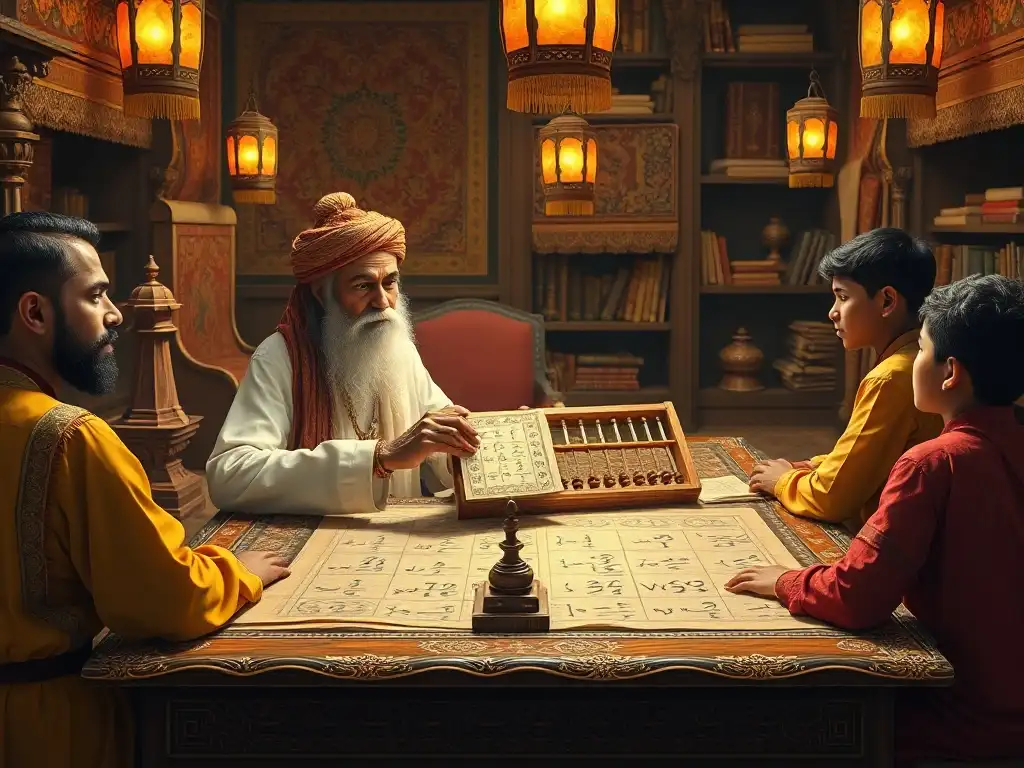
The history of ancient Indian mathematics is a captivating journey through the rich tapestry of intellectual achievements that shaped not only the Indian subcontinent but also the broader world of mathematics. Ancient Indian scholars made significant contributions to mathematical concepts, particularly in the realm of fractional calculations, which laid the groundwork for future developments in arithmetic and number theory.
This article delves into the fascinating story of how ancient Indian civilizations approached and advanced fractional calculations, revealing their profound understanding of numbers, their applications, and the cultural context in which this knowledge flourished. By exploring the evolution of mathematical thought from the Indus Valley to the Gupta Empire, we can appreciate the pivotal role that ancient Indian mathematics plays in the comprehensive narrative of global mathematical history.
Overview of Ancient Indian Mathematics
Ancient Indian mathematics is characterized by a unique blend of practical applications and theoretical advancements. From the early numerals of the Indus Valley Civilization to the sophisticated systems developed during the Vedic period and beyond, the mathematical landscape of ancient India is marked by notable achievements.
- Key Contributions:
- Development of a positional decimal system.
- Introduction of zero as a number and a concept.
- Advanced methods for arithmetic, algebra, and geometry.
These innovations not only facilitated commerce and trade but also enriched philosophical and scientific discourse, demonstrating the integral role of mathematics in ancient Indian society.
Importance of Fractional Calculations in Ancient India
Fractional calculations were crucial in various aspects of daily life and scientific endeavors in ancient India. They were essential for:
- Trade and Commerce:
- Understanding and calculating prices and transactions.
- Astronomy and Calendar Systems:
- Precise measurements of time and celestial events required sophisticated fractional computations.
- Architecture and Engineering:
- Designing structures and calculating materials relied heavily on accurate fractional measurements.
The ability to manipulate fractions allowed ancient Indian mathematicians to solve complex problems, paving the way for advancements in various fields.
Historical Context of Fractional Calculations in Ancient India
To truly appreciate the contributions of ancient Indian mathematicians to fractional calculations, it is important to understand the historical context in which these developments occurred.
The Indus Valley Civilization and Early Mathematical Concepts
The Indus Valley Civilization, flourishing around 2600 to 1900 BCE, is believed to have been one of the earliest cultures to utilize a form of mathematics, including basic concepts of measurement and possibly fractions. Archaeological findings suggest that the people of this civilization:
- Developed a system of weights and measures.
- Employed early mathematical symbols, potentially indicating an understanding of fractions for trade and construction.
These foundational concepts set the stage for more sophisticated mathematical thought in subsequent periods.
The Vedic Period: Foundations of Mathematical Thought
The Vedic period (approximately 1500 to 500 BCE) marks a significant turning point in the evolution of mathematics in ancient India. The texts known as the Vedas contain references to mathematical concepts, including fractions. Key features of this period include:
- Siddhanta: Early texts like the Sulba Sutras provide rules for constructing altars with precise geometric shapes, requiring the use of fractions.
- Ritual and Calculation: The need for accurate calculations in religious rituals further propelled the development of mathematical techniques.
This period laid the groundwork for more advanced mathematical theories, including those involving fractions.
Contributions of Scholars in Ancient Indian Mathematics
Numerous scholars contributed to the rich tapestry of ancient Indian mathematics. Their work in fractional calculations is particularly noteworthy:
- Brahmagupta (598-668 CE): His seminal work, Brahmasphutasiddhanta, includes rules for arithmetic operations involving fractions, which were groundbreaking for their time.
- Aryabhata (476-550 CE): Known for his contributions to astronomy, Aryabhata's mathematical principles included methods for calculating fractions and their applications in astronomical contexts.
- Bhaskara II (1114-1185 CE): His text, Lilavati, not only introduced concepts of fractions but also applied them to solve practical problems.
These scholars, among others, played a pivotal role in advancing the understanding and application of fractional calculations, solidifying ancient India's legacy in the history of mathematics.
Key Texts Contributing to Fractional Calculations
Ancient Indian mathematics is rich with texts that have contributed significantly to the understanding and application of fractional calculations. These texts not only laid the groundwork for mathematical principles but also showcased how fractions were integrated into various aspects of life, including astronomy, trade, and ritual practices. Key literary works such as the Sulba Sutras, Aryabhatiya, and Brahmasphutasiddhanta highlight the evolution of fractional concepts and their practical implications in society.
The Sulba Sutras and Their Role in Geometry
The Sulba Sutras are ancient Indian texts that date back to around 800 BCE and are considered significant for their contributions to geometry and mathematics. These texts primarily serve as manuals for constructing altars for Vedic rituals, but they also delve into various mathematical principles, including the use of fractions.
One notable aspect is the use of simple fractions in geometric calculations to determine the dimensions of altars, which were often required to adhere to specific rituals. For example, the Sulba Sutras provided methods to calculate the area of squares and rectangles, as well as the relationships between different shapes, using fractional measurements. This early understanding of fractions not only facilitated the construction of altars but also laid the foundation for more complex mathematical concepts that would emerge later in ancient Indian mathematics.
Aryabhata's Contributions to Fractional Calculations
Aryabhata, one of the most celebrated mathematicians of ancient India, lived around 476–550 CE and made significant contributions to the field of mathematics, particularly in the area of fractional calculations. In his seminal work, the Aryabhatiya, Aryabhata introduced a positional number system that included fractions, allowing for more precise calculations.
Aryabhata’s approach to fractions was systematic; he used them to express ratios and divisions, which were crucial for astronomical calculations. His work demonstrated the importance of fractions in determining the positions of celestial bodies, calculating the circumference of the Earth, and predicting eclipses. By integrating fractions into his calculations, Aryabhata advanced the understanding of mathematics in ancient India and influenced subsequent scholars in the field.
Brahmagupta's Innovations in Arithmetic and Fractions
Brahmagupta, an influential mathematician and astronomer who lived in the 7th century CE, further advanced the study of fractions in his work, the Brahmasphutasiddhanta. He is credited with formalizing rules for arithmetic operations involving fractions, including addition, subtraction, multiplication, and division.
Brahmagupta's innovations included the introduction of the concept of zero and negative numbers, which greatly impacted how fractions were understood. He provided methods for simplifying complex fraction problems and established algorithms that made it easier to work with fractional quantities. His rules for handling fractions paved the way for more advanced mathematical concepts and highlighted the practical utility of fractions in various applications, such as taxation and trade.
Techniques and Methods of Fractional Calculations
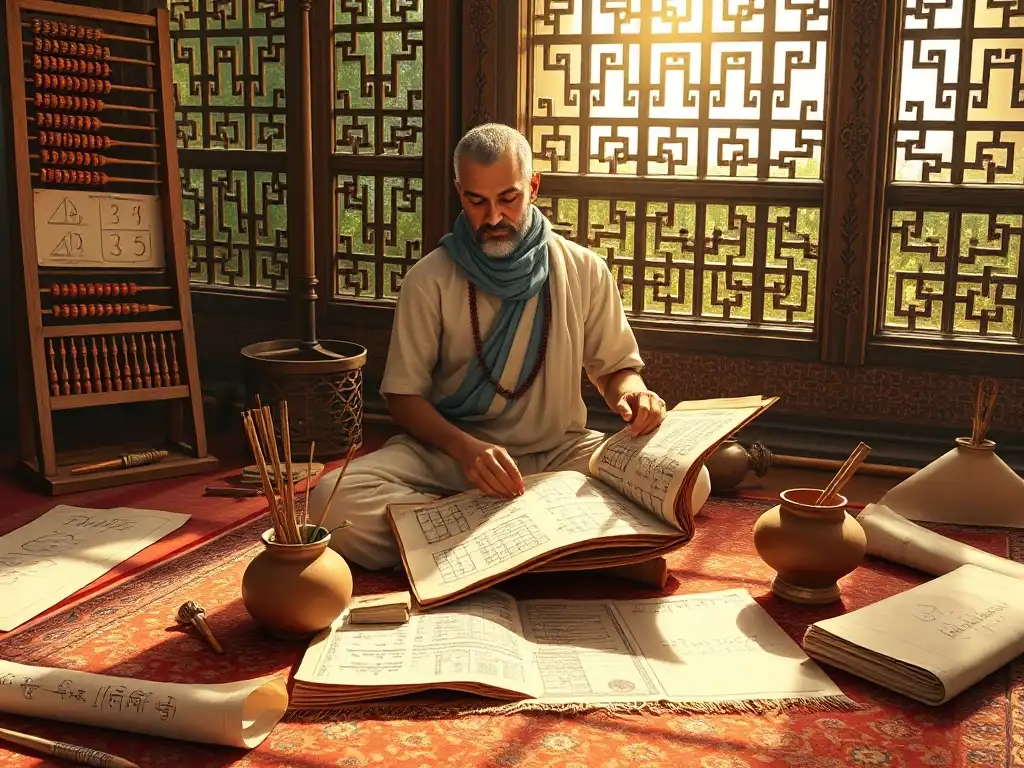
The techniques and methods used for fractional calculations in ancient India were diverse and innovative, reflecting a deep understanding of mathematics and its applications. These methods not only facilitated mathematical operations but also played a crucial role in everyday life.
Understanding the Concept of Fractions in Ancient India
In ancient India, fractions were understood as parts of a whole and were often expressed in terms of ratios. The concept was not merely theoretical; it was applied practically in various fields. Ancient mathematicians categorized fractions into proper fractions (less than one) and improper fractions (greater than one) and developed rules for their manipulation.
One prevalent method was the use of shulka, a term denoting the concept of division, which was integral in calculating parts of a whole in trade and measurement. Ancient texts illustrate how fractions were utilized in mathematical problems, reflecting an advanced understanding of numerical relationships and the ability to represent quantities accurately.
Practical Applications of Fractions in Trade and Commerce
Fractions played a vital role in ancient Indian trade and commerce. Merchants commonly used fractions to calculate prices, weights, and measures of goods, which were essential for transactions. The development of fractional calculations allowed for precise pricing and fair trade practices, which were crucial in a thriving economy.
For instance, when measuring commodities such as grains, fractions were used to denote quantities, ensuring that merchants could accurately represent portions of goods. The ability to work with fractions facilitated complex transactions and negotiations, enhancing trade efficiency and contributing to economic growth in ancient Indian society.
The Role of Fractions in Astronomy and Calendar Calculations
Fractions were instrumental in the field of astronomy in ancient India, particularly for calculating celestial movements and constructing calendars. Astronomers relied on fractional calculations to determine the positions of planets, the timing of eclipses, and the length of the solar year.
Ancient texts detail methods for calculating the fractional parts of lunar months and solar years, which were vital for religious observances and agricultural planning. For example, the Aryabhatiya includes algorithms for predicting the lunar phases using fractions, showcasing the intricate relationship between mathematics and astronomy in ancient India. These applications underscore the importance of fractions in both scientific inquiry and cultural practices, highlighting their enduring legacy in the history of mathematics.
Comparison with Other Ancient Civilizations
The evolution of fractional calculations in ancient India can be understood more profoundly when compared to similar developments in other ancient civilizations. Each civilization had its unique approach to mathematics, particularly in the realm of fractions, which reveals much about their cultural and intellectual priorities.
Fractional Calculations in Ancient Greek Mathematics
Ancient Greek mathematicians, such as Euclid and Archimedes, made significant contributions to mathematics, including the use of fractions. The Greeks employed a system based on geometric interpretations, wherein fractions were often represented as ratios of two whole numbers. For instance, the concept of a fraction was linked to the division of geometric shapes, emphasizing the importance of visual representation in their calculations.
In works like Euclid's "Elements," the Greeks systematically explored number theory, but their approach to fractions remained somewhat limited compared to ancient Indian methods. Greek fractions were primarily used in practical applications, such as commerce and land measurement, but they did not develop a comprehensive system for manipulating fractions as seen in Indian mathematics.
The Influence of Babylonian Mathematics on Indian Fractional Methods
The mathematical innovations of the Babylonians significantly impacted ancient Indian fractional calculations. Babylonian mathematicians utilized a base-60 numeral system, which allowed for the representation of fractions in a systematic manner. They employed sexagesimal fractions, which were often used in astronomy and trade.
This Babylonian influence can be observed in early Indian texts, where similar sexagesimal techniques were adapted. The "Sulbasutras," ancient Indian texts on geometry, show a clear understanding of fractions derived from Babylonian models, indicating a cross-cultural exchange of mathematical knowledge. The seamless incorporation of these methods into Indian mathematics illustrates the dynamic nature of knowledge transfer in ancient civilizations.
Unique Aspects of Ancient Indian Fractional Calculations
Ancient Indian fractional calculations exhibited unique characteristics that set them apart from those of other civilizations. A notable aspect was the sophisticated treatment of mixed fractions and their simplification. Ancient Indian mathematicians, particularly during the Gupta period, developed a notation system that allowed for efficient manipulation of fractions, including addition, subtraction, multiplication, and division.
Additionally, texts such as "Aryabhatiya" by Aryabhata and "Bakhshali Manuscript" reveal a deep understanding of decimal fractions, which were not as prevalent in other cultures at the time. The use of zero as a placeholder in these calculations further distinguished Indian mathematics, leading to advancements in arithmetic operations that would later influence global mathematical practices.
Legacy of Ancient Indian Fractional Calculations
The legacy of ancient Indian fractional calculations has persisted through centuries, significantly influencing both regional and global mathematical developments. This legacy is evident in various aspects of modern mathematics, education, and scientific inquiry.
Influence on Later Mathematical Developments
The methods developed by ancient Indian mathematicians laid the groundwork for later mathematical advancements in both India and beyond. Their innovative approaches to fractions, particularly in algebra and arithmetic, informed the work of later scholars in the Islamic Golden Age and the European Renaissance. The introduction of the decimal system and the concept of zero revolutionized calculations and paved the way for modern mathematics.
Moreover, prominent figures like Bhaskara II built upon these foundations, further refining fractional calculations and contributing to the understanding of calculus, which would later be developed in Europe independently.
The Impact of Ancient Indian Mathematics on the Global Stage
Ancient Indian mathematics has had a profound and lasting impact on the global stage. The transfer of knowledge through trade routes and cultural exchanges facilitated the dissemination of Indian mathematical concepts, including fractional calculations, to various civilizations.
During the Middle Ages, as Islamic scholars translated and expanded upon ancient Indian texts, the contributions of Indian mathematicians became integral to the development of mathematics in the Islamic world, influencing renowned mathematicians such as Al-Khwarizmi. Eventually, these mathematical ideas reached Europe, helping to shape the course of Western mathematics.
Preservation of Ancient Indian Mathematical Knowledge
The preservation of ancient Indian mathematical knowledge is a testament to the rich intellectual tradition of the subcontinent. Manuscripts, inscriptions, and later printed texts played a crucial role in safeguarding this knowledge. Institutions of learning, such as Nalanda and Takshashila, were vital in nurturing and disseminating mathematical concepts.
In contemporary times, efforts to digitize and study ancient manuscripts have opened new avenues for research, ensuring that the contributions of ancient Indian mathematicians are recognized and appreciated. This ongoing interest in ancient Indian mathematics highlights its significance in understanding the history of mathematics and its evolution over time.
Conclusion
The exploration of fractional calculations in ancient Indian mathematics reveals a sophisticated understanding of numbers and their relationships that dates back thousands of years. Ancient Indian mathematicians, including notable figures such as Aryabhata and Brahmagupta, made significant contributions to the field of mathematics, particularly in their approach to fractions. Their work laid the foundation for further developments in mathematical thought and practice, influencing not only local scholars but also mathematicians across the globe.
Summary of Key Points on Ancient Indian Mathematics History
- Early Beginnings: Ancient Indian mathematics can be traced back to the Indus Valley Civilization, where evidence of early counting systems and measurements was found. This set the stage for more complex mathematical concepts.
- Notable Mathematicians: Figures such as Aryabhata (476–550 CE) introduced innovative concepts in arithmetic, including the use of zero and the decimal system. Brahmagupta (598–668 CE) further advanced the study of fractions, providing rules for their operations.
- Fractional Notations: Ancient Indians used unique symbols for fractions and developed methods for performing calculations with them. This included the representation of fractions as parts of a whole, laying the groundwork for modern fractional arithmetic.
- Mathematical Texts: Key texts such as the "Aryabhatiya" and "Brahmasphutasiddhanta" documented mathematical principles, including rules for dealing with fractions and their applications in astronomy and commerce.
- Influence on Global Mathematics: The mathematical innovations from ancient India significantly impacted the development of mathematics in other cultures, particularly in the Islamic world and later Europe.
The Continuing Relevance of Ancient Indian Fractional Calculations Today
The principles of fractional calculations developed by ancient Indian mathematicians are still relevant in contemporary mathematics and education. The understanding of fractions as parts of a whole is foundational in various fields, including:
- Mathematics Education: Modern teaching methods often draw on the principles established by ancient Indian scholars, emphasizing the importance of fractions in arithmetic and algebra.
- Engineering and Science: Many engineering calculations, scientific measurements, and data analysis techniques rely on fractional representations, echoing the methods pioneered by ancient mathematicians.
- Cultural Heritage: The legacy of ancient Indian mathematics continues to inspire new generations of mathematicians and scholars, highlighting the rich intellectual traditions of India.
The fascinating story of ancient Indian fractional calculations is not just a historical curiosity but a testament to the enduring nature of mathematical concepts that have shaped both ancient and modern understanding of mathematics. The insights gained from these early calculations remain pivotal in various applications today, ensuring that the contributions of ancient Indian mathematics history are celebrated and recognized.
- Introduction to Ancient Indian Mathematics History
- Historical Context of Fractional Calculations in Ancient India
- Key Texts Contributing to Fractional Calculations
- Techniques and Methods of Fractional Calculations
- Comparison with Other Ancient Civilizations
- Legacy of Ancient Indian Fractional Calculations
- Conclusion
- Summary of Key Points on Ancient Indian Mathematics History
- The Continuing Relevance of Ancient Indian Fractional Calculations Today
- What are the main contributions of ancient Indian mathematics?
- How did ancient Indians approach fractional calculations?
- What texts document the history of ancient Indian mathematics?
- How did ancient Indian mathematics influence other cultures?
- What role did the Gupta Empire play in the development of mathematics?
Frequently Asked Questions
What are the main contributions of ancient Indian mathematics?
Ancient Indian mathematics is known for its innovations in numerical systems, algebra, and geometry. Key contributions include the concept of zero, decimal system, and advancements in fractional calculations.
How did ancient Indians approach fractional calculations?
Ancient Indians developed sophisticated methods for fractional calculations, using fractions in a way that laid the groundwork for modern arithmetic. They understood equivalent fractions and operations involving them.
What texts document the history of ancient Indian mathematics?
The history of ancient Indian mathematics is primarily documented in texts like the Bakhshali Manuscript and the Aryabhatiya. These works showcase the mathematical techniques and theories employed in ancient India.
How did ancient Indian mathematics influence other cultures?
Ancient Indian mathematics significantly influenced Islamic scholars and later European mathematicians. The transmission of concepts like zero and decimal notation helped shape global mathematical practices.
What role did the Gupta Empire play in the development of mathematics?
The Gupta Empire, known as a golden age of culture and science, fostered significant advancements in mathematics. Scholars like Aryabhata contributed to astronomy and mathematical theories, enhancing the understanding of fractions and number systems.
Final Reflection: The Enduring Legacy of Ancient Indian Mathematics
The story of ancient Indian fractional calculations is not just a glimpse into the past; it is a testament to the brilliance of human intellect and its relevance in today's world. As we navigate the complexities of modern mathematics and technology, the foundational concepts developed by ancient Indian mathematicians continue to influence our understanding of numbers and calculations. The intricate methods they devised resonate with the challenges we face in contemporary mathematical applications, reminding us that innovation often has deep historical roots.
The impact of ancient Indian mathematics extends far beyond its historical context; it shapes our cultural and educational landscapes today. The principles of fractions and calculations laid down centuries ago are integral to the curricula in schools and universities worldwide. As we delve into the rich tapestry of mathematical history, we uncover the profound wisdom that these ancient scholars imparted. Mathematics knows no races or geographic boundaries; for mathematics, the cultural world is one country.
– David Hilbert. This quote encapsulates the universal nature of mathematics, highlighting how the contributions of ancient Indian mathematicians are woven into the global narrative of mathematical advancement.
As we reflect on the fascinating story of ancient Indian fractional calculations, I invite you to explore how this knowledge can inspire your own journey. Consider how the principles of perseverance, creativity, and intellectual curiosity demonstrated by these mathematicians can be applied in your life. Whether you are a student, a professional, or simply a lifelong learner, let the legacy of ancient Indian mathematics encourage you to embrace challenges with a fresh perspective and to appreciate the interconnectedness of knowledge across cultures and time.
Unlock the Secrets of Ancient Mathematics!
Thank you for diving into the captivating world of ancient Indian fractional calculations! We hope this article has provided you with new insights and sparked your curiosity about the mathematical brilliance of our ancestors. Now, it’s time to take these insights and apply them to deepen your understanding of both mathematics and history.
Here are some impactful steps you can take next:
- Explore a local library or online database to discover more literature on the evolution of mathematics throughout history.
- Engage with math enthusiasts or historians online; join forums or social media groups to share your thoughts and discoveries.
- Consider writing a short article or blog post about your newfound knowledge and its connection to modern mathematics!
What aspect of ancient Indian mathematics intrigues you the most, and how do you believe it influences our current mathematical practices? Let’s discuss in the comments below!