
The Legacy of Zero: How Ancient Indian Innovations Shaped Modern Math

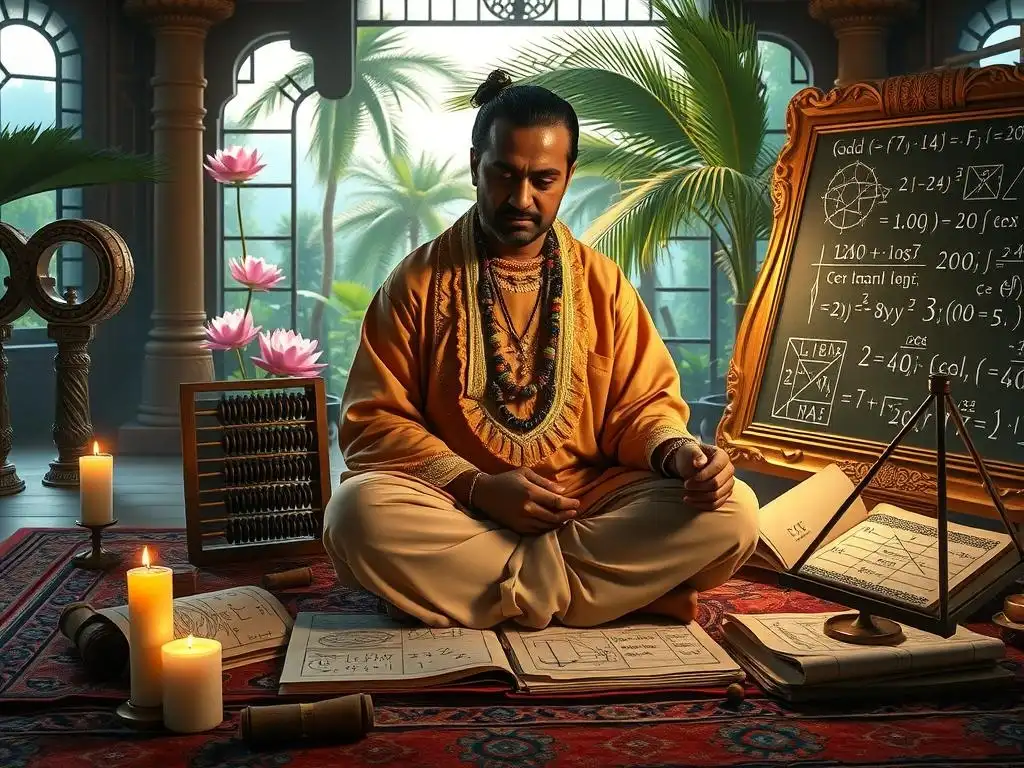
Welcome to Ancient India History, where we delve into the rich tapestry of India's past, uncovering the remarkable civilizations that shaped not only a subcontinent but also the world. In our featured article, "The Legacy of Zero: How Ancient Indian Innovations Shaped Modern Math," we explore the groundbreaking advancements in ancient Indian mathematics, including the revolutionary concept of zero that transformed numerical systems globally. Join us on this fascinating journey as we unravel how these innovations laid the groundwork for future mathematical achievements and continue to influence our lives today.
Are you ready to discover the profound impact of ancient Indian scholars? Let’s dive in!
Introduction to Ancient Indian Mathematics Innovations
The history of mathematics is intricately woven with the threads of various cultures and civilizations, but few have left as profound an impact as ancient India. Among its many contributions, the invention of zero stands out as a revolutionary concept that transformed mathematical practices globally. This article delves into the rich tapestry of ancient Indian mathematics innovations, focusing specifically on the legacy of zero and its implications for modern mathematics. By exploring the context in which these groundbreaking ideas emerged, we can better appreciate how ancient Indian scholars laid the groundwork for contemporary mathematical thought.
Understanding the Concept of Zero in Ancient India
To grasp the significance of zero in ancient Indian mathematics, it is crucial to understand its development and the cultural backdrop that fostered such innovation. Unlike in many other civilizations where mathematics was primarily practical, Indian scholars approached it with a philosophical lens, viewing numbers as abstract entities. This unique perspective allowed them to conceptualize zero not merely as a placeholder but as a number with its own value and properties.
The Historical Context of Zero's Invention
The invention of zero can be traced back to the early centuries CE, during a time when Indian mathematicians were already excelling in arithmetic and algebra. The Bakhshali Manuscript, believed to date back to the 3rd or 4th century CE, is one of the earliest known texts to use a symbol for zero, indicating its emergence as a fundamental component of numerical systems. This period was marked by a flourishing of intellectual pursuits, with scholars such as Aryabhata and Brahmagupta making significant strides in mathematics.
- Cultural Influences: The philosophical and religious climate of ancient India, influenced by Hinduism and Buddhism, emphasized the concept of shunya (emptiness), which played a critical role in shaping the understanding of zero.
- Mathematical Necessity: As trade and commerce expanded, the need for a more sophisticated counting system became apparent. The introduction of zero allowed for more complex calculations and record-keeping, ultimately facilitating advancements in various fields, including astronomy and architecture.
Key Figures in the Development of Zero
Several prominent mathematicians contributed to the development and popularization of zero in ancient India. Their works not only advanced mathematics but also laid the foundation for future innovations.
- Aryabhata (476–550 CE): Often regarded as one of the greatest mathematicians of ancient India, Aryabhata introduced the concept of zero as a placeholder in his seminal work, the Aryabhatiya. His contributions extended beyond zero, encompassing various aspects of mathematics and astronomy.
- Brahmagupta (598–668 CE): A key figure in the formalization of mathematical rules involving zero, Brahmagupta's text, Brahmasphutasiddhanta, outlined operations such as addition and subtraction involving zero, providing the first systematic treatment of this concept.
- Bhaskara II (1114–1185 CE): Building on the foundations laid by earlier scholars, Bhaskara II further explored the implications of zero in his work, Lilavati, where he presented problems and solutions that highlighted the versatility of zero in calculations.
Through their collective efforts, these mathematicians not only advanced the understanding of zero but also inspired future generations of scholars across the globe, ultimately shaping the landscape of mathematics as we know it today.
The Impact of Ancient Indian Innovations on Modern Mathematics
The contributions of ancient Indian mathematicians have had a profound and lasting impact on modern mathematics. Their innovations laid the groundwork for many mathematical principles we take for granted today. One of the most significant legacies is the concept of zero, which revolutionized numerical systems and calculations. The introduction of zero as a number and a placeholder enabled more complex equations and computational methods, which are foundational in various fields, including engineering, physics, and economics.
Moreover, ancient Indian mathematicians developed sophisticated mathematical techniques and concepts that influenced global mathematical practices. Their work on algebra, geometry, and trigonometry not only advanced the field but also provided essential tools that were later adopted and adapted by scholars in other cultures, particularly during the Islamic Golden Age. The impact of these innovations continues to resonate in contemporary mathematics, underscoring the importance of ancient Indian contributions to the discipline.
Contributions of the Gupta Empire to Mathematics
The Gupta Empire, which flourished from approximately 320 to 550 CE, is often referred to as the Golden Age of India due to its remarkable advancements in various intellectual fields, including mathematics. During this period, mathematicians like Aryabhata and Brahmagupta made groundbreaking contributions that would shape future mathematical thought.
Aryabhata, one of the most notable figures, introduced the concept of zero and emphasized its significance in calculations. He also formulated a place value system that allowed for easier arithmetic operations. His work, "Aryabhatiya," encompassed topics such as trigonometry and algebra, which were revolutionary for his time.
Brahmagupta further advanced mathematical understanding by defining rules for arithmetic operations involving zero and negative numbers, addressing equations, and developing methods for solving quadratic equations. His seminal work, "Brahmasphutasiddhanta," established foundational principles that influenced both Indian and Islamic mathematics.
The Gupta Empire's emphasis on scholarly pursuits and its patronage of intellectual endeavors fostered an environment ripe for mathematical innovation, leaving a legacy that shaped mathematics across the globe.
The Role of Indian Mathematicians in the Global Context
Indian mathematicians played a crucial role in the development of mathematical concepts that transcended regional boundaries and influenced global practices. Their works were translated and disseminated through trade routes and scholarly exchanges, particularly during the medieval period.
As Islamic scholars absorbed and built upon Indian mathematical knowledge, the transmission of these innovations led to significant advancements in mathematics across the Islamic world. Indian numeral systems, including the place value system and the use of zero, became integral to Islamic mathematics, which in turn laid the groundwork for the mathematics taught in Europe during the Renaissance.
Notable mathematicians such as Bhaskara II and Madhava of Sangamagrama further contributed to the global mathematical discourse by exploring calculus concepts and infinite series long before they were recognized in Europe. Their pioneering work illustrates the interconnectedness of cultures and the importance of acknowledging the contributions of ancient Indian mathematics within the broader tapestry of global mathematical history.
Exploring Key Ancient Indian Mathematical Innovations
Ancient Indian mathematics is marked by several key innovations that have significantly influenced modern mathematical thought. These innovations include the place value system, the decimal system, and advanced arithmetic techniques, all of which have shaped how mathematics is taught and understood today.
The Place Value System
The place value system is one of the most significant contributions of ancient Indian mathematics. This system allows numbers to be represented in a way that their value is determined by their position (or place) within a number. For example, in the number 205, the '2' represents two hundreds, the '0' represents zero tens, and the '5' represents five units.
This concept not only simplifies arithmetic operations but also enables the representation of large numbers efficiently. The use of a base-10 system, along with the representation of zero as a placeholder, was revolutionary and set the stage for future developments in mathematics. The place value system has become the standard for numerical representation worldwide.
The Decimal System and Its Significance
The decimal system, which originated in ancient India, is another crucial innovation that has profoundly affected modern mathematics. This system is based on ten digits (0-9) and allows for straightforward arithmetic operations, making calculations more efficient.
By utilizing the decimal system, mathematicians can express large quantities compactly and perform operations such as addition, subtraction, multiplication, and division with ease. The adoption of this system was instrumental in developing not just mathematics but also fields like commerce, science, and engineering. It remains the dominant numerical system used globally today.
Advanced Arithmetic Techniques in Ancient India
Ancient Indian mathematicians developed a variety of advanced arithmetic techniques that paved the way for modern computational methods. Techniques such as the "sutras" for multiplication and division, as well as methods for calculating square roots and cube roots, were documented in texts like "Bakhshali Manuscript" and works of mathematicians such as Brahmagupta.
These techniques allowed for greater accuracy and efficiency in calculations, and their influence can be seen in contemporary arithmetic practices. The systematic approach to problem-solving and the emphasis on algorithms in ancient Indian mathematics laid the groundwork for future mathematical exploration, demonstrating the ingenuity and sophistication of ancient Indian scholars.
The Spread of Ancient Indian Mathematical Knowledge
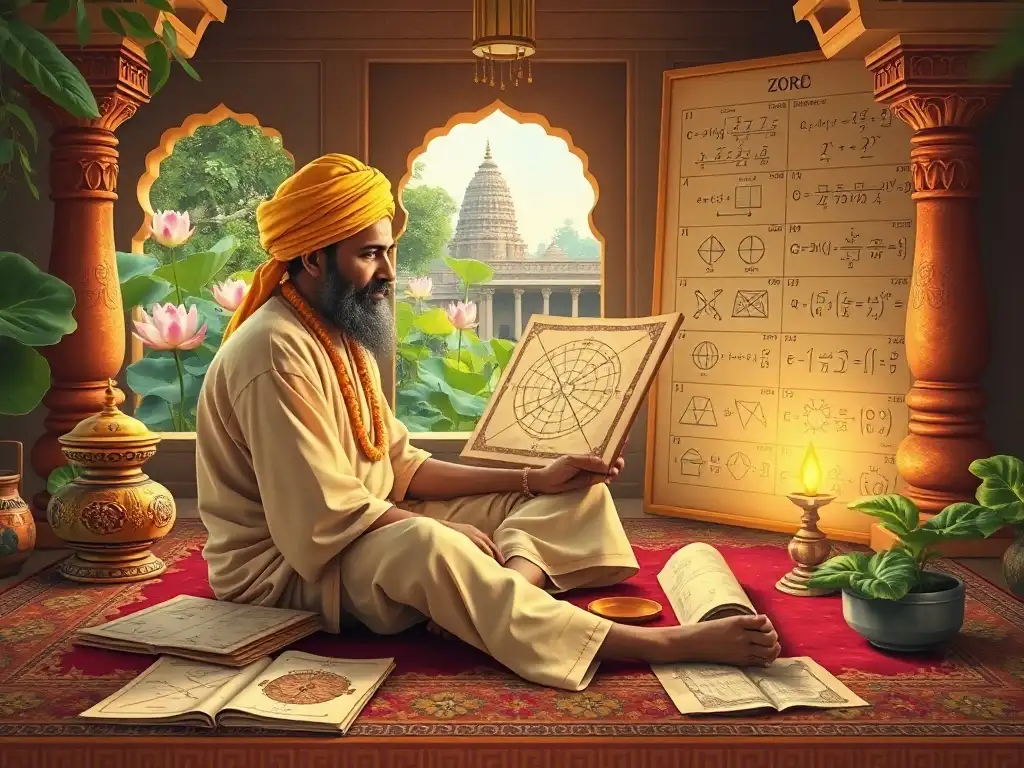
The dissemination of ancient Indian mathematical knowledge was a significant process that unfolded over centuries, greatly influencing various cultures and civilizations. This spread was primarily facilitated through trade routes and cultural exchanges, where scholars and merchants interacted and shared ideas. As a result, ancient Indian mathematics not only enriched the local intellectual landscape but also laid the groundwork for future developments in mathematics across the globe.
Transmission of Knowledge through Trade Routes
Trade routes, particularly the Silk Road and maritime pathways, served as vital conduits for the exchange of goods and ideas. Indian mathematicians traveled along these routes, sharing their innovative concepts, including the numeral system and the concept of zero. The presence of Indian merchants in regions such as Central Asia and the Middle East allowed for direct interaction with local scholars, fostering an environment of intellectual curiosity and collaboration.
Additionally, manuscripts containing mathematical texts were transported along these routes, ensuring that the knowledge was preserved and disseminated. For instance, the introduction of the decimal system and the place-value notation had profound implications on the mathematical practices of other cultures, enhancing their computational capabilities.
Influence on Islamic Golden Age Mathematics
The Islamic Golden Age, spanning from the 8th to the 14th century, saw a remarkable integration of ancient Indian mathematical knowledge into the burgeoning fields of science and mathematics. Scholars such as Al-Khwarizmi and Al-Biruni were instrumental in translating and adapting Indian mathematical texts, which included the works of Aryabhata and Brahmagupta.
The adoption of the Indian numeral system, which included the revolutionary concept of zero, allowed Islamic mathematicians to perform complex calculations with unprecedented ease. This led to significant advancements in algebra, geometry, and astronomy within the Islamic world. The impact of these innovations subsequently spread to Europe during the Renaissance, establishing a direct lineage from ancient Indian mathematics to modern mathematical practices.
Case Studies of Influential Ancient Indian Mathematicians
The legacy of ancient Indian mathematics is profoundly marked by the contributions of several key mathematicians. Their pioneering work not only advanced mathematical thought in India but also provided foundational concepts that would resonate through subsequent generations worldwide.
Aryabhata and His Contributions
Aryabhata, one of the most renowned mathematicians and astronomers of ancient India, made groundbreaking contributions in the 5th century CE. His seminal work, the Aryabhatiya, encompasses a wide array of mathematical topics, including arithmetic, algebra, and trigonometry. Aryabhata was among the first to introduce the concept of zero as a placeholder, which was revolutionary for the development of a positional numeral system.
He also proposed methods for calculating the areas of triangles and circles, and presented a formula for the circumference of a circle that is remarkably close to the actual value. Aryabhata's work laid the groundwork for future mathematicians and influenced both Indian and Islamic mathematical traditions.
Brahmagupta's Innovations in Mathematics
Brahmagupta, a 7th-century mathematician, is celebrated for his contributions to arithmetic and algebra. His work, the Brahmasphutasiddhanta, is one of the earliest texts to systematically discuss the rules for arithmetic operations involving zero and negative numbers. Brahmagupta's innovative approaches to solving quadratic equations and his methods for calculating areas further advanced the field of mathematics.
His rules for handling zero, particularly in subtraction and division, were pivotal in establishing a solid mathematical framework that would be referenced by later scholars. Brahmagupta's insights into mathematics not only influenced Indian mathematics but also had a lasting impact on the development of mathematical thought in the Islamic world and beyond.
Conclusion: The Enduring Legacy of Ancient Indian Mathematics Innovations
The contributions of ancient Indian mathematicians, particularly the invention and conceptualization of zero, have left an indelible mark on the field of mathematics. This innovation was not merely a mathematical tool; it redefined the very framework of numerical systems and paved the way for complex calculations and mathematical theories. The legacy of zero as a placeholder, its role in the decimal system, and its use in various mathematical operations demonstrate how ancient Indian innovations transcended their time, influencing generations of mathematicians across the globe.
Moreover, the implications of these innovations extend beyond mathematics into various domains, including science, engineering, and technology. The ability to perform calculations efficiently and accurately has driven advancements in these fields, illustrating the practical applications of ancient theories. As we explore contemporary mathematics, it becomes evident that the foundations laid by ancient Indian scholars continue to inform and inspire modern mathematical thought.
Reflection on the Importance of Zero in Modern Math
Zero, often considered one of the most significant inventions in mathematics, holds a unique place in the number system. Its introduction allowed for the representation of nothingness and facilitated the development of algebra and calculus. By functioning as a placeholder, zero enables clearer distinctions between numbers, enhancing the overall structure of the numeric system.
In modern mathematics, zero is not just a number; it plays a critical role in various mathematical concepts, including limits, functions, and equations. For instance, in calculus, the concept of limits approaches zero, leading to profound implications in understanding change and continuity. Furthermore, in computer science, binary code relies on the presence of zero and one to perform complex operations, showcasing the versatility and necessity of this ancient innovation in contemporary technology.
The Continuing Influence of Ancient Indian Contributions on Mathematics Today
The influence of ancient Indian mathematics is evident in numerous aspects of today’s mathematical practices. Scholars like Aryabhata and Brahmagupta laid foundational principles that are still taught in modern mathematics curricula. Their works on arithmetic, algebra, and geometry have been preserved and expanded upon, leading to significant advancements in mathematical theory and practice.
Moreover, the principles of mathematics established by ancient Indian thinkers have been integrated into global mathematical discourse. The spread of the decimal system, including the use of zero, has become a standard in mathematical education worldwide. This demonstrates the far-reaching impact of ancient Indian innovations, as they continue to shape mathematical methodologies and educational frameworks across cultures.
The contributions of ancient Indian mathematics innovations, particularly the concept of zero, have not only transformed mathematics during their time but continue to resonate in modern practices, ensuring that the legacy of these ancient scholars endures in the fabric of contemporary mathematics.
- Introduction to Ancient Indian Mathematics Innovations
- Understanding the Concept of Zero in Ancient India
- The Impact of Ancient Indian Innovations on Modern Mathematics
- Exploring Key Ancient Indian Mathematical Innovations
- The Spread of Ancient Indian Mathematical Knowledge
- Case Studies of Influential Ancient Indian Mathematicians
- Conclusion: The Enduring Legacy of Ancient Indian Mathematics Innovations
- What is the significance of zero in ancient Indian mathematics?
- How did ancient Indian innovations influence modern mathematics?
- Who were the key figures in ancient Indian mathematics?
- What role did the Indus Valley Civilization play in early mathematics?
- How did the Gupta Empire contribute to mathematical advancements?
Frequently Asked Questions
What is the significance of zero in ancient Indian mathematics?
The concept of zero, developed by ancient Indian mathematicians, revolutionized mathematics by allowing for the representation of nothingness and enabling advanced calculations.
How did ancient Indian innovations influence modern mathematics?
Ancient Indian innovations, such as the decimal system and the use of zero, laid the foundation for modern mathematical concepts, enhancing calculations and problem-solving techniques.
Who were the key figures in ancient Indian mathematics?
Notable mathematicians like Brahmagupta and Aryabhata made significant contributions, particularly in algebra and the understanding of place value systems.
What role did the Indus Valley Civilization play in early mathematics?
The Indus Valley Civilization introduced early forms of geometry and measurements, influencing later mathematical development in ancient India.
How did the Gupta Empire contribute to mathematical advancements?
The Gupta Empire fostered a golden age of learning, where scholars made strides in astronomy, calculus, and further developed the concepts of zero and the decimal system.
Final Reflection: The Enduring Legacy of Ancient Indian Mathematics
The innovations of ancient Indian mathematics have not only shaped the foundations of modern mathematics but also continue to resonate in our daily lives. The concept of zero, along with other mathematical advancements, serves as a testament to the brilliance of ancient thinkers and their profound impact on contemporary society. Today, as we navigate a world increasingly driven by technology and data, the importance of these innovations becomes even more apparent, reminding us of the timeless nature of knowledge.
The legacy of ancient Indian mathematics is woven into the very fabric of our cultural and intellectual landscape. From the algorithms that power our digital devices to the mathematical principles that underpin scientific discoveries, these innovations have laid the groundwork for progress. As we reflect on this heritage, we are reminded of the words of the mathematician Bhaskara II, who stated, "> Mathematics is the language of the universe." This perspective emphasizes the universal relevance of these ancient contributions, encouraging us to appreciate and honor the wisdom of the past.
As we look to the future, let us embrace the lessons of ancient Indian mathematics and apply them to our own lives. Consider how the principles of innovation, curiosity, and collaboration can inspire you in your personal and professional endeavors. Take a moment to reflect on the mathematical concepts that shape your world and challenge yourself to explore new ideas with the same spirit of inquiry that drove ancient scholars. By doing so, we not only pay homage to their legacy but also pave the way for future innovations that will continue to transform our understanding of the universe.
Embrace the Power of Mathematical Legacy!
Thank you for taking the time to explore the fascinating history of ancient Indian innovations and their profound influence on modern mathematics! Your curiosity about this incredible legacy is just the first step toward unlocking the boundless potential of these foundational concepts. Now, it’s time to put your newfound knowledge into action!
- Dive deeper! Challenge yourself to learn and apply a concept from ancient Indian mathematics—consider picking up a book or enrolling in an online course to enhance your skills.
- Share the knowledge! Discuss these ancient innovations with friends or classmates to inspire a deeper appreciation for the rich history of mathematics.
- Engage with the community! Join online forums or participate in local workshops that focus on mathematics and its historical dimensions to connect with others who share your passion.
Which aspect of ancient Indian mathematics do you find most inspiring, and how will you incorporate it into your own learning journey?