
The Mathematical Genius of Ancient India: Exploring the Birth of Zero


Welcome to Ancient India History, where we embark on a fascinating journey through the rich tapestry of ancient Indian civilizations. Discover the groundbreaking contributions that have shaped our understanding of the world, particularly in the realm of mathematics. In our feature article, “The Mathematical Genius of Ancient India: Exploring the Birth of Zero,” we delve into the revolutionary ideas that emerged from this remarkable era, igniting curiosity about how these concepts continue to influence modern mathematics.
Join us as we explore the intricate connections between culture, innovation, and intellect that define the legacy of ancient Indian mathematics history. Your adventure into the past begins here!
Introduction to Ancient Indian Mathematics History
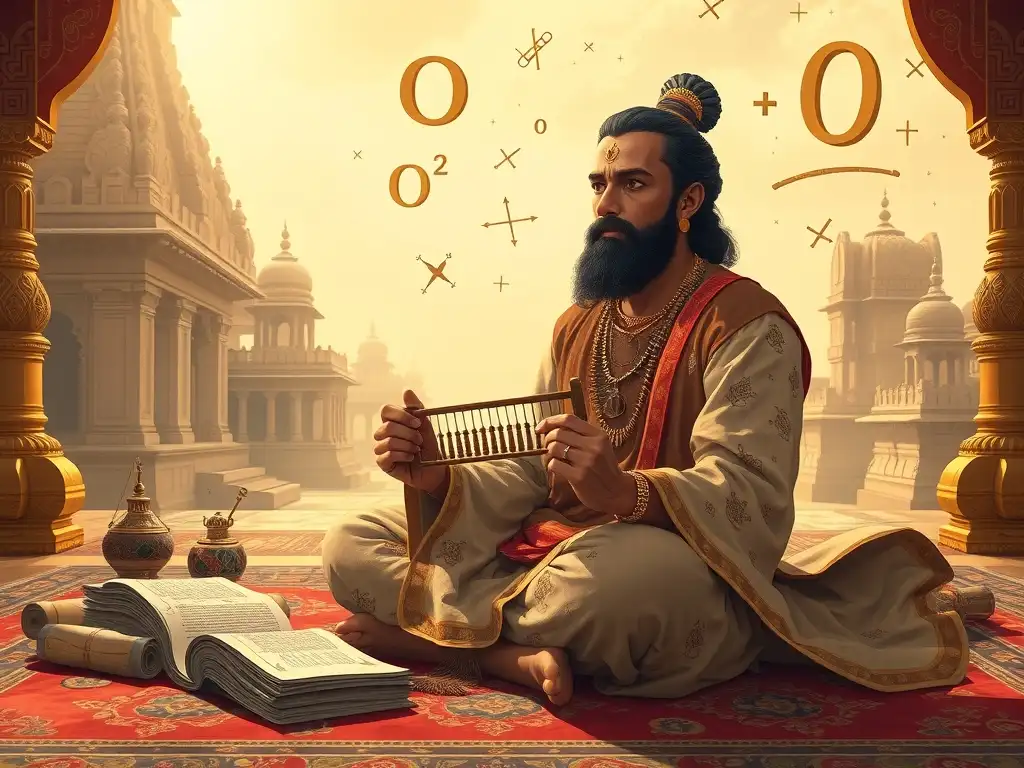
The history of mathematics in ancient India is a testament to the profound intellectual achievements that laid the groundwork for modern mathematics. Among these achievements, the invention of zero stands out as a pivotal moment that transformed mathematical thought and practice. Ancient Indian mathematicians not only conceptualized zero as a number but also recognized its utility in calculations, paving the way for advancements in algebra and arithmetic.
This article delves into the rich tapestry of ancient Indian mathematics history, highlighting the contributions of notable scholars such as Aryabhata, Brahmagupta, and Bhaskara. Their innovative ideas and methods not only enriched Indian culture but also influenced mathematical developments across the globe. As we explore the significance of zero, we will uncover how this seemingly simple symbol revolutionized mathematics and enabled the complex computations we rely on today.
The Importance of Zero in Mathematics
Zero is more than just a placeholder; it is a fundamental concept that underpins the entire structure of mathematics. Here are several reasons why the introduction of zero by ancient Indian mathematicians was revolutionary:
- Place Value System: The development of a place value system was made possible with the incorporation of zero. This system allows for the representation of large numbers succinctly and accurately. For example:
- The number 205 is represented as 2 hundreds, 0 tens, and 5 units, demonstrating how zero can indicate the absence of a value in a specific place.
- Arithmetic Operations: Zero plays a crucial role in arithmetic operations. It serves as the identity element in addition (e.g., \( x + 0 = x \)) and as a nullifying element in subtraction (e.g., \( x - x = 0 \)). This understanding was vital for the advancement of algebra and calculus.
- Mathematical Formulations: The use of zero allowed ancient Indian mathematicians to explore and formulate mathematical equations more effectively. For instance, Brahmagupta's rules for handling positive and negative numbers relied on the concept of zero, enabling more complex calculations.
- Cultural Impact: The acceptance and use of zero in mathematical practices had a profound impact on various fields, including astronomy, commerce, and engineering. This concept was instrumental in the development of algorithms and computational techniques that facilitated trade and navigation.
The invention of zero by ancient Indian mathematicians was a groundbreaking innovation that reshaped the landscape of mathematics. Its importance cannot be overstated, as it not only simplified calculations but also opened doors to new mathematical theories and practices. As we continue to explore the achievements of ancient Indian mathematics history, it becomes clear that these early scholars laid the foundation for many mathematical concepts that are still in use today.
The Origins of Zero in Ancient Indian Culture
The concept of zero as a numeral and a mathematical placeholder emerged within the rich tapestry of ancient Indian culture, setting the stage for revolutionary advancements in mathematics. It is crucial to understand that zero was not merely a symbol but a profound idea that represented nothingness and the absence of quantity. This philosophical and mathematical duality was deeply embedded in Indian thought.
The earliest recorded use of zero can be traced back to the 5th century CE, notably in the works of the mathematician Aryabhata. However, the conceptual groundwork for zero likely predates this period, as ancient Indian texts and inscriptions hint at an evolving understanding of numerical values. The Brahmi numeral system, which was used in ancient India, began to incorporate a symbol for zero by the 9th century, indicating a significant leap in mathematical thinking.
The cultural and philosophical roots of zero can also be linked to the Indian philosophical traditions that emphasized the void, emptiness, and the cyclical nature of existence. This integration of mathematical concepts with philosophical notions allowed for a more holistic understanding of numbers, paving the way for zero to become an essential component of mathematics.
Historical Context of Ancient Indian Mathematics
Ancient Indian mathematics flourished during several key periods, particularly from the Vedic period (circa 1500 BCE) through the Gupta Empire (circa 320-550 CE). The Vedas included early mathematical concepts, primarily focused on astronomy and rituals, indicating that numerical understanding was integral to ancient Indian society.
During the Gupta period, a golden age of science and mathematics emerged, characterized by significant advancements. Scholars such as Aryabhata and Brahmagupta laid the foundation for algebra, arithmetic, and the concept of zero. This historical context reveals that mathematics was not isolated; it was intertwined with astronomy, religion, and daily life, demonstrating the multifaceted nature of ancient Indian civilization.
The writings of these mathematicians were preserved and studied for centuries, influencing not only Indian scholars but later mathematicians in the Islamic world and Europe. This interconnectedness highlights the importance of ancient Indian mathematics in the broader narrative of mathematical history.
Early Uses of Zero in Calculations
The advent of zero revolutionized calculations in ancient India. Initially, zero served as a placeholder in the decimal system, allowing for the representation of large numbers and facilitating more complex calculations. The use of zero enabled mathematicians to perform operations that were previously cumbersome.
For example, Brahmagupta’s rules for arithmetic operations involving zero demonstrate its application in division and subtraction. His work, Brahmasphutasiddhanta, defined rules for using zero in calculations, establishing a framework that would influence future mathematical thought. The ability to add, subtract, and multiply using zero simplified mathematical procedures and significantly improved accuracy in calculations.
Moreover, zero played a crucial role in astronomical calculations, which were vital for navigation and calendar systems in ancient India. The flexibility and efficiency brought about by zero allowed for more profound explorations in mathematics, leading to groundbreaking developments in algebra and geometry.
Key Figures in the Development of Zero
Aryabhata: The Pioneer of Mathematics
Aryabhata, born in 476 CE, is often hailed as the first significant mathematician and astronomer of ancient India. His seminal work, Aryabhatiya, introduced the concept of zero as a placeholder and showcased its mathematical importance. Aryabhata’s innovative approach to mathematics included the use of positional notation, which laid the groundwork for modern numerical systems.
In addition to zero, Aryabhata made remarkable contributions to trigonometry, approximation of π (pi), and the calculation of square roots. His methods for solving quadratic equations and his systematic approach to astronomy reflected a deep understanding of mathematical principles. Aryabhata’s pioneering work not only advanced the study of mathematics in India but also had a lasting impact on subsequent generations of mathematicians.
Brahmagupta: The Key Contributor to Zero's Concept
Following Aryabhata, Brahmagupta emerged in the 7th century CE as a crucial figure in the development of zero. His text, Brahmasphutasiddhanta, is one of the earliest known works to explicitly describe the arithmetic rules involving zero. Brahmagupta articulated the operations of addition, subtraction, multiplication, and division as they pertain to zero, clarifying its role within mathematical calculations.
Brahmagupta’s work provided practical applications of zero, particularly in solving equations and understanding the implications of quadratic solutions. His insights laid the foundation for future mathematicians and ensured that the concept of zero was systematically integrated into mathematical thought.
Bhaskara II: Advancements in Mathematical Thought
Bhaskara II, also known as Bhaskara the Great, was a prominent mathematician and astronomer of the 12th century CE. His work, Lilavati, is renowned for its comprehensive treatment of arithmetic, algebra, and geometry, including the applications of zero. Bhaskara II expanded upon the foundations laid by earlier mathematicians, exploring more complex mathematical concepts.
In Lilavati, he presented numerous problems and solutions involving zero, illustrating its utility in practical scenarios. Bhaskara II’s contributions not only enriched the mathematical landscape of ancient India but also emphasized the importance of mathematical education, as he sought to make complex ideas accessible to learners.
Together, these key figures—Aryabhata, Brahmagupta, and Bhaskara II—played instrumental roles in solidifying the concept of zero within the framework of mathematics, forever altering the trajectory of mathematical history and influencing future generations around the globe.
The Evolution of Mathematical Concepts in Ancient India
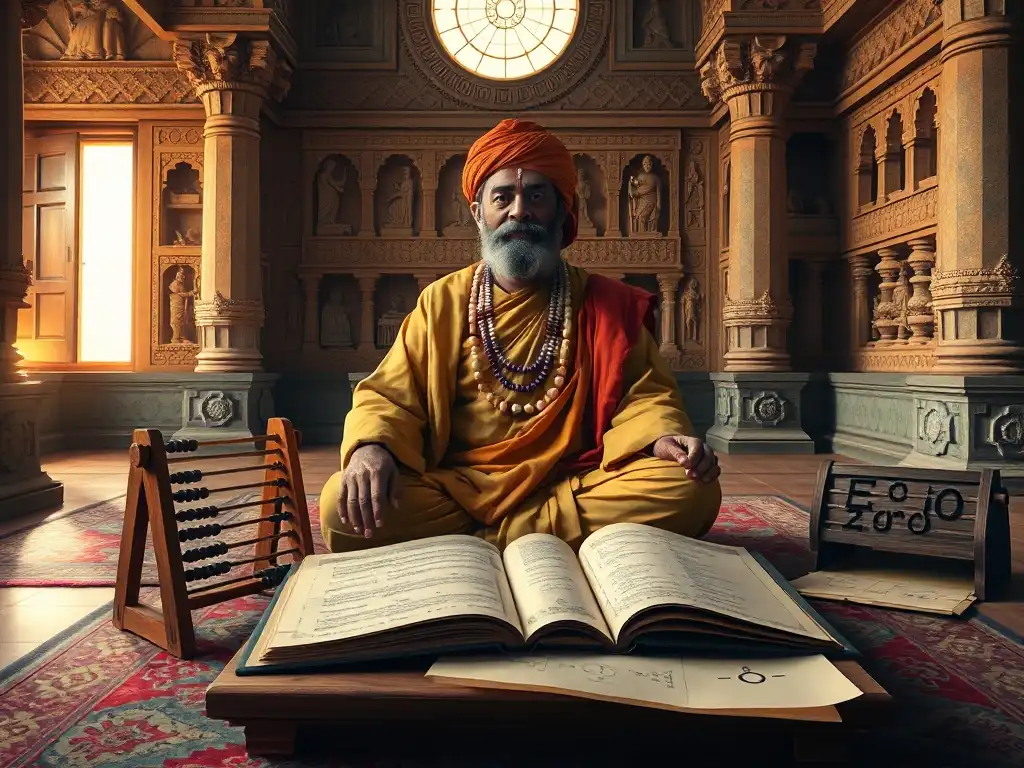
The development of mathematical concepts in ancient India can be traced back to the Vedic period (circa 1500-500 BCE), where early arithmetic and geometry began to take shape. The Vedas, particularly the Sulba Sutras, were instrumental in introducing mathematical ideas that were primarily aimed at ritualistic purposes, such as constructing altars and performing sacrifices. This early mathematics laid the groundwork for more complex concepts in later periods.
As time progressed, Indian mathematicians began to explore abstract mathematical ideas. The introduction of the decimal system and positional notation significantly revolutionized mathematics, allowing for more sophisticated calculations. The concept of zero, which emerged around the 5th century CE, was a pivotal moment in this evolution, as it provided a means to represent the absence of quantity and facilitated calculations in a way that was previously impossible.
By the time of the Gupta Empire, which flourished between the 4th and 6th centuries CE, mathematical concepts had reached remarkable sophistication. Notable mathematicians like Aryabhata and Brahmagupta made significant contributions, including methods for solving quadratic equations and advancements in trigonometry. This period marked a golden age for mathematics in ancient India, leading to profound influences on mathematical thought in other cultures.
The Role of the Gupta Empire in Advancing Mathematics
The Gupta Empire, often referred to as the "Golden Age of India," played a crucial role in the advancement of mathematics. During this period, scholars enjoyed patronage that allowed them to focus on research and teaching. The empire's emphasis on learning and scholarship fostered an environment where mathematical ideas could flourish.
One of the most notable figures from this era is Aryabhata, who made groundbreaking contributions to arithmetic, algebra, and astronomy. His work, "Aryabhatiya," introduced the concept of zero as a placeholder and discussed methods for calculating square and cube roots. Aryabhata's trigonometric innovations, such as the sine function, laid the foundation for future developments in mathematics.
Brahmagupta, another prominent mathematician of the Gupta period, further expanded on Aryabhata's work. In his text "Brahmasphutasiddhanta," he introduced rules for arithmetic operations involving zero and negative numbers, establishing a systematic approach to solving quadratic equations. The contributions of these scholars during the Gupta Empire not only advanced mathematical knowledge in India but also influenced subsequent generations of mathematicians worldwide.
Influences of Vedic Texts on Mathematical Ideas
Vedic texts played a significant role in shaping mathematical concepts in ancient India. The Sulba Sutras, which are part of the larger corpus of Vedic literature, specifically focus on geometry and the construction of altars. These texts demonstrate an early understanding of geometric principles and the application of mathematics in religious rituals.
The Sulba Sutras contain rules for constructing right angles, squares, and various geometric shapes, which were essential for the accurate design of altars used in Vedic ceremonies. Interestingly, these texts also reflect an understanding of the Pythagorean theorem long before it was formally recognized in Greek mathematics.
Moreover, the Vedic texts introduced the concept of mathematical precision and the use of numerical values in rituals. This laid the groundwork for the later development of more abstract mathematical theories, including algebra and arithmetic, showcasing the deep interconnection between mathematics and spirituality in ancient Indian culture.
Comparing Ancient Indian Mathematics with Other Civilizations
The mathematical achievements of ancient India are often compared with those of other civilizations, particularly ancient Greece and ancient China. Each civilization contributed uniquely to the development of mathematical thought, and contrasting these contributions highlights the distinct nature of ancient Indian mathematics.
Ancient Indian Mathematics vs. Ancient Greek Mathematics
Ancient Indian mathematics is characterized by its practical approach, especially in the realms of astronomy and engineering, which contrasts with the theoretical focus of ancient Greek mathematics. While Greek mathematicians like Euclid emphasized geometry and logical proofs, Indian mathematicians developed algorithms and solutions that were rooted in practical applications.
The introduction of the decimal system and the concept of zero in India provided a more effective means for calculations compared to the Greek numerical system, which relied on cumbersome methods such as the abacus. Additionally, Indian mathematicians made strides in algebra and trigonometry, whereas Greek mathematics predominantly focused on geometry and ratios.
Despite these differences, there were notable influences between the two cultures. The translation and dissemination of Indian mathematical texts eventually reached the Islamic world and, later, Europe, showcasing a blend of ideas that enriched global mathematical knowledge.
Ancient Indian Mathematics vs. Ancient Chinese Mathematics
When comparing ancient Indian mathematics with that of ancient China, several similarities and differences emerge. Both civilizations developed sophisticated mathematical systems independently, with China focusing heavily on practical applications, particularly in agriculture and trade.
Chinese mathematicians, like those behind the "Nine Chapters on the Mathematical Art," excelled in arithmetic, geometry, and even early forms of linear algebra. In contrast, ancient Indian mathematics placed a strong emphasis on the development of abstract concepts, particularly through the idea of zero and positional notation, which significantly simplified calculations.
Moreover, while both civilizations recognized the importance of mathematical precision, ancient Indian mathematicians were more inclined to explore theoretical concepts, such as infinity and irrational numbers, which found limited representation in Chinese mathematics. This divergence in focus led to distinct mathematical traditions that ultimately contributed to the broader tapestry of global mathematics.
The Impact of Zero on Global Mathematics
The invention of zero, primarily attributed to ancient Indian mathematicians, marked a pivotal moment in the history of mathematics. This revolutionary concept not only transformed mathematical practices within India but also had far-reaching implications across the globe. Zero enabled the development of a number system that facilitated more complex calculations and laid the groundwork for modern mathematics.
With zero, mathematical operations became significantly simpler. It allowed for the representation of 'nothing' in a tangible form, which was crucial for arithmetic operations like addition, subtraction, multiplication, and division. The introduction of zero also led to the establishment of a positional numeral system, where the placement of a digit determines its value, thereby enhancing numerical accuracy and efficiency.
How Zero Transformed Mathematical Operations
Zero's introduction into mathematics revolutionized the way calculations were performed. Before zero, ancient civilizations used cumbersome methods of counting and calculations that often lacked precision. The incorporation of zero allowed mathematicians to:
- Simplify Arithmetic: Operations became more straightforward. For example, adding or subtracting zero from any number yields the original number, which simplifies many calculations.
- Facilitate Complex Calculations: Zero made it possible to represent large numbers concisely, enabling complex equations and calculations that were previously impractical. This was particularly beneficial for algebraic expressions and equations.
- Enable Advanced Mathematical Concepts: The concept of zero paved the way for the development of negative numbers and fractions, expanding the mathematical landscape and allowing for a more profound exploration of mathematical theories.
The Spread of Zero to the Islamic Golden Age

The journey of zero from its origins in ancient India to its adoption in the Islamic Golden Age was a fascinating process of cultural and intellectual exchange. By the 7th century AD, Indian numerals, including the concept of zero, began to reach the Islamic world through trade and scholarly interactions.
Prominent Islamic scholars, such as Al-Khwarizmi, who is often referred to as the "father of algebra," played a crucial role in integrating zero into Islamic mathematics. His works, particularly "Al-Kitab al-Mukhtasar fi Hisab al-Jabr wal-Muqabala," emphasized the importance of the positional numeral system and laid the foundations for algebra, incorporating zero as a fundamental element.
The Islamic Golden Age saw the widespread dissemination of these mathematical concepts across Europe, particularly through translations of Arabic texts into Latin during the 12th century. This process ultimately led to the adoption of the numeral system that we use today, complete with zero.
Conclusion: The Legacy of Ancient Indian Mathematics History
The legacy of ancient Indian mathematics, particularly the invention of zero, continues to resonate through various facets of contemporary mathematics. This profound contribution has shaped how we understand and engage with numbers in our daily lives.
The Continued Relevance of Zero in Modern Mathematics
In modern mathematics, zero is indispensable. It serves as a foundational element in various branches of mathematics, including algebra, calculus, and computer science. The concept of zero is integral to many mathematical theories and practices, allowing for the development of functions, limits, and even the foundational principles of programming and digital technology.
Moreover, zero plays a significant role in defining mathematical concepts such as limits, continuity, and convergence. Its relevance extends beyond theoretical applications; it is crucial in practical scenarios, from financial calculations to engineering problems.
Celebrating the Contributions of Ancient Indian Civilizations to Mathematics
The contributions of ancient Indian civilizations to mathematics, especially the invention of zero, represent a remarkable achievement that deserves recognition and celebration. This innovation not only provided the tools necessary for mathematical advancement but also inspired generations of mathematicians across cultures and epochs.
By acknowledging the brilliance of ancient Indian scholars, we can appreciate the rich tapestry of mathematical history that has shaped our understanding of the world. Their legacy is a testament to human ingenuity and the enduring quest for knowledge that transcends borders and time.
- Introduction to Ancient Indian Mathematics History
- The Importance of Zero in Mathematics
- The Origins of Zero in Ancient Indian Culture
- Key Figures in the Development of Zero
- The Evolution of Mathematical Concepts in Ancient India
- Comparing Ancient Indian Mathematics with Other Civilizations
- The Impact of Zero on Global Mathematics
- How Zero Transformed Mathematical Operations
- The Spread of Zero to the Islamic Golden Age
- Conclusion: The Legacy of Ancient Indian Mathematics History
- The Continued Relevance of Zero in Modern Mathematics
- Celebrating the Contributions of Ancient Indian Civilizations to Mathematics
- What is the significance of zero in ancient Indian mathematics?
- How did ancient Indian mathematicians contribute to geometry?
- Who were some notable figures in ancient Indian mathematics?
- What role did the decimal system play in ancient Indian mathematics?
- How did ancient Indian mathematics influence other cultures?
Frequently Asked Questions
What is the significance of zero in ancient Indian mathematics?
The concept of zero was a groundbreaking innovation in ancient Indian mathematics, allowing for the representation of nothingness and enabling more complex calculations.
How did ancient Indian mathematicians contribute to geometry?
Ancient Indian mathematicians made significant strides in geometry, particularly in the fields of trigonometry and measurement, laying the groundwork for future mathematical explorations.
Who were some notable figures in ancient Indian mathematics?
Prominent mathematicians such as Aryabhata, Brahmagupta, and Bhaskara made substantial contributions, particularly in algebra and the decimal system.
What role did the decimal system play in ancient Indian mathematics?
The decimal system was crucial in ancient Indian mathematics as it introduced a place-value system, facilitating easier calculations and paving the way for modern mathematics.
How did ancient Indian mathematics influence other cultures?
The advancements in mathematics from ancient India significantly influenced other cultures, especially through the trade routes, spreading ideas such as zero and the decimal system to the Islamic world and beyond.
Final Reflection: The Enduring Legacy of Ancient Indian Mathematics
The exploration of ancient Indian mathematics, particularly the birth of zero, is not just a historical curiosity; it is a testament to the profound impact of intellectual innovation on our modern world. The contributions of ancient Indian mathematicians have shaped the very foundations of mathematics as we know it today, demonstrating that the quest for knowledge transcends time and geography. Their legacy continues to resonate in contemporary mathematical practices, reminding us of the brilliance that emerged from this vibrant civilization.
The influence of ancient Indian mathematics on the cultural and social landscape is profound and far-reaching. From the algorithms we use in computing to the very concept of numerical representation, the innovations of the past have paved the way for advancements in science, technology, and even philosophy. As we reflect on this rich history, we are reminded of the words of the great mathematician Bhaskara II: Mathematics is the language of the universe.
This sentiment underscores the idea that the mathematical principles developed in ancient India are not merely relics of the past but are integral to our understanding of the world today.
As we conclude this exploration, I invite you to reflect on the significance of these ancient contributions in your own life. Consider how the principles of mathematics, born from the ingenuity of ancient Indian scholars, influence your daily decisions and the technology you engage with.
Embrace the spirit of inquiry and innovation that characterized this remarkable era, and let it inspire you to seek knowledge and understanding in your own pursuits. The legacy of ancient Indian mathematics is not just a chapter in history; it is a call to action for all of us to appreciate and build upon the foundations laid by those who came before us.
Unveil the Secrets of Ancient Mathematics!
Thank you for diving into the fascinating world of ancient Indian mathematics with us! By exploring the origin of the concept of zero, you have uncovered a crucial milestone in the evolution of mathematics that has shaped societies across centuries. Now, let's take a step further and make this knowledge work for us!
Here’s how you can deepen your connection to this remarkable history:
- Delve Deeper: Research and read more about key mathematicians from ancient India, such as Aryabhata and Brahmagupta. Discover their influential works that impacted not just mathematics but also astronomy and the sciences.
- Engage with Others: Share this article with friends and on social media to spark conversations about the contributions of ancient civilizations to modern life. Let’s celebrate this rich heritage together!
- Experiment with Numbers: Consider creating a project or presentation on how the concept of zero has influenced modern mathematics and technology. Get creative!
What are your thoughts on how the invention of zero has shaped our understanding and application of mathematics today?