
How Sanskrit Preserved Knowledge Through the Ages

Welcome to Ancient India History, where we invite you to embark on a captivating journey through the rich tapestry of India's ancient civilizations. This week, we delve into the fascinating history of Sanskrit knowledge preservation, uncovering the remarkable ways in which this ancient language safeguarded profound wisdom and cultural heritage across the ages. As you explore our insights, prepare to be intrigued by the powerful impact of Sanskrit on literature, philosophy, and science.
Join us in unraveling the mysteries of how a single language became a cornerstone of knowledge in one of the world's oldest cultures. Let the exploration begin!
- Introduction to Sanskrit Knowledge Preservation History
- Historical Context of Sanskrit Knowledge Preservation
- Methodologies of Knowledge Preservation in Sanskrit
- Key Texts and Their Contributions to Knowledge Preservation
- The Influence of Sanskrit on Other Languages and Cultures
- Challenges Faced in Sanskrit Knowledge Preservation
- Conclusion: The Lasting Legacy of Sanskrit Knowledge Preservation
- References and Further Reading on Sanskrit Knowledge Preservation History
-
Frequently Asked Questions
- What is the significance of Sanskrit in ancient Indian history?
- How did Sanskrit knowledge preservation impact education in ancient India?
- What role did manuscripts play in the preservation of Sanskrit texts?
- How did the Gupta Empire contribute to the preservation of Sanskrit knowledge?
- What challenges did Sanskrit knowledge preservation face over the centuries?
- Final Reflection: The Enduring Legacy of Sanskrit Knowledge Preservation
- Unveil the Treasures of Ancient Knowledge!
Introduction to Sanskrit Knowledge Preservation History
Sanskrit, one of the oldest languages in the world, holds a significant place in the history of knowledge preservation in ancient India. Its intricate grammar, extensive vocabulary, and philosophical depth have allowed it to serve as a vital conduit for the transmission of knowledge across centuries.
This article will delve into the fascinating journey of how Sanskrit facilitated the preservation of vast amounts of knowledge, ranging from religious texts to scientific treatises. By exploring the nuances of Sanskrit as a language and its pivotal role in the intellectual landscape of ancient India, we can better appreciate its enduring legacy and the profound impact it has had on subsequent generations.
Overview of Sanskrit as a Language
Sanskrit, often referred to as the "language of the gods," is a classical language of India that boasts a rich literary tradition. Emerging around 1500 BCE, it is characterized by its:
- Complex Grammar: The grammatical structure of Sanskrit is highly sophisticated, with an extensive system of inflection and derivation. This complexity allows for precise expression and nuanced meanings.
- Rich Vocabulary: With a lexicon that includes words for various disciplines such as philosophy, mathematics, and astronomy, Sanskrit has been a foundational language for numerous fields of study.
- Phonetic Beauty: The sound system of Sanskrit is meticulously crafted, making it not only a language of science but also one of poetry and music.
Sanskrit's structure enables the articulation of intricate ideas and concepts, fostering a tradition of scholarship that has contributed significantly to the preservation of knowledge throughout Indian history.
Importance of Knowledge Preservation in Ancient India
In ancient India, the preservation of knowledge was not merely an academic pursuit; it was a cultural imperative. The significance of knowledge preservation in this civilization can be summarized through several key aspects:
- Cultural Identity: Knowledge, encapsulated in texts and oral traditions, served as a means of maintaining cultural identity among diverse communities in ancient India. It fostered a sense of unity and continuity.
- Religious Significance: Sacred texts like the Vedas and Upanishads were crucial for spiritual practices and rituals. The preservation of these texts in Sanskrit ensured the transmission of religious knowledge and philosophical thought through generations.
- Scientific Advancements: Ancient Indian scholars made groundbreaking contributions in various fields such as mathematics, medicine, and astronomy. The documentation of these advancements in Sanskrit allowed for their preservation and dissemination, influencing not only Indian but also global knowledge systems.
- Oral Tradition and Manuscript Culture: The oral tradition of reciting texts and the later development of manuscript culture played a vital role in preserving Sanskrit literature. This dual approach ensured that knowledge was both preserved and accessible.
By understanding the importance of knowledge preservation in ancient India, we can appreciate the role of Sanskrit as a cornerstone in the architectural edifice of Indian intellectual heritage.
Historical Context of Sanskrit Knowledge Preservation

The Origins of Sanskrit and Early Texts
Sanskrit, one of the oldest languages in the world, has its roots in the Indo-Aryan group of languages, emerging around 1500 BCE. The earliest form of Sanskrit is known as Vedic Sanskrit, which is found in the Vedas—sacred texts that are among the earliest literary records of ancient India. These texts were composed orally and transmitted through generations, emphasizing the importance of oral tradition in preserving knowledge.
The Rigveda, the oldest of the four Vedas, consists of hymns and rituals that not only reflect theological and philosophical insights but also serve as a historical record of the society during that era. It is crucial to note that the meticulous oral transmission of these texts was supported by the use of mnemonic devices and specific recitation techniques, ensuring that the contents were preserved accurately over centuries.
In addition to the Vedas, other early texts such as the Upanishads and Brahmanas contributed significantly to the preservation of knowledge. The Upanishads delve into metaphysical concepts and philosophical discussions, while the Brahmanas provide explanations of rituals and their significance. This early body of literature laid the foundation for a rich scholarly tradition that would continue to develop in subsequent centuries.
Role of Vedic Literature in Knowledge Preservation
Vedic literature played a pivotal role in the preservation of knowledge across various domains, including philosophy, science, and ethics. The Vedas are not merely religious texts; they encapsulate a vast array of knowledge that encompasses cosmology, astronomy, mathematics, and medicine.
- Philosophical Insights: The Upanishads, which are considered the culmination of Vedic thought, introduce profound philosophical concepts such as Brahman (the ultimate reality) and Atman (the individual self). These texts have been subject to extensive commentary and interpretation, maintaining their relevance throughout history.
- Scientific Knowledge: The Vedic texts contain early references to astronomical phenomena, which were systematically recorded. For instance, the positions of celestial bodies were meticulously documented, allowing for the development of calendars and astrological systems.
- Ethical Frameworks: The Vedas also provide ethical guidelines that influenced societal norms and practices. The principles of Dharma, or duty, are extensively discussed and have shaped moral philosophy in Indian culture.
The oral tradition of recitation and memorization ensured that Vedic literature was not only preserved but also adapted over time, allowing for the continual integration of new knowledge while maintaining the essence of the original texts.
Influence of Sanskrit in Indian Philosophy and Religion
Sanskrit's influence extends far beyond its role as a language; it has profoundly shaped Indian philosophy and religion. The language serves as the medium for many critical philosophical discourses, sacred texts, and religious rituals.
- Philosophical Schools: Various philosophical schools, such as Advaita Vedanta and Nyaya, have utilized Sanskrit to articulate complex ideas. The precision of Sanskrit grammar and vocabulary enables nuanced discussions that are essential for philosophical debate.
- Religious Texts: Important religious texts, including the Bhagavad Gita and the Puranas, are composed in Sanskrit. These texts not only convey spiritual teachings but also reflect the socio-cultural context of their time. Their preservation and interpretation through Sanskrit have allowed them to remain vital to Hinduism and other Indian religions.
- Cultural Legacy: The use of Sanskrit in literature, drama, and poetry has enriched Indian culture. Works such as Kalidasa's "Shakuntala" and the "Mahabharata" illustrate the artistic and literary prowess of Sanskrit, contributing to its enduring legacy.
Sanskrit has played an indispensable role in the preservation of knowledge in ancient India. Its origins in Vedic texts, the comprehensive nature of Vedic literature, and its influence on philosophy and religion underscore the significance of Sanskrit knowledge preservation history. Through careful transmission and adaptation, Sanskrit has remained a cornerstone of Indian intellectual and cultural heritage.
Methodologies of Knowledge Preservation in Sanskrit
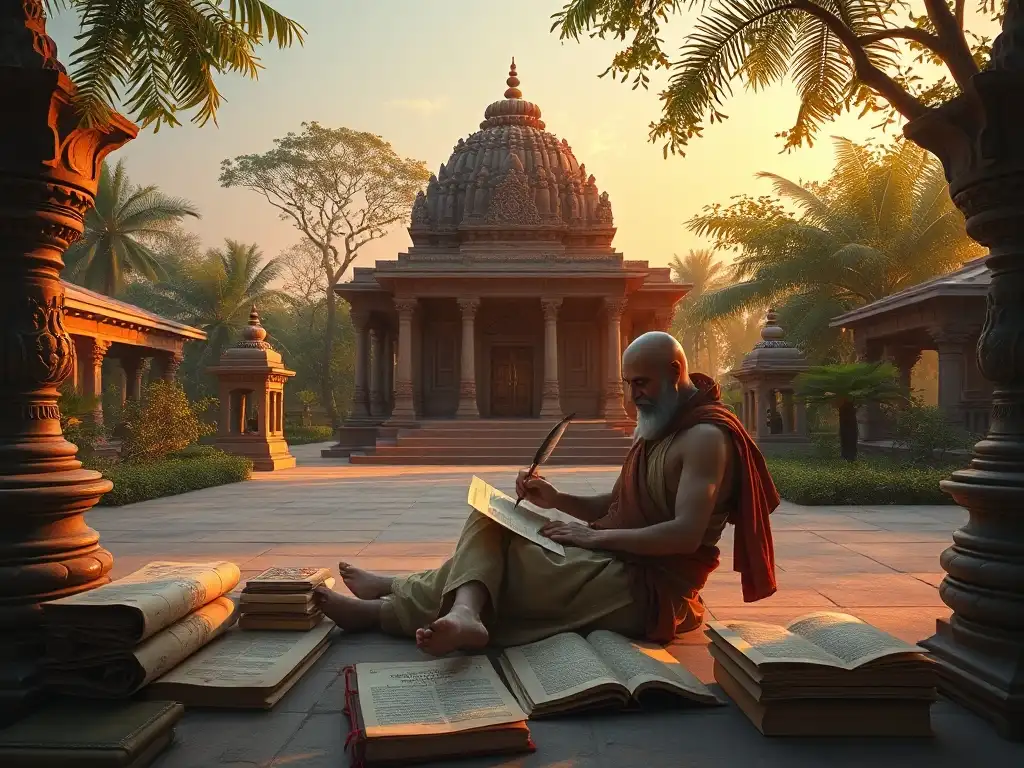
The preservation of knowledge in ancient India, particularly through the medium of Sanskrit, employed a variety of methodologies that ensured the continuity and integrity of information across generations. These methodologies not only facilitated the transmission of religious, philosophical, and scientific texts but also contributed to the development of a rich literary tradition. Among the most significant methodologies are oral traditions, written records, and the role of scholars and educational institutions like gurukuls.
Oral Tradition and Its Impact on Sanskrit Texts
Oral tradition played a crucial role in the preservation of Sanskrit knowledge before the advent of written records. This method involved the memorization and recitation of texts by skilled practitioners known as shrotriyas. The oral transmission of knowledge relied on several key elements:
- Rhythm and Meter: Sanskrit texts, especially Vedic hymns, were composed in specific metrical patterns that facilitated memorization. The use of chandas (metre) made it easier for reciters to remember complex verses.
- Repetition and Recitation: The practice of repeated recitation not only reinforced memory but also allowed for communal participation, where groups could engage in collective learning. This was especially important in the context of rituals, where precise recitation was deemed essential.
- Mnemonics: Techniques such as pratīka (a type of mnemonic) helped in structuring and recalling large volumes of information. These tools were critical in ensuring accuracy during transmission, as they provided a framework for recalling intricate details.
The impact of oral tradition on Sanskrit texts has been profound. Many ancient texts, such as the Vedas and Upanishads, were preserved for centuries through oral transmission, maintaining their authenticity and integrity until they were eventually committed to writing.
Written Records: From Palm Leaves to Manuscripts
The transition from oral to written forms of knowledge preservation marked a significant evolution in the history of Sanskrit. Early written records utilized various materials, including:
- Palm Leaves: The earliest manuscripts were often inscribed on palm leaves, which were light and portable. This material, however, was susceptible to decay and damage from environmental factors.
- Birch Bark: In regions where palm leaves were not readily available, birch bark became a popular medium for writing. Its durability allowed texts to withstand the test of time better than palm leaves.
- Papers and Parchments: With the advent of trade and cultural exchanges, particularly during the medieval period, the use of paper and parchment began to emerge. These materials provided a more reliable means for the production of manuscripts.
The process of writing allowed for the systematic organization of knowledge, making texts accessible to a broader audience. Sanskrit manuscripts began to flourish, with notable compilations such as the Mahabharata and Ramayana being meticulously transcribed. The written word not only preserved existing knowledge but also facilitated the creation of new commentaries and interpretations, thus enriching the Sanskrit literary tradition.
The Role of Scholars and Gurukuls in Preserving Knowledge
Scholars and educational institutions, particularly gurukuls, played an instrumental role in the preservation and dissemination of Sanskrit knowledge. These centers of learning were characterized by:
- Mentorship: Gurukuls operated on a system of guru (teacher) and shishya (student), where knowledge was imparted through direct interaction. This mentorship model fostered deep understanding and critical thinking among students.
- Curriculum Development: The curriculum in gurukuls often encompassed a wide range of subjects, including grammar, philosophy, astronomy, and medicine. This holistic approach ensured that students received a well-rounded education, thus preserving a diverse spectrum of knowledge.
- Textual Criticism and Commentary: Notable scholars such as Panini and Vyasa contributed to the preservation of Sanskrit through their works in grammar and literature. Their commentaries provided context and interpretation, enhancing the understanding of ancient texts.
- Cultural Transmission: Gurukuls also played a vital role in the cultural transmission of values and traditions, ensuring that the essence of Sanskrit knowledge permeated various aspects of society.
The methodologies of knowledge preservation in Sanskrit highlight a rich tapestry of practices that have sustained ancient wisdom through the ages. The interplay of oral traditions, written records, and the contributions of scholars and educational institutions has shaped the preservation history of Sanskrit, ensuring its relevance and accessibility in the contemporary world.
Key Texts and Their Contributions to Knowledge Preservation
The Vedas: Foundational Texts of Knowledge
The Vedas, composed between 1500 and 500 BCE, are regarded as the oldest sacred texts of Hinduism and serve as the foundational texts for Sanskrit knowledge preservation history. These texts encompass four main collections: the Rigveda, Samaveda, Yajurveda, and Atharvaveda. Each Veda has its unique emphasis, yet collectively they represent a comprehensive system of knowledge, encompassing rituals, hymns, and philosophical teachings.
- Rigveda: The Rigveda is a collection of hymns dedicated to various deities, showcasing an extensive vocabulary and a complex meter. It is rich in poetic expression and provides insights into the early Indo-Aryan culture, including cosmology, theology, and social structure.
- Samaveda: Primarily a liturgical text, the Samaveda is crucial for its musical notations derived from the Rigveda. It highlights the importance of sound and chanting in Vedic rituals, thus preserving not just the written word but also the oral traditions of knowledge transmission.
- Yajurveda: Serving as a manual for rituals, the Yajurveda provides practical instructions for ceremonies. This text reflects the practical application of Vedic knowledge and its transmission through generations, ensuring that rituals and their meanings were preserved.
- Atharvaveda: A collection of hymns, spells, and incantations, the Atharvaveda contains practical knowledge about daily life, medicine, and ethics. It represents a more diverse body of knowledge that extends beyond ritualistic practices, thus contributing to the preservation of cultural wisdom.
The preservation of these texts was facilitated by a sophisticated oral tradition, where meticulous recitation and memorization were paramount. This practice ensured that even in the absence of written records, the knowledge contained within the Vedas could be transmitted unchanged across generations, illustrating the pivotal role of Sanskrit in the continuity of ancient Indian knowledge.
The Upanishads: Philosophical Insights and Knowledge
Emerging as the concluding part of the Vedic texts around 800 to 400 BCE, the Upanishads represent a significant evolution in Sanskrit knowledge preservation history. They shift focus from ritualistic practices to profound philosophical inquiries and spiritual teachings, delving into concepts such as the nature of reality (Brahman) and the self (Atman).
- Philosophical Depth: The Upanishads explore metaphysical questions, offering insights into the relationship between the individual soul and the universal spirit. This philosophical discourse laid the groundwork for various schools of Indian philosophy, ensuring that complex ideas about existence and consciousness were preserved in the Sanskrit language.
- Sanskrit Terminology: The texts introduced critical terms and concepts such as moksha (liberation), karma (action), and dharma (duty), which have become integral to Indian thought. The precise use of Sanskrit in articulating these ideas allowed for nuanced discussions and interpretations, further embedding these concepts in the cultural and intellectual fabric of India.
- Transmission and Commentary: Over centuries, the Upanishads were subject to numerous commentaries, reinforcing their importance in philosophical discourse. Scholars such as Adi Shankaracharya in the 8th century CE produced extensive analyses that not only preserved the original texts but also interpreted them for subsequent generations.
- Influence on Other Traditions: The philosophical insights of the Upanishads transcended time and geography, influencing various spiritual traditions, including Buddhism and Jainism. This cross-pollination of ideas underscores the enduring relevance of Sanskrit as a vehicle for philosophical knowledge.
The Upanishads played a critical role in preserving and transmitting profound philosophical insights, ensuring that the wisdom of ancient thinkers continued to resonate through the ages.
The Puranas: Myths, Legends, and Historical Records
The Puranas, written between 300 CE and 1500 CE, are a genre of ancient Indian literature that serves as a vital source for preserving historical narratives, cosmology, and cultural traditions in Sanskrit knowledge preservation history. Comprising eighteen major Puranas, including the Vishnu Purana, Shiva Purana, and Bhagavata Purana, these texts encapsulate a wealth of knowledge across diverse subjects.
- Cultural Narratives: The Puranas weave intricate tales of gods, goddesses, and legendary heroes, reflecting the cultural ethos of ancient Indian societies. These narratives not only entertain but also convey moral lessons and communal values, ensuring that essential cultural knowledge was preserved for future generations.
- Historical Accounts: Beyond mythology, the Puranas contain accounts of historical events, genealogies of royal families, and descriptions of ancient cities. This aspect of the Puranas provides critical insights into the socio-political landscape of ancient India, serving as a rich resource for historians and scholars.
- Religious and Ritualistic Practices: The Puranas elaborate on various religious practices and rituals associated with the worship of deities. By documenting these practices in Sanskrit, they played a crucial role in the preservation of religious knowledge, allowing rituals to be performed consistently over time.
- Influence on Arts and Culture: The stories and teachings found within the Puranas have significantly influenced Indian art, dance, and literature. Many classical art forms draw inspiration from these texts, demonstrating how the Puranas have shaped not only the religious landscape but also the cultural identity of India.
The Puranas are essential texts that preserve a diverse array of knowledge, from mythology to history, ensuring that the cultural and religious heritage of ancient India remains alive through the enduring power of the Sanskrit language.
The Influence of Sanskrit on Other Languages and Cultures

Sanskrit, often regarded as the mother of many languages in the Indian subcontinent, has profoundly influenced various languages and cultures, both within and beyond its geographical confines. Its extensive vocabulary, rich grammatical structure, and philosophical depth have made it a pivotal vehicle for knowledge preservation, particularly in fields such as religion, science, and literature.
Sanskrit as a Lingua Franca in Ancient India
In ancient India, Sanskrit served as a lingua franca, primarily among the educated and elite classes. This role was critical for facilitating communication across diverse linguistic and cultural groups. It enabled scholars, poets, and philosophers from different regions to exchange ideas and collaborate effectively.
- Educational Institutions: Renowned centers of learning, such as Nalanda and Takshashila, utilized Sanskrit as the primary medium of instruction. Students from various parts of India and neighboring countries came to these institutions to learn in Sanskrit, promoting a shared intellectual culture.
- Literature and Texts: Many ancient texts, including the Vedas, Upanishads, and epic narratives like the Mahabharata and Ramayana, were composed in Sanskrit. These texts not only provided spiritual and philosophical insights but also acted as a unifying force for knowledge dissemination across different regions.
- Religious Significance: Sanskrit was integral to Hindu rituals and Buddhist practices. The use of Sanskrit hymns and mantras in religious ceremonies helped preserve the language's prominence and sanctity, further establishing it as a common thread in India's spiritual tapestry.
The Spread of Sanskrit Knowledge Beyond India
Sanskrit's influence transcended the borders of India, reaching various regions in Asia and beyond. This spread was facilitated by trade, cultural exchanges, and the movement of scholars.
- Southeast Asia: Ancient Indian traders and missionaries took Sanskrit with them to regions such as Indonesia, Thailand, and Cambodia. The adoption of Sanskrit in local languages and scripts was evident in inscriptions found in places like Borobudur and Angkor Wat, which showcase the integration of Sanskrit vocabulary and literary forms.
- Buddhism and Jainism: The spread of Buddhism, which often utilized Sanskrit in its teachings and texts, played a significant role in introducing the language to places like Tibet, China, and Mongolia. Similarly, Jain texts written in Sanskrit contributed to its reach and influence in western India and beyond.
- Cultural Exchanges: Diplomatic missions and cultural exchanges between India and regions such as Persia and the Hellenistic world facilitated the transmission of Sanskrit knowledge. Scholars from these regions translated Sanskrit texts, further enriching their own cultures and languages.
Influence on Modern Languages and Literature
The legacy of Sanskrit is not confined to ancient texts; its influence continues to resonate in modern languages and literature.
- Indo-Aryan Languages: Languages such as Hindi, Bengali, Punjabi, and Marathi have directly descended from Sanskrit, inheriting a significant portion of their vocabulary and grammatical frameworks. For example, many words in Hindi, like 'vidya' (knowledge) and 'shanti' (peace), are derived from their Sanskrit roots.
- Loanwords in Other Languages: Sanskrit has contributed numerous loanwords to languages such as Malay, Thai, and even English. Words like 'karma', 'yoga', and 'mantra' have made their way into global discourse, showcasing the universal relevance of Sanskrit concepts.
- Modern Literature and Arts: Contemporary writers and poets often draw inspiration from Sanskrit literature, exploring themes and styles reminiscent of ancient texts. The revival of interest in Sanskrit literature has also led to translations and adaptations, making these ancient works accessible to a modern audience.
The history of Sanskrit knowledge preservation is intricately linked to its influence on languages and cultures. From serving as a unifying medium in ancient India to shaping modern linguistic landscapes, Sanskrit's legacy endures, highlighting its significance in the continuum of human thought and expression.
Challenges Faced in Sanskrit Knowledge Preservation

Historical Disruptions and Their Impact
Throughout its history, Sanskrit has faced numerous challenges due to various historical disruptions that significantly impacted its preservation and transmission. One of the most significant disruptions occurred during the invasions of foreign powers, such as the Greeks, Persians, and later the Mughals. These invasions often led to the suppression of indigenous cultures and languages, including Sanskrit, which was regarded as a language of the elite.
- Conversion and Cultural Shifts: The advent of Islam in India brought about a shift in cultural dynamics. Many scholars transitioned to Persian and Arabic, leading to a decline in the use of Sanskrit in both literature and education. This shift not only influenced language use but also resulted in a loss of literary heritage as many Sanskrit texts were not translated or preserved.
- Colonial Rule: The British colonial period further exacerbated the decline of Sanskrit. The introduction of English as a medium of education led to a systematic neglect of indigenous languages. The colonial education system prioritized Western knowledge, which diminished the status of Sanskrit and its associated texts.
The Decline of Sanskrit and Its Consequences
The decline of Sanskrit has had profound consequences on the preservation of knowledge in ancient India. As the language fell out of favor, many texts and scholarly traditions that relied on Sanskrit began to disappear.
- Loss of Texts: Significant Sanskrit texts, such as the Vedas, Upanishads, and various philosophical treatises, faced the risk of being lost or destroyed. Manuscripts were often not copied, leading to a scarcity of available resources for future generations.
- Disruption of Tradition: The oral tradition of knowledge transmission, which heavily relied on Sanskrit, was disrupted. Gurus who once taught in Sanskrit found it increasingly difficult to pass on their knowledge to students who were unfamiliar with the language. This led to a fragmentation in the continuity of intellectual traditions.
- Cultural Disconnect: The decline of Sanskrit also fostered a cultural disconnect between ancient knowledge systems and contemporary society. Many modern scholars and practitioners found themselves distanced from their cultural heritage, making it challenging to access the rich philosophical and scientific knowledge encapsulated in Sanskrit texts.
Efforts to Revitalize Sanskrit Knowledge in the Modern Era
In response to the challenges faced, there have been concerted efforts to revitalize Sanskrit knowledge in the modern era, highlighting a renewed interest in its significance and contributions.
- Academia and Research: Universities and research institutions have initiated programs dedicated to the study of Sanskrit. Courses focusing on grammar, literature, and the philosophical underpinnings of Sanskrit texts have gained popularity, fostering a new generation of scholars.
- Cultural Movements: Various cultural movements, such as the Sanskrit Sahitya Parishad, have emerged to encourage the use of Sanskrit in everyday life. These organizations promote the learning of Sanskrit through workshops, seminars, and public speaking events, aiming to rekindle interest in the language.
- Digital Preservation: The advent of technology has provided new avenues for preserving Sanskrit knowledge. Digital libraries and online repositories have been established to catalog and make accessible ancient manuscripts and texts. This digitization effort not only aids preservation but also facilitates wider access to Sanskrit literature for scholars and enthusiasts alike.
- Government Initiatives: In India, government initiatives have been launched to promote Sanskrit education in schools and colleges. Scholarships and grants for research in Sanskrit studies are also part of these efforts, aimed at enhancing the academic landscape surrounding this ancient language.
Through these multifaceted efforts, there is hope for Sanskrit knowledge preservation history to not only survive but thrive, ensuring that the rich intellectual heritage of ancient India is accessible for future generations.
Conclusion: The Lasting Legacy of Sanskrit Knowledge Preservation
Sanskrit, often referred to as the mother of many languages in the Indian subcontinent, holds a unique position in the history of knowledge preservation. Its systematic grammar, vast vocabulary, and rich literary tradition have ensured that knowledge, philosophy, and culture have been meticulously documented and transmitted through generations. The legacy of Sanskrit knowledge preservation is not merely confined to the texts themselves but extends to the methodologies of learning, teaching, and the very frameworks of thought that have shaped various disciplines.
Throughout history, Sanskrit has played a pivotal role in various fields such as mathematics, astronomy, medicine, and philosophy. Ancient texts like the Vedas, Upanishads, and the works of Kalidasa and Aryabhata have not only preserved knowledge but have also influenced cultures beyond India. The intricate systems of knowledge embedded in these texts showcase the depth of intellectual pursuits in ancient Indian civilization.
The resilience of Sanskrit as a language that has survived invasions, colonialism, and the rise of regional languages speaks volumes about its intrinsic value. Today, its revival and the growing interest in its study underscore the need to appreciate and engage with this ancient language, ensuring that its treasures continue to enlighten future generations.
The Importance of Understanding Sanskrit Knowledge Preservation History Today
Understanding the history of Sanskrit knowledge preservation is crucial for several reasons:
- Cultural Heritage: Sanskrit is a key to unlocking the philosophical and spiritual heritage of ancient India. By studying its preservation history, we gain insights into the values, beliefs, and practices that shaped Indian civilization.
- Interdisciplinary Connections: The study of Sanskrit offers a gateway to various fields such as theology, linguistics, and anthropology. Knowledge preserved in Sanskrit texts can lead to new interpretations and understanding across disciplines.
- Modern Applications: Contemporary society can benefit from the principles of knowledge preservation found in Sanskrit. Concepts of systematic documentation, debate, and discourse can inform modern educational practices and knowledge management systems.
- Revival and Preservation Efforts: As interest in Sanskrit grows, awareness of its historical significance can drive efforts to preserve and promote the language, ensuring that it remains vibrant and relevant.
- Promoting Global Understanding: In an increasingly interconnected world, understanding Sanskrit knowledge preservation history can foster cross-cultural dialogue and appreciation, highlighting the contributions of ancient Indian civilization to global knowledge.
Future Prospects for Sanskrit and Its Role in Knowledge Preservation
As we look to the future, the prospects for Sanskrit and its role in knowledge preservation appear promising. Here are some key areas of potential development:
- Digital Preservation: Advances in technology allow for the digitization and preservation of ancient Sanskrit texts. This ensures wider accessibility and the potential for collaborative research across global platforms.
- Educational Reform: Incorporating Sanskrit into modern educational curricula can lead to a revival of interest. Institutions can develop programs that emphasize the significance of Sanskrit in understanding cultural and historical contexts.
- Interdisciplinary Research: Scholars from various fields may increasingly collaborate to explore the implications of Sanskrit texts on contemporary issues, thus solidifying its relevance.
- Community Engagement: Grassroots movements aimed at teaching and learning Sanskrit can cultivate a new generation of speakers and enthusiasts, ensuring the language's survival and evolution.
- Global Outreach: Initiatives that promote Sanskrit as a language of knowledge can enhance its appeal worldwide, encouraging scholars and learners from diverse backgrounds to engage with its rich history.
The preservation of Sanskrit knowledge is not just a historical endeavor; it is a living process that continues to evolve. By understanding its past, we can better appreciate its present significance and ensure its future contributions to global knowledge.
References and Further Reading on Sanskrit Knowledge Preservation History
Suggested Books and Articles
-
"Sanskrit: An Essential Grammar" by James W. Gair and W. S. Allen
This comprehensive grammar book provides insights into the structure and usage of Sanskrit, serving as a vital reference for understanding the linguistic aspects of Sanskrit knowledge preservation.
-
"The Sanskrit Language: An Introduction" by Arthur A. Macdonell
Macdonell's work explores the historical development of Sanskrit, detailing its role in the transmission of knowledge through various texts, including Vedas, Upanishads, and Puranas.
-
"Sanskrit and the Study of World Languages" by Robert P. Goldman
This article discusses the global implications of Sanskrit as a classical language and its influence on the linguistic heritage of various cultures.
-
"The History of Sanskrit Literature" by A. N. D. S. V. Chatterji
Chatterji's comprehensive exploration traces the evolution of literature in Sanskrit, highlighting key texts that have preserved knowledge across generations.
-
"Knowledge Preservation in Ancient India: An Overview" by R. S. Sharma
This article examines the mechanisms through which ancient Indian scholars preserved knowledge, with a particular focus on the role of Sanskrit in this process.
Online Resources and Archives for Sanskrit Texts
-
Digital Library of India
A treasure trove of digitized Sanskrit texts that allows researchers and enthusiasts to access historical manuscripts and literature.
-
Sanskrit Documents
An extensive collection of resources, including texts, translations, and audio files, aimed at promoting the study of Sanskrit language and literature.
-
The Sanskrit Heritage Site
This online platform offers numerous resources, including grammar guides, vocabulary lists, and links to primary texts, making it a valuable tool for learners and scholars alike.
-
Internet Archive - Sanskrit Books
The Internet Archive hosts a variety of Sanskrit texts, providing free access to a wide range of historical and literary works that reflect the depth of Sanskrit knowledge.
-
Harvard University’s South Asia Institute
Offers a digital repository of Sanskrit literature, alongside research articles and projects focused on the preservation of ancient texts and their significance in modern scholarship.
These references and resources are essential for anyone interested in delving deeper into the Sanskrit knowledge preservation history, as they provide both foundational texts and modern interpretations of this rich linguistic tradition.
Frequently Asked Questions
What is the significance of Sanskrit in ancient Indian history?
Sanskrit is considered a crucial language for preserving ancient texts, literature, and philosophical ideas, playing a key role in the cultural heritage of India.
How did Sanskrit knowledge preservation impact education in ancient India?
The preservation of knowledge in Sanskrit facilitated the establishment of educational institutions like Gurukuls, where students learned various subjects, including philosophy, sciences, and arts.
What role did manuscripts play in the preservation of Sanskrit texts?
Manuscripts were essential for safeguarding Sanskrit literature and scientific works, allowing for the transmission of knowledge across generations and regions.
How did the Gupta Empire contribute to the preservation of Sanskrit knowledge?
The Gupta Empire is often referred to as the Golden Age of Sanskrit literature, where many scholars produced significant works that enriched and preserved the intellectual legacy of ancient India.
What challenges did Sanskrit knowledge preservation face over the centuries?
Despite its importance, Sanskrit knowledge faced challenges such as the decline of the language, invasions, and the loss of manuscripts, which threatened the continuity of its rich heritage.
Final Reflection: The Enduring Legacy of Sanskrit Knowledge Preservation
The preservation of knowledge through Sanskrit is not just a historical phenomenon; it is a testament to the resilience of human intellect and culture. In today's rapidly changing world, where information is often fleeting and easily forgotten, the meticulous documentation and transmission of knowledge in Sanskrit remind us of the importance of safeguarding our intellectual heritage. The ability to preserve wisdom across generations is a powerful tool that can guide us in navigating contemporary challenges.
Sanskrit has profoundly influenced not only the academic landscape but also the cultural and spiritual fabric of societies around the globe. The teachings and philosophies embedded in Sanskrit texts continue to resonate, shaping our understanding of ethics, science, and spirituality. As the renowned scholar Friedrich Max Müller once said, A man who knows only one language is a man who knows only one way of thinking.
This highlights the significance of linguistic diversity and the rich perspectives that languages like Sanskrit offer in our quest for knowledge and understanding.
As we reflect on the lessons of Sanskrit's preservation, let us be inspired to cultivate our own intellectual legacies. Consider how you can contribute to the preservation of knowledge in your own life—whether through sharing stories, documenting experiences, or engaging in lifelong learning. Embrace the wisdom of the past as a guiding light for the future, and remember that each of us has a role in ensuring that knowledge endures for generations to come.
Unveil the Treasures of Ancient Knowledge!
Thank you for exploring the fascinating journey of how Sanskrit has preserved knowledge through the ages! Your interest in this rich historical narrative is commendable, as it opens the door to a deeper understanding of our collective heritage.
Now, it's time to take action and immerse yourself even deeper into the world of ancient wisdom. Here’s how you can continue your exploration:
- Dive into Sanskrit texts: Select a classic text and begin reading—it may surprise you how relevant these teachings are to contemporary life!
- Share your insights: Engage in discussions about what you've learned with friends or on social media. Help spread awareness about the importance of preserving ancient languages and knowledge.
- Join a community: Seek out local or online groups focused on Sanskrit or ancient Indian studies. Connect with individuals who share your passion for this fascinating field!
What ancient knowledge or insight from Sanskrit resonates with you the most, and how would you like to explore it further?