
How Ancient Indian Courts Handled Civil and Criminal Cases


Welcome to Ancient India History, where we embark on a fascinating journey through the rich tapestry of India's past. Here, we delve into the ancient Indian court systems, exploring how these judicial frameworks shaped civil and criminal justice in a time of remarkable cultural and legal advancements. Are you curious about the intricate laws and practices that governed ancient Indian societies? Join us as we uncover the profound contributions of these early legal systems and their enduring legacy on modern jurisprudence. Read on to discover how justice was administered in the vibrant civilizations of ancient India!
- Introduction to Ancient Indian Court Systems
- Historical Context of Ancient Indian Courts
- Structure of Ancient Indian Courts
- Handling Civil Cases in Ancient Indian Courts
- Handling Criminal Cases in Ancient Indian Courts
- Key Features of Ancient Indian Court Systems
- Comparison of Civil and Criminal Case Handling
- Conclusion: Legacy of Ancient Indian Court Systems
- References and Further Reading on Ancient Indian Court Systems
- Frequently Asked Questions
- Final Reflection: The Enduring Legacy of Ancient Indian Court Systems
- Unveil the Wisdom of Ancient Indian Justice!
Introduction to Ancient Indian Court Systems
The intricate tapestry of ancient Indian court systems reveals a sophisticated approach to justice that has evolved over millennia. Spanning from the Indus Valley Civilization to the Gupta Empire, the judicial practices of ancient India were deeply intertwined with cultural, social, and religious norms.
This article aims to delve into the multifaceted nature of civil and criminal cases as handled by ancient Indian courts, uncovering the principles and procedures that governed them. By exploring the ancient Indian court systems, we gain insight into how justice was administered and the significant role these systems played in maintaining societal order and harmony.
Overview of Judicial Practices in Ancient India
Judicial practices in ancient India were characterized by a blend of customary laws and codified statutes. The Dharma Shastras, texts outlining moral and legal duties, were foundational in shaping the legal landscape. Key features of the ancient Indian judicial system included:
- Local Governance: Justice was often administered at the village level by local leaders or councils, known as panchayats, who handled minor disputes.
- Formal Courts: For more serious matters, formal courts were established, presided over by judges (often scholars) who applied legal principles derived from religious texts and local customs.
- Types of Cases: Civil cases typically involved disputes over property, marriage, and debts, while criminal cases encompassed theft, assault, and other offenses against individuals or the state.
The methods of resolving disputes included mediation, arbitration, and formal trials, reflecting a nuanced understanding of justice that sought to restore balance rather than merely punish wrongdoing.
Importance of Legal Systems in Ancient Indian Civilization
The legal systems of ancient India were pivotal in shaping societal norms and maintaining order. Their importance can be summarized as follows:
- Social Order: By providing a structured approach to conflict resolution, the ancient court systems contributed significantly to social stability and cohesion.
- Cultural Identity: The integration of law with religious and ethical principles helped to reinforce cultural identity and community values.
- Influence on Modern Legal Systems: Many concepts from ancient Indian law, such as the presumption of innocence and the right to a fair trial, have influenced contemporary legal frameworks, showcasing the enduring legacy of these early systems.
The ancient Indian court systems were not merely mechanisms for administering justice; they were vital institutions that reflected the values, beliefs, and complexities of ancient Indian civilization. Understanding these systems offers a richer perspective on the development of legal thought and practice in the Indian subcontinent.
Historical Context of Ancient Indian Courts
Evolution of Legal Systems in Ancient India
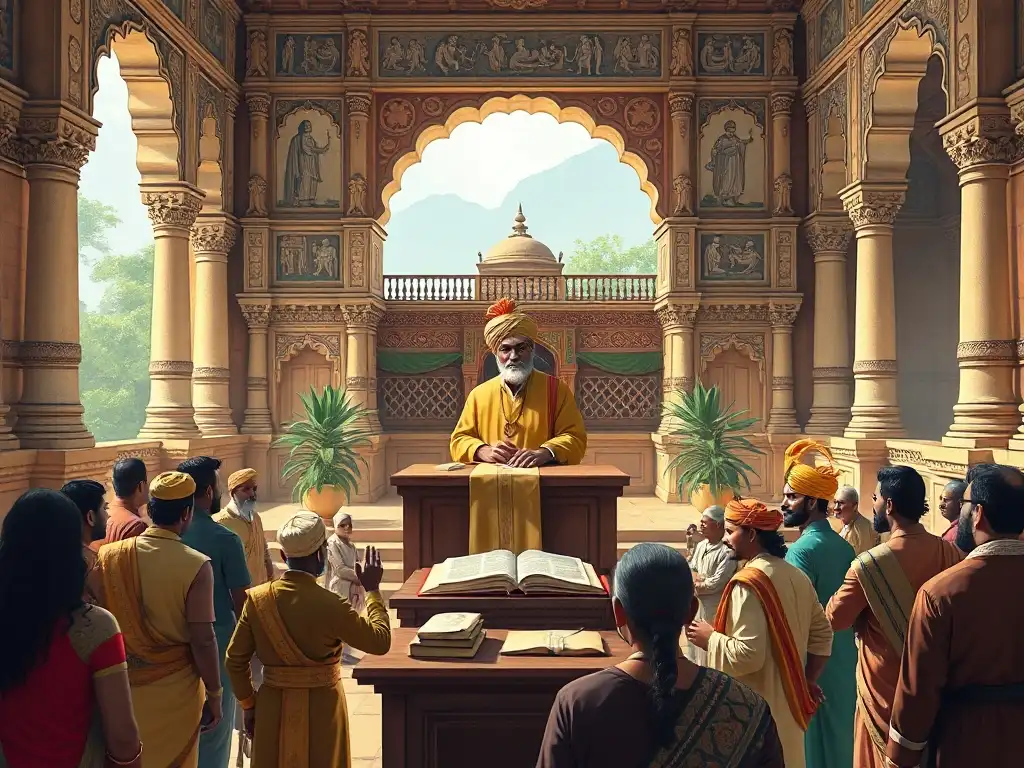
The legal systems in ancient India were deeply rooted in the socio-economic and cultural contexts of the time. The Vedic period, dating back to around 1500 BCE, laid the foundation for these systems, with texts such as the Rigveda and the Yajurveda providing early insights into societal norms and justice practices.
- Dharma Shastras:
- Central to the evolution of legal frameworks were the Dharma Shastras, which outlined moral and ethical conduct. The most prominent among these, the Manusmriti, composed around 200 BCE to 200 CE, detailed laws concerning civil and criminal matters, including marriage, property rights, and duties of individuals within the community.
- The concept of Dharma emphasized duty and righteousness, which influenced the judicial processes and how disputes were resolved.
- King’s Role in Justice:
- Kings were viewed as the ultimate arbiters of justice. They were responsible for upholding Dharma and ensuring societal order. This often meant that the king himself would preside over significant cases, reflecting the belief that justice was a divine right.
- This period also saw the establishment of local assemblies or Sabhas, where community members would come together to discuss and resolve disputes, which showcased an early form of participatory justice.
- Development of Specialized Courts:
- By the time of the Mauryan Empire (322-185 BCE), a more organized court system began to emerge. Specialized courts for different types of cases, including civil disputes and criminal offenses, were established, allowing for a more systematic administration of justice.
- The Kautilya's Arthashastra, written during this era, provided detailed descriptions of legal processes, including the roles of judges, the types of evidence acceptable in courts, and the methodologies for conducting trials.
Influences on Ancient Indian Court Systems from Other Civilizations
Ancient Indian court systems were not developed in isolation. They were shaped by interactions with various civilizations and cultures, leading to a rich tapestry of legal traditions.
- Persian Influence:
- The influence of the Persian Empire, especially during the reign of Darius I, introduced concepts of centralized governance and judicial administration. Persian models of courts and the use of appointed judges were adopted in parts of northern India, particularly in territories like Gandhara.
- The administrative practices, such as the use of written records and formal procedures in trials, found their way into Indian courts, enhancing the legal framework.
- Hellenistic Connections:
- Following Alexander the Great’s invasion in the 4th century BCE, there were exchanges of ideas regarding governance and law. The Hellenistic approach to legal systems, with its emphasis on codified laws and structured legal practices, contributed to the development of more formalized legal proceedings in Indian courts.
- The adaptation of some Greek legal terminology and concepts into Indian practice marked an evolution in the sophistication of legal discourse.
- Buddhist Influence:
- The rise of Buddhism also impacted legal thought, promoting ideals of compassion, non-violence, and social justice. Buddhist texts emphasized ethical behavior and the importance of community welfare, influencing the way laws were interpreted and enforced.
- Buddhist councils, which often included discussions on legal matters, promoted a more inclusive approach to justice, allowing for community involvement in legal processes.
- Trade and Cultural Exchanges:
- Ancient Indian civilization was part of extensive trade networks that facilitated cultural exchanges. Contacts with Roman and Southeast Asian civilizations introduced new legal concepts and practices.
- The cross-cultural interactions contributed to the diversity of legal practices, enriching the existing systems with new methods for conflict resolution and legal governance.
The evolution of ancient Indian court systems was a complex interplay of indigenous practices, royal decrees, and external influences, culminating in a rich legal heritage that laid the groundwork for contemporary Indian law. The historical context and the rich tapestry of influences highlight the dynamic nature of justice in ancient India, reflecting both its cultural values and its adaptive legal frameworks.
Structure of Ancient Indian Courts

The judicial system of ancient India was characterized by a complex structure that varied across regions and epochs. This system not only addressed legal disputes but also reflected the socio-political dynamics of the time. Courts in ancient India were integral to maintaining order, justice, and the rule of law, serving both civil and criminal matters within their jurisdiction.
Types of Courts in Ancient India
Ancient Indian courts were classified into various types based on their jurisdiction, authority, and the nature of cases they handled. Each type played a distinct role in the legal landscape of the time.
Local Courts and Their Functions
Local courts, often known as "Panchayats," were the backbone of the judicial system in villages and small communities. Their primary functions included:
- Dispute Resolution: Local courts handled minor civil disputes, such as property issues, family matters, and neighborhood conflicts. They aimed to resolve issues amicably, promoting social harmony.
- Mediation and Arbitration: Often, local leaders or elders acted as mediators, encouraging parties to settle their grievances outside formal proceedings. This grassroots approach fostered community involvement in the justice process.
- Enforcement of Customary Laws: Local courts operated under customary laws specific to their communities, ensuring that local traditions and practices were respected in legal matters.
The Panchayat system exemplifies the democratic ethos of ancient Indian society, where justice was accessible and community-driven.
Royal Courts and Their Authority
At the top of the judicial hierarchy were the royal courts, which held significant authority over serious criminal cases and high-profile civil disputes. Their roles included:
- Judicial Authority: Royal courts dealt with severe offenses such as theft, murder, and treason. The king or a designated judge presided over these courts, ensuring that justice was meted out according to the king's edicts and the prevailing legal code.
- Legal Codes: These courts often referred to established legal texts like the Manusmriti and Arthashastra, which provided guidelines on various offenses and their corresponding punishments.
- Appeals and Reviews: Decisions made in local courts could be appealed to royal courts, allowing for a higher level of scrutiny and fairness in the judicial process.
Hierarchical Organization of Judicial Bodies
The hierarchy of the ancient Indian court system was structured to facilitate the efficient administration of justice. It can be outlined as follows:
- Village Courts (Panchayats): The first level of dispute resolution, typically consisting of local elders or respected community members.
- District Courts: These acted as intermediaries, handling more significant cases that required a higher authority than local courts but were not severe enough for royal courts.
- Royal Courts: The apex court, presided over by the king or appointed judges, handling the most serious criminal and civil cases, and interpreting the law based on royal decrees and established legal texts.
| Hierarchical Level | Type of Court | Jurisdiction |
|---|---|---|
| 1. Village Courts | Panchayats | Minor civil disputes and local issues |
| 2. District Courts | Local or District Courts | Moderate civil and criminal cases |
| 3. Royal Courts | Supreme Court | Serious criminal cases and appeals |
The organization of ancient Indian courts illustrates the sophistication of the legal system, where each level addressed specific types of disputes, contributing to a comprehensive approach to justice. This structure not only ensured fairness and accessibility but also reflected the cultural values and norms of ancient Indian society.
Handling Civil Cases in Ancient Indian Courts
Types of Civil Disputes Addressed
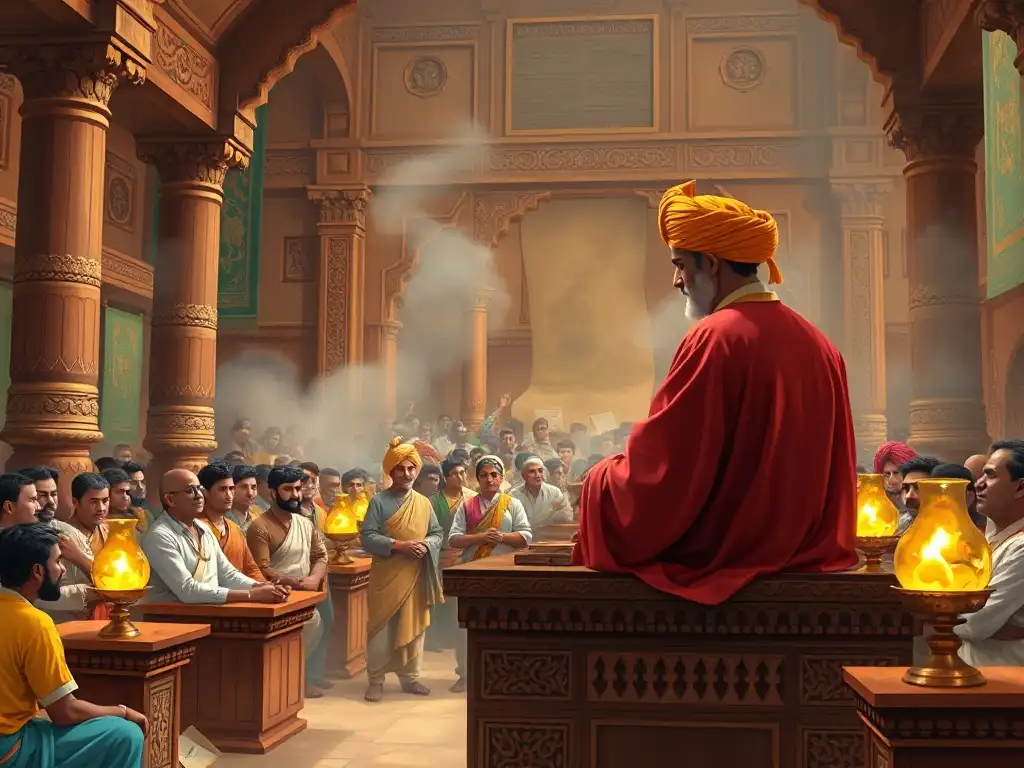
Ancient Indian court systems were responsible for a myriad of civil disputes, reflecting the complexity and diversity of society at the time. Common types of civil cases included:
- Property Disputes: Issues concerning land ownership, inheritance, and tenancy were prevalent. Disputes arose over boundaries, claims to ancestral property, and rights of usage.
- Contractual Disputes: Agreements between merchants, landowners, and craftsmen often led to disagreements regarding the terms of contracts, fulfillment of obligations, and compensation for breaches.
- Family Matters: Cases related to marriage, divorce, and inheritance were handled, addressing the rights of individuals and families, especially concerning dowries and inheritance laws.
- Torts: Offenses that caused injury or damage to an individual or property, such as defamation or nuisance, were also addressed in these courts.
These disputes were crucial for maintaining social order and justice within ancient Indian communities.
Procedures for Resolving Civil Cases
The procedures for resolving civil cases in ancient Indian courts were methodical and aimed at ensuring fairness and justice. Key aspects included:
- Filing a Complaint: The aggrieved party would present a formal complaint to the court, detailing the nature of the dispute and the parties involved.
- Summoning the Opposing Party: The court would summon the other party to respond to the complaint, ensuring both sides had the opportunity to present their case.
- Examination of Evidence: Evidence was collected and examined, including documents, witness testimonies, and any other relevant information. The courts placed significant emphasis on the credibility of the evidence presented.
- Judgment: After considering all arguments and evidence, the judge would deliver a verdict, often accompanied by recommendations for reconciliation.
Role of Mediators and Arbitrators
Mediators and arbitrators played a vital role in the ancient Indian court systems. Their functions included:
- Facilitating Negotiations: Mediators helped the disputing parties to negotiate and arrive at amicable settlements, prioritizing reconciliation over adversarial proceedings.
- Impartial Decision-Making: Arbitrators, often chosen by the parties involved, provided binding decisions based on the evidence presented, ensuring that justice was served without the lengthy processes of formal court proceedings.
- Cultural Context: These roles were deeply embedded in the cultural context of ancient India, where community ties and social harmony were paramount.
Evidence and Testimony in Civil Cases
Evidence and testimony were critical in the resolution of civil cases in ancient Indian courts. Key points include:
- Types of Evidence: Both direct and circumstantial evidence were admissible. This included physical evidence, documents, and oral testimonies from witnesses.
- Witness Credibility: The credibility of witnesses was rigorously assessed, with an emphasis on honesty and reliability. Witnesses were often required to take oaths to ensure truthful testimonies.
- Legal Texts and Precedents: Ancient Indian legal texts, such as the Manusmriti, provided guidelines on evidence gathering and the weight of different types of evidence, influencing the court's decisions.
- Role of Rituals: In some cases, rituals and oaths were integral to the process, where parties would invoke divine powers to affirm their honesty, adding a layer of moral obligation to their testimonies.
The handling of civil cases in ancient Indian courts illustrates a sophisticated legal system that prioritized fairness, community involvement, and the maintenance of social order.
Handling Criminal Cases in Ancient Indian Courts
Nature of Criminal Offenses in Ancient India
The criminal offenses in ancient India were diverse and deeply rooted in the socio-cultural fabric of the time. The legal texts, such as the Manusmriti and the Arthashastra, provide valuable insights into the types of crimes recognized and their corresponding punishments. Criminal offenses ranged from theft, murder, and adultery to more specialized offenses like fraud and corruption among officials.
- Theft: Considered a serious offense, theft was often punished with severe penalties, including mutilation or even death, depending on the value of the stolen goods.
- Murder: This was viewed as an egregious crime, with punishments varying significantly based on the circumstances. For instance, intentional murder often warranted the death penalty, while accidental homicides could lead to lesser penalties.
- Adultery: This was not only a breach of social norms but also a legal offense. The punishment for adultery could range from fines to more severe penalties, depending on the status of the individuals involved.
The categorization of offenses also reflected the prevailing values and norms of society, as well as the need to maintain order and harmony within the community.
Judicial Procedures for Criminal Trials
The judicial procedures for handling criminal cases in ancient Indian courts were comprehensive and systematic, aimed at ensuring justice while adhering to the established legal codes. The process typically involved several key stages:
Investigation and Arrest Processes
The investigation process in ancient Indian courts was primarily conducted by local authorities or appointed officials known as Amatyas or Vishayapati. Their roles included gathering evidence and interviewing witnesses. The following steps were generally followed:
- Complaints: The criminal process often began with a formal complaint filed by the victim or a witness. This complaint triggered an investigation.
- Evidence Collection: Investigators would gather physical evidence, witness testimonies, and any other relevant information. The use of written records was prevalent, ensuring that a clear account of the proceedings was maintained.
- Arrest: Based on the gathered evidence, the accused could be arrested. The arrest procedures were designed to respect the dignity of individuals, although they could be forceful if deemed necessary.
Trials and Sentencing in Criminal Cases
Once the investigation culminated, the case would proceed to trial, which was characterized by a series of formal proceedings:
- Court Structure: Trials were conducted in various levels of courts, depending on the severity of the crime. Higher courts dealt with more serious offenses, while local courts managed minor infractions.
- Presentation of Evidence: Both the prosecution and defense had the opportunity to present their cases. Witnesses were called to testify, and arguments were made based on the evidence.
- Judgment: After evaluating the evidence, the presiding judge or a panel of judges would deliver a verdict. The decision would often consider not only the legal statutes but also the moral implications of the case.
- Sentencing: Sentences varied widely, ranging from fines and restitution to corporal punishment or imprisonment. The severity of the sentence was often influenced by the social status of the offender and the victim.
The judicial practices of ancient Indian courts highlight a sophisticated understanding of law and order, reflecting the complexities of human behavior and societal norms. The ancient Indian court systems were pivotal in maintaining social harmony and justice, laying the groundwork for modern legal principles.
Key Features of Ancient Indian Court Systems

The ancient Indian court systems were characterized by a unique blend of legal traditions, cultural practices, and philosophical underpinnings that shaped the administration of justice in various civilizations. These systems were not monolithic but varied significantly across different regions and periods, reflecting the socio-political contexts of their times.
Key features of these court systems included:
- Hierarchy of Courts: Ancient India had a well-defined hierarchy of courts, ranging from local village assemblies (panchayats) to higher courts presided over by kings or appointed judges. This structure facilitated the handling of disputes at both local and regional levels.
- Community Involvement: Courts often involved community members or elders in the decision-making process. This communal approach ensured that justice was not only legal but also aligned with social norms and values.
- Role of Kings: In many instances, the king was seen as the ultimate authority on justice. His role included not just adjudicating high-profile cases but also ensuring that laws were upheld within his realm. The king's edicts often served as a source of law.
Principles of Justice in Ancient Indian Law
The principles underlying ancient Indian law were deeply rooted in the philosophical and ethical frameworks of the time. Justice was perceived not merely as a legalistic concept but as a moral imperative. Key principles included:
- Dharma: The concept of dharma was central to ancient Indian legal thought. It encompassed the duties, rights, and moral laws that governed individual conduct and societal order. Disputes were often resolved in the context of dharma, emphasizing fairness and righteousness.
- Restorative Justice: Rather than focusing solely on punishment, many ancient legal practices aimed at restoring harmony and balance within the community. This approach encouraged reconciliation between disputing parties.
- Equity Over Rigidity: Ancient Indian courts were known for their flexibility in interpreting laws. Judges had the discretion to adapt legal principles to the specific circumstances of each case, which allowed for a more equitable outcome.
Use of Codified Laws and Legal Texts
Codified laws played a significant role in the governance of ancient Indian societies. Legal texts provided systematic guidelines that helped ensure consistency and fairness in the judicial process.
Manusmriti and Its Influence on Judicial Practices
The Manusmriti, also known as the Laws of Manu, is one of the most significant legal texts of ancient India, dating back to around the 2nd century BCE. Its influence on judicial practices can be summarized as follows:
- Comprehensive Legal Framework: The Manusmriti outlines laws concerning various aspects of life, including civil rights, family law, and criminal offenses. It served as a reference for judges and legal practitioners.
- Social Stratification: The text reflects the varna system (social classes) prevalent during its time, prescribing different legal rights and duties for different castes. This stratification influenced court judgments and the administration of justice.
- Moral and Ethical Guidelines: Besides legal stipulations, the Manusmriti emphasized moral conduct and ethical responsibilities, guiding judges in their deliberations and decisions.
Other Important Legal Texts in Ancient India
Apart from the Manusmriti, several other legal texts contributed to the understanding and practice of law in ancient India:
- Yajnavalkya Smriti: This text, considered a sequel to the Manusmriti, also lays down laws and procedures for various legal matters, emphasizing procedural fairness and the rights of individuals.
- Narada Smriti: Focused primarily on procedural law, the Narada Smriti provided insights into the functioning of courts and the conduct of judges, highlighting the importance of due process.
- Kautilya’s Arthashastra: While primarily a treatise on statecraft, it includes significant commentary on legal principles, emphasizing the pragmatic aspects of law and governance.
Ancient Indian court systems were complex and multifaceted, reflecting the rich tapestry of cultural, ethical, and legal traditions. The influence of codified laws and texts like the Manusmriti played a crucial role in shaping judicial practices, ensuring that justice was administered according to the prevailing moral and societal norms of the time.
Comparison of Civil and Criminal Case Handling

The ancient Indian court systems were complex and multifaceted, reflecting the diverse legal traditions that evolved over centuries. One of the key aspects of these systems was the handling of civil and criminal cases, which, despite their differences, shared several common judicial principles and practices. Understanding this comparison provides valuable insight into the legal landscape of ancient India.
Differences in Procedures between Civil and Criminal Cases
The procedures for handling civil and criminal cases in ancient Indian courts were fundamentally distinct, catering to the nature of the disputes involved.
- Nature of the Dispute:
- Civil Cases: These primarily involved disputes between individuals or entities, often concerning property, contracts, and family matters. The focus was on restoring rights and compensation to the aggrieved party.
- Criminal Cases: Conversely, criminal cases dealt with offenses against the state or society, including theft, murder, and assault. The emphasis was on punishment and deterrence.
- Initiation of Proceedings:
- Civil Cases: Initiated by the aggrieved party, often through a formal complaint. The plaintiff was required to present evidence and arguments to support their claim.
- Criminal Cases: Typically initiated by the state or a representative, often through an official complaint lodged by a victim or witness. In some instances, the king or local ruler could directly involve themselves in serious crimes.
- Burden of Proof:
- Civil Cases: The burden of proof lay primarily on the plaintiff, who had to establish their case by a preponderance of evidence.
- Criminal Cases: In contrast, the burden of proof rested with the prosecution, which had to establish guilt "beyond a reasonable doubt." This higher standard reflected the severity of potential penalties.
- Outcome of the Cases:
- Civil Cases: Outcomes usually involved monetary compensation, restitution of property, or specific performance of contracts.
- Criminal Cases: Consequences could range from fines and imprisonment to corporal punishment and even capital punishment, depending on the severity of the crime.
- Judicial Authority:
- Civil Cases: Often adjudicated by a local or village headman (panchayat), who acted as a mediator and judge. In more complex cases, higher authorities might be involved.
- Criminal Cases: These were typically handled by royal courts or specialized judges, reflecting the serious implications of criminal law.
Similarities in Judicial Practices and Principles
Despite the differences in handling civil and criminal cases, ancient Indian court systems exhibited several similarities in their judicial practices and principles:
- Adherence to Dharma:
- Both civil and criminal cases were guided by the principles of Dharma, which encompassed moral and ethical standards. Judges were expected to consider justice, fairness, and societal norms in their rulings.
- Use of Witnesses and Evidence:
- In both types of cases, the presentation of witnesses and tangible evidence was crucial. Testimonies were valued, and the credibility of witnesses played a significant role in the court's decision-making process.
- Role of Mediation:
- Mediation was a common practice in both civil and criminal disputes. Courts often encouraged parties to resolve their differences amicably before proceeding with formal hearings, reflecting a preference for reconciliation over punitive measures.
- Public Participation:
- The court proceedings were typically public, allowing community members to witness the administration of justice. This transparency was vital for maintaining trust in the judicial process.
- Caste and Social Hierarchy Considerations:
- Both civil and criminal cases were influenced by the caste system and social hierarchies. Judges often had to navigate these complexities, which could impact the outcomes based on the social status of the parties involved.
By examining these distinctions and similarities within the ancient Indian court systems, we gain a deeper understanding of how legal principles were applied in different contexts, shaping the foundations of India's rich legal heritage.
Conclusion: Legacy of Ancient Indian Court Systems

The ancient Indian court systems were pivotal in shaping the legal landscape of the region. They not only addressed the civil and criminal disputes of their time but also established foundational principles that resonate in today's legal practices. The structured approach towards justice, the emphasis on ethical conduct, and the recognition of public interest laid the groundwork for a more organized legal system. These ancient practices reflect a sophisticated understanding of law and justice that was inextricably linked to the moral and social fabric of society.
Impact on Modern Legal Systems
The influence of ancient Indian court systems can be observed in various aspects of modern legal frameworks. Many principles that originated in ancient India continue to guide contemporary legal practices, including:
- Restorative Justice: Ancient courts emphasized reconciliation and restoration rather than mere punishment, a concept that is gaining traction in modern legal systems worldwide.
- Community Involvement: The role of local communities in resolving disputes has re-emerged in various forms, such as mediation and community courts, echoing the participatory nature of ancient judicial practices.
- Legal Codification: The meticulous recording of laws and decisions in ancient texts has paved the way for the codification efforts seen in modern legal systems, ensuring consistency and clarity in the application of law.
| Aspect | Ancient Indian Courts | Modern Legal Systems |
|---|---|---|
| Approach to Justice | Restorative and reconciliatory | Often punitive, but evolving towards restorative practices |
| Role of the Community | Integral in dispute resolution | Increasingly recognized in mediation and community courts |
| Legal Documentation | Codified texts like Manusmriti | Statutes, legal codes, and case law |
Continuing Influence of Ancient Judicial Practices in Contemporary India
In contemporary India, the echoes of ancient judicial practices can be seen in various legal mechanisms and societal attitudes toward justice. For instance:
- Panchayati Raj System: This grassroots governance structure, which involves village councils (Panchayats), reflects the ancient practice of community-based dispute resolution. The Panchayats adjudicate local matters, emphasizing collective wisdom and community involvement.
- Customary Laws: Many regions in India still adhere to customary laws that have their roots in ancient practices. These laws often govern marriage, inheritance, and land rights, showcasing the continuity of traditional legal principles.
- Legal Pluralism: Modern India recognizes multiple legal systems, including statutory law, customary law, and religious law. This pluralism mirrors the historical coexistence of various legal traditions in ancient India, offering a rich tapestry of legal practices that cater to diverse communities.
The legacy of ancient Indian court systems is not merely a historical artifact; it continues to shape the legal discourse in India today. As modern legal systems evolve, the enduring principles of justice, community involvement, and ethical conduct from ancient times remain relevant, reminding us of the rich heritage of legal practices that have influenced contemporary society.
References and Further Reading on Ancient Indian Court Systems
Suggested Books and Articles
To gain a deeper understanding of the ancient Indian court systems, several key texts and articles are essential. Here is a curated list of recommended readings:
- "The History of Indian Law" by R. C. Gupta
- This comprehensive book outlines the evolution of legal systems in India, including the ancient court structures, their functions, and pivotal cases.
- "Judicial Administration in Ancient India" by R. N. Sharma
- Focusing specifically on the judicial practices of ancient India, Sharma's work provides insight into the roles of judges, the nature of trials, and the legal codes that governed society.
- "The Arthashastra" by Kautilya (Chanakya)
- A foundational text of ancient Indian political philosophy, it discusses statecraft, including the administration of justice and the functioning of courts.
- "Law and Society in Ancient India" by R. S. Sharma
- This book explores the relationship between law and social structures in ancient India, shedding light on how societal norms influenced court proceedings.
- "The Role of Women in Ancient Indian Courts" by K. L. Bhattacharya
- An insightful article that examines the participation and status of women in ancient judicial systems, providing a nuanced perspective on gender roles within the courts.
- "Administrative and Judicial Systems of Ancient India" by M. S. Gopal
- Gopal's research presents a detailed analysis of the judicial hierarchy and administrative processes, emphasizing the integration of law with governance.
Archaeological discoveries have significantly contributed to our understanding of ancient Indian court systems. Here are some notable findings that shed light on judicial practices:
- The Indus Valley Civilization Seals:
- Numerous seals from the Indus Valley, such as those inscribed with script and depicting judicial figures, suggest the existence of a sophisticated legal framework that regulated trade and social conduct.
- The Edicts of Ashoka:
- These inscriptions, found throughout the Indian subcontinent, not only emphasize moral governance but also outline principles of justice and the ethical responsibilities of rulers, hinting at the court systems of the Mauryan Empire.
- Excavations at Taxila:
- Excavations at this ancient city have revealed structures believed to be courts, along with artifacts that indicate the presence of legal practitioners and the administration of justice in a cosmopolitan setting.
- Ancient Manuscripts and Legal Texts:
- Manuscripts such as the Manusmriti and the Yajnavalkya Smriti provide direct references to legal procedures and the roles of judges, illustrating the codified laws that governed civil and criminal matters.
- Courtroom Remains in Gupta Era Sites:
- Archaeological sites from the Gupta period have uncovered remnants of courtrooms, including benches and platforms, which indicate formalized judicial proceedings during this golden age of Indian civilization.
These references and findings not only enhance our comprehension of the ancient Indian court systems but also underline their complexity and significance in the broader context of legal history.
Frequently Asked Questions
What were the main features of ancient Indian court systems?
Ancient Indian court systems were characterized by local governance, judicial independence, and community involvement. Courts often operated under the guidance of local rulers and adhered to established legal texts like the Manusmriti.
How were civil cases resolved in ancient India?
Civil cases in ancient India were typically resolved through mediation and arbitration. The courts focused on restoring harmony and often encouraged negotiation between parties before resorting to formal judgments.
What role did the king play in the ancient Indian court systems?
The king served as the ultimate authority in the ancient Indian court systems. He ensured that justice was administered fairly and appointed judges to oversee various cases, maintaining law and order in his kingdom.
Were there any specific laws governing criminal cases?
Yes, ancient Indian legal texts provided guidelines for criminal cases, outlining punishments and procedures. The Dharma Shastras detailed the types of offenses and corresponding penalties, emphasizing retribution and rehabilitation.
How did ancient Indian courts influence modern legal systems?
Ancient Indian courts laid the foundation for modern legal practices by introducing concepts such as due process, evidence, and rights of the accused. Their influence can still be seen in contemporary judicial systems across India.
Final Reflection: The Enduring Legacy of Ancient Indian Court Systems
The intricate mechanisms of ancient Indian court systems not only shaped the legal landscape of their time but also resonate profoundly in today's judicial practices. As we delve into the historical nuances of how civil and criminal cases were managed, we uncover a rich tapestry of justice that continues to influence modern legal frameworks. The principles of fairness, community involvement, and ethical governance that were foundational to these ancient courts remind us that the pursuit of justice is a timeless endeavor.
The impact of ancient Indian court systems extends beyond mere historical interest; it serves as a crucial reference point in our ongoing dialogue about justice and equity in society. These systems exemplified a holistic approach to law, integrating social norms and values into legal proceedings. As Mahatma Gandhi once said, "> An unjust law is itself a species of violence. Arrest for its breach is more so." This highlights the importance of ensuring that our current legal systems remain just and equitable, echoing the wisdom of our ancestors.
As we reflect on the lessons from ancient Indian court systems, I invite you to consider how these principles can be applied in your own life and community. Let us strive to embody the spirit of justice, fairness, and integrity that these ancient courts exemplified, ensuring that our actions contribute to a more just society for all. By doing so, we honor the legacy of those who came before us and pave the way for a future where justice is accessible and equitable for everyone.
Unveil the Wisdom of Ancient Indian Justice!
Thank you for exploring the fascinating world of ancient Indian courts with us! We hope you’ve gained valuable insights into how civil and criminal cases were intricately handled in this rich historical context. Now, it's time to take that knowledge further and engage with the legacy of ancient justice systems.
Here’s how you can deepen your understanding and connect with this theme:
- Delve deeper: Research specific cases or principles from ancient courts that intrigue you and explore their relevance in today's legal systems.
- Share your thoughts: Discuss your insights about ancient Indian law with friends or in online forums to exchange perspectives and learn from others.
- Get creative: Write a short story or a fictional account inspired by ancient legal practices, reimagining their application in modern scenarios.
What aspect of ancient Indian legal systems fascinates you the most, and how do you believe it can influence contemporary justice practices?