
The Evolution of Property Rights in Ancient Indian Law


Welcome to Ancient India History, where we embark on a captivating journey through the rich tapestry of ancient Indian civilizations. From the bustling streets of the Indus Valley to the intellectual heights of the Gupta Empire, we delve into the profound cultural and legal contributions that have shaped India's legacy. In our featured article, "The Evolution of Property Rights in Ancient Indian Law," we invite you to explore how the concept of ancient Indian property rights evolved, reflecting the complexities of society and governance.
Prepare to uncover fascinating insights that will deepen your understanding of a civilization often celebrated but rarely fully comprehended. Join us as we unlock the mysteries of the past and reveal the foundations of modern legal systems!
- Introduction to Ancient Indian Property Rights
- Historical Context of Property Rights in Ancient India
- Key Legal Texts on Property Rights in Ancient India
- Types of Property Rights in Ancient Indian Law
- Evolution of Property Rights across Different Periods
- Case Studies of Property Rights in Ancient India
- Conclusion: Legacy of Ancient Indian Property Rights
- References and Further Reading
- Frequently Asked Questions
- Final Reflection: The Enduring Legacy of Ancient Indian Property Rights
- Uncover Your Knowledge of Ancient Property Rights!
Introduction to Ancient Indian Property Rights
The evolution of property rights in ancient India is a critical aspect of understanding the broader legal and social frameworks that shaped Indian civilization. These rights were not merely a legal concept; they were deeply intertwined with cultural values, religious beliefs, and societal norms. From the well-organized urban settlements of the Indus Valley Civilization to the sophisticated legal codes of the Gupta Empire, property rights evolved in response to the changing dynamics of society, economy, and governance.
This exploration delves into the historical progression of property rights, highlighting their significance in ancient Indian law and their impact on social structure and individual rights. By examining ancient legal texts like the Manu Smriti, we gain insight into how property ownership was defined, regulated, and contested in ancient Indian society, illuminating the foundational role these rights played in shaping the lives of individuals and communities alike.
Overview of Property Rights in Ancient India
Property rights in ancient India can be understood through various legal texts and historical accounts that outline the norms and regulations governing ownership and transfer of property. These rights were often categorized into different types:
- Private Property: Individuals had the right to own land, livestock, and other valuables, which they could buy, sell, or bequeath.
- Common Property: Certain resources, like forests and water bodies, were considered communal, accessible to all members of a community.
- Religious and Charitable Property: Temples and religious institutions held property that was meant for public use and welfare.
The legal framework governing these rights was not uniform and varied across regions and periods. Influenced by local customs and practices, legal texts such as the Manu Smriti provided guidelines on ownership rights, inheritance, and dispute resolution.
Importance of Property Rights in Ancient Indian Society
The significance of property rights in ancient Indian society extended beyond mere ownership; they were integral to social stability, economic prosperity, and individual identity. Here are some key aspects highlighting their importance:
- Economic Security: Property rights provided individuals and families with economic stability, enabling them to cultivate land, engage in trade, and accumulate wealth.
- Social Status: Ownership of property was often linked to social status, affecting one's standing within the community. Landowners typically held considerable influence and power.
- Legal Disputes: Clear property rights facilitated the resolution of disputes, allowing for a structured approach to conflicts over land and resources.
The evolution of property rights in ancient India was crucial for shaping social relationships and economic interactions, laying the groundwork for the complex legal systems that would develop in subsequent eras. Understanding these rights offers valuable insights into the broader cultural and historical narrative of ancient Indian civilization.
Historical Context of Property Rights in Ancient India

The Indus Valley Civilization and Property Ownership
The Indus Valley Civilization (IVC), flourishing around 2500 BCE, presents one of the earliest examples of organized urban society in ancient India. The archaeological discoveries at sites such as Harappa and Mohenjo-Daro reveal a sophisticated understanding of property ownership, even before the advent of written legal codes.
Evidence suggests that the inhabitants of the IVC engaged in agriculture, trade, and crafts, indicating the need for defined property rights. The presence of standardized weights and measures implies a system of trade which would necessitate some form of ownership recognition. Moreover, residential layouts with wells and drainage systems point towards private property, likely owned by families or clans.
In terms of legal frameworks, while no written texts from this period have explicitly detailed property rights, the material culture indicates a societal structure that likely respected personal property, as evidenced by individual homes and specialized workshops. Thus, the foundations of ancient Indian property rights can be traced back to these early urban settlements, showcasing a nascent recognition of ownership and communal land use.
Vedic Period: Foundations of Property Rights
The Vedic Period (circa 1500–500 BCE) marks a significant evolution in the understanding of property rights in ancient India, primarily through the establishment of dharma (righteousness or law) as a guiding principle. The Vedas, especially the Rigveda, provide insights into the societal norms surrounding property ownership, where land and cattle were viewed not only as material assets but also as symbols of wealth and status.
During this period, the concept of joint family emerged, leading to collective ownership of property. However, the smritis, particularly the Manu Smriti, later articulated clearer distinctions regarding inheritance and succession. According to Manu, property was divided among male heirs, ensuring that each family member had a stake in the family's wealth. This legal framework established the groundwork for individual property rights while maintaining a balance with familial obligations.
Furthermore, the Vedic texts also recognized the concept of gift (dāna) and inheritance (pratyabhijñā), which influenced property rights. These practices reinforced societal norms around property distribution, indicating that property was not merely a possession but intertwined with social responsibilities and religious duties.
The Role of Religion in Shaping Property Rights
Religion played a pivotal role in shaping the concept of property rights in ancient India. The intertwining of law and religion is most prominently seen in texts like the Manu Smriti, where property rights are discussed in the context of varnas (social classes) and ashramas (stages of life). The legal frameworks established in these texts were often justified through religious doctrines, linking property ownership to moral and ethical responsibilities.
For instance, the concept of dharma dictated that property should be used not merely for personal gain but for the welfare of society. The wealthy were expected to engage in dāna, or charitable giving, as a means of redistributing wealth for the betterment of the community. This religious perspective contributed to a social contract that defined the ethical use of property, ensuring that ownership was accompanied by a sense of duty toward the less fortunate.
Moreover, the rituals and customs surrounding property transactions, such as the grihapravesh (housewarming ceremony), emphasized the sanctity of land and property. This religious significance imbued property rights with a sense of permanence and respect, further solidifying the notion that ownership was not just a legal concept but a sacred responsibility.
The evolution of ancient Indian property rights was intricately linked to religious beliefs, social structures, and moral obligations, creating a complex tapestry of ownership that resonated throughout ancient Indian civilization.
Key Legal Texts on Property Rights in Ancient India
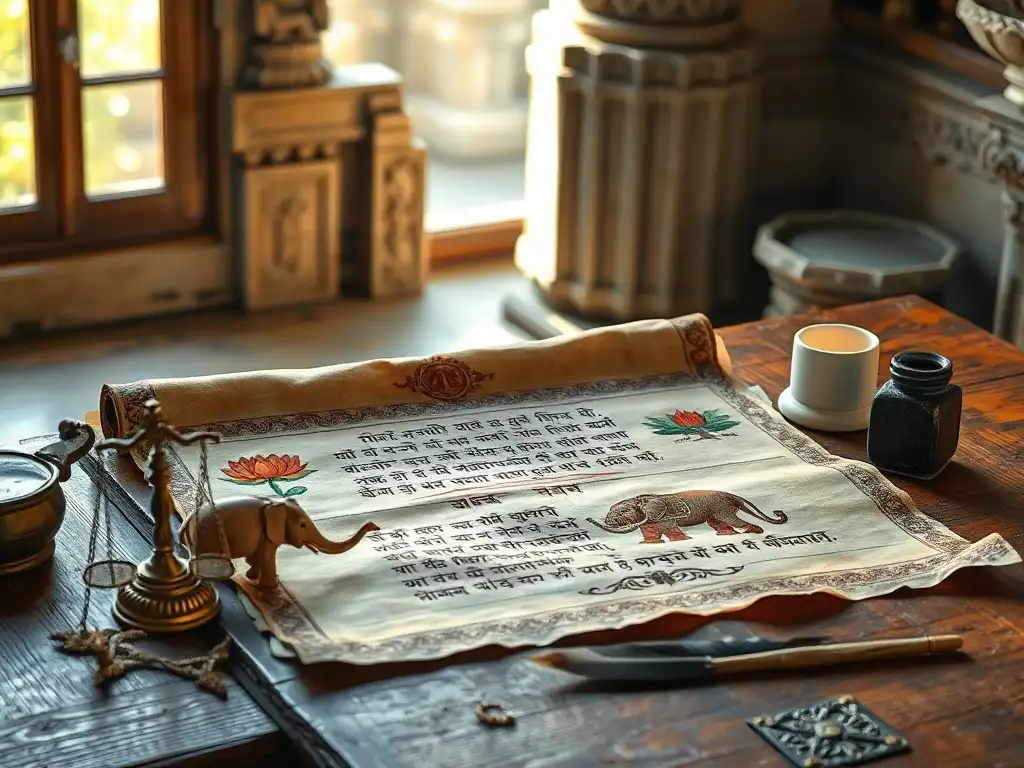
Manu Smriti: A Comprehensive Guide to Property Rights
The Manu Smriti, also known as the Manusmṛti or Manu's Code of Law, is one of the most important texts for understanding ancient Indian property rights. Compiled around the 2nd century BCE, this legal text provides a comprehensive framework for various aspects of law, including property ownership, inheritance, and gender roles in property rights.
Property Ownership
In the Manu Smriti, property is classified mainly into two types: apatya (inherited property) and dāya (gifted property). The text emphasizes that property should ideally be inherited by male heirs, with sons receiving a larger share compared to daughters. This reflects the patriarchal structure of ancient Indian society, where lineage and family name were perpetuated through male descendants.
- Key Provisions:
- Sons inherit the father's property equally, but the eldest son has preferential rights.
- Daughters are provided with a share only if there are no male heirs.
- Property can be managed by women, but their rights are often limited compared to men.
Inheritance Laws
The Manu Smriti outlines detailed inheritance laws, which establish a hierarchy of heirs. The order of inheritance typically follows this sequence:
- Sons
- Daughters
- Wives
- Father
- Brothers
This hierarchy underscores the importance of male heirs in the transfer of property rights, as women were often relegated to secondary status regarding ownership.
The son is the embodiment of the father; thus, the property must remain within the male lineage for continuity.
The Yajnavalkya Smriti, dated to around the 3rd century CE, is another critical text that further refines the principles of property ownership established in the Manu Smriti. This text introduces more nuanced legal insights into ownership, inheritance, and the rights of women.
Ownership Rights
Unlike the Manu Smriti, the Yajnavalkya Smriti acknowledges the property rights of women more explicitly. It states that women, particularly wives, are entitled to a share of their husband's property, enhancing their legal standing in property matters.
- Key Features:
- Wives are entitled to a share upon the husband's death.
- The text advocates for the equitable treatment of daughters, granting them rights of inheritance alongside sons.
Inheritance and Succession
The Yajnavalkya Smriti introduces the concept of stridhan, which refers to the property that a woman acquires through gifts, inheritance, or earnings. This provision signifies a shift towards recognizing women's agency in property rights.
- Inheritance Hierarchy:
- Sons inherit first, followed by daughters and wives.
- The text emphasizes the importance of equitable distribution among all heirs, reflecting a more progressive view on property rights compared to its predecessor.
Other Significant Texts: Arthashastra and Dharmashastra
In addition to the Manu Smriti and Yajnavalkya Smriti, other texts like the Arthashastra and various Dharmashastras provide further insights into ancient Indian property rights. These texts not only discuss property laws but also elaborate on the socio-economic implications of ownership and legal transactions.
Arthashastra
The Arthashastra, attributed to Kautilya (Chanakya), is primarily a treatise on statecraft and economic management. However, it also delves into property rights, emphasizing the role of the state in regulating ownership and commerce.
- Key Insights:
- The state has the authority to intervene in property disputes.
- Economic activities and property exchanges are regulated to prevent exploitation.
Dharmashastra
Various Dharmashastras, which are legal texts based on Dharma (moral law), further elaborate on property rights and the ethical implications of ownership. These texts often vary in their interpretations but commonly stress the importance of dharma in legal transactions.
- Significant Themes:
- The moral obligations of property owners.
- The duty to ensure fair distribution of wealth within the community.
Ancient Indian property rights were shaped by a complex interplay of legal texts that outlined ownership, inheritance, and the socio-economic responsibilities of individuals. These texts reflect the evolving perspectives on gender and property, illustrating a gradual shift towards more equitable rights over time.
Types of Property Rights in Ancient Indian Law
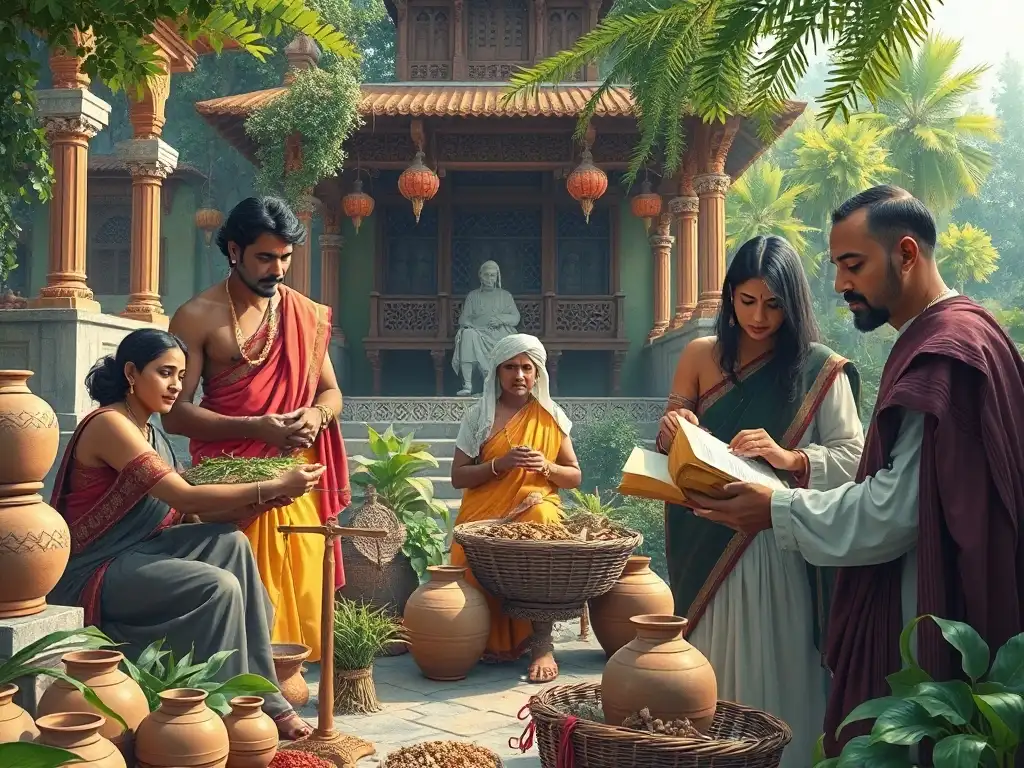
The evolution of property rights in ancient Indian law reflects a complex interplay between individual ownership, familial structures, and gender roles. Understanding these types of property rights provides insight into the socio-economic dynamics of ancient Indian civilizations.
Individual Property Rights: Ownership and Control
Individual property rights in ancient India were primarily defined by the concepts of ownership and control. The foundational texts, such as the Manu Smriti, outline a framework where personal ownership is recognized and protected.
- Ownership: Individuals had the right to own land, livestock, and movable property. Ownership was often linked to the caste system, where higher caste individuals, particularly Brahmins and Kshatriyas, had greater access to land and wealth.
- Control: The ability to control one's property included the right to transfer or bequeath assets. This right was crucial for maintaining economic status and social standing.
For example, the Manu Smriti states that a person can gift or sell their property, emphasizing the importance of personal agency in property rights. However, this ownership was often subject to societal norms and expectations, which could limit an individual's freedom to act independently, especially in the case of lower castes.
Joint Family Property: The Concept of Coparcenary
In ancient Indian law, joint family property was governed by the concept of coparcenary, primarily among male family members. This institution played a significant role in the distribution and management of property.
- Coparcenary Defined: Coparcenary is a form of joint ownership where each male member of the family has an equal share in the ancestral property. This system ensured that property remained within the family lineage.
- Rights of Coparceners: Each coparcener had the right to demand a partition of the property, which could result in the division of assets among male heirs. The Yajnavalkya Smriti further outlines the rights of coparceners, indicating that they could not be excluded from the family property without their consent.
- Impact on Property Distribution: The coparcenary system facilitated the preservation of wealth within families, yet it also posed challenges. For instance, upon the death of a coparcener, the property would automatically pass to the remaining male heirs, often leaving daughters and widows without claims to the ancestral property.
Women's Property Rights: Legal Status and Challenges
The legal status of women's property rights in ancient India was complex and varied significantly across different periods and texts. While some ancient texts acknowledged women's rights to property, the practical enforcement of these rights often faced societal challenges.
- Acknowledgment in Texts: The Manu Smriti and other texts recognized women's rights to inherit property, particularly in the form of Stridhan, which included gifts and wealth given to women at marriage. This provision aimed to secure a woman's financial independence.
- Challenges Faced: Despite the theoretical recognition of these rights, women often faced significant cultural and legal challenges. In practice, societal norms frequently marginalized women's rights, leading to situations where they were pressured to relinquish their claims to property in favor of male relatives.
- Legal Reforms Over Time: Women’s property rights evolved throughout ancient Indian history, with varying degrees of recognition. By the time of the Gupta Empire, there were more explicit provisions for women's rights to own and inherit property, though societal practices often lagged behind legal texts.
The evolution of ancient Indian property rights showcases a rich tapestry of legal principles that influenced social structures. Understanding these types of property rights provides critical insights into the interplay between law, culture, and society in ancient India, and highlights the ongoing dialogues surrounding property rights that continue to resonate today.
Evolution of Property Rights across Different Periods

The evolution of property rights in ancient India is a complex and nuanced aspect of its legal history, reflecting the socio-economic and cultural transformations over centuries. Ancient Indian property rights can be traced through various legal texts, inscriptions, and historical narratives, revealing how property ownership, inheritance, and management adapted to changing conditions.
Changes in Property Rights during the Maurya Empire
The Maurya Empire (circa 322–185 BCE) marked a significant chapter in the development of property rights in ancient India. The empire's expansive territory and centralized governance necessitated a more structured approach to property law.
- State Control and Taxation: The Mauryan administration implemented extensive taxation on agricultural land, which established a system of state control over property rights. Land was primarily owned by the state, with individuals receiving rights to cultivate it in exchange for taxes. This arrangement not only increased state revenues but also allowed for the regulation of land use.
- Legal Texts: Texts such as the Arthashastra, attributed to Kautilya (Chanakya), provided detailed guidelines on property management, including land revenue systems, rights of tenants, and the duties of landlords. The Arthashastra emphasized the importance of land as a source of wealth and power, influencing property rights profoundly.
- Women's Rights: During this period, women were granted certain property rights, particularly in the context of inheritance. While society was predominantly patriarchal, women could inherit property from their fathers and maintain ownership, although this was often limited to movable property.
Gupta Period: Consolidation and Changes in Property Law
The Gupta Empire (circa 320–550 CE) is often referred to as the "Golden Age" of ancient India, characterized by significant advancements in arts, science, and law. This period saw consolidation and refinement in property rights.
- Codification of Laws: The Gupta period witnessed the codification of legal principles, with texts such as the Manusmriti playing a pivotal role. The Manusmriti outlined various property rights, emphasizing the importance of dharma (duty) in ownership and inheritance. It established norms for property distribution, especially concerning familial ties.
- Joint Family System: The joint family system became prevalent during this era, where property was held collectively by family members. This system allowed for shared ownership and management of resources, ensuring that property remained within the family for generations. However, it also complicated individual rights, as the decisions were collective.
- Land Grants: The Gupta rulers often issued land grants (agrahara) to Brahmins and temples, which not only served religious purposes but also reinforced the socio-political structure by intertwining land ownership with religious authority. These grants sometimes included stipulations regarding the use and transfer of land, further shaping property rights.
Influence of Foreign Rules on Property Rights: The Mughals and Beyond
The arrival of foreign powers, notably the Mughals, introduced new dynamics to the framework of property rights in India, impacting ancient Indian property rights significantly.
- Mughal Land Revenue System: The Mughal Empire (1526–1857) implemented a sophisticated land revenue system known as "Zabt," which categorized land based on its productivity. This system led to clear definitions of ownership and property rights, with land being surveyed and valued. The Mughal rulers recognized the rights of cultivators and facilitated their ownership, albeit under the overarching authority of the state.
- Legal Pluralism: The Mughal period introduced a degree of legal pluralism, where customary laws coexisted with Islamic laws. This duality allowed for various interpretations of property rights depending on the community and region, leading to a more diverse approach to property ownership.
- Impact of Colonial Rule: The subsequent arrival of British colonial rule in the 18th century further transformed property rights. The introduction of Western legal concepts and land tenure systems often disregarded traditional frameworks, leading to the disintegration of established property rights and creating conflicts that have persisted into modern times.
The evolution of ancient Indian property rights reflects a rich tapestry of legal, social, and economic influences. From the structured systems of the Maurya Empire to the complexities introduced by foreign rule, these changes laid the foundation for contemporary property laws in India. Understanding this historical context is crucial for comprehending the current legal landscape surrounding property rights.
Case Studies of Property Rights in Ancient India

Analysis of Legal Cases from Ancient Texts
The ancient Indian legal system, as evidenced in texts like the Manu Smriti and the Yajnavalkya Smriti, provides a comprehensive framework for understanding property rights. These texts offer numerous case studies that illuminate how property disputes were resolved and the principles that governed ownership.
- Land Ownership Disputes:
- One notable case involves the division of land among heirs. The Manu Smriti stipulates that property should ideally be divided equally among sons, while daughters typically received no share unless stipulated otherwise. This reflects a patriarchal system where male heirs were prioritized in property rights.
- Women's Property Rights:
- In contrast, the Yajnavalkya Smriti outlines instances where women could inherit property, particularly in the absence of male heirs. This is significant as it highlights the evolving perception of women’s rights within the legal frameworks of the time.
- Gifting and Wills:
- The texts also address the legality of gifts and wills. For example, a case where a father gifts property to a son during his lifetime is recognized, but stipulations regarding the father's control over the property until his death are also noted. This indicates an early form of testamentary freedom while emphasizing the father's authority.
- Resolution Mechanisms:
- Disputes were often settled through local assemblies (panchayats), which played a crucial role in mediating conflicts and enforcing property rights. The decisions of these assemblies were considered binding and reflected the community's consensus.
These case studies illustrate that ancient Indian property rights were deeply intertwined with societal norms and values, governed by a complex interplay of legal texts and customary practices.
The Impact of Judicial Decisions on Property Rights
Judicial decisions in ancient India had a profound impact on the evolution of property rights, shaping societal norms and legal principles. The interpretations of ancient texts and the rulings made by local assemblies contributed to the dynamic nature of property laws.
- Precedent Setting:
- Judicial decisions often set precedents in property law, influencing future cases. For instance, landmark rulings regarding joint family property established that property acquired during the family’s existence was jointly owned, thereby reinforcing collective rights over individual claims.
- Adaptation to Social Changes:
- As society evolved, so did the interpretations of property rights. Judicial decisions began to reflect changing attitudes towards women's rights and inheritance, leading to gradual reforms in property laws. Such decisions indicated a shift towards recognizing women's agency in property ownership.
- Conflict Resolution:
- The role of judicial decisions in conflict resolution cannot be overstated. Rulings from local assemblies not only resolved individual disputes but also helped consolidate community standards regarding property rights. For instance, decisions that favored equitable distribution of land among siblings set a legal standard that promoted fairness and justice.
- Influence on Subsequent Legal Frameworks:
- The principles established in ancient judicial decisions laid the groundwork for later legal systems in India. The emphasis on equitable distribution, inheritance rights, and the recognition of women's property claims can be traced through history, influencing modern property laws.
Overall, the impact of judicial decisions on property rights in ancient India reflects a complex interplay between legal principles and social dynamics, showcasing the adaptability of ancient Indian law in response to the needs of society.
Conclusion: Legacy of Ancient Indian Property Rights

The evolution of property rights in ancient India laid a foundational framework that continues to influence legal systems today. Ancient Indian property rights were not merely a set of rules governing ownership; they encapsulated broader social, economic, and moral dimensions. The principles articulated in foundational texts like the Manu Smriti provided clarity on ownership, inheritance, and the responsibilities associated with property, shaping the socio-economic landscape of the time.
Lasting Influence on Modern Indian Property Law
The legacy of ancient Indian property rights is evident in contemporary Indian law, particularly in the realm of property and inheritance. Key aspects that have persisted include:
- Joint Family System: The concept of joint family ownership has its roots in ancient practices. This system not only promoted economic cooperation but also reflected the cultural emphasis on familial unity.
- Inheritance Rights: The division of property among heirs, as outlined in ancient texts, continues to influence modern legal interpretations. The recognition of women's rights to inherit property, although historically limited, has seen considerable evolution, echoing the ancient principles of fairness and equity.
- Land Tenure Systems: The agrarian laws from ancient India, which detailed land ownership and usage rights, have evolved into the modern land revenue systems, affecting land ownership patterns and agricultural practices today.
These aspects highlight the resilience of ancient Indian property rights in adapting to modern legal frameworks while retaining their core values.
Reflections on the Evolution of Property Rights in Ancient India
The journey of property rights in ancient India reflects a dynamic interplay between law, culture, and economy. Key reflections include:
- Cultural Integration: Property rights were intertwined with social norms and customs, demonstrating a holistic approach to law that considered individual rights alongside community welfare.
- Legal Codification: Texts like the Manusmriti codified property rights, providing not just regulations but also moral guidance. This codification facilitated the resolution of disputes and promoted stability within society.
- Economic Development: The evolution of property rights contributed to economic growth, enabling trade and agricultural expansion. Secure property rights incentivized investment and innovation, crucial for the flourishing of ancient Indian civilizations.
- Adaptability: The adaptability of property rights in response to changing societal needs is a testament to the foresight of ancient legal scholars. Their ability to integrate new ideas while preserving essential values speaks volumes about the sophistication of ancient Indian legal thought.
The rich tapestry of ancient Indian property rights not only shaped the socio-economic fabric of its time but also continues to resonate in contemporary legal practices. Understanding this evolution provides valuable insights into the complexities of property law and its enduring legacy in modern India.
References and Further Reading
Suggested Books and Articles on Ancient Indian Property Rights
To gain a comprehensive understanding of ancient Indian property rights, several key texts and scholarly articles can provide valuable insights. Below are some recommended resources that delve into the principles and evolution of property rights within the context of ancient Indian law:
- "Manu Smriti" - Often regarded as one of the foundational texts of Hindu law, the Manu Smriti outlines various aspects of social order, including property rights. It is essential for understanding the legal framework governing ownership and inheritance in ancient India.
- "The Hindu Law of Inheritance" by R. C. Gupta - This book offers an analysis of inheritance laws as described in ancient texts, shedding light on how property rights were structured and transferred through generations.
- "Property Rights in Ancient India" by R. S. Sharma - A scholarly article that examines the nuances of property ownership, rights, and duties as outlined in ancient Indian legal codes. It provides historical context and comparative analysis with other legal traditions.
- "Principles of Hindu Law" by J. D. B. Shastri - This comprehensive text discusses various principles of Hindu law, including property rights, and offers interpretations of ancient legal texts alongside contemporary implications.
- "Women and Property Rights in Ancient India" by K. C. Gupta - This article focuses on the role of women in property ownership, inheritance, and management in ancient Indian society, highlighting significant legal stipulations that affected their rights.
By exploring these resources, readers can deepen their understanding of ancient Indian property rights and their implications in the broader context of Indian legal history.
Important Legal Texts for Deeper Understanding
To truly grasp the evolution of property rights in ancient India, it is crucial to explore specific legal texts that have shaped the understanding of property ownership and inheritance. Below are some of the most significant works:
- Manu Smriti: This ancient text is pivotal in discussing various aspects of law, particularly property rights. The text outlines rules regarding ownership, inheritance, and transfers of property, establishing a foundational legal framework.
- Yajnavalkya Smriti: Another essential legal text, the Yajnavalkya Smriti, expands on property rights, focusing on inheritance laws, the rights of different societal classes, and the implications of property disputes.
- Narada Smriti: This text offers a legal perspective on property rights, emphasizing the importance of equitable distribution and the roles of guardians in managing property.
- Mitakshara and Dayabhaga: These two influential commentaries on Hindu law provide interpretations of property rights, particularly regarding coparcenary and succession laws, highlighting regional variations and legal principles.
| Legal Text | Key Focus Areas |
|---|---|
| Manu Smriti | Ownership, inheritance, and transfers |
| Yajnavalkya Smriti | Inheritance laws and societal roles |
| Narada Smriti | Equitable distribution and guardianship |
| Mitakshara | Coparcenary and succession laws |
| Dayabhaga | Regional variations in property rights |
These texts not only offer insights into the legal structures surrounding property rights but also reflect the socio-cultural dynamics of ancient Indian society, shaping the evolution of property rights over time. Understanding these foundational texts is essential for anyone interested in the legal history of ancient India.
Frequently Asked Questions
What were the property rights in ancient India?
In ancient India, property rights were influenced by religious texts and customary laws, which governed ownership, inheritance, and transfer of property.
How did the Indus Valley Civilization approach property rights?
The Indus Valley Civilization had an organized system that likely included land ownership and trade, but specific laws regarding property rights remain largely undocumented.
What role did Hindu law play in property rights?
Hindu law, as outlined in texts like the Manusmriti, established principles for inheritance and ownership, emphasizing family and caste dynamics in property distribution.
Were women granted property rights in ancient India?
While women had limited rights, they could inherit property under certain conditions. However, their property rights were often subordinate to male relatives.
How did the Gupta Empire influence property rights?
During the Gupta Empire, there was an evolution in property rights with a more structured legal system, promoting land grants and state control over property disputes and ownership.
Final Reflection: The Enduring Legacy of Ancient Indian Property Rights
The evolution of property rights in ancient Indian law is not merely a historical account; it is a testament to the intricate relationship between society, culture, and the law. Today, as we navigate the complexities of property ownership and rights in a rapidly changing world, understanding the foundations laid by ancient Indian property rights becomes increasingly relevant. The principles established in ancient texts continue to resonate, reminding us that the quest for justice and equity in property matters is timeless.
The influence of ancient Indian property rights extends beyond legal frameworks; it shapes our cultural identity and social interactions. In contemporary society, the principles of ownership, inheritance, and communal rights derived from ancient practices still guide our understanding of property. As we reflect on this legacy, we are reminded of the words of Mahatma Gandhi, who said, "> The true measure of any society can be found in how it treats its most vulnerable members." This perspective underscores the importance of ensuring that property rights are equitable and accessible to all, echoing the values upheld in ancient Indian law.
As you contemplate the lessons of ancient Indian property rights, I invite you to consider how these principles can inform your own understanding of ownership and responsibility. Reflect on your relationship with property—whether it be land, resources, or intellectual creations—and think about how you can advocate for fairness and justice in your community. By embracing the wisdom of the past, we can forge a future where property rights are not just privileges for the few, but a foundation for a just and equitable society for all.
Uncover Your Knowledge of Ancient Property Rights!
Thank you for diving into the fascinating evolution of property rights in ancient Indian law! You've taken a step toward understanding the intricate tapestry of history that shapes modern society. Now, let's harness that knowledge and take meaningful actions together!
- Explore further: Delve into the nuances of ancient legal texts by reading seminal works like the Manusmriti or Arthashastra, which provide valuable insights into the principles that continue to influence contemporary legal systems.
- Share your insights: Start a conversation with friends or on social media about how these ancient principles of property rights impact current property laws! Use the hashtag #AncientPropertyRights to connect with others who share your interest.
- Join a community: Engage with historians or legal enthusiasts by attending local lectures or webinars focused on ancient laws and their modern implications. This is a great opportunity to expand your network and deepen your understanding.
What surprising connections between ancient property rights and today's legal frameworks have you discovered? Share your thoughts below!