
The Relevance of Ancient Indian Legal Texts in Global Legal Discourse


Welcome to Ancient India History, where we embark on an intriguing journey through the rich tapestry of ancient Indian civilizations. Delve into the depths of history, culture, and the remarkable contributions that have shaped our world. In this article, we unveil the relevance of ancient Indian legal texts in contemporary global legal discourse, offering a fresh perspective that connects the wisdom of the past with today’s legal frameworks. Are you ready to discover how these timeless texts continue to influence modern law? Join us as we explore!
- Introduction to Ancient Indian Legal Texts Relevance
- Historical Context of Ancient Indian Legal Texts
- Key Features of Ancient Indian Legal Texts
- The Relevance of Ancient Indian Legal Texts in Contemporary Legal Discourse
- Critiques and Misunderstandings of Ancient Indian Legal Texts
- Conclusion: The Enduring Legacy of Ancient Indian Legal Texts
- Frequently Asked Questions
- Final Reflection: The Enduring Relevance of Ancient Indian Legal Texts
- Unleash the Wisdom of Ancient Legal Texts!
Introduction to Ancient Indian Legal Texts Relevance

The legal traditions of ancient India have left an indelible mark on the framework of contemporary legal systems, not only within the subcontinent but also across the globe. This article delves into the relevance of ancient Indian legal texts, particularly focusing on the insights they offer into the legal frameworks, societal norms, and ethical considerations of their time.
From the renowned Manu Smriti to lesser-known texts, these legal documents provide a wealth of knowledge that reflects the cultural and philosophical underpinnings of ancient Indian civilization. By exploring their significance, we aim to uncover how these texts contribute to current legal discourse and their enduring influence on modern legal thought.
Overview of Ancient Indian Legal Texts
Ancient Indian legal texts encompass a variety of writings that articulate laws, regulations, and ethical guidelines governing social conduct. Notable among these texts are the Manusmriti, Yajnavalkya Smriti, and Narada Smriti, which collectively form the backbone of Hindu law. These texts not only address civil and criminal law but also delve into matters of morality, duty, and social order, reflecting the comprehensive nature of legal thought in ancient India.
- Manusmriti: Often regarded as the most influential legal text, it outlines the duties and responsibilities of individuals based on their caste and gender.
- Yajnavalkya Smriti: This text is known for its systematic approach to legal matters, covering a wide range of topics from inheritance to procedural laws.
- Narada Smriti: Focused on procedural law, it offers insights into the judicial process and the roles of various legal practitioners.
These texts serve as critical resources for historians and legal scholars, allowing for a deeper understanding of how law and society were intertwined in ancient India.
Importance of Legal Texts in Ancient Indian Civilization
Legal texts were not mere collections of laws; they were foundational to the societal framework of ancient Indian civilization. They played a crucial role in:
- Establishing Social Order: By codifying norms and values, legal texts helped maintain social harmony and order. They delineated the roles and responsibilities of different societal groups, thus facilitating governance.
- Guiding Ethical Conduct: Ancient Indian legal texts incorporated ethical considerations, emphasizing moral duties alongside legal obligations. This integration of ethics and law provided a holistic approach to justice.
- Influencing Cultural Practices: The principles enshrined in these texts influenced various aspects of daily life, including marriage, property rights, and religious duties, shaping the cultural landscape of the time.
The enduring relevance of these texts lies in their ability to reflect the complexities of human relationships and societal structures, offering timeless lessons that resonate even in contemporary legal contexts.
Purpose and Structure of the Article
This article aims to investigate the multifaceted relevance of ancient Indian legal texts in today’s legal discourse. We will explore the historical context of these texts, analyze their content, and discuss their implications for modern legal frameworks.
The structure of the article is as follows:
- Overview of Ancient Indian Legal Texts: A detailed examination of key texts and their contributions to legal thought.
- Importance of Legal Texts in Ancient Indian Civilization: Insights into how these texts shaped societal norms and ethics.
- Contemporary Relevance: An exploration of how ancient legal principles continue to influence modern legal systems and discussions.
- Conclusion: A summary of the key findings and their implications for future legal discourse.
Through this exploration, we hope to illuminate the profound impact of ancient Indian legal texts and their relevance in shaping contemporary legal thought.
Historical Context of Ancient Indian Legal Texts
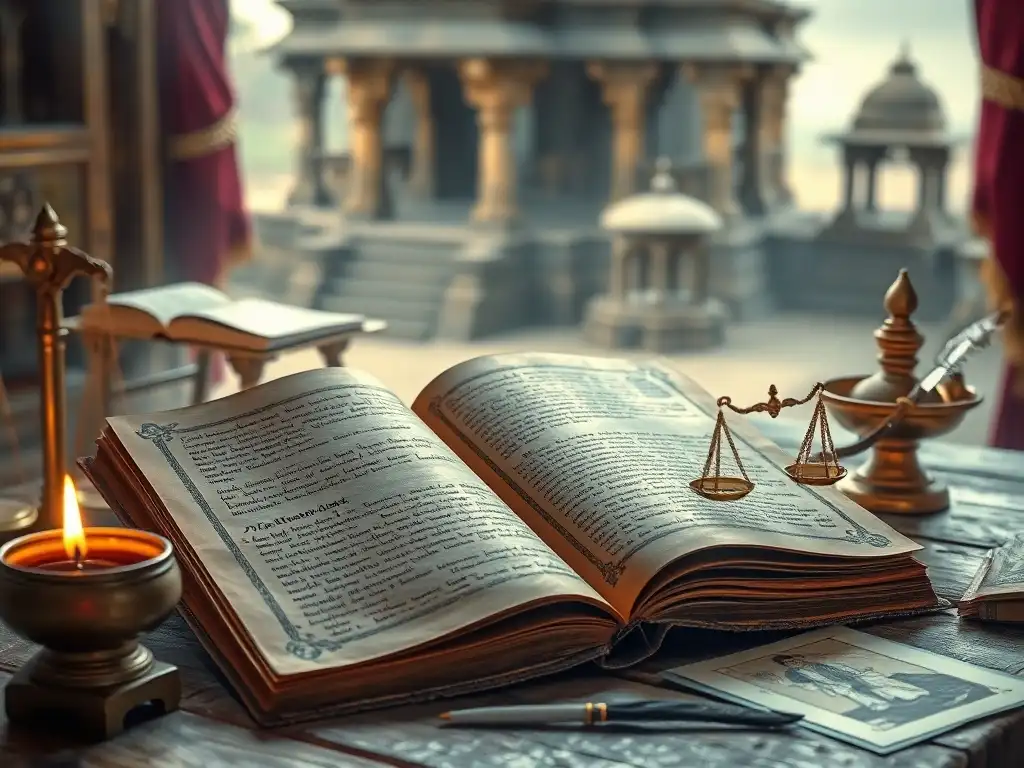
The historical context of ancient Indian legal texts is crucial to understanding their relevance and impact on contemporary legal discourse. Ancient India was not a monolithic society; rather, it consisted of a multitude of kingdoms and regions, each with its own customs and practices. The evolution of legal systems in this diverse environment was influenced by various factors including social norms, religious beliefs, and philosophical doctrines.
Development of Legal Systems in Ancient India
The development of legal systems in ancient India can be traced back to the Vedic period (approximately 1500 - 500 BCE). During this time, legal norms were primarily oral and derived from religious texts. The Vedas, particularly the Yajurveda, contain references to legal principles governing various aspects of life, such as contracts, property rights, and social duties.
As society evolved, so did its legal frameworks. The Dharma Shastras, a class of ancient Indian texts, emerged as codified laws that sought to address the complexities of social relationships. Among these, the Manu Smriti stands out as one of the most influential texts, outlining laws on civil, criminal, and family matters.
- Key Developments:
- The transition from oral traditions to written texts marked a significant milestone in legal evolution.
- The Kautilya's Arthashastra (4th century BCE) introduced a pragmatic approach to governance and law, emphasizing statecraft and economic policy.
- Regional Variations:
- Different regions developed their own legal customs, influenced by local culture and practices, leading to a rich tapestry of legal traditions across ancient India.
- Legal Authority:
- Kings and rulers were seen as the upholders of dharma (moral law), with their edicts often reinforcing the principles laid out in legal texts.
Major Legal Texts: Manu Smriti and Beyond
The Manu Smriti, also known as the Manusmriti, is perhaps the most well-known ancient Indian legal text, composed around the 2nd century BCE to 2nd century CE. It serves as a foundational text for Hindu law and is highly regarded for its insights into social order, justice, and morality.
Key Features of Manu Smriti:
- Social Stratification: It delineates duties and responsibilities based on the four varnas (social classes) - Brahmins, Kshatriyas, Vaishyas, and Shudras. This framework has had long-lasting implications on social organization in India.
- Legal Procedures: The text outlines procedures for trials, punishments, and the roles of judges, reflecting a structured approach to justice.
- Family Law: It addresses marriage, inheritance, and property rights, offering insights into the patriarchal structure of society during that era.
Beyond the Manu Smriti, several other legal texts contributed to the understanding of law in ancient India, such as:
- Yajnavalkya Smriti: This text is known for its more egalitarian views and offers a nuanced perspective on women's rights and property ownership.
- Narada Smriti: Focused on procedural law, it provides a comprehensive guide on judicial practices and the administration of justice.
Influence of Religion and Philosophy on Legal Frameworks
The interplay between religion, philosophy, and law in ancient India is profound and multifaceted. Hinduism, along with Buddhism and Jainism, shaped the moral and ethical foundations of legal texts.
- Religious Underpinnings:
- Legal texts often reflected the principles of dharma, which encompasses duty, morality, and law, suggesting that legal obligations were deeply intertwined with spiritual beliefs.
- Rituals and religious duties were given legal status, influencing societal norms and expectations.
- Philosophical Insights:
- The philosophies of thinkers like Kant and Aristotle found resonance in ancient Indian thought, emphasizing justice, ethics, and the nature of law.
- The Nyaya (Logic) school of philosophy contributed significantly to the development of legal reasoning and argumentation.
- Contemporary Relevance:
- The legal principles derived from these ancient texts continue to be relevant in discussions of human rights, social justice, and ethical governance in modern legal systems.
Ancient Indian legal texts are not merely historical documents; they are living legacies that continue to influence legal thought and practice worldwide. Understanding their relevance today involves recognizing the intricate tapestry of history, philosophy, and religion that has shaped them over centuries.
Key Features of Ancient Indian Legal Texts

Ancient Indian legal texts, such as the Manu Smriti, play a critical role in understanding the foundational concepts of law, morality, and societal governance in ancient India. These texts encapsulate a blend of legal doctrine, ethical guidelines, and cultural norms that have influenced not only Indian society but also global legal discourse. The key features of these texts include their comprehensive approach to law, the integration of social hierarchies, and the emphasis on dharma (duty or righteousness) as a guiding principle for justice.
Concepts of Dharma and Justice in Ancient Indian Law
The concept of dharma is central to ancient Indian legal texts, representing a complex interplay of duty, morality, and law. Dharma is not merely a set of laws; it reflects the ethical framework within which individuals are expected to operate. Ancient texts posited that justice is achieved when individuals fulfill their dharma, which varies according to one's social role, age, and gender.
- Interpretative Flexibility: The concept of dharma allows for contextual interpretation, meaning that laws could adapt to the changing dynamics of society. This flexibility is crucial for addressing diverse circumstances and ensuring justice is served in a manner that resonates with societal values.
- Justice as Social Order: Justice in ancient Indian law was viewed as a means to maintain social order. The texts often emphasized the restoration of balance and harmony over punitive measures. This approach reflects a restorative justice paradigm, prioritizing the community's well-being over individual retribution.
- Influence on Global Perspectives: The principles of dharma have found resonance in various global legal systems, influencing notions of justice and ethical governance. For example, the emphasis on moral responsibility mirrors aspects of Western legal thought, especially in discussions around restorative justice and community-oriented legal practices.
Role of Customary Law and Its Significance
Customary law, or lokavidhi, played an essential role in the legal landscape of ancient India. It consisted of unwritten laws derived from societal norms and practices, which were respected and followed by the community. The significance of customary law can be delineated as follows:
- Foundation of Legal Authority: Customary law served as a primary source of legal authority alongside written texts. It was deeply rooted in the lived experiences of the people, thereby ensuring that laws were relevant and applicable to everyday life.
- Community Participation: The development and enforcement of customary laws were often community-driven, allowing for greater participation among the populace in the legal process. This participatory approach fostered a sense of ownership and compliance among community members.
- Adaptability to Local Contexts: Unlike rigid codified laws, customary laws could evolve with the changing needs and values of society. This adaptability ensured that the legal system remained responsive to local customs and practices, which varied significantly across different regions of ancient India.
- Influence on Contemporary Legal Systems: The principles underlying customary law have implications for modern legal systems, especially in addressing issues of communal rights, minority protections, and the recognition of indigenous laws. Many contemporary legal frameworks are increasingly acknowledging the importance of customary laws in promoting justice and equity.
Procedures and Penalties: Understanding Ancient Legal Practices
Ancient Indian legal texts detail a variety of procedures and penalties that reflect the societal values and priorities of the time. These practices provide insight into the functioning of the legal system and its enforcement mechanisms.
- Judicial Procedures: The legal texts prescribe various procedures for dispute resolution, emphasizing the role of local assemblies (panchayats) in adjudicating cases. These assemblies comprised respected community members who would mediate conflicts and dispense justice based on established norms and principles.
- Types of Penalties: Penalties in ancient Indian law ranged from monetary fines to corporal punishment, depending on the severity of the offense. The texts often aimed to provide proportionality in punishment, ensuring that penalties were commensurate with the nature of the crime and the offender's social status.
- Focus on Rehabilitation: Unlike many punitive systems, ancient Indian legal texts often highlighted the importance of rehabilitation and reintegration into society. Offenders were encouraged to make amends through compensatory actions rather than merely serving time or enduring harsh penalties.
- Relevance in Modern Legal Discourse: Understanding these procedures and penalties offers valuable lessons for contemporary legal systems. The emphasis on community involvement, restorative approaches, and proportional justice can inform current debates around criminal justice reform and restorative justice practices.
The relevance of ancient Indian legal texts in global legal discourse lies in their rich insights into justice, societal values, and legal practices that continue to resonate today. By examining these texts, modern legal scholars and practitioners can draw valuable lessons for contemporary legal challenges.
The Relevance of Ancient Indian Legal Texts in Contemporary Legal Discourse

Comparative Analysis: Ancient Indian Legal Texts vs. Modern Legal Systems
Ancient Indian legal texts, such as the Manu Smriti and the Yajnavalkya Smriti, provide a comprehensive framework for understanding how law was conceptualized and implemented in ancient societies. These texts differ significantly from modern legal systems, which are typically based on codified statutes and case law. Here are some key points of comparison:
- Sources of Law:
- Ancient Indian texts primarily derive laws from religious and philosophical principles, where dharma (duty/righteousness) plays a central role.
- Modern legal systems often rely on written constitutions, statutes, and judicial precedents.
- Flexibility vs. Rigidity:
- Ancient laws were often more flexible, allowing for interpretation based on context and the moral standing of the individuals involved.
- In contrast, modern legal systems tend to be more rigid, emphasizing the rule of law and uniform application of statutes.
- Scope of Law:
- Ancient legal texts encompassed personal, social, and civil law, often intertwining with religious obligations.
- Modern legal frameworks categorize laws into civil, criminal, administrative, and constitutional, often separating them from religious contexts.
This comparative analysis highlights the enduring relevance of ancient texts, as many foundational legal concepts—such as justice, equity, and the role of community—continue to influence contemporary legal discourse.
Influence of Ancient Indian Legal Principles on Global Legal Thought
The principles enshrined in ancient Indian legal texts have transcended geographical boundaries, influencing legal thought globally. Key areas of influence include:
- Concept of Dharma:
- The idea of dharma has found resonance in various legal systems, particularly in discussions about morality and ethics in law.
- Legal scholars often reference dharma when exploring the balance between individual rights and societal responsibilities.
- Restorative Justice:
- Ancient texts advocate for restorative justice, emphasizing reconciliation over punishment.
- This approach has gained traction in modern legal systems, especially in indigenous and restorative justice movements worldwide.
- Gender and Law:
- Ancient Indian legal texts provide insights into the roles and rights of women in society, which continue to inform contemporary debates on gender equity in legal systems.
- The discussions around women's rights in ancient texts serve as a backdrop for ongoing reforms in many jurisdictions.
The global legal community increasingly recognizes these ancient principles, integrating them into modern legal frameworks to promote justice and social harmony.
Case Studies: Impact of Ancient Indian Legal Texts in Modern Jurisprudence
Several case studies illustrate the tangible impact of ancient Indian legal texts on contemporary jurisprudence:
- Judicial Interpretations in India:
- Indian courts have frequently cited the Manu Smriti in cases concerning family law and inheritance, particularly in discussions of women's rights.
- The Supreme Court of India has recognized the need to reinterpret ancient laws in light of modern values, leading to progressive judgments that promote gender equality.
- International Legal Frameworks:
- The principles of restorative justice inspired by ancient Indian texts have influenced international legal frameworks, such as the United Nations' guidelines on restorative practices.
- These frameworks aim to incorporate traditional methods of conflict resolution into modern legal practices, enhancing cultural sensitivity in legal processes.
- Educational Curricula:
- Legal education in various countries has begun to incorporate ancient Indian legal texts into curricula, emphasizing their relevance in understanding the evolution of legal thought.
- Courses exploring the intersection of ancient philosophies and contemporary law encourage students to engage critically with the historical context of legal principles.
These case studies underscore the ongoing relevance of ancient Indian legal texts in shaping modern legal systems and fostering a richer understanding of law globally.
Critiques and Misunderstandings of Ancient Indian Legal Texts

Understanding the critiques and misunderstandings surrounding ancient Indian legal texts is essential for appreciating their relevance in contemporary legal discourse. These texts, including the renowned Manu Smriti, have been subjects of debate and scrutiny, leading to various interpretations and, at times, misconceptions about their intent and applicability.
Common Myths Regarding Ancient Indian Law
Ancient Indian legal texts are often shrouded in myths that can distort their true essence and relevance. Here are some prevalent misconceptions:
- Myth 1: Ancient Indian Law is Static and Unchanging
- Many believe that ancient legal texts represent a rigid set of laws that have remained unchanged over centuries. In reality, these texts were often subject to interpretation and adaptation according to the prevailing social context and norms.
- Myth 2: Manu Smriti is the Sole Authority on Indian Law
- While the Manu Smriti is one of the most cited texts, it is not the only legal text in ancient India. Other texts, such as the Yajnavalkya Smriti and the Narada Smriti, also contributed to the legal framework, providing diverse perspectives on law and justice.
- Myth 3: Ancient Indian Law is Exclusively Oppressive
- Critics often portray ancient Indian law as inherently oppressive, particularly towards women and lower castes. However, a closer examination reveals nuances in these texts where rights, duties, and social roles were more complex and varied than commonly assumed.
- Myth 4: Ancient Indian Legal Principles Lack Relevance Today
- The argument that ancient Indian legal principles are entirely obsolete overlooks the foundational ideas of justice, equity, and social responsibility that can still inform modern legal systems.
Realities of Interpretation and Application in Modern Contexts
The application and interpretation of ancient Indian legal texts in contemporary contexts present both challenges and opportunities. Understanding these realities is crucial for harnessing their relevance today:
- Dynamic Interpretation
- Legal scholars and practitioners often engage with ancient texts through a lens of contemporary values, interpreting principles that resonate with modern legal systems. This dynamic interpretation allows for a synthesis of traditional values with current legal norms.
- Integration into Modern Legal Frameworks
- Some concepts from ancient Indian legal texts, such as restorative justice and community-based dispute resolution, have found their way into contemporary legal practices. These principles can enhance the effectiveness of modern justice systems by promoting reconciliation and social harmony.
- Cultural Contextualization
- The relevance of ancient Indian legal texts is often contingent upon cultural contextualization. Understanding the historical and social milieu in which these texts were produced can provide insights into their application and significance today.
- Critical Legal Studies
- Modern legal scholars are increasingly adopting critical approaches to ancient texts, exploring their implications for issues like gender equality, social justice, and human rights. This critical engagement fosters a more nuanced understanding of ancient laws and their applicability in today's legal discourse.
Balancing Traditional Values with Contemporary Legal Needs
Navigating the intersection of traditional values and modern legal needs requires careful consideration and balance. Here are some strategies for achieving this equilibrium:
- Adapting Legal Principles
- Legal practitioners and scholars can adapt principles from ancient Indian law to address contemporary challenges. For instance, principles of dharma (duty/righteousness) can be reinterpreted to align with contemporary notions of legal responsibility and ethical conduct.
- Inclusive Dialogue
- Engaging in inclusive dialogues that involve diverse stakeholders—including legal experts, historians, and community representatives—can help bridge the gap between ancient texts and modern legal practices. This collaborative approach fosters a deeper understanding of how ancient principles can be integrated into current legal frameworks.
- Promoting Legal Literacy
- Educating the public about the historical context and relevance of ancient Indian legal texts can empower individuals to appreciate their contributions to contemporary legal thought. Legal literacy initiatives can demystify these texts and encourage informed discussions about their application.
- Critical Reassessment
- Continual critical reassessment of ancient legal texts is necessary to ensure that they serve the evolving needs of society. This reassessment can lead to the development of legal principles that are both rooted in tradition and responsive to modern challenges.
The critiques and misunderstandings surrounding ancient Indian legal texts underscore the importance of nuanced interpretation and application. By addressing common myths, recognizing the realities of modern contexts, and balancing traditional values with contemporary needs, we can appreciate the enduring relevance of ancient Indian legal texts in global legal discourse.
Conclusion: The Enduring Legacy of Ancient Indian Legal Texts

Ancient Indian legal texts, particularly those like the Manu Smriti and Yajnavalkya Smriti, have played a pivotal role in shaping not only Indian jurisprudence but also the broader discourse surrounding legal systems globally. Their principles, which encompassed a blend of ethics, morality, and law, provide insights that continue to resonate in contemporary legal frameworks. The relevance of these texts is evident in their ability to address universal themes such as justice, duty, and social order, making them a rich source for comparative legal studies.
Summary of Key Points on Relevance
- Historical Foundations: Ancient Indian legal texts laid down the foundational principles of law that influenced various aspects of society, including family law, property rights, and social duties.
- Universal Themes: The themes present in these texts—such as justice (Dharma), truth (Satya), and duty (Karma)—are not limited to Indian culture but resonate across different legal traditions worldwide.
- Comparative Law: Scholars in comparative law have found the ethical and philosophical discussions in these texts to be relevant in understanding modern legal systems. They offer diverse perspectives that can enhance legal discourse.
- Influence on Modern Legal Systems: Many concepts derived from ancient Indian legal texts can be observed in modern legal principles, particularly in areas such as environmental law and human rights, reflecting their enduring influence.
- Cultural Significance: The texts provide not only legal guidelines but also cultural narratives that shape societal values and norms, thereby enriching the legal landscape.
Future Directions for Research and Exploration
The study of ancient Indian legal texts presents numerous avenues for future research:
- Interdisciplinary Approaches: Combining insights from anthropology, history, and law can yield a more comprehensive understanding of the texts' relevance today.
- Global Legal Integration: Investigating how ancient Indian legal principles can be integrated into contemporary legal systems, particularly in post-colonial contexts, can offer innovative solutions to modern legal challenges.
- Digital Humanities: Leveraging technology to digitize and analyze ancient texts can uncover patterns and insights that were previously inaccessible, facilitating broader scholarly engagement.
- Cross-Cultural Comparisons: Engaging in comparative studies with other ancient legal systems, such as Roman law or Mesopotamian codes, can highlight similarities and differences, enriching our understanding of global legal evolution.
Final Thoughts on Integrating Ancient Wisdom into Modern Legal Frameworks
Integrating the wisdom of ancient Indian legal texts into modern legal frameworks is not merely an academic exercise; it is a pathway to enriching contemporary legal thought. As societies grapple with complex legal and ethical dilemmas, revisiting the principles outlined in these texts can provide valuable insights.
By recognizing the ancient Indian legal texts' relevance, legal practitioners and scholars may find frameworks that emphasize justice, equity, and social responsibility. This integration could lead to more holistic legal systems that honor historical wisdom while addressing modern needs, ultimately fostering a more just and harmonious society.
The enduring legacy of ancient Indian legal texts continues to shape legal discourse globally, inviting ongoing exploration and integration into the fabric of contemporary law.
Frequently Asked Questions
What are Ancient Indian legal texts?
Ancient Indian legal texts are historical documents that outline the laws, regulations, and ethical standards of ancient Indian societies, including texts like the Manusmriti and Yajnavalkya Smriti.
How do these texts influence modern legal systems?
These texts provide foundational principles that have influenced various aspects of contemporary legal systems, particularly in countries with rich cultural ties to ancient India.
Why is the study of these texts important today?
Studying ancient Indian legal texts helps in understanding the evolution of legal thought and how historical practices can inform current legal frameworks and human rights discussions.
What topics do these legal texts cover?
They cover a wide range of topics including civil rights, family law, property rights, and criminal justice, reflecting the social norms and values of their time.
How can these texts contribute to global legal discourse?
Ancient Indian legal texts can contribute to global legal discourse by offering alternative perspectives on justice, equity, and moral philosophy, enriching the conversation around universal legal principles.
Final Reflection: The Enduring Relevance of Ancient Indian Legal Texts
The exploration of ancient Indian legal texts reveals their profound impact on contemporary legal frameworks, emphasizing that the wisdom of the past is not merely historical but serves as a guiding light for modern legal discourse. In an increasingly interconnected world, these texts offer timeless principles that resonate with current global challenges, reminding us that the foundations of justice and ethics are often rooted in ancient wisdom. The relevance of these texts today is not just an academic pursuit; it is a necessary dialogue that enriches our understanding of law and justice across cultures.
Cultural and social landscapes continue to be shaped by the insights gleaned from ancient Indian legal texts, which advocate for justice, equity, and moral integrity. The principles articulated in these texts have transcended time and geography, influencing legal systems and philosophies worldwide. > “The law is the embodiment of the moral sentiment of the people.” This quote encapsulates the essence of how ancient legal wisdom still informs our contemporary legal systems, urging us to reflect on the ethical dimensions of law in our societies.
As we move forward, I invite you to reflect on the lessons embedded in these ancient texts and consider how they can inform your understanding of justice and law in today's world. Engage with these ideas, challenge your perspectives, and recognize that the relevance of ancient Indian legal texts is not just an academic discussion but a call to action. By integrating these timeless principles into our daily lives, we can contribute to a more just and equitable society, honoring the legacy of those who came before us while shaping a better future.
Unleash the Wisdom of Ancient Legal Texts!
Thank you for diving into the rich world of Ancient Indian legal texts and their relevance in today’s global legal discourse! Your curiosity is a stepping stone towards a deeper understanding of this profound legacy. Now that you’ve explored the insights, it’s time to take action and engage with this fascinating topic further.
Here’s how you can dive even deeper:
- Start a discussion: Share your thoughts on the parallels you see between ancient and modern legal practices in the comments section below.
- Explore further: Read and reflect on specific ancient texts such as the Manusmriti or Arthashastra. You can find these at your local library or through various online resources.
- Join the community: Connect with others who are interested in legal history by participating in forums or social media groups that focus on ancient legal traditions.
What aspect of ancient Indian legal texts resonates with you most, and how do you think it could influence current legal practices?