
The Role of Religion in Shaping Ancient Indian Legal Systems


Welcome to Ancient India History, where we embark on a fascinating journey through the rich tapestry of ancient Indian civilizations. Dive deep into the intricate relationship between religion and legal systems, as we unveil how spiritual beliefs helped shape the legal frameworks of the time. Our featured article, "The Role of Religion in Shaping Ancient Indian Legal Systems," promises to enrich your understanding of this profound connection. Join us as we explore the legacy of ancient law codes and their enduring impact on modern society, igniting your curiosity about the vibrant past that continues to influence our world today.

Introduction to Ancient Indian Legal Systems and Religion
The intricate tapestry of ancient Indian legal systems is deeply interwoven with the religious beliefs and practices that prevailed throughout the subcontinent. Religion played a pivotal role in defining the legal landscapes of ancient India, influencing not only the formulation of laws but also their interpretation and enforcement.
Ancient Indian legal systems were not merely secular frameworks; they were profoundly shaped by the spiritual and ethical codes dictated by various religious traditions, including Hinduism, Buddhism, and Jainism. Understanding this connection is crucial for appreciating how these systems functioned and evolved across different periods, from the Indus Valley civilization through to the Gupta Empire.
Overview of Ancient Indian Legal Frameworks
Ancient Indian legal systems were characterized by a combination of codified texts and customary practices. The Dharma Shastras, particularly the Manusmriti, served as foundational texts that outlined duties, rights, and penalties based on caste and gender. The legal frameworks were often flexible, allowing for adaptation to local customs and conditions. Key features included:
- Customary Laws: Local traditions influenced legal practices, often overriding codified laws.
- Judicial Institutions: Various courts existed, including village assemblies ( panchayats) and royal courts, which handled disputes according to religious and moral guidelines.
- Mediation and Reconciliation: Emphasis was placed on resolving conflicts amicably, reflecting the values of harmony prevalent in religious teachings.
Importance of Religion in Legal Contexts
Religion served as a moral compass for legal principles in ancient India. Laws were seen not just as societal rules but as divine ordinances, creating a strong link between justice and spiritual duty. This relationship manifested in several ways:
- Ethical Foundations: Many laws were derived from religious texts, which dictated what was considered right or wrong.
- Legitimacy and Authority: Religious leaders often held significant influence over legal decisions, reinforcing the sanctity of the law.
- Social Order: Religious beliefs helped maintain social order by instilling a sense of duty and responsibility among individuals.
Historical Context of Religion and Law in Ancient India
Vedic Period: Foundations of Legal Thought
The Vedic period (circa 1500–500 BCE) laid the groundwork for legal thought in ancient India. Texts like the Rigveda not only address spiritual matters but also touch upon social conduct and ethical behavior. Key points include:
- Rituals and Laws: Many laws were intertwined with rituals, reflecting a belief that adherence to law was essential for cosmic order ( rita).
- Role of Priests: Priests acted as intermediaries between the divine and the earthly realm, influencing legal decisions based on religious doctrine.
Influence of Hindu Scriptures on Legal Principles
Hindu scriptures, particularly the Dharma Shastras, established a comprehensive legal framework that governed various aspects of life, including family law, property rights, and criminal justice. Important aspects include:
- Codification of Laws: The Manusmriti and other texts provided detailed guidelines on legal matters, often linking them to moral duties.
- Caste System: Legal rights and responsibilities were often determined by one's caste, emphasizing the intertwining of legal and religious identities.
The Role of Buddhism and Jainism in Legal Developments
Buddhism and Jainism offered alternative views on law and ethics, challenging the established Hindu framework. Their contributions included:
- Emphasis on Compassion: Both religions promoted values of non-violence and compassion, which influenced legal practices, particularly in matters of punishment and rehabilitation.
- Universal Justice: The focus shifted from caste-based laws to broader principles of justice applicable to all individuals, regardless of their social standing.
The intricate relationship between religion and ancient Indian legal systems reveals how deeply intertwined these aspects were in shaping societal norms and governance. Understanding this dynamic provides valuable insights into the evolution of law in one of the world's oldest civilizations.
Key Religious Texts Influencing Ancient Indian Legal Systems
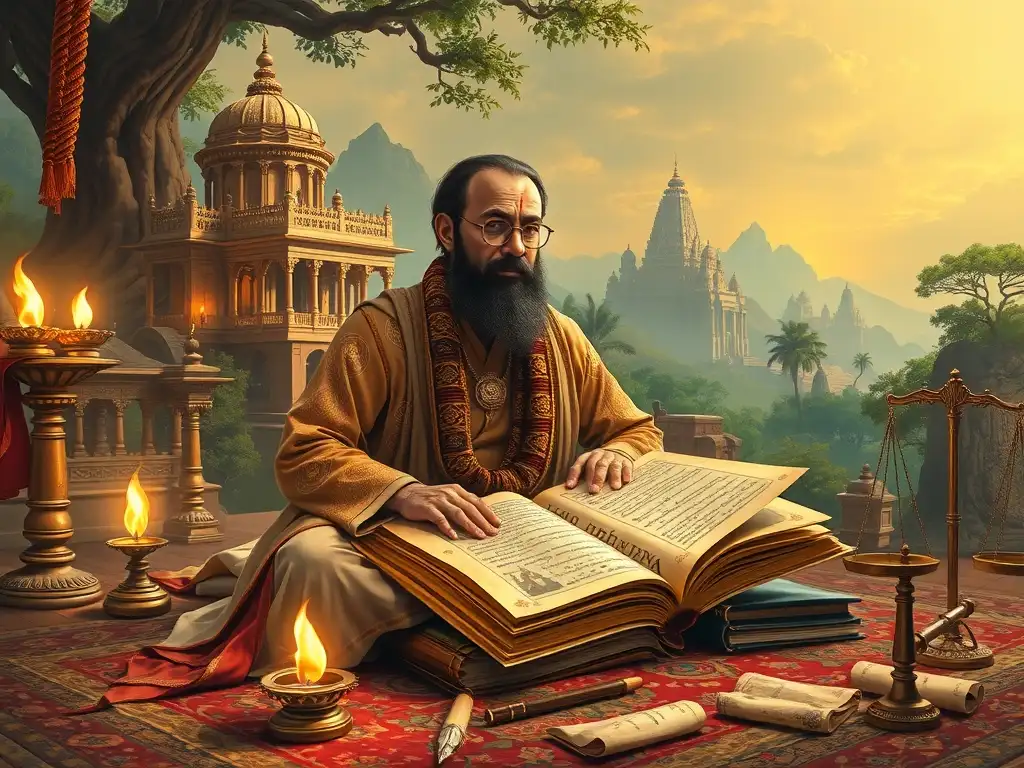
Ancient Indian legal systems were profoundly shaped by a variety of religious texts that provided ethical and moral guidelines, influencing both the formation and application of laws. These texts served as foundational documents that not only dictated legal norms but also reflected the spiritual values of the society. Among the most significant religious texts were the Manusmriti, Dharmashastras, and various Buddhist scriptures. Each of these texts contributed uniquely to the understanding and practice of law in ancient India, intertwining legal principles with religious beliefs and societal norms.
Manusmriti and Its Legal Philosophies
The Manusmriti, often referred to as the "Laws of Manu," is one of the most important texts in Hindu legal tradition. Composed around 200 BCE to 200 CE, it is a comprehensive guide that outlines various aspects of dharma (righteousness) and law. The text is divided into various chapters that cover topics such as caste duties, family law, inheritance, and criminal justice.
The Manusmriti emphasizes the role of dharma as a guiding principle for all individuals, asserting that law is not merely a set of rules but a reflection of moral order. It posits that the king has a divine duty to uphold dharma, suggesting a theocratic underpinning to the legal system. The text also categorizes offenses and prescribes specific penalties, illustrating a structured approach to justice that combines ethical considerations with legal enforcement.
Dharmashastras: Religious Codes and Legal Guidelines
The Dharmashastras, a genre of texts that includes the Manusmriti, further expand on the concept of dharma, providing detailed guidelines for personal conduct and legal responsibilities. These texts vary in age and regional relevance, but they collectively address the principles of righteousness, moral behavior, and legal obligations.
Dharmashastras serve as a reflection of the societal values of their time, covering a wide range of subjects from property rights and marriage to religious obligations and criminal law. They are essentially prescriptive texts that outline ideal behavior for individuals and the consequences of deviating from these norms, thereby reinforcing the connection between religious adherence and legal compliance.
Buddhist Texts and Their Contributions to Law
Buddhist texts, particularly the Vinaya Pitaka, also played a significant role in shaping legal systems in ancient India. These texts primarily focus on the rules governing the monastic community but extend their influence beyond to lay society through their ethical teachings.
The principles of non-violence (ahimsa), compassion, and justice articulated in Buddhist scriptures contributed to a more humane approach to law. The emphasis on moral conduct and the welfare of the community encouraged alternative dispute resolution methods, such as mediation, reflecting a legal culture that prioritized reconciliation over punishment. Notably, Emperor Ashoka's edicts, inspired by Buddhist teachings, further promoted ethical governance and social justice, showcasing the intersection of religion and law.
The Intersection of Religion and Justice in Ancient India
The relationship between religion and justice in ancient India was complex and multifaceted, often blurring the lines between legal and spiritual authority. Religious beliefs were not only inherent in the legal frameworks but also significantly influenced judicial processes. This intersection manifested in various forms, such as religious courts, the involvement of priests in legal proceedings, and notable legal decisions that echoed religious doctrines.
Religious Courts and Their Functionality
Religious courts, or "Dharmashastras," served as crucial arbiters of justice in ancient Indian society. These courts, often presided over by learned scholars or priests, dealt primarily with matters pertaining to personal law, including marriage, inheritance, and community disputes.
The functionality of these courts was rooted in the belief that legal decisions should align with religious principles. They operated on the premise that justice should reflect dharma, ensuring that legal outcomes were compatible with the moral and ethical expectations of the community. This integration of religious oversight into the judicial process reinforced the idea that law was not merely a human construct but a divine mandate.
The Role of Priests in Judicial Processes
Priests held a significant role in the judicial processes of ancient India, acting as both legal experts and mediators. Their deep understanding of religious texts enabled them to interpret laws through a spiritual lens, providing a framework for resolving disputes that adhered to dharmic principles.
In many cases, priests would be called upon to offer guidance in legal matters, often serving as advisors to kings and local rulers. This advisory role ensured that the application of law remained consistent with religious doctrines, further intertwining legal authority with spiritual wisdom. The involvement of priests in judicial proceedings exemplifies the pervasive influence of religion on legal practices, reinforcing the notion that justice was inherently linked to moral and ethical guidelines.
Case Studies: Notable Legal Decisions Influenced by Religion
Several notable legal decisions from ancient India illustrate the profound impact of religion on the judicial landscape. One such case involved the interpretation of inheritance laws as outlined in the Manusmriti. A ruling based on these laws often favored male heirs, reflecting the patriarchal values of the time. However, there were instances where local customs and religious interpretations allowed for variations, sometimes granting women rights to inheritance under specific circumstances.
Another significant example can be found in the legal practices surrounding marriage and divorce, where religious dictates greatly influenced the outcomes. In disputes over marital fidelity, religious courts would often consider the moral implications based on the teachings of the Dharmashastras, leading to judgments that emphasized societal norms and ethical behavior.
These case studies underscore the intricate relationship between religion and law in ancient India, demonstrating how legal decisions were not only matters of state but also reflections of the prevailing moral and religious ethos.
Evolution of Legal Systems Through Religious Practices
The evolution of ancient Indian legal systems is intricately tied to the religious practices and beliefs prevalent in society. From the early days of the Indus Valley Civilization, where community and religious norms guided social conduct, to the later codifications seen in texts such as the Manusmriti, religion served as a vital framework for legal principles. Early laws were often derived from dharma, a concept that signifies moral duty and righteousness, presenting a blend of ethical conduct and legal obligation.
As these religious doctrines evolved, they began to delineate specific legal norms, prescribing penalties for transgressions and offering guidance on various aspects of daily life, including family relations, property rights, and social duties. The intertwining of law and religion became a hallmark of ancient Indian legal systems, reflecting a societal structure that viewed legal order as divinely sanctioned. This relationship established a foundation for the legal systems that would follow, shaping their principles and practices for centuries to come.
Transition from Religious Law to Secular Systems
The transition from religious law to secular systems in ancient India was gradual and complex. While early legal frameworks were predominantly influenced by religious texts and practices, the necessity for a more structured and adaptable legal system emerged over time, especially during the Mauryan and Gupta periods. This transition was marked by a shift in focus from purely religious adherence to the inclusion of pragmatic considerations in legal matters.
During the Mauryan Empire, under King Ashoka, the Edicts of Ashoka exemplified this shift. Although they drew upon Buddhist principles, they aimed to promote ethical governance and social welfare, reflecting a more secular approach to law. This evolution continued into the Gupta period, where legal codes began to incorporate more secular elements, allowing for greater flexibility and responsiveness to the changing social dynamics.
Influence of Religion on Royal Decrees and Edicts
Religion played a significant role in shaping royal decrees and edicts throughout ancient India. Monarchs often invoked divine authority to legitimize their rule and decisions, thereby intertwining governance with religious principles. The king was seen as a protector of dharma, and his edicts were viewed as reflections of divine will, ensuring not just legal compliance but moral conduct among subjects.
For instance, the edicts of Ashoka not only conveyed legal directives but also served as moral exhortations to his subjects, urging them to practice compassion and non-violence. Similarly, other rulers, such as those from the Gupta dynasty, issued decrees that aligned with prevailing religious beliefs, reinforcing the idea that governance was a sacred duty. This relationship between religion and royal edicts allowed ancient Indian legal systems to maintain a degree of stability and continuity, as laws were perceived less as human constructs and more as extensions of divine order.
The Gupta Empire: A Synthesis of Religion and Law
The Gupta Empire (circa 320-550 CE) represents a pivotal moment in the synthesis of religion and law within ancient Indian legal systems. This period saw the flourishing of Hinduism, alongside the co-existence of Buddhism and Jainism, which significantly influenced legal thought and practice. The Gupta rulers emphasized the need for a cohesive legal framework that could incorporate various religious traditions, resulting in a more inclusive approach to law.
Legal texts from this period, such as the Manusmriti, illustrate this synthesis by codifying laws that reflect Hindu values while also accommodating local customs and practices. The Gupta legal system fostered an environment where religious principles could guide legal reasoning without dismissing the importance of social equity and justice. This integration of religious and secular legal elements laid the groundwork for future legal developments in India, ensuring that the legal systems remained relevant to the evolving cultural landscape.
Comparative Analysis of Religious Influence in Ancient Legal Systems

The influence of religion on legal systems is not unique to ancient India; it resonates across various ancient civilizations. However, the extent and manner of this influence exhibit notable differences. In ancient Mesopotamia, for example, the Code of Hammurabi was explicitly framed within a religious context, yet it operated largely as a secular legal code. Similarly, in ancient Egypt, laws were intertwined with religious beliefs, but the application of these laws often varied depending on social status.
In contrast, ancient Indian legal systems maintained a more fluid relationship between law and religion, with texts continuously evolving to reflect changing societal norms and religious beliefs. This adaptability allowed ancient Indian systems to remain relevant through centuries, accommodating diverse cultural influences and practices.
Comparison with Other Ancient Civilizations
When comparing the religious influence on ancient Indian legal systems with other civilizations, several key differences emerge. For instance, in ancient Greece, legal systems were largely secular, with the law being a product of human reasoning and civic philosophy. Conversely, ancient Indian laws were deeply rooted in dharma, reflecting a commitment to moral and ethical standards derived from religious beliefs.
Moreover, while both ancient Rome and India recognized the authority of divine law, Roman law evolved into a more codified and secular structure, particularly after the establishment of the Twelve Tables. In contrast, ancient Indian legal systems retained a pronounced religious character, which continued to shape legal practices long after the fall of the Gupta Empire.
Unique Features of Ancient Indian Legal Systems Rooted in Religion
Ancient Indian legal systems possessed several unique features that distinguished them from those of other civilizations, primarily due to their religious foundations. One such feature was the concept of dharma, which encompassed not only legal obligations but also social and moral responsibilities. This holistic approach fostered a sense of duty and ethical behavior among individuals, promoting social harmony.
Additionally, the caste system, which was influenced by religious beliefs, played a crucial role in shaping legal practices. Laws varied according to caste, reflecting the social hierarchy and the belief that different groups had distinct duties and rights. This differentiation in legal treatment underscores the deep intertwining of law and religion in ancient India.
Furthermore, the emphasis on reconciliation and restorative justice, as opposed to punitive measures, was another unique aspect of ancient Indian legal systems. Many legal texts advocated for mediation and compromise, aligning with the broader religious principles of compassion and non-violence, thereby ensuring that justice was not only served but was also restorative in nature.
The role of religion in shaping ancient Indian legal systems is multifaceted, revealing a rich tapestry of interaction between spiritual beliefs and legal principles that has left a lasting legacy on the Indian subcontinent's legal landscape.
Contemporary Reflections on Ancient Indian Legal Systems and Religion
The relationship between religion and law in ancient India is a foundational aspect of the country's legal heritage, influencing contemporary legal practices and societal norms. Ancient Indian legal systems were deeply intertwined with religious beliefs, shaping not just the laws themselves but the moral and ethical underpinnings of society. For instance, texts such as the Manusmriti provided guidelines for dharma (moral duty), which informed legal standards and social conduct. As modern India grapples with its diverse and pluralistic society, the echoes of these ancient legal traditions can be seen in contemporary discussions surrounding justice, ethics, and social equity.
In today’s context, the influence of ancient religious laws continues to spark debate, especially in matters concerning personal laws governing marriage, inheritance, and family relations. The coexistence of various religious laws in modern India reflects the historical precedent set by ancient legal systems, which were often localized and community-specific. This complexity invites continued reflection on how ancient principles can inform modern jurisprudence and the ongoing evolution of legal frameworks in a rapidly changing society.
Lasting Impacts of Ancient Religious Laws on Modern Indian Law
The ancient Indian legal systems, primarily shaped by religious doctrines, have left an indelible mark on modern Indian law. One of the most significant impacts is the incorporation of personal laws based on religious texts into the contemporary legal framework. For example, Hindu personal law, derived from texts like the Manusmriti, governs issues related to marriage and succession for Hindus. Similar provisions exist for Muslims, Christians, and other religious communities, showcasing the continued relevance of ancient legal principles.
Furthermore, the emphasis on concepts such as justice, equity, and moral duty from ancient texts has permeated modern legal interpretations and practices. The Indian Constitution, while secular, reflects many of these values, ensuring that justice is not only legalistic but also ethical. Moreover, the ongoing discourse around the reform of personal laws signals a recognition of the need to balance these ancient customs with contemporary human rights standards, illustrating the dynamic interplay between historical precedents and modern legal challenges.
The Relevance of Ancient Legal Principles in Today's Society
Ancient Indian legal principles resonate strongly in today’s societal context, particularly in the realms of ethics and morality. The foundational idea that law should reflect the moral fabric of society remains pertinent, as modern legal systems continue to grapple with ethical dilemmas and the quest for justice. The principles of dharma, which emphasize duty and righteousness, can be seen in contemporary debates surrounding social justice, gender equality, and environmental law.
Moreover, the procedural aspects of ancient legal systems, such as mediation and community-based dispute resolution, are increasingly relevant in today’s legal practices. These approaches promote restorative justice and community involvement, countering the adversarial nature of modern litigation. As society evolves, revisiting these ancient practices may provide valuable insights into creating a more equitable and just legal system that honors both tradition and modernity.
Conclusion: The Enduring Legacy of Religion in Ancient Indian Legal Systems
The enduring legacy of religion in shaping ancient Indian legal systems is evident in both the framework and functioning of modern law in India. Through the integration of religious principles into legal practices, ancient civilizations established a legal ethos that continues to inform contemporary legal thought and practice. Understanding this legacy is crucial for comprehending the complexities of modern Indian law, particularly in a society marked by diversity and pluralism.
Summary of Key Points
- Ancient Indian legal systems were fundamentally influenced by religious doctrines, particularly in the realms of morality and ethics.
- Personal laws derived from ancient texts continue to govern family and social matters in contemporary India.
- The principles of dharma and community participation in dispute resolution remain relevant and are increasingly recognized in modern legal discourse.
- The interplay between ancient legal traditions and modern legal frameworks highlights the dynamic nature of law as it adapts to societal changes.
Final Thoughts on the Relationship Between Religion and Law in Ancient India
The relationship between religion and law in ancient India is not merely a historical curiosity; it serves as a lens through which to view the evolution of legal systems and societal norms. As modern India navigates the complexities of its legal landscape, reflecting on the religious underpinnings of ancient law can provide valuable insights for contemporary legal practices.
The challenge lies in reconciling the rich legacy of ancient legal traditions with the demands of modernity, ensuring that justice and equity remain at the forefront of legal development. This ongoing dialogue between past and present will undoubtedly shape the future of law in India, fostering a legal culture that respects its roots while embracing progress.
- Introduction to Ancient Indian Legal Systems and Religion
- Overview of Ancient Indian Legal Frameworks
- Importance of Religion in Legal Contexts
- Historical Context of Religion and Law in Ancient India
- Key Religious Texts Influencing Ancient Indian Legal Systems
- The Intersection of Religion and Justice in Ancient India
- Evolution of Legal Systems Through Religious Practices
- Comparative Analysis of Religious Influence in Ancient Legal Systems
- Contemporary Reflections on Ancient Indian Legal Systems and Religion
- Conclusion: The Enduring Legacy of Religion in Ancient Indian Legal Systems
- What role did religion play in ancient Indian legal systems?
- How did the Indus Valley Civilization contribute to early legal practices?
- What are some key religious texts that influenced ancient Indian law?
- How did the Gupta Empire impact legal frameworks?
- Did ancient Indian legal systems vary across different regions?
Frequently Asked Questions
What role did religion play in ancient Indian legal systems?
Religion was a fundamental influence on ancient Indian legal systems, as many laws were derived from religious texts and practices, guiding moral and ethical behavior.
How did the Indus Valley Civilization contribute to early legal practices?
The Indus Valley Civilization showcased the early use of weights, measures, and possibly trade regulations, indicating a structured approach to governance and legal principles.
What are some key religious texts that influenced ancient Indian law?
Manusmriti and Dharmashastras are two significant religious texts that laid down the principles of law, ethics, and social duties in ancient India.
How did the Gupta Empire impact legal frameworks?
The Gupta Empire marked a period of legal sophistication, integrating religious and secular laws, thus influencing the development of a more organized and codified legal system.
Did ancient Indian legal systems vary across different regions?
Yes, ancient Indian legal systems were often regional and diverse, reflecting the cultural and religious practices unique to each area, leading to varied interpretations and applications of law.
Final Reflection: The Enduring Legacy of Religion in Ancient Indian Legal Systems
The intricate relationship between religion and ancient Indian legal systems remains profoundly relevant today. As we navigate a world where legal frameworks often intersect with cultural and spiritual beliefs, understanding this historical context enriches our perspective on contemporary law and ethics. The foundational role that religion played in shaping these systems not only influenced governance but also established moral codes that resonate through time, reminding us that the past is a lens through which we can better understand the present.
The impact of religion on ancient Indian legal systems is not merely a relic of history; it continues to influence our cultural and social landscapes. The principles derived from these ancient texts still echo in modern legal practices and societal norms, shaping our understanding of justice and morality. As Mahatma Gandhi once said, "> An unjust law is itself a species of violence. Arrest for its breach is more so." This highlights the ongoing dialogue between law and ethics, urging us to reflect on how historical frameworks inform our current legal challenges and societal values.
As we contemplate the lessons from ancient Indian legal systems, I invite you to reflect on the role of your own beliefs in shaping your understanding of justice and morality. Consider how the principles derived from these ancient teachings can inspire you to advocate for a more just and equitable society. Engage with the past not just as a historical account, but as a source of wisdom that can guide your actions and decisions in the present and future.
Unveil the Legacy of Ancient Indian Law!
Thank you for exploring the fascinating intersection of religion and legal systems in ancient India! We hope you’ve gained valuable insights into how spiritual beliefs shaped governance and justice during this pivotal era. Now, it's time to take your curiosity further!
Here are a few powerful steps for you to dive deeper into this rich history and connect with others:
- Explore related articles on our website to discover how various cultures and beliefs have influenced legal practices around the world.
- Join the conversation! Share this article with friends or on social media, and invite others to discuss the ongoing role of religion in contemporary legal systems.
- Consider visiting a local library or museum to discover artifacts or texts that provide deeper insights into ancient Indian legal principles.
What aspect of ancient Indian law intrigues you the most, and in what ways do you believe it continues to shape modern societies?