
The Beauty of Nature in Kalidasa's Poems: A Study of Imagery and Symbolism


Welcome to Ancient India History, where we embark on a fascinating journey through the rich tapestry of ancient Indian civilizations. Today, we delve into the enchanting world of Kalidasa, whose poetry paints a vivid portrait of nature that transcends time. In our featured article, "The Beauty of Nature in Kalidasa's Poems: A Study of Imagery and Symbolism," we invite you to explore how his intricate use of nature imagery not only reflects the beauty of the world around him but also offers profound insights into the human experience.
Join us as we unravel the layers of symbolism and discover the deeper meanings behind Kalidasa's lyrical masterpieces. Your exploration begins here—dive deeper to uncover the wonders of ancient literature beyond epics!

Introduction to Kalidasa and His Poetry
Kalidasa, one of the most celebrated poets and dramatists of ancient India, is renowned for his profound contributions to classical literature. His works, which include plays, poems, and epics, are characterized by their rich imagery, lyrical beauty, and deep emotional resonance.
Central to Kalidasa's poetry is the theme of nature, which serves not only as a backdrop but also as a vital component that reflects the emotional states and philosophical musings of his characters. In this article, we delve into Kalidasa's nature imagery analysis, exploring how he masterfully intertwines the beauty of the natural world with human experiences, making them inseparable elements in his poetic narrative.
Overview of Kalidasa's Life and Contribution to Classical Literature
Kalidasa's exact dates remain uncertain, but he is believed to have lived around the 4th to 5th century CE. His life is shrouded in legend, with many tales highlighting his humble beginnings and subsequent rise to fame as a court poet. His most famous works include Shakuntala, Meghaduta, and Raghuvamsa, which exemplify the high points of classical Sanskrit literature.
Kalidasa's poetry is marked by its sophisticated use of similes, metaphors, and personification, particularly in his depictions of nature. His ability to evoke emotion and create vivid imagery has made his works timeless, influencing countless poets and writers throughout history.
Significance of Nature in Ancient Indian Poetry
Nature has always held a significant place in Indian poetry, especially in classical literature, where it often symbolizes the divine, the cyclical nature of life, and the emotional landscapes of human existence. The natural world serves as a canvas upon which poets like Kalidasa express their thoughts on love, loss, and spirituality.
In ancient Indian poetry, elements such as rivers, mountains, and flora are not merely decorative; they embody deeper meanings and serve as metaphors for the poet's inner feelings and societal observations. The reverence for nature is evident in its frequent representation as a nurturing and sustaining force, reflecting the harmonious relationship between humanity and the environment.
Understanding Nature Imagery in Kalidasa's Works
Defining Nature Imagery in Poetry
Nature imagery in poetry refers to the use of descriptive language that evokes images of the natural world. This imagery can range from the beauty of landscapes and the intricacies of flora and fauna to the subtleties of seasonal changes. In Kalidasa's poetry, nature imagery is intricately woven into the fabric of his verses, enhancing the thematic depth and emotional impact of his work.
The effectiveness of nature imagery lies in its ability to resonate with readers on multiple levels. It invokes sensory experiences, evokes emotions, and creates a connection between the reader and the poem's subject matter. Through vivid depictions of nature, Kalidasa conveys complex emotions and philosophical ideas, making his poetry more relatable and profound.
The Role of Nature Imagery in Kalidasa’s Themes
In Kalidasa's works, nature imagery plays a critical role in expressing themes of love, longing, and the passage of time. For instance, the changing seasons often mirror the emotional states of his characters, with the blossoming of spring representing new love or hope, while the desolation of winter may symbolize loss or sorrow.
Moreover, Kalidasa's use of nature as a motif allows him to explore broader philosophical concepts such as the impermanence of life and the interconnectedness of all beings. His poems often reflect a deep appreciation for the beauty of the natural world, suggesting that it is not only a source of inspiration but also a teacher of life's profound truths.
As we continue to analyze Kalidasa's works, we will uncover the intricate layers of meaning embedded in his nature imagery, revealing how it enhances our understanding of his poetic vision and the cultural context of ancient India.
Analysis of Nature Imagery in Kalidasa's Major Works
Kalidasa, one of the most celebrated poets of ancient India, intricately weaves nature imagery into the fabric of his poetry, using it not only as a backdrop but also as a pivotal element that enhances emotional depth and thematic richness. His major works, including "Shakuntala," "Meghaduta," and "Raghuvamsha," showcase the profound connection between nature and human experiences. Through vivid descriptions and personification of natural elements, Kalidasa creates a harmonious relationship between the physical world and the emotional landscape of his characters.
In "Shakuntala," nature imagery serves to reflect the inner feelings of the characters, while in "Meghaduta," it embodies longing and separation. Similarly, "Raghuvamsha" uses nature to symbolize the virtues of its royal characters, portraying the ideal qualities of leadership and righteousness. This analysis reveals how Kalidasa’s adept use of nature imagery enriches the narrative, infusing it with layers of meaning that resonate with readers on multiple levels.
"Shakuntala": The Interplay of Nature and Emotion
In "Shakuntala," Kalidasa masterfully utilizes nature to mirror the emotional journey of his protagonist. The lush forests, blooming flowers, and tranquil rivers are not mere settings but reflections of Shakuntala's changing emotions. For instance, the verdant surroundings of the hermitage symbolize her innocence and purity, while the blooming lotuses represent her blossoming love for King Dushyanta.
As the plot unfolds, the imagery shifts; when Shakuntala faces despair due to her separation from the king, the once vibrant landscape transforms into a somber environment, echoing her heartache. The interplay of nature and emotion is further emphasized through metaphors and similes, allowing readers to feel the depth of her sorrow. This symbiotic relationship between the natural world and human emotion is a hallmark of Kalidasa's poetic style, making "Shakuntala" a poignant exploration of love and loss.
"Meghaduta": The Cloud Messenger as a Symbol of Yearning
In "Meghaduta," the central theme of longing is vividly illustrated through the imagery of the cloud as a messenger. The protagonist, separated from his beloved, beseeches the cloud to carry his message. This poignant plea transforms the cloud into a powerful symbol of hope and yearning. Kalidasa's detailed descriptions of the cloud's journey through various landscapes—lush valleys, majestic mountains, and serene rivers—serve to enhance the emotional weight of the message.
The imagery in "Meghaduta" not only highlights the physical beauty of the natural world but also emphasizes the profound emotional landscape of separation and desire. As the cloud traverses through diverse environments, it becomes a metaphor for the universal experience of longing, connecting the reader with the shared human condition of love and separation. Kalidasa’s use of nature imagery here elevates the narrative, making it resonate deeply with audiences across time and culture.
"Raghuvamsha": Nature as a Reflection of Royalty and Virtue
In "Raghuvamsha," Kalidasa employs nature imagery to reflect the virtues and qualities of its royal characters, particularly those of the Raghu dynasty. The majestic landscapes and bountiful flora symbolize the glory and grandeur associated with royalty. For instance, descriptions of flourishing gardens, rivers teeming with life, and majestic mountains serve as metaphors for the strength, nobility, and virtue of the kings.
Furthermore, the interactions between the characters and their natural surroundings often highlight their moral integrity and responsibilities as rulers. Kalidasa’s portrayal of nature as a reflection of virtue suggests that a ruler's connection to the environment is indicative of their character. This rich imagery not only enhances the narrative but also serves as a moral commentary, reinforcing the ideals of dharma and leadership.
The Symbolism of Nature in Kalidasa's Poetry
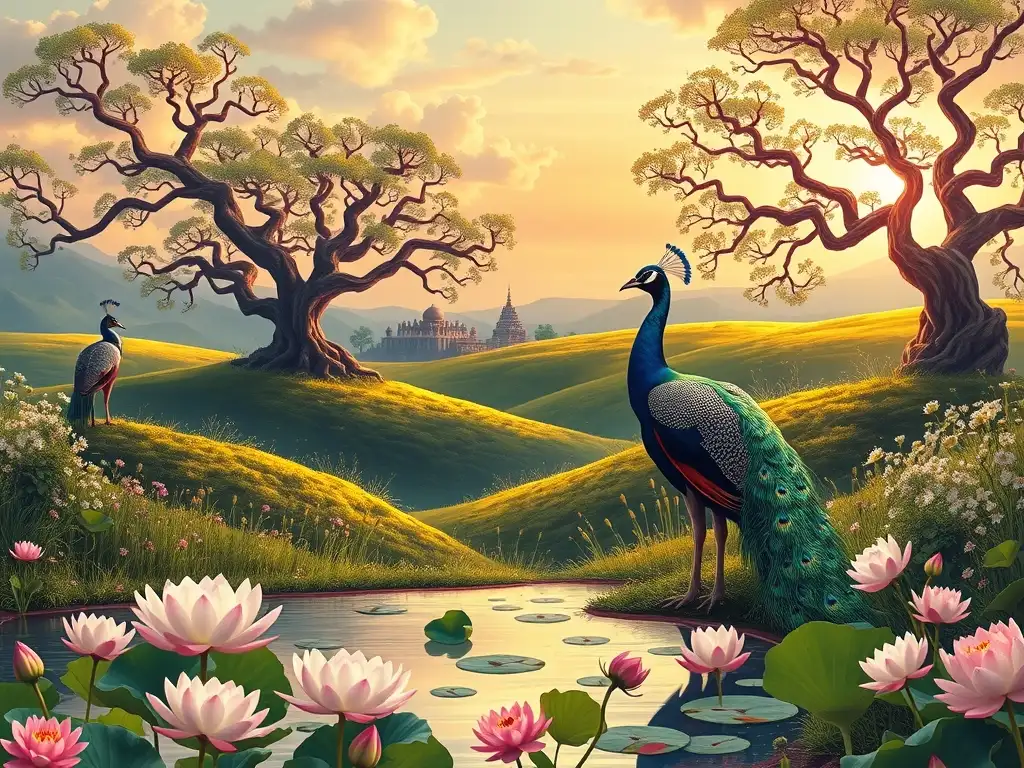
Kalidasa's poetry is imbued with rich symbolism, where elements of nature often take on deeper meanings beyond their physical existence. This symbolism allows readers to interpret the text on various levels, providing insights into the emotional and philosophical dimensions of his work. By examining the symbolic representations of natural elements, one can uncover the intricate layers of meaning that Kalidasa has woven into his verses.
Elements of Nature and Their Symbolic Representations
In Kalidasa's works, various elements of nature symbolize different emotions and states of being. For example:
- Flowers: Often symbolize beauty and love, particularly the lotus, which represents purity and divine love.
- Rivers: Typically signify the flow of time and the continuity of life, often embodying the idea of journey and transformation.
- Clouds: Serve as symbols of longing and communication, especially in "Meghaduta," where they act as messengers of love.
- Forests and Mountains: Represent the complexities of human emotions, from tranquility to turmoil, reflecting the characters' inner lives.
Through these symbolic representations, Kalidasa invites readers to engage with the text on a deeper level, encouraging interpretations that resonate with their own experiences and emotions.
Nature as a Divine Presence in Kalidasa's Works
In addition to representing human emotions and experiences, nature in Kalidasa's poetry often embodies a divine presence. The landscapes, flora, and fauna are portrayed as manifestations of divine beauty and grace. For instance, rivers are not just bodies of water but are often personified as goddesses, enhancing their sacredness.
This divine aspect of nature serves to reinforce the interconnectedness of the human and the divine, suggesting that the natural world is imbued with spiritual significance. Kalidasa's reverence for nature reflects the broader cultural and philosophical beliefs of ancient India, where the environment is seen as a living entity deserving of respect and admiration. This theme of nature as a divine presence adds a layer of spiritual depth to his poetry, inviting readers to appreciate the beauty and sanctity of the natural world.
The Impact of Kalidasa’s Nature Imagery on Classical Indian Literature
Kalidasa’s poetry is renowned for its vivid and evocative nature imagery, which not only enhances the aesthetic appeal of his works but also deepens the thematic resonance. His ability to intertwine nature with human emotion has left a lasting imprint on classical Indian literature. By employing natural elements as metaphors for love, melancholy, and beauty, Kalidasa creates a rich tapestry where the external world mirrors the internal experiences of his characters. This profound relationship between nature and emotion encourages readers to explore the interconnectedness of their surroundings and their feelings, making his work both relatable and timeless.
The vividness of Kalidasa's nature imagery can be seen as a reflection of the cultural significance attributed to the natural world in ancient Indian thought. His descriptions of landscapes, seasons, flora, and fauna are not mere embellishments but serve as integral components that drive the narrative and evoke a sense of place. As such, Kalidasa’s works resonate with readers on multiple levels, encouraging them to appreciate the beauty of nature while recognizing its role in the human experience.
Influence on Future Generations of Poets
Kalidasa's impact on future generations of poets is substantial, as he set a high standard for the use of nature imagery in literature. Many poets who followed him drew inspiration from his seamless integration of natural elements, striving to capture the same depth of emotion and beauty. For instance, poets like Bhavabhuti and Bana were influenced by Kalidasa’s ability to articulate complex feelings through the lens of nature, often incorporating similar imagery into their own works.
The influence of Kalidasa extends beyond mere imitation; he has become a benchmark against which subsequent poets measure their creativity and artistic expression. The symbolism he employed—such as the monsoon rains representing rejuvenation or blooming flowers symbolizing love—has been adapted and reinterpreted by later poets, enriching the landscape of Indian literature. This legacy underscores the essential role Kalidasa’s nature imagery plays in shaping poetic traditions and inspiring new artistic expressions.
The Legacy of Nature Imagery in Indian Literary Tradition
The legacy of Kalidasa’s nature imagery is evident throughout Indian literary tradition, influencing not only poetry but also classical drama and prose. His works have been studied extensively, leading to a deeper understanding of the thematic significance of nature in the context of love, spirituality, and existential contemplation. The motifs he introduced have permeated various genres, inspiring writers to explore the relationship between human beings and their environment.
Moreover, the celebration of nature in Kalidasa's poetry has contributed to a broader cultural appreciation for the natural world within Indian philosophy and spirituality. The reverence for nature as a source of inspiration and wisdom continues to resonate in contemporary literature, art, and environmental discourse. Thus, Kalidasa's imagery remains a vital part of the narrative fabric of Indian culture, reflecting an enduring legacy that transcends time and resonates with readers across generations.
Conclusion: The Enduring Beauty of Nature in Kalidasa's Poetry
Kalidasa's exploration of nature imagery not only elevates his poetry but also serves as a profound commentary on the human condition. His ability to convey complex emotions through the natural landscape invites readers to engage with both the beauty and the transience of life. As we analyze his works, we uncover layers of meaning that highlight the significance of nature in shaping human experiences and emotions.
Summary of Key Insights on Nature Imagery Analysis
In analyzing Kalidasa's nature imagery, several key insights emerge:
- Interconnectedness: Nature serves as a mirror to human emotions, highlighting the interconnectedness of life and the environment.
- Symbolism: Natural elements are rich in symbolism, representing various aspects of love, longing, and the cycles of life.
- Cultural Reflection: His poetry reflects the cultural and philosophical values of ancient Indian society, emphasizing the importance of nature in spiritual and artistic expressions.
These insights underscore the depth of Kalidasa’s work and the significance of nature imagery in understanding his literary genius.
The Importance of Nature in Understanding Kalidasa’s Literary Genius
Nature in Kalidasa's poetry is not merely a backdrop; it is a vital component that shapes the narrative and emotional landscape. Understanding his use of nature imagery provides crucial insights into his literary genius. By analyzing how Kalidasa employs nature to express complex emotions, readers can appreciate his mastery in intertwining the external world with the human experience.
Furthermore, nature imagery enhances the universality of Kalidasa's themes, allowing them to transcend cultural boundaries and resonate with diverse audiences. His portrayal of nature invites readers to reflect on their own experiences and perceptions, fostering a deeper connection to the text. Thus, the study of nature imagery in Kalidasa's poetry is essential for grasping the fullness of his artistic vision and the enduring beauty of his contributions to Indian literature.
- Introduction to Kalidasa and His Poetry
- Understanding Nature Imagery in Kalidasa's Works
- Analysis of Nature Imagery in Kalidasa's Major Works
- The Symbolism of Nature in Kalidasa's Poetry
- The Impact of Kalidasa’s Nature Imagery on Classical Indian Literature
- Conclusion: The Enduring Beauty of Nature in Kalidasa's Poetry
- What is the significance of nature imagery in Kalidasa's poems?
- How does Kalidasa use symbolism in his depiction of nature?
- Can you give examples of specific poems where nature imagery is prominent?
- How does cultural context influence Kalidasa's use of nature in his poetry?
- What can modern readers learn from Kalidasa's nature imagery?
Frequently Asked Questions
What is the significance of nature imagery in Kalidasa's poems?
Nature imagery in Kalidasa's works serves to enhance emotional depth and connect human experiences with the beauty and transience of nature, making his poetry resonate profoundly with readers.
How does Kalidasa use symbolism in his depiction of nature?
Kalidasa employs symbolism to convey complex themes, such as love, loss, and the passage of time, often using elements like flowers, rivers, and seasons to represent human emotions and spiritual journeys.
Can you give examples of specific poems where nature imagery is prominent?
In poems like "Shakuntala" and "Meghaduta," Kalidasa vividly describes the scenery and natural elements, using them as backdrops to explore the characters' feelings and the interplay between nature and love.
How does cultural context influence Kalidasa's use of nature in his poetry?
The cultural context of ancient India, with its reverence for nature and its cycles, deeply influences Kalidasa's imagery, reflecting the philosophical beliefs and aesthetic values of his time.
What can modern readers learn from Kalidasa's nature imagery?
Modern readers can gain insights into the interconnectedness of nature and human life, appreciating how Kalidasa's vivid imagery encourages a deeper appreciation of the world around us.
Final Reflection: Embracing the Essence of Nature through Kalidasa's Lens
The beauty of nature, as depicted in Kalidasa's poems, resonates profoundly in today's world, where the urgency of environmental awareness is at an all-time high. In an era marked by rapid urbanization and climate change, Kalidasa's vivid imagery serves as a poignant reminder of the intrinsic connection between humanity and the natural world. His work invites us to pause and reflect on the splendor that surrounds us, urging us to cultivate a deeper appreciation for the environment that sustains us.
The influence of Kalidasa's nature imagery extends beyond mere aesthetics; it shapes our cultural and social consciousness. His ability to weave nature into the fabric of human emotion and experience continues to inspire poets, artists, and environmentalists alike. In every walk with nature, one receives far more than he seeks.
This quote encapsulates the essence of Kalidasa's work, illustrating how nature enriches our lives and encourages us to find solace and inspiration in its beauty.
As we conclude this exploration of Kalidasa's nature imagery, I invite you to reflect on your own relationship with the natural world. Consider how you can incorporate the lessons from Kalidasa's poetry into your daily life, fostering a deeper connection with the environment. Whether through mindful observation, artistic expression, or environmental stewardship, let us honor the beauty of nature and carry forward the legacy of appreciation that Kalidasa so eloquently expressed in his timeless verses.
Unveil the Splendor of Nature through Poetry!
Thank you for exploring the rich imagery and symbolism of nature in Kalidasa's poems with us! Your interest in this magnificent blend of literary artistry and the beauty of the natural world highlights the depth of appreciation we can cultivate for both. Now, it’s time to enhance your experience and immerse yourself even deeper into this enchanting theme.
Here are some actions you can take to continue your journey:
- Dive into Kalidasa's Work: Select a poem and immerse yourself in its vivid imagery. Take notes on how nature is portrayed and reflect on the emotions it evokes within you.
- Join the Conversation: Share your thoughts about how Kalidasa’s depiction of nature resonates with your own experiences. Connect with fellow enthusiasts in our comments section or on social media.
- Explore Related Themes: Investigate other poets or literary forms that celebrate the beauty of the natural world. You might discover surprising connections or different perspectives that further enrich your understanding.
How have Kalidasa’s poetic representations of nature influenced the way you perceive the environment around you? We’d love to hear your insights!