
The Influence of Ancient Indian Literature on Southeast Asian Cultures

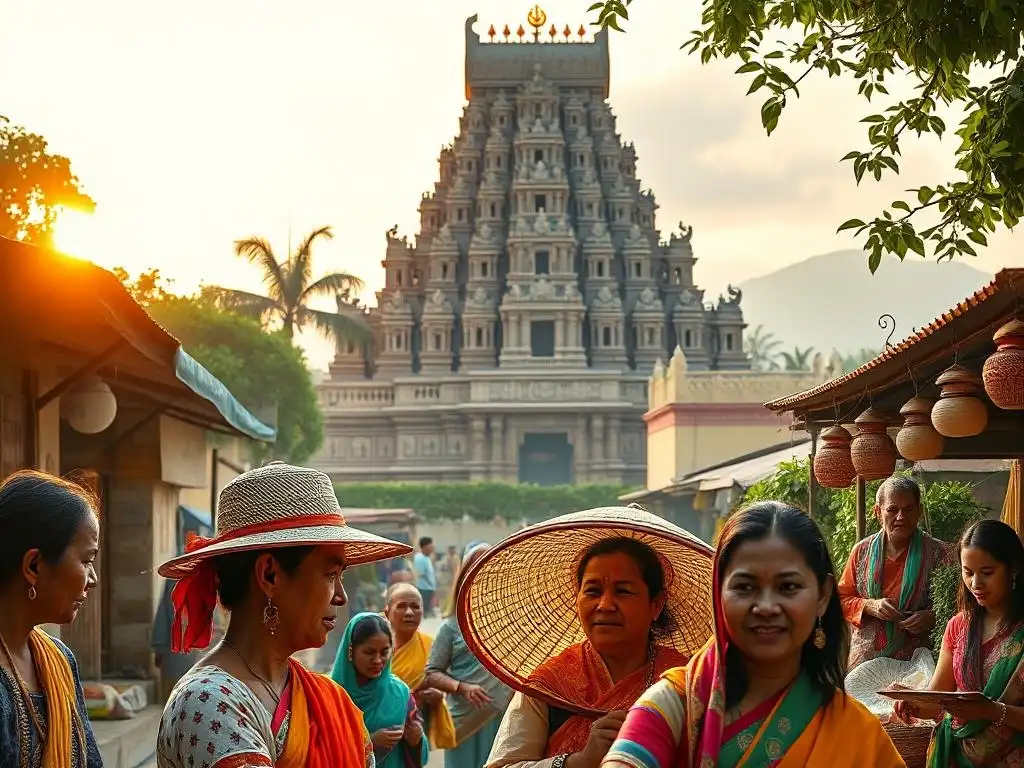
Welcome to Ancient India History, where we embark on an extraordinary journey through time to uncover the profound and intricate tapestry of ancient Indian civilizations. In our featured article, "The Influence of Ancient Indian Literature on Southeast Asian Cultures," we delve into how the literary treasures of India have not only shaped its own rich heritage but have also left an indelible mark on the cultures and societies of Southeast Asia.
Join us as we explore the fascinating connections that span continents, revealing the power of words that transcended borders and continue to resonate through the ages. Are you ready to discover the stories that bridged civilizations?
Introduction to Ancient Indian Literature and Its Global Significance
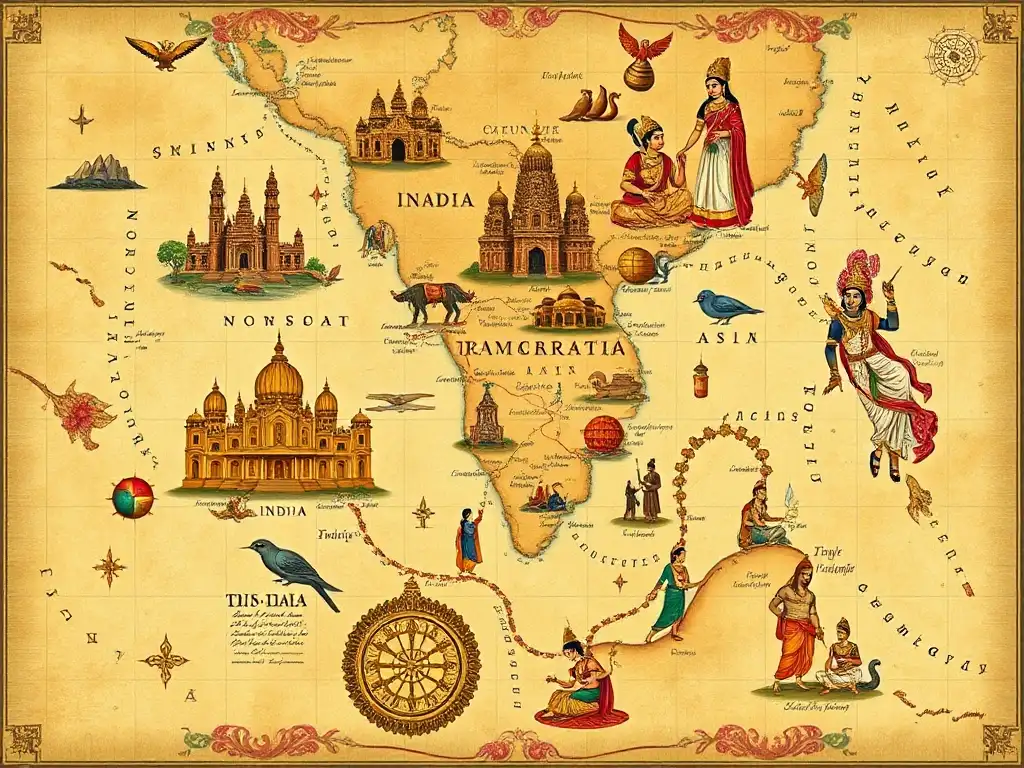
Ancient Indian literature, with its profound depth and complexity, has played a pivotal role in shaping the cultural and intellectual landscapes of various regions, particularly Southeast Asia. Spanning a vast array of genres, including poetry, drama, and philosophical treatises, this body of work not only reflects the rich heritage of Indian civilization but also serves as a testament to its far-reaching influence.
The impact of ancient Indian literature on Southeast Asia is particularly noteworthy, as it facilitated the exchange of ideas, values, and artistic expressions that transcended geographical boundaries. This article delves into the intricate connections between ancient Indian literary traditions and the cultural developments in Southeast Asia, exploring how this interaction has enriched the region's own literary and cultural heritage.
Overview of Ancient Indian Literature
Ancient Indian literature encompasses a diverse range of texts, including Vedic scriptures, Upanishads, epics like the Mahabharata and Ramayana, and classical poetry. These works are characterized by their rich symbolism, intricate narrative structures, and philosophical depth, offering insights into the social, religious, and political milieu of their times. Central to this literary tradition is the interplay of oral and written forms, with many texts initially transmitted through oral recitation before being documented in written form. This unique aspect not only preserved the literature but also allowed for its evolution and adaptation across different contexts.
Importance of Ancient Indian Literature in Historical Context
The historical significance of ancient Indian literature extends beyond its aesthetic value; it served as a vehicle for the dissemination of ideas and cultural practices. During the early centuries CE, India was a melting pot of diverse cultures, with various kingdoms and empires fostering an environment conducive to intellectual exchange.
As trade routes flourished and cultural interactions intensified, the literary works of India began to influence neighboring regions. The philosophical concepts, narrative styles, and poetic forms found in ancient Indian texts laid the groundwork for the development of literary traditions in Southeast Asia, where they were integrated into local cultures and adapted to regional contexts.
The Spread of Ancient Indian Literature to Southeast Asia
Historical Routes of Cultural Exchange
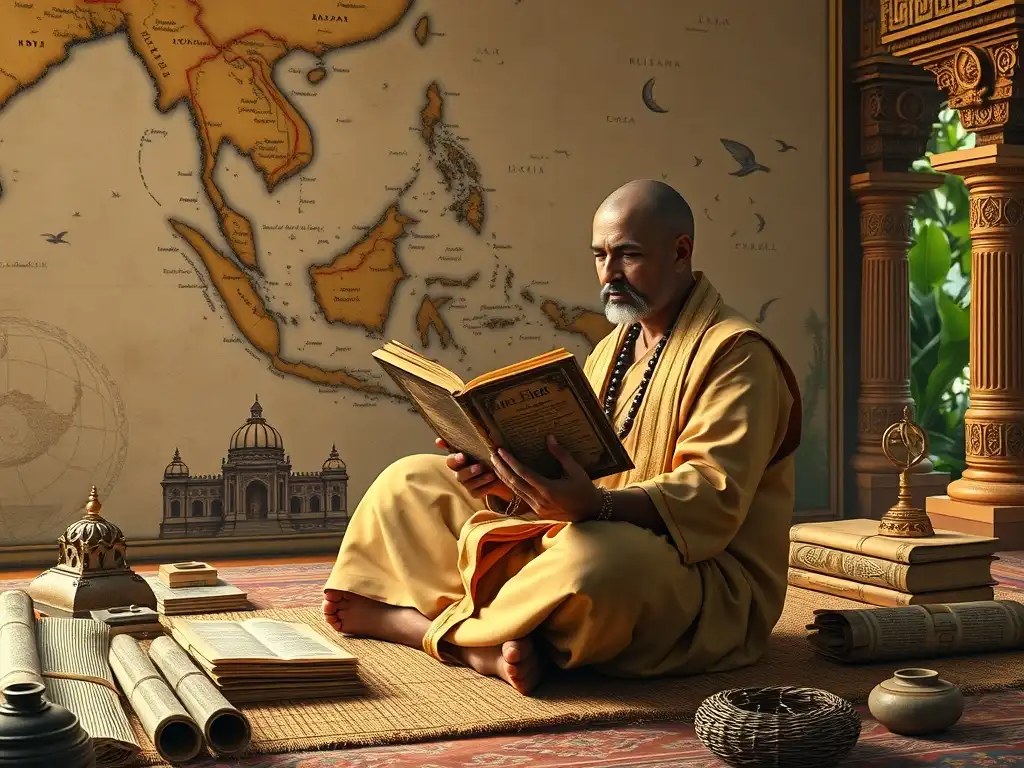
The transmission of ancient Indian literature to Southeast Asia was facilitated by several historical routes, primarily through maritime trade networks that connected the Indian subcontinent with the islands and coastal regions of Southeast Asia. Merchants, travelers, and scholars played a crucial role in this cultural diffusion, bringing with them not only goods but also ideas and texts. Prominent trade routes such as the Maritime Silk Road and the Spice Route served as conduits for the exchange of literary works, allowing for the cross-pollination of cultural and intellectual traditions.
Key Periods of Influence in Southeast Asia
Several key periods marked the influence of ancient Indian literature in Southeast Asia, particularly during the early centuries CE and the post-Gupta era. During these times, Indian literary works were translated, adapted, and incorporated into local traditions. For instance, the Sanskrit epics found resonance in the courts of Southeast Asian kingdoms, where they were reinterpreted through local lenses. Additionally, the emergence of Buddhism and Hinduism in the region further facilitated the spread of Indian literary forms, as sacred texts and narratives became integrated into religious practices and local belief systems.
The exploration of ancient Indian literature's impact on Southeast Asia reveals a rich tapestry of cultural exchange, adaptation, and evolution that continues to influence the literary landscapes of both regions today. Through examining the historical context and the pathways of this literary diffusion, we can appreciate the enduring legacy of ancient Indian literature in shaping Southeast Asian cultures.
Major Themes in Ancient Indian Literature Impacting Southeast Asia
Ancient Indian literature has significantly shaped the cultural landscape of Southeast Asia through its profound themes and narratives. The migration of these literary traditions, primarily during the early centuries of the Common Era, facilitated the exchange of ideas, beliefs, and artistic expressions that resonated deeply with local cultures. The key themes that emerged from ancient Indian literature, such as spirituality, political philosophy, and artistic aesthetics, have found their way into the literary frameworks of various Southeast Asian nations, influencing their storytelling, governance, and cultural practices.
Spiritual and Philosophical Concepts
The spiritual and philosophical concepts found in ancient Indian literature, particularly those derived from texts like the Vedas, Upanishads, and various Puranas, have deeply influenced Southeast Asian cultures. These texts often explore fundamental questions about existence, morality, and the nature of the divine, which have been integrated into local belief systems.
Southeast Asian societies, such as those in Indonesia and Thailand, adopted and adapted these spiritual themes, shaping their own religious practices and ideologies. For instance, the concept of Dharma, or moral duty, has resonated with Buddhist and Hindu teachings in these regions, promoting ethical governance and social responsibility. Additionally, the philosophical explorations of the self and the universe found in Indian literature have enriched local philosophical discourses, fostering a blend of indigenous and Indian thought.
Political and Governance Ideas
Ancient Indian literature also offers a wealth of political and governance ideas that have had a lasting impact on Southeast Asian political structures. Texts like Kautilya's Arthashastra provide insights into statecraft, administration, and diplomacy, which were instrumental in shaping the governance models in emerging Southeast Asian kingdoms.
The principles of just rule, the importance of a wise ruler, and the necessity of strategic alliances have been embraced by local leaders. Countries such as Cambodia and Java have drawn from these ancient texts to establish their own systems of governance, reflecting a blend of Indian and indigenous political philosophies. The Indian influence can be seen in the development of centralized kingdoms, court rituals, and legal systems that prioritize moral and ethical leadership.
Artistic Expression and Aesthetics
The artistic expression and aesthetics found in ancient Indian literature have left a significant imprint on Southeast Asian art, architecture, and performance. The rich imagery and symbolism present in Indian poetry and prose inspired local artists to adapt these elements into their own cultural expressions.
For example, the intricate carvings on the walls of temples in Angkor Wat and the performances of traditional dances in Bali often draw upon themes and characters from Indian epics. The use of classical Sanskrit poetry styles has influenced local poets, leading to the creation of vibrant literary traditions that reflect both Indian and Southeast Asian aesthetics. This blending of artistic styles highlights the dynamic nature of cultural exchange, showcasing how ancient Indian literary themes have been reinterpreted within local contexts.
Specific Examples of Ancient Indian Literary Works Influencing Southeast Asian Cultures
The influence of ancient Indian literature on Southeast Asian cultures is vividly manifested in various literary works and adaptations. Notable examples include adaptations of epic narratives and the incorporation of Sanskrit texts into local literature, showcasing the enduring legacy of Indian literary traditions in shaping the cultural identity of Southeast Asian nations.
The Ramayana and Its Adaptations in Southeast Asia
The Ramayana, one of the two major Sanskrit epics, has been a cornerstone of cultural exchange between India and Southeast Asia. Its themes of duty, honor, and devotion have been particularly resonant in regions like Indonesia, Thailand, and Myanmar, where local adaptations have emerged.
In Indonesia, the Ramayana has been transformed into traditional shadow puppetry performances known as Wayang Kulit, where characters and narratives are adapted to reflect local customs and beliefs. Similarly, in Thailand, the Ramayana, known as Ramakien, has influenced the country's dance, theater, and literature, showcasing the universal appeal of its themes while integrating local cultural elements.
The Mahabharata's Role in Southeast Asian Narratives
The Mahabharata, another significant epic, has also played a crucial role in shaping Southeast Asian literature and cultural narratives. Its themes of conflict, justice, and morality have found resonance in various local stories and legends.
In Malaysia, for instance, the epic has been adapted into traditional storytelling forms, where characters such as Arjuna and Krishna are celebrated in local folklore. The Mahabharata has also influenced the dance-drama traditions in Bali, where performances depict key events from the epic, reinforcing its importance in the region's cultural expressions.
Influence of Sanskrit Texts on Local Literature
The influence of Sanskrit texts extends beyond the major epics, affecting a wide range of local literature across Southeast Asia. Sanskrit's literary styles, themes, and philosophical concepts have been integrated into the vernacular literature of countries such as Cambodia, Thailand, and the Philippines.
For example, Khmer literature has drawn from Sanskrit poetic forms, while local chronicles and religious texts often incorporate Sanskrit terminology and narrative techniques. This exchange has enriched the literary landscapes of Southeast Asian nations, facilitating a unique synthesis that honors both Indian literary traditions and local cultural expressions, resulting in a vibrant and diverse literary heritage that continues to thrive today.
The Role of Trade and Interaction in Disseminating Ancient Indian Literature

The dissemination of ancient Indian literature across Southeast Asia was significantly influenced by trade and cultural interactions. Trade routes, both overland and maritime, served as conduits for not just goods but also ideas, philosophies, and literary works. Key trading hubs, such as those in present-day Indonesia, Malaysia, and Thailand, became melting pots where Indian and local cultures intertwined. As merchants traveled, they brought along texts, stories, and religious scriptures, which were integrated into local cultures and adapted to fit regional contexts.
Moreover, the interactions between Indian scholars and the ruling elites of Southeast Asian kingdoms fostered an environment conducive to the exchange of literary knowledge. These scholarly exchanges not only promoted the learning of Sanskrit and Tamil but also facilitated the translation and adaptation of Indian literary classics into local dialects, enriching the narrative traditions of Southeast Asia. The impact of these interactions can still be seen today in the literary landscapes of countries such as Indonesia, Cambodia, and Thailand.
Trade Routes and Their Cultural Impact
Trade routes, particularly those of the Maritime Silk Road and the overland routes through the Indian subcontinent, played a crucial role in the cultural exchange between India and Southeast Asia. The ports of Southeast Asia, including Srivijaya and Funan, became critical nodes for Indian traders. These interactions enabled the flow of texts, such as the Mahabharata and Ramayana, which were often recited or performed by traveling bards.
The cultural impact of these trade routes extended beyond mere literary exchange; they facilitated the spread of Hinduism and Buddhism, which were often accompanied by their respective literary traditions. Temples and monuments, such as those found in Angkor Wat and Borobudur, reflect this intertwining of literary and religious traditions, showcasing how ancient Indian literature influenced local artistic expressions and cultural practices.
Interactions Between Indian Scholars and Southeast Asian Rulers
The engagement between Indian scholars and Southeast Asian rulers was instrumental in popularizing ancient Indian literature. Rulers in Southeast Asia often sought the wisdom of Indian scholars to enhance their governance and culture. These scholars were invited to teach and share their knowledge, leading to the establishment of centers of learning that focused on Sanskrit and classical Indian texts.
As a result, many Southeast Asian kingdoms adopted Indian literary forms, integrating them into their royal courts. This not only solidified the status of Indian literature but also led to the creation of local adaptations and new literary forms, reflecting the unique cultural contexts of Southeast Asia. The enduring legacy of these interactions can be seen in the continued reverence for ancient texts and the incorporation of Indian literary motifs in Southeast Asian folklore and storytelling traditions.
Linguistic Influence of Ancient Indian Literature on Southeast Asian Languages
The impact of ancient Indian literature on Southeast Asian languages is profound, manifesting through the incorporation of Sanskrit and other Indian linguistic elements. This influence is evident in the vocabulary, grammar, and literary styles of various regional languages, showcasing the deep-rooted connections between these cultures.
Sanskrit Loanwords in Southeast Asian Languages
Sanskrit has left an indelible mark on many Southeast Asian languages, with a significant number of loanwords being integrated into local vernaculars. For instance, languages such as Bahasa Indonesia, Thai, and Khmer contain numerous Sanskrit-derived terms, particularly in fields like religion, administration, and literature. Words related to kingship, governance, and spiritual concepts are among the most commonly borrowed, illustrating how Indian literature and culture shaped local governance and societal structures.
The extensive use of these loanwords not only highlights the linguistic influence but also points to the cultural prestige associated with Sanskrit. Many Southeast Asian communities regarded Sanskrit as a language of power and wisdom, which further encouraged its adoption in religious and literary contexts.
The Development of Regional Languages from Ancient Texts
The influence of ancient Indian literature also facilitated the development of regional languages in Southeast Asia. Texts originally written in Sanskrit and Tamil were translated into local languages, giving rise to literary traditions that incorporated Indian themes and narratives. For example, the Ramayana and Mahabharata have been adapted into various forms in languages such as Javanese and Thai, resulting in a rich tapestry of storytelling that merges Indian epics with local cultural elements.
These adaptations not only enriched the regional languages but also helped preserve the themes and moral lessons embedded in Indian literature. The blending of styles and narratives has contributed to a unique literary heritage in Southeast Asia, showcasing the lasting impact of ancient Indian literature on the region's linguistic evolution and cultural identity.
Conclusion: The Enduring Legacy of Ancient Indian Literature in Southeast Asia
The influence of ancient Indian literature on Southeast Asian cultures is profound and enduring. The texts, philosophies, and narratives that originated in India have not only shaped literary traditions but also contributed to the broader cultural and spiritual landscapes of the region. From the spread of Hinduism and Buddhism to the incorporation of Sanskrit and Pali into local languages, the impact of these literary works is evident in various facets of life, including religion, art, and governance.
As Southeast Asian nations continue to evolve, the foundations laid by ancient Indian literature remain a vital part of their cultural heritage. This legacy is reflected in contemporary literature, where themes and motifs from ancient texts are often revisited and reinterpreted, showcasing the timeless nature of these works. The cross-cultural dialogues initiated centuries ago continue to thrive today, underscoring the importance of ancient Indian literature in the ongoing narrative of Southeast Asian identity.
Summary of Key Influences
The key influences of ancient Indian literature on Southeast Asia can be summarized as follows:
- Religious Texts and Philosophical Traditions: The dissemination of texts such as the Vedas, Upanishads, and Puranas played a crucial role in shaping the spiritual beliefs of Southeast Asian societies. These texts introduced core concepts of Hinduism and Buddhism, influencing local religions and practices.
- Language and Literary Forms: Sanskrit and Pali emerged as significant literary languages in Southeast Asia, leading to the development of local adaptations and original works inspired by Indian literary traditions. This linguistic influence helped preserve and propagate ancient Indian literary forms, such as poetry and drama.
- Cultural Exchange and Adaptation: The incorporation of Indian epics like the Ramayana and Mahabharata into local traditions illustrates the dynamic process of cultural exchange. These epics were adapted into various forms, including dance, theatre, and literature, reflecting local customs and values while retaining their Indian origins.
- Art and Iconography: The themes and narratives of ancient Indian literature significantly influenced Southeast Asian art, particularly in temple architecture and sculpture. The visual representations of deities and mythological scenes in places like Angkor Wat and Borobudur showcase this artistic legacy.
Reflection on the Ongoing Cultural Exchange and Literary Impact
The ongoing cultural exchange between India and Southeast Asia continues to enrich both regions. While ancient Indian literature laid the groundwork for this connection, modern interactions, facilitated by globalization and technological advancements, have further deepened the ties. Contemporary Southeast Asian authors often draw inspiration from ancient texts, blending traditional motifs with modern themes to create works that resonate with today's audiences.
Moreover, initiatives to preserve and promote the study of ancient Indian literature within Southeast Asia highlight the importance of this cultural heritage in fostering mutual understanding and respect among diverse communities. As scholars and artists explore the intersections of these rich literary traditions, the legacy of ancient Indian literature remains a cornerstone of cultural identity and expression in Southeast Asia, ensuring that its impact is both lasting and evolving.
- Introduction to Ancient Indian Literature and Its Global Significance
- Overview of Ancient Indian Literature
- Importance of Ancient Indian Literature in Historical Context
- The Spread of Ancient Indian Literature to Southeast Asia
- Major Themes in Ancient Indian Literature Impacting Southeast Asia
- Specific Examples of Ancient Indian Literary Works Influencing Southeast Asian Cultures
- The Role of Trade and Interaction in Disseminating Ancient Indian Literature
- Linguistic Influence of Ancient Indian Literature on Southeast Asian Languages
- Conclusion: The Enduring Legacy of Ancient Indian Literature in Southeast Asia
- What is the primary focus of ancient Indian literature?
- How did ancient Indian literature influence Southeast Asian cultures?
- What role did trade routes play in the dissemination of ancient Indian literature?
- Can you name some specific Southeast Asian cultures influenced by ancient Indian literature?
- What is the long-term legacy of ancient Indian literature in Southeast Asia?
Frequently Asked Questions
What is the primary focus of ancient Indian literature?
Ancient Indian literature primarily encompasses epics, poetry, and philosophical texts that reflect the cultural and spiritual values of Indian civilization.
How did ancient Indian literature influence Southeast Asian cultures?
Ancient Indian literature impacted Southeast Asian cultures through the spread of religious texts, epics like the Ramayana and Mahabharata, and the introduction of Sanskrit as a literary language.
What role did trade routes play in the dissemination of ancient Indian literature?
Trade routes facilitated the exchange of goods and ideas, allowing literature and cultural narratives from ancient India to reach and influence Southeast Asian societies.
Can you name some specific Southeast Asian cultures influenced by ancient Indian literature?
The Khmer Empire, Srivijaya, and Sailendra in Indonesia are notable examples of cultures that were significantly shaped by Indian literary traditions and mythologies.
What is the long-term legacy of ancient Indian literature in Southeast Asia?
The long-term legacy includes the integration of Indian epics into local traditions, the establishment of Hindu-Buddhist kingdoms, and the enduring cultural practices that reflect Indian influences.
Final Reflection: The Enduring Legacy of Ancient Indian Literature in Southeast Asia
The profound impact of ancient Indian literature on Southeast Asian cultures is not merely a historical footnote; it is a vibrant thread woven into the fabric of contemporary society. From the epics of the Mahabharata and Ramayana to the philosophical texts of the Vedas, these works have shaped the narratives, beliefs, and artistic expressions of nations across Southeast Asia. Today, this influence resonates in the region’s literature, art, and even spiritual practices, reminding us of the interconnectedness of human experience.
The cultural exchange initiated by ancient Indian literature has left an indelible mark on the social landscape of Southeast Asia, fostering a rich tapestry of shared stories and values. This legacy is evident in the way local traditions have embraced and adapted Indian narratives, creating a unique blend that reflects both heritage and innovation. As noted by scholar R. S. Sharma, The interaction between cultures is a dynamic process, leading to the evolution of new identities and expressions.
This ongoing dialogue between ancient texts and modern interpretations continues to inspire artists, writers, and thinkers across the region.
As we reflect on the lessons imparted by ancient Indian literature, let us consider how we can incorporate these timeless themes of morality, heroism, and the quest for knowledge into our own lives. I invite you to explore the stories that have shaped your culture and to seek connections with the broader human experience. By embracing the wisdom of the past, we can foster a deeper understanding of ourselves and our place in the world, ensuring that the legacy of ancient Indian literature continues to thrive in the hearts and minds of future generations.
Embrace the Legacy: Discover Your Connection to Ancient Wisdom!
Thank you for diving into the fascinating world of ancient Indian literature and its profound influence on Southeast Asian cultures. Your interest in understanding these timeless connections enriches your perspective on history and culture. Now, let's build on that insight and take bold steps to deepen your exploration!
Here’s what you can do next:
- Start your journey by reading a classic work of ancient Indian literature, such as the Mahabharata or Ramayana, and reflect on its themes.
- Join a local or online group that discusses the intersections of Indian and Southeast Asian cultures to share insights and broaden your understanding.
- Share this article with friends or on social media to spark conversations about the importance of cultural heritage and its ongoing impact today.
What aspect of ancient Indian literature resonates most with you, and how do you see it influencing modern cultures around you?